








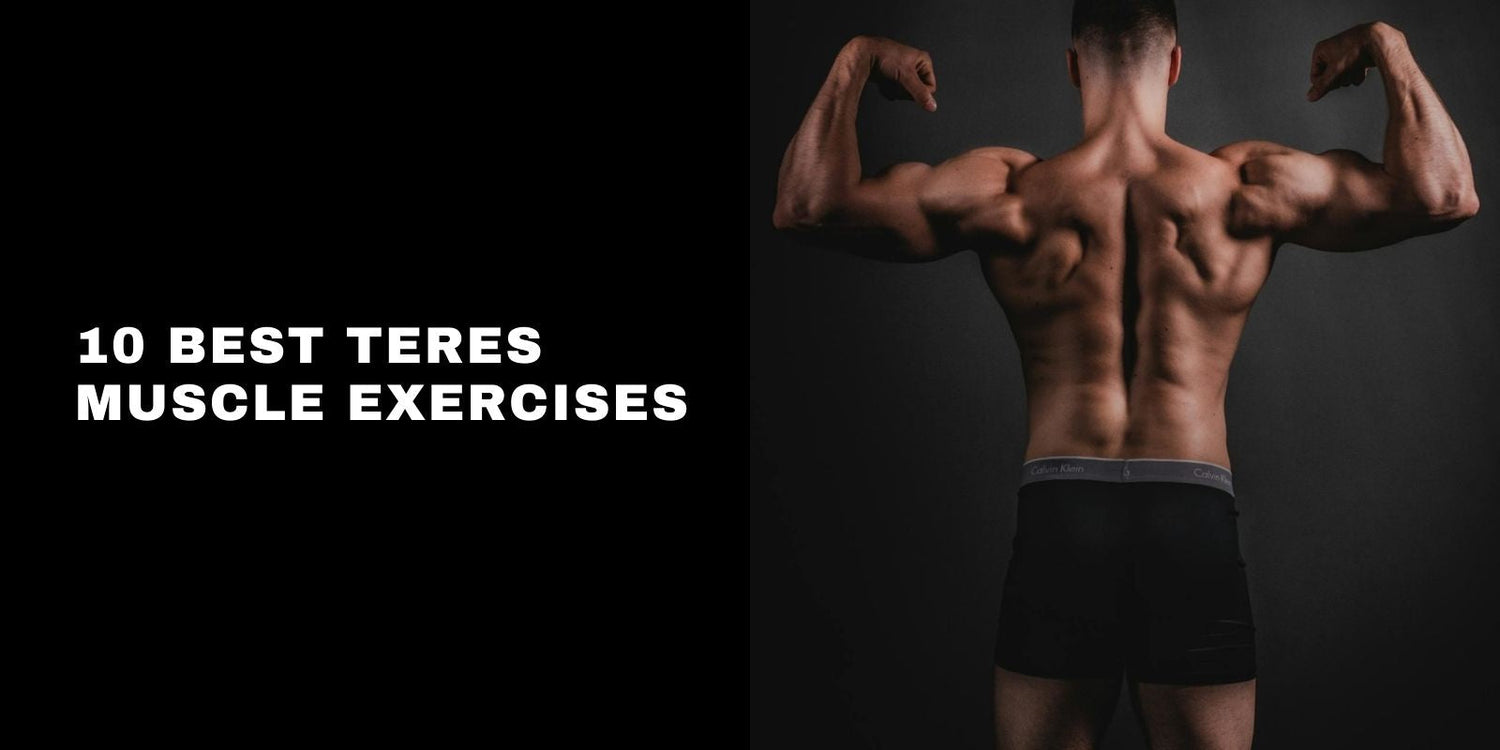
Developing strong and balanced teres muscles is essential for optimizing pulling mechanics, reinforcing rotator cuff stability, and preventing chronic shoulder discomfort during heavy compound lifts. While the teres major functions as a powerful pulling muscle, the teres minor serves as a crucial posterior rotator cuff stabilizer.
This comprehensive training guide breaks down the 10 best exercises for the teres major and minor, complete with exact form cues, video demonstrations, and balanced workout routines.
Quick Answer: The best teres muscle exercises combine heavy horizontal and vertical pulling for the teres major with controlled external rotation for the teres minor. Incorporate single-arm dumbbell rows, straight-arm pulldowns, cable face pulls, and side-lying dumbbell external rotations into your weekly routine to build resilient, injury-free shoulders.
Key Takeaways
- Distinct Functional Roles: The teres major acts as a prime mover for shoulder extension and adduction, whereas the teres minor functions as an external rotator and glenohumeral stabilizer.
- Targeted Loading Strategies: Train the teres major with moderate-to-heavy rows and pulldowns (8-12 reps), but keep teres minor work light and controlled (12-20 reps).
- Elbow Path Dictates Recruitment: Pulling your elbows tight toward your hips maximizes teres major tension while minimizing unwanted upper trapezius dominance.
- Comprehensive Rotator Cuff Support: Pairing isolation pulling with external rotation exercises like face pulls restores healthy scapulohumeral rhythm and relieves shoulder impingement.
- Pain Signal Protocol: Persistent radiating sensations, joint instability, or sharp pain require immediate training modification and medical evaluation.
What Are the Anatomical Differences Between the Teres Major and Minor?
The teres major and teres minor are two distinct muscles located on the posterior aspect of the scapula that perform complementary yet opposite biomechanical functions.[1] While the teres major assists the latissimus dorsi in arm adduction, extension, and internal rotation, the teres minor forms part of the rotator cuff system to provide external rotation and dynamic glenohumeral joint stabilization.[2]
Understanding these functional distinctions is critical when programming back and shoulder workouts. Training both muscles with the same intensity or rep scheme often leads to muscular imbalances, poor posture, and joint irritation.
| Anatomical Muscle | Primary Biomechanical Role | Optimal Training Style | Primary Exercise Matches |
|---|---|---|---|
| Teres Major | Shoulder extension, adduction, internal rotation | Moderate to heavy pulling with controlled negatives | Dumbbell rows, neutral grip pulldowns, straight-arm pulldowns |
| Teres Minor | External rotation, posterior glenohumeral stabilization | Light resistance, high reps, strict rotational control | Side-lying external rotations, cable face pulls, prone raises |
What Is the Single Arm Dumbbell Row and How Does It Build Teres Major Strength?
The single arm dumbbell row is a unilateral horizontal pulling exercise that builds significant strength and mass in the teres major and latissimus dorsi by allowing an extended active range of motion. Supporting your non-working side on a flat bench stabilizes the pelvis and spine, enabling direct force production through the target posterior shoulder musculature.
Executing unilateral rows with single arm dumbbell row technique allows you to focus on driving the elbow toward the hip crease rather than flaring outward, which isolates the teres major while reducing unwanted biceps involvement.

- Setup: Place your left knee and left hand firmly on a sturdy flat bench, holding a dumbbell in your right hand with your arm extended.
- Execution: Initiate the pull by retracting your right scapula and driving your elbow upward and backward toward your right hip.
- Contraction: Pause for one second at the top of the lift, squeezing the outer edge of your upper back before lowering under a 2-second negative.
- Recommended Volume: Perform 3 to 4 sets of 8 to 12 controlled repetitions per arm.
- Common Flaw: Jerking the torso upward or rotating the chest open shifts tension onto the lower back and neck.
How Do Straight Arm Cable Pulldowns Isolate the Teres Major?
Straight arm cable pulldowns isolate the teres major and lats through pure shoulder extension without involving elbow flexion or biceps fatigue. Maintaining a slight bend in the elbows throughout the arc allows for sustained mechanical tension across the entire lateral border of the scapula.
This isolation movement is especially beneficial for lifters who struggle to feel their back working during compound pulling exercises. Pairing this drill with general strength training equipment helps develop the mind-muscle connection needed for heavier lifting days.

- Setup: Attach a straight bar or rope attachment to a high pulley station and stand hip-width apart with a slight forward hip hinge.
- Execution: Grasp the bar with an overhand grip, lock your elbows with a subtle 15-degree bend, and sweep the bar downward toward your upper thighs.
- Peak Squeeze: Hold the bottom position for a count of two, actively pulling your shoulder blades down and back.
- Recommended Volume: Complete 3 sets of 12 to 15 reps with moderate resistance.
- Common Flaw: Bending and extending the elbows during the rep turns the movement into a triceps pushdown.
Why Is the Neutral Grip Lat Pulldown Effective for Shoulder and Lat Development?
The neutral grip lat pulldown is a vertical pulling movement that positions the shoulders in a biomechanically favorable joint path to heavily recruit the teres major, lower lats, and mid-back. Using parallel handles on versatile strength machines reduces internal rotation stress at the glenohumeral joint compared to wide overhand grips.
Lifters with preexisting shoulder impingement or limited thoracic mobility can train vertical pulling intensely with this variation while maintaining optimal scapular depression.

- Setup: Secure your thighs under the lat pulldown pads and grasp the V-bar or neutral grip attachment with palms facing inward.
- Execution: Depress your shoulders, lift your sternum slightly, and pull the handle smoothly toward your upper clavicle.
- Form Cue: Think about driving your elbows straight down into your back pockets rather than pulling with your hands.
- Recommended Volume: Execute 3 sets of 8 to 12 reps with full eccentric control.
- Common Flaw: Leaning excessively backward turns the pulldown into a sloppy horizontal row.
How Does the Incline Bench Dumbbell Row Eliminate Cheating for Better Teres Engagement?
The incline bench dumbbell row eliminates momentum and lumbar compensation by providing full anterior chest support throughout the pulling cycle. Resting your torso against an inclined backrest forces the teres major, rhomboids, and rear deltoids to handle the entire load without assistance from hip drive.
Utilizing a sturdy RitFit adjustable foldable utility bench set at a 30-to-45-degree angle ensures strict upper-back recruitment and protects the lower spine.

- Setup: Lie face down on an incline bench with your chest firmly against the top pad and arms hanging straight down holding dumbbells.
- Execution: Row the weights toward your ribs while keeping your elbows angled slightly inward at roughly 45 degrees from your torso.
- Squeeze: Hold the peak contraction at the top for one full second, feeling the posterior shoulder blades pinch together.
- Recommended Volume: Perform 3 sets of 10 to 12 smooth reps.
- Common Flaw: Hyperextending the cervical spine by craning your neck upward strains the cervical discs.
What Makes the Face Pull Essential for Teres Minor Activation and Shoulder Balance?
The cable face pull is a premier postural exercise that combines horizontal abduction with active external rotation to target the teres minor, infraspinatus, and lower trapezius.[3] Strengthening these posterior stabilizers balances out heavy chest pressing and counteracts forward rounded shoulder posture.
Lifters can perform this variation using standard cable stacks or explore specialized setups like Smith machine face pulls to maintain strict rotator cuff engagement.

- Setup: Set a dual-rope attachment on a cable machine at eye level and grip the ends with thumbs pointing toward your body.
- Execution: Step back into a solid split stance, then pull the center of the rope directly toward the bridge of your nose while pulling your hands apart.
- External Rotation: Finish each repetition in a "double biceps" pose with your elbows high and forearms vertically aligned.
- Recommended Volume: Complete 2 to 3 sets of 12 to 20 reps using light to moderate weight.
- Common Flaw: Setting the weight too heavy turns the movement into a jerky upright row.
How Do You Perform Side Lying Dumbbell External Rotations for Rotator Cuff Stability?
Side lying dumbbell external rotations isolate the teres minor and infraspinatus by utilizing gravity as the primary resistance vector throughout the rotational arc. Performing this movement on your side places maximum torque at the exact point of peak external rotation, delivering superior cuff activation compared to standing free-weight drills.
Selecting very light weights from the RitFit dumbbells collection ensures you isolate the small rotator cuff fibers without recruiting larger compensation muscles.

- Setup: Lie on your side on an exercise mat or bench, placing a small rolled towel between your top elbow and your rib cage.
- Starting Position: Bend your working elbow to 90 degrees with the dumbbell resting lightly in front of your abdomen.
- Rotation: Keeping the elbow pinned to your side, slowly rotate the forearm upward toward the ceiling until it is roughly parallel to the floor.
- Controlled Lowering: Lower the dumbbell slowly over a 3-second eccentric phase back to the starting mark.
- Recommended Volume: Execute 2 to 3 sets of 12 to 20 slow, deliberate reps per shoulder.
- Common Flaw: Rolling the torso backward to hoist the weight compromises shoulder stabilization.
What Are the Scapular and Shoulder Stability Benefits of the Prone Y Raise?
The prone Y raise is a bodyweight or light-load corrective exercise that develops lower trapezius strength and upward scapular rotation to support teres muscle health. Teaching the shoulder blade to glide smoothly along the rib cage prevents posterior impingement during overhead lifting.[5]
Integrating scapular activation drills into your weekly routine complements broader shoulder workout with dumbbells sessions for long-term joint durability.

- Setup: Lie face down on a flat bench or mat with your arms extended forward at a 30-to-45-degree angle in a "Y" position, thumbs pointing up.
- Lift: Squeeze your shoulder blades downward and raise your arms a few inches off the surface without extending your lower back.
- Hold: Maintain the top contraction for 2 full seconds before lowering with total control.
- Recommended Volume: Perform 2 sets of 8 to 12 strict repetitions.
- Common Flaw: Arching the lower spine or lifting the chest off the bench replaces scapular action with lumbar extension.
How Does the Low to High Straight Arm Band Row Target the Teres Major at Home?
The low to high straight arm band row uses variable elastic resistance to challenge the teres major through a continuous upward and backward shoulder extension arc. As the resistance band stretches toward the peak of the pull, mechanical tension increases directly where the teres major is in its shortest contraction range.
This exercise is ideal for home workouts where cable machines are unavailable, allowing lifters to maintain high training frequency alongside other foundational muscle building exercises for posterior shoulder health.

- Setup: Anchor a resistance band near floor level and stand 3 to 4 feet back facing the anchor point with your arm extended.
- Execution: Keeping your elbow extended with minimal bend, pull the band in a smooth backward sweep past your hip.
- Squeeze: Contract the outer lat and teres major firmly at the top for one second.
- Recommended Volume: Complete 2 to 3 sets of 12 to 15 reps per side.
- Common Flaw: Allowing the band to snap your arm forward on the return phase removes eccentric training benefits.
How Can Foam Rolling and Ball Release Relieve Posterior Shoulder Tightness?
Foam rolling and lacrosse ball myofascial release relieve posterior shoulder tightness by applying localized pressure to alleviate hypertonicity in the teres major, minor, and infraspinatus. While soft tissue release does not build muscular capacity, it temporarily improves glenohumeral internal rotation range and reduces stiffness before workouts.
Targeted self-myofascial release is especially effective when combined with active warm-up drills before starting intense back routines outlined in guides like the best back workouts at home.

- Setup: Lie on your side and place a massage ball or high-density foam roller along the posterior border of your armpit just below the rear deltoid.
- Mobilization: Gently shift your body weight across tender muscle knots while taking slow, diaphragmatic breaths.
- Oscillation: Perform small 1-inch oscillations or gently internally and externally rotate your arm while pinning the tissue.
- Prescription: Spend 60 to 90 seconds per shoulder prior to pulling workouts.
- Common Flaw: Applying aggressive pressure over the axillary nerve or bony scapular spine causes inflammation.
What Is the Proper Technique for the Doorway Lat and Teres Stretch?
The doorway lat and teres stretch is a static mobility stretch that lengthens the lateral back line and posterior shoulder capsule using a doorway or rack upright for leverage. Lengthening the teres major and lats restores full overhead shoulder flexion and relieves muscular tightness following intense pulling sessions.

- Setup: Stand in a sturdy doorway and grip the frame at head height with your target arm.
- Hinge: Step back slightly, hinge at your hips, and allow your pelvis to sink backward while maintaining a firm grip.
- Lengthen: Relax your shoulder blade and breathe deeply, feeling a deep stretch down the side of your torso and rear armpit.
- Duration: Hold the stretch for 20 to 30 seconds per side for 2 to 3 cycles post-workout.
- Common Flaw: Forcing aggressive spinal twisting can place uncomfortable torque on the anterior shoulder joint.
What Are the Best Sample Workout Routines for Teres Major and Minor Training?
The best workout routines for teres muscle development balance heavy pulling compounds for the teres major with high-repetition rotator cuff stabilization for the teres minor.[4] Structuring your workouts based on your specific training environment and goals ensures balanced strength gains and joint protection.
| Routine Type | Primary Exercises Included | Sets & Reps | Weekly Frequency |
|---|---|---|---|
| Strength & Hypertrophy (Gym) | Single Arm Dumbbell Row, Neutral Grip Pulldown, Straight Arm Cable Pulldown, Cable Face Pull | 3-4 sets of 8-12 reps (Rows/Pulldowns), 3 sets of 15 reps (Face Pulls) | 2 sessions per week |
| Home Mobility & Cuff Stability | Doorway Stretch, Side-Lying Dumbbell External Rotation, Prone Y Raise, Low-to-High Band Row | 2-3 sets of 12-20 reps (Rotations/Raises), 30s holds (Stretches) | 2-3 sessions per week |
What Signs Indicate You Should Stop Training and Seek Clinical Evaluation?
You should stop training and seek clinical evaluation if you experience sharp catching pain, numbness or tingling radiating down the arm, or joint instability during shoulder movements. While standard delayed-onset muscle soreness is normal, neurological symptoms and worsening discomfort signal underlying structural pathology that requires professional medical assessment.
- Radiating Neurological Pain: Sensations of burning, pins, needles, or electric shocks down the triceps or forearm indicate possible quadrilateral space syndrome or cervical nerve compression.
- Sudden Loss of Strength: Inability to externally rotate the arm against light resistance may suggest a rotator cuff tear.
- Glenohumeral Instability: Feeling the shoulder slip or give way during overhead or rowing motions requires clinical examination.
- Progressive Symptom Escalation: Pain that worsens steadily across training weeks despite deloading warrants physician consultation.
Frequently Asked Questions About Teres Muscle Exercises
Teres muscle training questions frequently center around exercise selection differences between the teres major and teres minor, proper loading ranges, and injury prevention protocols.
What are the best teres major exercises?
Single arm dumbbell rows, straight arm cable pulldowns, and neutral grip lat pulldowns are among the most effective teres major exercises. These pulling variations directly align with the muscle's primary functions of shoulder extension, adduction, and internal rotation, especially when you pull your elbow toward your hip without excessive shrugging.
What are the best teres minor exercises?
Side lying dumbbell external rotations and controlled cable face pulls are two of the best exercises for targeting the teres minor. Because the teres minor functions as part of the rotator cuff, it responds best to lighter loads, strict rotational mechanics, and deliberate tempo rather than heavy compound pulling.
Can rows train both the teres major and teres minor?
Yes, rowing movements train the teres major effectively during the pulling phase, while also engaging the teres minor as a dynamic stabilizer. However, standard rows do not fully isolate the teres minor, meaning lifters should pair rows with dedicated external rotation drills for complete posterior shoulder balance and stability.
Is the teres major the same muscle as the latissimus dorsi?
No, the teres major and latissimus dorsi are distinct anatomical muscles, although they share similar insertion points and functions, including shoulder adduction and internal rotation. The teres major is a thick, smaller muscle positioned directly above the lat near the lateral scapular border, often nicknamed "the lat's little helper."
Should I train the teres minor with heavy weights?
No, you should not train the teres minor with heavy weights because it is a small rotator cuff stabilizer rather than a prime mover. Overloading external rotation exercises forces larger muscles like the upper trapezius and posterior deltoid to take over, which increases the risk of shoulder impingement and reduces muscle activation.
How often should I train the teres muscles each week?
Most lifters achieve optimal results by training the teres muscles two to three times per week within a balanced upper body or push-pull-legs routine. Heavier teres major exercises require 48 hours of recovery between sessions, whereas low-load teres minor stabilization drills can be performed more frequently as part of a warm-up.
Can teres muscle exercises help relieve shoulder tightness and pain?
Yes, targeted teres exercises can help relieve posterior shoulder tightness by restoring muscular balance between internal and external rotators and improving scapulohumeral rhythm. However, if your shoulder pain involves sharp pinches, numbness, tingling, or radiating sensations down the arm, you should rest and seek professional medical guidance immediately.
Which teres exercise is best for a home gym workout?
The single arm dumbbell row is the top home gym exercise for building teres major strength using just an adjustable bench and free weights. For targeting the teres minor at home, side lying dumbbell external rotations or light resistance band face pulls offer accessible and highly effective rotator cuff conditioning.
Conclusion
Building strong and functional teres muscles requires a targeted two-part strategy combining heavy pulling compound work for the teres major with low-load rotational control for the teres minor. Incorporating single-arm rows, straight-arm pulldowns, and rotator cuff rotations builds resilient, high-performing shoulders capable of handling heavy resistance training while minimizing injury risk.
Important disclaimer: This article is for general educational and informational purposes only and does not constitute medical advice. If you experience sharp pain, persistent numbness, or joint instability, consult a qualified healthcare professional before beginning any exercise routine.
References
1. Maciel RA, Zogaib RK, Pochini ADC, Ejnisman B. Isolated rupture of teres major in a goalkeeper. BMJ Case Rep. 2015;2015:bcr2015210524. doi:10.1136/bcr-2015-210524
2. Dalagiannis N, Tranovich M, Ebraheim N. Teres minor and quadrilateral space syndrome: a review. J Orthop. 2020;20:144-146. doi:10.1016/j.jor.2020.01.021
3. Akhtar A, Richards J, Monga P. The biomechanics of the rotator cuff in health and disease: a narrative review. J Clin Orthop Trauma. 2021;18:150-156. doi:10.1016/j.jcot.2021.04.019
4. Schoenfeld BJ, Grgic J, Van Every DW, Plotkin DL. Loading recommendations for muscle strength, hypertrophy, and local endurance: a re-examination of the repetition continuum. Sports Basel. 2021;9(2):32. doi:10.3390/sports9020032
5. Melo ASC, Moreira JS, Afreixo V, Moreira-Gonçalves D, Donato H, Cruz EB, Vilas-Boas JP, Sousa ASP. Effectiveness of specific scapular therapeutic exercises in patients with shoulder pain: a systematic review with meta-analysis. JSES Rev Rep Tech. 2024;4(2):161-174. doi:10.1016/j.xrrt.2023.12.006





