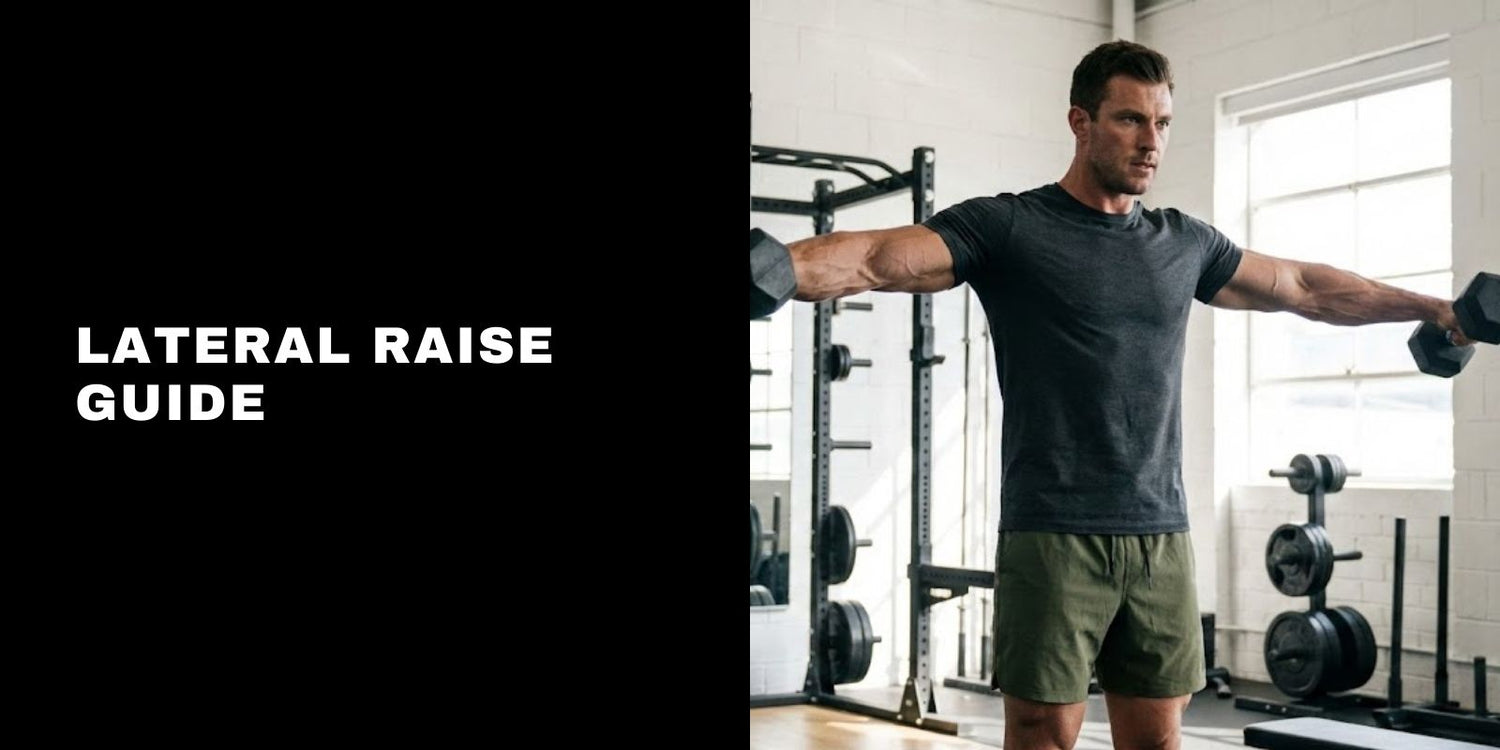
Lateral raises mainly work the lateral deltoid, which is the side shoulder muscle most responsible for visible shoulder width. They also recruit the supraspinatus and smaller scapular stabilizers that keep the upper arm moving cleanly during shoulder abduction.
This guide covers which muscles lateral raises work, how to perform them with proper form, how much weight to use, and how to program them in a home gym. You will also learn common mistakes, useful variations, and the safest ways to build wider shoulders with a pair of hex rubber dumbbells.
Quick Answer: Lateral raises mainly work the lateral deltoid, which is the side shoulder muscle most responsible for visible shoulder width. The supraspinatus and smaller scapular stabilizers assist, while a controlled raise to roughly shoulder height with a moderate load builds the side delts best.
Key Takeaways
- Primary mover: Lateral raises mainly target the lateral deltoid, which is the shoulder head most responsible for visible width.
- Lighter load wins: The best weight is usually lighter than most people expect, because the side delt responds well to clean tension and controlled reps.
- Scapular plane path: A slightly forward raise in the scapular plane often feels smoother than forcing the arms directly out to the side.
- Watch for compensators: If your traps, neck, or lower back do most of the work, the load is too heavy or your arm path is drifting.
- Variation matters less: Both dumbbell and cable lateral raises can work well, so your setup, comfort, and control matter more than brand loyalty to one variation.
What Muscles Do Lateral Raises Work?
Lateral raises work the lateral deltoid as the primary mover, with the supraspinatus, trapezius, serratus anterior, and core providing support. The exercise trains shoulder abduction, so the side head of the shoulder carries most of the tension.
Primary Muscle Worked
The lateral deltoid is the main mover because the exercise is built around shoulder abduction. Resistance training research has shown strong medial deltoid activation during lateral raise patterns.[1]
Supporting Muscles
Lateral raises are not a one muscle movement, because the shoulder joint and scapula need help from small stabilizers and upper back muscles. The side delt should still feel like the star of the exercise, not the neck or traps.
- Supraspinatus: Helps initiate the first part of shoulder abduction and supports joint control as the arm begins to rise.
- Upper and lower trapezius: Assist with scapular motion, but too much shrugging shifts the exercise away from the side delt.
- Serratus anterior: Helps the shoulder blade move smoothly so the arm can elevate without excessive compensation.
- Anterior deltoid: Contributes more when the raise drifts too far forward or becomes more of a front raise.
- Forearms and core: Hold the implements steady and keep the torso from swinging during standing versions.
What Lateral Raises Do Not Replace
Lateral raises do not replace pressing, rowing, or rear delt work, because they mainly solve one job well. They are best used as a focused side delt builder inside a complete shoulder program.
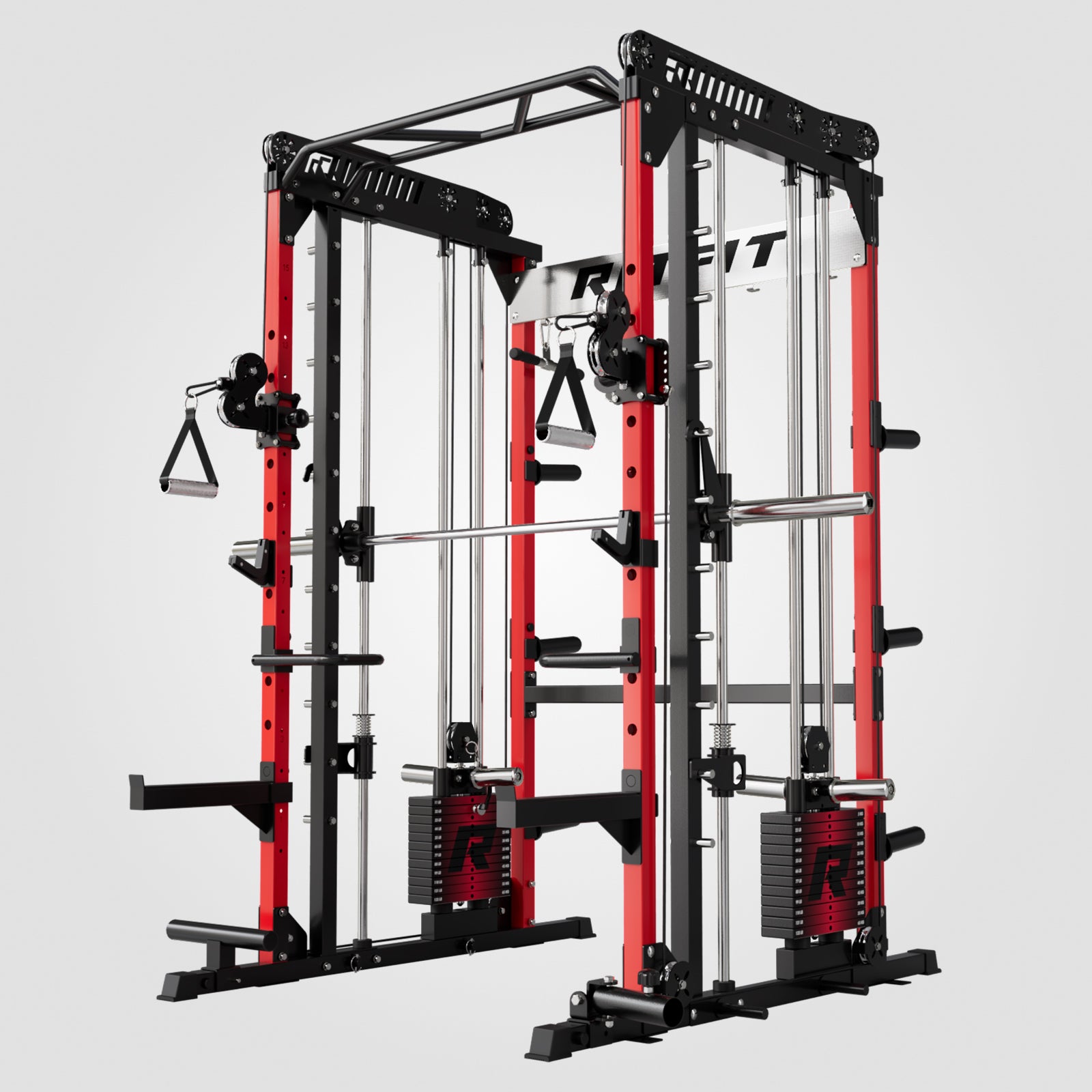
For a complete shoulder setup at home, pair a dumbbell routine with a cable machine to hit the side delts with smooth, controlled tension.
What Are the Benefits of Lateral Raises?
Lateral raises are one of the most effective isolation exercises for building shoulder width, because they directly bias the lateral deltoid. They also balance the shoulder, add low systemic fatigue, and fit easily into most push day workouts.
Shoulder Width
Lateral raises are one of the best choices for improving the look of shoulder width because they directly bias the side delt. That makes them especially useful for building a stronger V taper appearance.
Balanced Shoulder Development
Many lifters already hammer the front delts with pressing, so side delt work fills a common gap. Better balance usually improves both aesthetics and exercise selection across push days.
Low Systemic Fatigue
Lateral raises create strong local tension without the full body fatigue that comes with heavy compound lifts. That makes them easy to recover from and easy to place late in a workout.
How Do You Perform Lateral Raises With Proper Form?
Proper lateral raise form matters more than ego loading, because the shoulder is mobile, sensitive, and easy to cheat through. Your goal is to move the upper arm with control, not to throw the weight outward with momentum.
Step by Step Technique
- Step 1: Set your stance. Stand tall with a soft knee bend and hold the weights at your sides with a neutral grip.
- Step 2: Brace and lean slightly. A small forward torso lean often lines up the side delt better with gravity and reduces the urge to shrug.
- Step 3: Raise the arms out and slightly forward. Think about moving wide through the elbows instead of lifting the hands as high as possible.
- Step 4: Stop around shoulder height. Going much higher often shifts work to the traps and changes the feel of the rep.
- Step 5: Lower under control. The lowering phase should stay smooth and deliberate so the deltoid keeps tension instead of losing it to gravity.
Best Form Cues
Good cues keep the movement repeatable and help you feel the side delt sooner. They also make it easier to notice when the set stops being an isolation exercise.
- Lead with the elbows: This keeps the upper arm doing the work instead of turning the rep into a loose wrist driven swing.
- Keep the wrists quiet: Neutral wrists usually feel cleaner than dramatic wrist rolling or forced pinky up positions.
- Reach wide, not high: This reduces the urge to shrug and helps you stop near the point where the side delt still owns the rep.
- Use a slight scapular plane path: EMG work on lateral raise variations suggests arm path and humeral rotation affect muscle contribution, which is one reason a neutral or slightly forward raise often feels more consistent than an exaggerated thumbs down style.[2]
Common Mistakes
Most lateral raise problems come from trying to make a small muscle movement look like a big strength lift. When form breaks, bigger muscles steal the job.
- Swinging the torso: Momentum gets the weight moving, but it lowers tension where you actually want it.
- Shrugging the shoulders: If your neck tightens and your shoulders climb toward your ears, your traps are taking over.
- Bending the elbows too much: A huge elbow bend shortens the lever and changes the feel of the exercise.
- Using a painful range: Sharp pinching is a stop sign, not a cue to push harder.
How Much Weight Should You Use for Lateral Raises?
The best lateral raise weight is usually lighter than most lifters expect, because the side delt is a small muscle working through a long lever. Choose a load you can control from the first inch to the last inch of every rep.
Why Moderate Loads Usually Win
The side delt is a relatively small muscle working through a long lever, so very heavy loading usually invites cheating before it creates better tension. Most lifters grow faster when they keep the set strict enough for the shoulder to stay in control.
Best Rep Range for Most Lifters
Most people do well with about 10 to 20 reps per set, because that range makes control easier and keeps joint stress reasonable. You should still finish close to failure, but only while technique stays intact.
Simple Starting Test
The right load is the one you can own from the first inch to the last inch of the rep. If control disappears, the weight is no longer serving the goal of the exercise.
- Test 1: Can you complete at least 12 clean reps without swinging the torso.
- Test 2: Can you reach near shoulder height without shrugging the shoulders up.
- Test 3: Can you lower the weight smoothly for about two seconds.
- Test 4: Can you keep the same path on the last reps that you used on the first reps.
Dumbbell or Cable for Growth
Both options can work, because the best exercise is the one you can control consistently across enough hard sets. A 2025 study found similar lateral deltoid hypertrophy outcomes between dumbbell and cable lateral raises when range of motion was standardized between conditions.[3]
If you want finer jumps between loads, an adjustable dumbbells set makes small weight changes easier to manage at home.
"Autoregulation is simply a systematic approach to implementing something every trainer worth their salt knows is of supreme importance: the principle of individuality."
Eric Helms, PhD, CSCS, Sport Scientist and Coach, 3D Muscle Journey
What Are the Common Lateral Raise Mistakes and Fixes?
Most lateral raise mistakes come from trying to make a small muscle exercise look like a big strength lift. When form breaks, bigger muscles steal the job and the side delt gets less direct work.
| What you feel or see | Likely cause | Fix you can apply today |
|---|---|---|
| Neck tight, shoulders rising | Traps taking over | Lower the load, think wide elbows, and stop around shoulder height |
| Body swings to start each rep | Too much weight or fatigue | Use a seated version, reduce the load, and slow the first half of the rep |
| Front shoulder feels more active than side delt | Raise is drifting too far forward | Use a slightly forward scapular plane path, not a front raise path |
| Pinchy feeling near the top | Range or path does not suit your shoulder | Reduce range, try cables, and use the path that feels smoother and pain free |
| Forearms burn before shoulders | Grip is dominating the set | Lighten the dumbbells or use a cable handle that lets the shoulder stay the limiter |
The table summarizes the most common lateral raise compensations and the practical correction for each one.
How Do You Program Lateral Raises in Your Workout?
Lateral raises fit best after compound presses, because pressing needs freshness and coordination more than side delt isolation does. That order lets you train hard without turning lateral raises into a sloppy warm up or a rushed finisher.
Best Placement
Put lateral raises near the end of a push day, after your main pressing work is done. This keeps the side delts fresh enough to control the load while the heavier lifts still get priority.
Weekly Volume and Frequency
The side delts often recover quickly enough for two or three exposures per week if total volume is sensible. Most lifters can start with 3 to 5 sets per session and adjust based on soreness, performance, and shoulder comfort.
Example Push Day Plug In
A simple layout keeps the exercise useful without overcomplicating the day. You only need enough structure to keep the side delt getting direct work consistently.
- Seated Dumbbell Overhead Press: 3 sets of 6 to 10 reps.
- Incline Press: 3 sets of 8 to 12 reps.
- Lateral Raise Variation: 3 to 4 sets of 12 to 20 reps.
- Rear Delt or Upper Back Work: 2 to 4 sets based on your split.
Keeping your weights organized with a dumbbell rack makes switching between loads faster during a busy session.
What Variations and Modifications Should You Try?
Cable, seated, and lean away variations each change how the side delt feels during the rep. Choosing the version you can control best usually delivers the most consistent growth.
Cable Lateral Raises
Cables are useful when you want tension through more of the range and a smoother resistance curve at the bottom. They are also easy to scale with small jumps if you have access to a cable crossover machine.
Pairing a cable machine with a set of cable handles gives you comfortable grips for lateral raise work.
Seated Lateral Raises
Seated reps reduce body sway and make cheating harder, so they are often a better teaching tool for beginners. A stable seat on a weight bench or the RitFit Gator adjustable weight bench supports a clean setup in a home gym.
Lean Away Lateral Raises
Leaning away changes the resistance profile and can make the bottom range feel more demanding. It is a good option for lifters who already control the basic standing or seated version.
Scaption Based Raises
A slightly forward raise in the scapular plane can feel more shoulder friendly for some lifters, because it changes scapular muscle activity and often reduces the sense of crowding at the top. Research on scaption positions also shows meaningful differences in lower trapezius and serratus anterior contribution across exercise setups.[4]
How Do You Prevent Shoulder Injuries During Lateral Raises?
Shoulder friendly lateral raises start with a proper warm up and a conservative range of motion. Stop any rep that creates sharp pain, because side delt work should feel like muscular effort, not joint irritation.
Warm up the shoulder first with light band work or a few low weight sets before you load the working sets. If you need more load options at home, the dumbbells collection makes it easier to progress in smaller, more shoulder friendly steps.
FAQs About Lateral Raises
How much weight should you use for lateral raises?
Yes. Light to moderate weight is usually best for lateral raises because it lets your side delts stay under control instead of letting your traps and torso take over. If you cannot pause briefly near shoulder height and lower the weight smoothly, the load is too heavy.
What should you do if lateral raises hurt your shoulders?
No. Shoulder pain during lateral raises is not something you should push through. A slightly forward arm path, a shorter range, or cables may feel better, but sharp or pinching pain means you should stop, lower the load, and reassess your setup.
Are cable lateral raises better than dumbbell lateral raises?
Cable lateral raises are not automatically better, but they can feel smoother because tension stays on the shoulder through more of the range. Dumbbell and cable versions can both work well, so your equipment, comfort, and ability to control the rep should guide the choice.
Why do your traps take over during lateral raises?
Your traps take over lateral raises when the weight is too heavy or your shoulder path drifts upward instead of outward. Think about reaching wide, stopping near shoulder height, and keeping your neck relaxed, because side delt work should feel controlled rather than shrugged.
How should beginners start lateral raises?
Most beginners should start lateral raises with very light dumbbells and aim for clean sets of about twelve to twenty reps. The right starting weight is the one you can lift without swinging, bending the elbows too much, or losing control on the way down.
Should beginners do seated lateral raises or standing lateral raises?
Seated lateral raises can be a better choice for beginners who struggle with body sway or momentum. Sitting down reduces cheating and makes it easier to learn a clean shoulder path, which often helps lifters feel the side delts instead of the traps or lower back.
What is the best rep range for lateral raises?
Most lifters do well with about 10 to 20 controlled reps per set for lateral raises. That range keeps technique clean and joint stress reasonable, and you should still push close to failure while the side delt stays in control.
How many times a week should you train lateral raises?
Most lifters can train lateral raises two to three times per week when total volume is sensible. Start with about 3 to 5 working sets per session and adjust based on soreness, performance, and how the shoulders feel on the next training day.
Conclusion
Lateral raises mainly work the lateral deltoid through controlled shoulder abduction, which is why they build width when you keep the set strict. Choose a moderate load, a shoulder friendly arm path, and a steady lowering phase to get the most from every rep.
Start light, build volume slowly, and explore our latest RitFit offers to stock your home gym for consistent side delt training.
Disclaimer
This article is for general educational purposes only and is not medical advice. Stop the exercise if you feel sharp pain, numbness, or unusual weakness, and get guidance from a qualified clinician before starting or modifying your training.
References
1. Campos Y, Vianna JM, Guimaraes MP, et al. Different Shoulder Exercises Affect the Activation of Deltoid Portions in Resistance Trained Individuals. J Hum Kinet. 2020;75:5-14.
2. Coratella G, Tornatore G, Longo S, Esposito F, Cè E. An Electromyographic Analysis of Lateral Raise Variations and Frontal Raise in Competitive Bodybuilders. Int J Environ Res Public Health. 2020;17(17):6015.
3. Larsen S, Wolf M, Schoenfeld BJ, et al. Dumbbell versus cable lateral raises for lateral deltoid hypertrophy: an experimental study. Front Physiol. 2025;16:1611468.
4. Tsuruike M, Ellenbecker TS. Scapular Muscle Electromyographic Activity During Abduction Exercises in the Scapular Plane in Three Positions. Int J Sports Phys Ther. 2019;14(6):935-944.