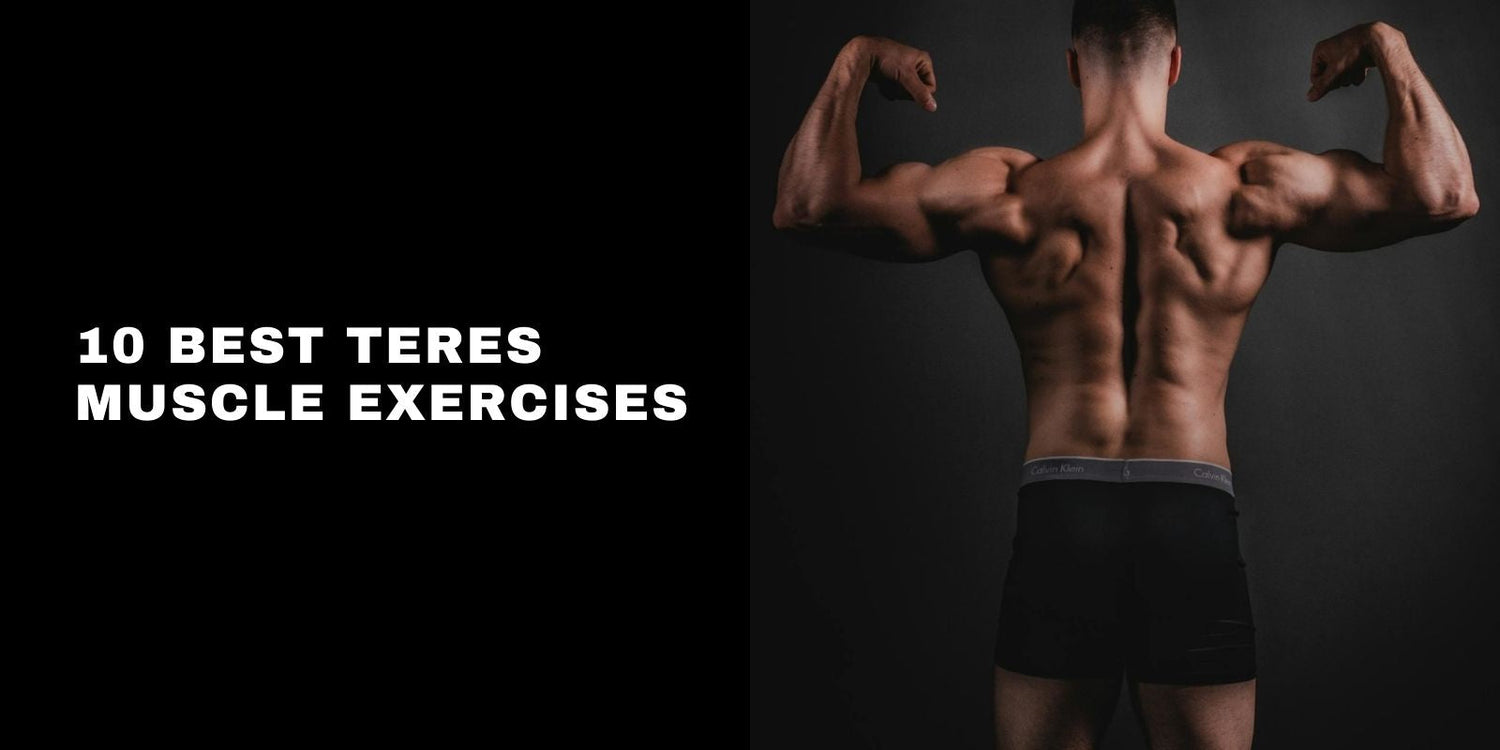
Strong teres muscles help you pull with better control, stabilize the shoulder, and move more smoothly during rows, pulldowns, presses, and overhead work. The best plan is simple, train the teres major with controlled pulling, then support the teres minor with light external rotation and scapular control work.
Safety note: This guide is for general fitness education, not medical diagnosis or injury treatment. Stop training and speak with a qualified clinician if you feel sharp pain, radiating symptoms, numbness, tingling, instability, major weakness, or pain that keeps getting worse.
Editorial note: This article uses peer reviewed research to support anatomy, shoulder control, and general resistance training recommendations. It should still be reviewed by a qualified clinician before being positioned as medical or rehabilitation advice.
Key Takeaways
- Teres major training should focus on pulling strength: Rows, neutral grip pulldowns, and straight arm pulldowns usually create the best training stimulus.
- Teres minor training should stay light and precise: Side lying external rotation, face pulls, and scapular control drills are better than heavy loading.
- A two part plan works best: Use compound pulling to build strength, then add low load rotator cuff work for shoulder control.
- Exercise angle matters: Elbow to hip pulling better targets the teres major, while clean external rotation better supports the teres minor.
- Pain changes the goal: Sharp, radiating, worsening, or unstable shoulder symptoms require a more cautious approach and professional evaluation.
Table of Contents
- Understanding the Teres Muscles
- Why the Teres Muscles Matter
- Training Principles
- 10 Best Teres Exercises
- Sample Workout Routines
Understanding the Teres Muscles
The teres major and teres minor sit close together on the back of the shoulder, but they do different jobs. Knowing the difference helps you choose better exercises and avoid treating every posterior shoulder issue as the same problem.
What is the teres major?
The teres major helps extend, adduct, and internally rotate the shoulder, so it works hard during rows, pulldowns, and straight arm pulling patterns.[1]
What is the teres minor?
The teres minor is one of the rotator cuff muscles and helps externally rotate and stabilize the shoulder during arm movement.[2]
Teres Major vs Teres Minor
The easiest way to separate them is to think of the teres major as a pulling strength helper and the teres minor as a shoulder control muscle. Both matter, but they should not be trained the same way.
| Muscle | Main Role | Best Training Focus | Common Exercise Matches |
|---|---|---|---|
| Teres major | Shoulder extension, adduction, and internal rotation | Controlled pulling strength | Dumbbell rows, neutral grip pulldowns, straight arm pulldowns |
| Teres minor | External rotation and shoulder stabilization | Low load precision and control | Side lying external rotation, face pulls, scapular control drills |
Why the Teres Muscles Matter for Shoulder Health
The teres muscles help connect back strength with shoulder control. The rotator cuff plays an important role in glenohumeral stability and shoulder function, which is why smaller control muscles should not be ignored in a balanced training plan.[3]
Common issues involving the teres major and minor
Posterior shoulder tightness, discomfort near the back of the armpit, and fatigue during overhead work can show up when pulling volume, posture, and rotator cuff control are poorly balanced.
- High pulling volume: Too many heavy rows or pulldowns without enough recovery can irritate the rear shoulder area.
- Poor scapular control: If the shoulder blade does not move well, the smaller posterior shoulder muscles often work harder than they should.
- Overhead sport stress: Throwing, swimming, climbing, and racket sports can place repeated demand on the posterior shoulder.
- Weak external rotation: A weak or poorly coordinated rotator cuff can make pressing and overhead movement feel less stable.
Training Principles for Teres Muscles
Good exercise selection matters, but execution matters more. The teres muscles are easy to miss if you rush, shrug every rep, or let momentum replace control.
Warm up and mobility
Start with light movement and shoulder prep before heavier pulling. Use band pull aparts, controlled shoulder circles, easy scapular retractions, and light rows to increase blood flow and improve movement quality.
Technique and safety guidelines
Your goal is to keep the shoulder controlled while the target muscles do the work. Smooth reps are more useful than heavy reps that turn into shrugging, twisting, or jerking.
- Keep a neutral spine: Rows and pulldowns should come from the shoulder and upper back, not from trunk twisting or lumbar extension.
- Use a controlled tempo: Smooth reps improve targeting and reduce the chance of turning the set into momentum work.
- Keep the shoulder down: Excess shrugging shifts tension to the upper traps and away from the muscles you want to train.
- Respect pain signals: Muscle effort is acceptable, but sharp pain, numbness, instability, or radiating symptoms are red flags.
Programming basics
Most lifters can train teres focused work 2 to 3 times per week if recovery and total pulling volume are well managed. Moderate loads and 8 to 12 reps often support hypertrophy work, while lighter higher rep sets are useful for control and endurance focused shoulder exercises.[4]
Quick Exercise Selection Guide
Use this table to choose exercises based on your goal instead of guessing. Heavy pulling usually fits the teres major better, while lower load rotation work fits the teres minor better.
| Goal | Best Exercise | Main Bias | Suggested Range | Equipment |
|---|---|---|---|---|
| Build pulling strength | Single Arm Dumbbell Row | Teres major and lats | 3 to 4 sets of 8 to 12 reps | Dumbbell and bench |
| Improve shoulder extension control | Straight Arm Cable Pulldown | Teres major and lats | 3 sets of 10 to 15 reps | Cable machine or band |
| Train smooth vertical pulling | Neutral Grip Lat Pulldown | Lats and teres major | 3 sets of 8 to 12 reps | Cable station or Smith machine cable system |
| Support rotator cuff control | Side Lying External Rotation | Teres minor | 2 to 3 sets of 12 to 20 reps | Light dumbbell |
| Improve shoulder balance | Face Pull | Teres minor, rear delts, upper back | 2 to 3 sets of 12 to 20 reps | Cable or band |
10 Best Teres Muscle Exercises for Strength, Control, and Mobility
These exercises cover both major training needs. Some bias the teres major through pulling strength, while others support teres minor control and shoulder stability.
1. Single Arm Dumbbell Row

This is one of the best teres major exercises because it lets you drive the elbow toward the hip and load the back through a long range of motion.
- How to do it: Place one hand and one knee on a stable bench, keep your spine neutral, and let the dumbbell hang under your shoulder.
- What to feel: You should feel the lat and teres area working along the back and outer edge of the shoulder blade.
- Sets and reps: Use 3 to 4 sets of 8 to 12 reps per side.
- Common mistake: Shrugging up or rowing too high shifts the work toward the upper traps and rear delts.
- Helpful link: Learn detailed form cues in this single arm dumbbell row guide.
2. Straight Arm Cable Pulldown

This movement trains shoulder extension without turning the set into an elbow flexion exercise.
- How to do it: Stand facing a cable stack with a bar or rope at about shoulder height and keep a soft bend in the elbows.
- What to feel: You should feel tension along the side of the back and near the rear armpit.
- Sets and reps: Use 3 sets of 10 to 15 controlled reps.
- Common mistake: Bending the elbows too much turns the movement into a triceps pressdown.
3. Neutral Grip Lat Pulldown

A narrow neutral grip often creates a shoulder path that feels smoother than a very wide grip.
- How to do it: Sit tall, brace your torso, and pull the handle toward your upper chest while driving the elbows down and slightly back.
- What to feel: You should feel strong tension in the mid to lower lat region and the muscles near the back of the shoulder.
- Sets and reps: Use 3 sets of 8 to 12 reps.
- Common mistake: Leaning too far back or yanking the handle with body momentum reduces the training effect.
4. Incline Bench Dumbbell Row

Chest support removes cheating and helps you keep more tension on the target muscles.
- How to do it: Set a bench to a moderate incline, lie face down, and let the dumbbells hang naturally.
- What to feel: You should notice upper back tension with a strong connection through the teres and lat area.
- Sets and reps: Use 3 sets of 10 to 12 reps.
- Common mistake: Cranking the neck up or jerking the dumbbells off the bottom reduces control.
5. Face Pull

Face pulls are valuable for teres minor support because they combine external rotation, rear shoulder work, and scapular control.
- How to do it: Set a rope at face height and pull it toward your face while separating the hands.
- What to feel: You should feel the rear delts, upper back, and external rotators working together.
- Sets and reps: Use 2 to 3 sets of 12 to 20 reps.
- Common mistake: Turning the rep into a loose high row removes the external rotation benefit.
- Research note: Scapular therapeutic exercises have been studied in shoulder pain populations, which supports the value of controlled shoulder blade training in broader shoulder programs.[5]
- Helpful link: For a Smith machine cable variation, see the RitFit guide on Smith machine face pulls.
6. Side Lying Dumbbell External Rotation

This is one of the best teres minor exercises because it trains external rotation with minimal cheating.
- How to do it: Lie on your side, keep the top elbow pinned to your ribs at about 90 degrees, and rotate the forearm upward with a very light dumbbell.
- What to feel: You should feel a small but clear contraction deep in the back of the shoulder.
- Sets and reps: Use 2 to 3 sets of 12 to 20 slow reps.
- Common mistake: Using too much weight often makes the torso roll backward to finish the rep.
- Helpful link: Choose a light pair from the RitFit dumbbells collection for controlled external rotation work.
7. Prone Y Raise

The prone Y raise supports scapular control and overhead mechanics rather than directly isolating the teres muscles.
- How to do it: Lie face down on a bench or the floor with the arms angled overhead in a Y shape and thumbs pointing up.
- What to feel: You should feel lower trap and upper back engagement with light shoulder stability demand.
- Sets and reps: Use 2 sets of 8 to 12 controlled reps.
- Common mistake: Lifting too high and compensating with the spine defeats the purpose of the drill.
- Helpful link: For more upper body support work, review these shoulder workouts with dumbbells.
8. Low to High Straight Arm Band Row

This variation changes the resistance angle and can help some lifters feel the teres major more clearly than a standard pulldown.
- How to do it: Anchor a band or cable low, keep the arm mostly straight, and pull back and slightly upward past the hip.
- What to feel: You should feel the side of the back and shoulder extending through a smooth arc.
- Sets and reps: Use 2 to 3 sets of 12 to 15 reps per side.
- Common mistake: Bending the elbow too much removes the straight arm bias.
9. Foam Rolling or Ball Release

Soft tissue work does not build strength, but some people use it to temporarily reduce the feeling of local tightness.
- How to do it: Place a foam roller or ball near the muscular area behind the armpit and along the outer scapula border.
- What to feel: Mild pressure can be normal, but sharp nerve like pain is not.
- Suggested dose: Use 1 to 2 minutes per side with slow breathing.
- Common mistake: Rolling directly over bony landmarks or sensitive nerve rich areas can increase irritation.
10. Doorway Lat and Teres Stretch

This stretch can help open the side of the back and shoulder after heavy pulling.
- How to do it: Hold a doorframe at about shoulder height or slightly above it, shift the hips back, and lean the torso away from the hand.
- What to feel: You should feel a broad stretch through the side of the upper back and rear shoulder.
- Suggested dose: Hold for 20 to 30 seconds per side.
- Common mistake: Twisting too hard can irritate the front of the shoulder.
Sample Teres Major and Minor Workout Routines
Use these routines as templates, not rigid rules. Your final exercise choices should match your goals, equipment, recovery, and shoulder tolerance.
Strength Focused Back Day
This routine is best when your main goal is stronger pulling and better teres major development.
- Single Arm Dumbbell Row: 3 sets of 8 to 10 reps per side.
- Neutral Grip Lat Pulldown: 3 sets of 8 to 12 reps.
- Incline Bench Dumbbell Row: 3 sets of 10 to 12 reps.
- Straight Arm Cable Pulldown: 3 sets of 12 to 15 reps.
- Face Pull: 2 to 3 sets of 12 to 20 reps.
At Home Mobility and Control Routine
This routine is best when you want lighter shoulder control work without a full cable stack.
- Doorway Lat and Teres Stretch: 20 to 30 seconds per side.
- Side Lying External Rotation: 2 to 3 sets of 12 to 15 reps.
- Prone Y Raise: 2 sets of 8 to 12 reps.
- Low to High Band Straight Arm Row: 2 to 3 sets of 12 to 15 reps.
- Foam Rolling or Ball Release: 1 to 2 minutes per side.
Simple Equipment for Training the Teres Muscles at Home
You do not need a large gym setup to train the teres muscles well. A stable bench, a pair of light to moderate dumbbells, resistance bands, and a cable station can cover most rows, pulldowns, face pulls, and external rotation drills.
- For dumbbell rows: A flat or adjustable bench helps reduce lower back compensation.
- For external rotation: Light dumbbells are better than heavy dumbbells because control matters more than load.
- For cable work: A cable system allows straight arm pulldowns, pulldowns, and face pulls in one setup.
- Helpful link: Build a broader plan with this best back workouts at home guide.
Recovery, Progression, and When to Seek Help
Most people recover better with at least 48 hours between harder sessions that heavily load the same shoulder tissues. Progress by adding a small amount of load, a few reps, or better control instead of rushing to heavier weights.
Signs you should stop and get evaluated
Stop self programming if your symptoms feel sharp, unstable, neurological, or progressively worse. These signs may involve more than simple muscle tightness.
- Sharp or radiating pain: Stop if symptoms travel down the arm or feel electrical rather than muscular.
- Numbness or tingling: These symptoms suggest the issue may not be simple muscle tightness.
- Instability or giving way: A shoulder that feels loose or unreliable needs more than a standard exercise plan.
- Pain that keeps worsening: If lighter training and reduced volume do not help, professional assessment is the safer next step.
- Major strength loss or range of motion loss: These are not signs to push through.
FAQs
What are the best teres major exercises?
Rows, straight arm pulldowns, and neutral grip pulldowns are usually the best teres major exercises. These movements match the muscle role in shoulder extension and adduction, especially when you drive the elbow toward the hip and avoid shrugging through the upper traps.
What are the best teres minor exercises?
Side lying external rotation and controlled face pulls are two of the best teres minor exercises. They train external rotation and shoulder control with lighter loads, which usually fits the rotator cuff better than heavy pulling or aggressive shoulder isolation work.
Can rows train both the teres major and teres minor?
Yes. Rows can train the teres major well, especially when the elbow moves toward the hip. They do not train the teres minor as directly, so most lifters should still include light external rotation and scapular control work for better shoulder balance.
Is teres major the same as the lat?
No. The teres major assists many lat like actions, but it is a separate muscle near the back of the shoulder. It often works with the lats during rows and pulldowns, which is why many lifters feel both areas together.
Should I train teres minor with heavy weight?
No. The teres minor usually responds better to lighter weight, slower tempo, and cleaner control. Heavy loading often causes compensation from the rear delts, traps, or torso, which can reduce the value of external rotation work.
How often should I train teres muscles?
Most people can train the teres muscles 2 to 3 times per week. Heavier teres major work needs more recovery, while light teres minor control drills may be used more often if they stay pain free and fatigue remains low.
Can teres exercises help shoulder tightness?
Yes. Teres exercises may help some shoulder tightness when the issue comes from poor control, fatigue, or limited mobility. They should not be used to self treat sharp pain, radiating symptoms, numbness, instability, or pain that gets worse with training.
Which teres exercise is best for home gyms?
The single arm dumbbell row is one of the best home gym choices for the teres major. For the teres minor, side lying dumbbell external rotation is simple, low cost, and easy to control with a light dumbbell.
Conclusion
The best teres major and teres minor exercises combine controlled pulling strength with light shoulder control work. Train the teres major with rows and pulldowns, support the teres minor with external rotation and scapular drills, and stop if pain becomes sharp, unstable, radiating, or progressively worse.
Important disclaimer: This article is for general educational purposes only and is not medical advice. If you have shoulder, neck, back, elbow, or wrist pain, recent injury or surgery, numbness, tingling, unexplained weakness, or dizziness, consult a qualified clinician before training. Stop any exercise that causes sharp pain.
References
- Maciel RA, Zogaib RK, Pochini ADC, Ejnisman B. Isolated rupture of teres major in a goalkeeper. BMJ Case Rep. 2015;2015:bcr2015210524. doi:10.1136/bcr-2015-210524
- Dalagiannis N, Tranovich M, Ebraheim N. Teres minor and quadrilateral space syndrome: a review. J Orthop. 2020;20:144-146. doi:10.1016/j.jor.2020.01.021
- Akhtar A, Richards J, Monga P. The biomechanics of the rotator cuff in health and disease: a narrative review. J Clin Orthop Trauma. 2021;18:150-156. doi:10.1016/j.jcot.2021.04.019
- Schoenfeld BJ, Grgic J, Van Every DW, Plotkin DL. Loading recommendations for muscle strength, hypertrophy, and local endurance: a re-examination of the repetition continuum. Sports Basel. 2021;9(2):32. doi:10.3390/sports9020032
- Melo ASC, Moreira JS, Afreixo V, Moreira-Gonçalves D, Donato H, Cruz EB, Vilas-Boas JP, Sousa ASP. Effectiveness of specific scapular therapeutic exercises in patients with shoulder pain: a systematic review with meta-analysis. JSES Rev Rep Tech. 2024;4(2):161-174. doi:10.1016/j.xrrt.2023.12.006