








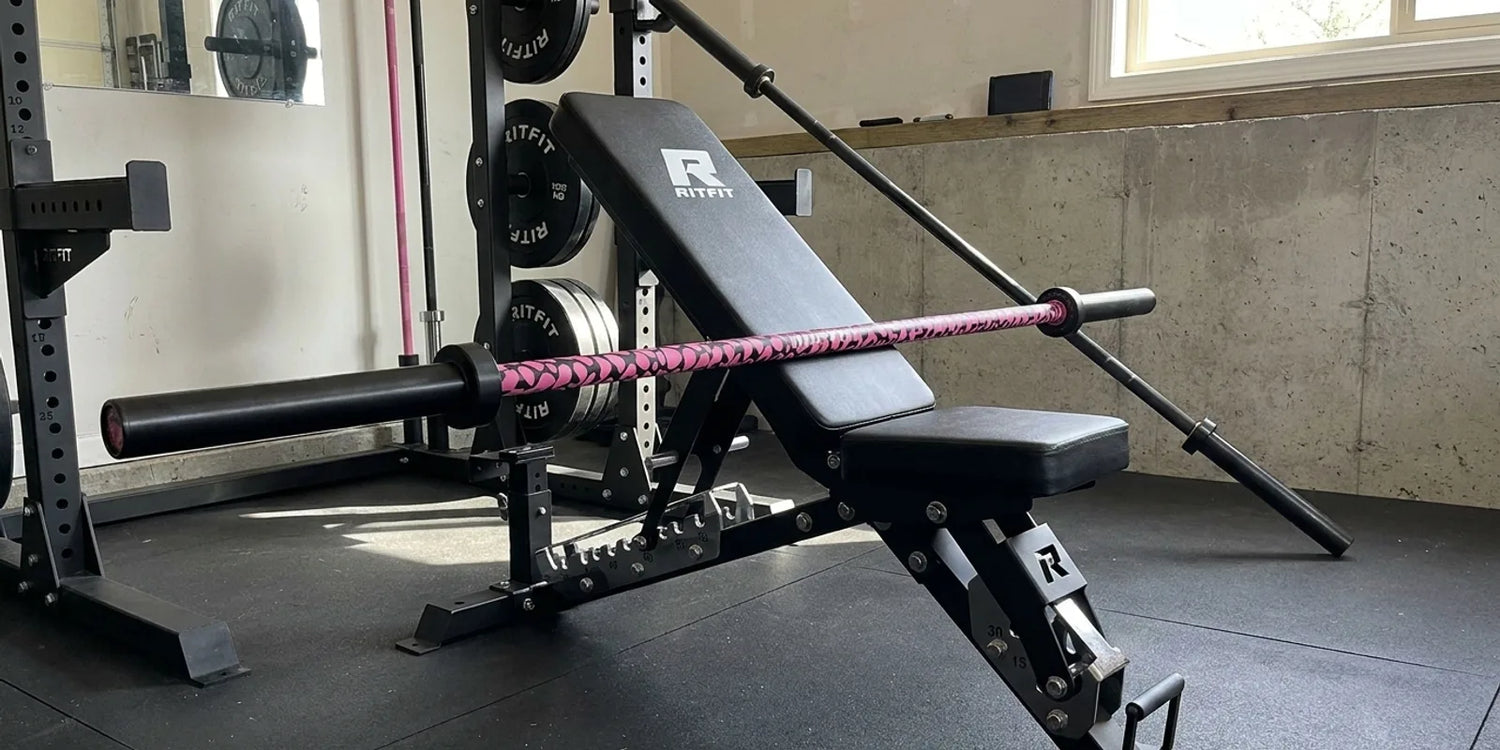
A 5 foot Olympic bar makes sense when you want full Olympic plate compatibility but train in a space-constrained environment where maneuvering a standard 7-foot barbell is impractical.
This guide explains dimensions, rackability limits, loading capacities, and safe exercise selection to help you optimize your compact training setup.
Quick Answer: A 5 foot Olympic bar is a 60-inch specialty barbell with standard 2-inch rotating sleeves designed specifically for compact home gyms and tight spaces. It allows lifters to use standard Olympic weight plates for bicep curls, rows, and floor presses without fitting standard 48-inch racks.
Key Takeaways
- Space-Saving Geometry: A 5 foot Olympic bar reduces overall length by over 24 inches compared to a standard barbell.
- Standard 2-Inch Plate Fit: The 50 mm rotating sleeves accept standard Olympic iron and bumper plates.
- Non-Rackable Shaft: With an inside collar distance of roughly 36 inches, it cannot rest safely on standard 48-inch power racks.
- Accessory Training Focus: It excels at freestanding movements like curls, bent-over rows, RDLs, and landmine presses.
- Progression Limits: Shorter loadable sleeves limit total plate capacity compared to full-length Olympic barbells.
What Is a 5 Foot Olympic Bar?
A 5 foot Olympic bar is a shortened barbell engineered with standard 2-inch rotating sleeves for small workout spaces. It measures exactly 60 inches from end to end while maintaining standard sleeve diameter for Olympic weight plates.
Lifters often choose short bars when navigating tight basement or garage corners. Comparing barbell types helps lifters understand key mechanical differences, such as exploring Olympic Bar vs Standard Bar for sleeve and bearing specifications.
Most 5-foot Olympic bars weigh between 25 and 30 pounds rather than the standard 44.1 pounds. You can review standard bar weights in our guide on How Much Does An Olympic Bar Weigh to log workouts accurately.
5 Foot vs 7 Foot Olympic Bar Differences
The primary differences between a 5-foot and a 7-foot barbell are overall length, rackability, and sleeve loading space. Standard 7-foot bars provide maximum load capacity for powerlifting, whereas 5-foot bars prioritize agility and clearance.
| Specification | 5 Foot Olympic Bar | 7 Foot Olympic Bar |
|---|---|---|
| Overall Length | 60 inches (152 cm) | 86 to 87 inches (218 to 220 cm) |
| Average Bar Weight | 25 to 30 lbs (11.3 to 13.6 kg) | 44.1 lbs (20 kg) / 33 lbs (15 kg) |
| Shaft Length (Inside Collars) | 36 to 38 inches (91 to 96 cm) | 51.5 to 52 inches (131 cm) |
| Rack Compatibility | Non-rackable on standard 48" cages | Fully rackable on all standard racks |
| Loadable Sleeve Length | 9.5 to 10.5 inches | 16.0 to 16.4 inches |
| Weight Capacity | 300 to 500 lbs | 700 to 1,500+ lbs |
| Primary Exercise Focus | Curls, rows, landmine, floor press | Back squats, bench press, deadlifts |
Comparison reflects standard commercial and home gym barbell manufacturing specifications.
You can discover full-length heavy-duty options across the RitFit lineup of Olympic Barbells and bundled Bars And Plates.
Is a 5 Foot Olympic Bar Rackable?
A 5 foot Olympic bar is not rackable on standard home gym power cages or squat stands. Standard power racks require at least 48 inches of shaft clearance, but a 5-foot bar has only 36 to 38 inches between collars.
Placing a short bar across wide J-hooks forces the rotating sleeves onto the supports, creating extreme tipping risks. For rack-based squats and heavy pressing, choose a full-size bar like the Ritfit 7ft Olympic Barbell Bar For General Weightlifting 500 700 1000lbs Capacity Options or the Ritfit Patriotic Star Olympic Bar 20kg.
"The standard bar length is a little over 7 feet, has 2-inch diameter sleeves for loading plates, and weighs 20kg. For home gym purposes, a 28.5 or 29mm bar will be the most durable and provide the best service over time."
Mark Rippetoe, Strength Coach and Author of Starting Strength (Starting Strength)
Best Exercises for a 5 Foot Olympic Bar
A 5 foot Olympic barbell works best for movements that do not require rack mounting. Its shorter length improves balance during freestanding lifts and accessory work.
- Standing Bicep Curls: The compact profile reduces rotational wrist strain while allowing incremental Olympic plate loading.
- Bent-Over & Pendlay Rows: Excellent for back development in rooms where wall clearance prevents full bar sweeps.
- Romanian Deadlifts: Provides direct posterior chain stimulation with Olympic plates while keeping the center of mass compact.
- Barbell Floor Press: Offers a safe, effective horizontal press without requiring a wide bench press rack.
- Landmine Rotations & Presses: Inserting one end into a landmine creates a versatile rotational training station.
Which Exercises Require Extra Caution With Short Barbells?
Certain compound lifts require caution or should be avoided entirely with a 5-foot barbell. Heavy back squats and wide-grip snatches are compromised by the narrow shaft and sleeve dimensions.
- Heavy Back Squats: Unracking without a narrow specialty stand requires cleaning the weight overhead, which is hazardous at heavy loads.
- Max-Weight Deadlifts: The 10-inch sleeve limits plate loading when using wide plates like Ritfit Fleck Bumper Plates 2 Inch Olympic Rubber Weight Plates.
- Olympic Snatches: Wide grip placement is physically impossible for most adult lifters on a 36-inch shaft.
When Does a 5 Foot Olympic Bar Make the Most Sense?
A 5 foot Olympic bar makes sense for small apartments, tight garage corners, or as a dedicated accessory bar. It allows lifters to train effectively without constantly clearing large open floor areas.
Biomechanical research indicates that equipment specificity dictates strength and movement outcomes across training programs.[1] Furthermore, resistance training loading research confirms that both moderate and heavier loads drive substantial muscle hypertrophy when training volume and effort are sufficient.[2]
How to Choose the Right Short Olympic Bar for Your Space
Select a 5-foot bar featuring true 2-inch rotating sleeves and a minimum load capacity of 300 pounds. Ensure the knurling offers a secure grip without causing hand abrasion during higher-rep accessory circuits.
Always clamp your plates securely using durable barbell collars such as the Ritfit Olympic Barbell Clamppair Of Two before lifting. Evidence reviews demonstrate that structured strength training maintains exceptional safety when equipment is properly secured and loaded.[3]
Applying systematic progressive overload protocols maximizes long-term hypertrophic adaptations while safeguarding joints and connective tissues.[4]
How to Build a Compact Home Gym Setup Around a Short Olympic Bar
Building an efficient compact gym around a 5-foot bar involves pairing it with slim plates, an adjustable bench, and vertical storage. Cast iron plates save sleeve space, allowing heavier loads in a compact profile.
Adding an adjustable bench expands your training into incline curls, seated presses, and chest-supported rows. Keep your workout floor safe and organized by storing your bar and plates vertically when not in use.
FAQs About 5 Foot Olympic Bars
Is a 5 foot Olympic bar good for a compact home gym?
Yes, a 5 foot Olympic bar is ideal for compact home gyms where space is limited. It allows you to use standard 2-inch Olympic plates for bicep curls, bent-over rows, Romanian deadlifts, floor presses, and landmine exercises without requiring the large 9-foot lateral clearance of a standard 7-foot barbell.
Can you bench press with a 5 foot Olympic bar?
You can perform floor presses or use narrow bench stands, but standard rack-mounted bench pressing is not recommended. Most 5-foot Olympic bars have an inside collar distance of 36 to 38 inches, making them too narrow to rack safely on standard 48-inch wide power racks or bench stations.
Is a 5 foot Olympic bar rackable?
Generally no, a 5 foot Olympic bar is not rackable on standard squat racks and power cages. Standard power racks require an inside collar spread of at least 48 inches. Because a 5-foot bar measures 60 inches total, its shaft cannot span standard rack uprights without placing the sleeves on J-hooks.
What exercises can you do with a 5 foot Olympic bar?
A 5 foot Olympic bar works best for standing bicep curls, upright rows, bent-over rows, Romanian deadlifts, floor presses, shrugs, overhead clean-and-presses, and landmine rotations. These movements do not require a wide rack setup and benefit directly from the agility and balance of a shorter barbell.
How much weight can a 5 foot Olympic bar hold?
Most high-quality 5 foot Olympic barbells are rated to hold between 300 and 500 pounds safely. However, actual loadability is typically limited by the 9.5 to 10.5 inch sleeve length, which accommodates fewer wide bumper plates than a full-size barbell during heavy lifting sessions.
What is the difference between a 5 foot and 7 foot Olympic bar?
The primary differences are overall length, bar weight, rackability, and sleeve loading capacity. A 7-foot bar weighs 44.1 pounds and fits standard racks for heavy squats and bench presses. A 5-foot bar weighs 25 to 30 pounds and is optimized for space savings and freestanding accessory work.
Should beginners buy a 5 foot Olympic bar or a 7 foot Olympic bar?
Beginners with adequate floor space and a power rack should choose a 7-foot Olympic bar as their primary training foundation. Lifters with severe space restrictions or those wanting a secondary bar for arm and back accessory exercises will benefit substantially from starting with a 5-foot Olympic barbell.
Can a 5 foot Olympic bar fit Olympic weight plates?
Yes, a 5 foot Olympic barbell is manufactured with standard 2-inch diameter rotating sleeves designed specifically to fit standard Olympic iron plates, urethane plates, and rubber bumper plates. Always verify your plate inner diameter measures 2 inches before purchasing to ensure full compatibility with the bar.
Conclusion
A 5 foot Olympic bar is a space-efficient training tool that provides standard Olympic plate compatibility in compact home gyms. It excels across curls, rows, floor presses, and landmine movements while maintaining manageable footprint requirements.
To upgrade your home lifting setup with specialized gear and exclusive savings, explore the RitFit discount guide for the best equipment bundles.
Disclaimer
This article is for educational purposes only and does not replace professional medical or training advice. Always inspect equipment prior to use, secure plates with safety collars, and consult a qualified fitness professional before starting any new exercise routine.
References
1. Haugen ME, Vårvik FT, Larsen S, Haugen AS, van den Tillaar R, Bjørnsen T. Effect of free weight vs machine based strength training on maximal strength, hypertrophy and jump performance: a systematic review and meta analysis. BMC Sports Sci Med Rehabil. 2023;15:103. doi:10.1186/s13018-023-00713-4 PMCID: PMC10444397
2. Schoenfeld BJ, Grgic J, Van Every DW, Plotkin DL. Loading recommendations for muscle strength, hypertrophy, and local endurance: a re examination of the repetition continuum. Sports. 2021;9(2):32. doi:10.3390/sports9020032 PMCID: PMC7927075
3. Serafim TT, de Oliveira ES, Maffulli N, Migliorini F, Okubo R. Which resistance training is safest to practice? A systematic review. J Orthop Surg Res. 2023;18(1):296. doi:10.1186/s13018-023-03781-x PMCID: PMC10123992
4. Krzysztofik M, Wilk M, Wojdała G, Gołaś A. Maximizing muscle hypertrophy: a systematic review of advanced resistance training techniques and methods. Int J Environ Res Public Health. 2019;16(24):4897. doi:10.3390/ijerph16244897 PMCID: PMC6950543





