








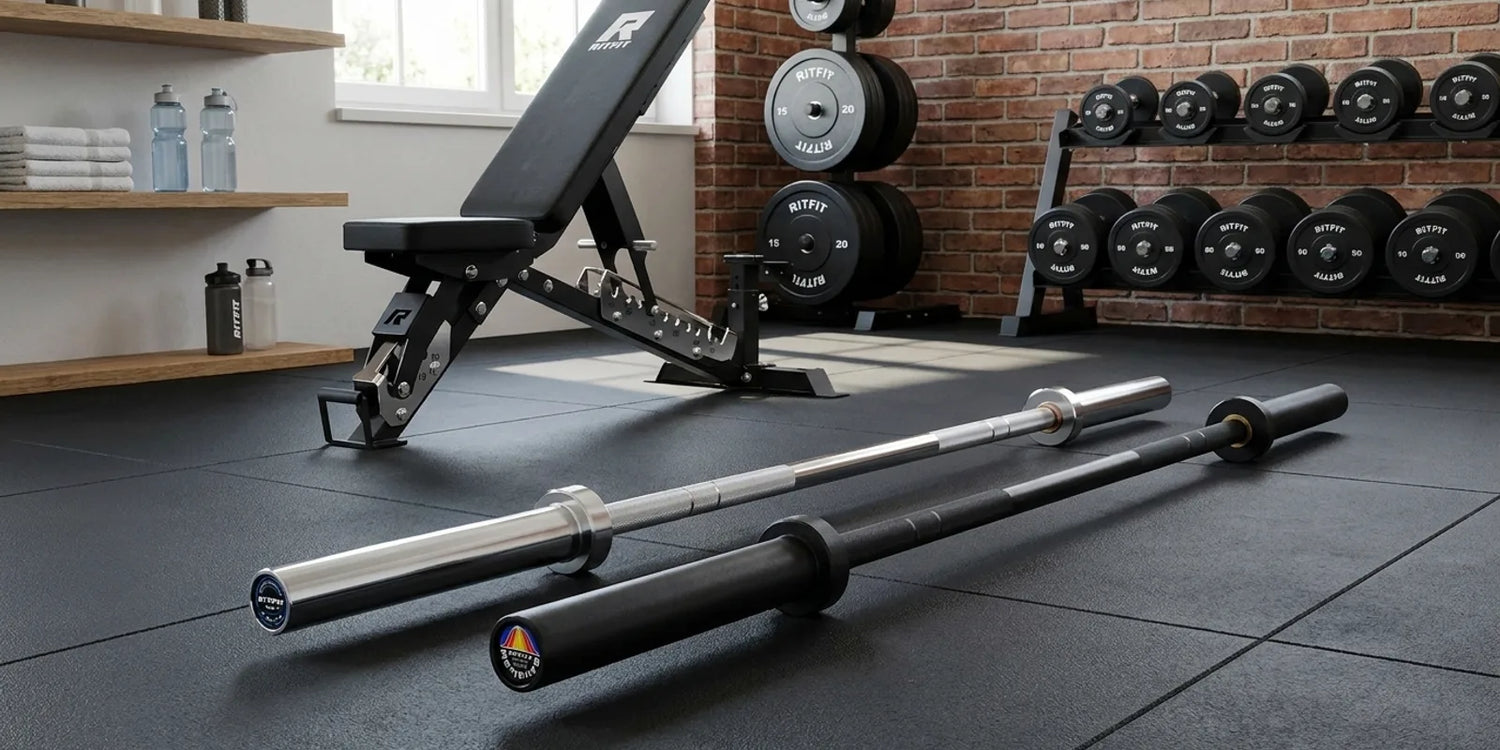
An Olympic barbell offers the durability, load capacity, and compatibility required for serious home gym strength training. Understanding the structural differences between an Olympic bar and a standard bar ensures you invest in the right weightlifting setup.
This guide breaks down sleeve dimensions, shaft diameter, weight capacity, rotation mechanisms, and plate compatibility to help you build the ideal home lifting station.
Quick Answer: An Olympic barbell is the superior choice for most home gyms because it features standard 2-inch rotating sleeves, supports heavier loads above 500 lbs, and fits modern power racks and bumper plates. Standard barbells with 1-inch fixed sleeves only suit light casual lifting, tight spaces, or existing 1-inch plate collections.
Key Takeaways
- Sleeve Compatibility: Olympic barbells feature 2-inch rotating sleeves that accept Olympic plates, whereas standard bars use 1-inch fixed sleeves.
- Weight Capacity: Olympic bars support between 500 and 1,000+ lbs, making them essential for progressive overload and heavy compound lifts.
- Wrist Protection: Rotating sleeves equipped with bushings or bearings reduce rotational torque on wrists and elbows during dynamic barbell lifts.
- Rack Dimensions: Full-size 7-foot Olympic bars fit standard 48-inch power cages and squat stands, while shorter standard bars may not rack properly.
- Long-Term Value: Starting with an Olympic barbell prevents costly plate replacements and offers superior equipment resale value over time.
What Is the Difference Between an Olympic Bar and a Standard Bar?
The primary difference between an Olympic bar and a standard bar is the sleeve diameter, with Olympic bars using 2-inch sleeves and standard bars using 1-inch sleeves. This fundamental distinction dictates plate compatibility, bar weight, total load capacity, and overall rack compatibility.
Olympic barbells are engineered for heavy strength training, powerlifting, and Olympic weightlifting movements. Standard barbells are designed as economical alternatives for general fitness, bodyweight-level lifting, and smaller workout footprints.
Structured resistance training promotes substantial neuromuscular and skeletal adaptations across all fitness levels.[1] Equipping your training space with versatile Olympic barbells ensures your home gym can support continuous progressive overload.
How Do Olympic and Standard Barbells Compare in Specifications?
Olympic barbells provide greater overall length, higher tensile strength, and significantly higher weight capacity than standard barbells. Standard bars are lighter and shorter, which makes them easier to handle for beginners but limits long-term strength progression.
| Specification | Olympic Barbell | Standard Barbell |
|---|---|---|
| Sleeve Diameter | 2 inches (50 mm) | 1 inch (25.4 mm) |
| Shaft Diameter | 28 mm to 29 mm | 25 mm (1 inch) |
| Standard Bar Weight | 20 kg (44 lbs) men / 15 kg (33 lbs) women | 10 lbs to 25 lbs (varies) |
| Overall Length | 7.2 ft (86 inches) | 5 ft to 6 ft (60 to 72 inches) |
| Weight Capacity | 500 lbs to 1,500+ lbs | 150 lbs to 300 lbs |
| Sleeve Rotation | Bushings or needle bearings | Fixed (no rotation) |
| Plate Type | 2-inch Olympic and bumper plates | 1-inch standard cast iron plates |
| Rack Compatibility | Standard power racks and squat stands | Narrow benches or freestanding uprights |
Comparison data based on standard manufacturing specifications and commercial gym equipment benchmarks.
Lifters seeking detailed dimensions for standard benching bars can consult our guide on how much a bench press barbell weighs. You can also explore whether are all bench bars 45 pounds to ensure precise loading on bench day.
Why Does Sleeve Rotation Matter for Lifting Safety?
Sleeve rotation allows weight plates to spin independently of the barbell shaft, significantly reducing rotational torque on your wrists, forearms, and elbows. This rotation is crucial for protecting joint health during fast compound lifts such as cleans, snatches, and overhead presses.
Olympic barbells utilize internal bronze bushings or high-precision needle bearings to deliver a controlled spin. Standard bars lack internal bearings, meaning any spinning plate directly twists the lifter's grip and joints during dynamic movements.
Biomechanical studies emphasize that movement coordination and joint safety heavily depend on the mechanics of your lifting apparatus.[2]
"The standard bar length is a little over 7 feet, has 2-inch diameter sleeves for loading the plates on, and weighs 20kg. For home gym purposes, a 28.5 or 29mm bar will be the most durable and provide the best service over time."
Mark Rippetoe, Strength Coach and Author of Starting Strength, How to Build a Home Gym
How Does Plate Compatibility Impact Your Home Gym Budget?
Choosing a barbell format permanently determines your weight plate ecosystem because 2-inch Olympic plates and 1-inch standard plates are not interchangeable. Investing in Olympic plates from the start prevents the expensive need to replace your entire plate collection when upgrading equipment.
Standard 1-inch plates cannot slide onto 2-inch Olympic sleeves without cumbersome sleeve adapters that often shift during training. Olympic bumper plates feature uniform outer diameters that distribute impact forces evenly across gym flooring during heavy deadlifts.
Long-term training adaptations require matching equipment versatility with structured progression strategies.[3] Browse complete RitFit barbells and weight plates to secure compatible gear from day one.
Which Barbell Is Best for Your Home Gym Training Goals?
An Olympic barbell is best for lifters seeking progressive strength gains, heavy squats, deadlifts, and compatibility with standard power racks. A standard barbell is suitable only for lifters focused on casual toning, isolated arm exercises, or very compact living spaces.
- Choose Olympic if: You plan to use a power cage, lift over 200 lbs, perform Olympic lifts, or build a long-term garage gym setup.
- Choose Standard if: You have extreme spatial limits, already own 1-inch plates, or solely require light resistance work under 150 lbs.
For complete space planning and budgeting assistance, check our home gym equipment guide under 2000 and the comprehensive home gym guide.
What Are the Best RitFit Olympic Barbells and Plates?
RitFit offers precision-engineered Olympic barbells and durable bumper plates tailored for home gym athletes of all experience levels. These options range from versatile 15kg training bars to heavy-duty 7-foot bars rated up to 1,000 lbs.
- RitFit 7ft Olympic Barbell Bar: Built with medium knurling, dual bushings, and load capacities ranging from 500 to 1,000 lbs for powerlifting and daily training.
- RitFit 15kg Pink Leopard Olympic Training Barbell: A 25mm shaft training bar offering manageable starting weight for technique practice and overhead movements.
- RitFit Patriotic Star Olympic Bar 20kg: A full-size 20kg barbell featuring premium knurl marks and eye-catching Cerakote-finished styling.
- RitFit Patriotic Color Bumper Plates: High-density virgin rubber bumper plates designed with 2-inch stainless steel inserts to protect bars and flooring.
- RitFit Olympic Barbell Clamps: Quick-locking collar clamps providing secure plate retention on all 2-inch Olympic barbell sleeves.
If you want top-tier value on a dedicated strength station, read our review of the best affordable Olympic barbell for home gyms or pair your barbell with the M1 Multi Functional Home Gym Smith Machine.
FAQs About Olympic and Standard Barbells
Is an Olympic bar better than a standard bar for a home gym?
Yes. An Olympic bar is usually better for a serious home gym because it fits Olympic plates, supports heavier training, and works with most modern racks. A standard bar still makes sense for light casual training, compact rooms, or users who already own 1 inch plates.
What is the biggest difference between an Olympic bar and a standard bar?
The biggest difference is sleeve diameter. Olympic bars use 2 inch sleeves for Olympic plates, while standard bars use 1 inch sleeves for standard plates. This affects plate compatibility, collars, rack setup, training capacity, and whether your equipment can grow with your strength goals.
Can beginners use an Olympic barbell?
Yes. Beginners can use an Olympic barbell if they start with manageable weight and learn correct setup. A 15kg Olympic training bar can be easier to handle than a 20kg bar, while still keeping the lifter inside the Olympic plate ecosystem.
Should I buy a standard barbell if I already own standard plates?
Yes. A standard barbell can be a practical choice if you already own 1 inch plates and only plan light to moderate training. If you want heavier lifting, bumper plates, rack compatibility, or long term progression, moving to Olympic equipment is usually cleaner.
How much space do I need for an Olympic barbell?
Most home gyms need at least 8 ft of clear width for a full size Olympic bar. This gives room to load plates, unrack safely, and move without hitting walls or storage. Smaller rooms may require careful layout planning before purchase.
Does an Olympic bar require Olympic plates?
Yes. An Olympic bar requires plates with 2 inch center holes. Standard plates with 1 inch holes will not fit Olympic sleeves. Adapters exist for some situations, but they are not the best solution for stable, heavy, or long term strength training.
Which RitFit barbell is best for a lighter Olympic training setup?
The RitFit 15kg Pink Leopard Olympic Training Barbell is a strong option for lifters who want a lighter Olympic setup. It keeps the user in the Olympic plate system while offering a lower starting bar weight than many 20kg bars.
Are Olympic bumper plates worth it for home gyms?
Yes. Olympic bumper plates are worth it if you want a more versatile home gym setup. They fit Olympic sleeves, support deadlifts and floor based lifting, and pair well with Olympic bars, racks, and future equipment upgrades.
Conclusion
Selecting between an Olympic bar and a standard bar establishes the foundation of your home strength training journey. Investing in an Olympic barbell provides superior weight capacity, joint-friendly sleeve rotation, and seamless integration with modern racks and bumper plates.
Evaluate your training ambitions and explore the RitFit discount guide to assemble a durable, high-performance lifting setup today.
Disclaimer
This article is for informational and educational purposes only and does not substitute for professional fitness coaching or medical advice. Always inspect your lifting equipment, adhere to manufacturer weight ratings, and use proper safety collars and spotters during heavy lifts.[4]
References
1. Mcleod JC, Currier BS, Lowisz CV, Phillips SM. The influence of resistance exercise training prescription variables on skeletal muscle mass, strength, and physical function in healthy adults: an umbrella review. J Sport Health Sci. 2024;13(1):47-60. doi:10.1016/j.jshs.2023.06.005 PMCID: PMC10828784
2. Haugen ME, Vårvik FT, Larsen S, Haugen AS, van den Tillaar R, Bjørnsen T. Effect of free-weight vs. machine-based strength training on maximal strength, hypertrophy and jump performance: a systematic review and meta-analysis. BMC Sports Sci Med Rehabil. 2023;15(1):103. doi:10.1186/s13018-023-00713-4 PMCID: PMC10433604
3. Wirth K, Keiner M, Hartmann H, Sander A, Mickel C. Effect of 8 weeks of free-weight and machine-based strength training on strength and power performance. J Hum Kinet. 2016;53:201-210. doi:10.1515/hukin-2016-0023 PMCID: PMC5260527
4. Serafim TT, de Oliveira ES, Maffulli N, Migliorini F, Okubo R. Which resistance training is safest to practice? A systematic review. J Orthop Surg Res. 2023;18(1):296. doi:10.1186/s13018-023-03781-x PMCID: PMC10103522





