








Selecting the best weight bench for small spaces requires balancing exercise versatility, structural stability, and post-workout storage footprint. Choosing the right bench format ensures consistent home training without turning your living area into a cluttered obstacle course.
This guide compares adjustable, flat, and foldable benches across stability, exercise selection, and spatial efficiency. Understanding these critical trade-offs helps you build a high-performance training zone in any compact room.
Quick Answer: For small spaces, an adjustable bench is the best overall choice because it offers flat, incline, and upright positions without occupying permanent dedicated floor area. Heavy lifters prioritizing rock-solid rigidity should choose a flat bench, whereas studio apartment lifters requiring rapid post-workout storage benefit most from a reinforced foldable bench.
Key Takeaways
- Best overall versatility: An adjustable weight bench provides incline, flat, and seated angles that unlock dozens of dumbbell exercises in compact home gyms.
- Maximum pressing stability: A dedicated flat bench delivers zero frame play and optimal load distribution for heavy barbell and dumbbell pressing.
- Space saving storage: A foldable bench reduces storage footprint by over fifty percent while offering reliable frame locking mechanisms for apartment workouts.
- Essential safety criteria: Bench load capacities must combine user body weight and working barbell or dumbbell resistance with a safety buffer.
- Setup and clearance: Keeping at least two feet of open clearance around your bench ensures safe dumbbell handling and emergency bailing paths.
How Do Adjustable, Flat, and Foldable Benches Compare?
Each bench category provides distinct structural advantages tailored to specific room dimensions, training styles, and storage requirements. Comparing their operational footprints and load ratings helps clarify which configuration best serves your home setup.
| Bench Category | Primary Strength | Key Limitation | Typical Footprint | Ideal User Profile |
|---|---|---|---|---|
| Adjustable Bench | Flat, incline, and upright positions | Heavier frame and moving pivot points | 50" L × 20" W | Full-body dumbbell and bodybuilding workouts |
| Flat Bench | Unmatched structural rigidity and zero pad gap | Fixed horizontal angle only | 48" L × 18" W | Heavy powerlifting and barbell rack pressing |
| Foldable Bench | Collapses flat for closet or under-bed storage | Requires pin checks before heavy lifts | 50" L × 16" W (Folded: 10" H) | Apartments and multi-use living spaces |
Comparison metrics reflect standard home gym bench specifications and average residential floor clearance guidelines.
Why Choose an Adjustable Weight Bench for Small Spaces?
An adjustable weight bench delivers the highest exercise versatility per square foot by providing multiple backrest and seat angles. This capability allows you to target different muscle divisions without purchasing separate specialized benches.
Research examining pressing angles demonstrates that altering backrest incline recruits upper pectoral motor units distinct from flat horizontal pressing.[1] This angular variation enhances balanced muscular development across comprehensive home lifting routines.
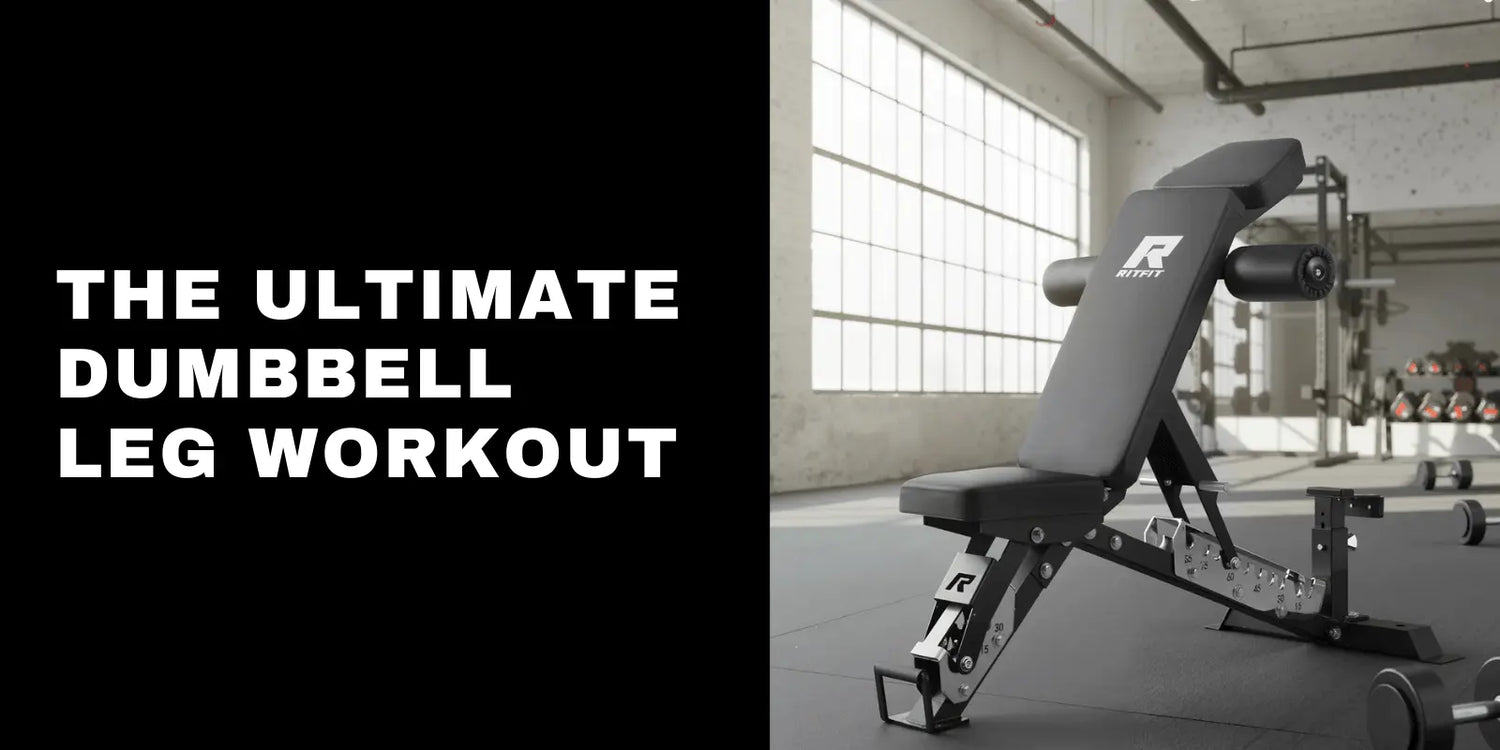
Lifting with the RitFit Gator Adjustable Weight Bench allows smooth transitions between seated overhead presses, incline dumbbell rows, and flat chest presses. You can browse the complete RitFit weight bench collection to evaluate heavy-duty ladder-style adjustment frames built for tight home training quarters.
"They're good for everything from chest presses, dumbbell bench presses, incline bench supersets, skull crushers, glute bridges, incline rows to hit your back, ab moves, quad and leg moves like split squats, and more biceps moves than you can imagine."
, Ebenezer Samuel, C.S.C.S., Fitness Director at Men's Health
When Is a Flat Weight Bench the Best Choice?
A flat weight bench is the premier choice for strength athletes who prioritize maximum frame rigidity and an unbroken support pad. Because it eliminates hinge mechanisms, a welded flat frame eliminates mechanical wobble during heavy barbell loads.
Clinical resistance training reviews emphasize that structural stability and controlled lifting mechanics are vital for minimizing musculoskeletal strain.[2] A uniform support surface provides dependable shoulder blade retraction and solid foot drive during demanding sets.
Integrating a flat bench inside heavy-duty power racks creates a dedicated pressing station for bench presses and hip thrusts. When paired with durable RitFit free weights, a flat bench provides a minimalist strength solution that never requires mechanical maintenance.
How Safe and Practical Is a Foldable Weight Bench?
A foldable weight bench is practical and safe for compact living areas when constructed with reinforced steel tubing and positive-locking safety pins. Its ability to fold flat within seconds transforms any shared living area back into an open room immediately after training.
Exercise adherence literature indicates that training convenience and accessible home environments directly enhance long-term workout consistency.[3] Having equipment that stores effortlessly removes friction from daily fitness habits in shared households.
The RitFit Foldable Weight Bench provides multi-angle backrest positions alongside rapid fold-away locking pins for apartment dwellers. Reviewing independent test feedback on the RitFit 1300lb Adjustable Weight Bench helps confirm how compact frames maintain dependable load stability.
What Should You Look for Before Buying a Compact Bench?
Selecting a compact bench requires evaluating total load capacity, frame dimensions, pad density, and flooring integration before making a purchase. Calculating these dimensions prevents purchasing a bench that overwhelms your usable training space.
- Total Weight Capacity: Verify that the bench rating exceeds your body weight combined with your maximum working dumbbell or barbell load.
- Pad Density and Width: Opt for firm 2.5-inch high-density padding that supports the upper thoracic spine without causing shoulder impingement.
- Flooring Protection: Position your bench atop protective rubber gym flooring mats to prevent frame slippage and safeguard delicate indoor floors.
- Free Weight Compatibility: Pair your setup with compact adjustable dumbbells or durable hex rubber dumbbells to maximize workout versatility within tight floor boundaries.
Always measure your open floor space to confirm you have ample room to adjust backrest angles and maneuver free weights safely.
How Can You Maximize Training Safety in Tight Areas?
Training safely in tight spaces requires maintaining strict spatial clearance, executing pre-lift hardware checks, and adhering to progressive load principles. Establishing disciplined layout protocols prevents accidental collisions with surrounding furniture and walls.
Systematic reviews on resistance training safety indicate that structured lifting environments significantly reduce accidental training injuries compared to unguided formats.[4] Maintaining clear surroundings and locking all pins prior to each set guarantees a dependable training session.
- Maintain Two Feet of Clearance: Ensure open space around all sides of the bench for smooth dumbbell pick-up and emergency drop pathways.
- Verify Pin Engagement: Double-check that adjustment ladders and pop pins are fully seated before applying heavy loads.
- Store Vertically with Care: Anchor folded benches securely against walls to prevent accidental tip-overs in busy households.
FAQs About Weight Benches for Small Spaces
What is the best small exercise bench for a home gym?
An adjustable bench is the best overall small exercise bench for home gyms because it combines flat, incline, and seated positions into a single compact footprint. This multi angle design supports pressing, seated shoulder work, and chest supported rows while minimizing the need for separate specialized workout stations.
Is a foldable weight bench safe for heavy lifting?
A foldable weight bench is safe for heavy lifting when it features heavy gauge steel tubing, solid locking pins, and a verified weight rating above your combined body and barbell load. You should always inspect hinge connections and ensure level floor placement before attempting high load sets in small rooms.
How much clearance space is needed around a workout bench?
You should maintain at least two feet of clear perimeter space around all sides of your workout bench to ensure safe dumbbell handling and unhindered movement. This buffer provides sufficient room for setting down heavy weights, stepping around the frame, and executing emergency bails during demanding home training sessions.
Which bench type is best for building upper chest muscle?
An adjustable bench is the superior choice for upper chest development because adjustable backrest angles target the clavicular pectoralis head through incline pressing variations. Flat benches remain highly effective for overall sternal chest development, but incline angles provide specific mechanical stimulus essential for complete upper body hypertrophy.
How does pad thickness affect bench pressing comfort and stability?
Pad thickness between two and three inches with high density foam padding delivers the ideal balance of shoulder blade comfort and solid lifting support. Overly soft foam compresses under heavy loads and creates joint instability, while excessively thin padding causes uncomfortable pressure on the upper spine and hips during heavy sets.
Can beginners achieve a full workout routine with only a flat bench?
Beginners can achieve an effective full body strength workout using a flat bench paired with basic free weights or dumbbells. A flat bench supports flat presses, single arm rows, step ups, and seated arm work, though an adjustable model allows easier progression into varied pressing angles over time.
Conclusion
Choosing the best weight bench for small spaces depends on whether your priority is multi-angle versatility, heavy lifting stability, or compact storage. Selecting the model that aligns with your weekly routine ensures long-term home gym consistency.
Explore exclusive seasonal promotions and equipment savings through the RitFit discount guide before finalizing your home gym setup.
Disclaimer
This article provides general fitness information and does not constitute personalized medical or physical therapy advice. Consult a certified medical professional or strength coach before beginning any intense resistance training program.
References
1. Chaves SFN, Rocha-Junior VA, Encarnacao IGA, et al. Effects of horizontal and incline bench press on neuromuscular adaptations in untrained young men. Int J Exerc Sci. 2020;13(6):859-872. PMC7739565
2. Kawa O, Zywiec W, Czyzewski B, et al. Most common injuries in resistance training: mechanisms, therapeutic interventions, and preventive strategies. Cureus. 2025;17(10):e94035. doi:10.7759/cureus.94035
3. Collado-Mateo D, Lavin-Perez AM, Penacoba C, et al. Key factors associated with adherence to physical exercise in patients with chronic diseases and older adults: an umbrella review. Int J Environ Res Public Health. 2021;18(4):2023. doi:10.3390/ijerph18042023
4. Serafim TT, de Oliveira ES, Maffulli N, Migliorini F, Okubo R. Which resistance training is safest to practice? A systematic review. J Orthop Surg Res. 2023;18:296. doi:10.1186/s13018-023-03781-x





