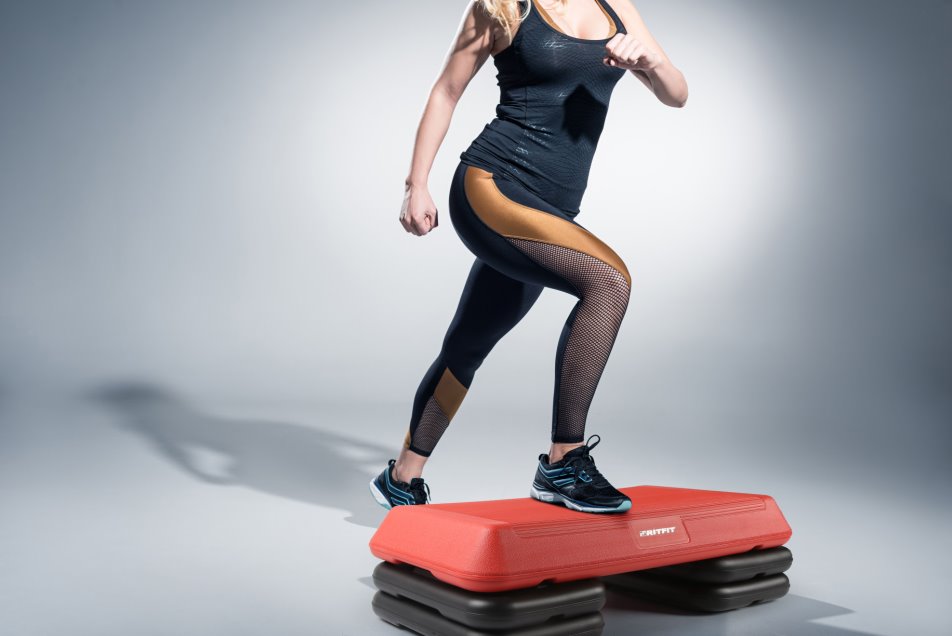
A step workout is a cardio and strength routine that uses an elevated platform to train your legs, glutes, core, coordination, and endurance at home. You can make it easier or harder by changing the step height, pace, work time, rest time, and total rounds.
This guide shows 6 aerobic step exercises, beginner friendly circuits, safety tips, and simple ways to progress. Start low, move with control, and choose step based options before adding jumps.
Table of Contents
Key Takeaways
- A step workout is a scalable home cardio routine that uses an elevated platform for lower body strength, coordination, and conditioning.
- Beginners should start with a low step, slower tempo, and step based options before adding speed or jumps.
- The main muscles worked are the quads, glutes, hamstrings, calves, shoulders, triceps, and core.
- Fat loss comes from consistent weekly activity, smart nutrition, and progressive training volume, not from one single exercise.
- A stable step platform, non slip flooring, supportive shoes, and enough floor space make the workout safer and easier to repeat.
What Is a Step Workout?
A step workout is a training session built around stepping, climbing, jumping, or bracing on a raised platform. It combines aerobic movement with simple strength patterns, which makes it useful for home cardio, leg training, and full body conditioning.
Most step workouts use repeated movements such as step ups, lateral steps, mountain climbers, bridges, and plank variations. Research involving bench step aerobics shows that this style of exercise can create meaningful cardiorespiratory demand when programmed with enough intensity and duration.[1]
Benefits of Aerobic Step Workouts
Aerobic step workouts are useful because they raise your heart rate while training the lower body through a controlled range of motion. They are especially practical for people who want a compact home cardio option without needing a treadmill or large machine.
- Cardio endurance: Continuous stepping helps you build work capacity and stay active for longer sessions.
- Lower body strength: Step ups and lateral step ups train the quads, glutes, hamstrings, and calves.
- Coordination: Repeated foot placement teaches rhythm, balance, and body control.
- Calorie burn: Aerobic exercise can support weight management when weekly volume and nutrition are consistent.[2]
- Small space training: One platform can support cardio intervals, core work, glute training, and modified bodyweight exercises.
How to Choose the Right Step Height
Choose a step height that lets your full foot land securely while your knee stays aligned with your toes. A lower height is better for beginners, faster intervals, knee sensitive users, and anyone still learning balance.
- Beginner height: Start low enough that each rep feels stable and controlled.
- Intermediate height: Increase height only after your foot placement, knee tracking, and step down control are consistent.
- Advanced height: Use a taller platform for slower strength focused work, not for rushed reps.
- Impact rule: If your knees, ankles, hips, or lower back feel irritated, reduce height before changing anything else.
What You Need for a Step Workout
You need a stable platform, supportive shoes, and enough open floor space to step in every direction without twisting or slipping. A dedicated aerobic step platform is the best option because it is built for repeated foot contact and adjustable workout intensity.
- Training surface: Use home gym flooring mats if your workout area feels slick or hard.
- Platform option: A sturdy plyo box can work for some step up variations, but it should not wobble or slide.
- Progression load: Add hex rubber dumbbells only after bodyweight step ups feel stable.
- Home gym expansion: Browse home gym equipment if you want to pair cardio work with strength training.
How to Warm Up and Work Out
Warm up before a step workout to prepare your joints, raise your body temperature, and reduce sloppy first round movement. Use 3 to 5 minutes of marching, easy step ups, arm swings, and gentle mobility before starting the main circuit.
- Warm up: March in place, step up slowly, swing your arms, and practice the first exercise at an easy pace.
- Main circuit: Do each exercise for 50 seconds, then rest for 10 seconds.
- Beginner option: Do each exercise for 30 seconds, then rest for 20 to 30 seconds.
- Total rounds: Complete 2 to 3 rounds if you are new, or 3 to 5 rounds if your form stays strong.
- Cool down: Walk slowly and stretch your calves, quads, hamstrings, hip flexors, and glutes.
6 Step Platform Exercises
These 6 step platform exercises train cardio, lower body strength, core stability, and upper body support. Use the easiest version first, then increase speed, height, resistance, or rounds one at a time.
1. Alternating Basic Step Up
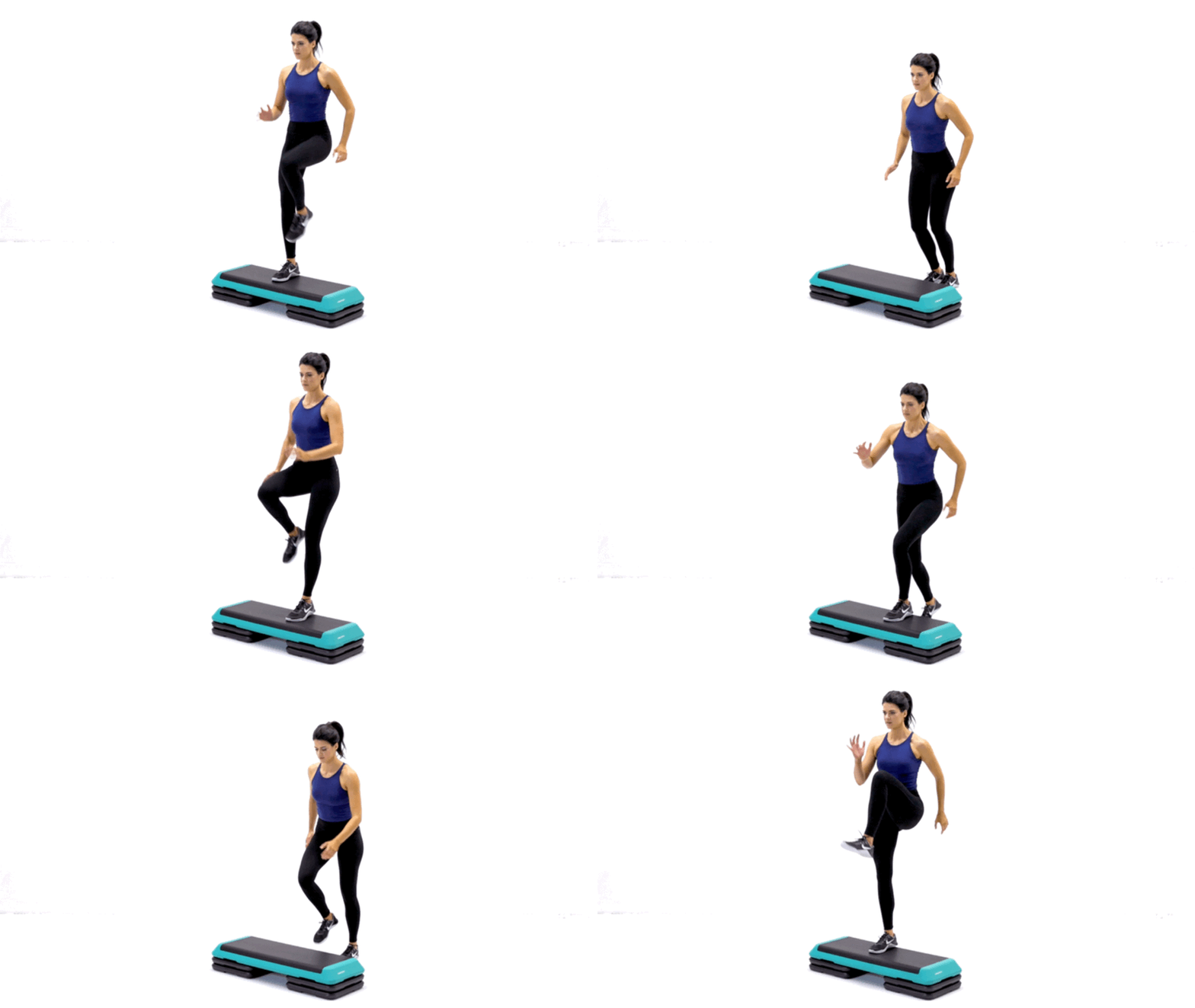
Alternating basic step ups are the best starting move because they teach safe foot placement and controlled lower body rhythm.
- Muscles worked: Quads, glutes, hamstrings, calves, and core.
- How to do it: Stand facing the step, place your full right foot on the platform, press through your heel, and bring the left foot up to meet it.
- Return: Step down with control, then switch the lead leg every few reps.
- Form tip: Keep your chest tall and your knee tracking in the same direction as your toes.
- Make it easier: Use a lower step and slow the tempo.
- Make it harder: Hold light dumbbells or increase pace only when your balance is consistent.
2. Incline Mountain Climbers
Incline mountain climbers use the step to make the plank angle more accessible while still challenging the shoulders, hips, and core.

- Muscles worked: Shoulders, chest, triceps, abs, obliques, hip flexors, and quads.
- How to do it: Place your hands on the step, walk your feet back into a plank, and brace your core.
- Movement: Drive one knee toward your chest, return it, then alternate sides at a controlled pace.
- Form tip: Keep your shoulders over your wrists and avoid letting your hips sag.
- Make it easier: Step each foot forward instead of hopping.
- Make it harder: Move faster while keeping your hips steady and your breathing controlled.
3. Alternating Lateral Step Up
Alternating lateral step ups train side to side control and help your glutes work harder than a straight forward step up.

- Muscles worked: Glutes, quads, hamstrings, calves, hips, and core.
- How to do it: Stand beside the step, place your closest foot fully on the platform, and press through the heel to stand tall.
- Return: Tap the trail foot lightly, step back down with control, then repeat before switching sides.
- Form tip: Keep your chest up and do not let the working knee collapse inward.
- Make it easier: Use a lower step and pause between reps.
- Make it harder: Add light dumbbells or a slower lowering phase.
4. Elevated Glute Bridges
Elevated glute bridges use the step to increase the glute and hamstring demand while keeping the movement low impact.

- Muscles worked: Glutes, hamstrings, core, and lower back stabilizers.
- How to do it: Lie on your back with your knees bent and your heels resting on the edge of the step.
- Movement: Press through your heels, lift your hips until your shoulders, hips, and knees form a straight line, then lower with control.
- Form tip: Squeeze your glutes at the top without over arching your lower back.
- Make it easier: Move your hips closer to the step and use a smaller range of motion.
- Make it harder: Try single leg bridges after standard reps feel stable.
5. Step Platform Burpee
Step platform burpees are a high intensity option, so beginners should use the step back version before adding jumps.

- Muscles worked: Full body, including legs, glutes, chest, shoulders, triceps, and core.
- How to do it: Stand facing the step, squat slightly, and step or jump both feet onto the platform.
- Movement: Step or jump down, place your hands on the step, move your feet back to plank, then return to standing.
- Form tip: Land softly and stop jumping when your knees or ankles feel uncontrolled.
- Make it easier: Step up, step down, and step back to plank without jumping.
- Make it harder: Add a push up only if your plank stays strong.
6. Plank Up Downs
Plank up downs train your abs, shoulders, and triceps while the step changes the angle and adds variety to core work.

- Muscles worked: Abs, obliques, shoulders, triceps, chest, and quads.
- How to do it: Start in a forearm plank with your elbows on the step and your feet extended behind you.
- Movement: Press one hand onto the step, then the other, and return to your forearms with control.
- Form tip: Keep your hips as still as possible and widen your feet if you wobble.
- Make it easier: Perform the movement from your knees.
- Make it harder: Slow each rep and alternate the lead arm every repetition.
Sample Step Workout Circuits
Use these circuits as starting points, then adjust work time, rest time, step height, and total rounds based on your fitness level. Aerobic and resistance training can both support body composition goals, so step workouts pair well with strength sessions when recovery is managed well.[3]
Beginner Fat Burn Circuit
Do 30 seconds of work and 30 seconds of rest for each exercise, then complete 2 total rounds.
- Best for: New exercisers, low impact cardio, and learning technique.
- Step height: Keep the platform low and avoid jumping.
- Goal: Finish with steady breathing and clean reps.
Intermediate Full Body Toning Circuit
Do 40 to 50 seconds of work and 10 to 20 seconds of rest for each exercise, then complete 3 to 4 rounds.
- Best for: Users who already feel stable stepping in multiple directions.
- Step height: Use a moderate height that keeps your knees controlled.
- Goal: Maintain a steady pace without losing form.
Advanced HIIT Step Session
Do 45 to 50 seconds of work and 10 to 15 seconds of rest for each exercise, then complete 3 to 5 rounds.
- Best for: Trained users who can handle faster transitions and higher fatigue.
- Step height: Increase height only if landings stay quiet and controlled.
- Goal: Push intensity without turning every rep into a jump.
30 Minute Step Aerobics Workout Video
This follow along video can help you practice step rhythm after you understand the basic movements above. Keep the platform low, reduce jumps, and pause the workout whenever your form starts to break.
- Warm up: Use easy stepping and arm movement before the faster combinations begin.
- Intensity: Reduce tempo if you cannot speak a short sentence during most of the session.
- Modification: Replace jumps with step based options whenever your knees, ankles, or back feel stressed.
Tips to Progress Safely
Progress your step workout by changing only one variable at a time. The safest order is usually workout time, rounds, pace, resistance, then step height.
- Add time first: Move from 12 minutes to 18 minutes before making the workout faster.
- Add rounds second: Add one extra round only when your final round still looks clean.
- Add pace carefully: Speed should never cause sloppy foot placement.
- Add resistance later: Use light dumbbells only for stable step up variations.
- Add height last: A higher step increases joint demand, so treat it as an advanced progression.
- Build a fuller home setup: Pair step workouts with home dumbbell training and adjustable weight benches when you want more strength work.
Safety and Modifications
Step workouts are safest when the platform is stable, the surface is non slip, and your movement stays controlled. People with chest pain, dizziness, fainting, unusual shortness of breath, or concerning joint pain should get medical guidance before increasing exercise intensity.[4]
- Use full foot contact: Place your whole foot on the platform and avoid letting your heel hang off.
- Control the step down: Lower yourself instead of dropping quickly to the floor.
- Watch knee alignment: Keep the knee moving in the same direction as the toes.
- Reduce impact: Step instead of jump when fatigue, pain, or balance issues appear.
- Clear your space: Keep pets, loose rugs, cords, and clutter away from your workout area.
- Use helpful accessories: Explore fitness accessories if you need simple tools for a more organized home gym space.
FAQs
Is a step workout good for beginners?
Yes. A step workout can be beginner friendly when you use a low platform, slow tempo, and longer rest periods. Start with basic step ups and lateral step ups before adding mountain climbers, burpees, faster intervals, or extra resistance.
How often should I do step workouts to burn fat?
Most people can start with 2 or 3 step workouts per week. Fat loss depends on total activity, nutrition, recovery, and consistency, so combine step sessions with strength training, daily movement, and a realistic calorie plan.
What step height should beginners use?
Beginners should use the lowest height that allows stable full foot contact. The right height lets your knee track over your toes, keeps your hips controlled, and allows you to step down smoothly without dropping or twisting.
Are step workouts bad for knees?
No. Step workouts are not automatically bad for knees when the height, pace, and movement quality are appropriate. Use a lower platform, avoid jumping, control the step down, and stop if sharp pain or swelling appears.
Can step workouts replace running?
Yes. Step workouts can replace running for many home exercisers who want cardio with more control over impact. They will feel different from running, but they can still raise heart rate, train the legs, and support conditioning.
What muscles do step platform exercises work?
Step platform exercises mainly work the quads, glutes, hamstrings, calves, abs, shoulders, chest, and triceps. The exact muscles depend on the exercise, since step ups emphasize legs while mountain climbers and plank up downs emphasize core and upper body support.
Can I do a step workout every day?
Yes. You can do light step movement daily if your joints feel good and intensity stays low. Harder circuits should usually be spaced out with recovery days, strength training days, or easier walking sessions to avoid overuse.
How can I make step workouts lower impact?
Use a lower step, remove jumps, slow the tempo, and take longer rest periods. Choose step based burpees, controlled step ups, and marching variations instead of fast hops when your knees, ankles, hips, or lower back need less stress.
Conclusion
A step workout is a simple way to train cardio, coordination, legs, glutes, and core with one compact platform. Start with basic movements, keep your step height manageable, and progress through more time, rounds, pace, resistance, and height only when your form stays consistent.
Disclaimer: This article is for general fitness education only and is not medical advice. Talk with a qualified healthcare professional before starting or intensifying exercise if you have heart symptoms, dizziness, fainting, joint pain, recent injury, pregnancy related concerns, or any medical condition that may affect safe training.
References
- Abrantes C, Martins S, Pereira A, Policarpo F, Machado I, Sousa N. Physiological exercise and post-exercise effects of inverse sequences of combined bench-step aerobics and resistance exercise. J Hum Kinet. 2021;77:61-70. doi:10.2478/hukin-2021-0011
- Jayedi A, Soltani S, Emadi A, Zargar MS, Najafi A. Aerobic exercise and weight loss in adults: a systematic review and dose-response meta-analysis. JAMA Netw Open. 2024;7(12):e2452185. doi:10.1001/jamanetworkopen.2024.52185
- Willis LH, Slentz CA, Bateman LA, Shields AT, Piner LW, Bales CW, Houmard JA, Kraus WE. Effects of aerobic and/or resistance training on body mass and fat mass in overweight or obese adults. J Appl Physiol. 2012;113(12):1831-1837. doi:10.1152/japplphysiol.01370.2011
- Whitfield GP, Riebe D, Magal M, Liguori G. Applying the ACSM preparticipation screening algorithm to U.S. adults: National Health and Nutrition Examination Survey 2001 to 2004. Med Sci Sports Exerc. 2017;49(10):2056-2063. doi:10.1249/MSS.0000000000001331