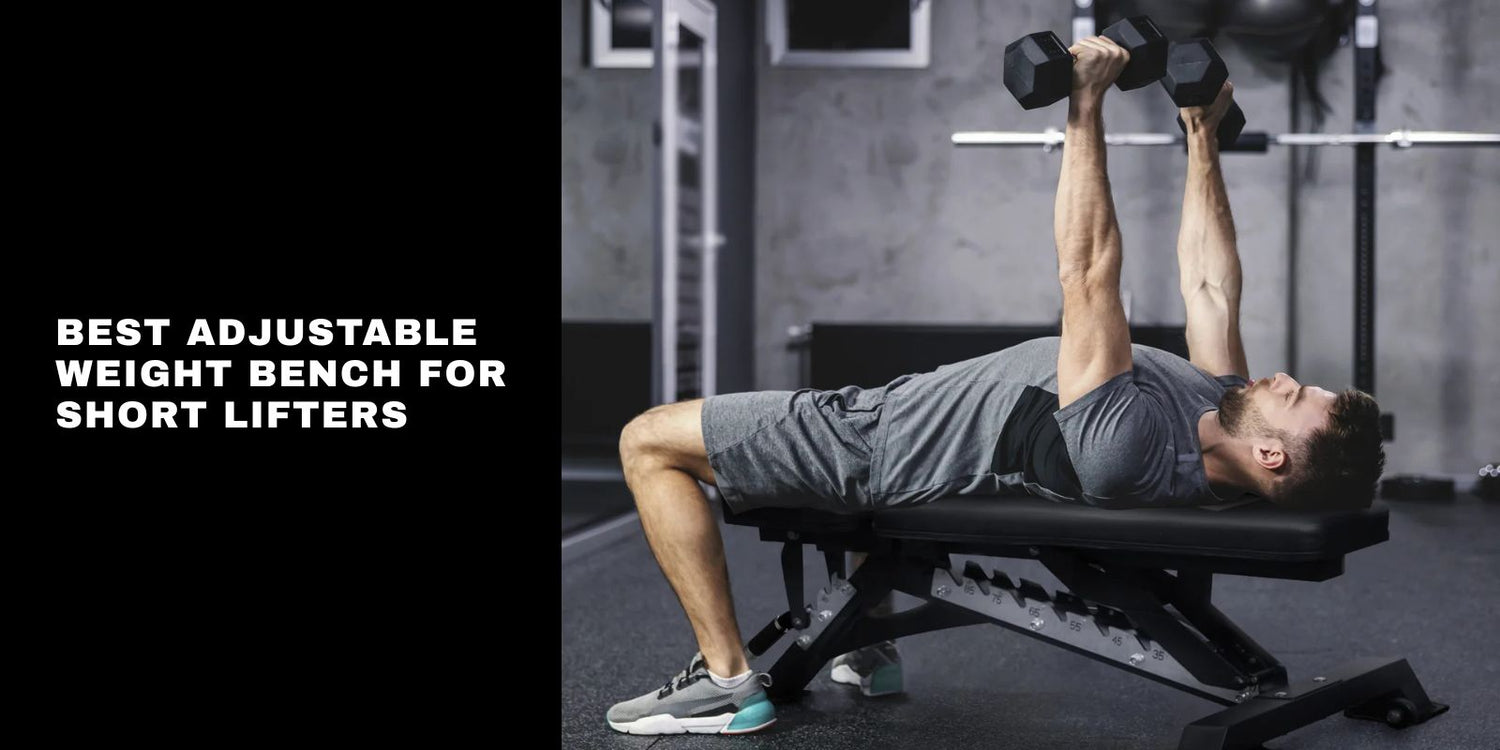
Finding the best adjustable weight bench for short lifters requires balancing low seat height, stable foot placement, and versatile incline settings. Standard commercial benches often sit too high off the floor, leaving shorter lifters on their tiptoes during heavy dumbbell and barbell presses.
This comprehensive guide explores the essential design features shorter lifters need, how the RitFit 1300lb Adjustable Weight Bench (BWB01) solves common ergonomic problems, and practical training tips to maximize pressing power at home.
Quick Answer: The best adjustable weight bench for short lifters features a low profile pad height under 17.5 inches, an adjustable seat angle, and a compact frame. The RitFit BWB01 delivers 10 backrest positions, 3 seat angles, and a stable 1300 lb weight capacity, allowing shorter lifters to maintain flat-foot drive safely.
Key Takeaways
- Seat Height Matters: Bench pad height under 17.5 inches is critical for shorter lifters to achieve solid leg drive and arch support.
- Angle Versatility: Having 10 backrest angles and 3 seat positions eliminates sliding and lumbar overextension during incline presses.
- Verified Home Fit: The RitFit BWB01 provides 1300 lb capacity with built-in wheels and handle for easy repositioning in compact spaces.
- Multi-Angle Training: Proper incline adjustments optimize upper chest and shoulder muscle activation without straining joint mobility.
- Long-Term Value: Choosing a durable 14-gauge steel bench provides superior stability compared to flimsy entry-level foldable models.
Why Standard Weight Benches Fail Short Lifters
Standard commercial benches often fail short lifters because excessive pad height and wide seat designs prevent full foot contact with the floor. This lack of grounded stability weakens leg drive and forces unnatural spinal hyperextension during heavy presses.
- Loss of Ground Contact: When your feet dangle or rest on your tiptoes, you lose up to 15 percent of pressing power derived from leg drive.
- Excessive Lumbar Arching: Shorter lifters often overarch their lower back to reach the ground, shifting compressive stress onto the lumbar spine.
- Shoulder Joint Impingement: Wide commercial pads restrict natural scapular retraction and upward rotation for lifters with narrower shoulder spans.
- Clunky Repositioning: Bulky 80-pound commercial benches make minor angle and distance adjustments exhausting in tight home gyms.
Understanding these ergonomic pitfalls helps lifters choose dedicated benches tailored to their frame, improving safety across all home strength workouts.
What Makes the Best Adjustable Bench for Shorter Lifters
The best adjustable bench for shorter lifters combines an accessible floor-to-pad height under 17.5 inches with an adjustable seat pad that locks your hips in place. These features ensure firm foot contact, comfortable hip angles, and smooth angle transitions for varied lifts.
| Design Feature | Short Lifter Requirement | Standard Commercial Benchmark | RitFit BWB01 Specification |
|---|---|---|---|
| Pad Height from Floor | 16.5", 17.5" | 18.0", 19.5" (Often too tall) | 17.0" (Optimal reach) |
| Backrest Adjustment | 8 to 10 ladder/pop-pin angles | 5 to 7 basic positions | 10 precise adjustment positions |
| Seat Angle Settings | 2 to 3 incline lock angles | 1 fixed flat position | 3 ergonomic incline settings |
| Frame Mobility & Weight | 45-55 lbs with transport wheels | 80+ lbs heavy commercial build | 52.9 lbs with wheels and handle |
| Weight Capacity | 800+ lbs structural load | 1000+ lbs commercial rating | 1300 lbs heavy-duty capacity |
Comparison based on standard IPF bench height guidelines versus typical commercial and home gym bench specifications.
Meet the RitFit BWB01 Adjustable Weight Bench
The RitFit BWB01 is a versatile heavy-duty adjustable bench built to handle 1300 lbs of load while maintaining an accessible height for home trainees. Its combination of heavy 14-gauge steel and dense high-density foam padding provides rock-solid foundation for pressing and rowing.
Whether you are pairing it with adjustable dumbbells or setting it inside a power rack, the BWB01 adapts seamlessly to full-body training routines.
"A weight bench, specifically an adjustable one, is non-negotiable in my home gym, and it should be in yours too. It provides a stable base for pressing, rowing, and stabilizing during heavy lifts."
, Ebenezer Samuel, C.S.C.S. Fitness Director at Men's Health
Why the RitFit BWB01 Works Well for Short Athletes
The RitFit BWB01 works exceptionally well for short athletes because its low pad profile and 3-stage seat tilt stop lifters from sliding forward during incline pressing. This keeps the pelvic girdle locked against the backrest and reduces strain on the lower back.
- Anti-Slide Seat Lock: Setting the seat pad to an upward tilt creates an active pocket that secures your hips during heavy 30-degree and 45-degree incline presses.
- Smooth Incline Progression: Ten backrest positions allow lifters to find the exact sweet spot for shoulder comfort and upper chest recruitment.[1]
- Compact Footprint: Measuring just under 53 pounds with integrated wheels, it maneuvers effortlessly even in tight spaces like a best adjustable weight bench for basement gym setup.
Lifters looking for heavy-duty commercial options can also evaluate the RitFit Gator Adjustable Weight Bench for extra decline and ladder variations.
How to Set Up Your Adjustable Bench for Optimal Leg Drive
To set up your adjustable bench for optimal leg drive, position your feet firmly flat on the floor with your shins perpendicular to the ground. If your heels still do not press firmly into the rubber matting, place a pair of flat weight plates beneath your feet as stable elevation blocks.
- Establish Three-Point Contact: Keep your head, upper back, and glutes firmly pressed against the dense bench pad throughout every rep.
- Pull Heels Slightly Back: Tucking your feet slightly behind your knees while keeping heels grounded creates immediate tension through the quadriceps and hips.
- Secure Angle Pins Completely: Always verify that the adjustment pin has fully clicked into the steel ladder slot before loading any barbell or dumbbells.
Best Home Bench Exercises for Shorter Lifters
The best home bench exercises for shorter lifters include flat dumbbell presses, 30-degree incline presses, chest-supported rows, and Bulgarian split squats. These multi-joint movements take full advantage of the bench's angle adjustability while safeguarding joint integrity.
- Flat & Incline Dumbbell Press: Enhances pectoral recruitment and shoulder stability without locking wrists into a fixed barbell trajectory.[2]
- Chest-Supported Dumbbell Row: Setting the bench to 45 degrees isolates the lats and rhomboids while completely taking pressure off the lower back.[3]
- Seated Overhead Dumbbell Press: Setting the backrest to 80 or 85 degrees provides vertical spine support without hitting hyperextension.
- Bulgarian Split Squats: Resting the rear foot on the cushioned pad allows for deeper, pain-free quadriceps and glute targeting.
Combine these movements with versatile exercise weights to build a complete upper and lower body workout program at home.
Comparing Adjustable Benches vs Other Home Gym Options
Adjustable benches provide significantly greater exercise versatility than fixed flat benches, supporting incline, upright, and chest-supported positions. While lightweight foldable benches offer easy closet storage, heavy-duty adjustable models provide the rigid stability required for progressive overload.[4]
| Bench Type | Primary Advantage | Short Lifter Considerations | Best Training Use Case |
|---|---|---|---|
| Heavy-Duty Adjustable (e.g. BWB01) | 10+ back angles, 1300 lb capacity, solid steel frame | Adjustable seat prevents sliding; ideal pad height for leg drive | Serious home lifters seeking long-term progression |
| Lightweight Foldable Bench | Folds flat for compact storage in closets or under beds | Often lighter frame, potential wobble under 300+ lb total load | Beginners and minimalists with strict space limits |
| Fixed Flat Bench | Zero pad gap, maximum structural rigidity | Fixed height cannot adapt to seated or incline movements | Powerlifters focusing exclusively on flat barbell press |
Review your training priorities and available space before choosing between adjustable and dedicated flat bench configurations.
Both male and female lifters can explore specific ergonomic reviews in our best adjustable weight bench for men and best adjustable weight bench for women guides.
Safety and Maintenance Tips for Home Benches
Proper safety and maintenance for adjustable weight benches requires inspecting hinge bolts monthly and wiping sweat off the vinyl upholstery after every workout. Keeping the frame clean and properly tightened prevents mechanical play and prolongs the lifespan of your equipment.
- Check Hardware Tightness: Periodically tighten pivot bolts and wheel brackets with a wrench to eliminate any lateral pad wobble.
- Protect Vinyl Upholstery: Clean the high-density foam padding using a damp cloth with mild soap; avoid harsh chemical solvents.
- Store Weights Properly: Keep dumbbells and plates organized on dedicated weights storage racks to maintain a clear training perimeter.
Organizing your training space with dedicated weights racks ensures safety during rapid angle changes and dumbbell transitions.
FAQs About Adjustable Benches for Short Lifters
Is the RitFit BWB01 adjustable weight bench good for short people?
Yes. The RitFit BWB01 adjustable weight bench can work well for short people because it offers broad angle adjustment, a manageable frame, and easier movement than bulkier benches. The smartest check is still your own setup, especially whether you can keep stable foot contact during pressing and seated work.
How much adjustability does the RitFit BWB01 adjustable weight bench offer?
The RitFit BWB01 adjustable weight bench offers 10 backrest positions and 3 seat positions, which gives most home lifters enough range for flat pressing, incline work, seated shoulder training, and decline style core work. That versatility makes one bench cover more sessions without adding extra equipment.
Does the RitFit BWB01 adjustable weight bench fit a small home gym?
Yes. The RitFit BWB01 adjustable weight bench is easier to manage in a small home gym because it weighs less than many heavy duty benches and includes wheels and a handle for repositioning. It is a practical option for garages, spare rooms, and shared training spaces.
What exercises can short lifters do on the RitFit BWB01 adjustable weight bench?
Short lifters can use the RitFit BWB01 adjustable weight bench for flat and incline presses, chest supported rows, seated shoulder presses, split squats, step ups, hip thrusts, and core work. The key is choosing angles and foot placement that let you stay planted and balanced through every rep.
Can beginners use the RitFit BWB01 adjustable weight bench safely at home?
Yes. Beginners can use the RitFit BWB01 adjustable weight bench safely at home when the bench is locked correctly, the load matches their skill level, and the room has enough clearance for setup. Starting with dumbbells and controlled rep speed usually makes home training feel more confident and repeatable.
Should short lifters choose the RitFit BWB01 adjustable weight bench over a foldable bench?
It depends. Short lifters should choose the RitFit BWB01 adjustable weight bench over a foldable bench when they want more load capacity, stronger day to day stability, and a more serious primary bench. A foldable model makes more sense when storage is the first priority and training loads stay lighter.
Conclusion
Choosing the best adjustable weight bench for short lifters comes down to finding a low pad height, stable frame, and multi-angle seat support. The RitFit BWB01 provides shorter athletes with the solid foundation needed to maximize pressing strength and training safety at home.
Ready to upgrade your home setup with dependable gear? Explore our comprehensive RitFit discount guide to find the best current promotions on strength equipment today.
Disclaimer
The information provided in this article is for educational and informational purposes only and does not substitute professional medical advice or personalized fitness coaching. Always consult a certified trainer or medical provider before starting any new high-intensity strength training program.
References
1. Rodríguez-Ridao D, Antequera-Vique JA, Martín-Fuentes I, Muyor JM. Effect of five bench inclinations on the electromyographic activity of the pectoralis major, anterior deltoid, and triceps brachii during the bench press exercise. Int J Environ Res Public Health. 2020;17(19):7339. doi:10.3390/ijerph17197339. PMCID: PMC7559679
2. Saeterbakken AH, Mo DA, Scott S, Andersen V. The effects of bench press variations in competitive athletes on muscle activity and performance. J Hum Kinet. 2017;57:61-71. doi:10.1515/hukin-2017-0052. PMCID: PMC5548153
3. Lacio M, Vieira JG, Trybulski R, et al. Effects of resistance training performed with different loads in untrained and trained male adult individuals on maximal strength and muscle hypertrophy: a systematic review. Int J Environ Res Public Health. 2021;18(21):11237. doi:10.3390/ijerph182111237. PMCID: PMC8583483
4. Iversen VM, Norum M, Schoenfeld BJ, Fimland MS. No time to lift? Designing time efficient training programs for strength and hypertrophy: a narrative review. Sports Med. 2021;51(10):2079-2095. doi:10.1007/s40279-021-01490-1. PMCID: PMC8472851