








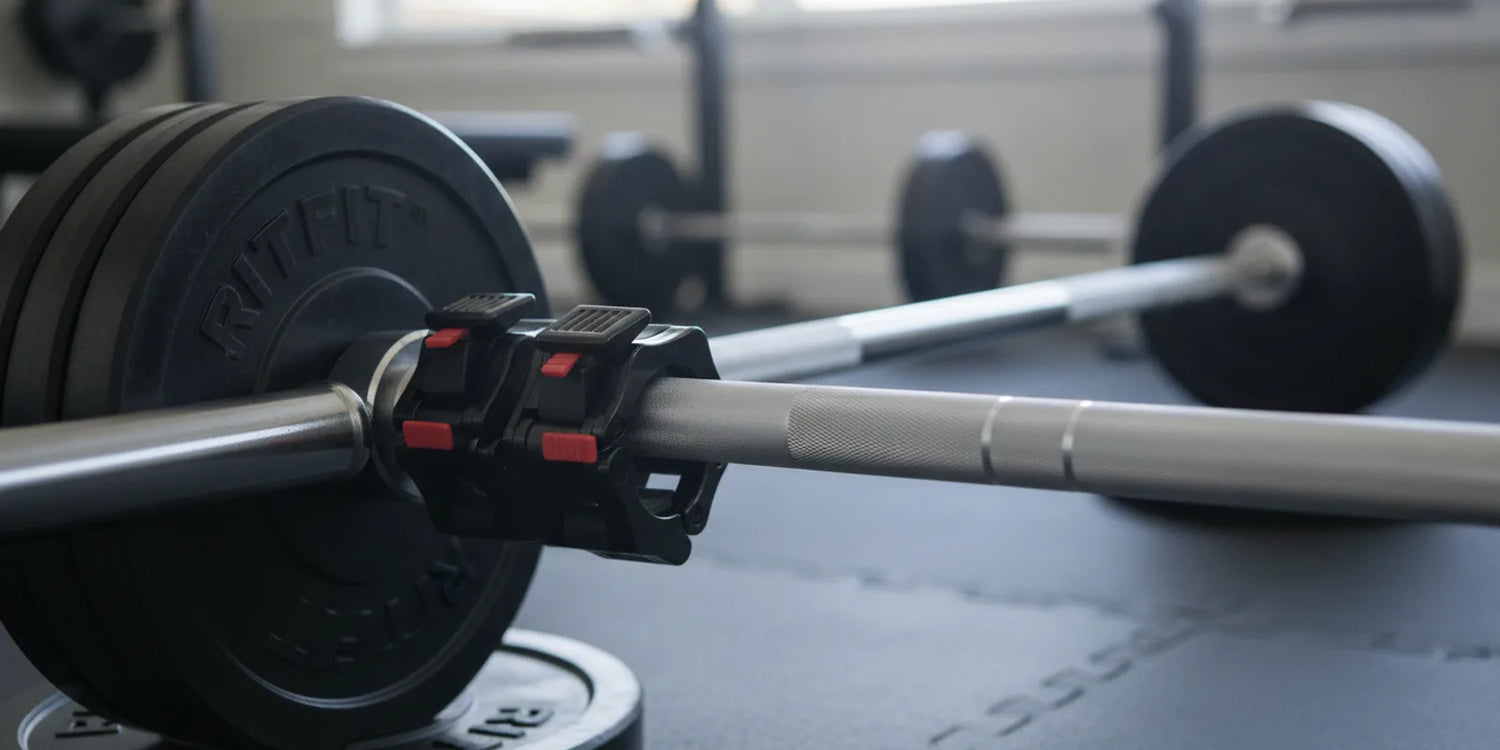
The best 1 inch barbell clamps are the collars sized for a 25 mm standard bar sleeve that lock your plates in place fast and hold them there under load. Picking the right one starts with your bar size, then your training style.
This guide walks through each collar type, matches them to real use cases, and shows you how to confirm the fit so you never buy an Olympic collar that slides loose on a standard bar.
Quick Answer: The best 1 inch barbell clamps are collars labeled for a 25 mm standard bar sleeve. Quick release clamp collars suit most lifters for their speed and secure hold, threaded spin lock collars fit screw type standard bars, and spring collars work for light, casual sessions.
Key Takeaways
- Match the size first: Standard bars use a 1 inch or 25 mm sleeve, so collars must be labeled for that diameter to grip safely.
- Clamp collars win for most: Quick release clamp collars apply fast, hold securely, and need no grip strength.
- Spin lock for threaded bars: Threaded standard bars pair with twist on spin lock collars for a firm hold.
- Spring collars are budget only: They cost little but can loosen during heavier or faster lifts.
- Tug test every set: Pull the collar and plates outward before you lift, and re-seat anything that slides.
1 Inch vs 2 Inch Bars: Why Sizing Comes First
Bar sleeve diameter decides which collar will actually grip, so you must confirm it before buying anything. Standard bars use a 1 inch or 25 mm sleeve, while Olympic bars use a 2 inch or 50 mm sleeve, and collars must match the bar sleeve to grip safely.
- Standard bar (25 mm): Thinner sleeves that accept 1 inch collars and standard hole weight plates.
- Olympic bar (50 mm): Thicker rotating sleeves that need 2 inch collars, common in most gyms and racks.
- Why it matters: An Olympic collar sits loose on a standard sleeve and cannot clamp, and a standard collar will not fit over an Olympic sleeve at all.
Bar design and loading are not interchangeable across formats, a point reinforced by controlled barbell testing.[1] Confirm your bar type against these Olympic barbell collar specifications or browse the full barbells collection before you match a collar.
What Are the Main Types of Barbell Collars?
The four main collar types are spring collars, quick release clamp collars, threaded spin lock collars, and competition style screw collars. One guide explains that collars create friction across the sleeve contact point to keep round plates from sliding during exercises, and each type creates that hold differently.
Spring Collars
Spring collars are a looped spring you squeeze open by hand, then release around the sleeve so tension holds the plates.
- Best for: Light or casual sessions where plates are not shifting much.
- Watch out: They can loosen under heavier or faster lifts and often need real hand strength to open.
Quick Release Clamp (Lock Jaw Style) Collars
Quick release clamp collars use a hinged body with a locking lever that snaps tight around the sleeve. You open the lever, position the collar, and close it for a fast, secure hold.
- Best for: General training and most lifters who want speed plus security.
- Watch out: Lower grade plastic bodies can crack over time, so pick a durable build.
Threaded Spin Lock Collars
Threaded spin lock collars twist onto the matching threads of a screw type standard bar until snug against the outer plate.
- Best for: Threaded 1 inch standard bars, the common pairing for that bar style.
- Watch out: Only work on bars that are actually threaded, and they take longer to apply than a lever clamp.
Competition Style Screw Collars
Competition style screw collars are heavier collars with a screw lock mechanism built for maximum security on the platform.
- Best for: Heaviest lifts and platform work where nothing can be allowed to move.
- Watch out: They cost the most and are usually overkill for general home training.
See a side by side walkthrough of how these collar styles compare for a home setup in the video below.
For a deeper primer on each style, read our overview of barbell clips and collars or the general collar general info reference.
Which Collar Type Fits Your Training?
The right collar depends on your bar type, budget, and how heavy or dynamic your lifts are. For most 1 inch lifters a quick release clamp is the balanced pick, while threaded bars need spin lock collars and heavy platform work leans toward screw collars.
| Your setup | Recommended collar | Why it fits |
|---|---|---|
| General 1 inch training | Quick release clamp pair | Fast, secure, and needs no grip strength |
| Threaded standard bar | Spin lock style | Matches the threaded 25 mm sleeve |
| Heavy or dynamic lifts | Clamp or screw style | Firmest, most reliable hold under load |
| Budget or light sessions | Spring collar | Low cost and quick for easy plate loading |
Pick a clamp pair from the barbell accessories range, and if you are still confirming a two inch build, check the Olympic barbells options first.
How Do You Confirm the Right Fit for a 1 Inch Bar?
You confirm fit by measuring your bar sleeve diameter and matching the collar label to it. A 1 inch standard bar reads 25 mm across the sleeve, so any collar you buy should be labeled for 1 inch or 25 mm bars.
- Measure the sleeve: Wrap a tape measure or caliper around the loading sleeve, not the grip shaft, and read the diameter.
- Read the spec sheet: Check your bar listing for a stated 25 mm or 50 mm sleeve before ordering collars.
- Match the label: Buy collars marked for your exact diameter, since a 2 inch collar sits loose on a 25 mm sleeve and cannot grip.
- Note the mechanism: Threaded standard bars need spin lock collars, while smooth sleeves take clamp or spring collars.
If you are also shopping bars and plates together, the barbells and weight plates collection keeps sizing consistent across your setup.
What Should Barbell Clamps Cost and When Should You Upgrade?
Good barbell clamps cost far less than most lifters expect, and a mid priced pair covers nearly every home setup. Prices commonly range from under 8 dollars for basic spring clips to over 150 dollars for premium or competition collars.
- Entry spring clips: The cheapest option, fine for light sessions but quick to loosen under load.
- Mid priced clamp pair: The best value for most home and gym lifters, balancing speed, security, and durability.
- Premium or competition: Worth the higher cost only if you compete on a platform or lift near your limit regularly.
Upgrade when your current collars slip during working sets, crack, or no longer hold plates flush. A durable clamp pair like the RitFit barbell clamp pair of two rarely needs replacing, so you spend once rather than repeatedly on cheap spring clips.
How Do You Install and Safety Check a Collar?
You install a collar by seating the plates flush, sliding the collar snug to the outer plate, locking it, then tug testing before you lift. This sequence keeps loads balanced and stops plates shifting mid set.
- Load flush: Slide plates on evenly with no gap between the first plate and the bar shoulder.
- Apply by type: Squeeze a spring collar, close the lever on a clamp, or twist a spin lock until snug without forcing it.
- Lock and confirm: Close until you feel firm resistance, then push the collar flush against the outer plate.
- Tug test: Pull the collar and plates outward, and if anything slides, re-seat and lock again.
- Both sides always: Never leave a collar on only one side of a loaded bar, since that creates a dangerous imbalance.
Stop and reset if a collar will not lock firmly, feels cracked, or lets plates rattle, and always secure both sleeves before your first rep. For a full routine, see our guide on how to use barbell collars safely.
What Common Mistakes Make Collars Slip?
Most collar slips come from a mismatched size, a gap behind the plates, or over forcing the lock. Avoiding these three errors keeps almost any quality collar holding as intended.
- Mismatched size: A loose collar on the wrong sleeve cannot grip, so always match the bar diameter first.
- Leaving a gap: Plates that are not flush to the shoulder shift mid set, so push them in before locking.
- Over forcing the lock: Forcing a mechanism past its firm stop can bend or crack it, so stop at snug resistance.
- Skipping the tug test: Assuming a collar is secure without checking is how a plate ends up sliding under load.
Whether you train with a standard or Olympic setup, the takeaway is simple, and a respected strength coach puts the collar's job plainly.
"Collars are designed to keep the plates from sliding off of the barbell sleeves. That's all they are for. If the plates are not sliding off, you don't need collars."
Mark Rippetoe, Strength Coach and Author of Starting Strength, Starting Strength
Round out your loading kit with a RitFit deadlift jack barbell stand for easier plate changes, or size up your bar with our 7ft Olympic barbell guide.
FAQs About 1 Inch Barbell Clamps
What size clamp do I need for a 1 inch standard barbell?
A 1 inch standard bar uses a 25 mm sleeve, so you need collars labeled for 1 inch or 25 mm bars. Olympic collars sized for a 2 inch or 50 mm sleeve will sit loose on a standard bar and cannot grip safely, so always confirm your bar diameter first before buying to guarantee a snug, secure fit.
Are spring collars or clamp collars better for a standard bar?
Spring collars are cheap and quick but can loosen during heavier or faster lifts. Clamp style and threaded spin lock collars hold more firmly and need no grip strength, making them the more reliable pick for most standard bar lifters. A clamp or screw style gives better peace of mind under load.
Can I use Olympic collars on a 1 inch standard bar?
No. Olympic collars are sized for a 2 inch or 50 mm sleeve, so they sit loose on a 25 mm standard bar and cannot grip. Always use collars made for your bar diameter, and choose spin lock collars for threaded standard bars. Matching the size is the single most important step for a safe, secure hold.
How tight should barbell collars be?
Tight enough that nothing moves. First push the plates flush against the bar shoulder, then slide the collar snug to the outer plate and lock it, and give the collar and plates a firm tug afterward. If anything slides, re-seat the plates and tighten again before you start your set.
How much should good barbell clamps cost?
Prices commonly range from under 8 dollars for basic spring clips to over 150 dollars for premium or competition collars. For most home and general gym lifters, a mid priced clamp pair offers the best balance of speed, security, and durability, so you rarely need to spend at the top of that range unless you compete on a platform.
Conclusion
The best 1 inch barbell clamps are the ones sized for your 25 mm standard bar and matched to how you train. Quick release clamp collars suit most lifters, spin lock collars fit threaded bars, and spring collars cover light sessions.
Confirm your sleeve size first, then choose your style and load with confidence. Pick a matching pair, run a tug test on every set, and train knowing your plates stay put.
Disclaimer
This guide is for general informational purposes and does not replace the safety instructions supplied with your specific bar or collars. Always follow manufacturer guidance and consult a qualified coach before attempting heavy or unfamiliar lifts.
Save on your next RitFit order
Tap the button to copy your code, then paste it at checkout.
References
1. Androulakis-Korakakis P, et al. Comparison of Olympic and Safety Squat Bar Barbells on Force, Velocity, and Rating of Perceived Exertion During Acute High-Intensity Back Squats in Recreationally Trained Men. Int J Exerc Sci. 2024.





