The best chin up pull up bar for your home gym depends on your wall type, ceiling height, and whether you already own a power cage. Chin-ups and pull-ups differ only in grip, but the bar you buy determines how safely and widely you can train both.
This guide breaks down bar types, weight capacities, and grip options so you can match a setup to your space and budget, and covers when a standalone bar is redundant if you already own a rack.
Quick Answer: The best chin up pull up bar is a wall-mounted or rack-integrated multi-grip bar with 400 to 1000 pounds of capacity, since it supports both grips safely, while doorway bars work only as a lighter, temporary starter option for apartments.
Key Takeaways
- Grip is the only real difference: Chin-ups use an underhand grip that biases biceps and lower lats, while pull-ups use an overhand grip that shifts load toward upper lats and rear delts.
- Mount type sets your ceiling on safety: Doorway bars cap around 250 to 300 pounds, while wall, ceiling, and rack-mounted bars typically hold 400 to 1000 pounds.
- Power cage owners rarely need a second bar: Most racks already include a pull-up bar rated for the frame's full capacity.
- Overhead pulling angle changes muscle emphasis: Research on pulling direction shows arm position affects rhomboid versus upper trapezius activation.[1]
- Progression comes from eccentric and isometric work: Building strength while lowering from the bar and holding a dead hang carries over to completing a full rep.
What is the difference between a chin-up and a pull-up?
A chin-up uses an underhand, palms-toward-you grip that emphasizes the biceps and lower lats, while a pull-up uses an overhand grip that shifts more work to the upper lats, rear delts, and mid-back. Both are compound pulls that also recruit the forearms and core through the full range of motion.
- Underhand chin-up grip: Shorter lever arm for the biceps, often easier for beginners to complete more reps.
- Overhand pull-up grip: Wider grip options increase lat width recruitment but can feel harder at first.
- Neutral grip: Palms face each other, which is gentler on the shoulder joint and still trains lats and forearms.
Arm position during any pulling exercise also changes which back muscles do the most work. One study found that pulling with the arm raised overhead at roughly 120 degrees of shoulder flexion increased rhomboid activation while reducing upper trapezius tension compared to lower arm positions.[1]
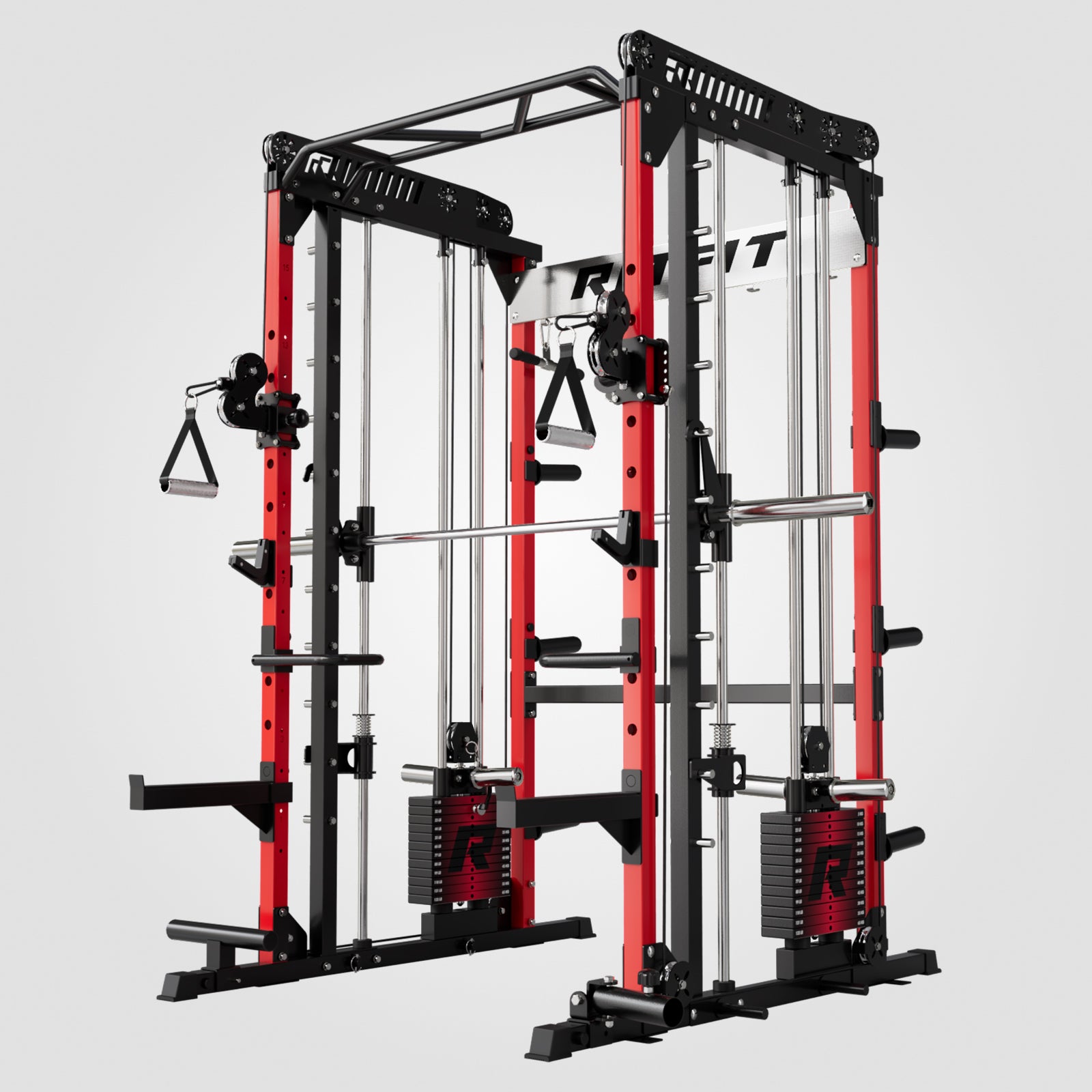
This is one reason a bar with multiple grip widths, like the RitFit P3 Power Cage With Pull-Up Bar, gives you more angle options than a single fixed straight bar. It also gives you room to test the clearance and weight capacity needed for your training goals.
What types of pull-up bars are available for home gyms?
Home pull-up bars come in five main mount types: doorway, wall-mounted, ceiling-mounted, rack-integrated, and freestanding, and each fits a different space and budget. Your choice mostly comes down to whether you can drill into a wall or ceiling, and whether you already own a rack.
Doorway bars
* Cost and capacity: Typically 25 to 40 dollars with a 250 to 300 pound weight limit, since the frame rests on the door trim rather than bolting into studs. * Best for: Renters, apartment dwellers, and beginners testing whether they will stick with pull-up training before investing in a permanent bar.
Wall-mounted bars
* Cost and capacity: Roughly 40 to 100 dollars with 400 to 500 pound capacity when lag-bolted into studs, offering far less flex than a doorway bar. * Best for: Garage gym owners without a rack who want a permanent, stable station for both grips and light kipping work.
Ceiling-mounted bars
* Cost and capacity: Around 50 to 120 dollars, bolted into overhead joists, freeing up wall space entirely. * Best for: Garages with high ceilings that double as parking space, where a wall bar would get in the way.
Rack-integrated bars
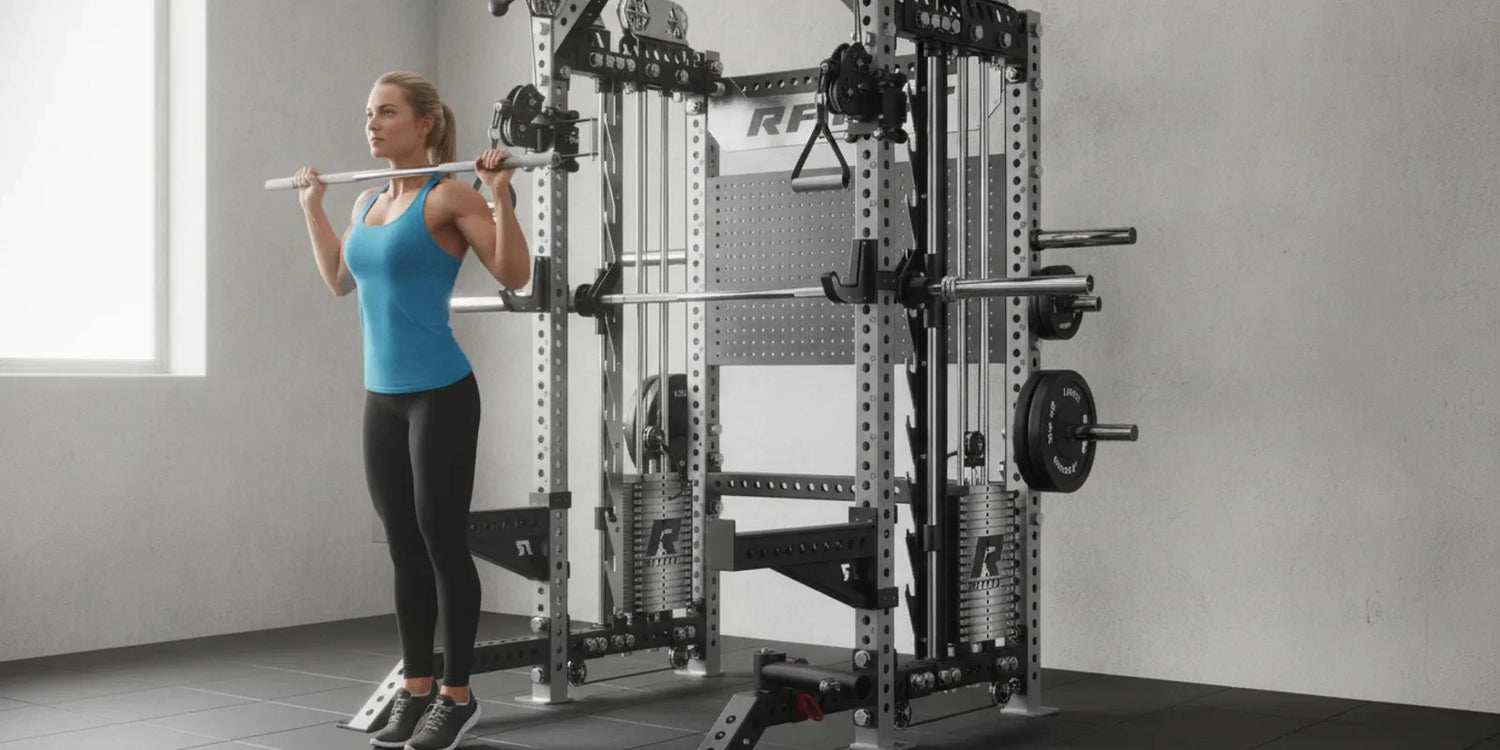
* Cost and capacity: Effectively free with a power cage purchase, rated for the rack's full frame capacity, often 500 to 1000 pounds. * Best for: Anyone who owns or plans to own a squat rack or power cage, such as the RitFit P3 Power Cage, since the bar comes built in.
Freestanding towers
* Cost and capacity: Around 100 to 250 dollars with 250 to 450 pound capacity, no drilling required but noticeably less stable overhead. * Best for: Renters who cannot drill and still want a taller, dedicated station over a doorway bar.
See our full walkthrough on how to train for a pull-up at home for space-planning tips beyond the bar itself.
Which RitFit setup fits your training goal?
Your best RitFit setup depends on space, budget, and whether pull-ups are your main focus or one part of a broader strength program. The comparison below covers only RitFit's own product line, not outside brands.
| User type | Recommended setup | Why |
|---|---|---|
| Apartment renter, no drilling allowed | Pull-Up Assist Band Set with a doorway bar | No permanent mounting, supports grip practice and assisted reps |
| Garage gym owner without a rack | Wall-mounted multi-grip bar | Stable, higher capacity than doorway bars, no rack purchase needed yet |
| Building a full home gym from scratch | RitFit P3 Power Cage With Pull-Up Bar | Pull-up bar included at full 1200 pound frame rating, plus squat and cable training in one purchase |
| Existing rack owner wanting more grips | Rack Attachments multi-grip handle | Adds grip variety without buying a redundant standalone bar |
Setup comparisons reflect RitFit's own product line only, not third-party brand rankings.
Is it worth upgrading from a doorway bar?
Upgrading from a doorway bar is worth it once you outgrow its 250 to 300 pound weight limit or want to add kipping pull-ups, weighted reps, or muscle-ups. A doorway bar is a reasonable starting point, but its flex under load and limited clearance become the ceiling on your training rather than your own strength.
If you are still building consistency with basic chin-ups and pull-ups, a doorway bar or the pull-up assist bands paired with it can carry you through the beginner phase. Once bodyweight reps feel controlled and you want to add load or explosive variations, a wall-mounted or rack-integrated bar removes the stability ceiling.
Is a standalone bar or a power cage cheaper long term?
A standalone wall-mounted bar is cheaper upfront, but a power cage upgrade path often costs less over several years if you plan to add squats, cable work, or a bench later. Buying a standalone bar first and a rack later means paying for two separate mounting systems instead of one.
- Standalone bar first: Lower initial cost, but you may still buy a rack later for squats or cable training, duplicating some hardware spend.
- Power cage first: Higher upfront cost, but the pull-up bar, squat stand, and often a cable system are included in one frame, like the RitFit P3 Power Cage.
- Existing rack owners: Adding a rack attachment for extra grips is almost always cheaper than a second freestanding bar.
If your goal is a complete home gym rather than pull-ups alone, starting with a power cage and skipping the standalone bar purchase is typically the lower total cost path.
What grip variations should you look for on a pull-up bar?
A useful pull-up bar offers wide overhand, close underhand, and neutral grip positions, since each shifts emphasis across the lats, biceps, and shoulders. Multi-grip bars let you rotate positions across a training week instead of loading the same joints the same way every session.
- Wide overhand grip: Biases outer lat width and teres major, the classic pull-up position.
- Close underhand grip: The chin-up position, with more bicep recruitment and lower lat emphasis.
- Neutral grip: Palms facing each other, easier on the shoulder joint, and strong for forearm and brachialis development.
Grip choice also interacts with shoulder positioning. A controlled EMG study found that scapular retraction performed with external shoulder rotation produced higher middle trapezius activation and lower rhomboid activation than a bent-elbow rowing position.[2]
Rotating grips on a bar like the RitFit P3 Power Cage lets you work these different positions without buying separate equipment.
How do you build toward your first strict pull-up?
Building toward a first strict pull-up comes from developing eccentric strength while lowering from the top position and isometric strength while holding a dead hang or mid-pull position for time. As those two qualities improve, the concentric strength needed to complete a full rep tends to follow.
- Negative reps: Start at the top of the bar and lower yourself as slowly as control allows.
- Dead hangs and flexed-arm holds: Build grip and shoulder stability at end ranges of the movement.
- Assisted reps: Use pull-up assist bands or a lat pulldown attachment to practice the full range under lighter load.
Supporting training research backs this approach: in an eight-week study, lat pulldown training performed with an unstable cable setup improved pull-up endurance 45.5 percent more than the same training performed with a stable setup, in recreationally active male college students.[3] This is one reason a cable-based accessory like the Smith machine lat pulldown can complement bar work rather than replace it.
What are common mistakes when choosing or installing a pull-up bar?
The most common mistakes are ignoring the weight rating, mounting into drywall instead of studs or joists, and buying a standalone bar when a power cage purchase is already planned. Each of these creates either a safety risk or a wasted purchase.
- Ignoring weight capacity margin: Choose a bar rated well above your body weight if you plan to add a dip belt or perform dynamic reps.
- Mounting into drywall alone: Wall and ceiling bars must anchor into studs or joists, not just drywall, or the mount can pull loose under load.
- Skipping overhead and depth clearance: Leave enough distance from the wall and ceiling for a full hang without touching either.
- Buying twice: If a power cage is already on your list, check whether it includes a pull-up bar before buying a separate one.
Read our how to start doing pull-ups guide for beginner-specific setup checks before you mount anything permanently.
"Focus on building your strength in lowering from the bar or holding yourself in a position either above or below the bar. This will carry over to your ability to pull up to the bar eventually. As you build your eccentric and isometric strength, your concentric pulling strength will follow along."
RitFit Training Team, Strength Coach, RitFit
FAQs About Chin-Up and Pull-Up Bars
What is the difference between a chin-up and a pull-up?
A chin-up uses an underhand, palms-facing-you grip that emphasizes the biceps and lower lats, while a pull-up uses an overhand grip that shifts more work to the upper lats and rear delts. Both are compound pulling movements that also engage the core, forearms, and mid-back, so alternating grips can build balanced upper-body strength.
How much weight capacity and clearance do you need?
Doorway bars typically cap out at 250 to 300 pounds of user weight, while wall-mounted, ceiling-mounted, and rack-integrated bars usually support 400 to 1000 pounds. If you plan to add a weighted dip belt or perform dynamic kipping pull-ups, choose a bar rated well above your body weight for a safety margin.
Is a doorway pull-up bar safe to use every day?
Doorway bars are safe for regular bodyweight pull-ups and chin-ups when installed correctly and used within their rated weight limit, but they flex more under load than permanently mounted options. They are not recommended for kipping pull-ups, muscle-ups, or weighted training, since the added momentum can loosen the mounting over time.
Do I need a separate pull-up bar if I already have a power cage?
Most power cages and squat racks already include a built-in pull-up bar rated for the frame's full capacity, so a separate standalone bar is usually unnecessary. If your cage lacks multi-grip handles, a low-cost rotating grip attachment can add variety without buying an entirely new bar.
What grip variations should beginners look for on a pull-up bar?
Beginners benefit most from a bar offering wide overhand, close underhand, and neutral grip options, since each targets the lats, biceps, and shoulders slightly differently. A multi-grip bar lets you rotate positions as you build strength, which can reduce repetitive strain on any single joint.
How do I progress toward my first strict pull-up?
Build eccentric strength by slowly lowering yourself from the top position, and build isometric strength by holding a dead hang or a mid-pull position for time. As these two strength qualities improve, concentric pulling strength to complete a full rep typically follows, according to RitFit's training team.
Conclusion
The best chin up pull up bar matches your wall, ceiling, and rack situation rather than any single universal winner. Doorway bars suit renters starting out, wall and ceiling bars suit permanent garage setups, and a power cage removes the need for a separate bar entirely.
Start with an honest look at your space and long-term goals, then check whether a rack purchase already covers your pull-up needs before buying a standalone bar. Browse current RitFit deals to compare setups within budget.
Disclaimer
This article is for general informational purposes and does not replace professional fitness or installation guidance. Consult a qualified trainer or contractor before starting a new exercise program or mounting equipment into walls or ceilings.
Save on your next RitFit order
Tap the button to copy your code, then paste it at checkout.
References
1. Yoo WG. Effects of pulling direction on upper trapezius and rhomboid muscle activity. J Phys Ther Sci. 2017;29(6):1043-1044. doi:10.1589/jpts.29.1043. PMCID: PMC5468195
2. Fennell J, Phadke CP, Mochizuki G, Ismail F, Boulias C. Shoulder Retractor Strengthening Exercise to Minimize Rhomboid Muscle Activity and Subacromial Impingement. Physiother Can. 2016;68(1):24-8. doi:10.3138/ptc.2014-83. PMCID: PMC4961314
3. Li Q, Yan J, Qiao M, et al. Eight-week lat pull-down resistance training with joint instability leads to superior pull-up endurance performance and reduced antagonist coactivation in recreationally active male college students. Eur J Sport Sci. 2025;25(1):e12243. doi:10.1002/ejsc.12243. PMCID: PMC11667758