








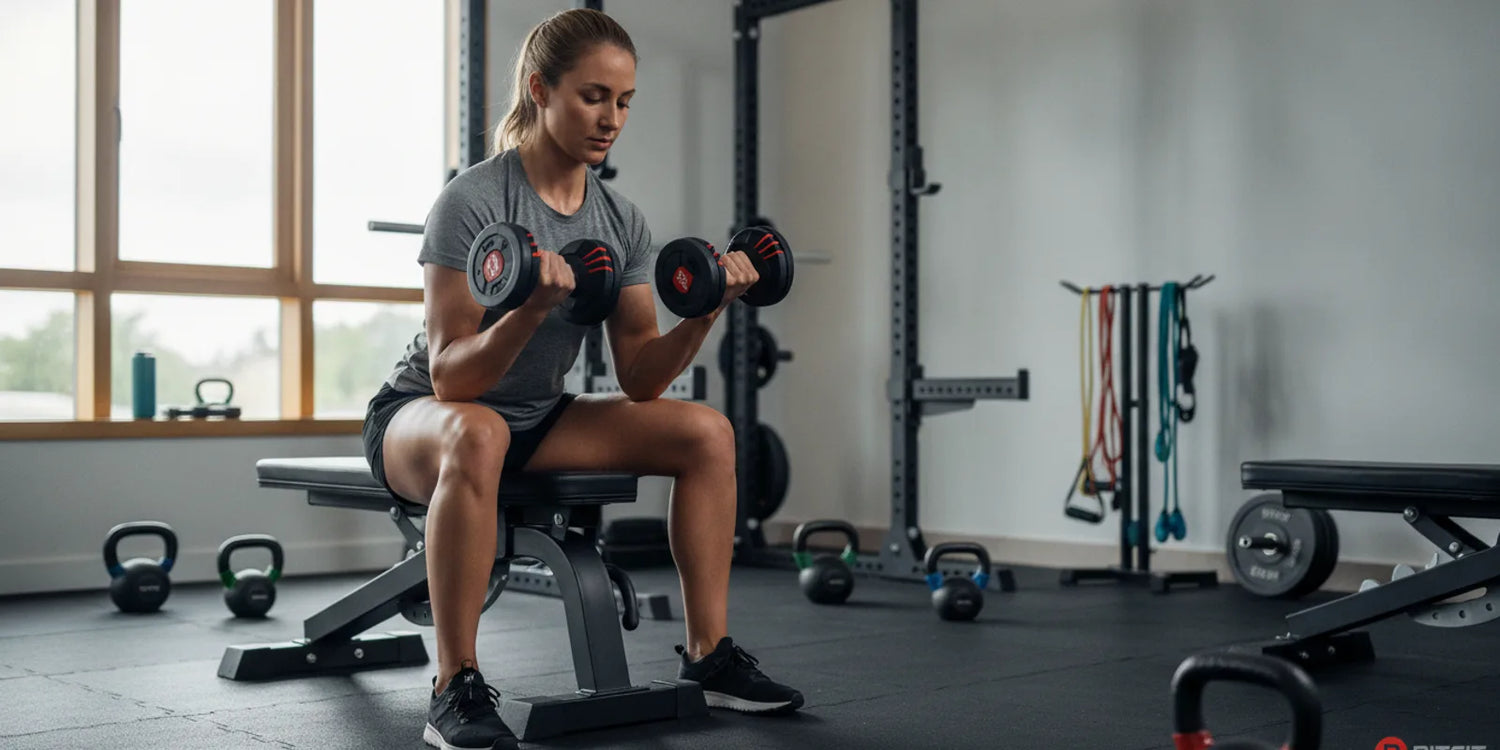
Choosing the best dumbbells for your home gym starts with matching dumbbell type and weight range to your training goal, not a generic top ten list.
This guide compares fixed and adjustable dumbbells, sets weight ranges for beginners, hypertrophy, and strength, and narrows the choice to a RitFit set that fits your space and budget.
Quick Answer: For most home gyms, adjustable dumbbells in the 5 to 50 pound range offer the best balance of space savings and room to grow, while fixed rubber hex dumbbells in the 5 to 40 pound range suit beginners who want a secure grip and plan to add heavier pairs over time.
Key Takeaways
- Dumbbell type: Adjustable dumbbells save space and often cost less over time than buying many fixed pairs, while fixed rubber hex dumbbells give a more secure grip for heavy pressing.
- Starting weight: Beginners typically start with 5 to 15 pounds per hand for pressing and curling, and 10 to 25 pounds for squats and rows.
- Training goal: Hypertrophy responds to weekly training volume, at least 10 sets per muscle group per week, while strength gains favor loads at or above 80 percent of one rep max.
- Material: Rubber hex coatings protect floors and stay quiet, PVC coating costs less but wears faster, and cast iron suits a dedicated garage gym.
- Long term value: A single adjustable dumbbell set can replace a wall of fixed pairs, which makes the higher upfront cost worth it in a space constrained home gym.
Should You Buy Fixed Weight or Adjustable Dumbbells?
Adjustable dumbbells fit tight spaces and a growing strength level better than fixed weight dumbbells. Fixed weight dumbbells offer a steadier feel for heavy pressing and pulling because the head never shifts.
- Storage footprint: One adjustable pair with a weight tray takes up less floor space than 4 or 5 fixed pairs.
- Cost over time: Adjustable sets cost more upfront but usually cost less per pound than buying several fixed pairs separately.
- Weight increments: Fixed dumbbells jump in fixed steps, commonly 5 pounds, while adjustable dumbbells often change in smaller 2.5 to 5 pound increments.
- Grip feel: Fixed hex dumbbells have a single solid head, which some lifters prefer for heavy presses and rows.
One home gym buying guide notes that a single pair of adjustable dumbbells can replace up to 10 to 16 pairs of fixed dumbbells while fitting in roughly a 2 square foot tray. If your budget is tight, our guide to best entry-level dumbbells covers lower cost fixed options.
For a small home gym, pairing either option with the RitFit 3-Tier Dumbbell Rack keeps weights organized instead of stacked on the floor. An adjustable dumbbells collection can shrink that footprint even further by replacing several fixed pairs with one adjustable set.
How Much Dumbbell Weight Do You Actually Need?
Most home gym users need a range of dumbbell weights rather than one number. The right starting point depends on training goal and which lift you are performing.
How Much Should Beginners Start With?
Beginners typically start with 5 to 15 pounds per hand for pressing and curling movements, and 10 to 25 pounds per hand for squats, rows, and other multi joint lifts. A weight that allows 10 to 15 clean reps with good form is a reasonable starting point for most new lifters.
What Load Range Builds the Most Muscle?
Muscle growth responds more to total weekly training volume, at least 10 sets per muscle group per week, than to any single weight, and research on resistance training shows this holds across a wide range of loads when sets are taken close to failure.[1] Slowing the lowering phase of a rep, known as eccentric emphasis, adds extra stimulus even when the weight itself stays moderate.
How Much Weight Do You Need for Strength Goals?
Strength focused training calls for heavier loads, generally at or above 80 percent of one rep max, performed through a complete range of motion.[1] In practice, this usually means choosing the heaviest dumbbell pair you can control with strict form for sets of about 3 to 6 reps.
Which RitFit Dumbbell Set Fits Your Setup?
The right RitFit dumbbell set depends on your available floor space, your budget, and whether you want room to add heavier weight later. A quick decision matrix narrows the choice faster than scrolling a long product list.
| Your Situation | Best Fit | Why |
|---|---|---|
| Small apartment or tight budget | RitFit PVC-Coated Dumbbells | Lower upfront cost, still covers full body training |
| Frequent heavy lifting in a dedicated space | RitFit Hex Rubber Dumbbells | Hex shape resists rolling, rubber coating protects floors under heavy drops |
| Limited floor space but want to keep progressing | RitFit Adjustable Dumbbells | One pair swaps weight plates instead of buying new fixed sets |
| Building a full home gym corner | Dumbbells A Rack Package with the RitFit 3-Tier Dumbbell Rack | Bundle keeps a full weight range organized in one footprint |
Matches reflect typical space, budget, and progression needs, not lab tested rankings.
The hexagon dumbbell sets collection covers most of the situations above in one place. For dedicated heavy lifting, the RitFit Hex Rubber Dumbbells hold up well to frequent floor drops.
This walkthrough from the RitFit channel shows how a PVC-coated dumbbell set with a rack fits into a small home gym corner.
What Handle and Material Should You Look for in Dumbbells?
The best dumbbells for daily use have a knurled or textured handle and either a rubber hex or cast iron head. Handle and material affect grip security, floor safety, and how long the set lasts.
- Handle diameter: A grip around 1 to 1.3 inches across suits most adult hands without straining the wrist.
- Coating type: Rubber hex heads protect floors and stay quiet, PVC coating is lighter on cost but wears faster, and chrome or cast iron is the most durable for heavy daily use.
- Corrosion resistance: Coated heads resist rust better than bare cast iron in humid garages or basements.
- Wear over time: Cheaper PVC coatings can crack or peel within a year or two of regular use, while rubber hex and cast iron typically last much longer.
The rubber hex dumbbells collection covers most durability focused picks, while the PVC-coated dumbbells collection fits a lighter budget.
Is It Worth Paying More for Quality Dumbbells?
Paying more upfront for durable dumbbells is worth it for most home gym owners. A quality set lasts for years without cracking, chipping, or losing its coating, which lowers the real cost per year of use.
- Cost per year: A durable set used for 5 or more years often costs less annually than replacing a cheap set every year or two.
- Resale value: Well maintained rubber hex or cast iron dumbbells hold resale value better than worn PVC coated sets.
- Fewer replacements: Avoiding early replacement means less time without equipment and less packaging waste over time.
- Bundle savings: Buying a rack and weight set together often costs less than purchasing each piece separately later.
The Dumbbells A Rack Package bundles a weight range with storage in one purchase, which spreads the cost of a rack across a set you already need.

What Mistakes Should You Avoid When Buying or Using Dumbbells?
The most common dumbbell mistakes are buying too light a set to start and skipping a storage rack. Both mistakes slow progress and turn a small home gym corner into a hazard.
- Buying only one weight: A single fixed pair limits which exercises you can load properly, since presses and curls need different loads.
- Skipping a rack: Dumbbells left on the floor create a tripping hazard and can roll under furniture.
- Using momentum instead of control: Swinging a weight up with body momentum raises the risk of wrist strain and reduces muscle activation.
- Dropping heavy weights carelessly: Dropping dumbbells on hard floors risks a dropped weight injury to feet or toes and can crack flooring.
- Not progressing weight: Staying at the same weight for months once reps become easy slows strength and muscle gains.
Which Dumbbell Exercises Should Beginners Start With?
Beginners get the most from a handful of compound dumbbell moves that train pressing, pulling, and squatting patterns. A short list covers upper body, lower body, and core in one session.
- Dumbbell press: Works the chest, shoulders, and triceps and can be done flat, incline, or seated.
- Bicep curl: Isolates the biceps and is easy to progress in small weight steps.
- Overhead press: Builds shoulder strength and core stability when performed standing.
- Goblet squat: Trains the legs and glutes while a front loaded dumbbell keeps the torso upright.
- Dumbbell row: Strengthens the back and improves posture, which balances out pressing movements.
A study found that the dumbbell shoulder press produced greater upper trapezius and anterior deltoid activation than the incline or flat bench dumbbell press in resistance trained and novice women, while the bench and incline presses activated the pectoralis major more.[2] Rotating between press variations can therefore target slightly different muscles across a training week.
One trial observed in untrained women that training seated dumbbell preacher curls near full elbow extension produced greater distal biceps hypertrophy over 8 weeks than training near the end of the range of motion, and strength gains also favored that group.[3] Paying attention to which part of the curl feels hardest can help match technique to this finding.
For a closer look at chest work, see how to do a dumbbell fly. To round out your pulling exercises, our guide to best back exercises with dumbbells covers rows and other variations.
"You can gain muscle, similar amounts of muscle, regardless of the loading across a wide range of loading spectrums... the caveat to this is that the lighter loads have to be taken with a high degree of effort. If you do not extensively challenge your muscles, meaning the last few reps are difficult to complete, you're not going to achieve gains."
Brad Schoenfeld, PhD, Exercise Science Researcher specializing in Muscle Hypertrophy, CUNY Lehman College
FAQs About Best Dumbbells
How much weight should you buy for dumbbells at home?
For most beginners, a set between 5 and 25 pounds per hand covers full body strength work, while adjustable dumbbells that go up to 50 pounds or higher give room to grow into heavier loads for compound moves like squats and rows without buying additional pairs.
How do adjustable dumbbells compare to fixed weight dumbbells?
Adjustable dumbbells save floor space and money by replacing multiple fixed pairs in one compact unit, and quality dial or spin lock models feel nearly identical to fixed dumbbells during lifts, though some heavier duty fixed hex dumbbells still offer a more secure grip for very heavy pressing and pulling work.
What material dumbbells are best for a home gym?
Rubber hex or hex rubber coated dumbbells protect floors and stay quiet during drops, making them ideal for apartments and garages, while PVC coated dumbbells cost less but wear faster, and chrome or cast iron dumbbells are the most durable option for a dedicated home gym that sees frequent heavy use.
How many pounds of dumbbells do you need for muscle growth?
Research on resistance training shows that building muscle depends more on total weekly training volume, at least 10 sets per muscle group per week, than on one specific weight, so most lifters progress through a range of dumbbells from light warm up weights up to their heaviest working sets as strength improves over time.
What can dumbbells alone do for a complete home gym workout?
Dumbbells alone can train every major muscle group through presses, rows, squats, and curls, and pairing them with an adjustable bench and a simple rack turns a small corner of a garage or spare room into a functional strength training setup without needing a full barbell rack or machine.
Conclusion
Choose adjustable dumbbells for tight spaces and a growing strength level, or fixed rubber hex dumbbells for a steadier grip during heavy lifts.
Start with the RitFit set that matches your current training goal, then browse the full range of dumbbells to round out your home gym.
Disclaimer
This article is for general informational purposes and does not replace personalized medical or fitness advice. Consult a qualified healthcare provider or certified trainer before starting a new strength training program, especially if you have an existing injury or health condition.
Save on your next RitFit order
Tap the button to copy your code, then paste it at checkout.
References
1. Phillips SM, D'Souza AC, Fiatarone Singh MA, et al. American College of Sports Medicine Position Stand. Resistance Training Prescription for Muscle Function, Hypertrophy, and Physical Performance in Healthy Adults: An Overview of Reviews. Med Sci Sports Exerc. 2026;58(4):851-872. PMC12965823
2. Luczak J, Riemann BL, et al. Shoulder Muscle Activation of Novice and Resistance Trained Women during Variations of Dumbbell Press Exercises. J Sports Med (Hindawi Publ Corp). 2013;2013:612650. PMC4590897
3. Pedrosa GF, Simões MG, Figueiredo MOC, et al. Training in the Initial Range of Motion Promotes Greater Muscle Adaptations Than at Final in the Arm Curl. Sports (Basel). 2023;11(2):39. PMC9960616





