A beginner home gym works best when you match your space, budget, and training goal before you buy equipment. This guide shows what to buy first, how to plan the room, and how to build a setup that stays practical as you get stronger.
Key Takeaways
- Start small and useful: Buy the fewest pieces that cover your main movement patterns well.
- Measure first: Floor area, ceiling clearance, doorway width, and storage space matter before any purchase.
- Match equipment to your goal: Strength, hypertrophy, conditioning, and athletic work do not need the same setup.
- Protect the space early: Good flooring, airflow, and organization make the gym safer and easier to use.
- Leave room to upgrade: The best beginner setup is the one you can use now and expand later.
Assess Your Space and Set Realistic Goals
Your layout should support training, loading, and movement before it tries to fit more equipment. Beginners usually make better long term decisions when they measure usable floor area, ceiling clearance, doorway width, and storage zones first.
- Small room or apartment: Start with adjustable dumbbells, a bench, bands, and a mat. This covers most major movement patterns while keeping the footprint manageable.
- Garage gym: Plan for airflow, temperature swings, and floor protection. A garage works very well when the equipment still leaves a clear path for walking, lifting, and plate loading.
- Basement gym: Check moisture, lighting, and overhead clearance before you commit to taller equipment. If your space is low or damp, review this basement gym equipment guide before buying a rack or machine.
Essential Equipment for Every Budget
A simple beginner setup can still support meaningful strength and muscle gain, because resistance training improves strength and hypertrophy across a wide range of effective program designs.[1] The smartest early purchases are the ones that let you train consistently, progress load, and keep the space easy to use.
Budget Setup
A budget setup should focus on flexibility, compact storage, and exercise variety. For more entry level ideas, see this guide to budget home gym equipment under 500.
- Adjustable dumbbells: These are usually the best first purchase for beginners. They support presses, rows, squats, hinges, carries, and many accessory lifts with very little floor demand.
- Adjustable bench: A bench expands chest, shoulder, back, leg, and core training immediately. If you are unsure where to start, review this guide to the best adjustable weight bench for beginners.
- Resistance bands: Bands add warm up work, mobility work, and helpful extra resistance. They are also one of the easiest tools to store in a tight setup.
- Workout mat: A mat makes floor work, stretching, and core training more comfortable. It also helps define the training zone in a shared room.
- Jump rope: A rope is a compact conditioning option that fits almost any budget. It works best when you already have enough overhead and floor clearance to move freely.
- Dumbbell research: If you still need help comparing first purchases, use this guide to the best dumbbells for beginners.
Mid Range Setup
A mid range setup should add safer strength progression without making the room feel crowded. Most beginners move into this tier when dumbbells alone stop covering their main loading needs.
- Bench plus dumbbells: This remains the core of a very efficient home gym. You can also browse RitFit benches and RitFit dumbbells if you want to build around that base.
- Barbell and plates: This is the point where squats, deadlifts, presses, and rows become easier to progress over time. A barbell setup makes the most sense when your room allows safe loading on both sides.
- Rack or squat stand: Safety arms and a stable frame matter as load rises. Beginners who want the most exercise variety from a single strength station usually benefit here.
- Conditioning piece: A rower, bike, or sled style option can be useful, but only if conditioning is a real weekly priority. When space is limited, strength equipment usually deserves the first claim on the room.
- More buying help: If your budget is expanding, compare options in this home gym equipment under 1000 guide and this home gym equipment under 2000 guide.
Premium Setup
A premium setup should improve training quality, convenience, and progression, not just increase the amount of metal in the room. This tier works best for people who already know how they train and what they use often.
- Commercial grade rack or cage: A stronger frame, better hardware, and cleaner attachment support improve both safety and upgrade options. This matters most when heavy barbell work is central to the plan.
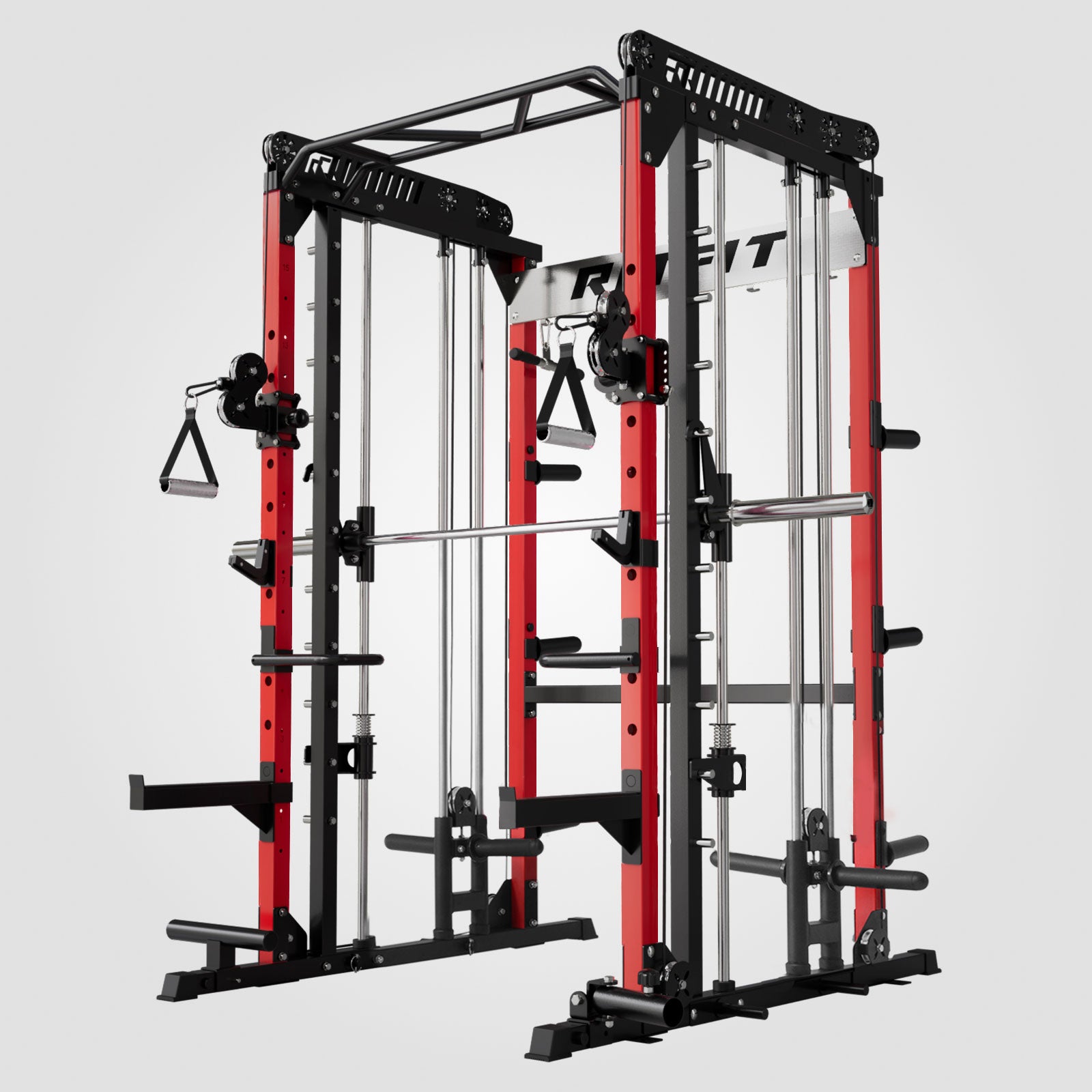
- Smith machine or all in one system: Guided bar work and cable versatility can make solo training easier to manage. If that is your priority, compare current RitFit Smith machines before choosing a larger setup.
- Higher quality plates and accessories: Premium plates, collars, and storage keep the space cleaner and loading easier. These upgrades usually matter more after the core training station is already in place.
Flooring and Training Environment
Flooring is one of the first upgrades that improves safety, noise control, and equipment life. Home exercise adherence often drops when the setup feels awkward, inconvenient, or hard to use, so a cleaner and more stable training area matters.[3]
- Rubber flooring: Rubber helps protect the subfloor and reduces noise from normal lifting and movement. It also improves traction for squats, hinges, carries, and bench setup.
- Ventilation: Airflow matters more than many beginners expect. Hot, stale, or damp rooms quickly become places people avoid using.
- Lighting: Bright, even light makes the gym safer and more inviting. This is especially important in basements and garages where form checks and loading accuracy matter.
- Room planning: Keep enough space around the bench, rack, or machine for safe entry, exit, and loading. If you need more detail, review this home gym flooring guide.
Equipment Selection by Training Goal
The right setup depends less on price and more on what you want the room to do every week. Beginners get better results when each purchase solves a specific training need instead of chasing a full commercial look.
Strength Training and Powerlifting
Choose a rack, a barbell, plates, and a stable bench if your goal is long term strength on the main compound lifts. This setup gives the clearest path for progressive overload, safe unracking, and repeatable barbell practice.
- Best fit: Lifters who want squats, presses, deadlifts, and rows to stay at the center of training.
- Main benefit: Easy load progression and strong exercise carryover.
- Main caution: You need more room for plate loading, walking space, and rack clearance.
Bodybuilding and Hypertrophy
Choose equipment that gives exercise variety, stable positions, and easy progression across many muscle groups. Whole body resistance training supports muscle growth, and hypertrophy can be developed across a wide loading range when sets are challenging enough.[2][4]
- Best fit: Lifters who want more pressing angles, rows, split squats, curls, extensions, and controlled accessory work.
- Main benefit: Dumbbells, a bench, cables, and guided bar work can make muscle focused training more efficient.
- Main caution: Do not buy specialized machines before you have a strong base of adjustable equipment.
General Fitness and Fat Loss
Choose equipment that makes full body sessions simple and repeatable. Dumbbells, bands, a bench, and one conditioning option usually outperform a room full of single purpose pieces for this goal.
- Best fit: People who want strength, conditioning, mobility, and consistency from one compact setup.
- Main benefit: Circuit work, supersets, and full body sessions are easy to organize.
- Main caution: Large cardio machines can dominate space without adding enough weekly value.
Athletic Performance
Choose equipment that leaves enough open area for fast movement, jumping, carries, and mobility work. A half rack, dumbbells, plates, and a clear floor area usually serve athletic training better than a crowded room.
- Best fit: People who train for movement quality, power, and mixed strength work.
- Main benefit: More open floor space means better movement options and easier exercise transitions.
- Main caution: Do not let large machines remove the free area your actual training needs.
Common Mistakes to Avoid
Most beginner home gym mistakes happen before the first workout, not during it. The biggest problems are overbuying, undermeasuring, and choosing equipment that looks impressive but does not match the real training plan.
- Buying too much too early: A crowded room is not the same thing as a better gym. Start with the pieces you can use well now, then expand after real training experience.
- Ignoring true footprint: The machine size is only part of the equation. You also need room for loading, moving, spotting, and storing accessories.
- Skipping flooring: Good flooring protects the space and makes the gym easier to use. It is a function upgrade, not just a cosmetic one.
- Letting cardio dominate the room: Conditioning is important, but many beginners give away too much space to one machine. Make sure the room still supports the strength work you actually need.
- Forgetting storage: Loose collars, bands, plates, and handles create visual clutter and slow down training. A cleaner setup usually gets used more often.
Maintenance and Long Term Success
A good home gym lasts when the equipment stays clean, secure, and easy to access. Long term progress usually comes from an organized room, simple programming, and upgrades made only after consistent use.
- Check hardware: Inspect bolts, safety arms, benches, and cable points regularly. Small fixes are easier than major failures.
- Store equipment well: Put plates, dumbbells, collars, and bands back in their places after each session. A usable gym is easier to return to tomorrow.
- Upgrade with intent: Add equipment only when it solves a real limitation. The best upgrades improve your training quality, not just your equipment count.
FAQs
How much space do beginners need for a home gym?
Most beginners can train well in a compact area if they choose multi use equipment and keep clear lifting space around it. A bench, adjustable dumbbells, bands, and a mat can fit into a small room corner, while a rack based setup needs much more clearance for loading and movement.
What equipment should beginners buy first for a home gym?
Start with equipment that covers the most movement patterns, then add specialized pieces later. Adjustable dumbbells, a sturdy bench, resistance bands, and flooring usually give beginners the best mix of strength work, exercise variety, and small space efficiency without forcing a large upfront spend.
Can a beginner home gym work in a garage or basement?
Yes. A garage or basement can work very well for a beginner home gym, but the environment must be managed first. Check ceiling height, airflow, moisture, temperature, and flooring before you add heavy equipment, because a damp or cramped setup quickly becomes uncomfortable and hard to use consistently.
Is a Smith machine necessary in a beginner home gym?
No. A Smith machine is useful, but it is not mandatory for a beginner home gym. Beginners can build plenty of strength with dumbbells, a bench, bands, and later a rack, while a Smith machine makes more sense when solo safety, guided bar work, and all in one convenience matter most.
Do beginners need rubber flooring in a home gym?
Yes. Rubber flooring is one of the smartest early upgrades for a home gym because it protects the subfloor, reduces noise, and improves traction. It also makes the training area feel more finished, which helps beginners keep equipment organized and use the space more consistently.
How much should a beginner spend on a home gym setup?
A beginner home gym can start on a modest budget if you focus on essentials instead of buying everything at once. Many people do better by starting small, training consistently, and upgrading later, because that approach reduces waste, protects cash flow, and reveals what equipment they actually use.
Conclusion
The best beginner home gym is the one that matches your space, your goal, and your current training level without wasting money or crowding the room. Start with versatile equipment, protect the space properly, and add bigger pieces only when your habits and strength clearly justify the upgrade.
Disclaimer: This article is for general educational purposes only and does not replace medical, rehabilitation, or personal coaching advice. If you have pain, injury history, balance limitations, or other health concerns, speak with a qualified clinician or coach before beginning a new training program or buying specialized equipment.
References
- Currier BS Mcleod JC Banfield L et al. Resistance training prescription for muscle strength and hypertrophy in healthy adults: a systematic review and Bayesian network meta-analysis. Br J Sports Med. 2023;57(18):1211-1220.
- Benito PJ Cupeiro R Ramos-Campo DJ Alcaraz PE Rubio-Arias JÁ. A systematic review with meta-analysis of the effect of resistance training on whole-body muscle growth in healthy adult males. Int J Environ Res Public Health. 2020;17(4):1285.
- Argent R Daly A Caulfield B. Patient involvement with home-based exercise programs: can connected health interventions influence adherence? JMIR Mhealth Uhealth. 2018;6(3):e47.
- Schoenfeld BJ Grgic J Van Every DW Plotkin DL. Loading recommendations for muscle strength, hypertrophy, and local muscular endurance: a re-examination of the repetition continuum. Sports. 2021;9(2):32.