








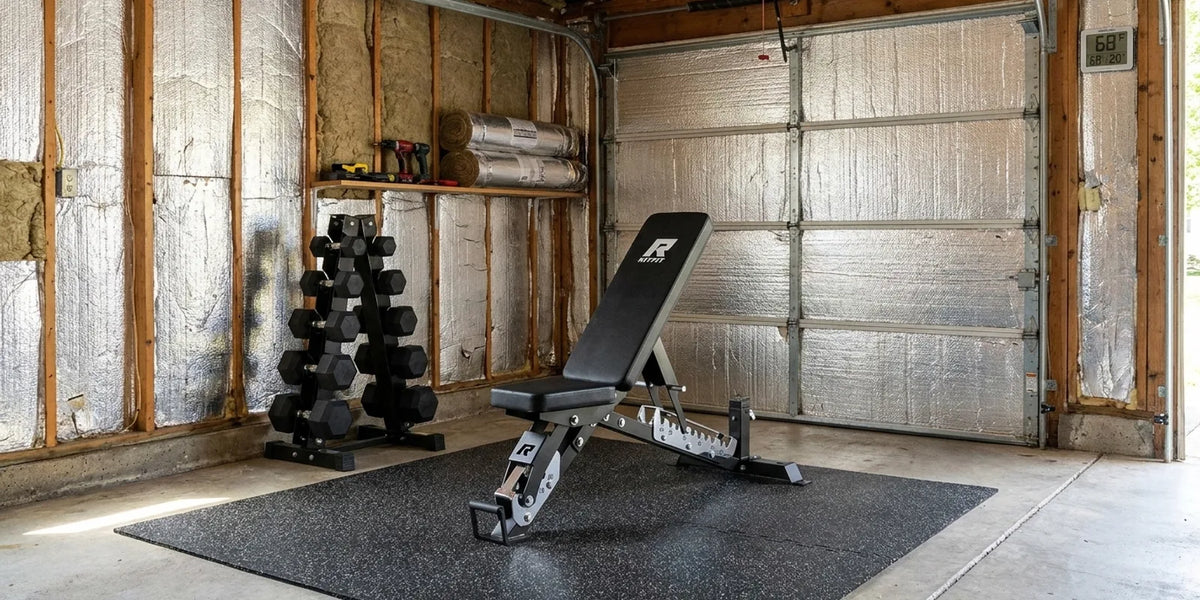
The best insulation for a garage gym is a layered setup that seals air leaks first, upgrades the garage door, and matches wall, ceiling, and floor insulation to your climate. This guide helps you choose the right materials, set smart priorities, avoid moisture mistakes, and create a more usable training space year round.
Key Takeaways
- Air sealing usually delivers the fastest comfort upgrade, especially around the garage door and side gaps.
- For most home gyms, fiberglass or mineral wool offers the best balance of cost, performance, and DIY practicality.
- Closed cell spray foam is the premium option when you need stronger air sealing and better performance in limited wall depth.
- Rubber flooring protects equipment and improves feel underfoot, but cold or damp slabs may still need a moisture aware underlayment.
- Insulation works best when it is paired with ventilation, humidity control, and the right heating or cooling plan.
Why Insulation Matters for Your Garage Gym
Garage gym insulation matters because major temperature swings make training less comfortable, less consistent, and harder on equipment. Heat stress can impair exercise performance and increase physiological strain, while cold exposure can reduce comfort and raise health and performance concerns during training.[1][2]
Training Quality and Consistency
A more stable room makes warm ups easier, working sets more predictable, and missed sessions less likely. You do not need a perfect studio climate, but you do need a space that does not feel punishing for half the year.
Equipment Protection and Floor Comfort
Better insulation reduces condensation risk, helps limit large swings around steel surfaces, and makes floor based work more tolerable. It also supports a smarter overall setup if you are still planning the room around your home gym equipment plan or comparing ideas for a basement style gym setup.
Understanding R Value for a Garage Gym
R value measures how strongly a material resists heat flow, so a higher number usually means stronger thermal resistance. Use the ranges below as planning targets, then verify final specs against your local code, climate zone, wall depth, and garage construction.
| Climate | Typical Wall Range | Typical Ceiling Range | Typical Door Range |
|---|---|---|---|
| Warm | R13 to R15 | R30 to R38 | R6 to R9 |
| Mixed | R15 to R21 | R38 to R49 | R9 to R13 |
| Cold | R19 to R21 or higher | R49 to R60 | R12 to R18 |
Best Insulation Materials for Garage Gyms
The right material depends on your budget, moisture risk, wall depth, and whether you want a DIY build or a finish once, forget it solution. For most readers, the real decision is not which material is universally best, but which one fits the garage they actually have.
Fiberglass Batt Insulation
Fiberglass batts are the standard value choice for garage gym walls because they are affordable, easy to source, and practical for framed cavities. They work best when the fit is clean, gaps are sealed, and the wall is finished properly.
- Best for: Budget conscious DIY projects with open stud walls.
- Watch out: Performance drops when batts are compressed, poorly cut, or installed around leaks without air sealing.
- Why it works: It gives most garages enough thermal improvement to make heating and cooling upgrades feel worthwhile.
Mineral Wool
Mineral wool is often the best all around batt choice when you want better sound control, tighter friction fit, and stronger moisture resistance than basic fiberglass. It is especially attractive for attached garages where noise and dampness matter more.
- Best for: Garage gyms near bedrooms, shared walls, or humid conditions.
- Watch out: It usually costs more than fiberglass and adds weight to the install.
- Why it works: It gives a stronger premium feel without forcing you into full spray foam pricing.
Closed Cell Spray Foam
Closed cell spray foam is the premium option when you need high performance per inch and better air sealing in one system. It makes the most sense for garages with irregular framing, limited cavity depth, or persistent leakage problems.
- Best for: High use training spaces, complex framing, and extreme climates.
- Watch out: Upfront cost is much higher, and changes later are harder.
- Why it works: It combines insulation and sealing better than most batt based paths.
Rigid Foam Board
Rigid foam board is one of the most useful materials for garage door panels, selective wall upgrades, and space sensitive surfaces. It gives solid R value per inch and can solve problems that batt insulation does not address well.
- Best for: Garage doors, spot retrofits, and thin assembly zones.
- Watch out: Some interior applications require a code compliant thermal barrier or finish layer.
- Why it works: It upgrades weak surfaces without eating too much room.
Where to Insulate First
If your budget is limited, do not try to perfect every surface at once. Start where the room feels worst, then move in the order that gives the biggest comfort gain per dollar.
The Garage Door
The garage door is usually the first place to upgrade because it is thin, leaky, and exposed to direct outdoor swings. If your gym also has height constraints, this guide to the best low ceiling home gym options can help you pair insulation work with equipment planning.
Walls
Wall insulation is the backbone of the room once the major leaks are controlled. In most garages, this is where fiberglass or mineral wool delivers the strongest value.
Ceiling
Ceiling insulation matters because roofs and attic spaces can drive major summer heat gain and winter loss. If the room still feels harsh after the walls are done, the ceiling is often the missing piece.
Floor
The floor matters because cold concrete behaves like a heat sink and can make the room feel uncomfortable even after the walls improve. Start with this home gym flooring guide, then compare it with these interlocking gym flooring mats if you need impact protection plus a cleaner finished surface.
Air Sealing and Moisture Control
Insulation alone will not fix a garage gym that still leaks air or traps moisture in the wrong assembly. Sports facility research also shows that indoor air quality and ventilation are critical in exercise spaces, especially where heat, humidity, and pollutants can build up indoors.[3][4]
Weather Stripping Usually Beats More Panel Insulation
If the door edges, top seam, or bottom seal leak badly, you can add panel insulation and still feel drafts. In many real garages, sealing the perimeter creates the first big comfort jump.
Vapor Control Depends on Climate and Assembly
A vapor barrier is not a universal yes or no decision, because the correct layer depends on whether the assembly needs to dry inward, outward, or both. If you are conditioning the garage, match moisture control to climate, slab condition, and local code rather than copying a one size fits all build.
- Cold climates: Interior side vapor control is more common, but the exact layer depends on the wall build.
- Mixed or humid climates: Trapping moisture can be worse than having less vapor resistance.
- Concrete slabs: Rubber flooring protects the slab surface, but a cold or damp slab may still need a moisture aware underlayment.
Heating and Cooling After Insulation
Insulation lowers the load, but it does not remove the need for climate control if you want a truly dependable garage gym. The best system is the one that fits how often you train, how quickly you need the room ready, and how much humidity your space holds.
Best Option for Daily Use
A mini split is usually the best all season upgrade for an insulated garage gym because it can heat, cool, and manage moisture in one system. It also pairs naturally with a future upgrade path if you are building around a larger smith machine setup or a more complete home gym package.
- Mini split: Best for frequent training and full season use.
- Infrared or radiant heat: Good when winter discomfort is the main issue and you want fast spot warmth.
- Portable units: Acceptable as temporary fixes, but less efficient and less elegant.
- Fans and dehumidifiers: Useful support tools, not full replacements for insulation and sealing.
Typical Cost by Upgrade Path
Garage gym insulation costs vary by region, labor, finish level, and whether the garage is already framed. The ranges below are practical planning estimates, not universal bids.
| Upgrade Path | Typical Budget Range | Value Level |
|---|---|---|
| Door panels plus new seals | About 100 to 300 dollars | Fast comfort gain |
| Fiberglass batt walls | About 400 to 1000 dollars | Best entry value |
| Mineral wool walls | About 700 to 1300 dollars | Better acoustics and moisture resistance |
| Closed cell spray foam | About 1500 to 4000 dollars | Premium performance |
| Flooring and slab upgrade | About 150 to 1200 dollars | Comfort plus equipment protection |
Best Setup by Garage Type
The best garage gym insulation plan changes with the shape of the room and the way you train. These starting points keep the decision practical.
- Attached garage gym: Prioritize mineral wool or well installed batts, plus air sealing, because comfort and sound transfer both matter. This is the layout where wall treatment often pays off faster than people expect.
- Detached garage gym: Prioritize envelope control first, because the room cannot borrow comfort from the house. Door, ceiling, and climate control sequencing matter more here.
- Small or low ceiling garage gym: Use thin but high impact upgrades, especially door sealing, rigid foam on weak surfaces, and smart equipment selection. This is where avoiding lost floor area matters as much as chasing the highest possible R value.
- Humid climate garage gym: Treat moisture and air movement as seriously as insulation. A drier room is often more usable than a room with slightly higher insulation but poor humidity control.
FAQs
What is the best insulation for a garage gym?
Mineral wool or fiberglass batts are the best value for most garage gym walls, while rigid foam works well on garage doors. Closed cell spray foam is the premium choice when you want stronger air sealing, better moisture resistance, and the highest insulation performance in limited depth.
Do I need to insulate the garage door for a garage gym?
Yes. The garage door is often the weakest surface in the room, so insulating it usually improves comfort faster than people expect. Door panels alone are not enough, because perimeter gaps, the bottom seal, and wind leaks can still make the space feel unstable and drafty.
Can garage gym flooring help with a cold concrete floor?
Yes. Garage gym flooring can make the slab feel less harsh, reduce contact chill, and improve comfort for floor work. Rubber alone is mainly a protective layer, so if the slab stays cold or damp, a moisture aware underlayment or thermal break usually works better.
Is spray foam worth it for a garage gym?
Spray foam is worth it when your garage gym has major air leaks, irregular framing, or very limited wall depth. It costs more than batt insulation, but it can deliver stronger sealing, better moisture control, and better long term efficiency when you train in the space often.
Should I use a vapor barrier in a garage gym?
It depends. A garage gym may need vapor control, but the right layer depends on climate, wall assembly, and whether the space is heated or cooled. In the wrong place, a vapor barrier can trap moisture, so local code and assembly details should guide the final decision.
Is a mini split the best heating and cooling option for a garage gym?
Yes. A mini split is usually the best all season option for an insulated garage gym because it can heat, cool, and remove moisture efficiently. It works best after air sealing and insulation, because conditioning an uninsulated garage wastes energy and reduces comfort.
Conclusion
The best insulation for a garage gym is not one material, but the right sequence. Seal leaks first, strengthen the garage door, match wall and ceiling insulation to your climate, and then add heating or cooling that makes sense for how often you train.
Disclaimer: This guide is for general educational use and should not replace local building code, HVAC, or moisture control advice for your specific garage. Final insulation, vapor control, electrical, and fire safety decisions should be verified against your climate, assembly type, and qualified local professionals.
References
- Gibson OR, James CA, Mee JA, Willmott AGB, Turner G, Hayes M, et al. Heat alleviation strategies for athletic performance: a review and practitioner guidelines. Temperature. 2020;7(1):3-36. doi:10.1080/23328940.2019.1666624
- Gatterer H, Dünnwald T, Turner R, Csapo R, Schobersberger W, Burtscher M, et al. Practicing Sport in Cold Environments: Practical Recommendations to Improve Sport Performance and Reduce Negative Health Outcomes. Int J Environ Res Public Health. 2021;18(18):9700. doi:10.3390/ijerph18189700
- Peixoto C, Pereira MC, Morais S, Slezakova K. Assessment of indoor air quality in health clubs: insights into ultra fine and coarse particles and gaseous pollutants. Front Public Health. 2023;11:1310215. doi:10.3389/fpubh.2023.1310215
- Blocken B, van Druenen T, Ricci A, Kang L, van Hooff T, Qin P, et al. Ventilation and air cleaning to limit aerosol particle concentrations in a gym during the COVID 19 pandemic. Build Environ. 2021;193:107659. doi:10.1016/j.buildenv.2021.107659





