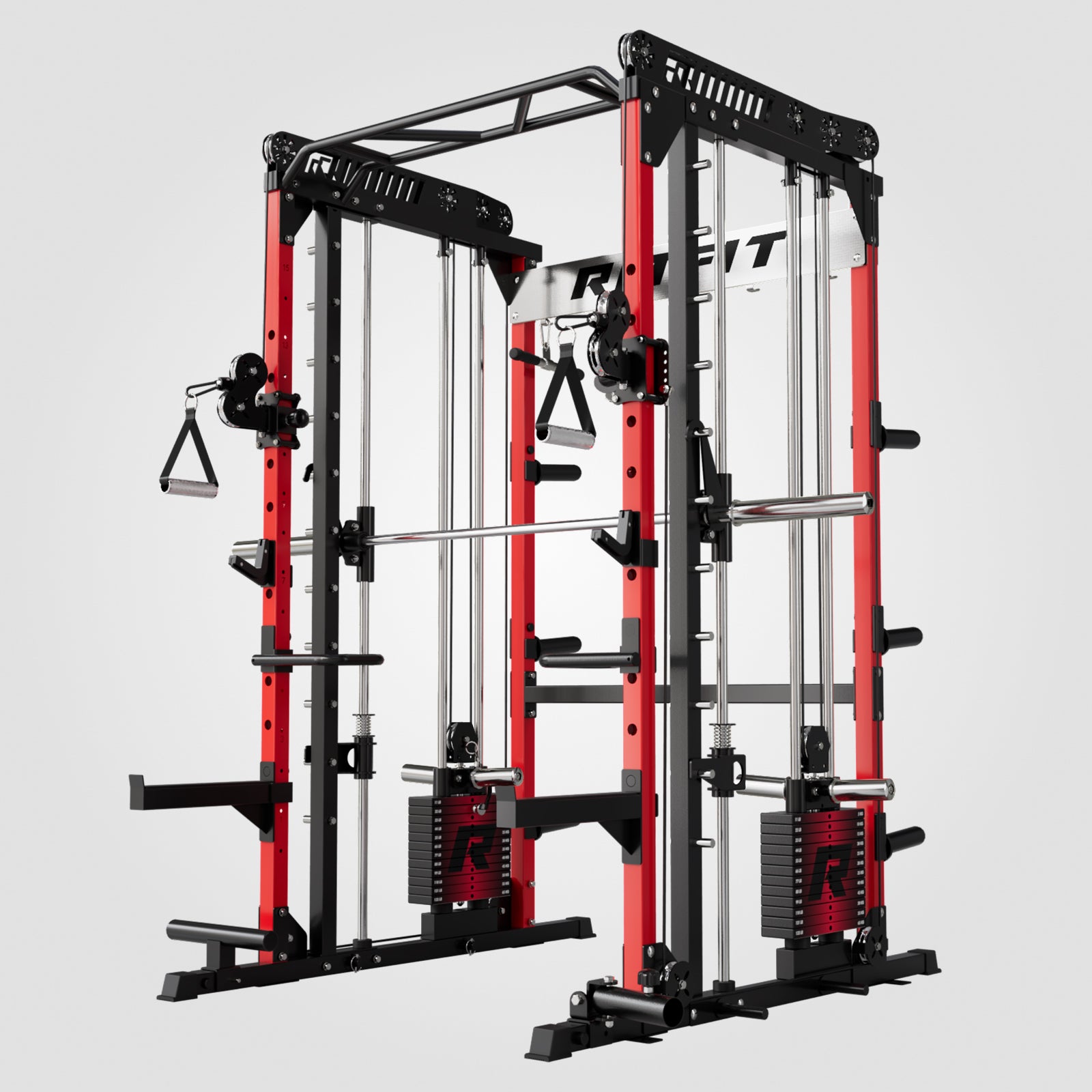
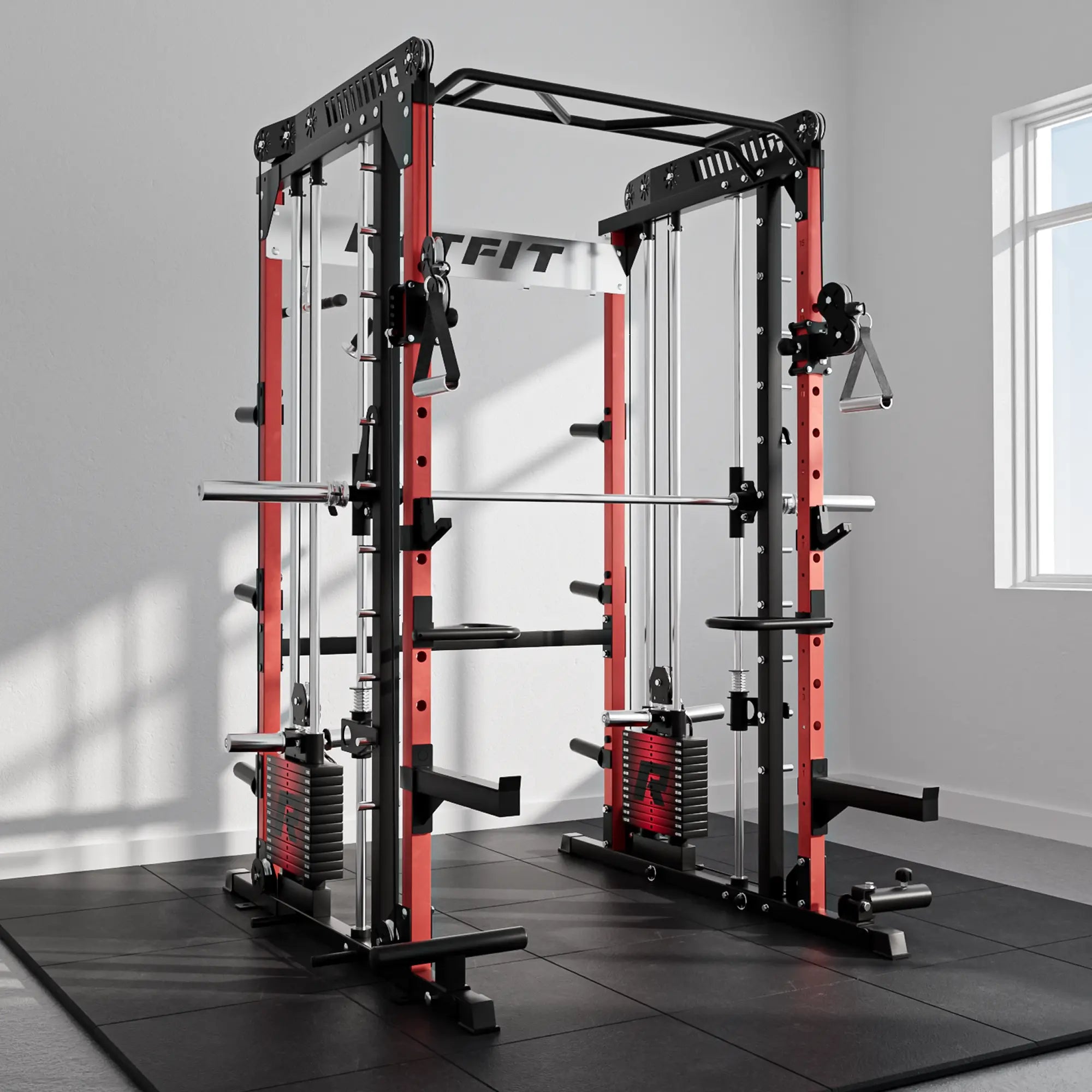

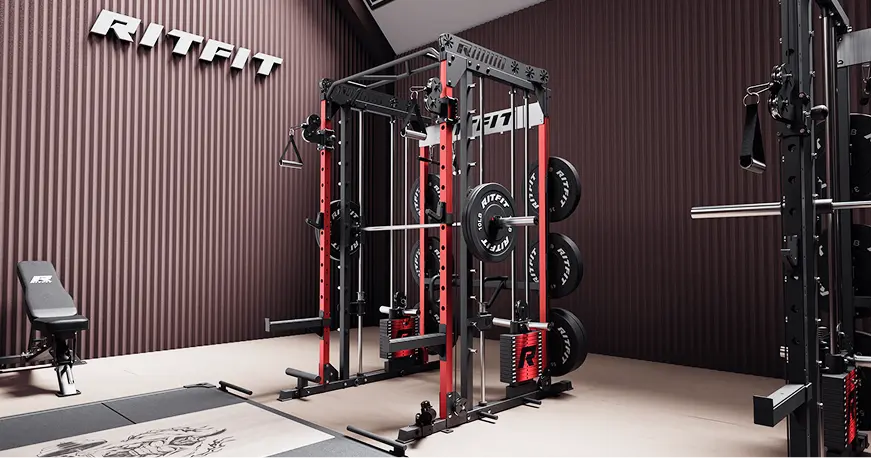
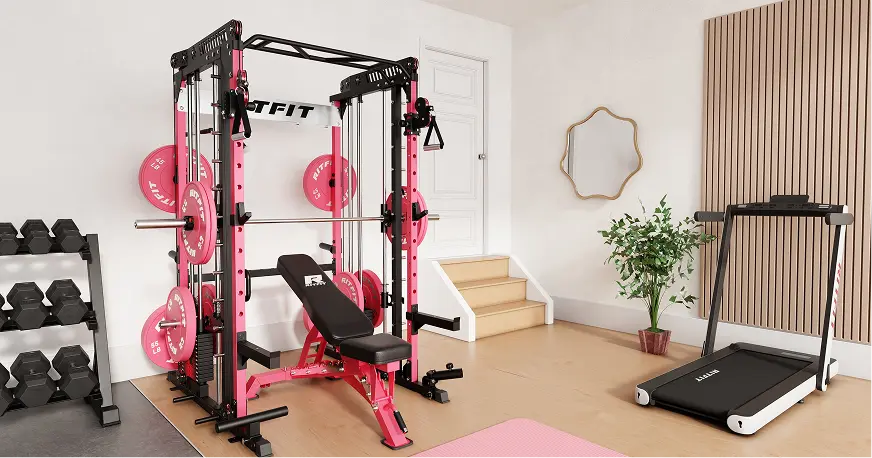
A best mat for Smith machine setups depends on the machine’s feet, anchor points, and the floor space where you train. A full-base covering can protect the contact area, while a separate impact zone can handle weights set down nearby.
This guide explains how to measure those areas, compare rubber tiles with rolls and lifting platforms, and check your exact machine manual before installation. Product specifications below are attributed to their published sources.
Quick Answer: The best mat for a Smith machine is a flooring setup that fits the frame, keeps every foot level, preserves required anchors, and covers the separate area where weights may land.
Key Takeaways
- Start with the manual: Confirm whether flooring beneath the frame is permitted and how leveling feet and anchors must contact the floor.
- Measure two zones: Record the machine's outside base and the distinct area needed for bench movement, plate handling, and weight set-downs.
- Separate support from impact: A mat under the frame does not automatically replace an anchor or a platform intended for barbell drops.
- Verify package coverage: The featured RitFit listing gives thickness and material but not tile dimensions or package coverage, so ask the seller before calculating quantity.
- Account for the room: A wood or upper floor needs building-specific load consideration; a rubber surface alone cannot establish structural suitability.
Best Smith Machine Mats by Setup: Footprint, Anchoring, and Drop Zone
The best Smith machine flooring setup follows the machine manual and protects the floor without changing how the frame sits. Match coverage to the actual footprint, then plan any barbell landing area separately.
| Format | Where it may fit | What to verify |
|---|---|---|
| Interlocking rubber tiles | Modular coverage for a defined machine or training area | Actual dimensions and package coverage, edge alignment, foot contact, and anchor clearance |
| Rubber roll or sheet | Continuous floor coverage with fewer seams | Thickness, fit around feet and hardware, and whether the manual permits a layer beneath the frame |
| Separate lifting platform | A distinct controlled set-down or lifting zone beside the frame | Use rating, dimensions, floor assembly, and the intended type of weight impact |
This is a format comparison, not a tested product ranking. Confirm each product's dimensions and intended use with its manufacturer.
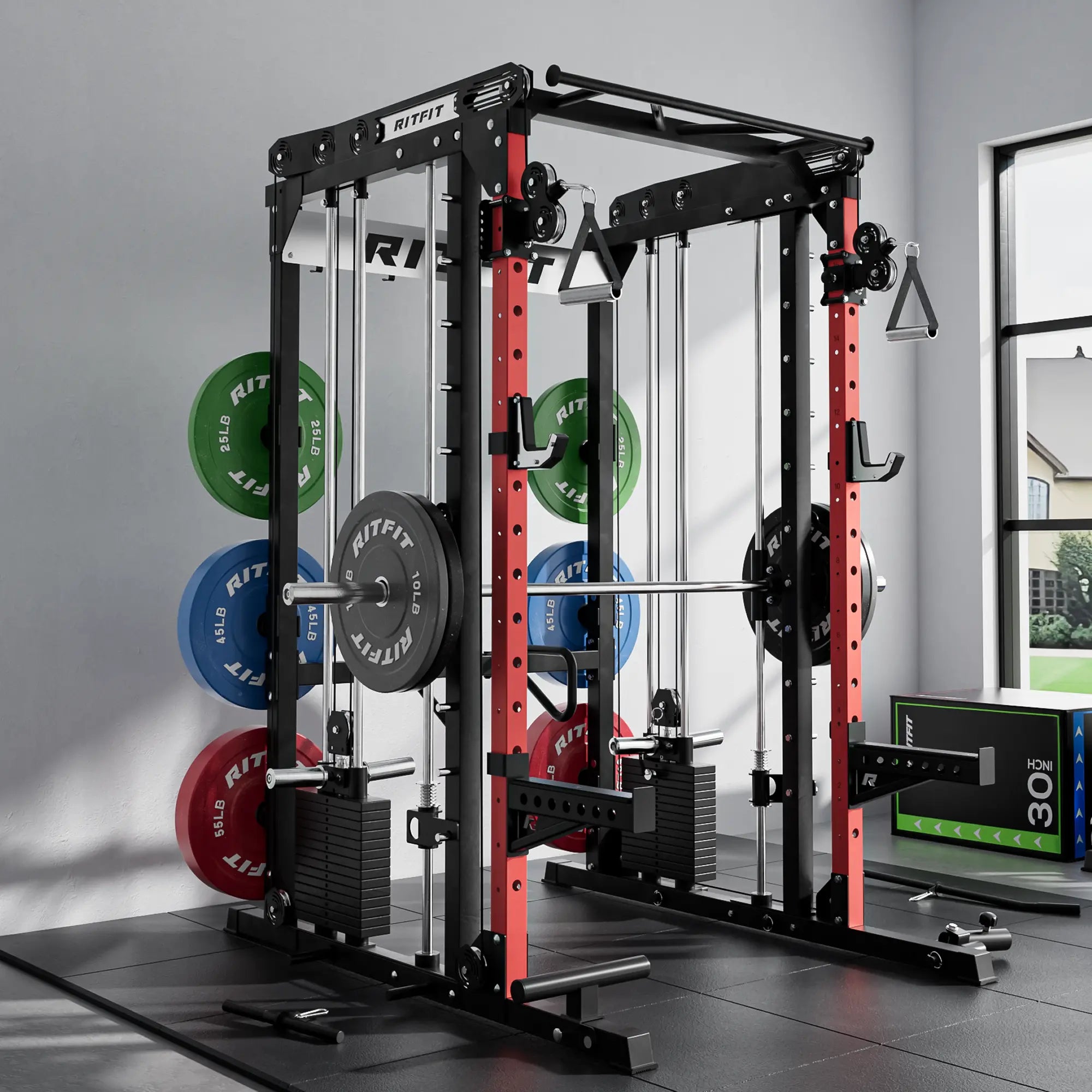
For machine-specific fit, begin with the Smith machine collection and open the exact model's instructions. For flooring options, compare the RitFit mats and flooring collection with the high-density interlocking tile listing, checking published coverage before purchase.
How Thick Should Smith Machine Flooring Be for Heavy Lifting and Drops?
Flooring thickness should match the activity and room while remaining compatible with the machine's installation requirements. A flooring expert's general recommendation can inform a comparison, but it cannot certify a Smith machine or a specific floor.
Garage Gym Reviews quotes former gym owner and Olympian Caine Wilkes on flooring for heavy lifting and overhead drops:
"If you're planning on heavy lifting, or dropping weight from overhead, I'd recommend a half-inch-thick rubber mat, at the minimum. That said, I typically prefer 3/4-inch flooring. This should be thick enough to help prevent damage to your floors or equipment if you drop weight."
Caine Wilkes, OLY, CNC, USAW-L1, former gym owner and Olympian, How Thick Should Gym Flooring Be, According to a Gym Owner and Olympian
Wilkes is discussing general gym flooring, not testing Smith-machine feet, anchor hardware, the RitFit tile, or an upper-floor assembly. Treat the thickness as an attributed point of comparison, then check your machine instructions and flooring product details.
How to Choose Flooring for a Smith Machine
Choose a flooring format only after checking the frame's support points, room surface, and training activity. The central distinction is static machine support under the feet versus impact protection in the area where free weights are handled.
- Interlocking tiles: Consider when modular coverage suits the room, but confirm the exact dimensions, pack coverage, seams, and whether added thickness is acceptable beneath the frame.
- Rubber roll or sheet: Consider for broader continuous coverage, then verify the actual product thickness and how it can be cut or fitted around anchors.
- Separate lifting platform: Consider a dedicated platform for planned barbell drops only when the platform is rated for that use and the room can support the complete setup.
For a Smith machine, avoid choosing by thickness alone. Verify the owner's manual, foot leveling, anchor installation, flooring coverage, and whether your planned set-down area is separate from the machine base.
Measure the Machine Base, Feet, and Landing Zone
Measure the machine base and training zone independently before estimating flooring. The usable layout must include all frame contact points and preserve clear access to loading sleeves, adjustment points, and doors.
- Record the base: Measure the outside length and width of the frame at floor level, including any feet that extend beyond the uprights.
- Mark every contact point: Note each leveling foot and anchor location, then compare them with the manual's required floor contact and installation method.
- Map the working area: Mark bench movement, plate loading, access paths, and any area where weights will be set down.
- Calculate from verified coverage: Divide the measured floor area by the product's stated coverage per package and round up to whole packages. If the listing does not provide coverage or tile dimensions, obtain those figures from the seller first.
- Check clearances: Dry-fit the proposed layout around thresholds, door swings, seams, and anchor points before assembly.
A published RitFit M1 PRO listing is one model-specific example, and its specifications should not be treated as an estimate for another machine. Use the exact model's dimensions and instructions; do not infer tile count or coverage from machine specifications.
3 Smith Machine Flooring Setups for Different Rooms
The right layout changes with the room surface and the kind of weight handling planned. Treat these as planning scenarios, then confirm the final design against the equipment manual and building requirements.
Concrete garage gym
On a solid, level concrete floor, compare a fitted layer beneath the base with a separate impact area beside it. Keep seams away from feet where practical, and verify that any anchors can still be installed as specified.
Wood or upper-floor room
On a wood or upper floor, ask a qualified building professional whether the complete equipment, plates, users, and activity are suitable for that floor assembly. A mat may protect a surface from some contact, but it does not establish structural capacity or prevent all transmitted vibration.
Machine with a separate drop zone
For a setup that includes barbell work, plan a dedicated landing zone outside the machine's support footprint. Select a platform or flooring system with published suitability for the intended activity rather than assuming general gym tiles are rated for drops.
For broader room-planning context, see RitFit's home gym flooring guide, Smith machine options for a basement gym, and Smith machine options for a garage gym.
RitFit Premium 0.8-Inch Interlocking Rubber Tiles: Who They May Suit
The RitFit Premium tile may suit buyers comparing modular flooring for a home or commercial gym, provided the exact dimensions and machine installation compatibility are confirmed before ordering. RitFit lists a 0.8-inch thickness, a dense rubber core, a durable PVC surface, and interlocking edges.
The official listing describes strength training, heavy equipment, and dropped-weight floor protection as intended uses, and lists Dark Walnut, Light Oak, and Dark Gray. These are manufacturer statements, not an independent load rating or Smith-machine compatibility certification.
- Known from the listing: 0.8-inch thickness, dense rubber core, durable PVC surface, interlocking edges, three color choices, and a displayed sale price of $169.99 when checked for this draft.
- Not stated on the listing: Tile dimensions, package quantity or coverage, load rating, compatibility with a named machine, and model-specific installation instructions.
- Warranty context: RitFit's current policy lists Flooring Mats with a 1-year warranty. Check with RitFit whether this exact product and purchase qualify under the policy terms.
Before buying, request the tile dimensions and package coverage, then compare thickness and contact geometry with the exact Smith machine manual. The RitFit Premium 0.8-inch interlocking rubber gym floor tiles listing is the source for the product details above; the current RitFit return and warranty policy is the source for the general Flooring Mats warranty category.
Install Around Leveling Feet, Anchors, and Doorways
Install flooring only in a way allowed by the exact machine's owner's manual. A general commercial machine manual illustrates why: TRUE's FS-30 manual calls for a solid, level surface, recommends anchoring, and says not to pull a gap beneath a foot closed with an anchor; follow the instructions for your own model instead.
- Confirm whether the machine can sit on added flooring and whether its feet must contact the subfloor directly.
- Check anchor type, location, reach, and installation sequence in the model-specific manual.
- Level all feet before tightening anchors; do not use hardware to pull a gap closed.
- Keep tile edges, seams, cutouts, and thresholds from interfering with full foot contact or door movement.
- Recheck the frame for rocking after installation and contact the manufacturer if the manual does not address the proposed flooring layer.
For a model-specific example of a Smith machine listing, see the RitFit M1 PRO Smith machine package or the RitFit multifunctional Smith machine listing; neither substitutes for the manual supplied with your own unit.
FAQs About Mats for Smith Machines
Can I put interlocking tiles directly under a Smith machine?
Only if the exact machine manual permits the added flooring and every foot remains level and fully supported. Check anchor reach and floor contact, and do not use an anchor to pull a gap closed. The RitFit tile listing does not provide machine compatibility, load rating, dimensions, or package coverage.
Should a Smith machine sit on a mat or beside one?
Follow the machine manual and the needs of the room. A layer beneath the base may affect leveling or anchoring, while a separate mat can cover a nearby set-down zone. Verify both layouts with the manufacturer when the manual does not specify flooring.
How can I estimate tile quantity for a Smith machine when package coverage is not listed?
Measure the outside base and the separate working area, then divide each planned floor area by the product's stated package coverage and round up to whole packages. The featured RitFit listing does not state tile dimensions or package coverage, so ask the seller before calculating an order. Do not assume a standard tile size or package count from the product name, and wait for the seller to confirm the actual coverage figure.
Are 0.8-inch rubber tiles always best for Smith machines?
No. The featured RitFit tiles are listed as 0.8 inches thick, but the listing does not publish machine-specific compatibility or a load rating. Compare the exact machine manual, feet, anchors, floor type, and room activity before choosing. The listed thickness is a product specification, not a universal recommendation. A different machine or floor assembly may need a different installation, so confirm those details before purchase.
Can gym tiles replace a platform for barbell drops?
No. Do not assume that general gym tiles are rated for barbell drops. RitFit describes its tiles as intended to help protect floors from dropped weights, but its listing provides no independent impact data or drop-weight limit. Choose a platform or flooring system specified for the planned activity.
Conclusion
The best mat for a Smith machine is the one that fits its frame and the room without compromising level feet or required anchors. Measure the base and impact zone separately, confirm the flooring details, and follow the exact machine manual before ordering or installing.
Compare flooring formats through the product details linked above, and check current offers in the RitFit discount guide. Ask for missing coverage details before estimating tile quantities.
Disclaimer
This guide provides general product-selection information and does not determine whether a floor can support a specific machine, user, or lifting activity. Follow the equipment manufacturer's instructions and consult a qualified building professional about upper-floor capacity or structural concerns.
References
Official product specifications, policy statements, and installation examples are linked in the relevant sections. Caine Wilkes's flooring recommendation is attributed to Garage Gym Reviews and is not presented as product testing. No scientific or clinical claims are made in this buying guide.