








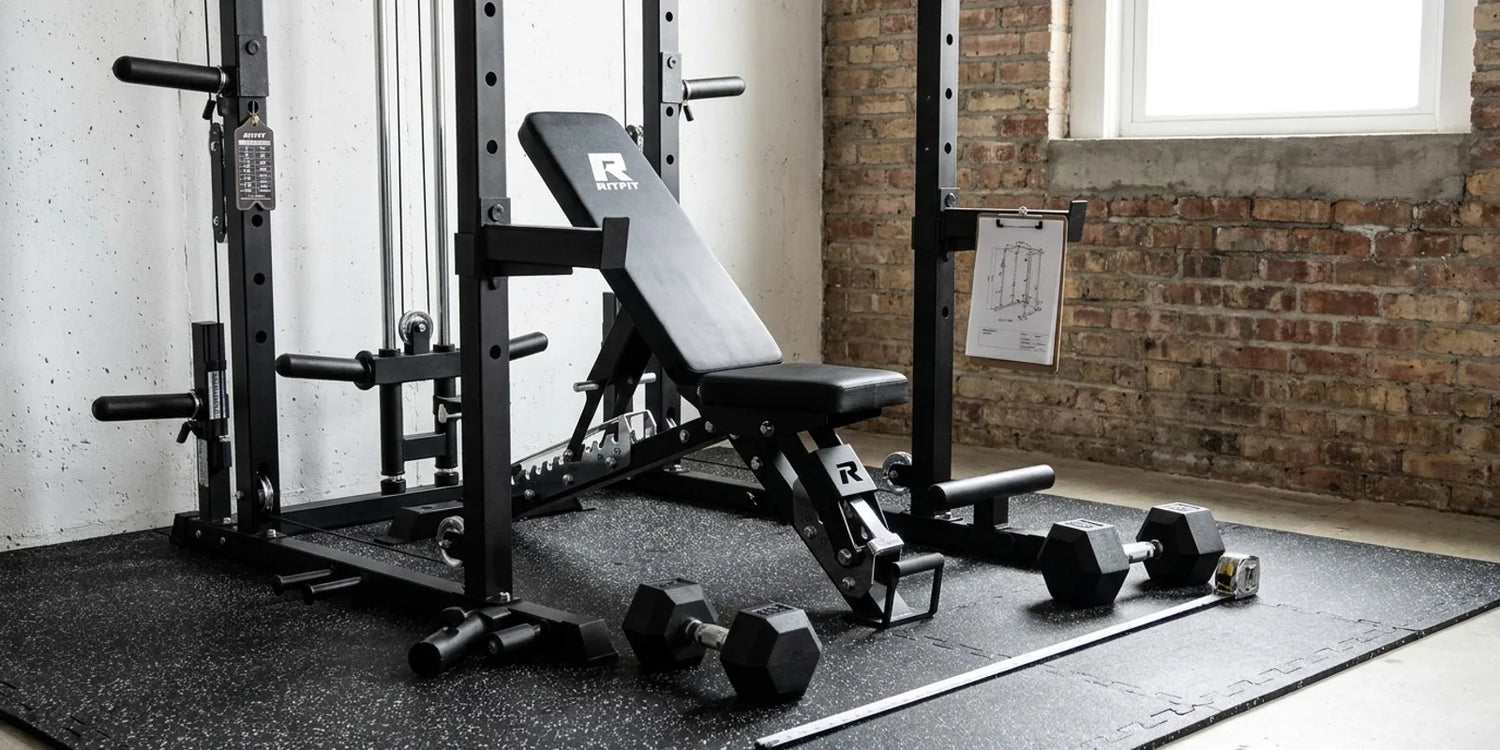
A safe and effective home gym starts with equipment that is stable, compatible, and suited to the lifts you actually perform. When you compare frame strength, safety features, footprint, bar design, and accessory options before buying, you build a training space that supports better performance and fewer avoidable mistakes.
This guide breaks down the home gym equipment technical specs that matter before you buy, from power cage stability to barbell and plate fit. Use it as a checklist on any technical specifications page.
Quick Answer: The home gym equipment technical specs that matter before you buy are frame stability, load capacity, safety failsafes, footprint, bar design, and attachment compatibility. Compare these details against the lifts and the space you actually have, because a stable, expandable setup beats a heavy one that does not fit.
Key Takeaways
- Start with the rack: Stability, safety arms, and rack compatibility shape the quality of your entire setup.
- Choose bars by function: Your barbell should match your mobility, available space, and primary training style.
- Use plates that fit the environment: Bumper plates are often the better match for home gyms that need floor protection and versatile loading.
- Add accessories with purpose: Benches, leg machines, grip bars, and bands should expand your programming, not just fill space.
- Read specs like a buyer, not a browser: Focus on dimensions, load limits, adjustability, and attachment fit before you buy.
How stable does a home power cage need to be?
A home power cage needs a frame that stays planted under heavy loads, safety arms that catch failed reps, and dimensions that fit your room. Review the BPC05 and PPC03 spec pages to compare structure, footprint, and load capacity before you buy.
- Structural Integrity: Choose a rack that feels planted under load and fits your room without sacrificing usable lifting space. The BPC05 Power Cage technical specifications are a useful starting point for reviewing structure, footprint, and core rack dimensions.
- Advanced Load Capacity: More advanced lifters should compare heavier duty frames that can support higher training demands and future add ons. Review the PPC03 technical specifications if you want to evaluate a more robust rack option for progressive strength work.
- Safety Failsafes: Spotter arms are one of the most important upgrades for solo training because they create a safer miss path on presses and squats. The 2x2 Spotter Arms are worth checking if your rack uses that size and you want better protection during hard sets.
Match the cage size to your ceiling height and lifting style before you commit. A rack that fits your space is easier to use safely and expand later.
Which barbell and plate specs fit your home gym?
The right barbell and plates match your movement comfort, room size, and training style rather than raw load capacity. Compare bar length, sleeve type, and floor friendly loading before you pair them with a rack.
- Specialty Bars for Comfort: A buffalo style bar can make squat positioning more comfortable for some lifters who dislike the shoulder position of a straight bar. The Buffalo Bar is a smart option to review if you want a bar profile that may feel friendlier during heavy squat work.
- Versatility in Training: Different bar lengths can make accessory work easier to manage in smaller spaces or mixed training setups. Check the technical specifications for our 4ft, 5ft, and 6ft straight training bars to compare the right fit for rows, curls, and other supplemental lifts.
- Floor Friendly Loading: Bumper plates are often the best fit for home gyms because they are built for repeated loading and help protect floors better than bare iron plates. The Olympic Rubber Bumper Plates are worth reviewing if you want a more home gym friendly plate setup.
"The standard bar length is a little over 7 feet, has '2-inch'/50mm diameter sleeves for loading the plates on, and weighs 20kg/44.1lbs. For home gym purposes, a 28.5 or 29mm bar will be the most durable and provide the best service over time. NEVER buy a 32mm bar. They are either junk, or a specialty squat bar that a home gym doesn't need."
Mark Rippetoe, Strength Coach and Author of Starting Strength, Starting Strength
What should you check on any technical specifications page?
A technical specifications page is useful only when you know which details affect fit, safety, and long term usability in your actual training space. Check footprint, load capacity, compatibility, and adjustment range before you compare anything else.
- Footprint and Clearance: Check the full length, width, and height before you compare anything else. A strong machine that does not fit your room or ceiling is the wrong machine for your home gym.
- Capacity and Intended Use: Compare stated load limits with the type of training you actually do. Static numbers matter, but the more important question is whether the equipment matches your real lifting style and progression plan.
- Compatibility: Make sure attachments, safeties, bars, and plates work with the rack size and sleeve type you already own or plan to buy. A system that is easy to expand usually gives you better long term value.
- Adjustment Range: Look for settings, grip options, and bench angles that support more than one exercise pattern. More useful adjustments usually mean more exercise variety without increasing your footprint.
Apply the same checklist to every piece you consider, not just the first one. Consistent comparisons make the final decision easier to justify.
Which accessories add the most training value at home?
Accessories and specialized machines should expand your programming by adding support, new angles, and more targeted fatigue. Buy an accessory only when it adds a movement your rack, bar, and plates cannot already cover.
- Lower Body Isolation: A leg press can help you add serious lower body volume without putting a bar on your back every session. The BLP02 technical specification is useful to review if you want a machine that supports focused quad and glute training at home.
- Upper Body Support: A stable adjustable bench improves pressing mechanics and expands your exercise menu well beyond flat pressing. The PCB01 technical specification highlights the kind of adjustability and support that matter for better setup quality.
- Back Training Variety: Multiple grip options can change wrist, elbow, and shoulder position enough to make pulling work feel more comfortable and more complete. The All-in-One Multi-Grip Lat Pull-Down Bar is a useful accessory for lifters who want more pulling variety from one station.
- Progressive Bodyweight Training: Pull up bands are practical for beginners and high volume trainees because they make assisted reps easier to scale. The Pull-Up Assist Band Set is worth considering if you want to build toward stricter pull ups with more manageable progression.
Start with one high value accessory and train with it before adding more. Purpose built additions beat a crowded corner of gear that never gets used.
FAQs About Home Gym Equipment Specs
What weight capacity should a home power cage support?
Yes.
A home power cage should support more than your current working weights so you have room to progress safely.
Check the stated load limit against your heaviest squat and bench numbers, then add a margin for spotters and future gains.
Most home lifters choose a frame rated well above their current one rep max.
How much ceiling clearance does a home gym rack need?
A taller lifter needs clearance above the rack so presses and pull ups never top out.
Measure from the floor to the lowest ceiling obstructions, then compare the rack height and your reach overhead.
Add extra space for plates, bars, and liftoff movement.
A generous ceiling makes every exercise safer.
Are bumper plates better than iron plates for a home gym?
Yes.
Bumper plates protect your floor and your bar because they are built for repeated loading and controlled drops.
Iron plates are thinner, which lets you load more weight per sleeve, but they transfer more impact to the floor.
Most home gyms choose bumpers for durability and floor safety.
What barbell length is best for a small home gym?
A shorter bar, such as a 4ft or 5ft straight training bar, is easier to manage in tight spaces and still supports rows, curls, and light pressing.
A full 7ft bar suits heavier squats and deadlifts when your room allows it.
Match the bar length to your space and primary lifts.
Do you need spotter arms when you train alone at home?
Yes.
Spotter arms create a safer miss path for presses and squats when no partner is available, so a failed rep ends on the safeties instead of on you.
Compare the arm length and rack compatibility before buying.
They are one of the highest value safety upgrades for solo training.
Can you build a solid home gym without a power rack?
Yes.
A power rack is the backbone for heavy compound lifting, but you can start with an adjustable bench, dumbbells, and bands for a capable beginner setup.
Add a rack when your loads and safety needs grow.
Buy in stages and let each purchase match your current training plan.
Conclusion
Building a home gym is not about collecting equipment. It is about choosing tools that fit your space, your training style, and your safety needs.
Use a technical specifications checklist before every purchase, then expand your setup as your training grows. Browse the full equipment range at RitFit Sales to compare specs and build your space step by step.
Disclaimer
This guide is for general educational purposes only and is not medical, rehabilitation, or engineering advice. Always follow the manufacturer's instructions, inspect equipment before each session, and train within your current ability and experience level.





