








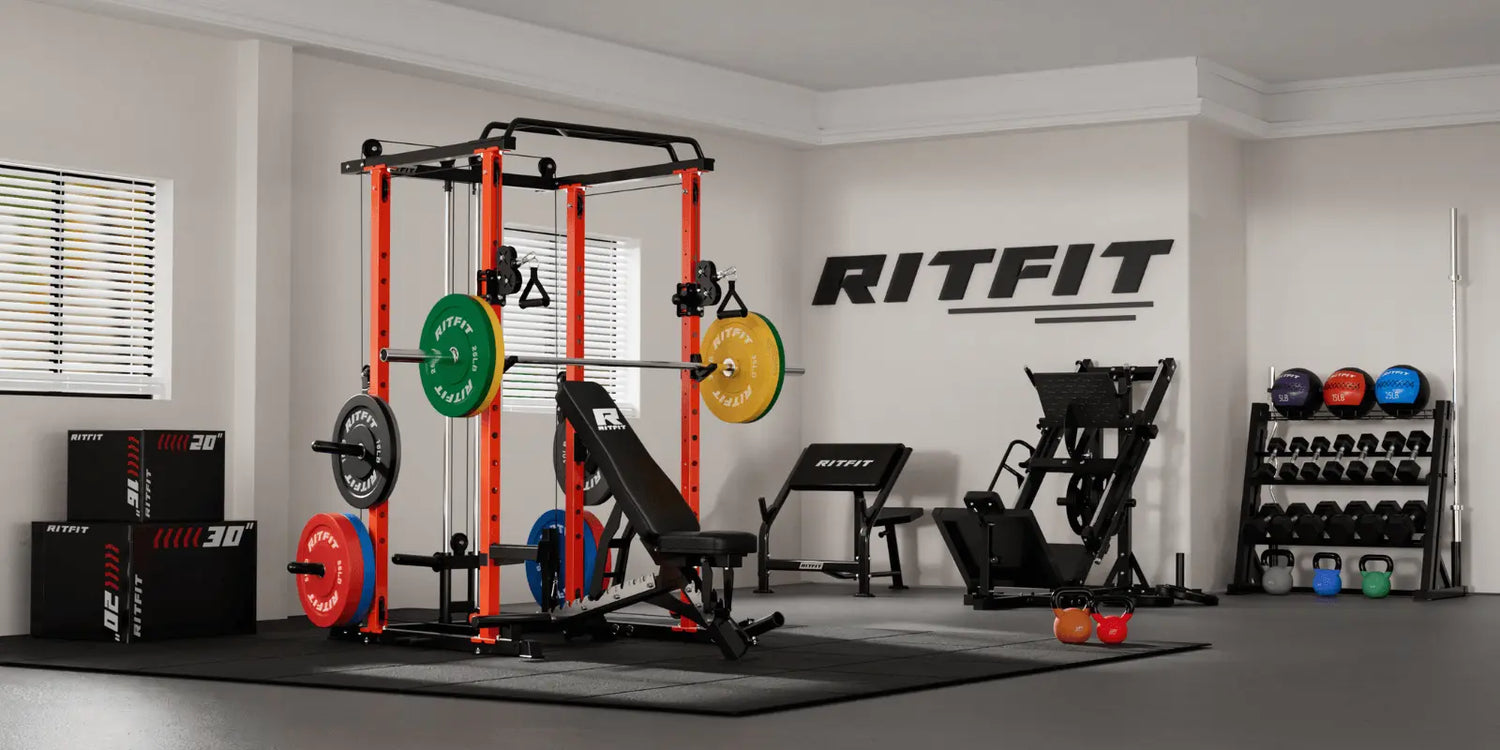
Setting up a home gym starts with matching your training goals, room size, and budget to the right equipment. A smart setup saves time, reduces wasted purchases, and makes consistent strength training easier at home.
This guide explains how to plan your space, choose core equipment, organize your layout, and build your gym in practical stages.
Quick Answer: The best home gym setup starts with your training goal, room size, and budget, then matches them to core equipment such as a power rack, barbell, plates, and adjustable bench. Plan your layout for safe clearances and durable flooring first, then expand in stages to keep the room functional and affordable.
Key Takeaways
- Start with goals before gear: Your training style should decide whether you need a rack, Smith machine, dumbbells, cables, or cardio equipment.
- Measure the room before buying: Ceiling height, walkway clearance, door swing, outlet access, and floor protection can decide what fits safely.
- Prioritize core equipment first: Flooring, a rack or Smith machine, a barbell, plates, and an adjustable bench create the strongest foundation.
- Build in stages: Add dumbbells, cable attachments, storage, cardio machines, and specialty tools after the main training station is working well.
- Safety matters most: Stable flooring, proper clearances, safety arms, controlled loading, and regular inspection are essential for solo home training.
Phase 1: Define Your Goals and Assess Your Space
The best home gym setup begins with a clear training goal and accurate room measurements. This prevents you from buying equipment that does not fit your space or support your routine.

Identify Your Training Style
Your training style should decide your first major purchase. A powerlifter needs a rack and barbell setup, while a general fitness user may start with dumbbells, a bench, and floor space.
- Strength Training and Powerlifting: Choose a heavy duty rack, Olympic barbell, bumper plates, and a stable bench. Explore power racks for home gym strength training if squats, bench press, and deadlifts are your priority.
- Bodybuilding and Hypertrophy: Choose equipment that supports pressing, rowing, squatting, curling, lateral raises, and cable work. Resistance training variables such as volume, load, tempo, and contraction type can influence hypertrophy outcomes.[1]
- General Fitness and Fat Loss: Choose a flexible setup that supports full body circuits, resistance training, and conditioning. A bench, dumbbells, kettlebells, bands, and one cardio option can cover most needs.
- Athletic Performance and Mobility: Leave open space for jumps, carries, sled patterns, and mobility drills. A half rack, plyo box, bands, and medicine ball can work better than a crowded machine layout.
Analyzing the Location
Your location decides your equipment size, noise control, climate needs, and flooring plan. A garage can support heavier equipment, while an apartment requires quieter loading and tighter storage.
- Garage Gym: A garage usually gives you a concrete slab and more freedom for heavy lifting. Plan for airflow, lighting, seasonal temperature changes, and enough clearance around the rack.
- Basement Gym: A basement can work well if you measure ceiling height before choosing tall racks or pull up stations. Humidity control is important because iron plates and barbells can rust.
- Spare Bedroom or Apartment: Noise and vibration control matter more than maximum load. Use dense flooring, controlled reps, compact dumbbells, and avoid dropping weights.
- Outdoor Patio: Outdoor setups need weather resistant equipment and covered storage. Moisture, sun exposure, and uneven ground can shorten the life of metal and upholstery.
Critical Measurements
You should measure your room before comparing equipment. The key numbers are length, width, ceiling height, walking clearance, loading clearance, and outlet access.
- Room Length and Width: Record the total footprint and mark where the rack, bench, plates, and dumbbells will sit. Keep enough room to load a barbell from both sides.
- Ceiling Height: Measure from the finished floor to the lowest ceiling obstruction. This matters for pull ups, overhead presses, cable attachments, and treadmills.
- Walkways: Leave at least two feet of clearance around major equipment when possible. This helps reduce tripping risk and makes plate changes easier.
- Electrical Access: Locate outlets before placing lights, fans, treadmills, or smart displays. Avoid running cords across lifting zones.
Phase 2: Infrastructure and Environment
A home gym should be safe, durable, and comfortable before you add heavy equipment. Flooring, lighting, airflow, and humidity control protect both your body and your gear.

Flooring Solutions
Home gym flooring protects the subfloor, reduces vibration, and gives your equipment a stable base. Do not place heavy racks, benches, or loaded barbells directly on tile, hardwood, or bare concrete.
- Rubber Stall Mats: Dense rubber mats are a practical choice for many garage gyms. They reduce impact noise and protect concrete from repeated plate loading.
- Interlocking Tiles: Interlocking tiles are easier to install and move. They work best for light training zones, cardio machines, and compact spare room gyms.
- Lifting Platform: A lifting platform is the better choice for heavy deadlifts or Olympic lifting. A wood center with rubber sides spreads impact and improves pulling stability.
- RitFit Flooring Option: If you want a ready made surface, review rubber high density interlocking gym flooring mats for compact home gym zones.
Lighting and Atmosphere
Bright lighting improves visibility and makes training feel more intentional. Good visibility is also a safety factor when loading plates, setting safety arms, and checking form.
- Lighting: Replace dim bulbs with bright LED shop lights or ceiling fixtures. Avoid dark corners around racks and cable stations.
- Mirrors: Mirrors can help you check bar path, squat depth, and posture. They should support technique awareness, not replace proper coaching.
- Ventilation: Airflow supports comfort during hard sets and conditioning work. Use a wall fan, open garage door, or dehumidifier depending on the room.
Phase 3: Core Equipment Selection
Your core equipment should support the exercises you will repeat every week. For most strength focused home gyms, the foundation is a rack or Smith machine, barbell, plates, bench, and safe flooring.

The Rack as the Centerpiece
The rack is the center of most strength training home gyms. It supports squats, presses, pull ups, rack pulls, and safer solo lifting when paired with properly set safeties.
- Power Rack: A power rack offers four uprights and the highest solo lifting safety potential. It is best for users who want free weight training with adjustable safety arms or straps.
- Smith Machine: A Smith machine guides the bar path and can help beginners or hypertrophy focused lifters train with more control. Compare Smith machines for home gym strength training if you want guided lifting, cable options, and rack style versatility.
- All In One Setup: An all in one machine can combine guided lifting, cable work, pull ups, and rack functions in one footprint. The RitFit M1 PRO Smith machine home gym package is relevant for buyers who want a larger strength training ecosystem.
The Barbell and Weights
A barbell and weight plates turn the home gym into a progressive training environment. Resistance training can support strength, muscle mass, metabolic health, and functional capacity when programmed appropriately.[2]
- Olympic Barbell: Choose a bar that matches your training style, hand feel, and loading needs. For most home gyms, a general purpose Olympic bar is enough.
- Bumper Plates: Bumper plates are useful when noise control and floor protection matter. They are also more forgiving than iron plates when handled in a home setting.
- Iron Plates: Iron plates are thinner and let you load more weight on the sleeve. They are usually noisier and less forgiving on floors.
- Complete Plate Path: Review barbells and weight plates for home gym training if you are building a barbell based setup from scratch.
- Specialty Bars: Add specialty bars only after the main barbell setup is complete. Trap bars, curl bars, and safety squat bars can expand exercise options later.
The Bench
A bench expands pressing, rowing, dumbbell, and Smith machine exercise options. For most home gyms, an adjustable bench offers more long term value than a flat only bench.
- Adjustable Bench: An adjustable bench supports flat, incline, and sometimes decline movements. Browse adjustable weight benches for home gym training if you want more exercise variety from one piece of equipment.
- Flat Bench: A flat bench is usually simpler, stable, and budget friendly. It is enough for flat pressing, rows, and step up variations.
- Bench Clearance: Measure how far the bench moves in and out of the rack. You need enough space to align the bench for bench press, incline press, and seated shoulder work.
Phase 4: Expanding Your Arsenal
Expansion should happen after the core setup is useful and safe. Add equipment that solves a specific training limitation instead of filling the room with tools you rarely use.
Dumbbells and Kettlebells
Dumbbells and kettlebells add unilateral work, accessory volume, and conditioning options. They are especially useful when you want more exercise variety without adding another large machine.
- Adjustable Dumbbells: Adjustable dumbbells save space by replacing multiple fixed pairs. They are ideal for apartment gyms and compact spare rooms.
- Fixed Dumbbells: Fixed dumbbells are faster to use between sets. Browse dumbbells for home gym strength training if convenience and quick transitions matter.
- Kettlebells: Kettlebells support swings, carries, goblet squats, and mobility focused training. Start with one or two practical weights before building a full set.
Cable Systems
Cable systems add constant tension and make accessory work easier to program. They are useful for back training, arm work, rear delts, core work, and controlled isolation exercises.
- Functional Trainer: A functional trainer gives you adjustable cable angles for flys, rows, pulldowns, pressdowns, and face pulls. It is best when you have enough space and want high exercise variety.
- Lat Pulldown and Low Row: A lat pulldown and low row station helps balance pressing volume with back training. This matters because a well planned home gym should support both pushing and pulling patterns.
- Rack Attachments: Attachments can expand a rack without replacing the whole setup. Explore rack attachments for home gym expansion if you want to add cable, lever arm, or storage functions later.
Cardio Equipment
Choose cardio equipment only if it fits your routine and room. A single well used cardio machine is better than two bulky machines that block your lifting space.
- Air Bike: An air bike is effective for high intensity intervals and full body conditioning. It is noisy, so it may not fit apartments or shared walls.
- Rowing Machine: A rower offers low impact cardiovascular work and folds upright in many designs. It requires enough floor length during use.
- Treadmill: A treadmill fits users who already run or walk consistently. Measure ceiling clearance with the deck height and incline in mind.
Phase 5: Logistics and Organization
A clean home gym is safer and easier to use consistently. Storage should keep plates, bars, collars, bands, and attachments off the floor and close to the exercises that need them.
Storage Solutions
Storage should reduce clutter without making equipment hard to access. The best storage plan keeps heavy items low, frequently used items visible, and walkways clear.
- Weight Tree: A plate tree keeps plates organized and reduces trip hazards. Place it near the rack but outside the main lifting path.
- Barbell Holder: A vertical or wall mounted holder protects sleeves and saves floor space. Keep barbells away from door swings and damp corners.
- Wall Storage: Pegboards and slat walls can store bands, chains, barbell accessories and collars, handles, and belts. This keeps smaller tools visible and easier to return after training.
- Weight Storage: Browse weight storage for organized home gyms if plates and dumbbells are starting to crowd the floor.
Maintenance and Safety
Home gym safety depends on setup, loading habits, and regular inspection. Proper instruction and age appropriate loading are key safety themes in resistance training research.[3]
- Cleaning: Wipe upholstery after training and remove sweat from metal surfaces. Brush chalk out of barbell knurling when grip buildup becomes visible.
- Inspection: Check rack bolts, bench hardware, pulleys, cables, pins, and J hooks on a schedule. Stop using any component that feels loose, frayed, bent, or unstable.
- Safety Arms: Set safety arms or spotter pins before squatting or bench pressing alone. They should catch the bar below your completed range but above a dangerous bottom position.
- Controlled Loading: Add weight gradually and keep collars on the bar. Consistent progression matters more than sudden jumps in load.
Phase 6: Budgeting and Purchasing Strategy
A home gym does not need to be finished in one purchase. The smartest approach is to buy the essentials first, then expand after your routine proves what you actually use.
The Budget Beginner Strategy
Start with flooring, a bench, dumbbells, bands, and one core strength station if space allows. This keeps the first purchase practical while still supporting full body training.
- Best First Buy: Choose flooring and one training anchor before buying accessories. A rack, Smith machine, or dumbbell bench setup should match your main workouts.
- Best Space Saver: Adjustable dumbbells, foldable benches, wall storage, and compact racks help small rooms stay usable. Avoid buying fixed equipment that blocks movement paths.
- Best Upgrade Path: Add plates, cable attachments, storage, and cardio after your weekly routine is stable. This prevents impulse buys and keeps the room functional.
The Buy Once Cry Once Approach
Investing in reliable core equipment can save money over time. A stable rack, durable bench, quality barbell, and strong flooring often outlast cheaper replacements.
- Prioritize Structure: Put more budget into the equipment that holds your body or the bar. Racks, benches, barbells, and safeties deserve more scrutiny than small accessories.
- Plan for Progression: Choose equipment that can support heavier loads and added attachments. Training volume and progressive overload are major variables in long term strength and hypertrophy planning.[4]
- Think in Systems: Review strength machines for home gym training if you want to build around a more complete machine based setup.
Financing and Shipping
Financing can make a home gym feel more like a monthly membership replacement. Always compare the total cost, shipping method, delivery location, and assembly effort before ordering.
- Freight Delivery: Large machines may arrive on a pallet at the curb. Plan help, tools, and a clear route before delivery day.
- Assembly Planning: Read the manual before opening all boxes. Sort hardware, protect the floor, and tighten bolts only after the frame is aligned.
- Long Term Cost: Include flooring, storage, collars, attachments, and maintenance supplies in your budget. These small items often determine how well the gym works day to day.
FAQs About Home Gym Setup
How much space do you need for a home gym?
Most home gyms need enough space for one main training station, safe walkways, and plate loading clearance. A small room can work with dumbbells and a bench, while a garage gym can support a rack, barbell, plates, storage, and cable equipment.
What equipment should you buy first for a home gym?
Start with flooring, one core strength station, a barbell or dumbbells, plates, and an adjustable bench. These pieces support the most repeatable training patterns, including squats, presses, rows, hinges, carries, and accessory work, without crowding the room too early in the build.
Can you set up a home gym in a basement?
Yes.
A basement can work well if ceiling height, humidity, flooring, and equipment clearance are planned first.
Measure before buying tall racks or pull up stations, use a dehumidifier when needed, and keep iron plates and barbells away from damp walls.
Is a Smith machine good for a home gym?
Yes.
A Smith machine can be a good home gym choice for guided lifting, solo training, and controlled hypertrophy work.
It is especially useful when paired with cables, a bench, safeties, and enough floor space for pressing, squatting, rowing, and accessory exercises.
Should you choose a power rack or a Smith machine for a home gym?
Choose a power rack if you prefer free weight barbell training and maximum exercise freedom. Choose a Smith machine if you want guided bar movement, easier solo setup, and integrated cable options, especially when your goal is controlled strength and muscle training.
What flooring is best for a garage gym?
Dense rubber flooring is usually best for a garage gym because it protects concrete, reduces vibration, and supports heavy equipment. Stall mats, interlocking rubber tiles, or a lifting platform can all work, depending on your budget, lifting style, and noise needs.
How should beginners budget for home gym equipment?
Beginners should budget in stages instead of buying everything at once. Start with flooring, one main training station, basic weights, and a bench, then add dumbbells, cables, cardio, and storage after several weeks of consistent training shows what you actually need.
Which home gym equipment saves the most space?
Adjustable dumbbells, foldable benches, wall storage, compact racks, and all in one strength machines save the most space. The best choice depends on whether you need free weight training, guided lifting, cable exercises, conditioning work, or general fitness variety at home.
Conclusion
Start your home gym with your space, not your wish list. Measure the room, protect the floor, choose one core training station, then add weights, a bench, storage, cables, and cardio in stages.
A good home gym removes friction from training and makes consistency easier. Build the foundation first, keep the layout safe, and expand only when the next purchase solves a real training need.
Check the RitFit sales page for current deals on racks, benches, and plates.
Disclaimer
This article is for general educational purposes only and is not medical advice. Always follow product manuals, inspect equipment before use, train with appropriate loads, and consult a qualified professional if you have medical concerns, injury history, pain during exercise, or uncertainty about safe technique.
References
1. Bernárdez-Vázquez R, Raya-González J, Castillo D, Beato M. Resistance training variables for optimization of muscle hypertrophy: an umbrella review. Front Sports Act Living. 2022;4:949021. doi:10.3389/fspor.2022.949021. PMCID: PMC9302196
2. Warburton DER, Nicol CW, Bredin SSD. Health benefits of physical activity: the evidence. CMAJ. 2006;174(6):801-809. doi:10.1503/cmaj.051351. PMCID: PMC1402378
3. Faigenbaum AD, Myer GD. Resistance training among young athletes: safety, efficacy and injury prevention effects. Br J Sports Med. 2010;44(1):56-63. doi:10.1136/bjsm.2009.068098. PMCID: PMC3483033
4. Schoenfeld BJ, Contreras B, Krieger J, et al. Resistance training volume enhances muscle hypertrophy but not strength in trained men. Med Sci Sports Exerc. 2019;51(1):94-103. doi:10.1249/MSS.0000000000001764. PMCID: PMC6303131





