








Table of Contents
Key Takeaways
- Natural Reality: A drug-free body is defined by proportionality and athletic function, distinct from the "dry and full" look of enhanced physiques.
- Timeline for Growth: Expect 10–20 pounds of muscle in year one (the "newbie gains" phase), with diminishing returns in subsequent years.
- Training Philosophy: Focus on compound movements and progressive overload. Consistency with a "good enough" plan beats a perfect plan you quit.
- Nutrition Strategy: Utilize the 80/20 rule and portion control rather than restrictive "clean eating" or "dirty bulking."
- Medical Perspective: Recovery is the primary driver of growth. Sleep and stress management are as critical as gym volume.
The Reality of the Natural Look
To build a physique that lasts a lifetime, we must first dismantle the false images sold by the industry. Building a body without shortcuts is a long road that demands patience, honesty, and hard work. The fitness world is full of noise, selling quick fixes and impossible dreams. This guide cuts through that noise to show you exactly what is possible naturally. We will explore the real look of a drug-free body, the timeline for true growth, and the simple habits that actually work. This is not about hype or marketing. It is about building a strong, capable body that lasts a lifetime. Welcome to the honest truth about natural fitness.
The first step in building a natural physique is understanding what is actually achievable. We live in an era where social media feeds, movie screens, and magazine covers are dominated by bodies that are often the result of extreme genetics or pharmaceutical assistance. For the everyday man, trying to look like an action hero or a professional bodybuilder is often a recipe for disappointment. A natural body has a distinct look, feel, and function that is different from the enhanced look, and recognizing these differences is key to setting healthy goals.
Visual Differences You Can See
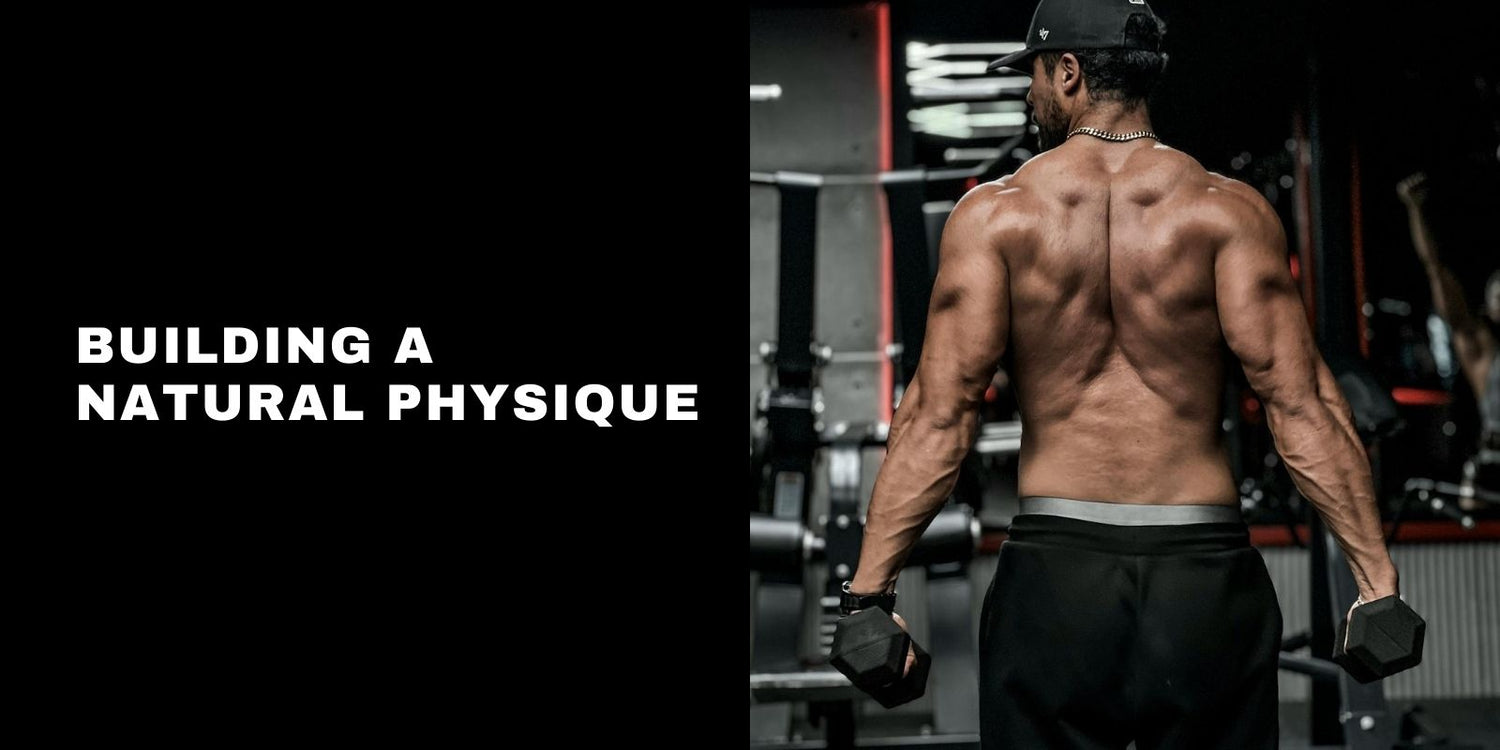
When you look at a natural lifter versus someone using performance-enhancing drugs, there are specific visual cues that tell the story. The most obvious difference is in the "3D" look of the muscles. Enhanced lifters often have muscles that look inflated, round, and hard even when they are completely relaxed. This is especially true in the shoulders and the upper back muscles known as the traps. These areas have more receptors that respond to drugs, causing them to grow out of proportion to the rest of the body. In a natural lifter, the shoulders will look broad and strong, but they usually won't look like cannonballs stuck to the side of the body. The traps will slope naturally from the neck rather than sitting high up near the ears.
Another major difference is the condition of the skin and the "dryness" of the look. Enhanced bodybuilders often achieve a look that is simultaneously huge and shredded, with paper-thin skin and veins popping out everywhere. For a natural guy, the body works hard to keep a balance. When you get very lean, your muscles tend to lose some of their fullness because they hold less water and energy. When you are well-fed and your muscles are full, you usually carry a little bit more body fat and water under the skin. It is very rare for a natural lifter to look "dry" and "full" at the same time. You usually have to pick one: look big and a bit softer, or look ripped and a bit smaller.
The comparison below breaks down these visual differences to help you spot realistic goals.
| Feature | The Natural Look | The Enhanced Look |
| Shoulders (Delts) | Broad and strong, but proportional to the arms and chest. | Round, "capped" look, often popping out aggressively even at rest. |
| Upper Back (Traps) | Slopes naturally from the neck; developed but not mountainous. | Sit very high, creating a "no neck" appearance; extreme thickness. |
| Muscle Fullness | Muscles look flatter when dieting; fullness comes with plenty of food. | Muscles stay round and full even when dieting heavily. |
| Vascularity (Veins) | Veins appear mostly on arms and legs when lean or hot. | Veins visible everywhere, including abs, chest, and shoulders. |
| Skin Texture | Normal skin thickness; retains some water for health. | "Paper thin" or "grainy" skin look; extremely dry appearance. |
| Year-Round Condition | Fluctuates between leaner and softer seasons. | Maintains extreme leanness with muscle fullness year-round. |
Understanding these differences protects you from the "imposter syndrome" many men feel. If you are working hard but don't have veins on your abs or shoulders that look like pumpkins, you aren't failing. You are just normal. A natural body flows. It looks athletic and functional. It looks like it was built for moving furniture or hiking a mountain, not just for posing under stage lights.
The Limits of Size
There is a biological ceiling to how much muscle you can build. Your body produces a specific amount of hormones that regulate growth, and once you tap out that natural potential, you cannot force more growth just by eating more or training harder. Scientists and coaches often use a calculation called the Fat-Free Mass Index to estimate this limit. While we won't get bogged down in complex math, the takeaway is simple: there is a cap.
For a man with average genetics, the limit is often a lean, athletic build. Think of a soccer player or a swimmer, but with a bit more thickness. You might reach a point where you look great in a t-shirt and impressive at the beach, but you will never be the biggest guy in the room. For those with elite genetics, the top 1% of the population, the limit is higher. These men might win natural bodybuilding contests or set powerlifting records. They look undeniably big and muscular, but even they will look small standing next to a professional bodybuilder on drugs.
Bone structure plays a massive role here. If you have thick wrists and ankles, you have a "large frame." A larger skeleton can support more muscle tissue. It’s like building a house; a bigger foundation allows for a bigger structure. A guy with a small, narrow frame can still build impressive muscle, but he will never carry the same raw amount of weight as a guy with a thick, lumberjack-style frame. This isn't a flaw; it's just biology. A smaller frame often looks more aesthetic because the muscle bellies pop more against the smaller joints. A larger frame looks more powerful and imposing. Both are winning hands if you play them right.
The Truth About Being Ripped
We need to talk about the "shredded" look. The fitness industry loves to show men with six-pack abs 365 days a year. They tell you that if you just buy their fat burner or follow their diet, you can look like that too. The truth is much harsher. For a natural lifter, staying extremely lean all the time usually comes with a heavy price tag.
When you diet down to very low body fat, the kind where your abs are razor sharp, your body thinks it is starving. Your testosterone levels drop. Your energy crashes. Your sex drive disappears. You might feel cold all the time and become irritable. Building muscle in this state is almost impossible because your body is trying to save energy, not build expensive new tissue.
Staying extremely lean all the time usually comes with a heavy price tag. When you diet down to very low body fat, such as the 5% levels seen on stage, your testosterone levels drop and your energy crashes as the body enters a survival state[1]. For most natural men, the healthy "sweet spot" is 10–15% body fat.
Timelines for Real Growth
One of the biggest reasons men quit the gym is that their expectations are wildly out of sync with reality. They expect to look like a superhero in three months. When it doesn't happen, they assume they are doing something wrong or that they have bad genetics. The truth is that building a natural body is a slow, grinding process measured in years, not weeks.
The First Year: The Golden Era
If you are just starting out, you are in the "newbie gains" phase. During this first year, it is realistic for a dedicated man to gain anywhere from 10 to 20 pounds of muscle as the body rapidly adapts to the novel stress of resistance training[2]. Years Two, Three, and Beyond As you enter your second and third years, the growth slows. By year five, you are an "advanced" lifter. While you may not be gaining much raw size, your muscle quality improves, a phenomenon often called "muscle maturity."
Years Two and Three: The Slowdown
As you enter your second and third years, the game changes. You are no longer a beginner. You are an intermediate lifter. The "low-hanging fruit" has been picked, and now you have to climb the tree to get the rest.
In year two, a realistic expectation for muscle growth drops to roughly half of what you got in year one. You might gain 6 to 10 pounds of muscle. In year three, it drops again, perhaps to just 3 to 5 pounds. This is known as the law of diminishing returns. The closer you get to your genetic potential, the harder every ounce of progress becomes.
This is the phase where many men lose motivation. They are working just as hard, often harder, but the scale is barely moving, and the mirror looks the same from month to month. This is where discipline beats motivation. You have to fall in love with the process of training, not just the result. You have to find joy in adding 5 pounds to your squat or perfecting your form, rather than just seeing your biceps get bigger every week.
Year Five and Beyond: The Grind
By the time you have been training consistently for five years, you are an advanced natural lifter. You have likely built 90% of the muscle you will ever have. Gaining even 1 or 2 pounds of pure muscle in a year at this stage is a huge victory.
Progress at this level is almost invisible in the short term. You might look exactly the same in January as you do in December. However, there is a silver lining. While you may not be gaining much raw size, your muscle quality improves. This is often called "muscle maturity." Years of contracting your muscles against heavy resistance gives them a harder, denser, grainier look. You might weigh the same as you did three years ago, but you look more impressive because the muscle has a permanent, etched-in quality that newbies don't have.
At this stage, the goal shifts from "getting huge" to "refining the work." You might focus on bringing up a lagging body part, improving your flexibility, or simply maintaining your strength as you age. Staying in top shape in your 30s, 40s, and 50s becomes the new challenge. The guys who stick it out this long are the ones who truly love the lifestyle.
The Plateau Reality
Every natural lifter hits walls. You will have periods where your bench press is stuck at the same weight for six months. You will have times when your weight won't budge no matter what you eat. This is normal. A plateau is not a failure; it is a signal. It might mean you need to eat more food. It might mean you need to sleep more. Or it might mean you need to back off and rest.
Sometimes, the best way to break a plateau is to do less. If you have been hammering your body for months, you might be carrying a deep fatigue that is masking your fitness. Taking a "deload week," where you lift lighter weights or take a few days off entirely, can wash away that fatigue and allow your body to supercompensate and grow. Learning to listen to your body and adjust your plan is what separates the veterans from the guys who burn out and quit.
Training Templates and Cards
Effective training does not require complexity; it requires adherence. Below are the foundational principles and a "Minimal Effective Dose" template designed for longevity.
The Power of Compound Movements
If you have a job, a family, and a life, you need efficiency. The most efficient tools in the gym are compound movements, which maximize systemic strength and structural adaptation by utilizing multiple muscle groups simultaneously[3]. Think about a squat. When you squat, you are moving your knees and your hips. You are working your quads, your hamstrings, your glutes, your lower back, and your abs. One exercise hits half your body. Compare that to a leg extension machine, which just hits the quads. You would have to do four or five isolation machines to get the same work as one set of squats.
The Four "Big Rocks" of Training:
- The Squat Pattern: Squats, Goblet Squats, Leg Press.
- The Hinge Pattern: Deadlifts, Romanian Deadlifts, Kettlebell Swings.
- The Push Pattern: Bench Press, Overhead Press, Push-Ups, Dips.
- The Pull Pattern: Pull-Ups, Rows, Lat Pulldowns.
Workout Card A: The Dad Workout (Minimal Effective Dose)
Best for: Beginners, New Parents, and Busy Professionals. Frequency: 3 days per week (e.g., Mon, Wed, Fri). Duration: 30-40 Minutes.
- Warm-up: 5 minutes of light cardio or dynamic stretching.
-
Circuit 1 (3 Rounds):
- Goblet Squats: 12 reps.
- Push-Ups: As many as possible (AMRAP).
- Rest 60 seconds.
-
Circuit 2 (3 Rounds):
- Dumbbell Rows: 10 reps per arm.
- Dumbbell Shoulder Press: 10 reps.
- Rest 60 seconds.
-
Finisher (2 Rounds):
- Plank: Hold as long as possible.
The Golden Rule: Do A Little More
The fancy term for this is "Progressive Overload," but let's call it the Rule of Doing More. Your body is smart and lazy. It will not build muscle unless it is forced to. If you lift the same 20-pound dumbbell for 10 reps every week for a year, your body will stay exactly the same. It has already adapted to that stress. To force new growth, you must increase the demand.
You can do this in several ways:
- Add Weight: Lift 25 pounds next week.
- Add Reps: Lift the 20 pounds for 12 reps instead of 10.
- Add Sets: Do 3 sets instead of 2.
- Improve Form: Do the reps slower and with better control, making the weight feel heavier.
- Rest Less: Do the same work in less time.
You must keep a logbook. Whether it's a notebook or an app on your phone, write down what you did. Before you start a set, look at what you did last week and try to beat it. Even if you only add 2.5 pounds or one single rep, that is progress. Those tiny wins compound over years into a massive physique.
Nutrition Card: The Hand Portion Method
Forget complex calorie counting if it stresses you out. Use your hand to measure portions. This method scales naturally with your body size.
Meal Frequency: 3 or 4 times a day.
- Protein (The Palm): 1 palm-sized portion of meat, eggs, or fish. (Provides amino acids for repair).
- Carbohydrates (The Fist): 1 fist-sized portion of rice, potatoes, oats, or fruit. (Provides glycogen for energy).
- Vegetables (The Fist): 1 fist-sized portion of greens. (Provides fiber and micronutrients).
- Fats (The Thumb): 1 thumb-sized portion of oils, nuts, or butter. (Essential for hormone production).
Good Sources:
| Source | Why it's good | Tips |
| Chicken Breast | Pure protein, low fat, cheap. | Cook in bulk for the week. |
| Eggs | High quality, healthy fats in yolk. | Hard boil for snacks. |
| Greek Yogurt | High protein, gut healthy. | Mix with fruit for dessert. |
| Lean Beef | Iron, B-vitamins, natural creatine. | Choose 90% lean or higher. |
| Canned Tuna | Very cheap, pure protein. | Mix with a little mayo/mustard. |
| Whey Protein | Convenient, fast digesting. | Good for post-workout. |
The 80/20 Rule:
- 80% of the time: Eat whole, healthy foods like the ones listed above.
- 20% of the time: Eat whatever you want. Have a burger. Eat some pizza. Have a beer with friends. This flexibility keeps you sane. It prevents binge eating. If you know you can have a slice of cake at a birthday party, you won't feel deprived. One bad meal doesn't make you fat, just like one salad doesn't make you skinny. It's the average that counts. You want a diet you can follow for 10 years, not 10 days.
Recovery and the Mental Game
Rest: The Unsung Hero
Here is a secret: You don't grow in the gym. You grow in bed. The gym is where you break the muscle down. Sleep and food are where you build it back up. If you train hard but sleep 5 hours a night, you will not grow. You will just burn out. Sleep is the best natural performance enhancer in the world. It is when your body releases growth hormone and testosterone. Prioritizing 7-8 hours of sleep is more important than any supplement you can buy. If you are stressed and sleep-deprived, adding another grueling workout might actually hurt you more than help you. Sometimes the best thing you can do for your physique is go to bed an hour earlier.
Dealing with "Gymtimidation"
Many men, especially beginners, feel anxious in the gym. They feel like everyone is watching them and judging them.
- The Truth: No one cares. The big guy in the corner is looking at himself in the mirror, not you. The girl on the treadmill is watching Netflix. Everyone is stuck in their own head.
- The Strategy: Go in with a plan. If you know exactly what exercises you are going to do, you won't feel lost. Put your headphones on, play your music, and get to work.
- The Etiquette: Be a good citizen. Put your weights back. Wipe down your sweat. Don't block the mirror. If you do these things, you will be respected by the regulars instantly, no matter how much you lift.
Final Thought: A Simple Start
You don't need to overhaul your entire life tomorrow. Start small. Commit to 3 days: Go to the gym Monday, Wednesday, and Friday for 45 minutes. Fix Breakfast: Start eating a high-protein breakfast (like eggs or yogurt) every day. Sleep: Try to get to bed 30 minutes earlier. Do that for a month. Then add another habit. Fitness is a marathon, not a sprint. You have the rest of your life to get this right. Don't rush. Enjoy the process of becoming a stronger, more capable man. The body you build naturally will be a badge of honor that no one can take away from you. It is proof that you can do hard things. And that is worth more than any plastic trophy.
Important disclaimer: This article is for general educational purposes only and is not medical advice. If you have shoulder, neck, back, elbow, or wrist pain, a recent injury or surgery, numbness or tingling, unexplained weakness, or dizziness, consult a qualified clinician before starting. Stop any exercise that causes sharp pain.
FAQs
How much muscle can I realistically build in my first year?
You can expect to gain approximately 10 to 20 pounds of muscle during your first year of dedicated training. This rate significantly decreases in subsequent years due to diminishing returns. Most natural lifters will fight for just 1 or 2 pounds of new tissue annually after the beginner phase ends.
Do I need supplements like creatine or whey to see results?
Supplements are not required for building a great physique. Whole foods should form the foundation of your diet because they provide better satiety and nutrients. Creatine monohydrate and whey protein are the only exceptions worth buying for their convenience and proven performance benefits. Avoid expensive fat burners and testosterone boosters.
Is it better to train muscles once a week or more frequently?
Training each muscle group 2 or 3 times per week generally yields better results for natural lifters than training them once. This frequency takes advantage of the muscle growth signal, which only lasts about 48 hours after a workout. Full-body or upper/lower splits allow you to hit this optimal frequency.
Is it healthy to stay shredded with visible abs year-round?
Maintaining extremely low body fat year-round is often unsustainable and unhealthy for natural athletes. You may experience low energy, poor sleep, and hormonal crashes. A body fat range of 10 to 15 percent is a healthier goal that allows you to feel strong while still looking athletic and lean.
Why has my progress stopped after the first few months?
You have likely reached the end of the newbie gains phase, where growth is rapid and easy. This transition to intermediate status requires more patience and structured progressive overload. You must now focus on small incremental improvements in strength and form rather than expecting the rapid visual changes you saw initially.
References
- Rossow LM, Fukuda DH, Fahs CA, Loenneke JP, Stout JR. Natural bodybuilding competition preparation and recovery: a 12-month case study. Int J Sports Physiol Perform. 2013;8(5):582-592. doi:10.1123/ijspp.8.5.582
- Lopez P, Radaelli R, Taaffe DR, et al. Resistance Training Load Effects on Muscle Hypertrophy and Strength Gain: Systematic Review and Network Meta-analysis. Med Sci Sports Exerc. 2021;53(6):1206-1216. doi:10.1249/MSS.0000000000002585
- Brigatto FA, DE Camargo JBB, DE Ungaro WF, et al. Multi-joint vs. Single-joint Resistance Exercises Induce a Similar Strength Increase in Trained Men: A Randomized Longitudinal Crossover Study. Int J Exerc Sci. 2020;13(4):1677-1690. Published 2020 Dec 1. doi:10.70252/LLHU2255





