








Hand grip exercises train the forearm flexors that close your fingers, and a well-run gripper routine builds crush strength with just one small tool. This guide covers the exact form, sets, reps, and programming you need, whether you train in a garage gym or at a desk.
You will learn how to choose the right resistance, how grippers compare with other grip tools, and how to avoid the overtraining mistakes that stall progress. Every recommendation below favors measurable, controllable progress over junk volume.
Quick Answer: Hand grip exercises build crush grip strength by training your forearm flexors with a handheld gripper, and the most effective approach is 2 to 3 focused sessions per week of 8 to 12 controlled closes per hand, paired with support holds, pinch work, and adequate recovery between sessions.
Key Takeaways
- Use a gripper you can control: Most beginners do best with a resistance they can close for 8 to 12 clean reps per hand.
- Set the handle deep in the palm: Better handle placement usually improves closing power and reduces slipping near the wrist.
- Do not chase endless reps: Very high rep pumping may build fatigue, but it is a poor main strategy for real grip strength.
- Train hard only a few times per week: Finger flexors may recover quickly, but tendons usually need more respect.
- Pair grippers with other forearm work: Wrist curls, reverse curls, hangs, carries, and pinch work create a more complete grip program.
What Muscles Do Hand Grips Work?
Hand grippers mainly work the forearm flexors that close your fingers around the handle, especially the flexor digitorum profundus and flexor digitorum superficialis. They also train the thumb side of the hand and several wrist stabilizers, which is why grip training can improve both crushing strength and forearm density.
- Flexor digitorum profundus: This is one of the main muscles behind strong hand gripper closes because it helps flex the fingers through the deeper part of the hand. It plays a major role when resistance gets heavy and the last part of the squeeze becomes harder.
- Flexor digitorum superficialis: This muscle supports finger flexion and helps create the force needed to keep pressure on the handles. It is especially active during repeated reps and longer gripping efforts.
- Flexor pollicis longus and thumb muscles: These muscles help the thumb stay locked against the handle so force does not leak during the squeeze. A stable thumb base usually makes heavy gripper work feel stronger and more controlled.
- Wrist flexors: Muscles such as flexor carpi radialis and flexor carpi ulnaris help stabilize the wrist while the fingers close. They do not create all of the squeezing force, but they help you hold a stronger hand position under load.
- Finger and wrist extensors: These muscles are not the primary movers during the close, but they help balance the forearm and control the reopening phase. Stronger extensors can also help reduce the flexor dominant overload that often builds up with frequent grip training.
In simple terms, hand grippers work far more than your palm. They mostly train the finger flexors in your forearm, while the thumb, wrist stabilizers, and extensors help you create force safely and repeatedly.
If forearm size is your main goal, our breakdown of whether handgrip increases forearm size explains exactly what grippers can and cannot add.

How to Choose the Right Gripper
Most beginners should choose a gripper they can close for 8 to 12 clean reps per hand, not the hardest spring they can barely move. A light to moderate resistance lets you build clean technique without wrist collapse, handle slip, or pain.
- Fixed resistance grippers: Best for tracking progress and testing stronger closes over time.
- Adjustable grippers: Best for beginners who need smaller jumps between settings.
- Finger spring tools: Better for finger control and light dexterity work than max strength.
- Digital dynamometers: Better for testing force than for long term strength progression.
- Soft rings and light tools: Better for warm ups, easy recovery sessions, and very light hand work.
Many people overestimate their starting level, so it is smarter to begin one step lighter and progress cleanly. If you want more variety than grippers alone, RitFit AuraSpin grip plates and hex rubber dumbbells expand pinch work, carries, and static holds inside the same garage setup.
For a wider comparison before you buy, our guide to hand grip strengtheners breaks down spring types and resistance levels in detail.
Hand Grippers vs Other Grip Tools: Which Should You Use?
Hand grippers are excellent for crush strength, but they are only one piece of complete hand training. If your goal is broad carryover, your program should combine grippers with bars, carries, pinches, and open hand work.
- Torsion spring grippers: These are best for straightforward crush grip practice, milestone closes, and low rep strength work.
- Thick handles and bars: Thick implements increase finger demand and make standard pulling work harder to hold, which is useful for support grip and real world carryover.
- Pinch tools and plates: Flat or awkward implements challenge the thumb and fingers in a way grippers do not.
- Adjustable tools: Adjustable resistance helps beginners bridge big jumps between easy and hard resistance settings.
Plates with built-in handles are the most common pinch upgrade after grippers, and the AuraSpin grip plates guide explains how plate work fits alongside spring work. The video below shows how grip plates handle in real training spaces.
What Are the Four Main Types of Grip Strength?
Grip strength splits into four main types: crush grip, support grip, pinch grip, and open hand strength. Each grip type changes the muscles, joint angles, and carryover you emphasize.
- Crush grip: This is your ability to close the hand hard against resistance, which is why hand grippers are the classic tool for it.
- Support grip: This is your ability to keep the hand closed around a heavy load over time, which is why hangs, rows, barbell holds, and carries matter so much.
- Pinch grip: This is the ability to control an object mainly between the fingers and thumb, with little help from the palm.
- Open hand strength: This matters when the fingers cannot wrap deeply around the object, which is common in climbing, thick handles, and smooth implements.
Training all four types keeps your hands useful outside the gripper itself. A lifter who only closes springs often stalls on heavy barbell holds for exactly this reason.
How to Do Hand Grip Exercises
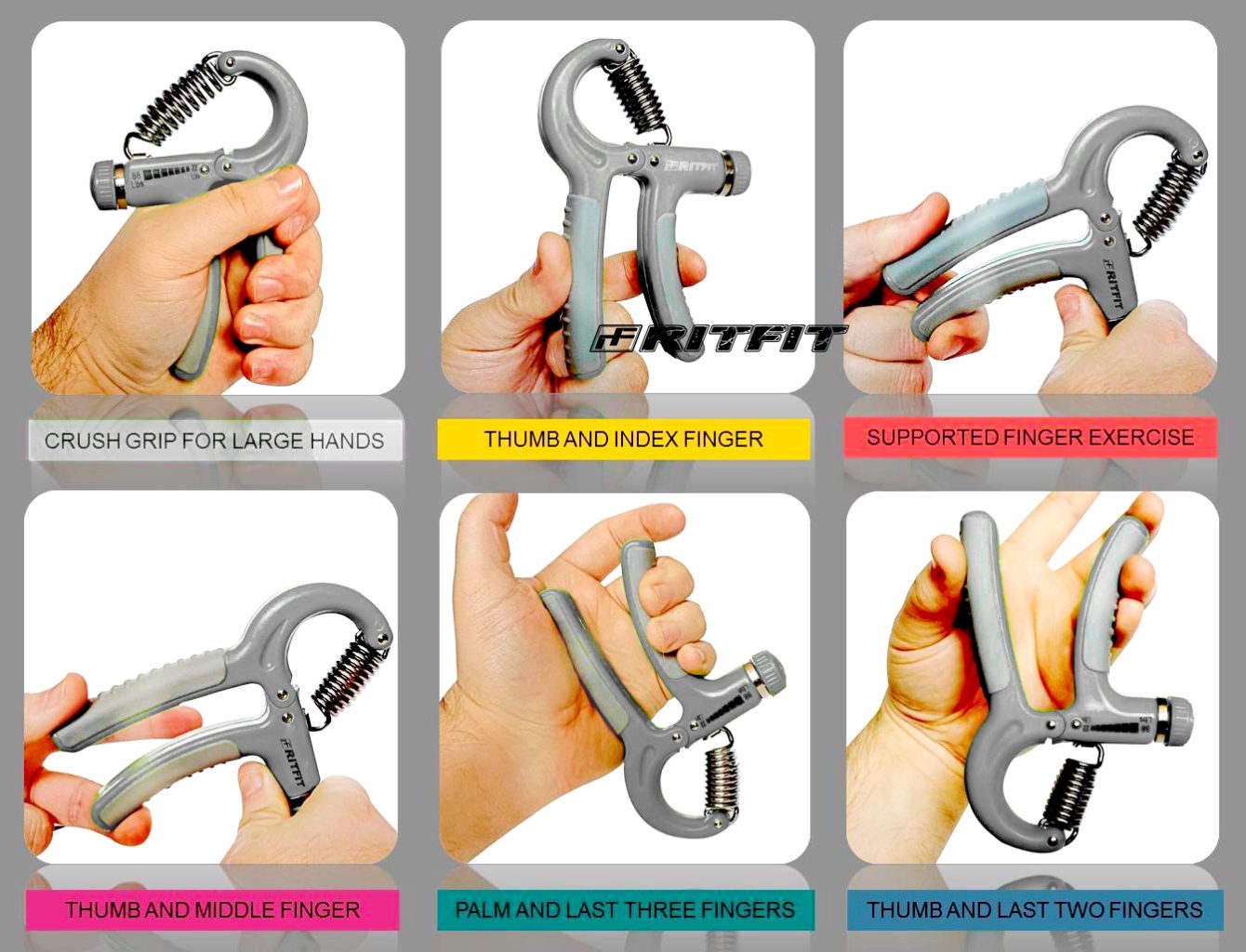
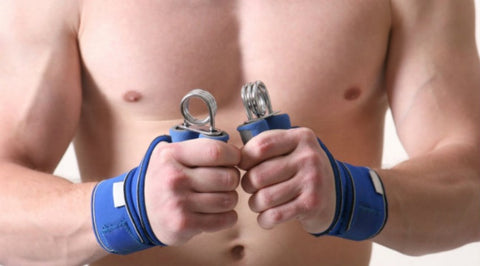
Good form starts with the handle seated deep in your palm, a neutral wrist, and a smooth close driven by all four fingers. Grip tools are small, but poor setup still leads to bad reps, sore skin, and irritated tissues.
Quick Setup Checklist
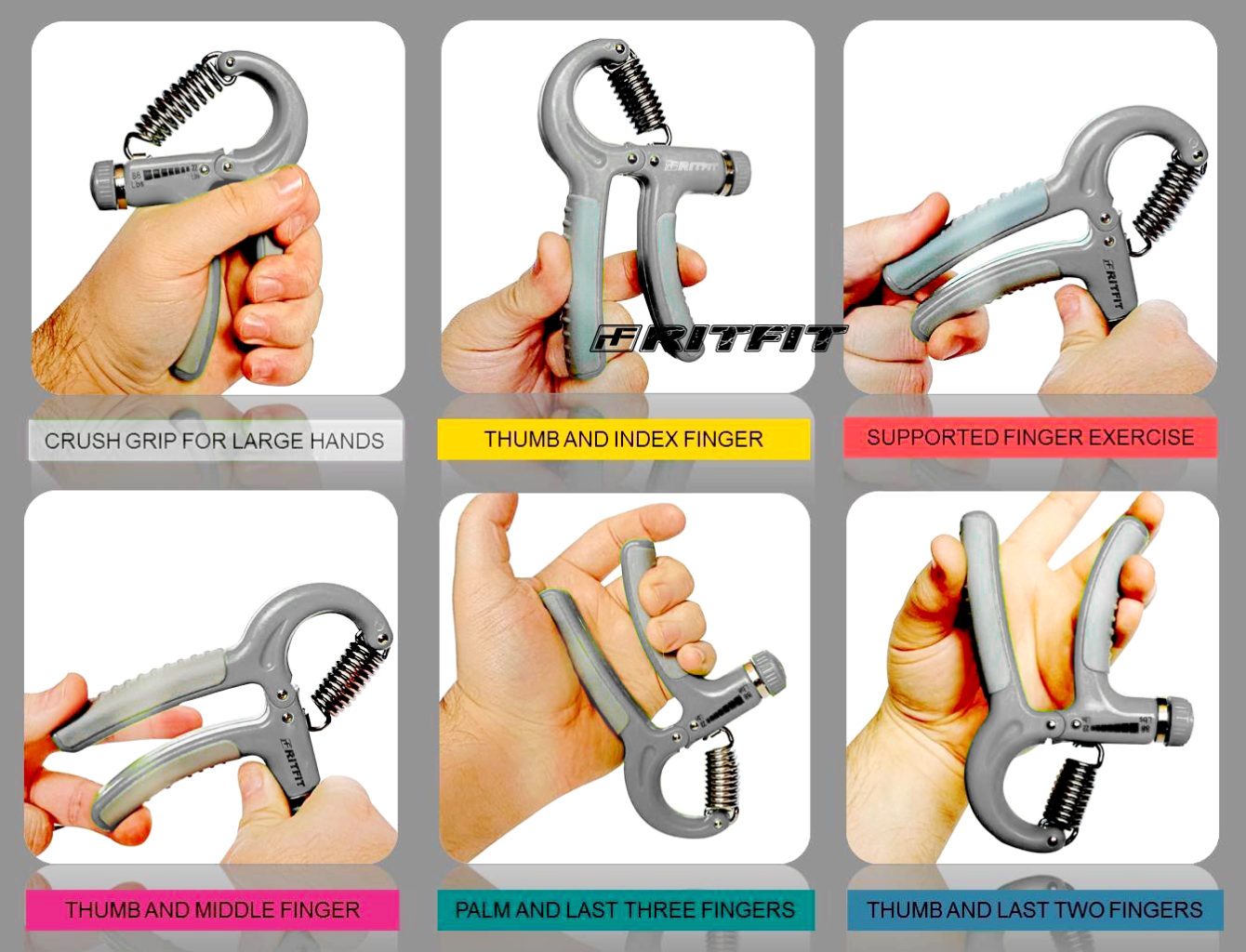
Set the lower handle into the palm instead of letting it drift toward the wrist. Keep the wrist neutral or slightly extended, then finish the close with the ring and pinky fingers instead of squeezing only with the index finger and thumb.
- Wrist position: Keep it neutral, not folded forward.
- Handle placement: Seat the handle deep enough that the fingers can finish the close.
- Finger pressure: Drive through all four fingers, especially the bottom two.
- Tempo: Close under control, pause briefly, then open slowly.
Step 1: Standard Close
Place one handle deep in your palm and wrap your fingers around the other handle. Squeeze the gripper shut, hold briefly, then lower it under control for 2 to 3 sets of 8 to 12 reps per hand.
Step 2: Controlled Negative
Use both hands to help shut the gripper, then remove the helper hand and resist the opening phase as slowly as possible. This is a strong option when you cannot yet close a harder gripper cleanly on your own.
Step 3: Finger Focus Curl
Use a light finger spring tool or a very light resistance option to train each finger more deliberately. This is useful when the ring finger and pinky lag behind or when the final part of the close feels weak.
For a closer look at why some grippers feel harsher than others, see our guide on the real gripe with hand grips.
Sample Grip Workout: How Much and How Often?
A sample grip workout pairs 3 sets of 8 to 12 closes per hand with controlled negatives, finger work, and a loaded carry or hold. Train grip hard 2 or 3 times per week, not every day, if strength is the main goal.
- Main close: 3 sets of 8 to 12 reps per hand.
- Controlled negatives: 2 sets of 3 to 5 reps per hand.
- Finger work: 2 sets of 10 to 15 reps per hand.
- Carry or hold: 2 or 3 sets of dumbbell holds or carries for time.
When you can hit all target reps with clean form, increase resistance slightly or add one extra work set. On off days, do light recovery work or skip direct grip training entirely if your hands or elbows feel irritated.
For more open hand or support grip work, pair grippers with the RitFit multi grip lat pull down bar or with timed holds using exercise handles for cable machines.
Which Hand Grip Exercises Build Support and Pinch Strength?
Support and pinch strength grow fastest from exercises that force the hand to hold load over time rather than squeeze and release. Add these movements after your main gripper work or on separate pulling days.
- Dead hangs: Hang from a pull up bar for 20 to 30 seconds per set to build the support grip your deadlifts and pull-ups demand.
- Farmer carries: Carry one heavy dumbbell per hand for 30 to 40 steps to train support grip under whole body load.
- Plate pinch holds: Pinch two smooth plates together at your side for 10 to 20 seconds to attack the thumb side a gripper barely touches.
- Towel rows or towel hangs: Wrap a towel around a handle or bar to thicken the grip and challenge the fingers in an open hand position.
- Wrist curls and reverse curls: Use a light dumbbell to balance the flexors with extensor and brachioradialis work.
If you train on a machine, our walkthrough of Smith machine forearm exercises shows where these movements fit inside a full session.
What Are the Benefits of Hand Grip Exercises?
Hand grip exercises train a specific part of hand strength that many lifting programs undertrain directly. They are also portable, simple to progress, and easy to add to upper body or forearm sessions.
Build crush grip strength
Grippers are best for improving crush grip, which is the ability to close the hand forcefully around an object. Grip strength is also used clinically as a quick marker of hand function and broader physical capability.[1]
Improve forearm training quality
Grippers can add density to the finger flexors, but they should not be your only forearm exercise. Research on forearm muscle activation supports using additional movements such as pronation or ulnar deviation work if you want more complete forearm development.[2]
Improve dexterity
Hand grip exercises improve dexterity through the frequent, deliberate use of your fingers and hands. With agile fingers, you can better perform daily tasks, especially as a musician, a typist, or a hairdresser.

Improve control for lifting and daily tasks
Stronger hands help you hold bars, handles, ropes, and tools with more confidence. The carryover is usually best when grippers are combined with holds, carries, hangs, and pulling work rather than treated as a complete grip system by themselves.
Train almost anywhere
A hand gripper is small enough to use at home, at work, or while traveling, which makes consistency easier. That convenience is one reason beginners often stick with grip work when larger forearm routines feel harder to maintain.
Understand the limits of the tool
Isometric handgrip protocols have shown blood pressure benefits in some hypertensive groups, but that should not be treated as a universal promise for every reader or a replacement for medical care.[3] Evidence based reviews support cautious wording here, because safety and usefulness depend on health status, intensity, and training setup.[4]
For lifters chasing size, our forearm crusher routine shows how to pair grippers with direct forearm work. Older adults can scale the same principles with light tools, as covered in our guide to exercises for elderly trainees.
How Does Grip Training Carry Over to BJJ, Climbing, and Lifting?
Grip transfer improves when you train the exact pattern your sport or lift demands instead of assuming every grip tool carries over equally. Grappling benefits from grip specific force production during sport based gripping tasks, while climbing changes finger and wrist position enough that hold style and grip style cannot be treated as identical.
- For deadlifts and rows: Support grip matters more than crush grip, so static holds, hangs, and heavy carries deserve priority.
- For BJJ and judo: Towel drills, gi specific holds, carries, and pull variations usually transfer better than grippers alone.
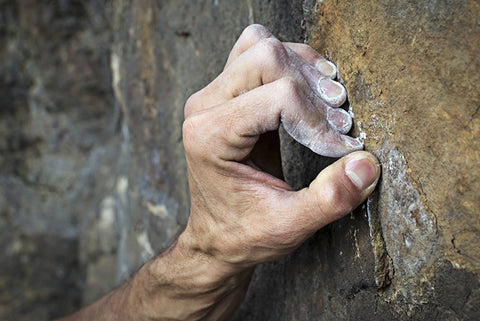
- For climbing: Edge depth, wrist angle, and finger posture all matter, so finger boards, open hand work, and carefully dosed finger loading are more specific than pure crushing work.
For grapplers building a home setup, our guide to home gym strength training for BJJ covers the equipment that supports gi pulls and grip endurance.
What Common Mistakes Should You Avoid?
Most grip training problems come from using the wrong resistance, doing too much volume, or letting the handle drift into a bad position. Fixing those basics usually improves both comfort and progress very quickly.
- Using a gripper that is too hard: If you cannot move it well, you cannot build clean technique or repeat quality reps.
- Doing junk volume: Easy sets of very high reps create fatigue without giving enough tension for meaningful strength gains.
- Training hard every day: Hands get used all day, so extra grip work adds up faster than many people expect.
- Letting the handle slide toward the wrist: This usually reduces force and makes the set feel worse on the hand.
- Assuming grippers train the wrists: Grippers mainly challenge finger flexion, so direct wrist work still matters.
- Ignoring support and pinch grip: Dead hangs, carries, and pinch lifts cover qualities a basic gripper does not train well.
- Training through sharp pain: Stop if you feel pain, numbness, tingling, or lingering joint irritation.
How Do You Balance Grip Training and Recovery?
Grip training becomes risky when volume rises faster than tissue tolerance. Hands and elbows usually complain first, long before motivation drops.
- Respect pain patterns: Sharp pain, locking, numbness, or pain that lingers into normal daily use is a sign to reduce loading and reassess.
- Train extensors on purpose: Climbers in particular can drift toward a flexor dominant profile, so extensor work is a useful balancing tool instead of an afterthought.
- Control weekly volume: It is usually smarter to keep hard grip work concentrated on a few sessions than to scatter max effort squeezing across every day.
- Use progression, not punishment: Better reps, slightly longer holds, and slightly harder implements beat random all out attempts for most trainees.
A simple readiness check keeps recovery honest. If your closes feel noticeably weaker than your last session or your hands feel inflamed, treat that as a signal to reduce load rather than push through.
When people start to see a drop off of 10% or so of their grip output, you really should skip the gym that day.
Jeff Cavaliere, MSPT, CSCS, Physical Therapist and Strength Coach at Athlean-X and former Head Physical Therapist for the NY Mets, in Optimize Your Exercise Program with Science-Based Tools (PodcastNotes / Huberman Lab)
How Do You Care for and Maintain Your Gripper?
Basic gripper care keeps the handle texture usable and the spring movement consistent. A few seconds of maintenance after training is usually enough.
- Wipe the handles: Remove sweat after each session.
- Clean the knurling: Brush out chalk and debris when buildup appears.
- Lubricate lightly: Add a very small amount of light oil if the spring starts squeaking.
- Store it dry: Keep it away from damp spaces to reduce rust and handle wear.
FAQs About Hand Grip Exercises
Do hand grippers actually build massive forearm muscles?
Yes, but primarily flexor density. While grippers effectively target and strengthen the flexor muscles for a hardened look, they aren't enough for maximum forearm size. You must combine gripper routines with wrist curls and reverse curls to achieve complete forearm hypertrophy.
Can I train with heavy hand grippers every day?
No, daily heavy training is not recommended. The tendons and ligaments in your hands require significantly longer recovery times than standard muscle tissue. Limit intense gripper workouts to two or three times a week to prevent severe inflammation or "trigger finger."
Will hand grippers improve my deadlifts or pull-ups?
Only slightly. Hand grippers specifically train "crush grip" (closing the hand against resistance), whereas deadlifts and pull-ups rely heavily on "support grip" (holding a static bar). To significantly improve your pull-up grip, practicing weighted dead hangs is much more effective.
What resistance weight should a beginner start with?
Beginners should start with 40 to 60 lbs. Most people overestimate their initial crushing strength.
How many sets and reps should I do for grip strength?
It depends entirely on your goals. For maximum strength, perform 3 to 5 sets of 1 to 5 heavy repetitions. For hypertrophy and endurance, aim for 3 sets of 10 to 15 reps. Stop doing high-rep "junk volume" if you want real strength.
How long does it take to see results from hand grip exercises?
Most people notice firmer closes and better hand control within the first few weeks of training two or three times per week. Visible forearm density and clearly heavier closes usually take longer and depend on your starting strength. Progress is fastest when you add resistance gradually and log every session.
Should I warm up before using a hand gripper?
Yes, a short warm-up prepares the fingers, thumb, and wrist for heavy squeezes. Start with 10 to 15 easy closes on a light gripper or a soft ring, then do a few slow wrist circles. Warm hands grip better and tolerate knurled handles more comfortably.
Conclusion
Hand grip exercises are a simple way to build stronger hands, add focused forearm work, and improve control in lifting and daily tasks. Choose a gripper you can actually control, respect recovery, and combine grippers with wrist work, carries, hangs, and pinch training for better results.
Start with the sample workout above and log every close, then check the RitFit discount guide before adding grip plates or dumbbells to your setup.
Disclaimer
This guide is for general fitness education only and is not medical advice. If you have hand, wrist, elbow, or nerve symptoms, consult a physician or physical therapist before starting or continuing grip training.
References
1. Vaishya R, Misra A, Vaish A, Ursino N, D'Ambrosi R. Hand grip strength as a proposed new vital sign of health: a narrative review of evidences. J Health Popul Nutr. 2024;43:7. doi:10.1186/s41043-024-00500-y
2. Fukunaga T, Fedge C, Tyler T, Mullaney M. Flexor-Pronator Mass Training Exercises Selectively Activate Forearm Musculature. Int J Sports Phys Ther. 2023;18(1):208-214. doi:10.26603/001c.68073
3. Palmeira AC, Farah BQ, Silva GO da, Moreira SR, Barros MVG de, Correia MA de, et al. Effects of isometric handgrip training on blood pressure among hypertensive patients seen within public primary healthcare: a randomized controlled trial. Sao Paulo Med J. 2021;139(6):648-656. doi:10.1590/1516-3180.2020.0796.R1.22042021
4. Baffour-Awuah B, Pearson MJ, Dieberg G, Wiles JD, Smart NA. An evidence-based guide to the efficacy and safety of isometric resistance training in hypertension and clinical implications. Clin Hypertens. 2023;29(1):13. doi:10.1186/s40885-022-00232-3





