The 2026 fitness landscape is defined by wearable technology, smart strength equipment, hybrid home training, and a fresh focus on recovery and longevity. This guide breaks down the biggest fitness trends of 2026 using the American College of Sports Medicine survey and current market data, so you can decide which ones are worth adopting in your own home gym.
Each trend below includes the evidence behind it, what it means for a home setup, and practical next steps. No industry data is invented here, and every statistic is sourced to the report or study it comes from.
Quick Answer: Wearable technology is the biggest fitness trend of 2026, ranking first in the American College of Sports Medicine survey for the third straight year. Home training, smart strength equipment, fitness apps, data-driven coaching, and recovery tools round out the trends reshaping how people train at home in 2026.
Key Takeaways
- Wearable technology is the top trend: the American College of Sports Medicine ranked it the number one fitness trend for 2026, its third consecutive year on top.
- Home training is part of a hybrid model: home sessions now blend with gym visits, and online home-based resistance training has early evidence of mental health benefits.
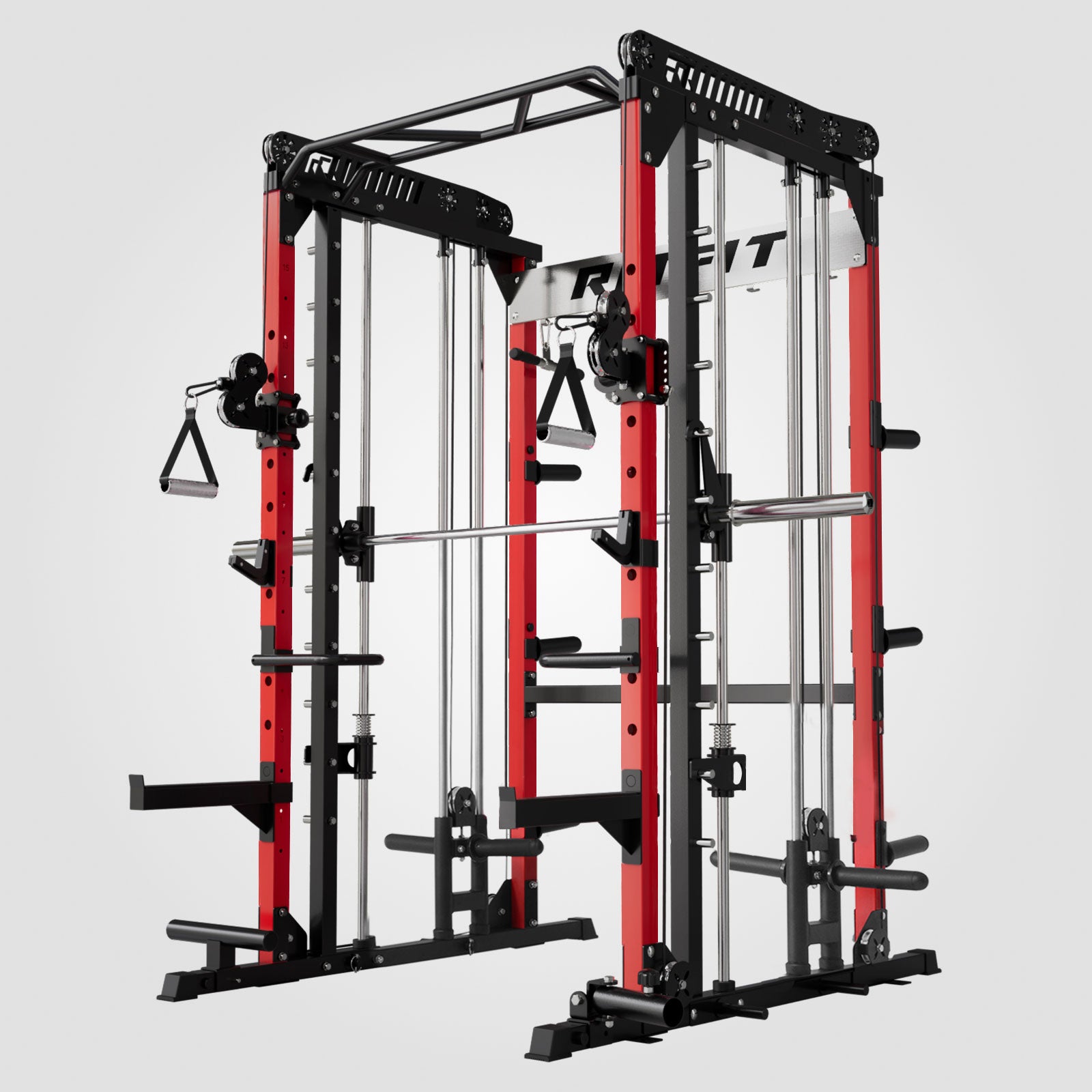
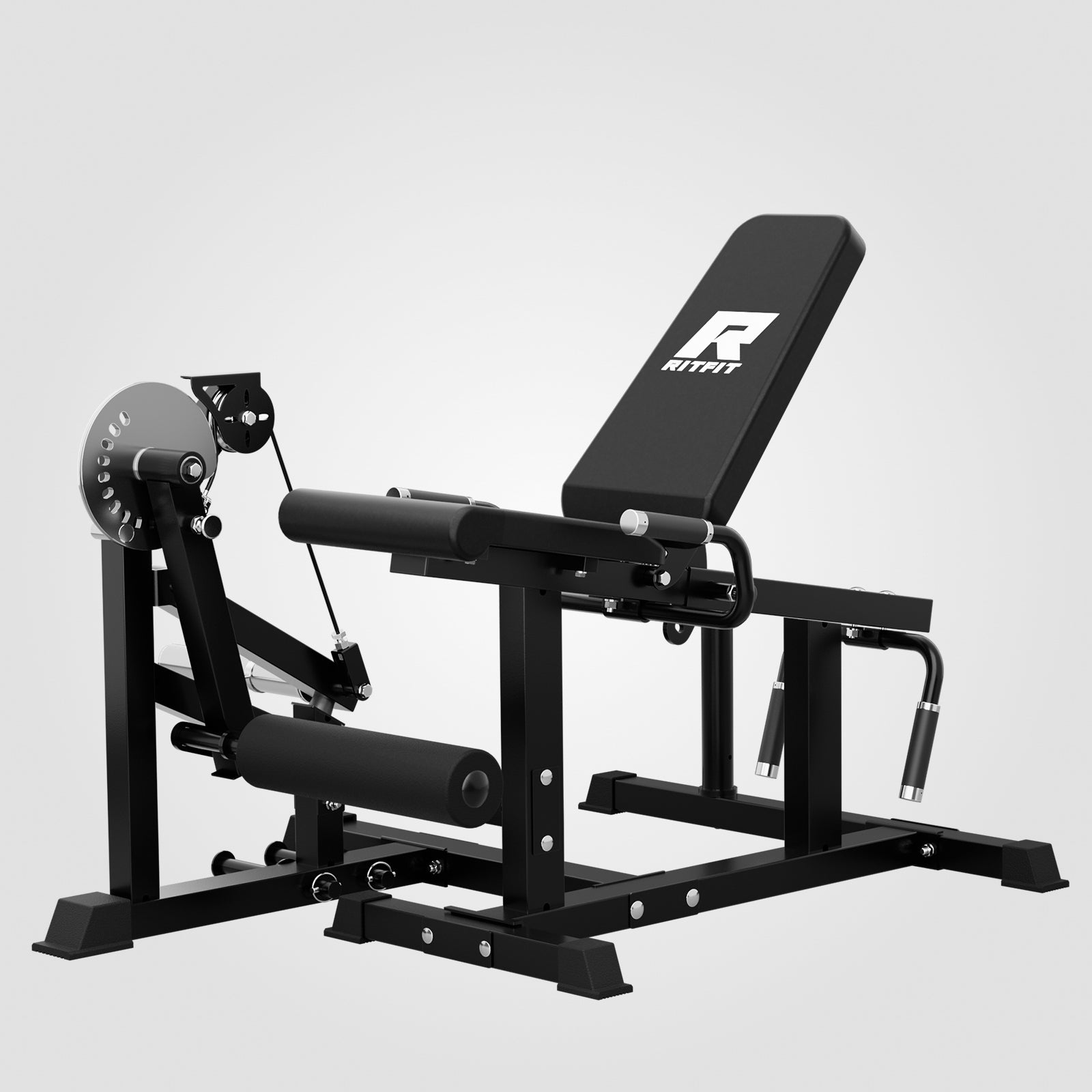
- Smart strength equipment is accelerating: connected strength gear is a fast-growing segment, and all-in-one machines bring cable and Smith work into a garage footprint.
- Data-driven training is mainstream: more than 70 percent of wearable users apply device data to their training or recovery decisions.
- Recovery and inclusivity are rising: recovery tools are the fastest-growing equipment segment, while older-adult and longevity-focused programs dominate the survey.
What Is the Biggest Fitness Trend of 2026?
Wearable technology is the biggest fitness trend of 2026. The American College of Sports Medicine ranked it number one for the third consecutive year, and it has held the top spot nine times across the survey's 20-year history.
- What counts as wearable tech: fitness trackers, smartwatches, heart rate monitors, and GPS devices that collect real-time health data such as heart rate, steps, and sleep.
- Why it keeps winning: the survey reflects the views of roughly 2,000 clinicians, researchers, and exercise professionals, and wearables earned a top-three ranking across nearly all professions and age groups surveyed.
- The equipment side: connected strength equipment follows the same logic, with one market forecast valuing it at 2.8 billion dollars in 2026 and projecting growth to 9.55 billion dollars by 2035.
- What this means for a home gym: a smart all-in-one machine can log workouts and adjust to your plan, which is why buyers increasingly pair wearable data with versatile strength equipment.
If you are planning a connected setup, start with a Home Gym Guide to map out your space, then browse Strength Machines that fit the smart-strength trend. To understand how interactive formats layer on top of equipment, read What Is Interactive Fitness.
Why Is Home Training Still Growing in 2026?
Home training is still growing in 2026 because it now sits inside a hybrid model that blends home and gym sessions. A pilot study found that eight weeks of online home-based resistance training improved depression scores in middle-aged adults.[1]
- The hybrid reality: most exercisers split time between a garage setup and a commercial gym, choosing the home for convenience and the gym for community and specialized gear.
- Evidence of benefits: the pilot study used twice-weekly sessions, which suggests a modest home routine can support physical fitness and mood without daily gym visits.
- Space-friendly gear: compact multifunctional machines, adjustable benches, and folding racks let you build a serious home gym in a small footprint.
- Family usage: shared home gyms stay relevant across a household, which keeps equipment used and justifies the investment.
For a complete garage setup, the M1 Multi Functional Home Gym Smith Machine pairs a Smith bar with cable stations, and the Buffalo Smith Machine adds lat pulldown and cable crossover work. If space is tight, see Minimum Home Gym Equipment and Home Gym Ideas.
How Are Wearables and Data-Driven Tools Shaping Training in 2026?
Data-driven tools shape training in 2026 by turning heart rate variability, sleep, and workout output into coaching decisions. The American College of Sports Medicine report notes that more than 70 percent of wearable users apply device data to their exercise or recovery strategy.
- What gets measured: heart rate variability, V02max estimates, sleep quality, and glucose trends are the most common signals used to set daily intensity.
- Recovery-aware programming: data-driven training ranked eighth on the 2026 survey and is strongest among coaches who use readiness scores to adjust volume.
- From numbers to action: the value comes from turning raw data into a simple rule, such as taking a lighter session when resting heart rate trends high.
- Balance with honest limits: consumer wearables vary in accuracy, so use them as a guide rather than a medical measurement.
To apply data-driven ideas to progressive strength, the principle in What Is Overload In Fitness explains how to load intelligently while staying responsive to recovery.
"Technology can answer specific hypotheses, track large data sets for long-term trends, provide objective measurements, enable quick and accurate communication with coaches, allow for individualization of training, and foster accountability and awareness."
Andy Galpin, PhD, Professor of Exercise Science and Human Performance, Parker University
Are Online Training and Fitness Apps Here to Stay?
Online training and fitness apps are here to stay, ranking fourth on the 2026 American College of Sports Medicine list. The report cites 2024 data showing more than 345 million people used fitness apps, generating more than 850 million downloads.
- On-demand formats: apps deliver scheduled, live-streamed, or recorded workouts, which suits busy schedules and hybrid training plans.
- Social connection matters: a study found that group exercisers reported more social support, a stronger exercise identity, and higher amounts of physical activity compared with those who trained alone.[2]
- Adoption profile: app users skew younger and urban, so older and less digitally confident exercisers benefit from simpler, guided programming.
- Pairing with equipment: home trainers increasingly combine app coaching with a cable or Smith machine to add structure without a gym membership.
If you are just starting a structured routine, the guidance in Fitness For Women shows how to pair programming with the right equipment for consistent results.
How Is Recovery Technology Changing Home Gyms in 2026?
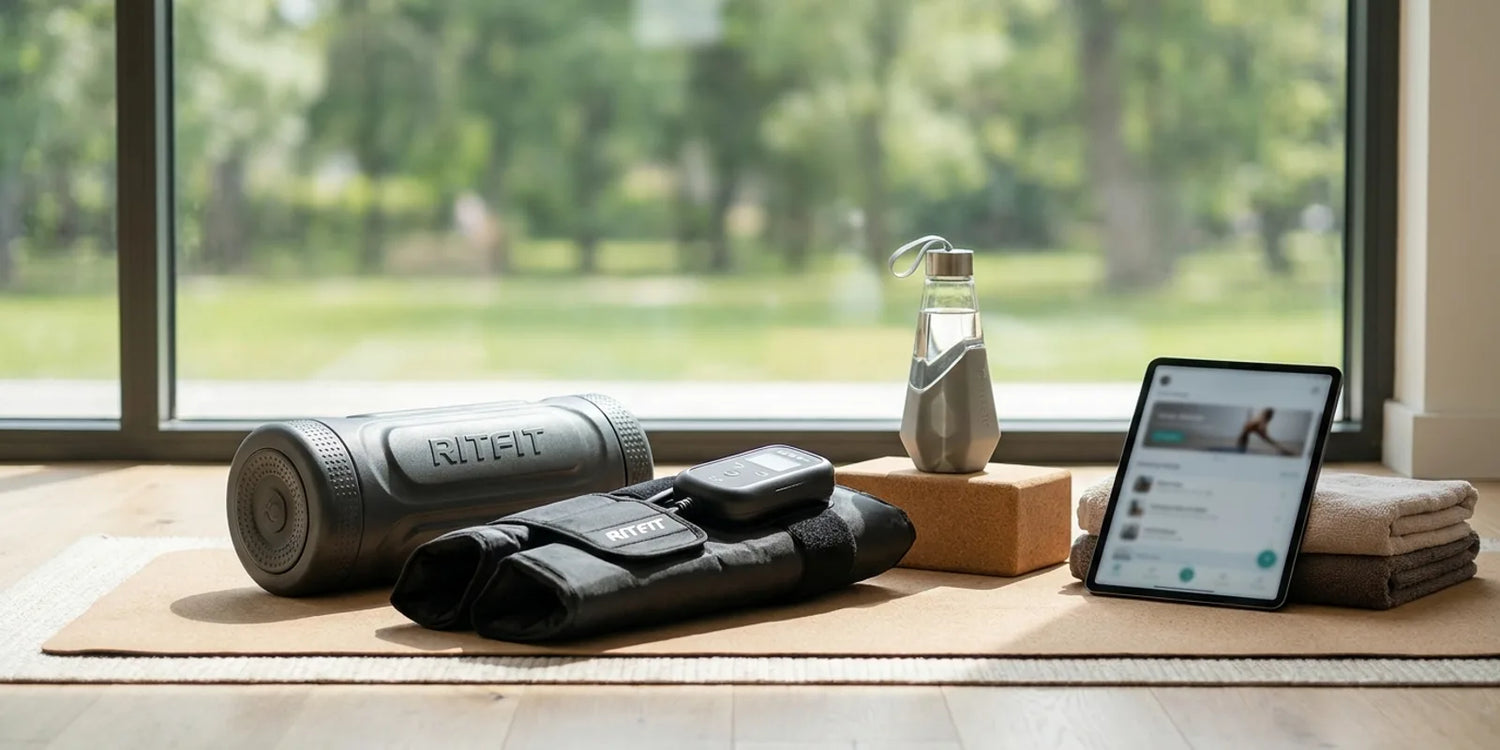
Recovery technology is changing home gyms in 2026 by making sleep, mobility, and active recovery part of the setup. Market analysts identify recovery and bio-hacking tools as the fastest-growing equipment segment.
- Percussive therapy: massage guns are the entry point, offering quick post-workout relief without a dedicated recovery room.
- Cold and heat exposure: at-home cold plunges and infrared saunas are increasingly sold as complete home gym additions.
- Sleep as training: wearables now track sleep and readiness, tying recovery directly into the data-driven trend.
- Market context: analysts estimate the United States fitness equipment market at roughly 5.5 to 6.2 billion dollars in 2026, with recovery tools leading growth.
Recovery does not need to be elaborate. A consistent post-workout routine that includes mobility, hydration, and enough sleep often outperforms any single device, so start simple and add tools only where they support your habits.
How Is Fitness Getting More Inclusive and Longevity-Focused in 2026?
Fitness in 2026 is more inclusive and longevity-focused, with the survey ranking fitness programs for older adults second, exercise for mental health sixth, and balance, flow and core strength fifth. Traditional strength training also stayed in the top ten at number seven.
- Older-adult programming: exercise for weight management ranked third, and recovery and balance work help older adults train safely and stay independent. A cross-sectional study of community-dwelling older adults found that those who exercised in a group showed better physical and cognitive function than those who exercised alone.[3]
- Mental health: exercise for mental health cracked the top ten, reinforcing the mood benefits seen in home-based training research.
- Strength stays central: fewer than 30 percent of United States adults meet guidelines for muscle-strengthening activity, which keeps traditional strength training relevant for longevity.
- Whole-person wellness: chronic disease management and medically integrated programs extend fitness beyond the gym floor.
For older adults building a safe home routine, Best Home Gym Equipment For Seniors outlines low-impact machines that support balance and strength work.
FAQs About Fitness Trends 2026
What are the biggest fitness trends in 2026?
According to the American College of Sports Medicine, wearable technology is the number one fitness trend for 2026.
Fitness programs for older adults, exercise for weight management, mobile exercise apps, and balance flow and core strength complete the top five.
Home training, smart strength equipment, and recovery technology also continue to grow.
Will home workouts remain popular in 2026?
Home training continues to grow in 2026 as part of a hybrid model that blends home and gym workouts.
A pilot study found that eight weeks of online home-based resistance training improved depression scores in middle-aged adults.
Compact machines, adjustable benches, and smart equipment make it easier to build a serious gym at home.
How are smart strength machines changing home training?
Smart strength machines adjust resistance, track form, and connect to apps that log your progress.
Market analysis points to connected strength equipment as a fast-growing segment in 2026.
For a home gym, an all-in-one machine with cables and a Smith bar can deliver the same versatility without the footprint of a full commercial setup.
What is data-driven training in fitness?
Data-driven training uses metrics like heart rate variability, sleep quality, and workout output to guide training decisions.
The ACSM report notes that more than 70 percent of wearable users apply device data to their exercise or recovery strategy.
The goal is adjusting intensity and recovery based on your readiness.
Which recovery technologies are trending in 2026?
Percussive therapy tools, cold and heat exposure, and sleep tracking are among the recovery technologies gaining ground in 2026.
Market analysis identifies recovery and bio-hacking tools as the fastest-growing equipment segment.
Recovery is increasingly built into home gyms rather than treated as an optional add-on.
Conclusion
The fitness trends of 2026 converge on one idea: training that is personalized, hybrid, and recovery-aware.
Wearable technology leads the American College of Sports Medicine list, while home training, smart strength equipment, online apps, and recovery tools give exercisers flexible ways to stay consistent.
Start with one trend that matches your goals, such as adding a wearable, building a compact home gym, or structuring recovery, and build from there.
New to home strength training? Begin with an all-in-one machine, a bench, and a simple progressive plan, and check the RitFit discount guide to equip your gym at a better price.
Disclaimer
This article is for general information only and does not constitute medical advice. Consult a physician or qualified professional before starting a new exercise program, especially if you have an injury, chronic condition, or other health concern.
References
1. Kikuchi N, Ohta T, Hashimoto Y, et al. Effect of Online Home-Based Resistance Exercise Training on Physical Fitness, Depression, Stress, and Well-Being in Middle-Aged Persons: A Pilot Study. Int J Environ Res Public Health. 2023;20(3). doi:10.3390/ijerph20031769. PMCID: PMC9914297
2. Golaszewski NM, LaCroix AZ, Hooker SP, Bartholomew JB. Group exercise membership is associated with forms of social support, exercise identity, and amount of physical activity. International Journal of Sport and Exercise Psychology. 2022;20(2):630-643. PMCID: PMC9053316
3. Fujii Y, Seol J, Joho K, Liu J, Inoue T, Nagata K, Okura T. Associations between exercising in a group and physical and cognitive functions in community-dwelling older adults: a cross-sectional study using data from the Kasama Study. Journal of Physical Therapy Science. 2021;33(1):15-21. PMCID: PMC7829564