








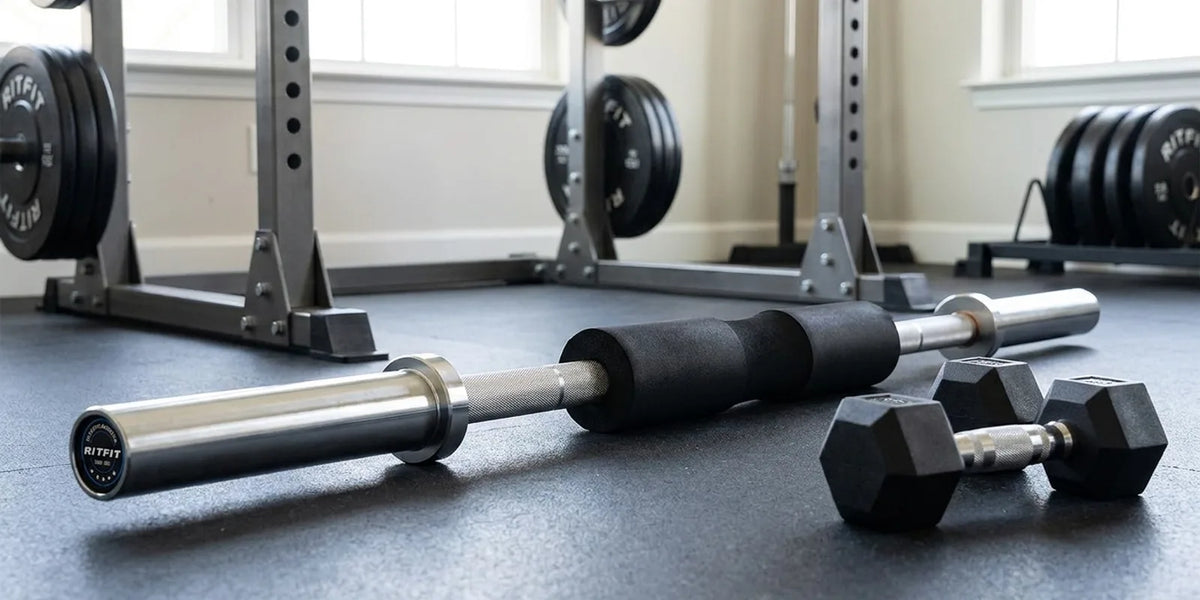
A foam pad for a barbell is a small accessory that changes where a loaded bar touches your body, and it earns its place on hip thrusts far more often than on heavy back squats. The pad spreads pressure across a wider patch of skin instead of a single bony contact point.
This guide covers when a pad helps, which thickness to choose, and when to leave it in your gym bag. It also covers foam density, sleeve fit, and the signs it is time to replace a worn pad.
Quick Answer: A foam pad for a barbell is worth buying for hip thrusts and glute bridges, where the bar presses on the hip crease, and it is usually unnecessary for heavy back squats, where a pad adds distance between bar and back and can shift bar position. Choose 1.5 to 2 inches of high density foam with a washable cover.
Key Takeaways
- Best use case: Hip thrusts and glute bridges are where a foam pad for a barbell pays off, because the bar rests on the hip crease instead of a muscle shelf.
- Thickness: Pads between 1.5 and 2 inches cushion the contact point without pushing the bar too far from the body.
- Squats are different: On a back squat the bar is meant to sit on the trapezius shelf or the rear deltoid shelf, so a pad mainly adds distance and instability.
- Materials: A high density foam core with a fabric or vinyl cover keeps its shape, while cheap foam flattens and stops cushioning.
- Fit: Most pads are cut for the 2 inch sleeve of an Olympic bar, and a 17 inch pad length covers most contact points.
What Does a Foam Pad Actually Do on a Loaded Bar?
A foam pad for a barbell spreads the load across a wider area of skin and muscle instead of letting a steel bar bite into one small contact point. The cushion compresses slightly under heavy weight, then springs back to keep the bar from digging in.
- Spreads pressure: The foam turns a narrow line of contact into a broader surface, which is why the same load feels gentler on thin tissue.
- Adds distance: Every inch of foam lifts the bar away from the body, so the pad changes the geometry of the lift as well as the feel of it.
- Does not add strength: A pad cannot make a heavy set easier, and it should never stand in for progressive overload.
The pad is a comfort layer, not a training tool, so it belongs with the rest of your barbell accessories rather than in your programming plan.
Which Pad Thickness Should You Choose?
Thickness decides how much distance sits between the bar and your body, and for most home gym lifters a pad of 1.5 to 2 inches is the useful range. That band adds comfort without turning the bar into a wobbly, distant object.
| Pad thickness | What it feels like | Best for | Watch out for |
|---|---|---|---|
| Under 1 inch | A thin barrier with very little give | Lifters who only want a slim layer over the hip crease | Comfort gains are small |
| 1.5 to 2 inches | The band one equipment guide calls the sweet spot | Hip thrusts, glute bridges and lunges | Still lifts the bar off your back on squats |
| Over 2 inches | Maximum padding with a soft, deep squeeze | High volume hip thrust work with heavy loads | Bulk, bar roll, and a wide gap between bar and body on squats |
Thickness tiers reflect pads sold for home use, and one equipment guide puts the useful range at 1 to 2 inches of foam. Confirm the foam density with the seller, since density matters more than raw thickness.
How to Choose a Barbell Pad That Fits the RitFit 7ft Olympic Barbell
Three measurements decide whether a pad works for your bar: sleeve diameter, pad length, and closure. A RitFit 7ft Olympic Barbell uses the standard Olympic sleeve that most pads are cut for, so a 17 inch pad with a hook and loop strap slides on cleanly.
- Sleeve diameter: Standard Olympic bars use a 2 inch sleeve, and pads sold for Olympic bars are sized to match.
- Pad length: Around 17 inches covers the contact area for squats and hip thrusts without sliding along the shaft.
- Closure: A hook and loop strap or a snug side slit keeps the pad centered when you load plates.
- Foam density: Dense foam rebounds after compression, while soft foam collapses and stops cushioning.
Pick your bar from the Olympic barbells range first, then match the pad to it rather than the other way round.
"7 Feet Olympic Weight Lifting Barbell Bars | with 500-1000LBS Capacity Options Good quality and easy to handle. I like it!!!"
Roy Chao, Verified Buyer, RitFit 7FT Olympic Barbell Bar 2'' Weight Lifting Bar
Foam vs Neoprene vs Fabric: Which Cover Lasts Longest?
Cover material decides how a pad handles sweat and skin contact, while the foam core decides whether the pad still cushions after a few months. A dense core with a tough cover outlasts a thick pad built on cheap foam.
- Foam core: High density and closed cell foam holds its shape under repeated compression, which is what keeps the pad useful.
- Neoprene cover: Neoprene shrugs off sweat and wipes clean, and it stays grippy against skin during hip thrusts.
- Fabric cover: A moisture wicking fabric feels soft against bare shoulders, but it holds moisture and needs regular washing.
- Vinyl or PVC cover: These wipe clean easily and resist tearing, though they can feel slick once sweat builds up.
Whatever the cover, plan to wash it. A removable cover with a hook and loop seal is easier to clean than a stitched one.
Clean foam also lasts longer than foam packed with dried sweat. Browse the full range of barbells to see where your bar sits in the lineup before you buy a pad for it.
When Should You Skip the Pad on Squats?
A back squat rarely needs a pad, because the bar is designed to rest on the trapezius shelf or the rear deltoid shelf rather than on bone. Cushioning pushes the bar away from that shelf, and a bar that sits farther out is harder to control through the whole rep.
- Fix position first: If the bar hurts, check where it sits and move it onto the muscular shelf instead of reaching for foam.
- Watch the bar path: A thick pad raises the bar and can change your bar path, which matters most as the load climbs.
- Expect less feedback: Foam reduces the proprioception you get from the bar, so the load can shift before you feel it.
- Do not skip the cause: Rack height, bar position and upper back tightness cause more squat discomfort than a bare bar does.
Placement is not a small detail. In 2021, a biomechanical comparison of 14 participants found that barbell placement can affect squat performance around the sticking region, with the heaviest loads moved in the low bar squat, then the high bar squat, and the least in the safety bar squat.[1]
Leave the pad off entirely if you compete in a barbell sport, if the bar feels unstable on your back, or if you notice you are adding weight simply because the bar stopped hurting.
Common Mistakes With a Squat Pad
Two errors show up most often: stacking foam on a bar that sits too high on the traps, and treating comfort as a reason to add weight early. Neither one fixes the cause of the discomfort.
Which Lifts Benefit Most From Padding?
Hip thrusts and glute bridges gain the most from a pad, because the bar sits across the hip crease where thin skin and little muscle separate it from the pelvis. A lunge sits somewhere in the middle, and a back squat needs padding least of all.
- Hip thrusts: The bar crosses the hip crease for the whole set, so a pad keeps pressure from becoming the limiting factor.
- Glute bridges: Same contact point, lighter load, and the same case for a thin layer of foam.
- Lunges and split squats: The bar still rests on the shelf, so a pad is a comfort preference rather than a need.
- Back squats: Skip it unless your upper back is unusually bony and every bar position still hurts.
Muscle activity also shifts with placement. In 2020, a study of 10 trained powerlifters reported greater rectus femoris and vastus medialis activity in the high bar squat than in the low bar squat when depth and stance width were matched.[2]
In 2021, a comparison of squat styles found that a low bar wide stance shifted more of the total moment to the hips.[3] Neither finding is about padding, and that is the point: bar position does real work, so do not let foam move it by accident.
Set up the lift that benefits most with this guide to how to do a barbell hip thrust.
Does a Pad Fit a Standard 2-Inch Olympic Bar?
A pad fits a standard Olympic bar because most pads are cut for the 2 inch sleeve that Olympic bars use for loading plates. The foam slides over the sleeve, and the slit at the side opens wide enough to get it on.
- Sleeve: Olympic bars use a 2 inch (50 mm) sleeve, and Olympic pads are sized to match it.
- Length: Around 17 inches of padding covers the contact zone for squats, hip thrusts and lunges.
- Specialty bars: Measure the shaft and the sleeve first, because a thicker shaft can change how a pad sits.
- Collars: Add Olympic barbell collars after the pad so the plates stay tight while you lift.
A bar loaded on the floor is easier to handle with a deadlift jack, especially once a pad makes the bar thicker where you grip it.
If you are unsure how tight collars should sit, this guide to how to use barbell collars safely covers it.
1lbs.
5 or 29mm bar will be the most durable and provide the best service over time.
NEVER buy a 32mm bar.
"
Mark Rippetoe, Strength Coach and Author of Starting Strength, Starting Strength, How to Build a Home Gym
How Does a Pad Fit Into a Home Gym Setup?
A foam pad sits on top of gear you already own, so it only makes sense once you have a bar and a place to squat or thrust. At 17 inches long and a couple of inches thick, it stores in a gym bag or hangs on a hook.
- Buy order: Bar and plates first, then a rack or bench, then comfort items like a pad and collars.
- Storage: Keep it out of direct sunlight and let it air dry, because heat and trapped sweat shorten foam life.
- Pairing: A pad, a set of collars and a jack cover the loading and comfort jobs around one bar.
FAQs About Foam Pads for a Barbell
Do you need a foam pad for a barbell?
Most lifters do not need one under a heavy back squat, because the bar is built to sit on the trapezius or rear deltoid shelf. A pad earns its place when the bar presses on a contact point with thin skin and little muscle underneath, which is the hip crease during hip thrusts and glute bridges.
Which barbell pad thickness is best?
A pad of 1.5 to 2 inches suits most home gym lifters, because it cushions the contact point without pushing the bar too far from the body. Thinner pads near 1 inch add little comfort, and thicker pads over 2 inches can feel bulky and unstable when the bar is on your back.
When should you avoid using a squat pad?
Skip the pad on heavy back squats if bar feel and stability matter to you. Cushioning adds distance between the bar and your back, which can move the bar position and make the load feel less secure. Check bar height and upper back tightness first, then decide.
Does a foam pad fit a standard Olympic bar?
Yes. Most pads are built for the 2 inch sleeve of a standard Olympic bar, and the side slit or hook and loop strap lets you slide the pad on before you load plates. Measure your sleeve diameter first if you train with a specialty bar. A deadlift jack makes loading easier.
What material should a barbell pad be made of?
Look for a high density foam core wrapped in a fabric or vinyl cover. Dense foam keeps its shape after repeated compression, while cheap foam flattens and stops cushioning. A removable and washable cover matters when the pad sits against bare skin during hip thrusts.
How long does a barbell pad last?
Replace the pad when the foam no longer springs back after compression or when the cover tears. Storing it away from direct sunlight and letting it air dry after a sweaty session stretches its working life. A pad that stays flattened under load has stopped doing its job.
Conclusion
A foam pad for a barbell is a narrow tool. It is the right answer when the bar presses on the hip crease with little muscle underneath, and the wrong answer when the bar already sits on a muscular shelf.
Pick a high density pad between 1.5 and 2 inches, keep the cover clean, and replace it when the foam stops rebounding. Check the RitFit discount guide before you add anything else to your home gym.
Disclaimer
This article covers equipment selection for general fitness training and does not provide medical advice. If you have shoulder, back or hip pain, or an injury that changes how you train, talk to a qualified healthcare professional before you change your setup.
References
1. Kristiansen E, Larsen S, Haugen ME, Helms E, van den Tillaar R. A Biomechanical Comparison of the Safety-Bar, High-Bar and Low-Bar Squat around the Sticking Region among Recreationally Resistance-Trained Men and Women. Int J Environ Res Public Health. 2021;18(16). doi:10.3390/ijerph18168351. PMCID: PMC8392107
2. van den Tillaar R, Knutli TR, Larsen S. The Effects of Barbell Placement on Kinematics and Muscle Activation Around the Sticking Region in Squats. Front Sports Act Living. 2020;2:604177. doi:10.3389/fspor.2020.604177. PMCID: PMC7739732
3. Larsen S, Kristiansen E, Helms E, van den Tillaar R. Effects of Stance Width and Barbell Placement on Kinematics, Kinetics, and Myoelectric Activity in Back Squats. Front Sports Act Living. 2021;3:719013. doi:10.3389/fspor.2021.719013. PMCID: PMC8440835





