Table of Contents
A functional trainer with a Smith machine is one of the smartest ways to build a complete home gym in one footprint. It combines guided bar work, adjustable cable training, and rack style support, which makes it ideal for buyers who want more versatility, safer solo sessions, and fewer separate machines.
Key Takeaways
- A functional trainer with Smith machine combines a guided bar, dual cables, and rack style features in one station.
- It works best for home gym buyers who want full body training, safer solo lifting, and better space efficiency.
- The right choice depends on footprint, ceiling height, pulley system, attachments, and your real training goals.
- Plate loaded models usually lower the entry cost, while weight stack models improve convenience and workout flow.
- RitFit options such as M1 style, M2 style, and Buffalo style setups serve different home gym needs and budgets.
What Is a Functional Trainer with Smith Machine?
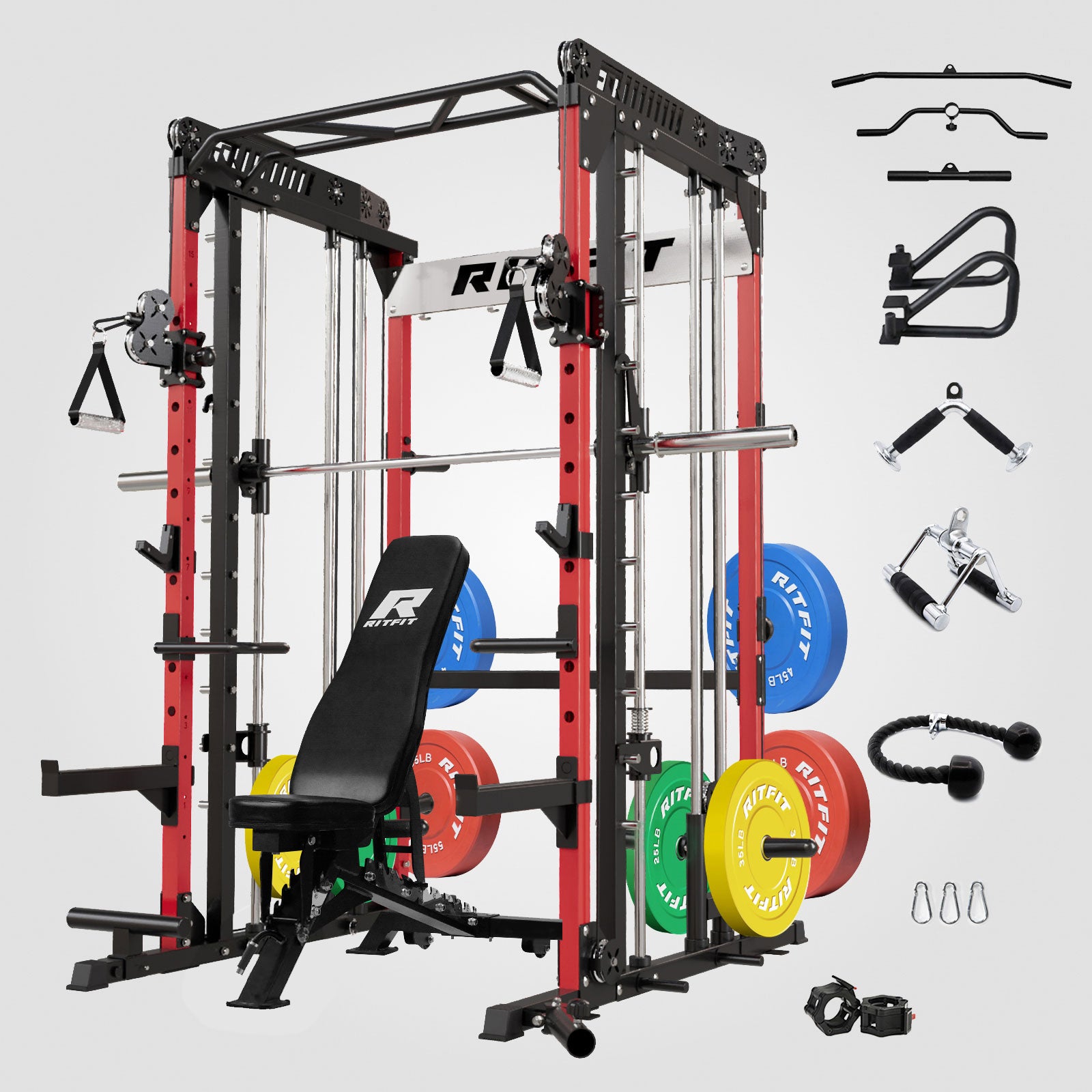
A functional trainer with Smith machine is an all in one strength station that combines a guided barbell path, dual adjustable pulleys, and rack style support into one frame. In practical terms, it lets you squat, press, row, pull, and train accessories from a single home gym base.
- Smith bar: A fixed bar path for squats, presses, lunges, hip thrusts, and other controlled compound lifts.
- Dual adjustable pulleys: The cable side gives you presses, rows, flyes, curls, triceps work, wood chops, and many unilateral patterns.
- Rack style support: Many models add safeties, J hooks, plate storage, pull up options, and compatibility with extra attachments.
- Home gym value: Instead of buying a rack, cable station, pull up unit, and Smith separately, you centralize training in one footprint.
Current evidence suggests both machines and free weights can support hypertrophy well, while strength gains are often most specific to the equipment you train on.[1]
If you are comparing categories first, start with the RitFit Smith machine collection to see how all in one designs are structured for home use.
Why This Combo Works So Well for Home Gyms
Full Body Training in One Footprint
This combo works because it covers heavy compound lifts, cable accessories, and bodyweight basics without forcing you to buy several separate stations. That matters in garages, spare rooms, and basements where floor space and setup speed directly affect what actually gets used.
- Lower body: Smith squats, split squats, Romanian deadlifts, hip thrusts, cable lunges, and calf work.
- Upper body push: Smith bench press, incline press, shoulder press, cable chest press, and cable flyes.
- Upper body pull: Lat pulldowns, rows, face pulls, straight arm pulldowns, and pull ups.
- Core and control: Pallof presses, chops, anti rotation holds, and unilateral cable patterns.
Safer Solo Training With a Guided Bar Path
The Smith side makes hard solo sets feel more controlled because the bar path is fixed and safety stops are easier to set. In novice lifters, machine based and free weight programs can both improve body composition and performance, which supports choosing the tool that best matches skill level and confidence.[2]
- Beginner friendly: The setup feels easier to learn when balance demands are lower.
- Solo confidence: The fixed path helps many users push effort without needing a spotter for every session.
- Controlled execution: Tempo work, partial range work, and repeatable setup are easier to standardize.
Better Budget and Workflow Efficiency
One all in one machine can reduce the need for separate purchases, repeated setup changes, and dead floor space between stations. For many home gym buyers, that efficiency matters as much as the training itself.
- Fewer separate machines: You replace multiple categories with one main training hub.
- Faster transitions: You can move from Smith work to cable work without crossing the room.
- Shared home use: One machine is easier to organize when two people train at different times.
Is It Right for You?
A functional trainer with Smith machine is right for you if you want one serious training station that can handle strength work, hypertrophy work, and accessory training for years. It is less ideal if you only want a basic rack, already own a complete cable setup, or care only about competition style barbell lifting.
You Want One Main Machine, Not a Patchwork Setup
This category fits buyers who want one centerpiece machine that can carry most sessions without constant add ons. It works especially well for first serious home gyms, family gyms, and long term buyers who value versatility.
You Train Alone Most of the Time
This setup makes sense for solo lifters who want safer pressing and squatting options without giving up cable variety. It also helps busy users keep workouts moving because most movements stay within one station.
You Need Variety Without Losing Structure
The cable side expands exercise selection, while the Smith side keeps big lifts simple to organize. That balance is useful for users who want hypertrophy focused variety but still want a clear base for progressive training.
How to Choose the Best Functional Trainer with Smith Machine
The best model is not the one with the longest feature list, it is the one that matches your room, budget, training style, and upgrade expectations. Start with space and movement needs first, then compare frame quality, pulley system, attachments, and day to day usability.
Frame Stability and Build Quality
Choose a frame that feels planted under rows, pull ups, and heavy bar work because stability affects both confidence and long term satisfaction. A strong base, clear load ratings, and well organized storage matter more than flashy marketing language.
- Look for: Stable footing, clean rack geometry, organized plate storage, and clearly stated load limits.
- Think long term: A home gym centerpiece should still feel solid after hundreds of sessions, not only on day one.
Smith Bar Feel and Safety Setup
A good Smith system should feel smooth, predictable, and easy to rack at the heights you actually use. The real question is not only whether the bar moves, it is whether it feels repeatable and safe under fatigue.
- Look for: Smooth travel, convenient hook positions, easy safety adjustment, and clear lifting space.
- Best use case: Controlled presses, squats, lunges, hip thrusts, and other solo strength patterns.
Cable System and Pulley Ratio
The cable system determines how versatile the machine feels, especially for rows, pulldowns, presses, flyes, and core work. Research comparing machine setups shows that nominal load and perceived effort do not transfer cleanly across exercises, so pulley ratio and movement feel matter more than raw numbers alone.[3]
- Plate loaded: Usually costs less up front and works well if you already own plates.
- Weight stack: Usually improves speed, convenience, supersets, and shared use.
- 2 to 1 ratio: Often feels smoother and gives more cable travel for many accessory movements.
- 1 to 1 ratio: Often delivers a heavier direct feel for users who want more load per side.
For a deeper comparison, see plate loaded vs weight stack Smith machines.
Attachments and Exercise Range
The best all in one units give you enough training variety out of the box that you do not need to solve basic movement gaps later. Attachments matter because they expand the value of the frame you already paid for.
- Look for: Lat pulldown options, low row capability, multi grip pull up points, dip support, and storage that does not interfere with lifting.
- Real benefit: More useful attachments mean fewer reasons to buy another station later.
If upper back training matters to you, this guide on how to do a lat pulldown on a Smith machine shows how cable integration expands the machine beyond basic pressing and squatting.
Footprint and Ceiling Height
Always buy based on usable space, not optimistic room measurements. Ceiling height, bench clearance, storage paths, and garage door tracks can make or break the buying decision.
- Measure height: Include mats, pull up bars, and any overhead hardware in the room.
- Measure front clearance: You need room to bench, load plates, walk around safeties, and use cable handles comfortably.
- Measure side clearance: Cable work and storage access often need more side room than buyers expect.
If height is your limiting factor, review the best Smith machine for low ceilings guide before choosing a full rack style setup.
Example Setups from the RitFit Smith Line
RitFit offers different all in one directions rather than one identical answer for every buyer. The right pick depends on whether you care most about simplicity, modularity, shared use, or long term upgrade potential.
Compact All in One for Most Home Gyms
If you want a straightforward centerpiece, the RitFit M1 multi-functional home gym Smith machine is a practical starting point because it combines Smith work, cables, rack support, and storage in one home friendly footprint.
- Best for: Garages, spare rooms, first serious home gyms, and buyers who want broad versatility without overcomplicating the purchase.
- Why it works: It gives you a clear balance of guided lifting, accessory range, and daily usability.
More Modular Decision Making
If you are comparing upgrade paths and configuration depth, the RitFit M1 vs M2 Smith machine guide is the most useful way to understand how a simpler all in one station differs from a more modular build path.
- Best for: Buyers who care about expandability, feature tradeoffs, and choosing the right long term platform.
- Why it works: It helps separate entry level needs from future upgrade ambitions before you overspend.
Shared Use and Family Friendly Layout
Buffalo style setups make the most sense when the machine will be used by multiple lifters or by one household across different goals. That design logic matters when one person wants Smith compounds while another wants cables, pulldowns, or accessory work in the same room.
- Best for: Couples, family gyms, and buyers who care about shared workflow.
- Why it works: It reduces traffic jams around the machine and improves practicality in real home use.
If you are still deciding whether an integrated setup beats a more traditional rack route, read Smith machine vs power rack before you commit.
How to Train on a Functional Trainer Smith Machine
The simplest way to program this machine is to use the Smith side for your main compounds and the cable side for accessories, unilateral work, and core. That approach keeps sessions efficient and helps you use the machine for more than only bench and squat days.
Beginner Full Body Split
A beginner can make fast progress by alternating a Smith focused day with a cable focused day across three weekly sessions. Time efficient resistance training can still work very well when exercise selection is smart and effort is consistent.[4]
- Day A: Smith squat, Smith flat or incline press, lat pulldown, cable row, Pallof press.
- Day B: Cable split squat, cable chest press or fly, single arm row, lateral raise, curl variation, wood chop.
- Progression: Add reps first, then load, while keeping technique and setup consistent.
Push Pull Legs with One Main Station
This machine also works well for a simple push pull legs split because it covers the main movement families without equipment drift. That keeps programming clear for intermediate lifters who want more volume without a more complicated room setup.
- Push: Smith incline press, Smith shoulder press, cable fly, triceps pressdown.
- Pull: Lat pulldown, cable row, straight arm pulldown, face pull.
- Legs: Smith squat, Smith Romanian deadlift, split squat, cable pull through, calf work.
If you want extra movement ideas, use must do Smith machine exercises for full body gains as a programming companion.
Use the Cable Side for Isolation and Balance
The cable side adds important accessory work that many basic Smith only setups miss. Recent shoulder research suggests cable and dumbbell lateral raises can both be effective for lateral deltoid growth when range of motion and effort are matched well.[5]
- Good cable choices: Lateral raises, flyes, curls, pressdowns, face pulls, chops, and anti rotation work.
- Why it matters: Cables help you train around weak points and balance out a compound heavy plan.
Common Mistakes to Avoid
- Buying from features alone: A longer feature list means little if the machine does not fit your room, budget, and real training style.
- Ignoring true footprint: Buyers often measure the rack but forget bench clearance, handle travel, storage access, and loading space.
- Comparing load numbers blindly: Different pulley systems and movement paths change how exercises feel, so effort and setup matter more than raw numbers.
- Using the Smith side only: The cable system is a major part of the machine’s value, so do not leave it out of your programming.
- Skipping safety setup: A guided bar is helpful, but you still need correct safeties, bench alignment, and realistic loading choices.
FAQs About Functional Trainers with Smith Machines
What is a functional trainer with Smith machine used for?
A functional trainer with Smith machine is used for full body strength training in one station. It lets you combine guided presses and squats, adjustable cable work, pull ups, and accessory movements, which makes it useful for home gyms that need versatility without multiple separate machines.
Is a functional trainer with Smith machine worth it for a home gym?
Yes. A functional trainer with Smith machine is worth it when you want one main machine that covers strength, hypertrophy, and cable work. It usually makes more sense than buying separate stations if space, setup speed, and solo training confidence matter to your home gym plan.
How much space does a functional trainer with Smith machine need?
A functional trainer with Smith machine needs enough room for the rack itself, bench movement, plate loading, and safe cable travel. You should measure ceiling height, front clearance, side clearance, and storage space before buying, because the real footprint is always larger than the listed machine dimensions.
Should you choose a plate loaded or weight stack functional trainer with Smith machine?
Choose a plate loaded functional trainer with Smith machine if you want a lower entry cost and already own plates. Choose a weight stack version if you want faster adjustments, easier supersets, and a smoother day to day user experience for shared training or frequent accessory work.
Can beginners use a functional trainer with Smith machine safely?
Yes. Beginners can use a functional trainer with Smith machine safely when safeties are set correctly and loads stay controlled. The guided bar path can reduce setup anxiety, while the cable side gives beginners more ways to practice rows, presses, and core work with manageable resistance.
Which functional trainer with Smith machine is best for low ceilings?
The best functional trainer with Smith machine for low ceilings is the one that fits your true usable height, not just your room measurement. You need to account for pull up bars, floor mats, garage door tracks, basement beams, and the clearance required to move attachments safely.
Final Thoughts
A functional trainer with Smith machine is a strong choice when you want one machine to handle heavy basics, cable accessories, and safer solo training in a normal home gym. The best buy is the one that fits your room, your workflow, and your long term training plan, not the one with the loudest feature sheet.
Disclaimer: This article is for general educational purposes only. It does not replace medical advice, injury diagnosis, or individualized coaching. If you have joint pain, back issues, cardiovascular concerns, or a recent injury, speak with a qualified health professional before starting a new training program or loading pattern.
References
- Haugen ME, Vårvik FT, Larsen S, Haugen AS, van den Tillaar R, Bjørnsen T. Effect of free-weight vs. machine-based strength training on maximal strength, hypertrophy and jump performance: a systematic review and meta-analysis. BMC Sports Sci Med Rehabil. 2023;15(1):103.
- Aerenhouts D, D'Hondt E. Using machines or free weights for resistance training in novice males? A randomized parallel trial. Int J Environ Res Public Health. 2020;17(21):7848.
- Migliaccio GM, Dello Iacono A, Ardigò LP, Samozino P, Iuliano E, Grgantov Z, Padulo J. Leg press vs. Smith machine: quadriceps activation and overall perceived effort profiles in recreational bodybuilders. Front Physiol. 2018;9:1481.
- Iversen VM, Norum M, Schoenfeld BJ, Fimland MS. No time to lift? Designing time-efficient training programs for strength and hypertrophy: a narrative review. Sports Med. 2021;51(10):2079-2095.
- Larsen S, Wolf M, Schoenfeld BJ, Sandberg NØ, Fredriksen AB, Kristiansen BS, van den Tillaar R, Swinton PA, Falch HN. Dumbbell versus cable lateral raises for lateral deltoid hypertrophy: an experimental study. Front Physiol. 2025;16:1611468.