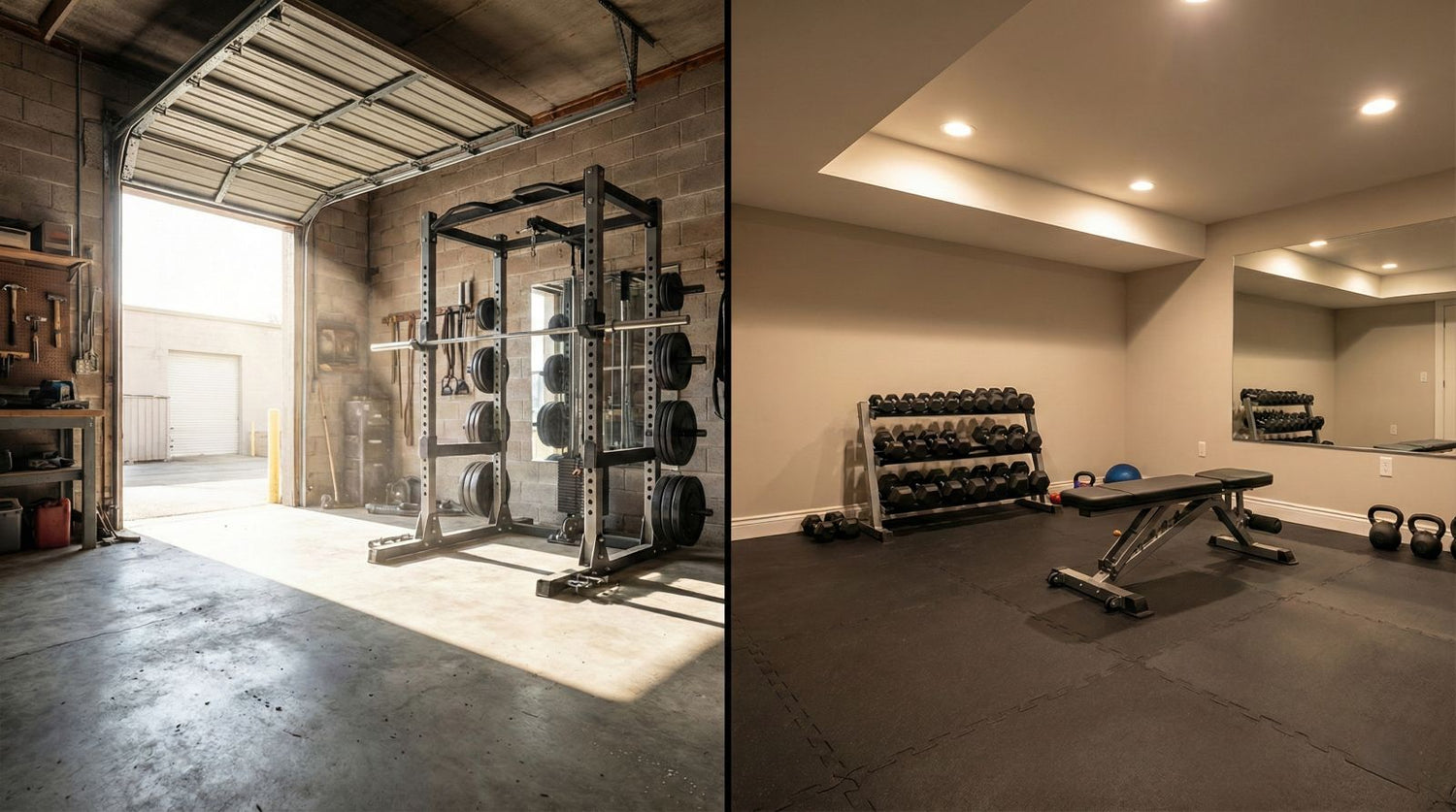
Choosing between a garage gym and a basement gym comes down to climate control, ceiling height, noise, humidity, equipment access, and how you train. A garage usually works better for heavy lifting and easy delivery, while a basement usually works better for year round comfort and a clean studio style setup.
Key Takeaways
- Choose a garage gym for heavy lifting: It usually offers easier equipment access, better impact isolation, and more freedom for loud training.
- Choose a basement gym for comfort: It usually has more stable temperatures, better indoor feel, and easier daily access.
- Check ceiling height first: Low ceilings, ductwork, and plumbing can limit racks, pull ups, overhead presses, and cardio machines.
- Control moisture before buying equipment: Rust, mold, and musty air can shorten equipment life and make training unpleasant.
- Plan flooring early: Rubber mats, interlocking tiles, and lifting platforms protect concrete, reduce noise, and improve stability.
Table of Contents
- 30 Second Decision Guide
- Before You Choose: Measure These First
- Climate Control and Environmental Management
- Structural and Space Limits
- Flooring: The Foundation of the Gym
- Acoustics and Sound Control
- Equipment Logistics, Layout, and Maintenance
- Lighting, Aesthetics, and Training Vibe
- Smart Training and Recovery Trends
- Financial Implications and ROI
- Best Equipment Choices by Space
- Summary Decision Matrix
30 Second Decision Guide
Choose the space that solves your hardest constraint first. For most homes, the order is ceiling height, noise, humidity, equipment access, and then renovation budget.
- Lean garage: You lift heavy, use bumper plates, train loudly, want easy driveway delivery, or need more overhead clearance.
- Lean basement: You want stable temperature, better indoor comfort, cleaner aesthetics, and a space that can double as a recovery or mobility room.
- Pause before deciding: If either space has water entry, poor ventilation, very low ceilings, or unsafe electrical access, solve that issue first.
Before You Choose: Measure These First
A good home gym starts with measurements, not equipment. Before choosing a garage or basement, confirm the space can safely fit your training style and equipment footprint.
- Ceiling height: Measure the lowest usable point, including ducts, lights, beams, and garage door tracks.
- Door and stair clearance: Confirm that racks, benches, plates, dumbbells, and machines can reach the room without damage.
- Floor condition: Check for slope, cracks, moisture, uneven carpet, and unstable subfloor areas.
- Humidity level: Use a hygrometer for several days, not one quick reading.
- Electrical access: Identify safe outlets for fans, lighting, dehumidifiers, screens, and climate control.
- Noise path: Stand above, beside, or outside the room while someone drops a light plate or walks heavily.
Climate Control and Environmental Management
The biggest daily difference between a garage gym and a basement gym is environmental stability. Basements usually feel more consistent, while garages often need insulation, sealing, and active heating or cooling.
The Garage: Temperature Swings Are the Main Battle
A garage gym can become very hot in summer and very cold in winter. That affects workout consistency, barbell comfort, electronics, and long term equipment care.
- Insulate first: Wall, ceiling, and garage door insulation usually matter before adding stronger heating or cooling.
- Seal air leaks: Gaps around doors, windows, and wall penetrations can waste energy and increase dust.
- Use fans wisely: Fans improve comfort, but they do not remove humidity or truly cool the room.
- Consider a mini split: A ductless heat pump can heat and cool a garage after the space is reasonably insulated.
The Basement: Stability Is the Main Advantage
A basement gym is usually easier to keep comfortable because surrounding soil buffers outdoor temperature swings. The tradeoff is a higher need for moisture control, airflow, and mold awareness.
- Improve airflow: Add a fan, check supply vents, and avoid blocking return air paths.
- Watch for stale air: Musty smells, condensation, or visible staining should be addressed before adding expensive equipment.
- Test older homes: Consider radon, mold, and water entry testing when the basement has a history of dampness.
Humidity and Equipment Protection
Humidity control protects both your health and your equipment. Research on indoor dampness and mold links damp indoor environments with increased respiratory and allergic health risks, so a basement gym should never ignore moisture management.[1]
- Garage rust risk: Condensation can form when warm moist air hits cold steel, especially on barbells, plates, and rack uprights.
- Basement mold risk: Constant dampness can create musty air, odor, mold risk, and faster wear on stored items.
- Practical target: Many indoor air quality discussions use roughly 40 to 60 percent relative humidity as a practical comfort range, with higher levels increasing moisture concerns.[2]
- Best tool: A dehumidifier with a drain hose is often the simplest basement upgrade.
Climate Control Cost Snapshot
Garages often require higher upfront comfort upgrades, while basements often require ongoing humidity and air quality management. Use this table as a planning guide, not a fixed quote.
| Feature | Garage Gym | Basement Gym |
|---|---|---|
| Primary challenge | Heat and cold swings | Humidity and stale air |
| First upgrade | Insulation and sealing | Dehumidifier and airflow |
| Comfort system | Mini split, fans, or safe heating | Central HVAC plus fans |
| Main equipment risk | Condensation rust | Moisture and mold risk |
Structural and Space Limits
Structure decides what you can actually train, even when the room looks large enough. Ceiling height, floor slope, support posts, and access paths can limit your rack, bench, barbell, and machine choices.
Ceiling Height Is the Hidden Dealbreaker
Ceiling height determines whether you can do overhead pressing, pull ups, tall rack work, and safe cardio movement. It also affects whether a full height Smith machine or power rack is realistic.
- Garage advantage: Many garages have more usable height, although garage door tracks can reduce clearance.
- Basement limitation: Ductwork, plumbing, beams, and recessed lighting can reduce the usable zone.
- Low ceiling solution: Use seated presses, compact racks, adjustable dumbbells, and lower profile cardio options.
- Squat planning: Squat mechanics can change with stance, trunk angle, depth, and joint loading, so choose a stable setup before adding heavy loads.[3]
Garage Slopes vs Basement Level Floors
A garage floor often slopes toward the door for drainage. That slope can affect squat balance, deadlift setup, rack leveling, and barbell roll.
- Garage fix: Build a level lifting platform or place the rack on a properly leveled base.
- Basement advantage: Basement slabs are often flatter, which makes flooring and rack placement easier.
- Heavy lift rule: Use bumper plates, dense rubber, and a platform if you plan to drop weights.
Flooring: The Foundation of the Gym
Flooring affects safety, sound, equipment stability, odor, and the finished look of your gym. Start with floor protection before buying large machines, because every rack, bench, and dumbbell area depends on a stable base.
For a clean and durable setup, consider high density interlocking gym flooring mats as the first upgrade for either a garage or basement gym.
Use Rubber Tiles or Dense Mats for Most Home Gyms
Rubber flooring is usually the most practical choice because it protects concrete, improves traction, and reduces vibration. It also gives the room a more intentional gym feel.
- Best for garages: Use dense mats or tiles over concrete, then add a platform under heavy barbell zones.
- Best for basements: Use rubber over a dry, stable base and avoid trapping moisture under flooring.
- Best for aesthetics: Speckled or clean edge tiles usually look more polished than rough utility mats.
- More guidance: Use this home gym flooring guide when comparing thickness, grip, and room layout.
Basement Carpet Needs a Rigid Base
Carpet is comfortable for stretching, but it is not stable enough for heavy lifting. If you must train over carpet, place plywood over it and add rubber mats on top.
- Why it matters: A soft base can make benches wobble and racks feel unstable.
- Better option: If possible, create a dedicated lifting zone instead of covering the entire basement.
Acoustics and Sound Control
Noise is often the real deciding factor between a garage gym and a basement gym. Impact noise from plates and foot pressure is much harder to manage than music or conversation.
Understand Air Noise and Impact Noise
Air noise includes music, talking, and fans, while impact noise includes dropped weights and bar contact. Impact vibration is the bigger problem because it travels through floors, walls, and framing.
- Garage advantage: Impact noise is often more isolated from bedrooms and living areas.
- Garage downside: Neighbors may hear sound through thin doors or open walls.
- Basement challenge: Vibration can travel into rooms above, even when the basement itself sounds quiet.
- Best first step: Use thick rubber, a platform, crash pads, and bumper plates before paying for structural soundproofing.
Choose Quieter Equipment When Needed
Quiet training starts with equipment choices, not just wall treatment. Rubber coated dumbbells, bumper plates, controlled tempo, and safe machine movements reduce noise at the source.
- Dumbbells: A set of rubber hex dumbbells can be quieter than metal dumbbells in a basement.
- Plates: Olympic bumper plates help reduce impact noise when used with proper flooring.
- Training style: Avoid repeated drops in shared homes unless you have a platform and pads.
Equipment Logistics, Layout, and Maintenance
Equipment logistics can make or break the project before the first workout. Garage gyms usually win on delivery access, while basement gyms require more planning around stairs, turns, doors, and assembly space.
Getting Equipment Into the Space
A garage is usually easier because boxes can move from driveway to gym with fewer turns. A basement can work well if equipment ships in manageable boxes and can be assembled in the room.
- Garage path: Measure the garage door opening, parking layout, and storage zones.
- Basement path: Measure stair width, ceiling turns, handrails, doors, and landing space.
- Assembly rule: Leave room to rotate uprights, slide benches, load plates, and move around the rack safely.
Layout Conflicts
Every home gym competes with something, such as parking, storage, laundry, utilities, or support posts. The best layout keeps the lifting zone clear and puts storage along walls.
- Garage conflict: Parking, bikes, tools, and seasonal storage can crowd barbell space.
- Basement conflict: Support posts, low beams, water heaters, and laundry zones can interrupt movement.
- Small space help: Review these garage gym organization ideas if your workout area shares space with storage.
Maintenance Differences
A garage gym needs more rust prevention, while a basement gym needs more dust, dampness, and airflow control. Regular maintenance keeps equipment safer and extends its lifespan.
- Garage routine: Wipe barbells, inspect rack hardware, sweep dust, and check for condensation.
- Basement routine: Empty or drain the dehumidifier, clean flooring, inspect corners, and check for musty odors.
- Maintenance guide: Use this home gym cleaning and maintenance guide to build a simple weekly routine.
Lighting, Aesthetics, and Training Vibe
The best gym is the one you want to enter consistently. Lighting, organization, and visual separation make the space feel like a real training room instead of leftover storage.
Lighting Should Make the Room Feel Energizing
Bright and even lighting improves visibility, focus, and perceived room quality. Low profile LEDs work well in basements, while bright shop style fixtures often work well in garages.
- Basement lighting: Choose low profile fixtures that do not reduce headroom.
- Garage lighting: Place fixtures to reduce shadows around racks and benches.
- Mirror caution: Mirrors help form checks, but avoid placing them where glare becomes distracting.
Mental Separation Matters
A garage gym can feel like leaving the house without driving anywhere. A basement gym can feel more convenient, but it may need stronger design cues to feel separate from daily home routines.
- Garage vibe: Industrial, open, rugged, and suited for strength focused training.
- Basement vibe: Controlled, clean, quiet, and suited for strength, mobility, yoga, and recovery.
- Consistency factor: Exercise environment can influence enjoyment and behavior, so comfort and atmosphere matter for long term adherence.[4]
Smart Training and Recovery Trends
Modern home gyms are no longer only racks and plates. More users now want digital programming, screens, connected equipment, recovery tools, and a hybrid room that feels useful beyond lifting.
Smart Training Setup
Basements often support smart training better because Wi Fi, temperature, and electronics stability are usually easier to manage. Garages can still work well if you add a Wi Fi extender and protect electronics from dust and temperature swings.
- Basement advantage: Better comfort for screens, tablets, connected apps, and guided training.
- Garage requirement: More sealing, dust control, and temperature management may be needed.
- Training efficiency: Time efficient resistance training can still produce useful strength and hypertrophy outcomes when program variables are managed well.[5]
Recovery Add Ons
Garages are often easier for messy recovery tools such as cold plunges because drainage and ventilation can be simpler. Basements can work, but water control and moisture planning become more important.
- Cold plunge: Plan drainage, splash control, electrical safety, and floor protection.
- Sauna: Confirm ventilation, clearance, electrical requirements, and moisture control before installation.
- Mobility zone: Basements usually feel better for stretching, yoga, and recovery work.
Financial Implications and ROI
The cheapest gym location is not always the best long term choice. A space that needs major insulation, soundproofing, waterproofing, or electrical work can cost more than the equipment itself.
Renovation Costs Depend on the Weakest System
A garage often needs insulation, sealing, and climate upgrades. A basement often needs moisture control, flooring, lighting, and sound management.
- Garage cost drivers: Garage door insulation, wall insulation, mini split installation, lighting, and flooring.
- Basement cost drivers: Dehumidification, flooring, ceiling clearance, sound control, and moisture repair.
- Resale caution: Keep garage changes reversible when parking value matters in your area.
Equipment Budget Changes by Space
The same equipment can work differently depending on the room. A tall rack may suit a garage, while a compact Smith machine, adjustable bench, and dumbbell zone may suit a basement better.
- Garage setup: Consider all in one strength stations, bumper plates, barbell storage, and heavier lifting zones.
- Basement setup: Consider compact racks, adjustable benches, dumbbells, cable systems, and quieter accessories.
- Budget planning: Use this home gym under 1000 guide if you need a lean starter setup.
Best Equipment Choices by Space
The best home gym equipment depends on ceiling height, noise tolerance, footprint, and training goals. Garage gyms usually support heavier setups, while basement gyms often reward compact and quieter equipment.
Best Garage Gym Equipment
A garage gym is ideal for heavier strength training when you have safe flooring, enough clearance, and a stable rack zone. It is also easier for large machines because delivery and assembly are simpler.
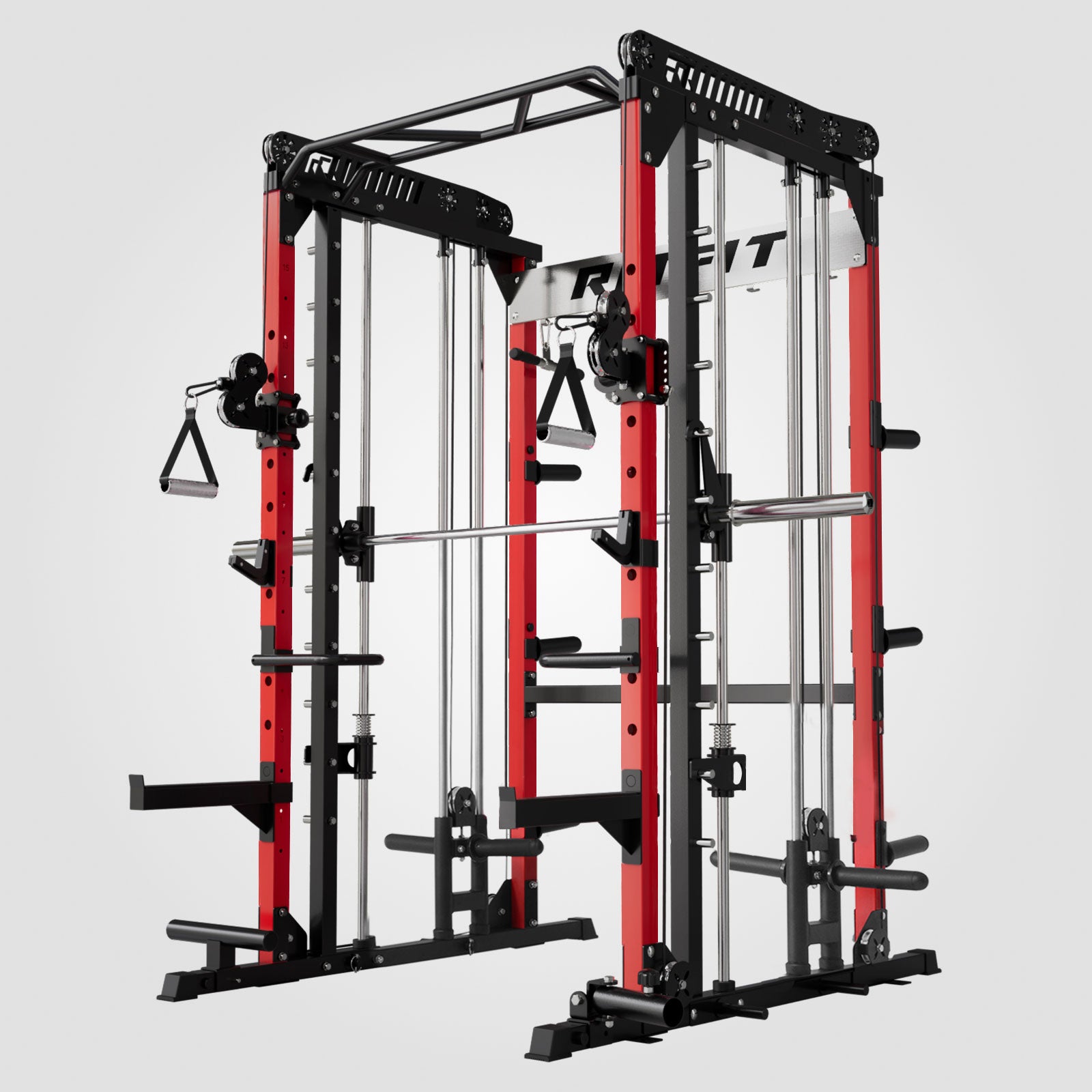
- All in one station: A Smith machine with cable training can reduce the need for several separate machines.
- Heavy lifting setup: A barbell, bumper plates, rack, platform, and storage system work well in a garage.
- Buying guide: Compare space saving options in this garage gym equipment package guide.
Best Basement Gym Equipment
A basement gym works best with compact, quiet, and stable equipment. Prioritize lower height machines, rubber dumbbells, an adjustable bench, and flooring that does not trap moisture.
- Compact strength station: A Smith machine can work if the ceiling and assembly path are realistic.
- Quiet strength basics: Rubber dumbbells, adjustable bench work, controlled cable training, and bumper plates are practical.
- Basement planning: Use this basement gym equipment essentials guide before buying large items.
Where a Smith Machine Fits
A Smith machine can work in either space if the ceiling height, floor stability, and access path are suitable. It is especially useful when you want guided bar movement, cable options, and a compact strength station.
- Garage fit: Better for full height setups, plate storage, and louder training.
- Basement fit: Better when you want controlled strength training without building a full free weight zone.
- Product option: Review the RitFit M1 Smith Machine with Cable Crossover System if you want a compact all in one strength setup.
Where an Adjustable Bench Fits
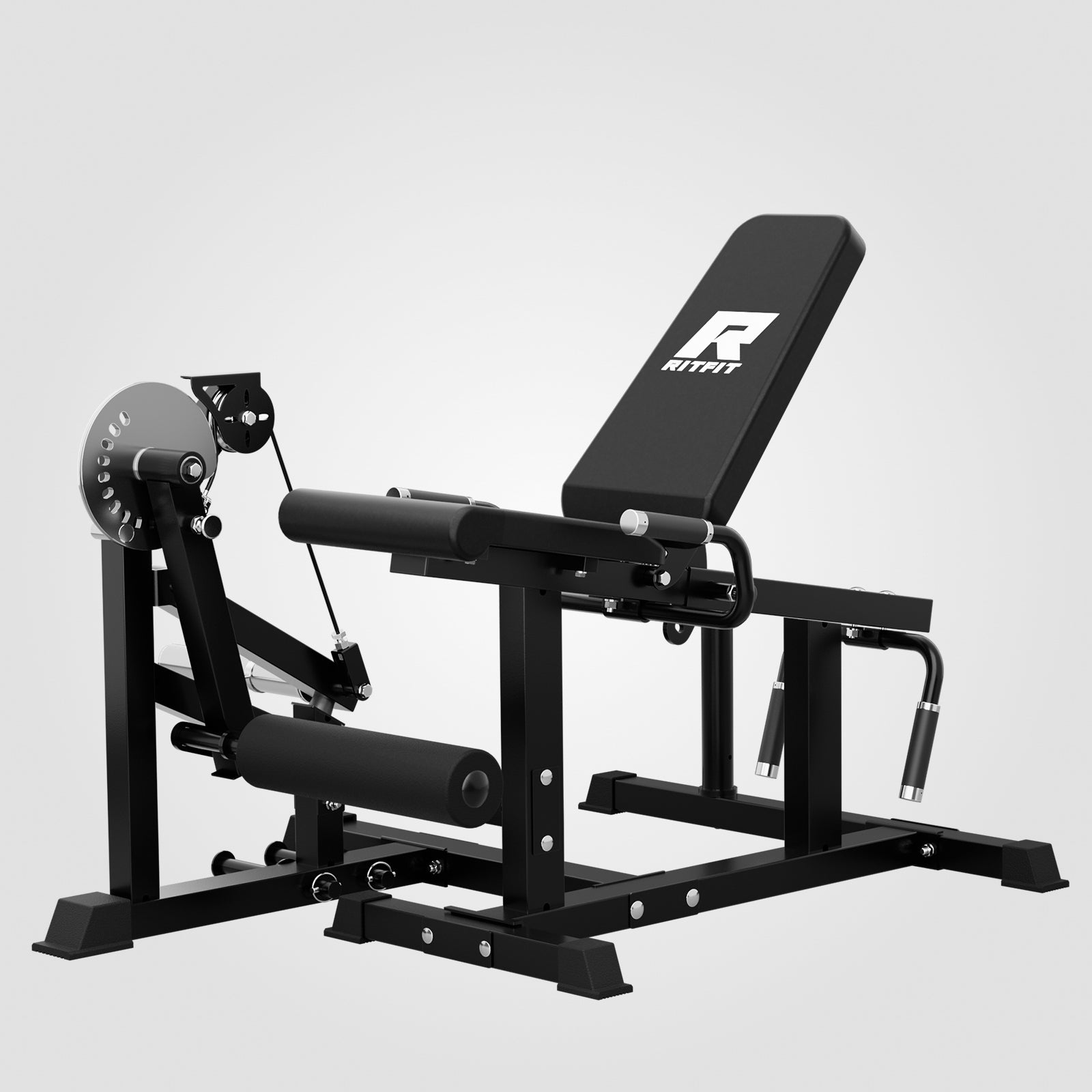
An adjustable bench belongs in almost every home gym because it expands dumbbell, cable, Smith machine, and bodyweight training options. It is especially useful in basements where seated and incline movements may replace overhead standing work.
- Garage use: Pair it with racks, barbells, dumbbells, and cable systems.
- Basement use: Use it for incline presses, seated shoulder work, rows, core training, and compact strength sessions.
- Product option: Consider the RitFit GATOR adjustable weight bench for a versatile bench based home gym setup.
Summary Decision Matrix
Use the matrix below when both spaces seem workable. Choose the location that removes the most serious limitation with the least permanent renovation.
| Constraint | Choose Garage If | Choose Basement If |
|---|---|---|
| Ceiling height | You want pull ups, overhead lifting, or taller racks. | You can use compact racks and seated variations. |
| Noise tolerance | You lift heavy or train loudly. | You train quietly and avoid dropping weights. |
| Climate | You live in a mild climate or will insulate and condition the space. | You want more stable comfort with fewer upgrades. |
| Humidity | You can seal the garage and prevent condensation. | You can run a dehumidifier and monitor moisture. |
| Equipment access | You want driveway to gym delivery. | You can handle stairs, turns, and in room assembly. |
| Room feel | You like a rugged strength training atmosphere. | You want a clean studio style room. |
FAQs
Which is better for a home gym, garage or basement?
It depends on your biggest constraint. Choose a garage for heavy lifting, easy delivery, and louder training, and choose a basement for stable comfort, cleaner aesthetics, and quieter daily access. Ceiling height, humidity, noise path, and equipment access should decide the final choice.
Can a basement gym handle heavy lifting equipment?
Yes. A basement gym can handle heavy lifting equipment when the floor is stable, dry, and accessible. The main limits are ceiling height, stair delivery, moisture control, and impact noise. Use rubber flooring, a platform, and careful layout planning before adding large racks or machines.
Is a garage gym bad for rust?
No. A garage gym is not automatically bad for rust, but it needs moisture control. Condensation forms when warm humid air meets cold steel, especially on barbells and rack uprights. Wipe metal surfaces, improve sealing, use airflow, and avoid storing equipment in damp corners.
Do I need a dehumidifier for a basement gym?
Often yes. A dehumidifier is one of the most useful basement gym upgrades because it helps control dampness, odor, mold risk, and equipment corrosion. Choose a unit with continuous drain support when possible, and monitor humidity with a simple hygrometer.
What flooring is best for a garage gym or basement gym?
Dense rubber flooring is usually best for both spaces. It protects concrete, improves traction, reduces vibration, and supports racks, benches, and dumbbells. For heavy barbell work, add a lifting platform or drop pads in the main impact zone.
How much ceiling height do I need for a home gym?
You need enough usable height for your tallest movement and equipment. Measure the lowest point, including ducts, lights, garage tracks, and beams. Pull ups, overhead presses, Smith machines, racks, and cardio machines all need different clearance, so measure before buying.
Should I put a Smith machine in a garage or basement?
Put a Smith machine where ceiling height, floor stability, and delivery access work best. Garages are usually easier for assembly and heavier training, while basements can work well for compact controlled strength sessions. Confirm product height, bar path, and plate loading space first.
How can I make a basement gym quieter?
Start by reducing noise at the source. Use thick rubber flooring, a lifting platform, bumper plates, drop pads, and controlled reps. Structural ceiling soundproofing can help, but it is more expensive and less reversible than changing flooring and training habits first.
Conclusion
A garage gym is usually better for heavy lifting, easy delivery, and louder training, while a basement gym is usually better for comfort, control, and a polished studio feel. Measure ceiling height, humidity, noise, access, and floor condition before choosing, then build around the constraint that is hardest to fix.
Disclaimer: This guide is for general home gym planning only and is not medical, structural, electrical, HVAC, or mold remediation advice. Consult a qualified professional before major renovations, electrical work, gas heating, moisture repair, structural changes, or training with pain, injury, dizziness, or unusual symptoms.
References
- Mendell MJ Mirer AG Cheung K Tong M Douwes J. Respiratory and allergic health effects of dampness, mold, and dampness related agents: a review of the epidemiologic evidence. Environ Health Perspect. 2011;119(6):748-756. doi:10.1289/ehp.1002410
- Jones ER Cedeño Laurent JG Coull BA Spengler JD Young AS Allen JG. Indoor humidity levels and associations with reported symptoms in office buildings. Indoor Air. 2022;32(1):e12961. doi:10.1111/ina.12961
- Straub RK Powers CM. A biomechanical review of the squat exercise: implications for clinical practice. Int J Sports Phys Ther. 2024;19(4):490. doi:10.26603/001c.94600
- Noseworthy M Peddie L Buckler EJ et al. The effects of outdoor versus indoor exercise on psychological health, physical health, and physical activity behaviour: a systematic review of longitudinal trials. Int J Environ Res Public Health. 2023;20(3):1669. doi:10.3390/ijerph20031669
- Iversen VM Norum M Schoenfeld BJ Fimland MS. No time to lift? Designing time efficient training programs for strength and hypertrophy: a narrative review. Sports Med. 2021;51(10):2079-2095. doi:10.1007/s40279-021-01490-1