A gluteus medius workout machine lets you isolate the side glutes with steady, scalable resistance that bodyweight drills rarely match. This guide covers which machines work, how to set them up, and how to program them.
You will learn the differences between the seated hip abduction machine, cable column, and multi-hip machine, plus how to bias the glute medius over the tensor fasciae latae.
Quick Answer
The best gluteus medius workout machine for most people is the seated hip abduction machine, which loads the muscle directly through hip abduction. A cable column with an ankle strap and a 4-way multi-hip machine are strong alternatives, especially when you adjust torso angle and foot position to limit tensor fasciae latae takeover.
Key Takeaways
- Best overall machine: The seated hip abduction machine isolates the gluteus medius with direct, easy to scale resistance.
- Setup matters most: Torso angle and foot position decide whether the glute medius or the tensor fasciae latae does the work.
- Cables and bands count: A cable column with an ankle strap or resistance bands can match or beat a seated machine for activation.
- Train it often: Two to three sessions weekly of higher rep, controlled work suits this stabilizing muscle.
- Stop on sharp pain: Lateral hip or groin pain means regress the load or rest, not push through.
| Brand | RitFit Sports |
|---|---|
| Featured Products | Hip abduction and multi-hip stations in the leg machine category |
| Key Specs | Adjustable pad width, selectable weight stack, upright or forward lean seat positions |
| Best For | Lifters and home gym owners building hip stability and rounder upper glutes |
| Not Ideal For | Anyone with acute lateral hip or groin pain until cleared by a professional |
Why Does the Gluteus Medius Deserve Its Own Machine Work?
The gluteus medius deserves dedicated machine work because it stabilizes the pelvis during walking, running, and single leg movements, yet compound lifts rarely load it hard enough. A machine delivers the consistent, scalable abduction resistance this muscle needs.
- Primary role: It abducts the hip and keeps the pelvis level when one foot leaves the ground.
- Three segments: The anterior, middle, and posterior fibers respond to slightly different hip positions and angles.
- Activation threshold: A study found side-lying hip abduction activated the gluteus medius to roughly 70 percent of maximum voluntary contraction, and about 40 percent is generally needed to drive strength adaptation.[1]
A machine makes hitting that threshold repeatable, which is harder to control with bodyweight clams alone. That reliability is why a dedicated tool earns its place.
Which Machines Train the Gluteus Medius?
Three machines train the gluteus medius effectively, the seated hip abduction machine, the cable column, and the 4-way multi-hip machine. Each loads hip abduction through a different path, and a systematic review found gluteus medius activation varies widely across exercises, from about 12 percent to over 100 percent of maximum voluntary contraction.[2]
Seated Hip Abduction Machine
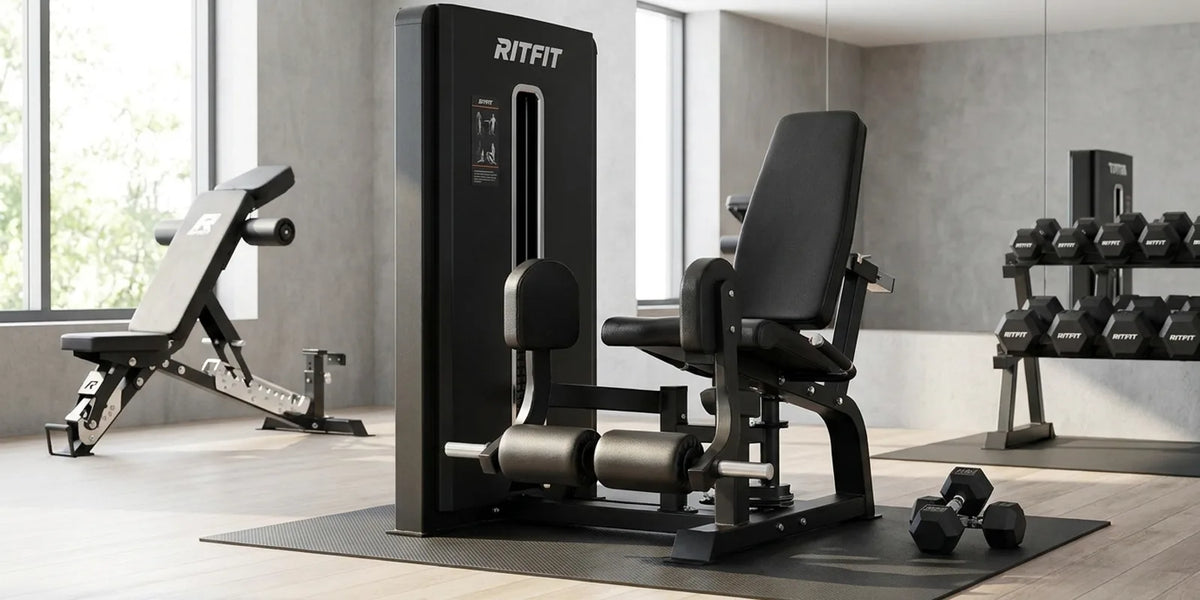
The seated hip abduction machine is the most accessible option, pressing both legs outward against pads while you sit in a fixed, supported position. It scales easily with a selectable stack and suits beginners through advanced lifters.
Cable Column (Standing Cable Hip Abduction)
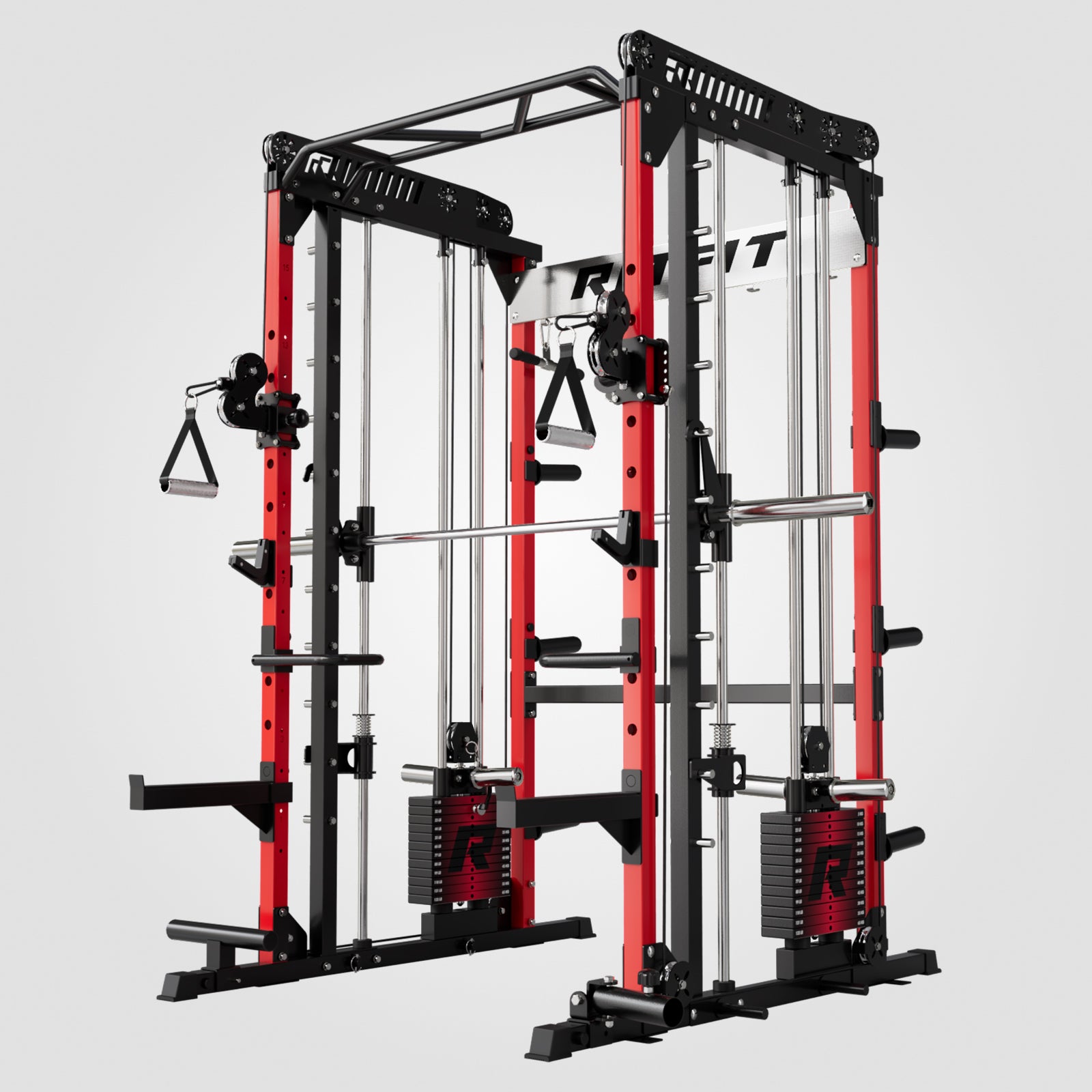
A cable column with an ankle strap lets you abduct one leg at a time through a long, controlled range while standing. You can browse the cable machine handles and ankle straps needed to set this up at home.
4-Way / Multi-Hip Machine
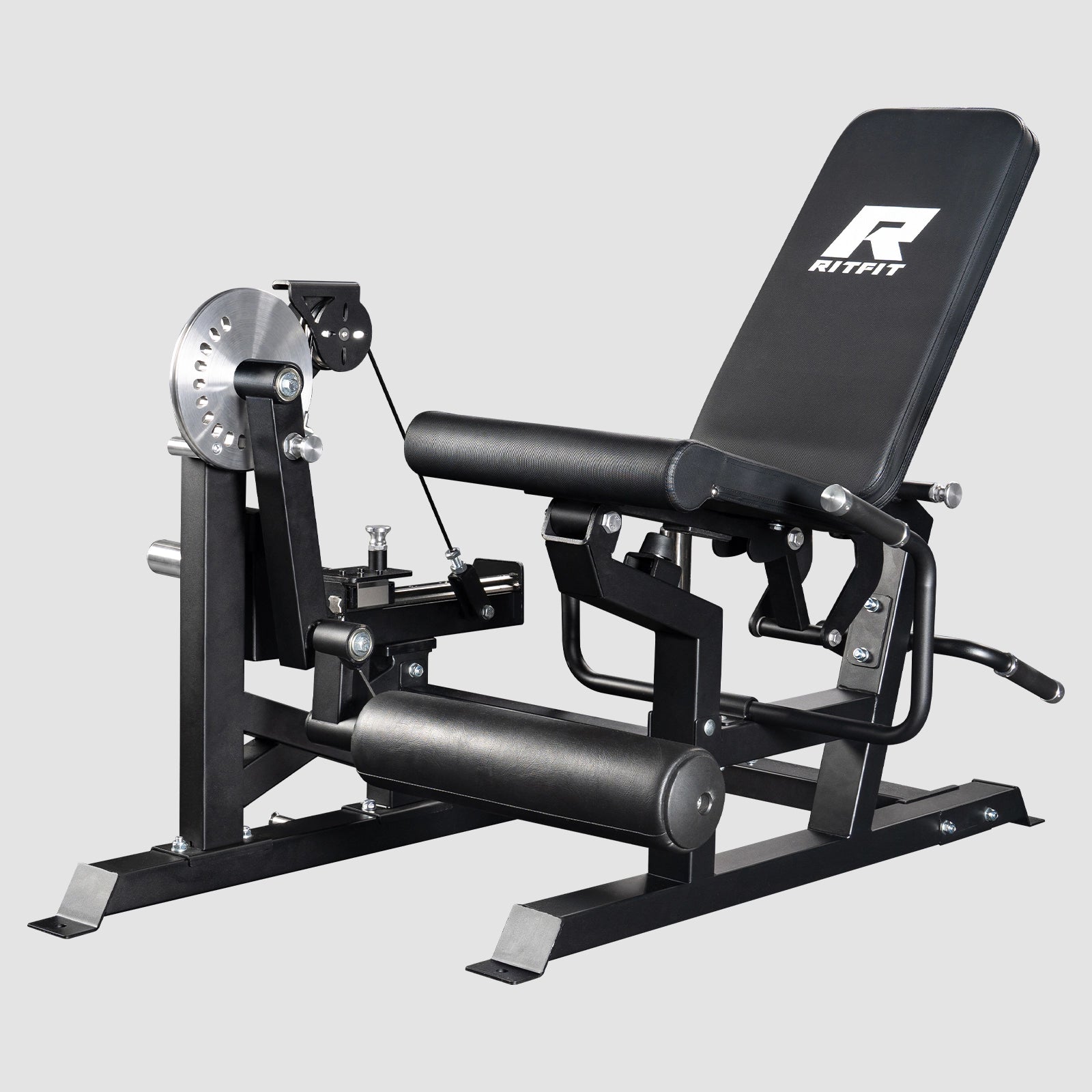
The 4-way hip machine trains abduction, adduction, flexion, and extension from a standing braced position. It is a favorite among coaches for loading the upper glutes through a full standing abduction arc.
- Where to find them: These stations sit within the broader cable machine and leg training lineups for home gyms.
"Many gyms have machines that allow for this. If you find one that feels right, then go really hard on these and make them a staple movement and go for progressive overload over time. The 4-way hip machine can work well."
Bret Contreras, PhD, Sports Scientist and Strength Coach, Glute Lab
Machine vs Free Weights vs Bands for the Gluteus Medius?
Machines, free weights, and bands all build the gluteus medius, but they differ in how cleanly they isolate it. A study found the hip abductor machine produced a more favorable glute medius to tensor fasciae latae ratio than the clamshell and side-lying abduction, making it strong for targeted work.
- Machine strengths: Fixed path, easy loading, and a good glute medius to TFL ratio when set up well.
- Free weight role: Loaded step-ups and single-leg work recruit the glute medius as a stabilizer rather than a prime mover.
- Band and cable edge: A study found elastic resistance produced higher glute medius EMG than the seated machine during hip abduction, partly due to the more extended hip position.[3]
The practical takeaway is to use a machine for reliable loading and add cables or bands for variety. Both belong in a complete plan, so explore the leg press machine range for related lower-body options.
How Should You Set Up the Hip Abduction Machine?
Setting up the hip abduction machine well means controlling torso angle and foot position so the gluteus medius leads instead of the tensor fasciae latae. Sit tall, keep the movement slow, and feel the side of the hip working.
- Torso angle: Sit upright to bias the posterior fibers, or lean slightly forward for the upper fibers, but never lean back.
- Hip position: A slightly extended hip rather than a deeply flexed one helps shift work away from the tensor fasciae latae.
- Tempo: Press out under control and resist the return for a count of two to keep constant tension.
- Range: Push to a comfortable end range without forcing the pelvis to rotate or the lower back to arch.
The video below demonstrates a frontal plane glute medius drill that reinforces the same upper-glute cueing you want on the machine.
How Much Load, Sets, and Frequency Should You Use?
For the gluteus medius, use moderate loads with higher reps and train it two to three times per week. This stabilizing muscle responds well to volume and constant tension rather than maximal singles.
- Starting load: Pick a weight you can control for 15 clean reps before your form breaks down.
- Sets and reps: Perform 2 to 4 sets of 12 to 20 reps per side, focusing on the squeeze at the top.
- Frequency: Train it 2 to 3 times weekly, leaving about a day between dedicated sessions.
- When to add weight: Add load once you can finish the top of your rep range with two clean reps left in reserve.
- Progression options: Slow the eccentric, add a pause at end range, or shift to single-leg cable work as you advance.
Keep increases small and earn them with technique. Pair this work with broader leg training from the best Smith machine leg workouts guide.
What Are the Common Mistakes and When Should You Stop?
The most common mistake is letting the tensor fasciae latae or momentum take over, which you feel as burning in the outer thigh instead of the side glute. Sharp lateral hip or groin pain is your signal to stop.
- Using too much weight: Heavy loads invite swinging and pelvic rotation that rob the glute medius of tension.
- Leaning back: Reclining shifts the work toward hip flexors and the tensor fasciae latae.
- Rushing reps: Fast, bouncy reps reduce the controlled tension this muscle thrives on.
- Ignoring symmetry: Train each side evenly on the cable column to avoid building imbalances.
- When to stop: Stop and regress or rest if you feel sharp lateral hip, groin, or knee pain rather than muscular fatigue.
If form slips, drop the load and rebuild the mind-muscle connection. For complementary glute work, see the Smith machine hip thrust glute workout guide.
Which Machine Should You Choose for Home or Gym?
Choose based on your space, budget, and training goal rather than chasing a single best machine. A cable column or multi-station unit suits home gyms, while a dedicated seated abduction machine fits commercial setups.
| Your Situation | Recommended Option | Why |
|---|---|---|
| Limited home space | Cable column with ankle strap | One station covers abduction plus many other movements |
| Want full standing arc | 4-way multi-hip station | Loads abduction through a long standing range |
| Commercial or dedicated room | Seated hip abduction machine | Simplest setup and easiest to scale for any level |
A versatile station gives the most value at home. Consider a multifunctional Smith machine with a cable system, or a combo machine workout setup for multiple glute angles.
FAQs About Gluteus Medius Workout Machines
Is the hip abduction machine good for the gluteus medius?
Yes, the seated hip abduction machine is one of the most accessible ways to load the gluteus medius directly. Research comparing single-joint exercises found the abductor machine produced a favorable glute medius to TFL activation ratio, meaning it targets the glute medius while limiting tensor fasciae latae takeover when you set it up well.
Should I lean forward or sit upright on the hip abduction machine?
Sitting more upright biases the posterior glute medius fibers, while a slight forward lean shifts emphasis toward the upper fibers. Avoid leaning back, which lets the tensor fasciae latae and hip flexors take over. Pick the torso position where you feel the side of your hip working hardest, and keep your movement controlled.
How often should I train the gluteus medius on a machine?
Two to three sessions per week is a practical target for most lifters, performing two to four sets of twelve to twenty controlled reps per side. Because the glute medius responds well to higher repetitions and constant tension, you can train it more frequently than heavy compound lifts, leaving about a day between dedicated sessions.
Can I train the gluteus medius without a dedicated abduction machine?
Absolutely. A cable column with an ankle strap lets you perform standing hip abduction through a full range, and bands or a 4-way hip machine work too. One study even found elastic resistance produced higher glute medius EMG than a seated machine during abduction, so cables and bands are excellent alternatives at home.
Why do I feel hip abduction in my outer thigh instead of my glute?
Feeling it mostly in the outer thigh usually means the tensor fasciae latae is dominating. Try keeping the hip in slight extension rather than flexion, point the toes slightly down or neutral, slow the lowering phase, and reduce the load. Re-establishing that mind-muscle connection with lighter resistance helps shift the work back to the glute medius.
Conclusion
A gluteus medius workout machine gives you the reliable, scalable resistance this stabilizing muscle needs to grow stronger and more durable. The seated hip abduction machine, cable column, and multi-hip machine all work when you set them up to bias the glute over the tensor fasciae latae.
Start light, train it two to three times weekly, and progress slowly. Browse the Smith machine lineup to build a complete lower-body station at home.
Disclaimer
This article is for general educational purposes and does not replace personalized medical or training advice. Consult a qualified healthcare or fitness professional before starting new exercises, especially if you have hip, groin, or knee pain.
References
1. McBeth JM, Earl-Boehm JE, Cobb SC, Huddleston WE. Hip Muscle Activity During 3 Side-Lying Hip-Strengthening Exercises in Distance Runners. J Athl Train. 2012;47(1):15-23. https://pmc.ncbi.nlm.nih.gov/articles/PMC3418110/
2. Moore D, Semciw AI, Pizzari T. An Examination of the Gluteal Muscle Activity Associated with Dynamic Hip Abduction and Hip External Rotation Exercise: A Systematic Review. Int J Sports Phys Ther. 2015;10(5):573-591. https://pmc.ncbi.nlm.nih.gov/articles/PMC4595911/
3. Brandt M, Jakobsen MD, Thorborg K, Sundstrup E, Jay K, Andersen LL. Perceived Loading and Muscle Activity During Hip Strengthening Exercises: Comparison of Elastic Resistance and Machine Exercises. Int J Sports Phys Ther. 2013;8(6):811-819. https://pmc.ncbi.nlm.nih.gov/articles/PMC3867074/