Physical fitness is usually grouped into two categories: health related fitness and skill related fitness. The first keeps your body healthy for daily life, while the second sharpens performance for sports and athletic movement.
This guide defines both categories, lists all eleven components with plain examples, compares them side by side, and shows how to train each one at home.
Quick Answer: Health related fitness covers five components that protect everyday health, while skill related fitness covers six abilities that improve sport performance. Everyone needs the five health related components, and beginners should build them first before adding skill related drills for a chosen sport.
Key Takeaways
- Two categories: Health related fitness keeps you healthy day to day, while skill related fitness sharpens athletic performance.
- Five vs six: Health related fitness has five components and skill related fitness has six, eleven in total.
- Health components: Cardiorespiratory endurance, muscular strength, muscular endurance, flexibility, and body composition.
- Skill components: Agility, balance, coordination, power, speed, and reaction time.
- Where to start: Beginners should build health related fitness first, then add skill work for a chosen sport.
What Is the Difference Between Health and Skill Related Fitness?
The difference is purpose: health related fitness covers the attributes you need to maintain everyday health, while skill related fitness covers abilities that mainly improve sport and athletic performance. Physical fitness was defined in foundational health research as a set of attributes people have or achieve that relate to the ability to perform physical activity[1].
- Health related: Five components everyone needs for daily function and long term wellness.
- Skill related: Six performance abilities that benefit athletes but are not essential for basic health.
Both matter, but they serve different goals, which is why fitness tests usually measure them separately.
What Is Health Related Fitness and Its 5 Components?
Health related fitness is the group of fitness attributes that are important for maintaining health and performing daily tasks with ease. According to ACSM-based texts, it includes five components: cardiorespiratory endurance, muscular strength, muscular endurance, flexibility, and body composition.
Cardiorespiratory endurance
This is the ability to exercise your whole body for a long time without stopping, supported by the heart, lungs, and circulation.
Muscular strength
This is the maximum force a muscle can produce in a single effort, such as lifting a heavy box once.
Muscular endurance
This is the ability of muscles to keep working continuously without tiring, like doing many repeated lifts.
Flexibility
This is the ability to move a joint fully through its range of motion, shaped by the mobility of surrounding muscles and tendons.
Body composition
This is the ratio of lean tissue to fat tissue in your body, a key marker of overall health.
You can support several of these at once with a guided plan such as these daily exercises for lifelong strength and health.
What Is Skill Related Fitness and Its 6 Components?
Skill related fitness is the group of abilities that improve athletic performance but are not considered essential for basic health. It includes six components: agility, balance, coordination, power, speed, and reaction time.
Agility
This is the ability to change body position quickly while keeping control, like dodging a defender in football.
Balance
This is the ability to keep an upright, stable posture while standing still or moving, such as walking a beam.
Coordination
This is the ability to use your senses with body parts together, like catching a ball or riding a bike, and this guide to coordination in fitness shows how to train it.
Power
This is the ability to apply strength quickly, combining force and speed to produce explosive movements like jumping.
Speed
This is the ability to move your body or cover a distance in the shortest possible time, as in a sprint.
Reaction time
This is how quickly you respond once you realize you need to move, like reacting to a starting pistol.
For a closer look at these six abilities, see this guide to skill related fitness components.
How Do the Two Types Compare Side by Side?
Health related fitness is needed for general health, whereas skill related fitness mainly supports athletic performance. The table below summarizes their components, main goal, and who benefits most.
| Feature | Health Related Fitness | Skill Related Fitness |
|---|---|---|
| Number of components | 5 | 6 |
| Components | Cardiorespiratory endurance, muscular strength, muscular endurance, flexibility, body composition | Agility, balance, coordination, power, speed, reaction time |
| Main goal | Maintain everyday health and function | Improve sport and athletic performance |
| Who benefits most | Everyone, at any age | Athletes and active sport players |
Component lists follow ACSM-based fitness definitions and the research cited in this guide.
For a deeper breakdown of the health side, see this PE guide to the 5 components of fitness.
Where Do Health and Skill Related Fitness Overlap?
The two categories overlap because some abilities draw on both, and most real activities blend them at once. Power, for example, combines muscular strength, a health related trait, with speed, a skill related trait.
- Shared abilities: Balance and power rely on strength and control that span both groups.
- Different emphasis by sport: Athletes develop these traits to different degrees depending on their game.
A study comparing 30 national basketball players, mean age around 24 years, with 30 football players, mean age around 23 years, in Sri Lanka found their fitness profiles differed by sport, with basketball players showing higher agility, power, coordination, and balance[2].
Because these domains are measured separately, large fitness assessments report them as distinct profiles. A study of 1131 children, mean age around 11 years, assessed health related measures and skill related measures as separate domains[3].
Balance and power sit at the center of that overlap, and these BOSU ball exercises for balance and core strength train both sides in one session.
How Do You Train Each Type at Home?
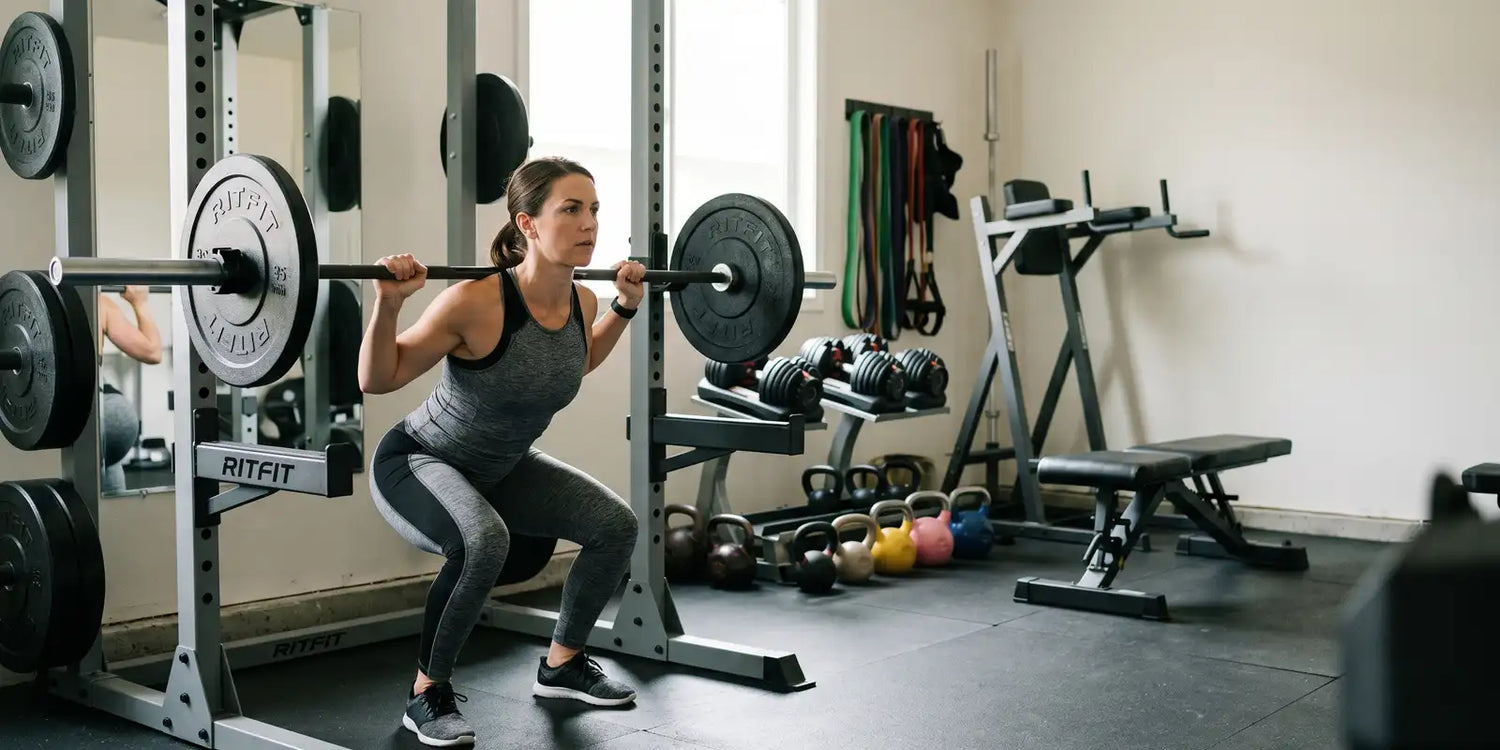
You train health related fitness with endurance, resistance, and mobility work, and skill related fitness with drills that challenge movement and reaction. Both can be built at home with simple equipment and bodyweight.
- Cardio and endurance: Brisk walking, jogging, or cycling for 20 to 40 minutes, 3 to 5 times per week.
- Strength and muscle endurance: Squats, push ups, and rows for 2 to 3 sets of 10 to 15 reps, 2 to 3 times per week.
- Flexibility: Gentle stretching or mobility flows on most days.
- Skill drills: Ladder footwork for agility, single leg holds for balance, and reaction catches for reaction time.
Browse the strength equipment collection or follow these Pilates exercises for core strength and flexibility to cover several components at home.
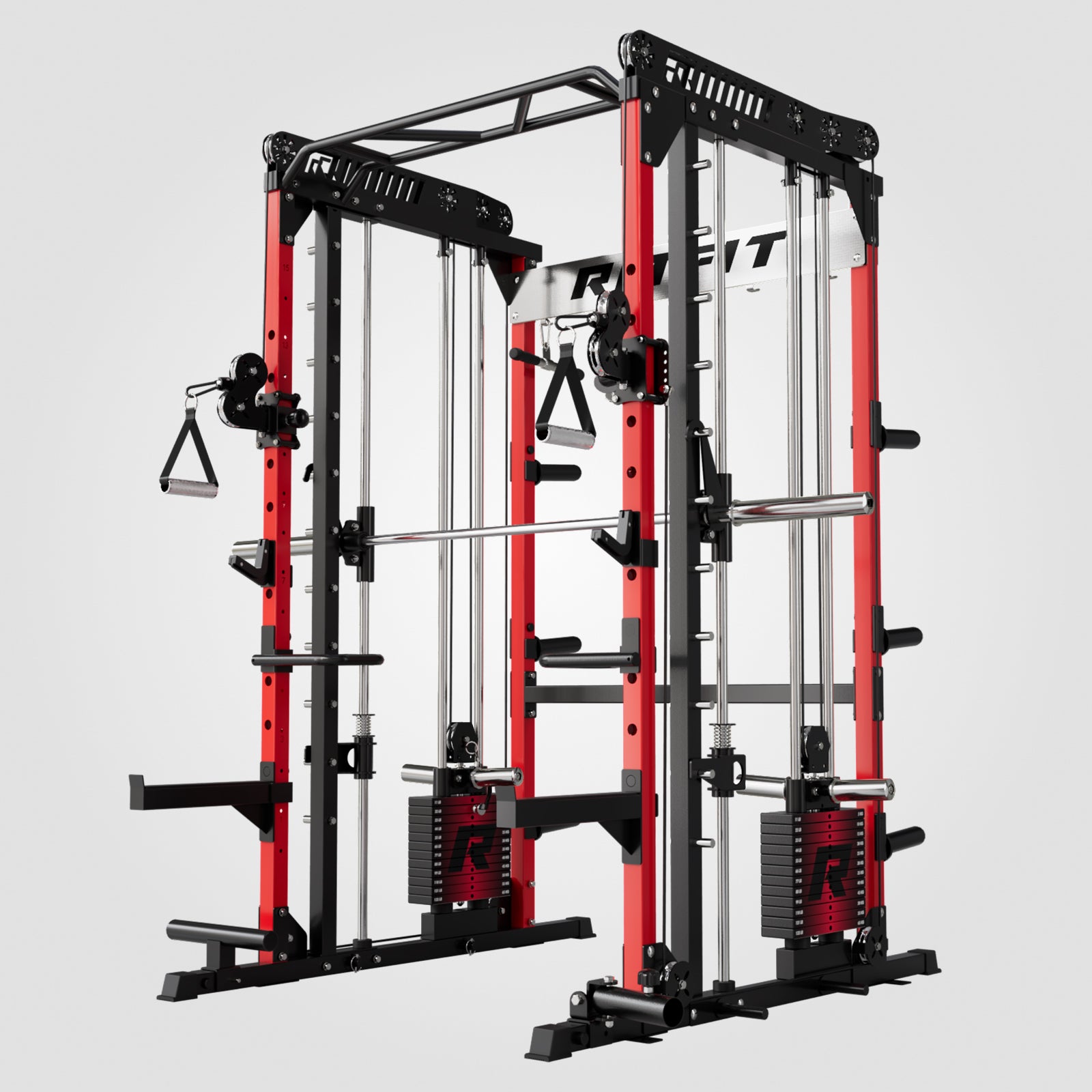
For loaded strength work, a modular RitFit M2 Smith machine covers pressing, rowing, and squatting in one footprint.
Setting up those sessions at home comes down to a few core pieces, as one fitness director puts it:
"Every home gym starts with the rack and bench. All your heavy lifts (and bodyweight moves like pull-ups) take place in the rack. And today's home benches are the backbone of any gym, overloaded with so much functionality that you'll do everything from Nordic curls to hanging sit-ups on them."
Ebenezer Samuel, C.S.C.S. Fitness Director, Men's Health, How Our Fitness Director Overhauled His Garage Gym
Which Type Should You Focus On First?
Most people should focus on health related fitness first, because its five components protect long term health and make daily life easier. Skill related fitness becomes a priority once you train for a specific sport or performance goal.
- Beginners: Build cardio, strength, flexibility, and healthy body composition as a foundation.
- Athletes: Add agility, power, speed, and reaction drills on top of that base.
If your goal is general wellness, see this overview of fitness for women for a balanced starting point.
FAQs About Health and Skill Related Fitness
What is the main difference between health and skill related fitness?
Health related fitness includes the five components everyone needs to stay healthy in daily life, such as cardiorespiratory endurance and muscular strength. Skill related fitness covers six performance abilities like agility and reaction time that mainly help in sports and athletics, but are not essential for general health.
What are the five components of health related fitness?
The five health related components of fitness are cardiorespiratory or cardiovascular endurance, muscular strength, muscular endurance, flexibility, and body composition. These attributes support your everyday health, help reduce injury risk, and make daily tasks like climbing stairs or carrying groceries easier to perform without fatigue.
What are the six components of skill related fitness?
The six skill related components of fitness are agility, balance, coordination, power, speed, and reaction time. These abilities determine how well you perform athletic movements, such as changing direction quickly, jumping explosively, or responding to a starting signal, and they matter most for sports and competitive performance.
Do non athletes need skill related fitness?
Yes, although it is not essential for basic health, skill related fitness still helps everyone. Balance, coordination, and reaction time keep you steady on stairs, help you avoid falls, and let you react quickly while driving. Athletes simply need higher levels of these abilities than the average person does.
Can a fitness component belong to both categories?
Some abilities overlap because power combines muscular strength, a health related trait, with speed, a skill related trait. Many real activities also blend both types at once. In practice the two categories are training emphases rather than rigid boxes, so improving one area often supports the other as well.
Which type of fitness should beginners focus on first?
Most beginners should prioritize health related fitness first, since cardiorespiratory endurance, strength, flexibility, and healthy body composition protect long term health. Once a solid base is built, you can add skill related training like agility or power work to support a specific sport or performance goal you care about.
Conclusion
Health related fitness and skill related fitness describe two sides of being fit, one for everyday health and one for athletic performance. Together they cover eleven components that you can develop with simple, consistent training.
Start by building the five health related components, then layer in skill drills if you play a sport or want sharper movement.
Disclaimer
This article is for general educational purposes only and does not replace personalized advice from a qualified professional. Consult a doctor or certified trainer before starting a new exercise program, especially if you have any health concerns.
References
1. Caspersen CJ, Powell KE, Christenson GM. Physical activity, exercise, and physical fitness: definitions and distinctions for health-related research. Public Health Rep. 1985;100(2):126-31. PMCID: PMC1424733
2. Kariyawasam A, Ariyasinghe A, Rajaratnam A, Subasinghe P. Comparative study on skill and health related physical fitness characteristics between national basketball and football players in Sri Lanka. BMC Res Notes. 2019;12(1):397. doi:10.1186/s13104-019-4434-6. PMCID: PMC6624989
3. Kinuthia SK, Stratton G, Wachira LJ, et al. Differences Between Health- and Skill-Related Physical Fitness Profiles of Kenyan Children from Urban and Rural Areas: The Kenya-LINX Project. Int J Environ Res Public Health. 2025;22(4). doi:10.3390/ijerph22040542. PMCID: PMC12026618