









A home gym starter pack comes down to five pieces of equipment: a power rack, an adjustable bench, dumbbells, an Olympic barbell, and weight plates. Everything else you see in garage gym photos is an upgrade to one of those five.
This guide breaks down what each piece does, which specs actually matter in a garage or spare bedroom, and three sample builds by budget so you can buy in stages instead of guessing.
Quick Answer: The essential home gym starter pack is a power rack or cage, an adjustable bench, a set of dumbbells, a 7-foot Olympic barbell, and 160 to 200 lb of weight plates. Those five cover squats, presses, rows, and deadlifts in about 40 sq ft of floor space.
Key Takeaways
- Five pieces, not fifty: A power rack, adjustable bench, dumbbells, an Olympic barbell, and weight plates cover every major movement pattern, so buy those before attachments or cardio machines.
- Ceiling height decides the rack: Most home racks stand 80 to 85 inches tall, so measure overhead clearance and pull-up space before you order.
- Bench ratings matter more than looks: The RitFit Gator Adjustable Weight Bench is rated for a 1,600 lb total load and 21 adjustment combinations.
- One bar covers the basics: A 7-foot Olympic bar with 2-inch sleeves, a 28 mm shaft, and about 44 lb of bar weight fits most racks and standard plates.
- Buy plates in pairs: Pairs of 45, 35, 25, 15, 5, and 2.5 lb plates let you add small jumps instead of stalling between sessions.
What Should You Plan Before Buying?
Three things decide your home gym starter pack: floor space, ceiling height, and a realistic budget. Measure all three before you order anything, because they determine which rack, bench, and bar will actually fit.
Ceiling height is the constraint most people miss. A rack needs clearance for pull-ups and overhead presses, not just for the frame itself.
- Space: Measure the length, width, and height of the training area, then leave room in front of and behind the rack for a bench and a loaded bar.
- Goals: If you want heavy squats, presses, and deadlifts, the rack, bar, and plates come first; if you mainly want to move more, a bench and dumbbells cover most of it at first.
- Budget: Plan in stages across 6 to 12 months rather than buying everything at once, so each purchase fits what you already own.
| Budget stage | What to buy first | Space to plan for |
|---|---|---|
| Under $1,000 | A compact rack or squat stand, a flat or lighter adjustable bench, one barbell, and 160 to 200 lb of plates | Roughly the width of a single parking space, about 8 ft by 8 ft |
| $1,000 to $2,000 | A full power cage with a cable system, a heavy-duty adjustable bench, an Olympic bar, 230 to 260 lb of plates, and one dumbbell pair | About 10 ft by 10 ft with working room for a bench |
| $2,000 and up | An all-in-one rack or Smith machine package, a commercial-grade adjustable bench, a larger bumper plate set, and a wider dumbbell range | A dedicated 12 ft by 12 ft area |
Space figures are planning estimates for a 7-foot bar with working room on each side. For reference, the RitFit P3 Power Cage occupies 17.5 sq ft on its own.
Once space, goals, and budget are clear, the five equipment types below are much easier to choose. Start with the piece that unlocks the most training, then build outward.
Why Is a Power Rack the Best First Buy?
A power rack is the best first buy because its safety bars or straps catch a failed rep, which lets you squat and press heavy without a spotter. It also anchors everything else, since the bench slides inside the cage and the barbell unracks at your pressing height.
A rack turns one barbell into a full-body training system. With a single cage you can squat, bench press, overhead press, rack pull, and do pull-ups, even when you train alone.
- Height and ceiling clearance: Most home racks stand 80 to 85 inches tall, so measure your ceiling and leave clearance for pull-ups and overhead work.
- Footprint and stability: A deeper rack feels steadier and gives you more room to move inside it, so check depth and width against your room plus the space a bench and bar need.
- Weight capacity and steel gauge: If you plan to lift heavy over time, look for a static load rating well above the weights you use and thicker uprights, such as 2 x 2 inch 14-gauge steel.
- Attachments and expandability: A pull-up bar, plate storage, a landmine, dip handles, and a cable system turn one rack into most of a gym.
If a rack offers all four, you can keep adding to it instead of replacing it later. That is what makes it the hub of a starter pack rather than just another purchase.
Why the RitFit P3 Power Cage Fits a Garage Gym
The RitFit P3 Power Cage pairs a 2 x 2 inch 14-gauge steel frame rated for a 1,200 lb static load with an integrated cable system that runs 21 aluminum pulleys at a 2:1 ratio. It measures 67.2 by 59.1 by 81 inches, covers 17.5 sq ft of floor, and accepts both 1-inch and 2-inch plates along with a landmine and storage pegs.[1]
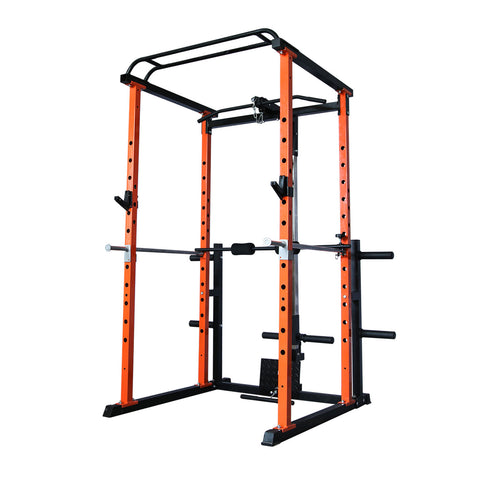
"Nice little setup. Great for home gym and basic needs. Easy to set up."
Abby B. Verified Buyer, RitFit P3 Power Cage 1200lbs Home Gym Package
How Do You Choose an Adjustable Weight Bench?
Choose an adjustable bench by checking three things: its total load rating, how many backrest angles it offers, and how wide the pad is. A bench that wobbles or sits too narrow limits how much you can press safely.
An adjustable bench pairs with a rack for flat, incline, and seated overhead pressing. It also covers dumbbell rows, incline dumbbell presses, seated shoulder presses, and chest flyes.
- Stability and weight rating: A wobbly bench caps how heavy you can go, so look for a solid frame, a wide base, and a rating that comfortably exceeds your body weight plus the heaviest load you press.
- Adjustment options: You need flat plus several incline settings at minimum, and a near-upright position helps for seated shoulder presses.
- Pad size and comfort: A pad that is too narrow feels unstable, while one that is too soft wastes energy, so choose a firm pad long enough for your torso.
- Mobility and storage: Wheels and a handle matter when your training area doubles as a parking spot or a living room.
If your budget is tight, a simple flat bench still works well, and you can upgrade to a higher-end adjustable model later. Most lifters eventually want the incline settings anyway.
Why the RitFit Gator Adjustable Weight Bench Suits Most Home Gyms
The RitFit Gator Adjustable Weight Bench is rated for a 1,600 lb total load and built from 50 by 70 mm heavy-duty steel tubing. It offers 21 adjustment combinations, including 10 backrest angles from 0 to 85 degrees, three seat angles, three decline settings, and five headrest positions, with 70 mm recycled foam padding and a headrest rated to 396 lb on its own.[2]
"Built with 14-gauge steel, the RitFit Gator Adjustable Weight Bench offers a robust weight capacity of 1,600 pounds. With 10 back pad angles, three seat pad positions, three decline settings, and a five-way adjustable head rest, you have ample options to support your strength and muscle building goals."
Stephen Sheehan, CPT, CNC, Certified Personal Trainer and Nutritionist, in RitFit Gator Adjustable Weight Bench Review (Garage Gym Reviews)
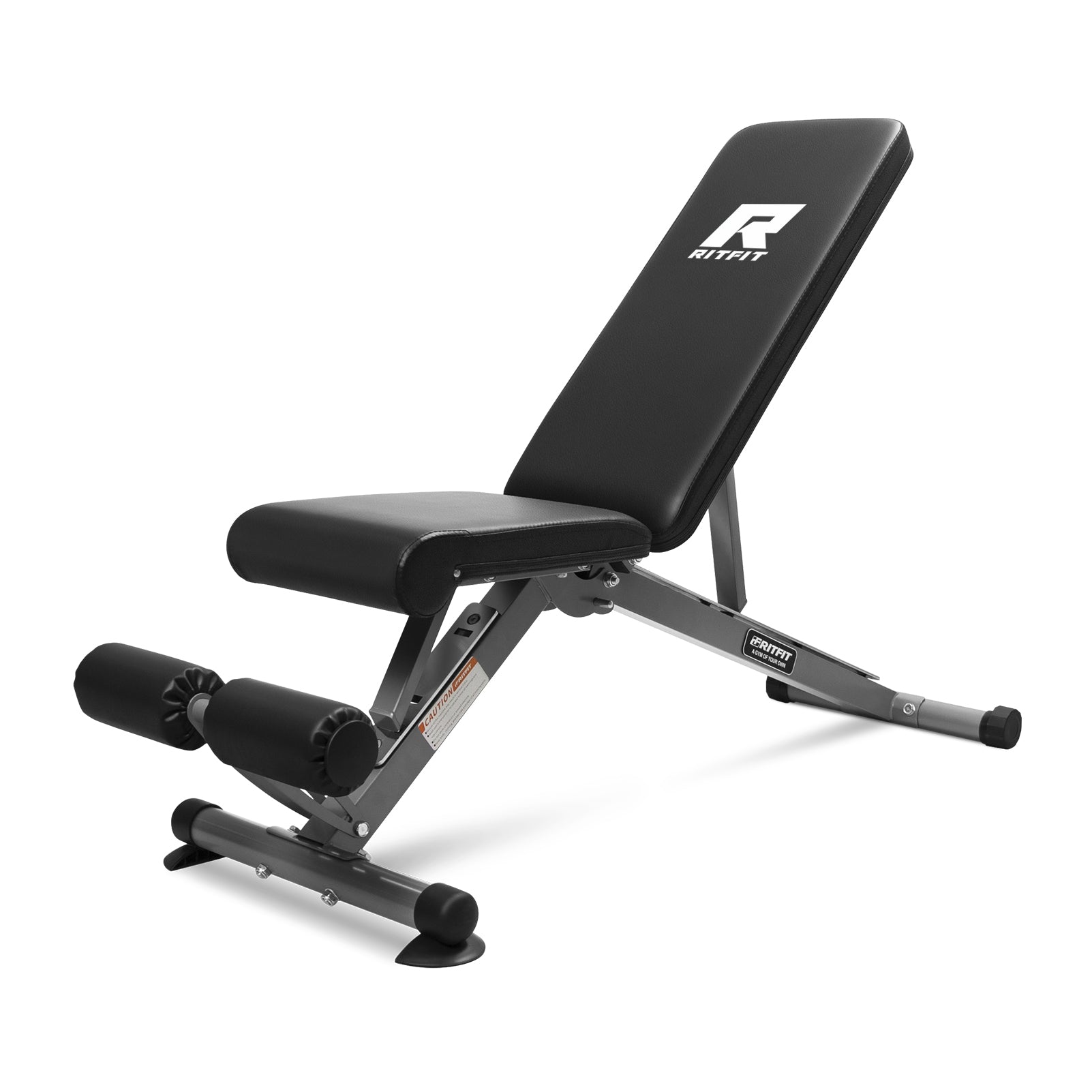
RitFit Gator Adjustable Weight Bench
"This bench is great and sturdy and does everything I need out of it for me and my son. I really like the arm rest especially for my son while he is learning and starting out in working out I think it's great that this product has something that can help with his form. It moves and adjust easily and very simple any one can do it. I use this in a limited space so I am moving it around to store it so bigger wheels would have been nice but It's also not a make or break. It still moves around great I just need to adjust the angle a bit. Over all great product and it's definitely worth the money to add to my home gym."
Rey O. Verified Buyer, RitFit GATOR 1600LB Adjustable Weight Bench
Are Dumbbells Worth Buying for a Starter Pack?
Dumbbells earn their place in a starter pack because they train one side at a time, which exposes and fixes the left-to-right strength differences a barbell can hide. They also cover accessory work that a rack and bar handle poorly, including lateral raises, curls, and single-arm rows.
You can buy fixed pairs or a single adjustable set, and the right answer depends on how much floor space you have and how much you want to spend over time.
- Fixed dumbbells: They feel great in the hand, hold up for years, and let you switch weights fast, but pairs add up in cost and take up more floor space.
- Adjustable dumbbells: They pack many weights into one compact system, which suits small spaces and tighter budgets, though changing weight between sets takes longer.
For general fitness and toning, a range of 5 to 30 lb per hand covers most upper-body and accessory exercises. If you plan to train heavier, choose pairs that reach 50 to 60 lb per hand or an adjustable set that grows with you.
Your barbell and rack handle the heaviest compound lifts, so dumbbells are free to do what they do best. They shine on isolation work, unilateral training, and any movement that does not need extreme loads.
Why the RitFit PWR05 Dumbbell Rack Set Works in a Small Space
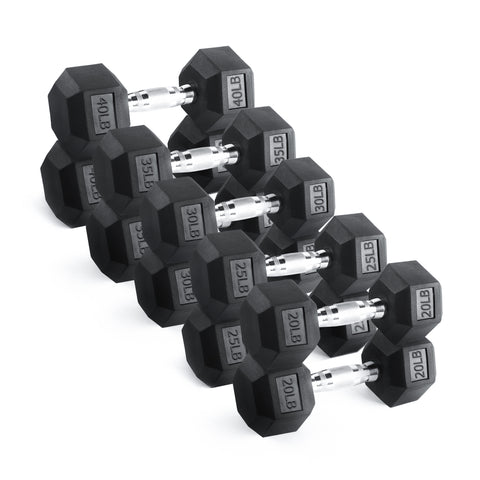
The RitFit PWR05 3-Tier Dumbbell Rack with Rubber Hex Dumbbell Set keeps a full working range on one vertical stand instead of scattered across the floor. The tiered layout keeps every pair visible and off the ground, which matters in a garage where the same square footage has to hold a car.
Which Barbell Should You Buy First?
An Olympic barbell with 2-inch sleeves is the right first bar for most home gyms because it fits standard racks and Olympic plates. A 7-foot bar weighing about 44 lb with a 28 mm shaft covers squats, presses, deadlifts, and rows.
A barbell is the most versatile single piece of equipment on this list. You can use it for compound movements like barbell rows, shoulder press, and deadlift, and pair it with a rack for front and back squats, heavy overhead press, bench press, incline press, and rack pulls.
- Length and sleeve compatibility: A standard 7-foot bar fits most power racks and leaves enough sleeve space for heavy loading, while shorter training bars suit tight spaces but fit fewer racks.
- Knurling: Medium knurling feels comfortable for most lifters and exercises, while aggressive knurling suits heavy pulls but can feel harsh if you are newer to lifting.
- Weight rating and durability: If you plan to train heavy or move the bar fast, choose a bar with a solid rating and a good reputation for holding up, since you will use it almost every session.
If you are unsure how to categorize this powerhouse lift in your workout split, check out our guide: Is the Deadlift a Push or Pull?
Why the RitFit 7FT Olympic Barbell Bar Fits Most Racks
The RitFit 7FT Olympic Barbell Bar weighs about 20 kg, or roughly 44 lb, and uses a 28 mm shaft with 2-inch sleeves that fit standard Olympic plates. It comes in 500, 700, and 1,000 lb capacity options, with steel construction, smooth bearings, and a protective coating.[3]

RitFit 7FT Olympic Barbell Bar
"7 Feet Olympic Weight Lifting Barbell Bars | with 500-1000LBS Capacity Options Good quality and easy to handle. I like it!!!"
Roy Chao, Verified Buyer, RitFit 7FT Olympic Barbell Bar 2'' Weight Lifting Bar
How Many Weight Plates Do You Need to Start?
Start with 160 to 200 lb of plates plus the bar if you are new to lifting, which is enough for squats and deadlifts through roughly your first 6 to 12 months. Buy pairs of 45, 35, 25, 15, 5, and 2.5 lb plates so you can add small jumps instead of stalling.
If you are going to buy a barbell, you will also need weight plates. The bar alone may be heavy enough at first, but it will eventually feel too light to keep you challenged.
| Lifter level | Total plate weight | What it covers |
|---|---|---|
| New to lifting | 160 to 200 lb | Squats, presses, and deadlifts for the first 6 to 12 months |
| Intermediate | 230 to 260 lb | Steady progression on squats and deadlifts |
| Long-term lifter | 300 lb and up | Heavier pulls and future strength goals |
Figures exclude the bar and assume standard Olympic plates. The math is easy to check against your own lifts: one 45 lb bar plus a pair of 45 lb plates is 135 lb.
- Bumper plates: Rubber-coated and floor-friendly, they are quieter on deadlifts and Olympic-style lifts, which suits garage and basement gyms.
- Iron or steel plates: Usually thinner, so you can load more weight on the bar, and often less expensive per pound, but louder and harder on unprotected floors.
Many home lifters mix the two, using bumper plates for big lifts and iron plates when they need more load in a smaller space.
Micro plates that weigh 0.25 to 1.5 lb are worth adding for barbell rows and overhead presses, where a 5 lb jump per side is a large step. Having pairs of every denomination is what lets you progress in small, manageable jumps.
Why the RitFit Black Bumper Plates Suit Garage Gyms
The RitFit Olympic Bumper Weight Plates combine an iron core with a thick rubber coating, an integrated metal sleeve, and a stainless-steel hub for smooth loading. Sets run from 100 lb to 370 lb, and the low-bounce design keeps deadlifts quieter in a garage or basement.
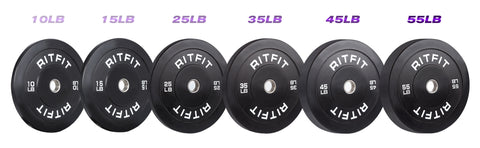
"Good quality bumpers These are high quality, affordable good looking plates. I'm waiting on another sale to buy other sizes to replace my other plates"
marcos ortiz, Verified Buyer, RitFit Olympic Bumper Weight Plates - 2-inch
What Are the Best Starter Pack Combos?
The best starter pack combo depends on your floor space, and the three builds below cover a small apartment, a standard garage, and a dedicated room. Each one lists what to buy first so you can start training with the pieces that matter.
1. Compact Essentials Setup for Small Spaces
This build suits apartments, spare bedrooms, and single parking bays where every inch counts.
- A compact full or half rack that clears your ceiling height
- A foldable or lighter adjustable bench
- One barbell with 160 to 200 lb of plates
- A pair of adjustable dumbbells for accessory work
2. Balanced Strength and Muscle Setup for Most Lifters
This is the sweet spot for a garage gym, because it is big enough to grow into without taking over the space.
- A full power cage with a pull-up bar and safety bars, ideally one that accepts cables later
- A heavy-duty adjustable bench with multiple incline settings
- One Olympic barbell
- 230 to 260 lb of plates
- A dumbbell set or an adjustable pair for isolation work
3. Premium All-in-One Setup for a Dedicated Room
This build suits a dedicated room or half a garage where you want a near-commercial setup in one footprint.
- An all-in-one rack or Smith machine package with built-in cable stations
- A commercial-grade adjustable bench
- An Olympic barbell, with a second bar later if you want a specialty option
- A larger bumper plate set for heavy squats and deadlifts
- A wider dumbbell range or a higher-capacity adjustable pair
FAQs About Home Gym Starter Packs
1. I only have a small bedroom or corner of the living room. Can I still build a home gym?
Yes. Focus on a compact rack or squat stand, a bench that can be rolled or folded away, adjustable dumbbells, and a smaller plate set. You can still train all major muscle groups in a tight space with smart exercise choices.
2. Should I buy everything at once or build my home gym in stages?
Most people are better off building in stages. Start with the core essentials you'll use every week (rack or stand, bench, barbell, plates), then add dumbbells and attachments later as your budget and training expand.
3. Do I really need a power rack, or can I just use dumbbells?
You can make great progress with only dumbbells, especially as a beginner. However, a power rack opens the door to heavier, safer compound lifts like squats and bench presses, which are very efficient for strength and muscle over the long term.
4. How much weight should I buy if I'm completely new to lifting?
Start with enough weight to challenge your lower-body lifts but still allow room to grow, often around 160-200 lb in plates plus the bar. As you get stronger in squats and deadlifts, you can add more plates over time.
5. What should I prioritize if my budget is very limited right now?
If money is tight, prioritize a safe way to perform the basics: some form of rack or stands, a stable bench, one barbell, and a modest plate set. You can always add dumbbells, more plates, and attachments later, your consistency matters far more than having every piece of equipment on day one.
Conclusion
Building a home gym starter pack is about five pieces, not fifty. A power rack, an adjustable bench, dumbbells, an Olympic barbell, and enough plates will carry your training for years, and you can add attachments and accessories as your goals change.
Start with the pieces that fit your space and your budget today, then upgrade the weakest link as you get stronger. Check the RitFit discount guide before you order so the savings can go toward your first plate pair.
Disclaimer
The equipment recommendations and training guidance in this article are for general information only and are not medical advice. Consult a qualified healthcare professional before starting a new strength training program, especially if you have an existing injury or health condition.
References
1. RitFit Sports. RitFit P3 Power Cage 1200lbs with Smooth Cable System and Aluminum Pulleys product page. Accessed September 21, 2026.
2. RitFit Sports. RitFit GATOR 1600LB Adjustable Weight Bench product page. Accessed September 21, 2026.
3. RitFit Sports. RitFit 7FT Olympic Barbell Bar 2 inch Weight Lifting Bar product page. Accessed September 21, 2026.





