At home workouts for overweight beginners with joint issues are not only possible, they are one of the safest ways to start moving again. This guide shows you how to begin with low-impact, joint-friendly exercises that build strength and support weight loss without putting painful stress on your knees and hips.
You will learn why movement is safe with joint pain, which exercises to start with, how to choose weight and intensity, and when to stop. The plan below is for anyone avoiding exercise because of extra body weight, and needs no special equipment.
Quick Answer: At home workouts for overweight beginners with joint issues are safe when you start with low-impact moves like seated leg lifts, glute bridges, wall sits, chair squats and marching. Begin with two to three short sessions a week, stop if you feel sharp joint pain, and progress gradually.
Key Takeaways
- Safe to start: Clinical guidelines recommend exercise for joint health, and low-impact movement is safe for most people when you begin gently.
- Weight loss helps joints: Losing as little as 5% of body weight can reduce joint pain and improve mobility.
- Start with bodyweight: Seated leg lifts, glute bridges, wall sits, chair squats and marching build strength with no equipment.
- Progress slowly: Two to three shorter weekly sessions beat intense daily workouts when you are starting out overweight.
- Know your stop signs: Sharp pain or swelling means stop and adjust; mild muscle soreness is normal and expected.
Can You Work Out at Home Safely as an Overweight Beginner with Joint Issues?
Yes, you can exercise safely at home with extra body weight and joint issues. At home workouts for overweight beginners are safe when you choose low-impact movements, start at a comfortable effort level and progress gradually.
Your joints are not fragile in the way many people fear.
Movement helps lubricate joints, and the muscles around your knees and hips act as shock absorbers that protect them.
Starting with seated and supported exercises lets you build strength at a level your body can handle today.
- Choose low-impact first: Seated and lying exercises remove body weight from painful joints while still working your muscles.
- Keep sessions short: Twenty to thirty minutes two or three times a week is enough to start seeing benefits.
- Use your comfort as a guide: You should be able to talk while exercising and feel no sharp pain in your joints.
The routine in this article works for any home space, from a small apartment corner to a garage gym. If you already exercise and want more variety, the related best back workouts at home can be added once your foundation is solid.
Why Is Exercise Safe and Important If You Have Joint Pain?
Exercise is a safe and well-supported starting point for joint health, and current guidelines recommend exercise programs tailored to your function and preferences [1]. When done at the right intensity, movement reduces stiffness, strengthens the muscles that support your joints and improves your ability to do daily tasks.
Many overweight beginners fear that any movement will make knee or hip pain worse.
Research shows the opposite: a body of clinical evidence supports exercise for people with joint concerns, with few contraindications or adverse events.
The danger is not moving, it is doing too much too soon in the wrong movements.
- Strengthens supporting muscles: Stronger quads, glutes and core take load off your knee and hip joints.
- Improves function: Regular movement helps you walk, climb stairs and get up from a chair more easily.
- Supports weight loss: Consistent low-impact exercise burns calories and combines with diet to create a healthy deficit.
The European League Against Rheumatism recommends that people with hip or knee osteoarthritis be offered an exercise program with progression tailored to their physical function and preferences [2]. That means the right plan is personal, starts where you are and advances when your body is ready. If you have a diagnosed joint condition, check with your doctor before starting any new program.
How Do Joint Pain and Extra Body Weight Affect Your Knees and Hips?
Extra body weight increases the load your knees and hips carry with every step, which can make existing joint discomfort worse over time. Research shows that losing as little as 5% of body weight can reduce joint pain and improve mobility [1].
Your knees and hips are weight-bearing joints, so every extra pound multiplies the force they absorb.
Reducing that load through a combination of gentle movement and weight loss is one of the most effective things you can do.
The good news is that you do not need dramatic weight loss to feel a difference, a modest 5% can already ease pain and make daily movement easier.
- Load matters: Walking, stairs and standing all transmit force through your knee and hip joints.
- Muscle is protection: Stronger leg and glute muscles absorb impact before it reaches your joints.
- Alignment counts: Keeping your knees tracking over your toes during squats reduces stress on the joint.
How your knees track matters for every lower body exercise. Physical therapist Jeff Cavaliere explains why alignment is central to joint health in the quote below.
"The knee joint itself is a consequential joint. That means it is simply a hinge joint that is at the mercy of what is going on at the ankle below and the hip above."
Jeff Cavaliere, MSPT, CSCS, Physical Therapist and Strength Coach, former Head Physical Therapist for the NY Mets, Athlean-X
Which Low-Impact At-Home Exercises Should You Start With?
Low-impact aerobic and strengthening exercise both support pain and function, so your best routine combines gentle cardio with basic strength moves [3]. Seated and supported exercises are ideal because they let you train muscles without loading painful joints with your full body weight.
The movements below are the safest starting points for overweight beginners with joint issues. Perform each one with slow, controlled motion and stop if you feel sharp pain.
- Seated leg lift: Sit tall in a chair, lift one leg straight out, hold for a moment and lower slowly. Repeat on both sides to strengthen your quads.
- Glute bridge: Lie on your back with knees bent, press through your heels and lift your hips. This strengthens your glutes and lower back without knee stress.
- Wall sit: Slide your back down a wall into a supported squat position. The wall carries your weight while your legs build strength.
- Chair squat: Lower yourself toward a chair and sit, then stand back up. This builds the strength you need for real daily tasks.
- Marching in place: Lift your knees gently while standing, holding a counter or chair for balance. This raises your heart rate with no impact.
- Seated row: Use a resistance band anchored in front of you and pull it toward your waist to strengthen your back and shoulders.
- Gentle floor push: Do a wall push-up or knee push-up to build upper body strength while protecting your wrists and shoulders.
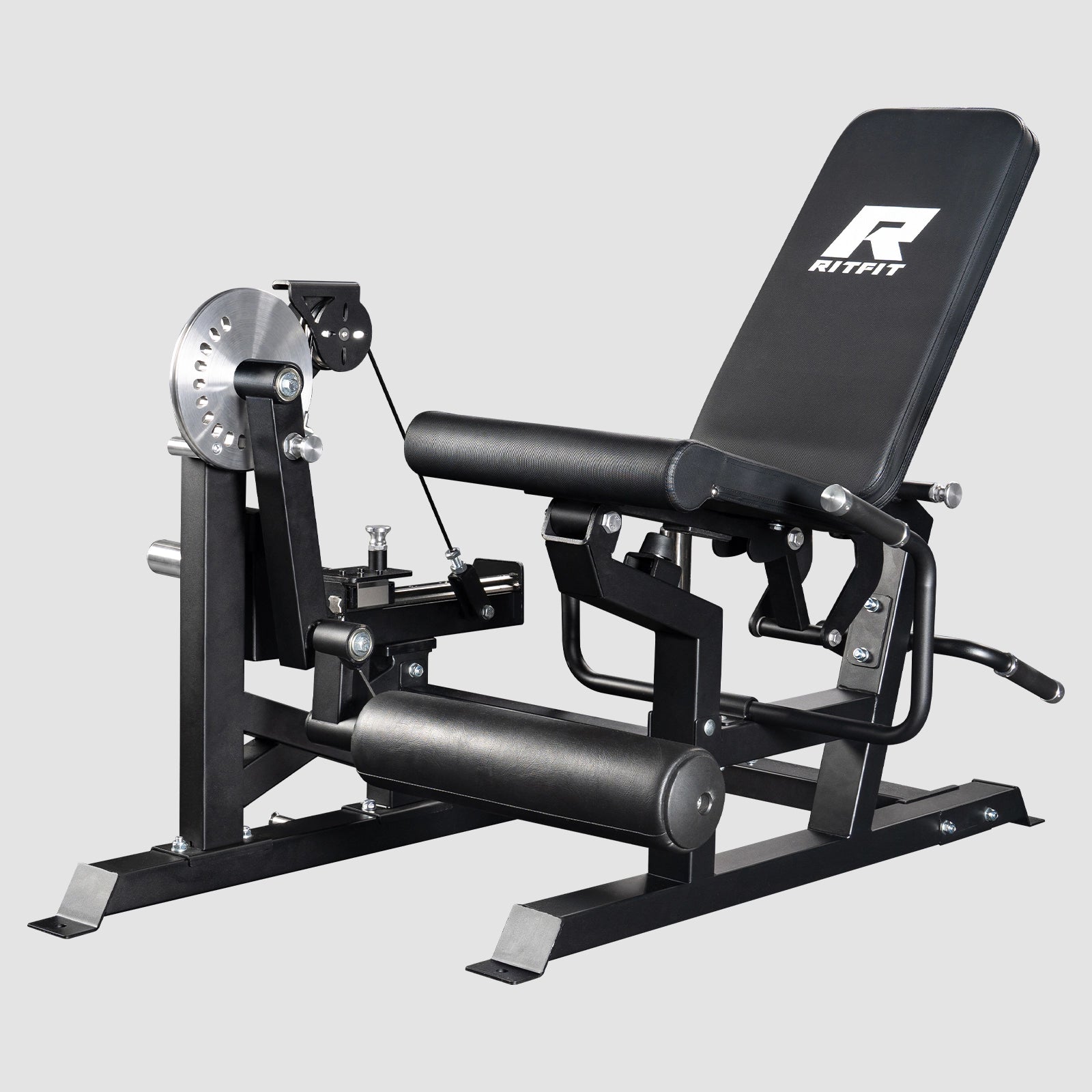
Beginners who want a low-impact lower body machine can use a leg press style machine, as covered in our best leg press machine for beginners at home guide, to keep the knees loaded in a controlled path. For a machine-based option, the RitFit Cougar home leg adduction and abduction machine trains the inner and outer thigh with smooth, guided motion.
How Do You Choose the Right Weight and Adjust Intensity?
Start with no weight or a very light weight and choose an effort level where you can complete every repetition with good form and no joint pain. A good rule is to pick a load that lets you finish the last two repetitions of a set while still feeling in control.
For bodyweight exercises, the weight is your own body.
Adjust intensity by changing the range of motion, the number of repetitions, the rest time or the speed of the movement.
For example, a shallow wall sit is easier than a deep one, and a seated leg lift with a straight leg is harder than one with a bent knee.
- Use the talk test: You should be able to say a short sentence while exercising without gasping.
- Add weight only when ready: When a set feels easy with perfect form, increase slightly rather than jumping up in load.
- Reduce range if it hurts: Shorten the movement until it is pain free, then slowly extend it over weeks.
When you are ready to add external weight, light dumbbells or resistance bands are the simplest options. Leg day ideas using free weights are covered in our ultimate dumbbell leg workout guide, which shows how to build strength at home with minimal equipment.
What Does a Simple 3-Day Beginner Plan Look Like?
A sustainable start is two to three short sessions per week with rest days in between.
This gives your joints time to recover and adapt while you build a consistent habit.
The plan below is a template you can adjust to your own ability.
| Day | Focus | Exercises |
|---|---|---|
| Day 1 | Lower body | Seated leg lifts 3 x 10 per leg, glute bridges 3 x 12, wall sits 3 x 20 seconds, chair squats 3 x 8 |
| Day 2 | Rest or gentle mobility | Easy walking, marching in place or stretching for 15 to 20 minutes |
| Day 3 | Upper body and core | Seated rows with a band 3 x 10, gentle floor push-ups 3 x 5, bird dogs 3 x 8 per side, marching 3 x 1 minute |
Sets and repetitions are starting points. Reduce them if you are new to exercise and increase only when a session feels comfortable.
Keep each session to about 20 to 30 minutes. Warm up with a few minutes of marching in place before you start, and finish with slow stretching. If a movement causes sharp pain, skip it that day and try a smaller range of motion next time. For a structured progression, the best HIIT workouts for beginners guide shows how to add safe intervals once your base is built.
How Do You Know When to Stop and When to Keep Going?
Stop an exercise if you feel sharp, stabbing pain, if a joint swells or if pain becomes notably worse during the movement. Mild muscle soreness is normal and expected, but joint pain that is sharp or gets worse is a clear signal to stop and adjust.
Learning to tell the difference between muscle soreness and joint pain is the most important skill for someone starting out with joint issues.
Muscle soreness usually appears a day or two after a session and feels like a dull ache in the muscle.
Joint pain is sharper, located in the joint itself, and can come with swelling or stiffness.
- Stop for sharp pain: Reduce the range of motion, lower the weight or choose a different exercise.
- Swelling is a warning: If a knee or hip swells after exercise, rest it and talk to your doctor.
- Keep going through mild soreness: Normal muscle soreness is a sign your body is adapting, not a reason to quit.
If you stop an exercise because of joint pain, try a modified version next session. A smaller range of motion or a seated version of the same move often lets you keep training the muscle without aggravating the joint.
What Equipment Do You Need at Home (and No-Equipment Options)?
You do not need any equipment to start.
Every exercise in the plan above works with just a chair, a wall and your own body weight.
Equipment becomes useful only when you want to add resistance and keep progressing safely.
As you get stronger, these additions help you increase the challenge without adding impact:
- Resistance bands: Light, cheap and joint friendly, they add progressive resistance to rows, presses and leg work. Browse the resistance bands collection to find a set.
- Light dumbbells: A pair of light dumbbells adds load to seated curls, shoulder presses and bridges. See the dumbbells collection for options.
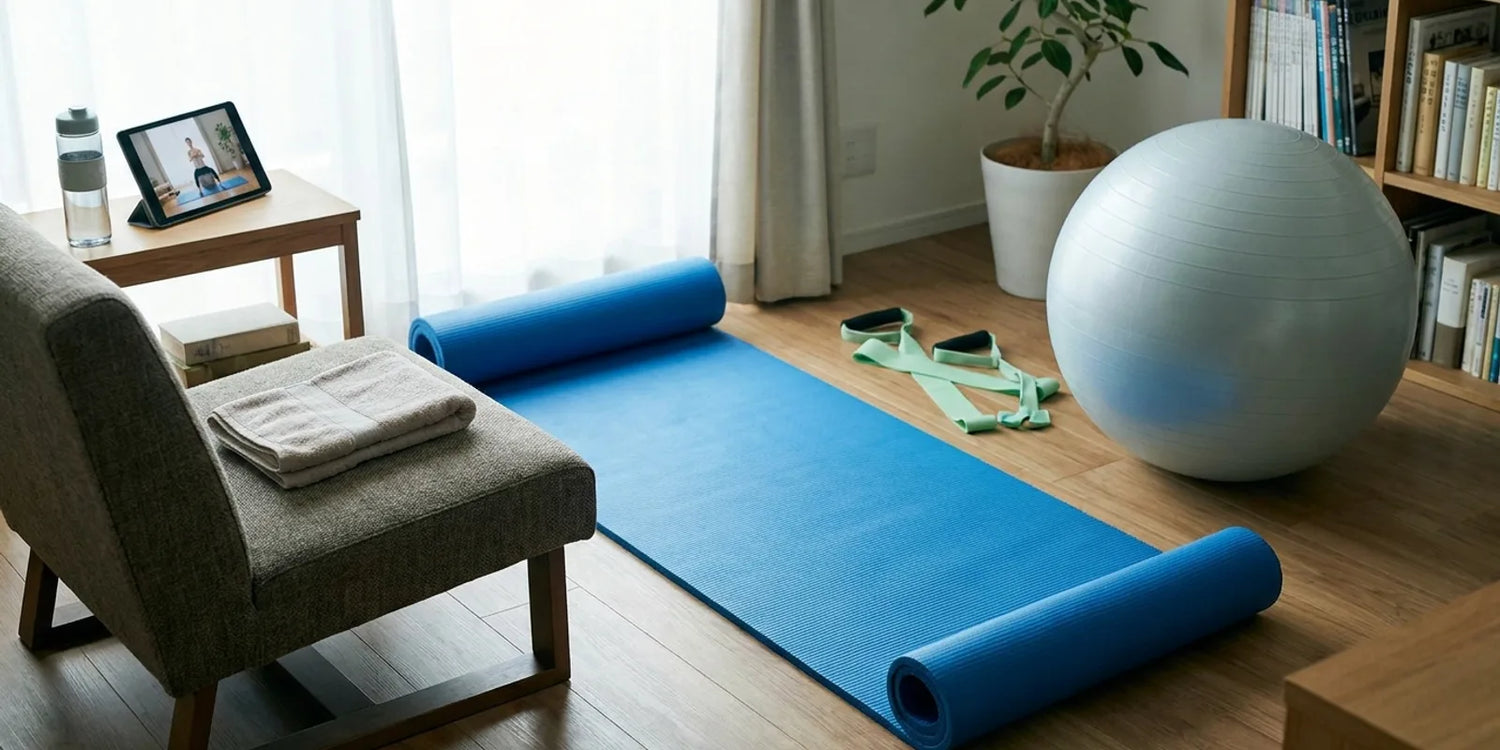
- Exercise mat: A mat cushions floor work. The mats and flooring collection keeps your joints comfortable for lying exercises.
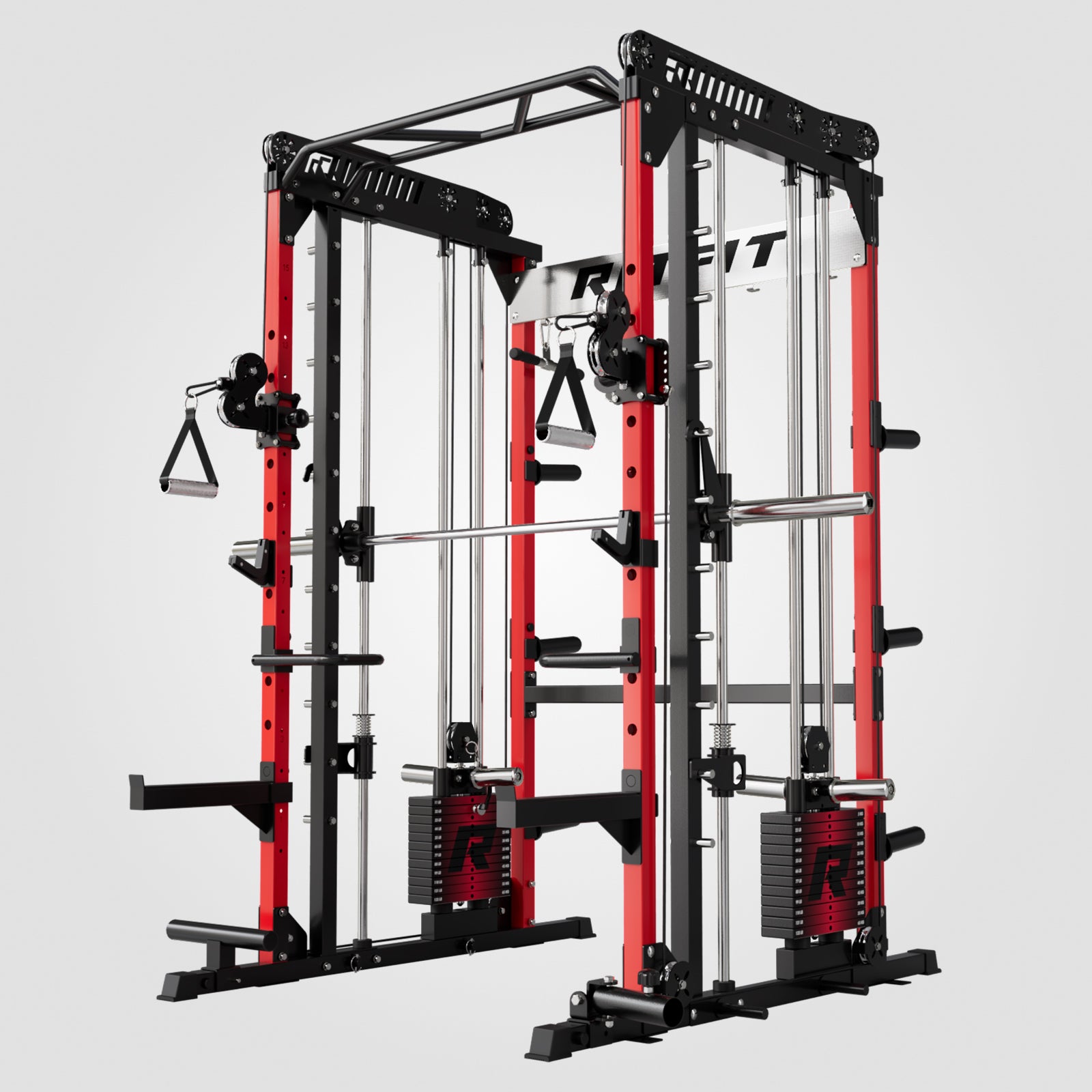
- Multi-functional machine: When you are ready to invest, a machine like the M1 multi-functional home gym smith machine combines safe, guided strength movements in a small footprint. The same reasoning is covered in our guide to why a smith machine is ideal for safe solo workouts at home.
Whatever you add, the principle stays the same: low impact, controlled movement and gradual progression. A machine that guides your motion, such as the Cougar leg machine mentioned earlier, can be a confidence builder because it removes balance concerns while you focus on strength.
What Common Mistakes Should Overweight Beginners Avoid?
The most common mistake is doing too much too soon, which usually comes from copying an intense online workout meant for fitter people. Start with shorter sessions, fewer sets and longer rest, and let your joints adapt before you push the volume up.
Avoid high-impact moves like running, jumping and burpees in the first weeks, and never push through sharp joint pain.
Skipping the warm-up is another common error, so always march in place for a few minutes before the main work.
If an exercise hurts, swap it for a seated or supported version rather than forcing it.
FAQs About At Home Workouts for Overweight Beginners with Joint Issues
Is it safe to exercise at home if I have knee pain?
For most people, yes.
Clinical guidelines recommend exercise for joint health, and low-impact movement is generally safe when you start gently and stop if you feel sharp pain.
Always check with your doctor before starting a new program, especially if you have a diagnosed joint condition.
What are the best low impact exercises for weight loss at home?
Seated exercises, wall sits, glute bridges, chair squats, marching and gentle floor strength moves are low-impact and joint friendly.
They let you build strength and burn calories without the pounding of running or jumping.
You can do them with no equipment or with light weights.
How much should I exercise each week if overweight?
Start with two to three shorter sessions per week, around 20 to 30 minutes each, and build up gradually.
Consistent, low-impact movement with rest days between sessions is more sustainable than intense daily workouts.
Listen to your body and progress only when you feel ready.
How do I know when to stop exercising for joint pain?
Stop if you feel sharp, stabbing pain, if a joint swells or if pain gets notably worse during an exercise.
Mild muscle soreness is normal, but joint pain that is sharp or persistent is a signal to rest and adjust.
Scale back the range of motion or reduce weight and try again.
Do I need equipment to start a home workout?
No. Bodyweight exercises like seated leg lifts, glute bridges, wall sits and marching are enough to start with no equipment at all. As you progress you can add light dumbbells, resistance bands or a multi-functional home gym machine to keep increasing the challenge safely.
Conclusion
At home workouts for overweight beginners with joint issues are safe, effective and entirely doable with low-impact, joint-friendly exercises.
Start with two to three short sessions a week, choose seated and supported movements, and progress gradually.
Losing as little as 5% of body weight can reduce joint pain, and consistent strength work protects your knees and hips for years to come.
Begin with the 3-day plan in this article and adjust it to your own comfort. If you are ready to invest in a guided option, check the RitFit sales page for current offers on multi-functional machines and accessories.
Disclaimer
This article is for general information only and is not medical advice. Consult a doctor or physical therapist before starting any new exercise program, stop any exercise that causes sharp pain or swelling, and follow professional guidance for any diagnosed joint condition.
References
1. Messier SP. Diet and exercise for obese adults with knee osteoarthritis. Clin Geriatr Med. 2010;26(3):461-77. doi:10.1016/j.cger.2010.05.001. PMCID: PMC3444812
2. Moseng T, Vliet Vlieland TPM, Battista S, et al. EULAR recommendations for the non-pharmacological core management of hip and knee osteoarthritis: 2023 update. Ann Rheum Dis. 2024;83(6):730-740. doi:10.1136/ard-2023-225041. PMCID: PMC11103326
3. Goh SL, Persson MSM, Stocks J, et al. Relative Efficacy of Different Exercises for Pain, Function, Performance and Quality of Life in Knee and Hip Osteoarthritis: Systematic Review and Network Meta-Analysis. Sports Med. 2019;49(5):743-761. doi:10.1007/s40279-019-01082-0. PMCID: PMC6459784