The barbell bent over row is a compound back exercise that builds pulling strength, upper back thickness, grip strength, and core stability. This guide shows you how to row with safer form, which muscles it trains, common mistakes to avoid, and how to set it up in a home gym.
Key Takeaways
- Best use: Barbell bent over rows are best for building back thickness, pulling strength, and upper back stability.
- Main muscles: The exercise trains the lats, rhomboids, middle traps, rear delts, erector spinae, biceps, core, and forearms.
- Form priority: A stable hip hinge, neutral spine, braced core, and elbow driven pull matter more than heavy weight.
- Home gym setup: You need a barbell, weight plates, clear floor space, and ideally rubber flooring or a rack setup.
- Safety note: If your lower back position breaks down, reduce the load or switch to chest supported rows, cable rows, or Smith machine rows.
What Is a Barbell Bent Over Row?
A barbell bent over row is a free weight pulling exercise where you hinge at the hips and pull a loaded barbell toward your lower ribs or upper abdomen. It is a staple back movement because it trains the back, arms, grip, trunk, and hip hinge position at the same time.
Free weight exercises can create meaningful trunk muscle demand, and research on core muscle activity has found high erector spinae activity during many free weight movements.[1]
Barbell Bent Over Row Muscles Worked
The barbell bent over row mainly works the lats, rhomboids, middle traps, rear delts, spinal erectors, biceps, core, and forearms. These muscles work together to pull the bar, stabilize the shoulder blades, and hold the torso in a strong hinge.
Primary Muscles
The primary back muscles are responsible for pulling the bar toward your torso and controlling your shoulder blades.
- Latissimus dorsi: Pulls the upper arm back and helps build the wider back look.
- Rhomboids: Retract the shoulder blades and support upper back posture.
- Middle trapezius: Helps squeeze the shoulder blades together at the top of the row.
- Rear deltoids: Assist shoulder extension and add balance to shoulder development.
Secondary Muscles
The secondary muscles stabilize the body and help transfer force through the bar.
- Erector spinae: Hold the spine in a stable position during the hinge.
- Core muscles: Brace the torso and reduce unwanted trunk movement.
- Biceps: Help bend the elbows during the pull.
- Forearms: Support grip strength during heavy or higher rep rows.
How to Do Barbell Bent Over Rows With Proper Form
Proper barbell row form starts with a strong hip hinge and a stable torso. Use a moderate load first so you can control the bar without bouncing, twisting, or standing up during the pull.
- Step 1: Set Your Stance: Stand with your feet about hip width apart and keep the bar over your midfoot. Your stance should feel balanced enough to brace without rocking forward or backward.
- Step 2: Hinge at the Hips: Push your hips back and let your torso lean forward while keeping a slight bend in your knees. A torso angle around 30 to 45 degrees works well for many lifters, but the exact angle depends on mobility and comfort.
- Step 3: Brace and Set Your Back: Tighten your core and keep your spine neutral before the bar leaves the floor or rack. Think about keeping your ribs down, chest open, and neck in line with your spine.
- Step 4: Pull With Your Elbows: Drive your elbows back and pull the bar toward your lower ribs or upper abdomen. The bar should move close to your body instead of drifting forward.
- Step 5: Lower Under Control: Lower the bar until your arms are straight while keeping your torso angle stable. Stop the set if you need to jerk the bar, bounce from the hips, or round your lower back.
Proper Barbell Bent Over Row Setup
A good setup makes the bent over row easier to control and safer to progress. You need a barbell, plates, enough floor space, and a stable surface before adding heavier weight.
- Grip Width: Use a grip slightly wider than shoulder width for most standard rows. A wider grip shifts more emphasis toward the upper back and rear delts, while a closer underhand grip can increase biceps and lat involvement.
- Bar Position: Start with the bar close to your shins and keep it close during the pull. A bar that drifts forward increases the demand on your lower back and makes the row harder to control.
- Torso Angle: Choose a torso angle you can hold for the full set. If your torso rises with every rep, lower the weight and rebuild control.
- Brace: Brace your core before each rep and keep pressure through your midfoot. This helps your hips, spine, and shoulders stay aligned.
- Starting Height: Pulling from the floor is standard, but rack height can help if mobility or plate size makes the floor start awkward. A power rack can make setup smoother for home gym lifters.
Common Barbell Row Form Cues
The best cues are simple, repeatable, and easy to check during every set. Use these cues to keep tension on your back instead of turning the row into a hip assisted pull.
- Chest open: Keep your chest open without overextending your lower back.
- Elbows back: Lead the pull with your elbows instead of curling the bar with your hands.
- Bar close: Keep the bar close to your legs and torso throughout the rep.
- Hips still: Hold your hinge position and avoid bouncing the weight upward.
- Shoulder blades move: Let the shoulder blades protract slightly at the bottom and retract at the top.
Common Barbell Bent Over Row Mistakes
Most barbell row mistakes happen when the weight is too heavy for the lifter to hold a stable hinge. Fix the position first, then increase load only when each rep looks controlled.
Rising Torso During the Pull
Standing up as you row turns the movement into a hybrid pull and reduces back tension. Use less weight and keep your torso angle consistent from the first rep to the last.
Lower Back Rounding
Lower back rounding usually means your hinge, brace, or load selection needs adjustment. Reduce the weight and stop the set when you can no longer keep a neutral spine.
Pulling With the Arms Only
Pulling only with the biceps limits back engagement. Think about driving the elbows behind you while your hands act like hooks on the bar.
Bouncing the Bar
Bouncing makes the lift less controlled and increases the chance of technique breakdown. Pause slightly at the bottom or slow the lowering phase to rebuild control.
Letting the Bar Drift Forward
A forward bar path makes the movement harder on the lower back. Keep the bar close and pull toward the lower ribs or upper abdomen.
Barbell Bent Over Row Variations
Row variations let you change the emphasis based on your goal, mobility, and equipment. Choose the variation that lets you train hard while keeping clean form.
Pendlay Row
The Pendlay row starts each rep from the floor and uses a stricter torso position. It is useful for lifters who want explosive pulling strength and a clear reset between reps.
Underhand Row
The underhand row uses a supinated grip and often feels more natural for lifters who want more lat and biceps involvement. Keep the wrists straight and avoid letting the elbows flare too wide.
Yates Row
The Yates row uses a more upright torso and usually an underhand grip. It can feel easier on the lower back for some lifters, but it still requires bracing and control.
Wide Grip Row
The wide grip row shifts more emphasis toward the upper back, rear delts, and middle traps. Use a lighter weight because the wider grip usually reduces the load you can control.
Smith Machine Row
The Smith machine row provides a fixed bar path that can help some home gym lifters focus on back contraction. For a guided version, see the RitFit guide on how to do Smith machine row.
How to Program Barbell Bent Over Rows
Program barbell rows based on your goal and your ability to keep a stable hinge. Progressive overload can come from heavier weight, more reps, better control, or more total quality work over time.[2]
For Strength
Use 3 to 5 sets of 3 to 6 reps with heavier loads and longer rest periods. Keep 1 to 3 reps in reserve so your torso position does not collapse.
For Muscle Growth
Use 3 to 4 sets of 8 to 12 reps with controlled tempo and a full usable range of motion. Hypertrophy research supports using enough mechanical tension, effort, and volume instead of chasing one perfect rep range.[3]
For Beginners
Use 2 to 3 sets of 10 to 15 reps with light to moderate weight. The goal is to learn the hinge, brace, and elbow path before pushing load.
For Time Efficient Training
Place rows after your main lower body or press movement if you train full body. Compound movements and smart exercise selection can help build strength efficiently when training time is limited.[4]
Sample Back and Full Body Workouts
Barbell rows fit well into both dedicated back days and full body strength sessions. Keep the row early enough in the workout that your lower back and grip are not already exhausted.
Sample Back Day
This setup pairs one heavy row with vertical pulling and upper back accessories.
- Barbell bent over row, 4 sets of 6 to 8 reps
- Lat pulldown, 3 sets of 10 to 12 reps
- Face pull, 3 sets of 12 to 15 reps
- Dumbbell shrug, 3 sets of 10 to 15 reps
Sample Full Body Day
This setup works well when you want squat, press, pull, and accessory work in one session.
- Squat, 3 sets of 5 reps
- Bench press, 3 sets of 5 reps
- Barbell bent over row, 3 sets of 8 reps
- Overhead press, 3 sets of 8 reps
- Core or grip work, 2 to 3 sets
For more pulling options, explore this back and bicep workout guide and the RitFit Smith machine back workout guide.
Home Gym Setup for Barbell Bent Over Rows
A home gym row setup should give you enough room to hinge, pull, and set the bar down safely. The essentials are a quality barbell, compatible plates, stable flooring, and enough clearance around the bar.
- Barbell: A standard Olympic barbell works best for loaded bent over rows. RitFit lifters can start with a 7ft Olympic barbell for general strength training.
- Weight Plates: Olympic plates let you load rows in small or large jumps. Browse barbells and weight plates if you are building a complete free weight station.
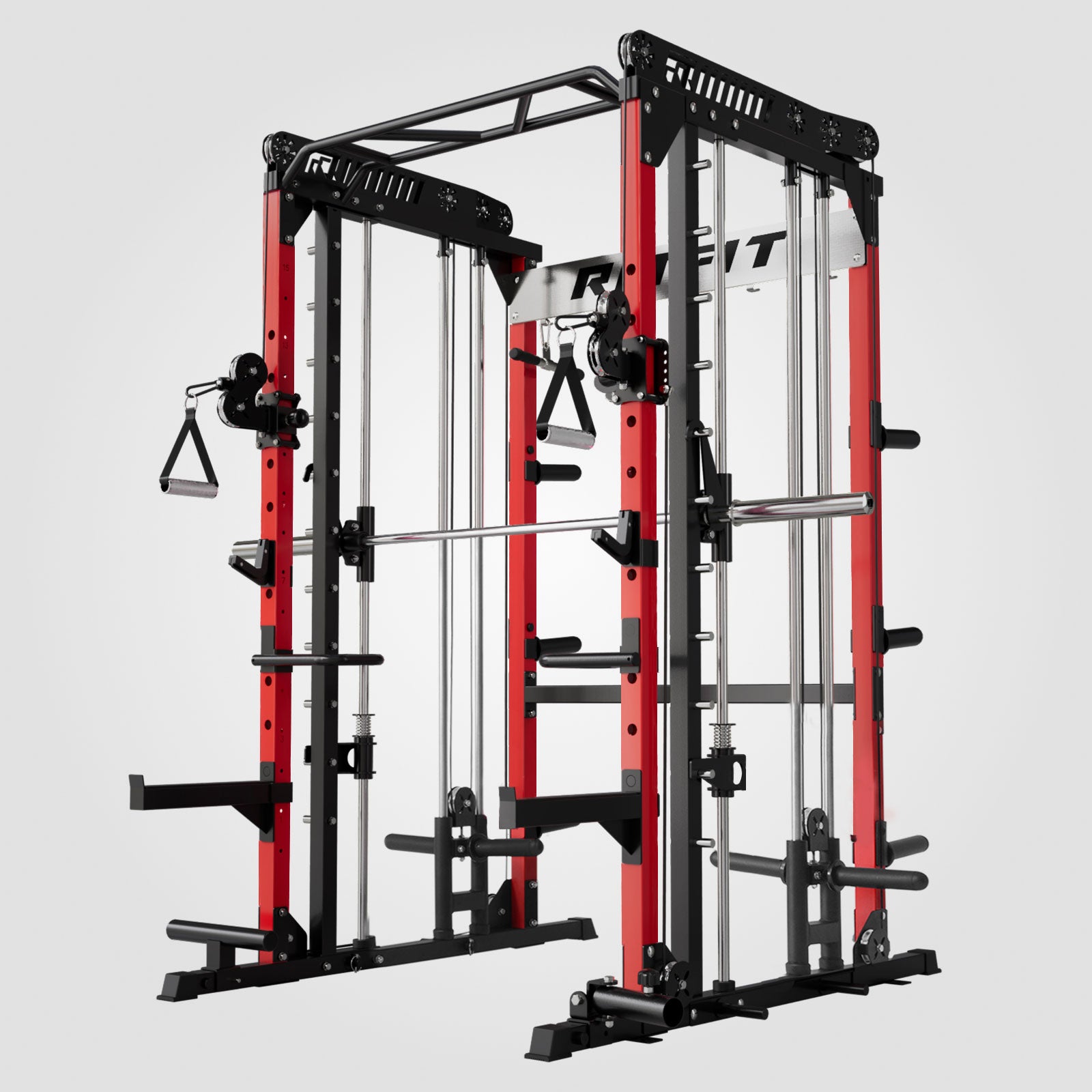
- Rack Setup: A rack can raise the starting position and keep the bar organized between sets. The RitFit P3 power cage is a practical option for lifters who want rows, squats, presses, and cable work in one home gym footprint.
- Floor Protection: Rubber plates and gym flooring help reduce noise and impact. They are especially useful if you train in a garage, basement, or shared living space.
- Space: Plan for at least enough length for the bar and enough side clearance to load plates safely. For broader setup planning, read the RitFit home gym equipment guide for beginners.
Can You Replace Barbell Rows With a Smith Machine?
Yes, a Smith machine can replace barbell rows when you want a more guided bar path or a more controlled home gym setup. Free weights and machines can both support strength training progress, but the best choice depends on your skill level, goals, and available equipment.[5]
If you prefer a guided row, read the RitFit tutorial on how to do the Smith machine bent over row. If you are comparing equipment, the Smith machine vs power rack guide can help you choose the right setup.
Who Should Be Careful With Barbell Bent Over Rows?
Lifters with current lower back pain, a history of spinal injury, poor hip hinge control, or grip limitations should approach barbell rows carefully. Use lighter loads, a higher torso angle, or a chest supported variation until your position is consistent.
Stop the set if you feel sharp pain, numbness, radiating symptoms, or a sudden loss of control. General muscle fatigue is normal, but pain that changes your movement pattern is a reason to reassess the exercise.
Barbell Bent Over Row Form Checklist
Use this checklist before adding more weight. If one item fails repeatedly, keep the load the same or reduce it until your form improves.
- Your feet stay planted through the full set.
- Your hips stay back without bouncing.
- Your spine stays neutral.
- Your neck stays in line with your torso.
- The bar stays close to your body.
- Your elbows drive back instead of flaring wildly.
- Your torso angle stays mostly consistent.
- You lower the bar under control.
FAQs
Are barbell bent over rows good for building back muscle?
Yes. Barbell bent over rows are good for building a stronger back because they train the lats, rhomboids, middle traps, rear delts, spinal erectors, biceps, and grip together. They work best when you keep a stable hip hinge, controlled bar path, and consistent torso angle.
What muscles do barbell bent over rows work?
Barbell bent over rows work the lats, rhomboids, middle traps, rear delts, erector spinae, biceps, forearms, and core. The back muscles pull and retract the shoulder blades, while the trunk and hips stabilize your body so the bar can move with control.
How heavy should I go on barbell bent over rows?
Use a weight you can row without losing your hinge, rounding your back, or jerking the bar. Most lifters should start lighter than expected, master clean reps, then add load only when every rep keeps the same bar path and torso position.
Can barbell bent over rows hurt your lower back?
Yes. Barbell bent over rows can irritate the lower back if the load is too heavy, the spine rounds, or the hips bounce to move the bar. Reduce weight, brace harder, use a higher torso angle, or choose chest supported rows if discomfort continues.
Should beginners do barbell bent over rows?
Yes. Beginners can do barbell bent over rows if they first learn the hip hinge, neutral spine, and controlled pulling pattern. Start with light weight, shorter sets, and video form checks, then progress only when the torso stays stable from start to finish.
Which grip is best for barbell bent over rows?
An overhand grip slightly wider than shoulder width is the best default for most barbell bent over rows. It trains the upper back and rear delts well, while an underhand grip can increase lat and biceps involvement if your wrists and elbows feel comfortable.
Can I do bent over rows in a small home gym?
Yes. You can do bent over rows in a small home gym if you have bar length clearance, room to load plates, and enough space to hinge safely. A barbell, plates, rubber flooring, and optional power rack cover most home row setups.
Is a Smith machine row a good alternative to barbell rows?
Yes. A Smith machine row is a good alternative if you want a fixed bar path, easier setup, or less balance demand. It still trains the back effectively, but you should keep the same bracing, hinge control, and elbow driven pull used in barbell rows.
Conclusion
The barbell bent over row is one of the most useful lifts for building a strong, muscular back at home or in the gym. Start light, control the hinge, pull with your elbows, and progress only when your form stays consistent.
For home gym training, pair a quality barbell with compatible plates, stable flooring, and a rack setup that supports your long term strength goals.
Disclaimer
This article is for general fitness education and is not medical advice. If you have back pain, a previous spinal injury, nerve symptoms, or any condition that affects lifting safety, consult a qualified healthcare professional or certified strength coach before performing loaded barbell bent over rows.
References
- Oliva-Lozano JM, Muyor JM. Core muscle activity during physical fitness exercises: a systematic review. Int J Environ Res Public Health. 2020;17(12):4306. doi:10.3390/ijerph17124306
- Plotkin D, Coleman M, Van Every D, Maldonado J, Oberlin D, Israetel M, Feather J, Alto A, Vigotsky AD, Schoenfeld BJ. Progressive overload without progressing load? The effects of load or repetition progression on muscular adaptations. PeerJ. 2022;10:e14142. doi:10.7717/peerj.14142
- Krzysztofik M, Wilk M, Wojdała G, Gołaś A. Maximizing muscle hypertrophy: a systematic review of advanced resistance training techniques and methods. Int J Environ Res Public Health. 2019;16(24):4897. doi:10.3390/ijerph16244897
- Iversen VM, Norum M, Schoenfeld BJ, Fimland MS. No time to lift? Designing time efficient training programs for strength and hypertrophy: a narrative review. Sports Med. 2021;51(10):2079-2095. doi:10.1007/s40279-021-01490-1
- Aerenhouts D, D'Hondt E. Using machines or free weights for resistance training in novice males? A randomized parallel trial. Int J Environ Res Public Health. 2020;17(21):7848. doi:10.3390/ijerph17217848