








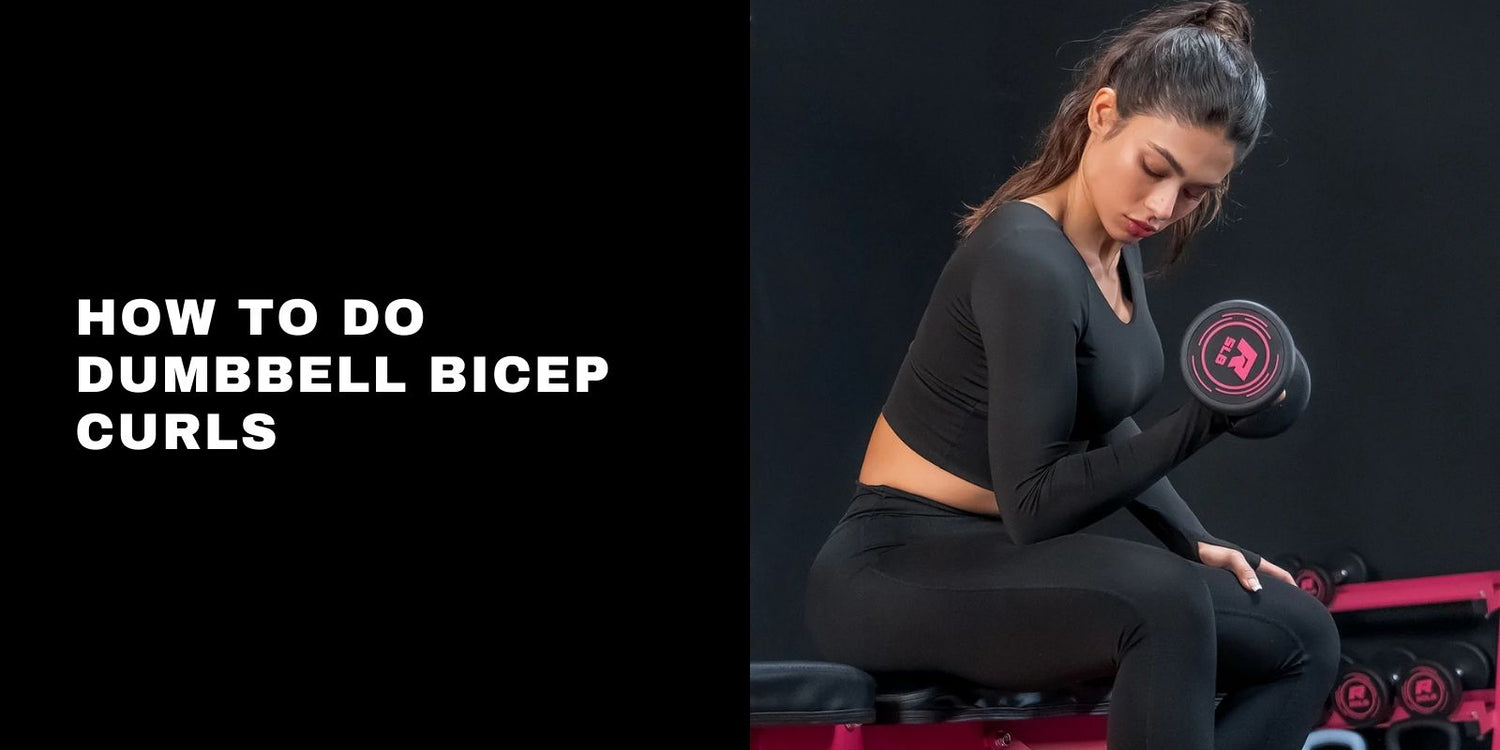
Mastering how to do dumbbell bicep curls is essential for building upper arm strength, muscular endurance, and aesthetic balance. Dumbbells allow natural wrist supination and eliminate unilateral strength discrepancies that often occur during fixed barbell movements.
This comprehensive training guide covers optimal curl biomechanics, common execution pitfalls, and versatile training variations to maximize muscular hypertrophy safely.
Quick Answer: To perform dumbbell bicep curls correctly, stand upright with weights at your sides and elbows tucked against your torso. Curl the dumbbells upward while supinating your wrists until palms face your shoulders, squeeze your biceps firmly at peak contraction, and lower under control for two to three seconds.
Key Takeaways
- Strict Elbow Position: Keep elbows pinned against your torso to prevent anterior deltoid takeover and maintain pure bicep tension.
- Wrist Supination: Rotating palms upward during the concentric phase maximizes peak contraction in the biceps brachii short head.
- Eccentric Control: Lower the dumbbells over a controlled 2 to 3 second count to stimulate greater mechanical tension and hypertrophy.
- Unilateral Balance: Dumbbell training ensures equal strength development across both arms, preventing dominant-side compensation.
- Equipment Selection: High-grade rubber hex dumbbells paired with an adjustable bench provide the optimal setup for home arm workouts.
What Are Dumbbell Bicep Curls?
Direct Answer: A dumbbell bicep curl is an isolated upper-body pull exercise that strengthens the anterior arm muscles through controlled elbow flexion. It remains a foundational movement in resistance training for arm size, functional pulling power, and elbow joint stability[1].
Unlike barbell curls that lock your wrists into a fixed plane, dumbbells allow free joint articulation. This flexibility reduces stress on the wrists and forearms while enabling full supination throughout each repetition.
What Muscles Do Dumbbell Curls Target?
Direct Answer: Dumbbell bicep curls primarily recruit the biceps brachii along with the brachialis and brachioradialis synergist muscles. Secondary stabilizers include the anterior deltoids and forearm flexors to maintain wrist rigidity[2].
The long head sits on the outer arm and creates the distinctive bicep peak during flexed poses. Meanwhile, the brachialis lies beneath the biceps, pushing the main muscle belly outward to add noticeable arm thickness.
- Biceps Brachii: Generates primary elbow flexion and forearm supination torque.
- Brachialis: Strongest pure elbow flexor, active across all wrist rotations.
- Brachioradialis: Engaged heavily during neutral-grip and hammer variations for lower-arm volume.
How to Perform Dumbbell Bicep Curls With Proper Form
Direct Answer: Executing a proper dumbbell curl requires a braced core, stationary elbows, and smooth tempo without momentum. Follow this four-step sequence to ensure maximum target muscle recruitment on every repetition.
- Setup: Stand tall with feet shoulder-width apart, holding a pair of dumbbells at arms' length with palms facing inward. Check our comprehensive dumbbells collection to choose the right training weights for your routine.
- Initiation: Inhale, engage your core, and keep your elbows glued to your ribcage without letting them drift forward.
- Concentric Curl: Exhale as you curl the dumbbells upward, supinating your wrists so your palms face your shoulders at top contraction.
- Eccentric Lowering: Squeeze the biceps at the peak for one second, then slowly lower the weights over 2 to 3 seconds until arms are fully extended.
What Are Common Bicep Curl Mistakes to Avoid?
Direct Answer: The most common bicep curl errors include swinging the torso, flaring the elbows outward, and shortening the range of motion. Eliminating these mistakes protects the lower back and guarantees that the biceps perform the intended workload.
Using excessive weight often forces lifters to hyperextend their spine, which shifts tension away from the arms onto lumbar tissues. Focus on selecting a weight that allows complete control through full extension at the bottom of every rep.
- Body Momentum: Rocking back and forth uses hip drive instead of isolated arm strength.
- Elbow Flaring: Allowing elbows to drift outward reduces activation of the biceps short head.
- Incomplete Extension: Stopping short of full arm extension prevents deep muscle stretch and reduces hypertrophy stimulus.
What Are the Best Dumbbell Curl Variations?
Direct Answer: Top dumbbell curl variations include incline bench curls, hammer curls, concentration curls, and preacher curls. Incorporating varied angles targets different sections of the arm musculature for complete development.
Incline curls place the long head on a deep passive stretch, maximizing hypertrophy stimulus across the full range of motion. For lifters seeking forearm thickness, hammer curls with a neutral grip heavily activate the brachioradialis.
Pairing these curl movements with an adjustable weight bench allows seamless transitions between seated, incline, and supported curl angles during intense arm sessions. You can also integrate compound upper-body movements like lat pulldown training to build synergistic pulling power.
How Many Sets and Reps Should You Do for Bicep Growth?
Direct Answer: For optimal bicep hypertrophy, perform 3 to 4 sets of 8 to 12 repetitions with 60 to 90 seconds of rest between sets. Training arms 2 times per week delivers sufficient volume without overtaxing recovery capacity[3].
Ensure that the last 2 repetitions of each working set challenge your muscular endurance while maintaining pristine technique. If your form breaks down before hitting your target rep count, reduce the dumbbell load immediately.
What Equipment Do You Need for Home Bicep Workouts?
Direct Answer: Building an effective home arm station requires durable dumbbells, an ergonomic bench, and a compact storage rack. Quality equipment ensures joint safety and keeps your training space organized.
The RitFit Rubber Hex Dumbbell Set with Rack offers premium cast-iron durability with non-slip knurled handles and protective rubber coating. You can complement your setup with our complete weight benches collection for supported curling exercises.
For athletes integrating arm training into full-body strength splits, explore our home gym guide to configure versatile layouts. You can also explore our power cages collection and free weights collection for a complete home strength training environment.
Frequently Asked Questions
Direct Answer: Find answers to the most common questions regarding dumbbell bicep curl technique, programming frequency, and load selection.
Should you do bicep curls standing or seated?
Standing curls engage core stabilizers and allow full range of motion, whereas seated curls eliminate body English for strict isolation. Combining both variations across your weekly training sessions builds balanced core stability and maximal upper arm muscle thickness effectively.
Is it better to curl both arms together or alternate?
Alternating curls allows greater neural focus and heavier progressive overload per arm, while bilateral curls save workout time and increase metabolic density. Both methods produce excellent muscle development when performed with strict elbow alignment and controlled eccentric lowering tempo.
How heavy should dumbbells be for bicep curls?
Select a dumbbell weight that causes muscular fatigue within eight to twelve repetitions while maintaining strict form and posture. Beginners should start with ten to fifteen pound weights and progressively add resistance as tendon strength and control improve steadily over time.
Can dumbbell curls help prevent elbow joint injuries?
Yes, performing controlled dumbbell curls strengthens the tendons surrounding the elbow joint including the distal biceps insertion and forearm musculature. Controlled eccentric tempo with moderate loads stimulates collagen remodeling, which shields joints against strain during heavy compound upper-body pressing movements.
How frequently should you train biceps each week?
Training biceps two times per week with six to ten total working sets per workout delivers optimal muscle protein synthesis. This training schedule provides forty-eight to seventy-two hours of recovery, allowing muscular tissues to repair fully between intense lifting sessions.
Conclusion
Understanding how to do dumbbell bicep curls with pristine form is the fastest route to bigger, stronger arms. By eliminating momentum, controlling the eccentric lowering phase, and incorporating strategic variations, you stimulate maximum muscle growth while protecting delicate joints.
Equip your home workout space with premium strength gear, stay consistent with progressive overload, and track your training gains over time.
Disclaimer
The fitness training and exercise instructions provided in this article are for informational and educational purposes only. Always consult a physician or qualified fitness professional before beginning any new exercise routine or lifting heavy weights, especially if you have pre-existing wrist, elbow, or shoulder conditions.
References
1. Schoenfeld BJ, et al. Effects of muscle action duration on muscular hypertrophy: a systematic review and meta-analysis. Sports Med. 2015;45(4):577-585. PMCID: PMC4562547
2. Marcolin G, et al. Differences in electromyographic activity of biceps brachii and brachioradialis while performing three variants of curl. PeerJ. 2018;6:e5161. PMCID: PMC6047918
3. Schoenfeld BJ, et al. Resistance training volume enhances muscle hypertrophy but not strength in trained men. Med Sci Sports Exerc. 2019;51(1):94-103. PMCID: PMC6303131





