How to do goblet squat on Smith machine equipment is straightforward when the bar stays racked and a dumbbell or kettlebell becomes the working load. This front loaded setup gives you a stable reference while you learn to brace, control depth, and keep the load clear of the machine.
This guide covers rack height, hand and load clearance, foot placement, form, load selection, common errors, progressions, substitutions, and clear stop conditions. It is a goblet squat tutorial, not a bar on back Smith squat guide.
Quick Answer: Keep the Smith machine bar securely racked above your movement, hold a manageable dumbbell or kettlebell at your chest, and rehearse an unloaded squat to confirm that your hands, head, elbows, and load never contact the bar or uprights. Use a stance that keeps your feet planted and your knees tracking with your toes.
Key Takeaways
- Bar position: Keep the Smith machine bar racked so the dumbbell or kettlebell is the only external load moving through the squat.
- Clearance first: Rehearse with no load and check your hands, head, elbows, chest, and implement against the bar and uprights.
- Foot position: Use a stance that keeps the middle of each foot grounded while the knees track with the toes.
- Progression: Add load only after you can repeat the same depth, brace, tempo, and rerack plan.
- Safety: Stop and reset when contact, balance loss, painful movement, or an unclear exit makes the next repetition questionable.
Why Use a Smith Machine for a Goblet Squat?
A Smith machine can provide a consistent setup reference for a goblet squat, but the bar should remain racked while the dumbbell or kettlebell supplies the load. The exercise therefore combines a front loaded squat pattern with a fixed equipment boundary rather than turning into a bar on back lift.
This distinction matters for beginners and home gym lifters who need a repeatable way to practice bracing, balance, and depth. A 2025 Delphi study with expert consensus addressed resistance exercise selection for novices, which supports teaching a scalable movement rather than forcing one setup on every person.[1]
- Stable reference: The rails and bar help you see where the machine is while you practice the goblet position.
- Front loaded intent: The weight stays close to the chest, encouraging an upright trunk without placing a bar across the back.
- Clear boundary: The setup makes clearance a deliberate step, not an assumption.
- Separate variation: If you want to learn a bar on back movement, use the bar on back Smith machine squat guide instead of blending the two tutorials.
The Smith machine is not a substitute for sound movement decisions. Treat every rack, bar path, and attachment layout as a different environment that needs an unloaded rehearsal.
How Do You Set the Rack and Check Clearance?
Set the Smith machine bar high enough that your head, hands, shoulders, and goblet load cannot contact it at the top or bottom of the squat. Keep the bar locked on its hooks, then use a bodyweight rehearsal to confirm the complete range of motion before choosing a working load.
1. Choose the rack height
Start with the bar above your head and shoulder path, not at a height that crowds your chest. A low ceiling or compact home gym can make the top of the rack feel close, so measure the space above the machine and leave room to stand tall without reaching into the bar.
2. Check the hand and load path
Hold an empty hand position in front of your chest and squat slowly. Check that your knuckles, wrists, elbows, forearms, and the front of the implement remain clear of the bar, sleeves, uprights, safety catches, and nearby attachments.
3. Check the bottom position
Use the deepest position you can control without losing foot pressure or trunk position. If the load touches the bar, your hands run into the uprights, or your chest is forced into the machine, reduce the depth, change the stance, or choose a different variation.
4. Confirm your exit
Before loading, decide where the implement will go after the final repetition. You should be able to stand fully, step clear with control, and set down the dumbbell or kettlebell without turning a fatigue problem into a rushed movement.
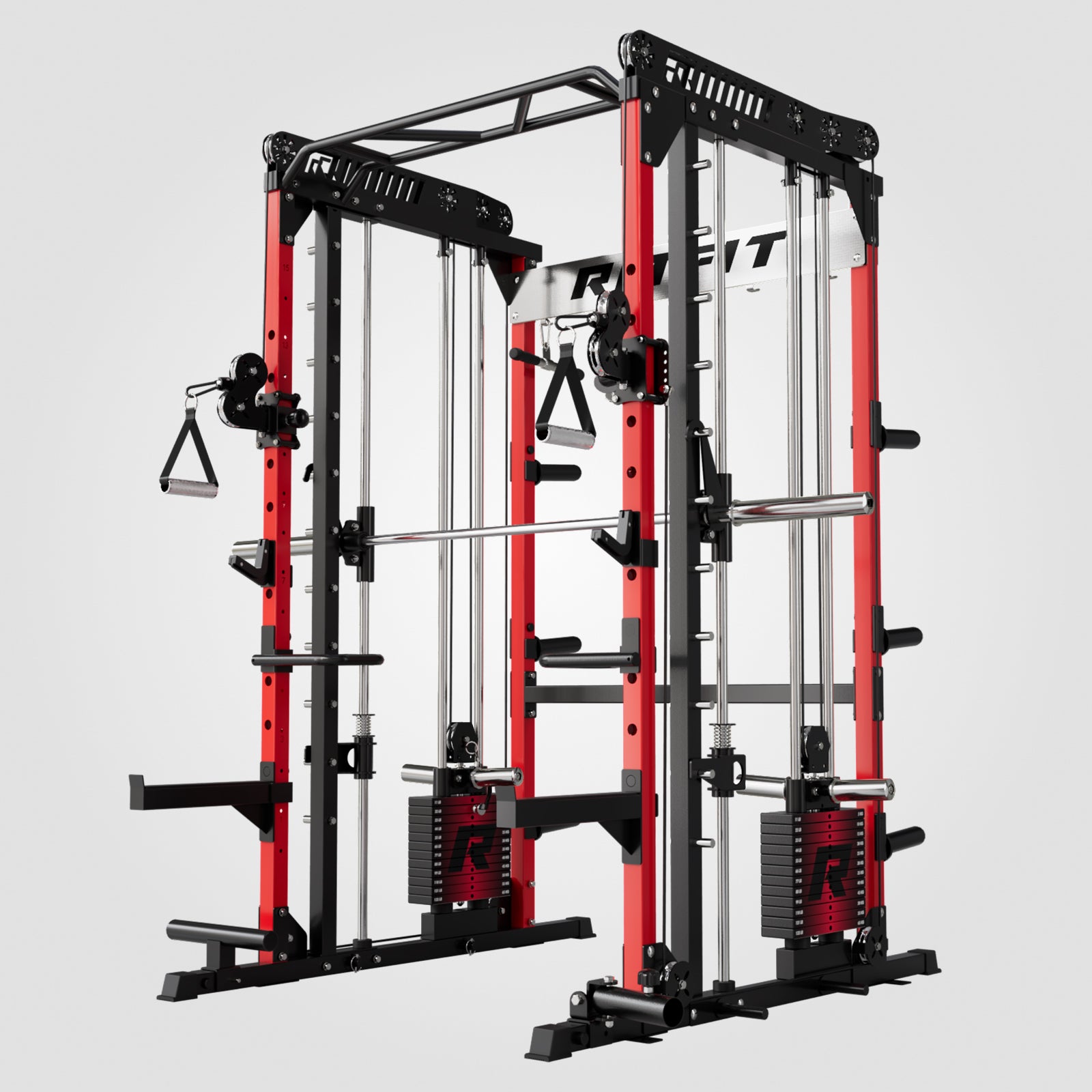
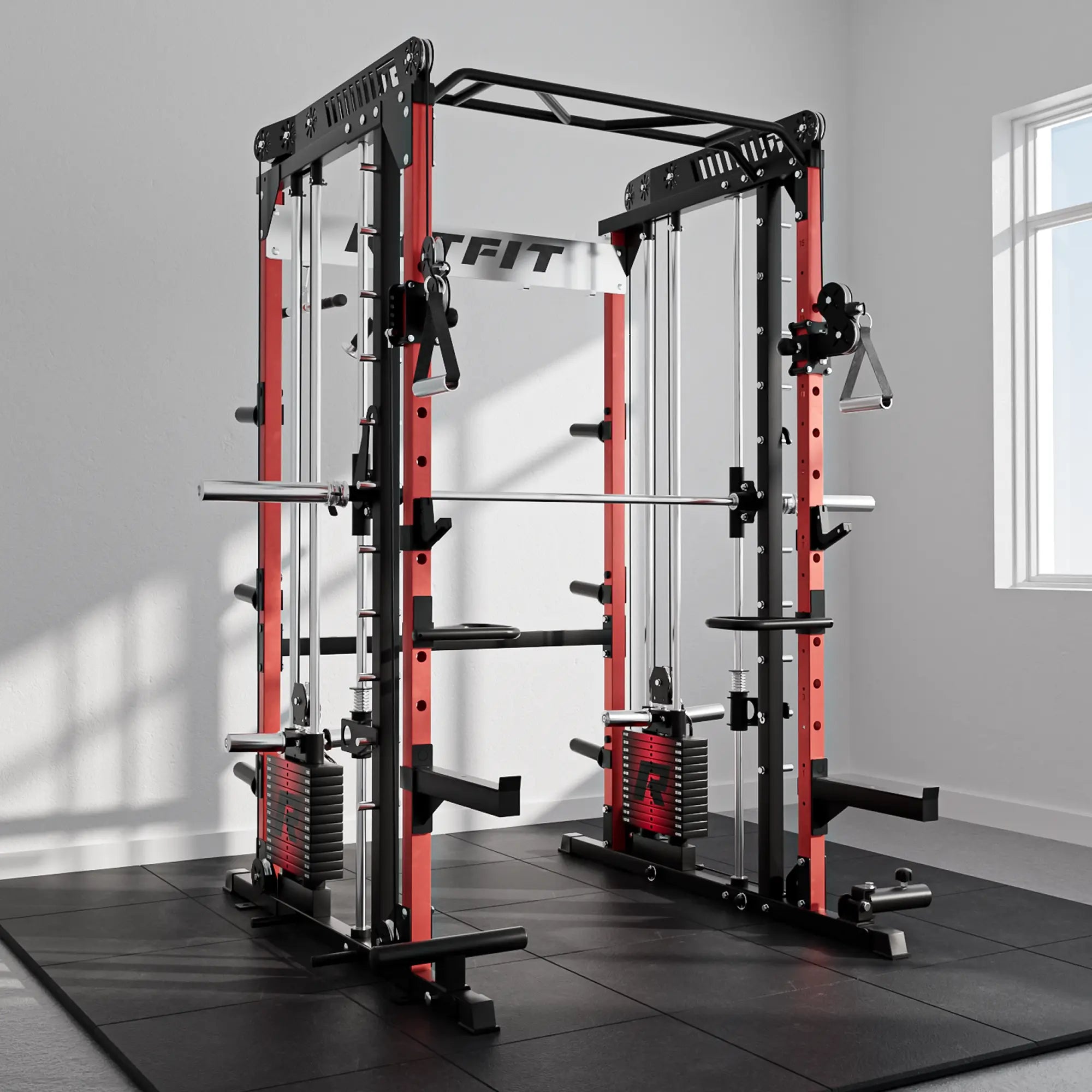
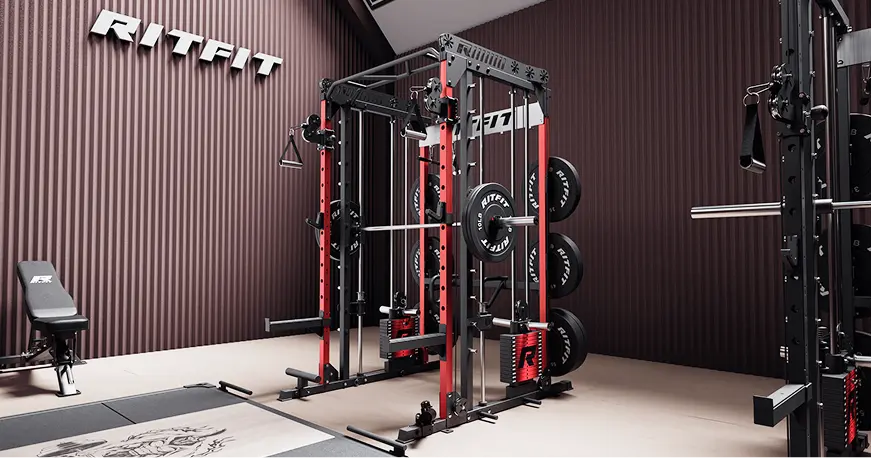
For a broader look at Smith machine layouts, review the Smith machine collection and compare the available frame environments without assuming every rack has identical clearance.
How Do You Find Your Stance and Foot Position?
Find your stance by keeping the load balanced over the middle of the foot while the knees travel in the same general direction as the toes. Start with a comfortable width and toe angle, then make small changes during an unloaded rehearsal instead of copying a fixed foot position.
A 2024 biomechanical review describes squat loading as dependent on technique and context, while a 2018 study examined stance width, foot placement angle, and experience in relation to squat motion and loading.[2][3] Those findings support testing your position inside the actual machine rather than treating one stance as universal.
- Width: Begin around a natural standing width, then widen slightly if your hips or the goblet load need more room.
- Toe angle: Use a modest outward angle that lets the knees track smoothly without forcing the feet to turn farther than your hips allow.
- Distance from the bar: Step to a position where the bar and uprights do not crowd the goblet load, but do not lean back to create clearance.
- Foot pressure: Keep the heel, base of the big toe, and base of the little toe connected to the floor as you descend and stand.
"I love Smith machine front squats. I do them with a medium stance and my toes pointed outward. By doing so, I'm really trying to focus on the outer sweep. I do these very deep, as deep as I can go. The Smith machine allows you to position yourself underneath and take the glutes and hips out of it and really focus on your quads without worrying about balancing."
Jay Cutler, Four time Mr. Olympia, Cutler Nutrition, Jay Cutler Answers 10 Questions About His Quad Training
Cutler is describing a Smith machine front squat, not this exact goblet variation, so use the quote as context for experimenting with a medium stance and outward toe angle, not as a command to copy his depth or position.
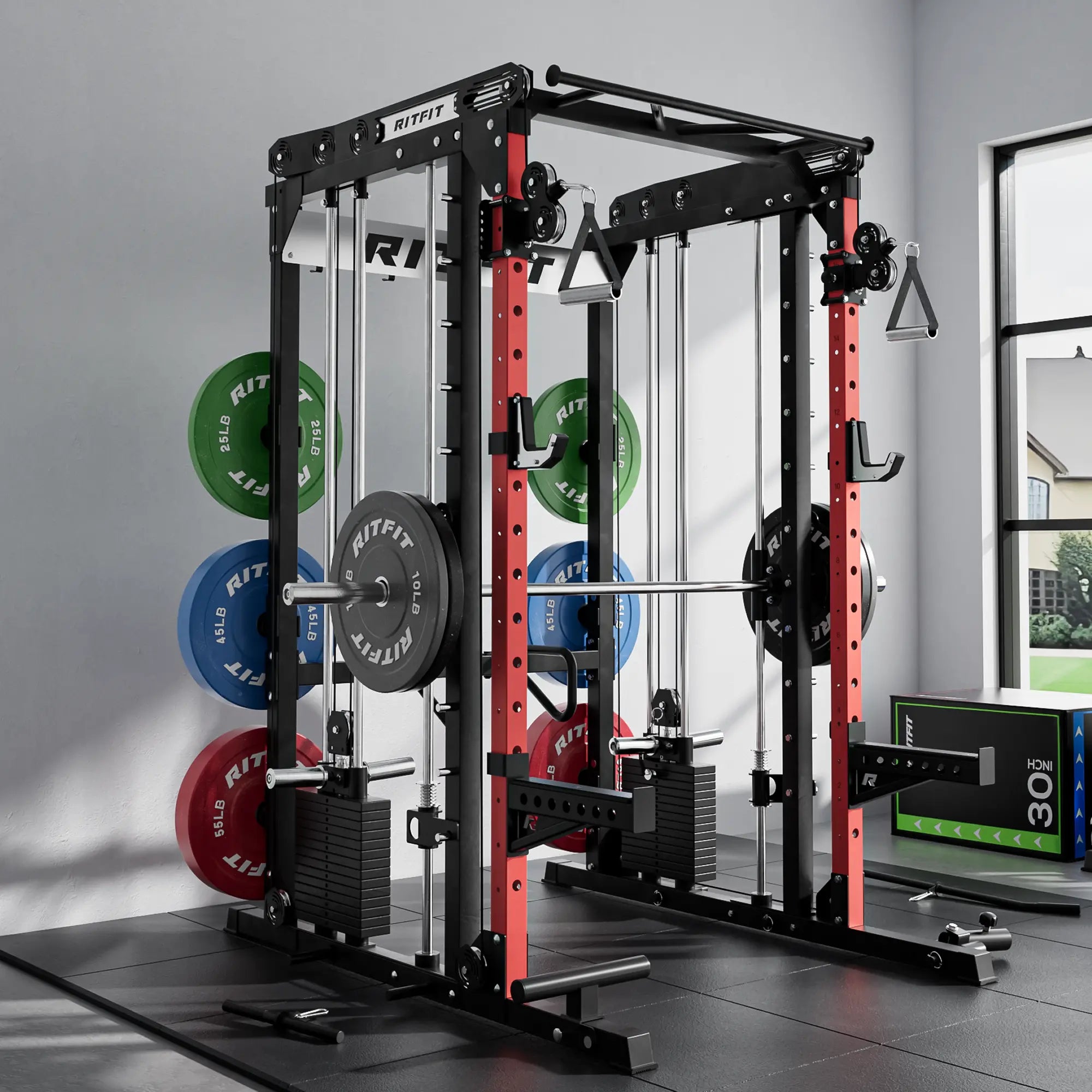
A multifunctional Smith machine can present a different set of uprights, attachments, and bar clearances than another rack. The machine changes your available space, but it does not change the need for a stable center of mass and controlled range of motion.
How Do You Do the Smith Machine Goblet Squat?
Perform the Smith machine goblet squat by bracing around a close chest hold, lowering under control, and standing through a stable foot position while the bar remains racked. Every repetition should preserve clearance and a clear exit plan.
- Step 1, rehearse: Stand in the machine with no implement, choose your stance, and perform one slow repetition to verify the bar and upright clearance.
- Step 2, pick up the load: Hold a dumbbell vertically by one end or a kettlebell by its handle, with the implement close to the chest and the elbows angled naturally toward the floor.
- Step 3, brace: Breathe in comfortably, create tension around the trunk, and keep the ribs stacked over the pelvis instead of flaring the ribs to make room for the load.
- Step 4, descend: Bend the knees and hips together, keep the feet planted, and lower for about 2-3 seconds while watching that the load does not drift into the bar.
- Step 5, check depth: Use the deepest position you can control without the heels lifting, knees collapsing, trunk folding, or the implement touching the machine.
- Step 6, stand: Push through the whole foot and let the hips and shoulders rise together. Keep the goblet load close instead of reaching it forward.
- Step 7, finish: Stand tall without leaning into the rack, stabilize the implement, and repeat only if the next repetition has the same clearance and control.
- Step 8, rerack: After the final repetition, stand completely, step away from the machine when balanced, and set the dumbbell or kettlebell down safely.
Use the official RitFit Smith machine leg workout video as a visual reference for the equipment environment, while keeping this article's goblet setup distinct from any bar loaded exercise shown there.
How Do You Choose Load, Reps, and Progression?
Choose a load that lets you repeat the planned depth, brace, tempo, and clearance without changing the position of the elbows or trunk. A light dumbbell, light kettlebell, or bodyweight rehearsal is the correct starting point when the machine layout is new.
- Start with practice: Use 1-2 light warm-up sets to learn the path before work sets. The goal is a repeatable movement, not an early test of strength.
- Use a flexible range: Try 8-12 controlled repetitions as a starting practice range, stopping earlier if form or clearance changes.
- Keep the effort honest: Leave enough control to finish the repetition and rerack plan without rushing. A heavier implement is not progress if it changes the pattern.
- Progress one variable: Add a small amount of load, one controlled repetition, a pause, or a slightly deeper range, but do not change every variable at once.
- Earn the next load: Increase weight only after all repetitions show stable feet, steady breathing, consistent depth, and no contact with the Smith machine.
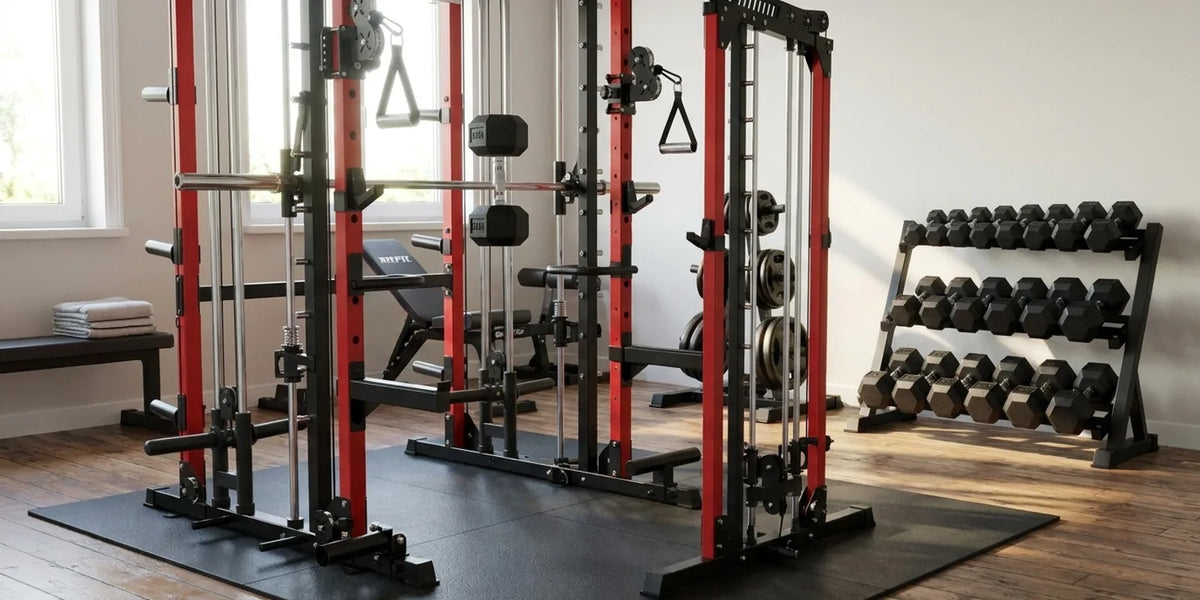
Keep the implement close to the chest as load increases. A compact home setup with accessible dumbbell storage and a set can make small load changes easier, but equipment access never replaces a controlled selection process.
If a fatigue limit comes from holding the weight rather than squatting, use a shorter set, a lighter implement, or a variation with a different loading position. The front loaded intent should stay clear without forcing your wrists, elbows, or shoulders to compensate.
What Common Mistakes Should You Correct?
Correct a goblet squat mistake by first securing the load and returning to an unloaded rehearsal. Most problems in this setup come from treating clearance, stance, or the final rerack as details instead of part of the exercise.
- Unracking the bar: Do not turn the exercise into a bar on back Smith squat by taking the bar off the hooks. Keep it racked and use the dumbbell or kettlebell as the load.
- Starting too close: If the implement or hands approach the bar at the top, step through a new position and retest without weight.
- Starting too far away: Do not lean back or reach the goblet forward to create space. Move the feet and adjust the rack relationship instead.
- Chasing depth: Do not force a deeper position after the heels lift, the pelvis loses control, or the load contacts the machine. Use a controllable range.
- Letting the elbows flare: Keep the load close enough that the shoulders and wrists do not have to hold it away from the body.
- Folding the trunk: Reduce load or depth if the chest drops sharply and the implement pulls you forward.
- Ignoring foot movement: Reset when the feet slide, the heels lift repeatedly, or one side bears noticeably more pressure.
- Rushing the last repetition: End the set when you can no longer stabilize the load and complete the exit without improvising.
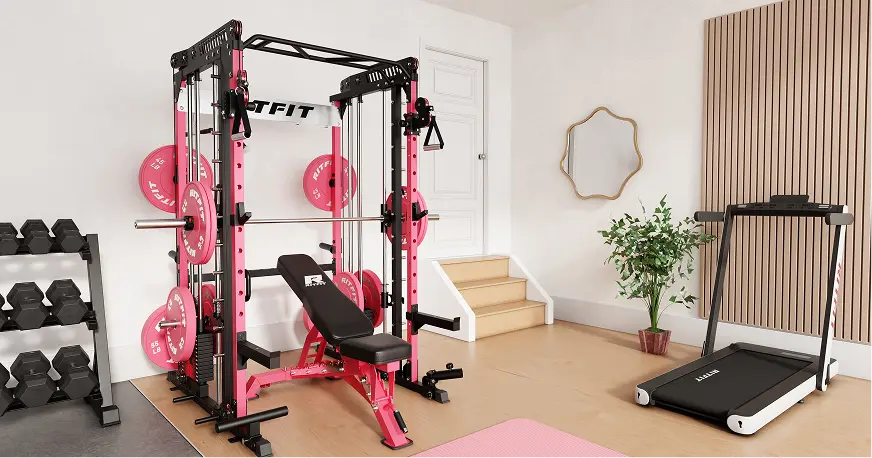
A home gym Smith machine such as the M1 home gym Smith machine may have a different attachment arrangement from another rack. Treat the linked example as a layout reference, not as evidence that every machine offers the same clearance.
What Progressions and Substitutions Work?
Use progressions that make the same front loaded squat easier to control before adding complexity. Use substitutions when the Smith machine's bar, uprights, ceiling, or attachment layout prevents a clean goblet path.
Progressions
- Bodyweight rehearsal: Practice the stance, brace, depth, and exit without a dumbbell or kettlebell.
- Paused goblet squat: Pause briefly at a comfortable depth while keeping the load close and the feet planted.
- Tempo goblet squat: Extend the lowering phase to about 2-3 seconds without adding load.
- Heavier goblet squat: Add load only when clearance and repetition quality remain unchanged.
- Range progression: Increase depth gradually only when the current range is stable and pain free.
Substitutions
- Free standing goblet squat: Remove the machine boundary when the rack crowds the load or hands.
- Box squat: Use a stable target to practice consistent depth, then stand without dropping onto the box.
- Landmine squat: Choose a front loaded option when a landmine station gives you a clearer bar path.
- Bodyweight squat: Return to no external load when holding the implement is the limiting factor.
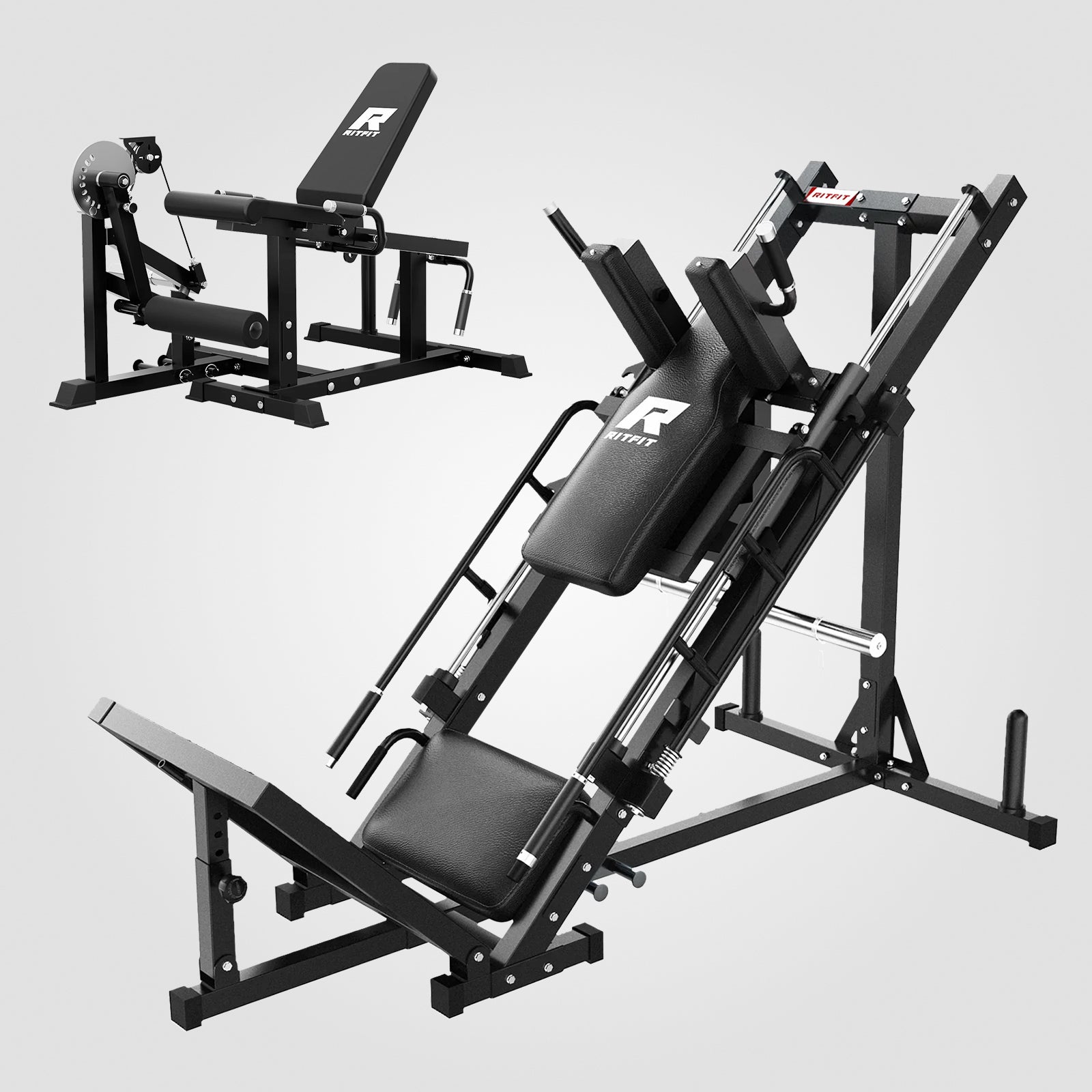
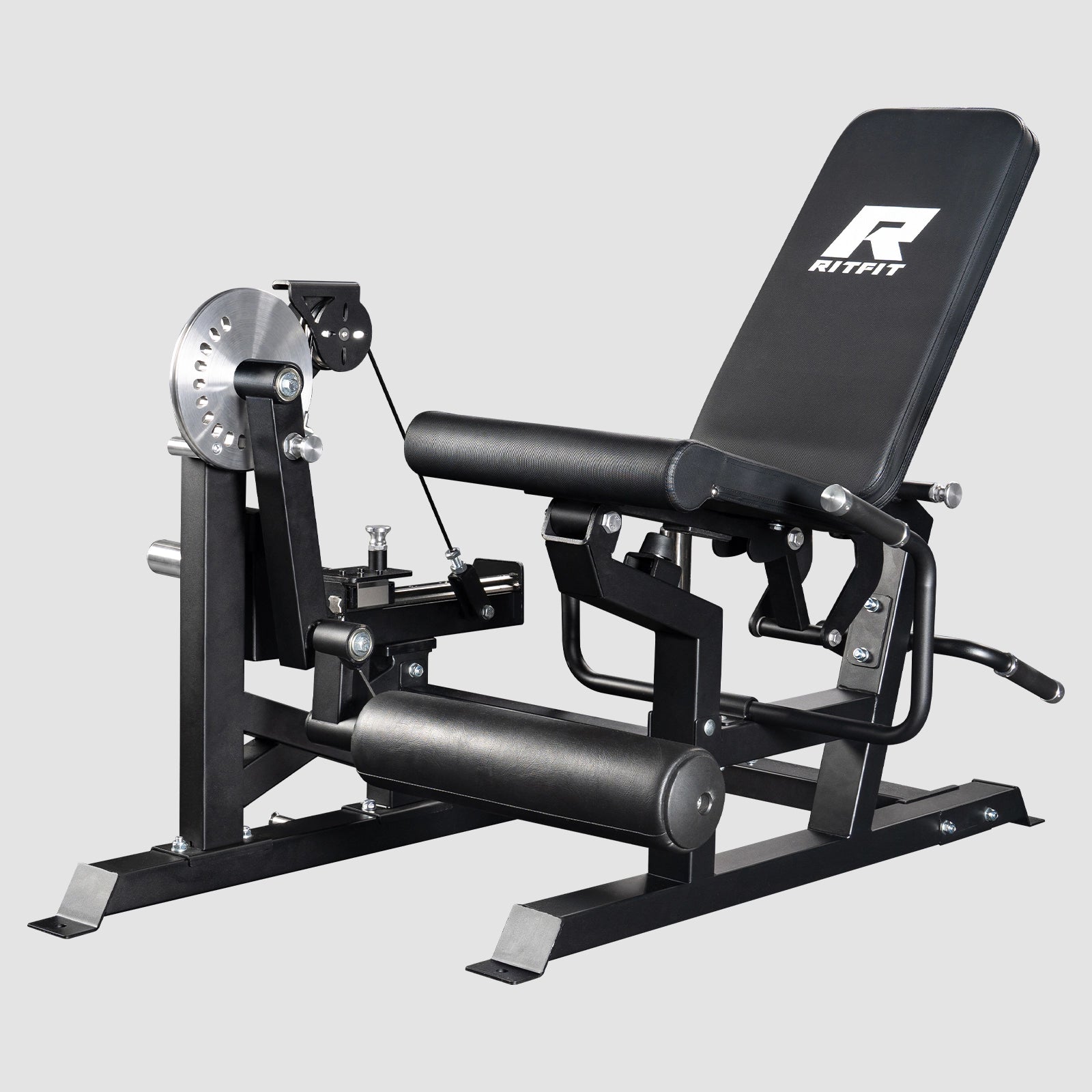
- Leg press or hack squat setup: Use a machine specific alternative when your goal is lower body training but the goblet clearance cannot be made reliable.
An adjustable weight bench can serve as a stable target for a carefully controlled box squat substitution, but the bench should not be used as a reason to force a depth that your stance cannot support.
When a different rack layout is the problem, compare the power rack cable crossover Smith machine as another equipment environment, then repeat the same unloaded clearance test before using any load.
When Should You Stop the Set?
Stop the Smith machine goblet squat set when you cannot keep the load clear, the feet planted, the knees tracking, the trunk controlled, or the exit plan obvious. Stopping is a form decision, not a failure of the workout.
- Contact: Stop if the dumbbell, kettlebell, hands, elbows, head, or shoulders touch the bar or uprights.
- Balance loss: Stop if you step, stumble, repeatedly lift a heel, or cannot keep pressure through the whole foot.
- Position loss: Stop if the trunk folds, the implement drifts away, or the knees no longer follow the intended path.
- Rerack uncertainty: Stop if fatigue makes it unclear how you will stand, step away, and set down the load.
- Pain or altered movement: Stop if pain appears or the movement changes to avoid a painful position. Do not test through it.
Secure the implement before stepping away, lower the load, and reassess the setup. If you cannot create a clear, controlled path with a lighter load and a shallower range, choose a substitution rather than forcing another repetition.
FAQs About How to Do Goblet Squat on Smith Machine
Can you do a goblet squat inside a Smith machine?
Yes. Hold a dumbbell or kettlebell at your chest while the Smith bar stays racked and out of your movement path. The machine can provide a consistent visual boundary, but it does not remove the need to test hand, head, load, and foot clearance before adding weight or depth.
Where should your feet go for a Smith machine goblet squat?
Place your feet where the load stays balanced over the middle of the foot and the knees can track in line with the toes. Start with a comfortable stance, then make small forward or backward changes while using an unloaded rehearsal to confirm the bar and machine do not crowd your hands or chest.
What weight should you use for a goblet squat?
Choose a dumbbell or kettlebell that allows controlled repetitions without the elbows, wrists, or trunk position changing. A light load or bodyweight rehearsal should come first. Increase the load only when every repetition reaches the planned depth with stable feet, steady breathing, and a clear rerack plan.
Should the Smith machine bar be unracked during a goblet squat?
No. This variation uses the Smith machine as a setup and boundary, while the dumbbell or kettlebell supplies the external load. Keep the bar secured at a height that cannot strike the head, hands, shoulders, or chest during the squat and stand sequence.
What are the best substitutions for a Smith machine goblet squat?
Useful substitutions include a free standing goblet squat, a box squat to a stable target, a landmine squat, or a bodyweight squat. Select the option that preserves the same front loaded intent while removing the clearance problem, balance limitation, or equipment constraint that stopped the original setup.
When should you stop a goblet squat set?
Stop the set when the load contacts the bar, the heels repeatedly lift, the knees lose their intended tracking, the trunk collapses, the rerack plan becomes unclear, or pain changes the movement. Secure the weight, step away only when stable, and lower the load before trying another set.
Conclusion
A Smith machine goblet squat works when the bar stays racked, the dumbbell or kettlebell stays close, and the entire setup is tested before loading. Use stance, depth, tempo, and weight as adjustable tools, then progress only while clearance and control remain consistent.
Start with an unloaded rehearsal, make one change at a time, and stop when the next repetition is not clearly safe to control. For general home gym planning, you can also review the RitFit discount guide.
Disclaimer
This exercise guidance is for general fitness education and does not replace individualized coaching or medical advice. Stop if movement causes pain or unusual symptoms, and seek qualified professional guidance before continuing when you are unsure about technique or readiness.
References
1. Kompf JM, Rhodes RE, Lee S. Selecting Resistance Training Exercises for Novices: A Delphi Study with Expert Consensus. Am J Lifestyle Med. 2025;19(3):437-449. doi:10.1177/15598276221115662. PMCID: PMC11873903
2. Straub RK, Powers CM. A Biomechanical Review of the Squat Exercise: Implications for Clinical Practice. Int J Sports Phys Ther. 2024;19(4):490-501. doi:10.26603/001c.94600. PMCID: PMC10987311
3. Lorenzetti S, Ostermann M, Zeidler F, et al. How to squat? Effects of various stance widths, foot placement angles and level of experience on knee, hip and trunk motion and loading. BMC Sports Sci Med Rehabil. 2018;10:14. doi:10.1186/s13102-018-0103-7. PMCID: PMC6050697