Table of Contents
A strong, muscular back and arms are indispensable for building your dream physique and protecting your shoulders in daily life. Although many people suggest you jump straight into pull-ups, not everyone is ready for them because of limited experience, strength, or shoulder mobility. Inverted rows, also known as Australian pull-ups, are a horizontal version of a pull-up that let you build a solid back without overloading your spine or hanging all of your body weight from the bar.
In this guide, you will learn exactly what an inverted row is, how to perform it with safe, joint-friendly form, the main muscles worked, key benefits, variations, alternatives, and practical tips on how to add it into your weekly routine.
What are Inverted Rows?
Inverted rows, or Australian pull-ups, are horizontal rowing variations where your body is suspended under a bar, rings, or straps and you pull your chest toward the handles. Because your feet stay on the floor, you can easily adjust the difficulty by changing your body angle instead of adding external weight.
Compared with traditional barbell rows, inverted rows place far less compressive stress on your lower back, which makes them beginner friendly and a smart choice for people who struggle to hinge with a loaded barbell.A study in the Journal of Strength and Conditioning Research found that inverted rows elicit high activation of the latissimus dorsi, upper back, and hip extensors while placing significantly less compressive load on the lumbar spine compared to standing bent-over rows[1].
During inverted rows, almost all of your “pull” muscles work together: upper and mid back, rear shoulders, biceps, forearms, and grip, with your core and glutes acting as stabilizers to keep your body in a straight line.
Inverted Rows Form and Technique
How to Do Inverted Rows
Step 1: Set the bar height and position yourself
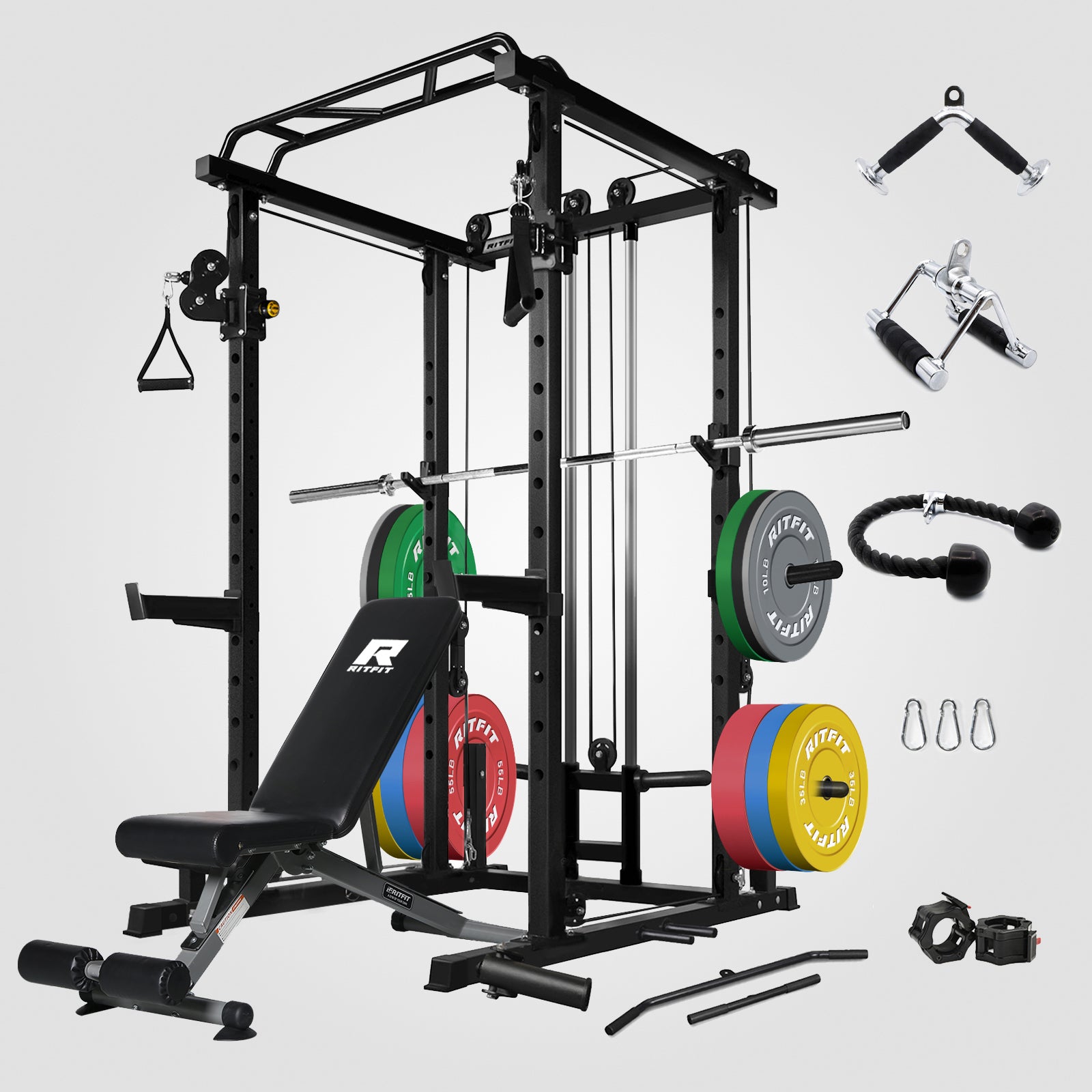
Set a bar on a stand or in a squat rack around waist to mid-thigh height. The lower the bar and the more horizontal your body, the harder the exercise will feel. Lie underneath the bar so it is roughly above your lower chest or mid-ribcage when you reach up.
Step 2: Find your grip and starting body position
Hold the bar with an overhand grip that is a little wider than shoulder width. Put your heels on the floor and walk your feet forward. Your body should be in a straight line from your head to your heels. Keep your ribs tucked and brace your core. Squeeze your glutes to keep your lower back from arching.
Step 3: Initiate the pull with your shoulder blades
Gently pull your shoulder blades down and back before you bend your elbows, as if you were trying to tuck them into your back pockets. Then, while keeping your neck straight and your body in one solid plank, pull your chest toward the bar. Try to touch the bar with your lower chest or get as close as your shoulders can comfortably allow.
Step 4: Control the lowering phase
Take a short break at the top and feel your upper back working. Slowly lower yourself for two to three seconds, letting your arms straighten out but not your hips or ribs. Hold your core and glutes tight until you get back to the starting position. Then do as many reps as you want.
Breathing tip:
Inhale as you lower yourself, then exhale as you pull your chest toward the bar.
Beginner regression:
If a full straight-body row feels too hard, bend your knees and place your feet flat on the floor so your body angle is more upright.
Advanced progression:
To make it harder, elevate your feet on a bench or box so your body is parallel to the floor, or add a weight plate on your torso.
Safety Tips & Who Should Be Careful
- Warm up first: Spend 5–8 minutes on light cardio and dynamic shoulder movements such as arm circles, band pull-aparts, and a few easy sets of rows with a higher bar position.
- Joint comfort first: If you feel pinching in the front of your shoulder or sharp pain in your elbow or wrist, reduce the range of motion, change the grip width, or stop and consult a professional. Dull muscular fatigue is normal; sharp joint pain is not.
- Previous injuries: If you've had shoulder impingement, rotator cuff tears, or problems with your cervical spine in the past, start with a higher bar, fewer reps, and a neutral grip (on rings or handles) to make it easier on your shoulders.
- Home setups: When using chairs, tables, or broomsticks at home, make sure all equipment is stable and rated to hold your body weight. If in doubt, do not use it. Your safety is more important than one workout.
Inverted Rows Common Mistakes to Avoid
Incorrect Position of Bar
There is no standard bar position or height for everyone. You should set the bar according to your height so that your chest should touch it at the top of the movement. Lower the bar a bit if it touches your waist or neck.
Lack of Hip & Core Engagement
Although inverted rows are primarily meant for your upper back, they also engage your core and glutes. Keeping your glutes in line with the rest of the body is essential for maintaining proper posture. Otherwise, you might end up injuring yourself.
Similarly, core engagement is indispensable for having the right form. Try doing glute bridges and core strengthening drills if you cannot engage these muscles effectively during your workout.
Wrong Grip
Grip width varies from person to person, with different strength and comfort levels. However, keeping your grip wider than shoulder-width is always a good idea if you're a beginner.
Hyperextending Your Knees
There is no reason why your knees should hurt during rows because they are meant for your upper body muscles. However, if it's happening, you're hyperextending your knees. To overcome this problem, try bending your knees slightly to alleviate the pressure on them.
Inverted Rows Muscles Worked
Latissimus Dorsi/Lats

Latissimus dorsi, commonly known as the lats, are the largest muscles in your upper back. They run from your lower spine and pelvis up to your upper arm, helping adduct, extend, and internally rotate your shoulders. Because inverted rows are a horizontal pulling motion, your lats are one of the primary movers every time you pull your chest toward the bar.
Rhomboids

Your rhomboids sit between your shoulder blades and spine. Their job is to retract your scapulae, which is essential for good posture and shoulder health. During inverted rows, the rhomboids pull your shoulder blades back and together as you row, helping you avoid the “rounded shoulder” posture that comes from too much sitting.
Biceps
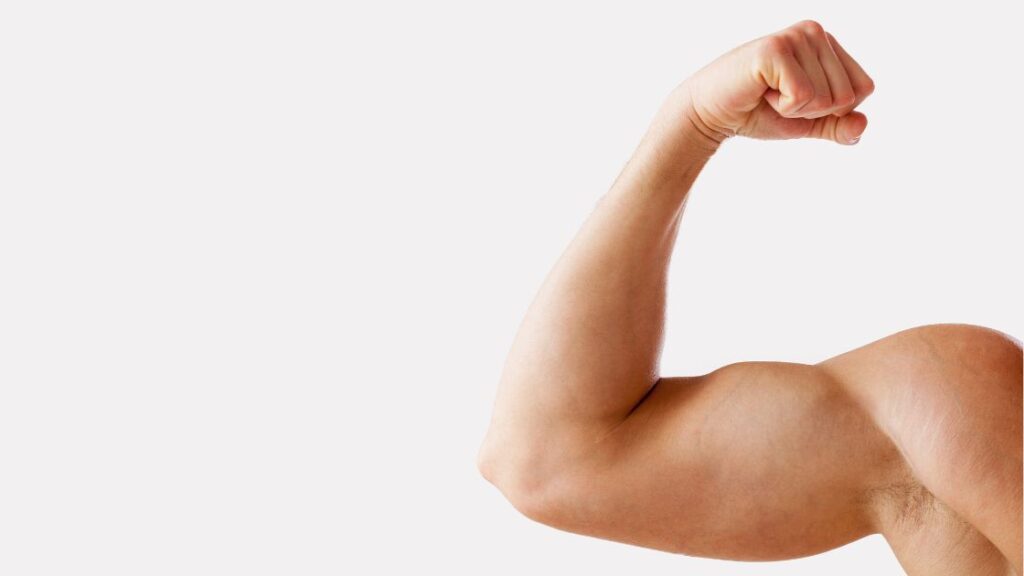
The biceps brachii are located on the front of your upper arm and are responsible for elbow flexion and assisting in shoulder stability. In inverted rows, they help bend your elbows and pull your body toward the bar, acting as powerful assistants to your back muscles.
Posterior Deltoids (Rear Shoulders)
The rear delts sit on the back of your shoulders and are heavily involved in any rowing or pulling motion. They help drive your upper arm back and support your shoulder joint, which is key for balancing out the front-dominant work most people do in pushing exercises like bench presses.
Forearms and Grip Muscles
Your forearm flexors, extensors, and small hand muscles work hard to keep your grip locked on the bar or handles. Over time, this improves grip endurance and strength, which carries over to deadlifts, pull-ups, and even everyday tasks like carrying groceries or suitcases.
Core and Glutes
Your abdominals, obliques, spinal stabilizers, glutes, and even hamstrings all work isometrically to keep your body in a straight line. If you maintain a tight plank position throughout each rep, inverted rows double as a core and posterior-chain stability exercise, not just a back builder.
Inverted Rows Benefits
Upper Body Growth
A strong back is a must whether you're looking for aesthetics or posture stability. It also helps prevent injuries, so working out back muscles should be part of your regular workout routine. Rows target your lats, rhomboids, delts, biceps, and forearms, providing an incredible upper-body workout experience.
You can make the workout harder or easier, depending on your experience. Even if you can do pull-ups, rows can still be a staple in your workout routine, providing you with a different angle. You can do them at the end of your back workout to test the muscles to their limits.
A Stronger Grip
- Overhand grip: This is a great way to make your grip stronger all over and your upper back thicker.
- Underhand grip: Puts more emphasis on the biceps.
- Holding onto rings or handles with a neutral grip is often the best choice for people with sensitive joints.
Great for Beginners
Pulling with your body weight is a good place for new lifters to start. You can learn how to do the row movement without having to hang from a high bar or balance heavy free weights with inverted rows.
You can start with a higher bar and bent knees. As you get stronger, you can lower the bar and stretch your legs. This built-in progression makes inverted rows easy for people who are scared of pull-ups or heavy barbell work.
Pull-up Progression
Pull-ups are one of the hardest exercises for your upper body because they require a lot of strength, control, and shoulder stability. Inverted rows work out many of the same muscles as pull-ups, but in a more comfortable horizontal position. This makes them a fantastic way to get ready for your first strict pull-up.
You can start with easy bent-knee rows and work your way up to straight-leg rows with your feet elevated. Then you can add band-assisted pull-ups and eventually full bodyweight pull-ups.
Targets Multiple Muscles
Inverted rows are a compound movement, meaning you train multiple joints and muscle groups at once. Instead of isolating only your biceps or only your lats, you train your entire posterior chain and pulling musculature in a coordinated way.
This makes inverted rows an efficient choice for full-body or upper-lower split routines. They can help you improve overall strength, posture, and athletic performance while keeping your training time reasonable.
Inverted Rows Variations
Inverted Ring Rows
Step 1: Fix gymnastic rings or suspension straps to a sturdy overhead anchor. Grab the handles and walk your feet forward until your body is leaning back at the desired angle.
Step 2: Set your body in a straight line from head to heels, squeeze your glutes, and brace your core.
Step 3: Pull your shoulder blades down and back, then row your chest toward the handles, keeping your wrists neutral.
Step 4: Pause briefly at the top, then lower yourself slowly until your arms are straight again. Repeat for the desired reps.
Coaching tip: Rings allow your hands to rotate naturally, which can feel easier on sensitive shoulders and elbows.
TRX Inverted Row
Step 1: Adjust your TRX straps to mid-length and hold the handles with an overhand or neutral grip. Walk your feet forward and lean back until your body forms a straight line.
Step 2: Keep your entire body tight, eyes looking slightly up, and avoid letting your hips sag.
Step 3: Pull your chest toward the handles, squeezing your shoulder blades together at the top.
Step 4: Lower yourself under control until your arms are straight again, keeping your body in a plank.
Table Inverted Rows
Step 1: Lie under a sturdy table and grab the edge with both hands slightly wider than shoulder width. Make sure the table will not tip or slide.
Step 2: Extend your legs and keep your body as straight as possible, or bend your knees if you need an easier angle.
Step 3: Pull your chest toward the edge of the table, leading with your shoulder blades rather than your chin.
Step 4: Lower yourself back to the starting position with control.
If the full straight-leg version feels too hard, bend your knees and bring your feet closer to your hips. This reduces the load and lets you build strength safely before progressing.
Inverted Bodyweight Rows
Step 1: Set a bar on a Smith machine or squat rack at about waist height. Grab it with an overhand grip at shoulder width or slightly wider.
Step 2: For beginners, bend your knees and plant your feet flat on the floor. As you get stronger, extend your legs to increase the difficulty.
Step 3: Brace your core, squeeze your glutes, and keep your body straight as you pull your chest toward the bar, squeezing your shoulder blades together at the top.
Step 4: Lower your body in a slow, controlled manner until your arms are straight again, then repeat.
Inverted Rows at Home Without Equipment
Step 1: Place two heavy, stable chairs back-to-back with a broomstick or sturdy bar across them. Test the setup carefully before getting underneath.
Step 2: Lie underneath, grab the broomstick with both hands, and walk your feet forward until your body is at the desired angle.
Step 3: Pull your chest toward the broomstick, keeping your body in a straight line and your shoulder blades squeezed together.
Step 4: Lower yourself slowly under control and repeat.
Always make sure the broomstick and chairs are strong and stable enough to handle your weight. If anything feels wobbly or unsafe, choose a different setup rather than risking a fall.
Inverted Row Alternatives
Although rows are excellent for what they do, people might still not do them for some reason, such as the lack of suitable equipment, etc. If you're one of them, here are some great alternatives you can try.
Barbell Bent-Over Row
The barbell bent-over row is one of the best upper-body exercises and a great alternative to an inverted row. One of its prominent advantages is that you only need one piece of equipment to perform it. Moreover, it targets all the muscle groups that an inverted row targets, so you'll feel similar stimulation from this exercise.
Single-Arm Dumbbell Row
The single-arm dumbbell row isolates one side of your muscles and lets you target them much better. Moreover, it forces you to engage your core and other muscles as stabilizers. Ensure your back is straight during the movement, as developing an arch can hurt your spine.
Pull-ups
Pull-ups are one of the best upper body exercises. You only need a strong bar to perform it at your home, gym, or local park. Pull-ups involve multiple muscles simultaneously and help you build serious strength.
However, pull-ups aren't the best choice for beginners, as they require serious strength. That's why it's suggested to start with rows and progress toward pull-ups.
Sumo Deadlift High Pull
Sumo deadlifts high pull is another exercise that targets all the muscles targeted by rows. It isn't about the amount of weight you can move in this exercise but the efficiency with which you move it. Instead of going with the heaviest barbell, lift something you find challenging and manageable simultaneously.
The sumo deadlift puts tension on all the muscles that rows exert, including the hamstrings, glutes, upper back, arms, etc. Whether you're a beginner or an expert, the sumo deadlift can be a game changer for anyone.
Inverted Rows FAQs
Q: Inverted Rows vs Pull-ups. What’s the difference?
The inverted rows and pull-ups differ in intensity, difficulty level, and technique. Pull-ups are much harder, as they are done vertically and require immense strength from several muscles. On the other hand, rows are done in a horizontal position and are much more manageable for your body, especially if you're a beginner.
Q: Who Should Do the Inverted Rows?
Rows are perfect for beginners who want to build a strong upper back and arms. Pull-ups can be demanding for beginners as they require a lot of strength. Rows can also benefit those who want to return to their routine after an injury but don't want to exert their muscles fully.
Q: How often should I do inverted rows?
The frequency of rows depends upon your experience and strength levels. If you're a beginner, you should do them at least once or twice a week, depending on your workout routine. You can also do them thrice a week if you prefer full-body workouts.
Q: How many reps and sets should I do for inverted rows?
The number of sets and reps for rows depends on your goals. If you're looking for hypertrophy, do at least 3 sets with 8-12 reps with 1-minute breaks. Those looking for strength should go for 4-5 sets of 6-8 reps with 30-second intervals.
Q: How to add inverted rows to my routine?
Rows should be added to your workout schedule to complement other exercises. For instance, do them on your pull days and give the muscles proper rest. For better results, beginners should do inverted rows twice or thrice a week.
Q: How do I progress with the inverted rows?
Although rows are comparatively easier to pull-ups, they can still be challenging to some people. The first variation you can try is to bend your legs and bring them closer to your hips. You can extend your legs to make it harder as you gain strength.
Summary
Inverted rows are a simple, scalable, and highly effective way to build a stronger back, healthier shoulders, and better overall pulling strength. They fit easily into beginner and advanced programs, can be done with minimal equipment, and allow you to progress all the way from bent-knee rows to feet-elevated weighted variations.
Focus on clean technique, strong core and glute engagement, and progressive overload over time. Avoid the common mistakes outlined above, listen to your joints, and treat inverted rows as a long-term staple in your training, and they will pay off in stronger lifts, better posture, and a more resilient upper body.
References
Fenwick CM, Brown SH, McGill SM. Comparison of different rowing exercises: trunk muscle activation and lumbar spine motion, load, and stiffness. J Strength Cond Res. 2009;23(2):350-358. doi:10.1519/JSC.0b013e3181942019