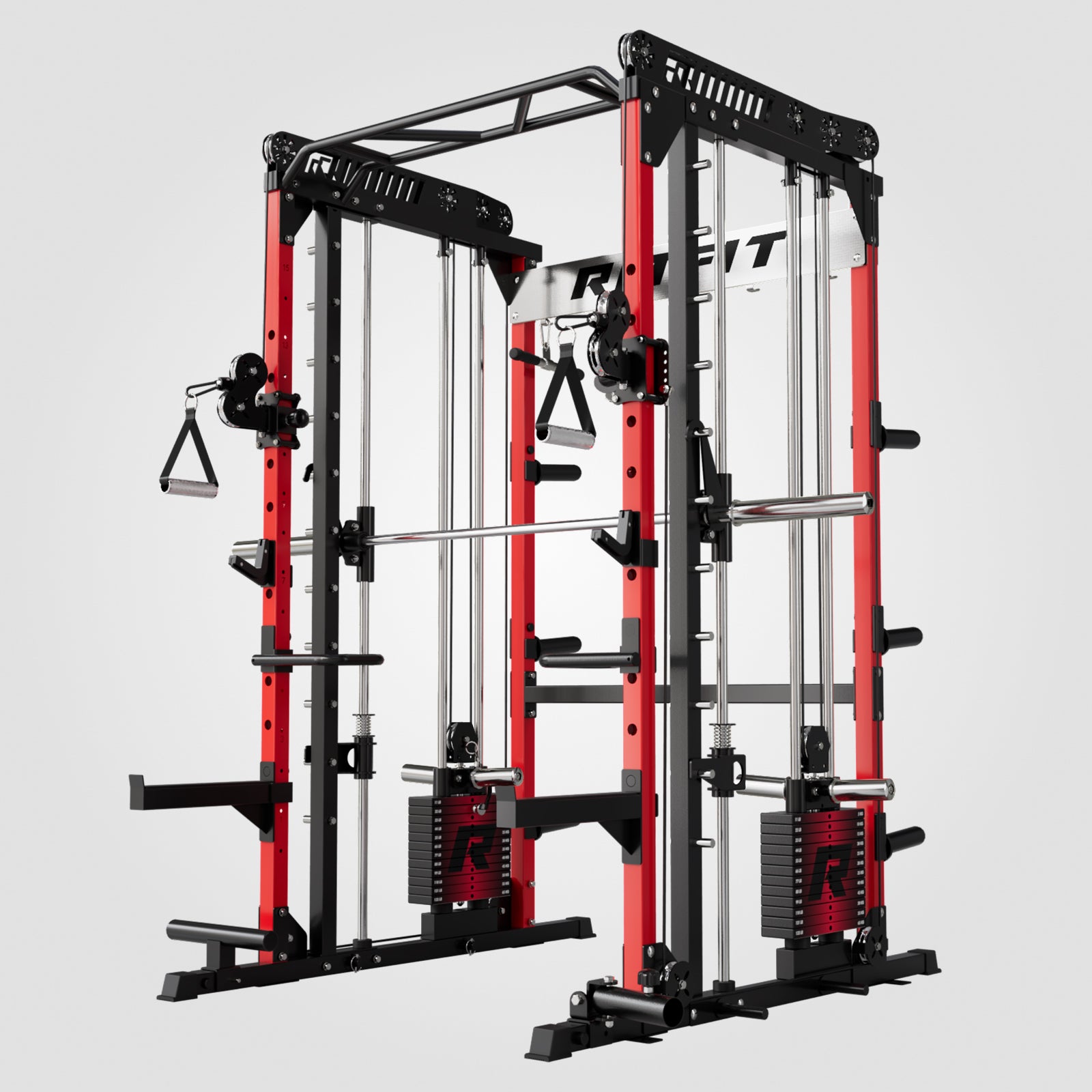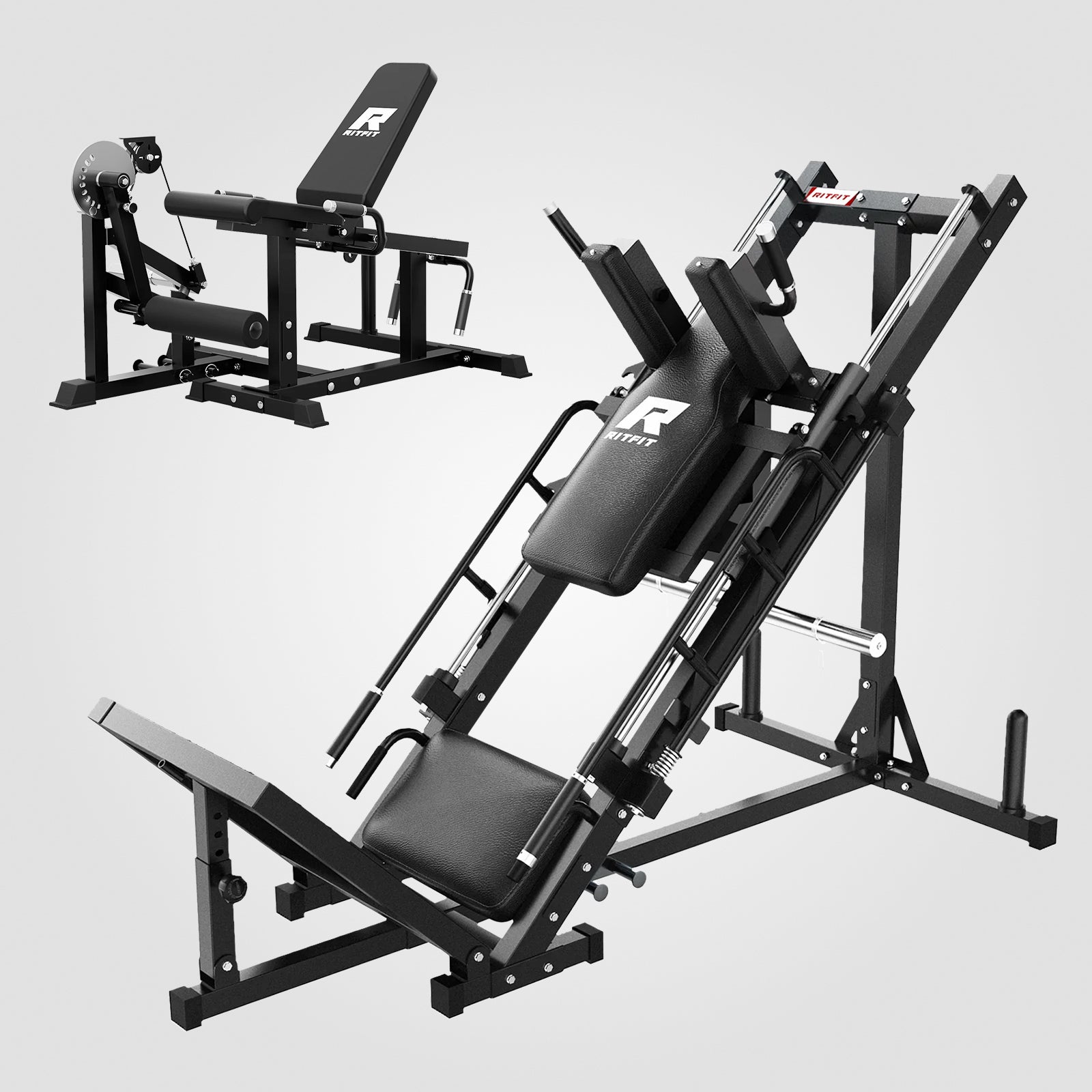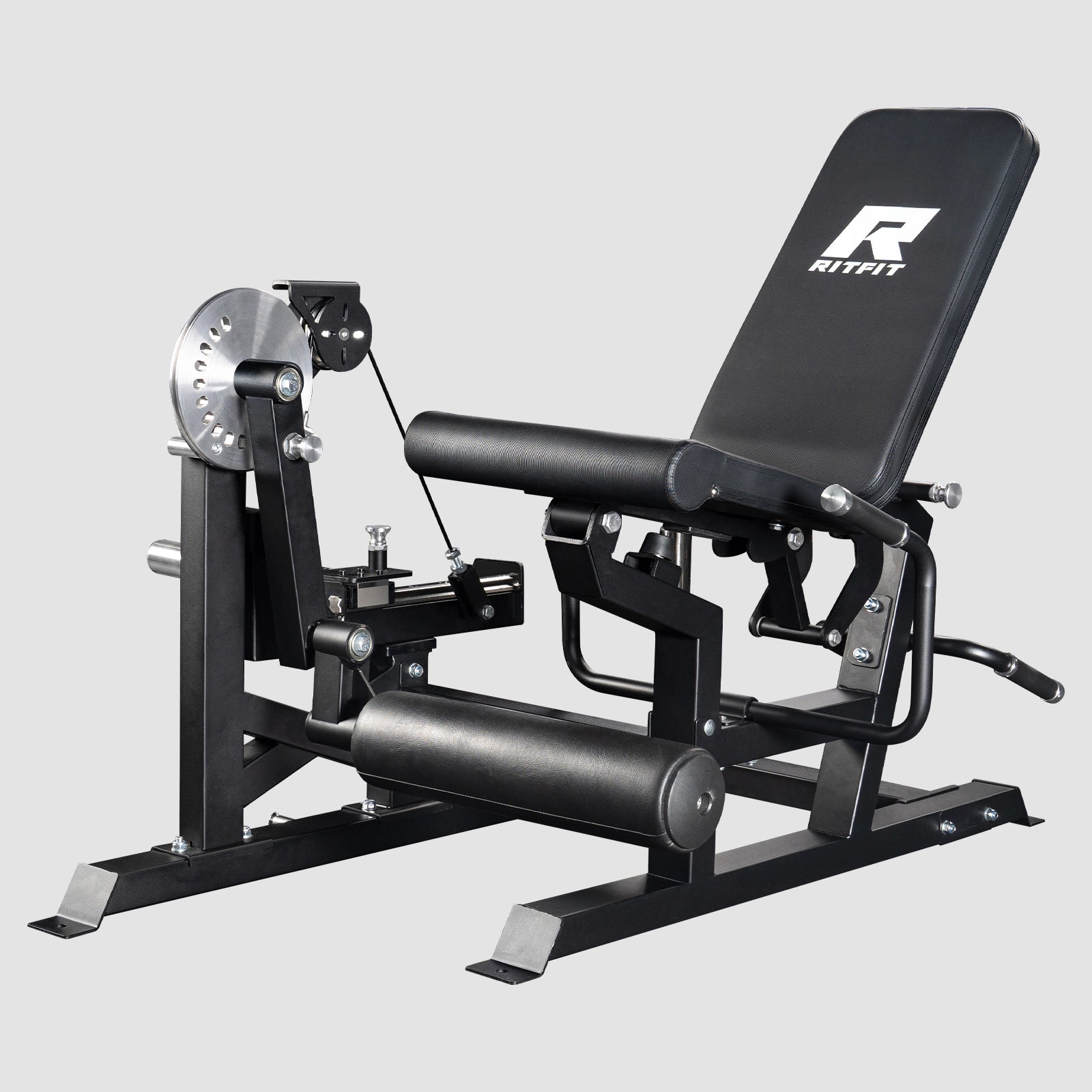
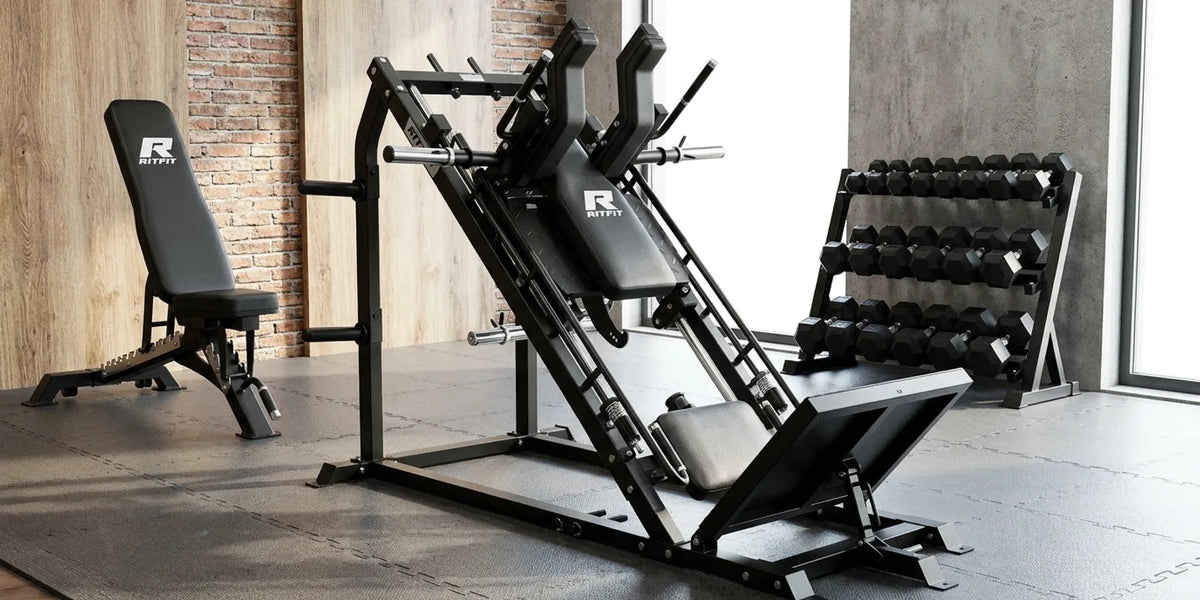
Single-leg calf raises on a leg press and hack squat machine train one calf at a time while the rails carry the load, so balance never ends the set early. You get stable loading, easy progression, and a full stretch at the bottom of every rep.
This guide covers both machine setups, step-by-step form, the muscles worked, and simple programming. It also compares the machine version with bodyweight single-leg calf raises and lists the mistakes and safety checks that matter most.
Quick Answer: Yes. To do a single-leg calf raise on a leg press and hack squat machine, place the ball of one foot on the lower edge of the footplate or platform, keep the safety stops engaged, and press through the ankle through a full stretch, a brief pause, and a slow lowering.
Key Takeaways
- Two solid setups: One forefoot on the lower edge of the sled in leg press mode, or one leg at a time on the platform in hack squat mode, turns a combo machine into a single-leg calf raise station.
- Knee angle picks the muscle: A straighter knee biases the gastrocnemius, while a soft, slightly bent knee shifts more of the work to the soleus.
- Pause beats bounce: A full stretch and a brief pause at the bottom keep the work on the muscle instead of the Achilles tendon.
- Stable load beats balance fatigue: The machine removes the balance test that ends many bodyweight sets early, and the safety stops add a margin the free version lacks.
- Program it weekly: Two to four short sessions with controlled reps fit how quickly the calf complex recovers.
Machine Setup Options
A leg press and hack squat combo machine gives you two workable setups for a machine single-leg calf raise. Both work well, and the best choice usually comes down to which mode feels steadier for your build and how the foot surface is shaped. If the machine itself is new to you, walk through how to use a leg press and hack squat machine first so the seat, sled, and safety catches are familiar before you load a single leg.
Option 1: Leg Press Mode
Adjust the seat so the working leg reaches the sled with the knee soft rather than locked or deeply bent. Place the ball of one foot on the lower edge of the footplate so the heel hangs free.
- Foot position: The ball of the foot sits securely on the edge with the forefoot fully supported, and the non-working foot stays off the plate, resting on the floor or tucked behind you.
- Safety stops: Set the machine's limiters before you un-rack and leave them engaged for the whole set, so the sled has a hard floor it cannot pass if the calf fatigues mid-set.
- The rep: Un-rack the sled, lower the heel under control, then press the plate away by pointing the toes.
Option 2: Hack Squat Mode
Stand on the platform with the ball of one foot at the edge and the heel free, facing the frame so you can hold the handles or brace lightly against the pads. Keep the carriage secured against its stops so it cannot travel unexpectedly while you work.
- Balance first: Hold the frame handles or brace lightly under the pads so balance is never the limiting factor.
- The rep: Drop the heel toward a comfortable stretch, rise as high onto the ball of the foot as you can, and stay tall through the hips and knees.
- Set structure: Finish all reps on one side, then switch feet and repeat.
Choosing a 3-in-1 Machine Like the RitFit GAZELLE PRO
Machines built for all three functions make this movement especially simple. A 3-in-1 unit such as the RitFit GAZELLE PRO combines leg press, hack squat, and a dedicated calf raise function, while combo units such as the RitFit BLP01 pair leg press and hack squat so the same sled and platform become the calf station.
- Versatility: If your garage gym holds one leg station, a 3-in-1 unit covers pressing, squatting, and calf work on the same footprint instead of three separate machines.
- Setup speed: The dedicated calf raise function on the GAZELLE PRO saves the footplate juggling act, while sled-only combos like the RitFit GAZELLE and the BLP01 still turn the plate you already loaded into a solid calf station.
- Before you buy: Compare footplate shapes and edge depth across the leg press machine lineup, since the edge is what lets the heel travel below the toes. Model-specific add-ons like the RitFit foot plate for the leg press also change that edge, and this 3-in-1 leg press and hack squat machine buying guide walks through what to look for.
The walkthrough below shows the 3-in-1 platform and sled that become the calf station.
"Wasn't sure if this machine would do the job since the price is on the lower end but so far, really like it! The assembly instructions made putting it together very smooth. Just be sure there's two people and it will be put together in about an hour or so. Very pleased with this purchase"
Heather T. Verified Buyer, RitFit GAZELLE PRO 3-In-1 Leg Press and Hack Squat Machine
Step-by-Step Form
Two variations cover the movement, the leg press single-leg calf raise and the hack squat single-leg calf raise. Both follow the same rhythm, a full stretch at the bottom, a brief pause, and a slow two to three second lowering. Pick the setup that feels steadier on your machine and own the range before you add load.
Leg Press Single-Leg Calf Raise
- Set the safety stops and adjust the seat so the working leg is nearly straight with a soft knee when the sled is racked.
- Place the ball of the working foot on the lower edge of the footplate with the forefoot fully supported and the heel hanging free. The foot points straight ahead or in whatever slight turnout feels natural for your hip.
- Un-rack the sled and let the heel travel below the level of the toes if the plate geometry allows, reaching a comfortable stretch through the back of the ankle.
- Pause briefly at the bottom, then press the plate away by pointing the toes until the calf is fully shortened.
- Squeeze at the top for a beat, then lower under control over roughly two to three seconds. That slow lowering is where much of the work happens.
Hack Squat Single-Leg Calf Raise
- Stand on the platform with the ball of one foot at the edge, the heel free, and the carriage secured against its stops.
- Hold the frame handles or brace lightly under the pads so balance is never the limiting factor, and keep a soft, constant knee angle.
- Lower the heel toward a comfortable stretch, pause to kill any bounce, then rise as high onto the ball of the foot as you can.
- Lower slowly, finish all reps on one side, then switch feet and repeat.
- Pause at the bottom: A deliberate pause kills the bounce and keeps the work on the muscle.
- Pick the knee angle on purpose: A straighter knee biases the gastrocnemius, while a slightly bent knee shifts more of the work to the soleus underneath it.
For a deeper comparison of foot positions and loading on the sled, see the leg press calf raise setup and form guide.
The tutorial below shows the foot placement and tempo on a leg press machine.
Muscles Worked
The prime movers are the two plantar flexors at the back of the lower leg, the gastrocnemius and the soleus. Together they form the calf complex that lifts the heel in every step, jump, and landing. Knee position decides which of the two works hardest.
- Gastrocnemius: The visible two-headed calf muscle crosses both the knee and the ankle, so the leg press setup with a nearly straight knee leans toward it.
- Soleus: The soleus crosses only the ankle, so the hack squat setup with a soft, slightly bent knee lets it take on more of the effort.
- Stance and foot angle: Neither meaningfully redirects the work, so pick whatever keeps the forefoot stable on the edge.
- Assisting muscles: The plantaris, the deep muscles behind the shin such as the tibialis posterior and the toe flexors, and the fibularis muscles on the outside of the lower leg steady the ankle as the heel rises and lowers.
- Ankle stabilizers: Because the movement is single-leg, the smaller stabilizers around the foot and ankle work harder than in a two-footed raise, which is one reason this variation is often used to even out a side-to-side difference.
Benefits vs Bodyweight Single-Leg Calf Raises
The machine version removes the two biggest limitations of the bodyweight single-leg calf raise, an unstable balance test and an awkward progression path. The bodyweight version is still a fine exercise and belongs in any warm-up or travel routine. On the machine, the tension stays on the calf from the first rep to the last.
- Stable load instead of a balance test: On a bodyweight single-leg calf raise, fatigue in the foot, ankle, and hip often ends the set before the calf is done, while the rails or frame keep the tension where it belongs.
- Easy, honest progression: Adding weight on a combo machine is as simple as loading another plate, and the smallest increments you own are enough.
- A deeper stretch: The platform edge lets the heel travel below the toes, reaching a full stretch at the bottom instead of the truncated range most floor-based bodyweight reps allow.
- Better at exposing left-right gaps: Training one leg at a time on a stable machine makes the comparison cleaner, because the load and range are repeatable set to set.
If you train calves in other stations too, such as the plate-loaded stations in the leg machine lineup, the same single-leg principle applies to single-leg calf raises for stronger calves generally, or to the single-leg version of a Smith machine calf raise when that is the equipment you have. Certified personal trainer Heather Cherry describes the diagnostic value of the movement in NASM's training guidance[1]:
"Single-leg calf raise: exposes and corrects side-to-side gaps while adding ankle stability demand"
Heather Cherry, NASM-Certified Personal Trainer, NASM blog, Calf Training: How to Program This Stubborn Muscle Group for Clients
Common Mistakes and Safety
Most single-leg calf raise mistakes come from bouncing, drifting feet, and loading too much too soon. Fix the rhythm first with a full stretch, a brief pause, and a controlled lowering. The safety stops do the spotting on every set, so treat them as non-negotiable.
- Bouncing off the tendon: Fast, partial bounces outsource the work to the Achilles tendon's elasticity, so reset the standard with a full stretch at the bottom, a brief pause, and a deliberate squeeze at the top.
- A foot that creeps: If the forefoot slides toward the middle of the plate mid-set, the heel loses its travel and the ankle loses its stable base, so place the ball of the foot firmly on the edge before the first rep.
- Too much weight, too soon: Calves tolerate load well, but the single-leg setup is new to most people, so start with an empty sled or a light stack and add load only when every rep looks the same as the first.
- Locked knees or swinging hips: Keep the knee soft and constant rather than pumping it to help the rep, and stay tall through the hips so the ankle does the work.
- Skipping the safety stops: Set the stops before you un-rack in leg press mode, and make sure the carriage is secured in hack squat mode before you stand on one leg.
- Ignoring sharp pain: General training soreness is normal, but sharp or persistent pain around the Achilles or heel is a signal to stop the exercise and get a qualified professional's opinion before returning to loaded work.
NASM-certified personal trainer Heather Cherry explains what the pause at the bottom is for:
"removes the bounce and forces the muscle, not the tendon, to produce the movement."
Heather Cherry, NASM-Certified Personal Trainer, NASM blog, Calf Training: How to Program This Stubborn Muscle Group for Clients
Programming: Sets, Reps, and Frequency
Calves recover quickly and respond to frequency, so they tolerate more weekly work than most lifters give them. A practical template that matches mainstream coaching guidance is two to four sessions per week with roughly eight to sixteen weekly sets for the calf complex.
- Frequency: Two to four sessions per week.
- Volume: Split the weekly sets between straight-leg work for the gastrocnemius and bent-knee work for the soleus, and if the machine single-leg calf raise is your only calf exercise, three to four sets per session is a reasonable place to start.
- Reps: Eight to fifteen controlled reps per set suit growth-focused training, while higher-rep sets of fifteen to twenty also work well for the soleus-biased bent-knee position.
- Progression: Add a small amount of load or one or two reps per week once every set is clean, and expect working loads to drop when you first adopt the pause-and-stretch standard.
- Placement: Train calves early in the session or between other sets rather than as an afterthought at the end, because consistency beats any single clever trick.
FAQs About Single-Leg Calf Raises
Can you really do single-leg calf raises on a leg press machine?
Yes. With the ball of one foot on the lower edge of the footplate and the heel free, the leg press becomes a stable single-leg calf raise station. Keep the safety stops engaged and use a load you can control through a full range.
Which setup is better, leg press mode or hack squat mode?
Neither is clearly superior. They emphasize slightly different muscles. The leg press setup with a nearly straight knee biases the gastrocnemius, while the standing hack squat setup with a soft knee lets the soleus do more. Many lifters use both across the week.
How much weight should I start with?
Start with the empty sled or the lightest setting you own, and build the rep quality first with a full stretch, a brief pause, a controlled lowering, and a hard squeeze. Increase the load only when the last rep looks like the first.
Is a machine single-leg calf raise good for beginners?
Generally, yes. The rails and handles make it more stable than the bodyweight version, and the safety stops add a margin the free-standing exercise lacks. Beginners should still start light and keep the range comfortable until every rep looks the same.
Do I need a dedicated calf raise machine?
No. A combo machine covers the need well, and multi-function units make it convenient. A 3-in-1 machine such as the RitFit GAZELLE PRO includes a calf raise function alongside leg press and hack squat, and combo units such as the RitFit BLP01 do the job with the sled alone.
Conclusion
A leg press and hack squat combo machine is a genuinely good home for the single-leg calf raise. Set up in leg press mode with one forefoot on the lower edge of the sled, or stand one leg at a time on the platform in hack squat mode, and keep the safety stops engaged on every set.
Start light, program the movement two to four times a week alongside some bent-knee calf work, and let clean reps do the compounding. When you are ready to compare machines for your home gym, check the RitFit discount guide for current offers.
Disclaimer
This article covers training technique and general programming only and is not medical advice. If you feel sharp or persistent pain around the Achilles or heel, stop the exercise and consult a qualified healthcare professional before returning to loaded work.
References
1. Cherry H. Calf training: how to program this stubborn muscle group for clients. NASM Blog.