Table of Contents
- What Is a Skater Squat?
- Proper Skater Squat Form and Technique
- Skater Squats Muscles Worked
- Skater Squats Benefits
- How to Program Skater Squats in Your Workout
- Skater Squats Variations
- Skater Squat Progression Plan
- Skater Squats Alternatives
- Skater Squat vs Pistol Squat
- Who Should Avoid Skater Squats?
Skater squats are a single leg squat variation that builds leg strength, balance, hip control, and knee stability without heavy equipment.
They are especially useful for home workouts because your front leg does most of the work while your back knee only taps a pad or the floor for guidance.
This guide explains how to do skater squats safely, what muscles they work, how to progress them, and which alternatives to use when balance or mobility is not ready yet.
Key Takeaways
- Skater squats build single leg strength: The working leg handles most of the load, which makes the exercise effective for quads, glutes, hips, and balance.
- The back leg should not push: Your back knee should lightly tap a pad or the floor, but the front leg should drive the movement.
- Beginners should raise the target: A higher pad shortens the range of motion and helps you learn control before going deeper.
- Progression should be gradual: Add depth, tempo, or dumbbells only after you can keep your knee aligned and your heel planted.
- Alternatives can still build strong legs: Bulgarian split squats, step ups, reverse lunges, and Smith machine squats can support the same lower body goal with more stability.
What Is a Skater Squat?
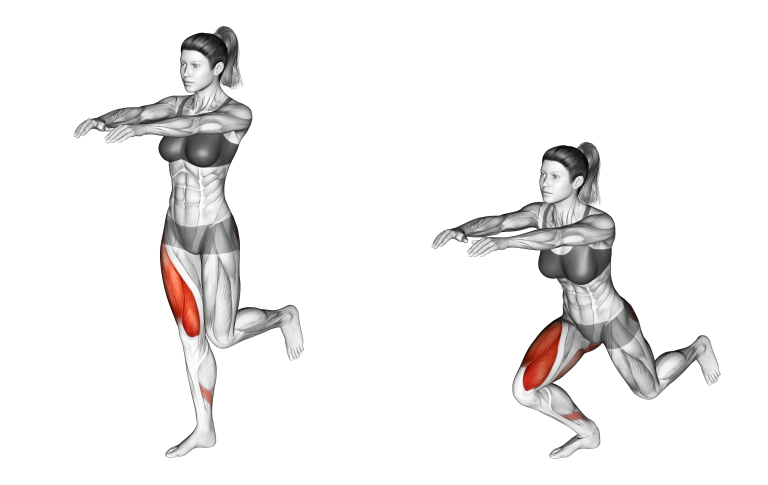
A skater squat is a single leg squat where the working leg lowers your body while the opposite knee moves behind you and lightly taps a pad, block, or floor.
Unlike a reverse lunge, the back leg should not step down and push you back up, which makes the exercise more demanding for balance, hip stability, and front leg strength.
Skater squats sit between split squats and pistol squats in difficulty. They are often easier to learn than pistol squats because the non working leg moves behind the body instead of staying straight in front.
Proper Skater Squat Form and Technique
How to Do Skater Squats
Proper skater squat form keeps the front knee aligned, the heel grounded, and the back leg passive. Use a pad, yoga block, or folded mat behind you so your back knee has a clear target.
- Step 1: Set your base: Stand on one foot with your heel flat and your hips facing forward. Place a pad behind you where your back knee can lightly tap.
- Step 2: Brace and reach: Tighten your core and reach your arms forward as a counterbalance. Keep your ribs down so your lower back does not overarch.
- Step 3: Lower with control: Push your hips back and bend your working knee as you descend. Keep the knee tracking over the middle toes instead of letting it collapse inward.
- Step 4: Tap lightly: Let the back knee touch the pad with minimal pressure. Do not use the back leg to push yourself upward.
- Step 5: Drive back up: Press through the middle of the working foot and squeeze the glute at the top. Start with 5 to 8 controlled reps per side.
Skater Squat Common Mistakes to Avoid
Most skater squat mistakes happen when the lifter uses too much range of motion too soon. Keep the movement slow, controlled, and pain free before adding depth or weight.
- Going too deep too soon: Use a higher pad if you lose balance or feel knee discomfort. Lower the pad gradually as control improves.
- Letting the knee cave inward: Keep your front knee in line with your middle toes. Think about gently pushing the knee outward as you lower.
- Using the back leg to push: The back knee should only tap. If the back foot helps you stand, raise the pad or slow the movement down.
- Lifting the front heel: Keep your heel grounded and your weight over the midfoot. A lifted heel usually means you need more ankle control or less depth.
- Falling forward: Keep your chest controlled and your core tight. Reaching the arms forward can help you balance without collapsing.
- Moving too fast: Lower for 2 to 3 seconds and stand with control. Bouncing at the bottom reduces stability and can irritate the knee.
Skater Squats Muscles Worked
Skater squats mainly work the quadriceps and glutes, but they also challenge the hamstrings, calves, hip stabilizers, and core. Single leg squat research shows that changing stance and non stance leg position can alter muscle activation and movement demands.[1]
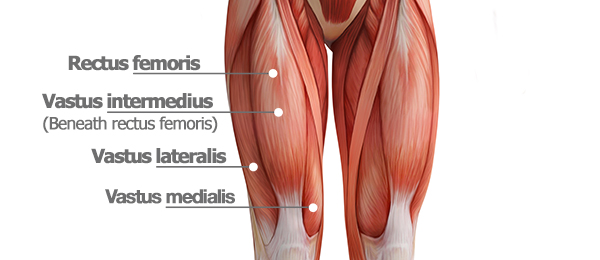
Quadriceps
The quadriceps are the main muscle group responsible for controlling the lowering phase and driving you back to standing. Unilateral squat research shows meaningful lower body muscle activation, which makes single leg squat patterns useful for strength and training design.[2]
Glutes
The gluteus maximus helps extend the hip as you stand, while the gluteus medius helps keep the pelvis level. Strong glute control is one reason skater squats are useful for athletes and home gym lifters who need better side to side stability.
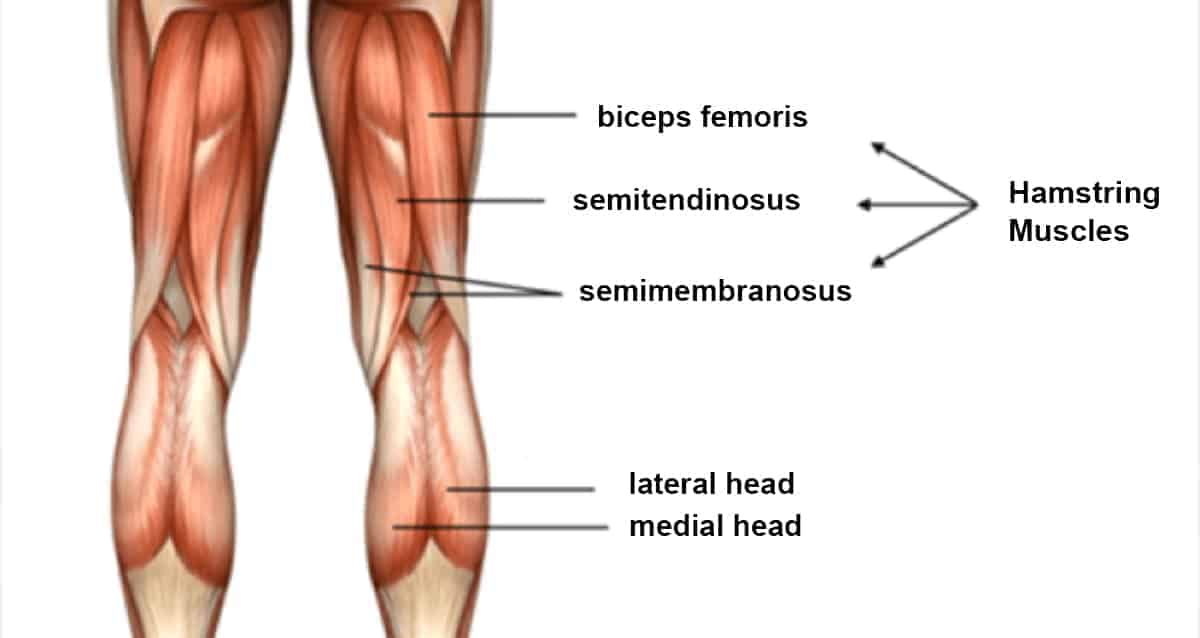
Hamstrings
The hamstrings assist hip extension and help stabilize the knee during the movement. They do not replace the quads in this exercise, but they help keep the lower body controlled.
Hip Stabilizers
The hip stabilizers keep your pelvis from dropping and your knee from drifting inward. This makes skater squats valuable for training control during running, cutting, stepping, and other single leg tasks.
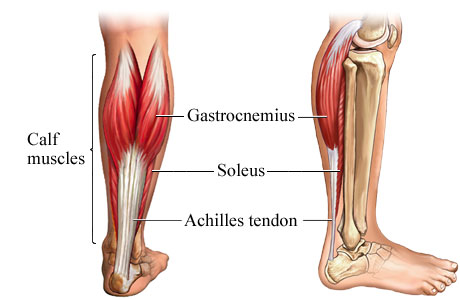
Calves
The calves help stabilize your ankle and keep pressure through the midfoot. Keeping the heel down makes the squat more controlled and reduces unwanted shifting into the toes.
Core
The core resists tipping and rotation while you stand on one leg. This makes skater squats a lower body exercise that also trains trunk control under real movement pressure.
Skater Squats Benefits
Skater squats are useful because they train strength, balance, and joint control at the same time. A meta analysis found that unilateral training can support performance qualities such as unilateral strength, jumping ability, change of direction, and balance depending on the training goal.[3]
- Builds single leg strength: Each side must work independently, which helps expose and train strength differences between legs.
- Improves balance and coordination: The working foot, ankle, knee, hip, and core must coordinate through the full rep.
- Strengthens knee tracking: Controlled reps teach the knee to follow the toes instead of collapsing inward.
- Works well in small home gyms: You can train skater squats with bodyweight, a pad, or light dumbbells.
- Supports athletic movement: Single leg control carries over well to running, jumping, deceleration, and side to side movement.
If you want a broader lower body strength plan, pair skater squats with the best quad exercises for strength and muscle growth to cover both single leg control and heavier strength work.
How to Program Skater Squats in Your Workout
Skater squats work best as an accessory strength exercise after your main squat, leg press, or hinge movement. Start with quality reps before chasing fatigue.
For Beginners
Do 2 to 3 sets of 5 to 8 reps per leg using a higher pad. Hold a rack, wall, or dowel for light support if balance is the limiting factor.
For Intermediate Lifters
Do 3 to 4 sets of 8 to 10 reps per leg with a lower pad or light dumbbells. You can also slow the lowering phase to increase time under tension.
Weekly Frequency
Train skater squats 1 to 3 times per week based on recovery and total lower body volume. Reduce volume if your knees, hips, or ankles feel irritated.
For a more equipment based lower body routine, combine skater squats with Smith machine leg workouts or explore the RitFit Smith machine collection for guided bar path training at home.
Skater Squats Variations
Skater squat variations let you adjust difficulty through range of motion, load, tempo, and stability. Choose the version that lets you keep clean knee alignment and controlled balance.
Single Leg Skater Squats
Single leg skater squats remove most balance assistance and require the working leg to control the full rep. Start with a low pad only if you can keep the heel down and the knee aligned.
Dumbbell Skater Squats
Dumbbell skater squats increase loading for the quads, glutes, and core. Hold one dumbbell in a goblet position or use two light dumbbells at your sides.
If you plan to load this movement, start with moderate weights from the RitFit dumbbells collection so balance and form stay under control.
Banded Skater Squats
Banded skater squats add a knee tracking challenge by asking the hip to resist inward collapse. Use a light band above the knees and keep the working knee aligned with the middle toes.
Looking for squat variations that complement single leg work? Read 6 Best Smith Machine Squat Exercises for stronger, safer leg gains.
Skater Squat Progression Plan
The best way to progress skater squats is to master balance first, then add depth, tempo, and load. Do not make the exercise harder until the working knee stays aligned and the back leg stays passive.
- Level 1, Supported skater squat: Hold a wall, rack, or dowel lightly. Use support only for balance, not to pull yourself up.
- Level 2, High pad skater squat: Tap a high pad behind you. This shortens the range of motion and builds confidence.
- Level 3, Low pad skater squat: Lower the pad as control improves. Keep the descent slow and the heel planted.
- Level 4, Tempo skater squat: Lower for 3 seconds and pause briefly at the bottom. This increases control without needing more weight.
- Level 5, Loaded skater squat: Add a dumbbell or weight vest only after bodyweight reps are smooth. Keep the load light enough to avoid twisting.
Skater Squats Alternatives
Skater squat alternatives are useful when balance, ankle mobility, or knee comfort limits your range of motion. Choose the movement that lets you train the same lower body goal with better control.
The Bulgarian Split Squat
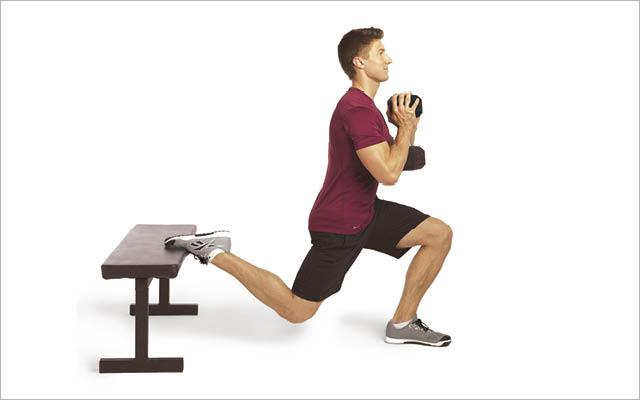
The Bulgarian split squat is a strong alternative because it trains one leg at a time while giving you more stability than a skater squat. Place the rear foot on a stable bench and lower under control.
A sturdy adjustable bench helps make Bulgarian split squats and step ups easier to set up. See the RitFit weight benches collection or the RitFit GATOR 1600LB Adjustable Weight Bench for home gym lower body training support.
The Reverse Lunge
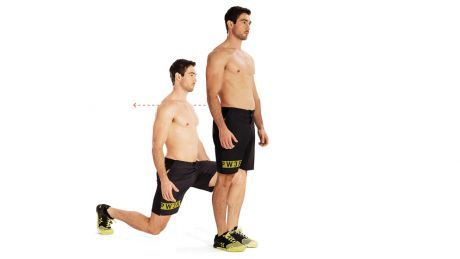
The reverse lunge is easier to balance than a skater squat because the back foot touches the floor. It is a good option when you want unilateral leg training without as much stability demand.
The Step Up
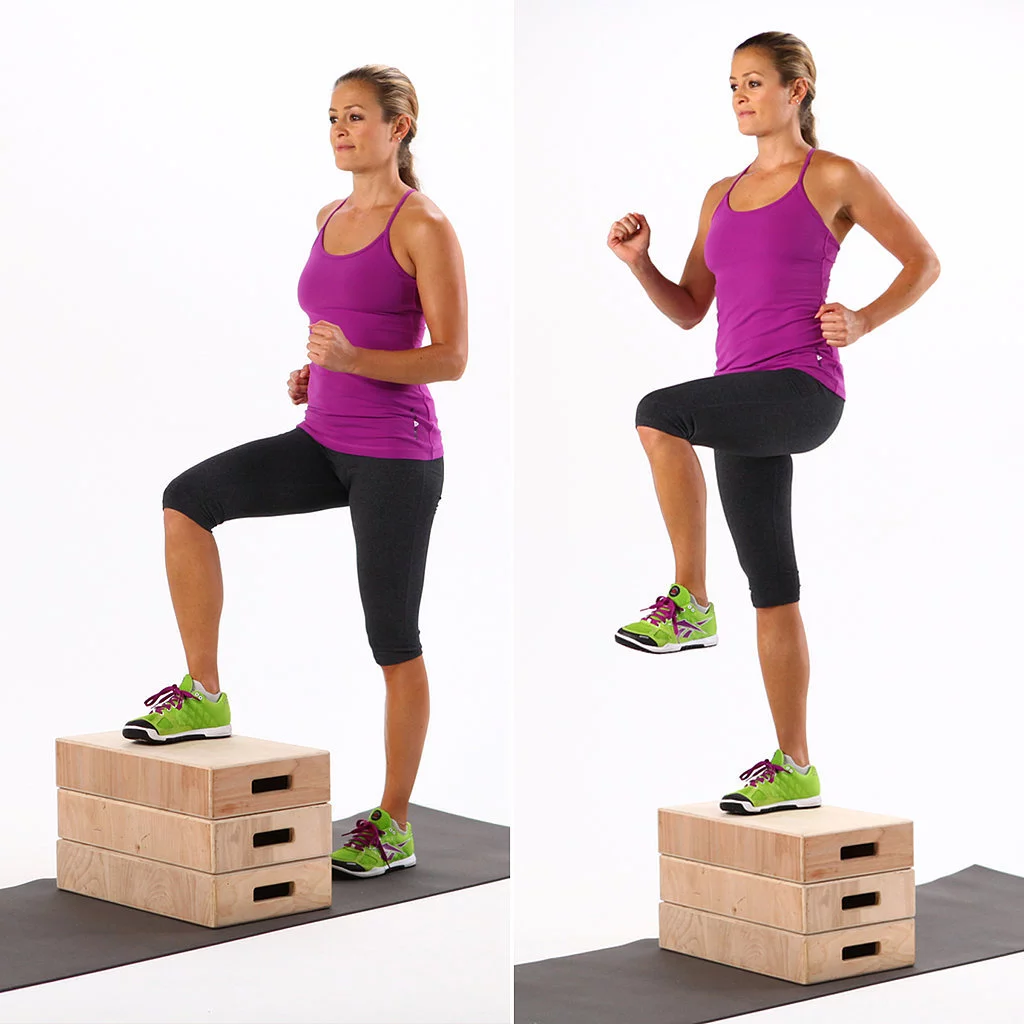
The step up trains quads, glutes, balance, and hip control with a clearer target than a skater squat. Choose a box or bench height that lets the lead foot stay flat and the knee track cleanly.
The Smith Machine Front Squat
The Smith machine front squat is useful when you want a more stable squat pattern that still emphasizes the quads. Beginners can study how to do a Smith machine front squat before adding heavier squat variations.
The Smith Machine Squat
The Smith machine squat can support heavier lower body training when balance is not the main goal. For setup, form, benefits, and muscles worked, read how to do Smith machine squats with proper form.
Skater Squat vs Pistol Squat
Skater squats are usually easier to learn than pistol squats because the non working leg moves behind the body instead of staying straight forward. This reduces the ankle mobility and hip flexion demand for many lifters.
Pistol squats require more mobility, balance, and body position control. Skater squats are often more practical for building strength because they are easier to modify with pads, support, or dumbbells.
Who Should Avoid Skater Squats?
You should avoid or modify skater squats if they cause sharp knee pain, hip pain, ankle pain, dizziness, or loss of balance that you cannot control. Raise the pad, hold a support, or switch to reverse lunges until the movement feels stable and pain free.
If you are returning from injury, use skater squats only after a qualified clinician clears single leg loading. Research shows that non stance leg position can change single leg squat mechanics, so the exact variation matters when the goal is rehabilitation or movement retraining.[4]
Skater Squat FAQs
Are skater squats good for beginners?
Yes. Skater squats can work for beginners when the range of motion is reduced and balance support is available. Start with a high pad, slow reps, and light assistance from a wall or rack, then progress only when your knee stays aligned and your heel stays planted.
What muscles do skater squats work?
Skater squats mainly work the quadriceps and glutes. They also train the hamstrings, calves, hip stabilizers, and core because your body must control balance on one leg while lowering and standing without using the back leg to push.
How often should I do skater squats?
Do skater squats 1 to 3 times per week depending on your recovery and lower body training volume. Most lifters should start with 2 or 3 sets per leg, then add reps, depth, or load only after the movement feels stable.
Can skater squats replace squats?
No. Skater squats can support squat strength, but they do not fully replace heavier bilateral squat patterns. Use them as an accessory exercise for single leg control, then keep squats, leg press, or Smith machine squats for heavier lower body loading.
Why are skater squats so hard?
Skater squats are hard because they combine strength, balance, hip stability, ankle control, and core tension in one movement. The front leg handles most of the work, while the back leg offers little help, so small form errors feel obvious quickly.
How can I make skater squats easier?
Make skater squats easier by using a higher pad, holding light support, and reducing depth. You can also slow the movement, practice reverse lunges first, or use bodyweight only until your front knee tracks cleanly over your toes.
Should skater squats hurt my knees?
No. Skater squats should not create sharp knee pain. Mild muscle effort is normal, but joint pain means you should reduce depth, raise the pad, slow down, check knee alignment, or use a more stable alternative until the movement feels comfortable.
Which skater squat alternative is best for home gyms?
The best skater squat alternative for many home gyms is the Bulgarian split squat or step up. Both exercises train one leg at a time, require limited space, and become easier to progress when you use a stable bench and light dumbbells.
Conclusion
Skater squats are a smart single leg exercise for building stronger quads, glutes, hips, calves, and core control in a home gym or bodyweight routine.
Start with a high pad, move slowly, keep the back leg passive, and progress only when each rep stays stable, aligned, and pain free.
Disclaimer: This article is for general educational purposes only and is not medical advice. If you have knee, hip, ankle, back pain, recent injury, surgery, numbness, weakness, dizziness, or balance issues, consult a qualified clinician before trying skater squats. Stop any exercise that causes sharp pain.
References
- Khuu A Loverro KL Lewis CL. Muscle activation during single legged squat is affected by position of the nonstance limb. J Athl Train. 2022;57(2):170-176. doi:10.4085/1062-6050-0019.21
- Eliassen W Saeterbakken AH van den Tillaar R. Comparison of bilateral and unilateral squat exercises on barbell kinematics and muscle activation. Int J Sports Phys Ther. 2018;13(5):871-881.
- Zhang W Chen X Xu K et al. Effect of unilateral training and bilateral training on physical performance: a meta analysis. Front Physiol. 2023;14:1128250. doi:10.3389/fphys.2023.1128250
- van den Tillaar R Larsen S. Kinematic and EMG comparison between variations of unilateral squats under different stabilities. Sports Med Int Open. 2020;4(2):E59-E66. doi:10.1055/a-1195-1039