Table of Contents
Important disclaimer: This article is for general educational purposes only and is not medical advice. If you have shoulder, neck, back, elbow, or wrist pain, a recent injury or surgery, numbness or tingling, unexplained weakness, or dizziness, consult a qualified clinician before starting. Stop any exercise that causes sharp pain.
Smith Machine Bulgarian Split Squat
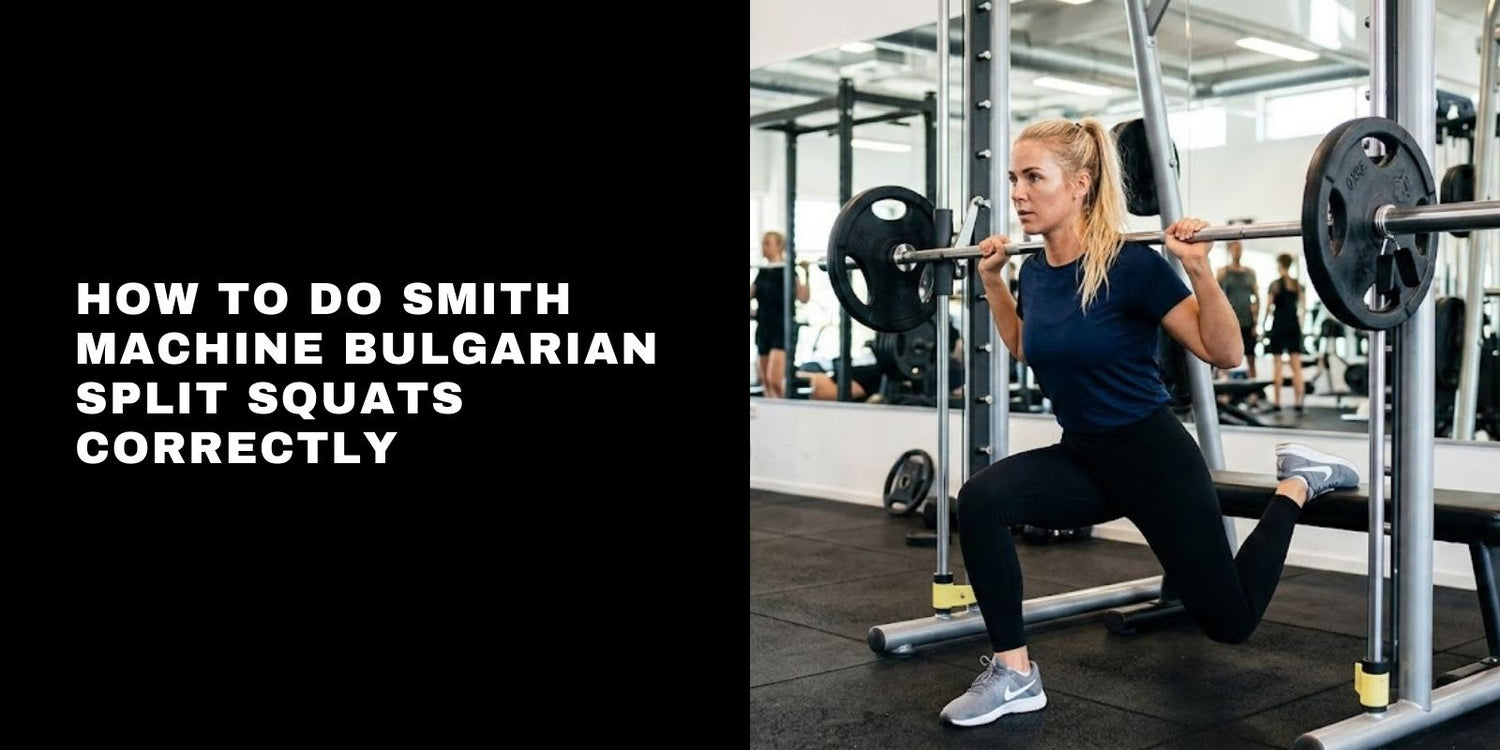
The Smith machine Bulgarian split squat is often described as a love hate exercise. It is challenging, but it is also one of the most effective movements for building unilateral leg strength and size. Unlike the free weight version, the Smith machine uses a fixed bar path. That stability helps you focus on driving the weight and creating tension in the target muscles.
This guide covers the correct setup, step by step technique, common mistakes, and how to adjust the exercise to emphasize either your glutes or quadriceps.
Key Takeaways
- Machine stability maximizes output: The Smith machine reduces balance demands so you can push harder while keeping the rep clean and controlled.
- Stance dictates muscle focus: A shorter stride with a more upright torso biases the quadriceps. A longer stride with a small hip hinge shifts more work to the glutes.
- Active foot mechanics improve control: Use a tripod foot by pressing the big toe, little toe, and heel evenly to stabilize the arch and help the knee track safely.
- Strategic programming keeps form strong: Train around RPE 7 to 8, leaving 2 to 3 reps in reserve. Pushing to sloppy failure increases the chance of compensations.
- The back leg is a kickstand: Keep most of the load on the front leg. If the rear hip flexor burns first, you are likely pushing off the bench.
Muscles Worked and Benefits
Main muscles worked
- Quadriceps: Primary movers for knee extension
- Glutes: Drive hip extension, especially out of the bottom
- Hamstrings: Assist hip extension and stabilize the knee
- Calves: Support ankle stability and balance
- Core: Helps maintain posture and protect the lower back
Benefits of Smith machine split squats
Using a Smith machine can offer advantages compared with dumbbells or a free bar.
- Increased stability: Less lateral wobble so you can focus on driving the working leg
- Better mind muscle connection: Balance demands are lower, which can improve your ability to feel the target muscles
- Imbalance correction: Unilateral work forces each leg to contribute without the stronger side taking over
- Safer re rack: It is usually easier to rack the bar if a rep stalls
Equipment and Setup
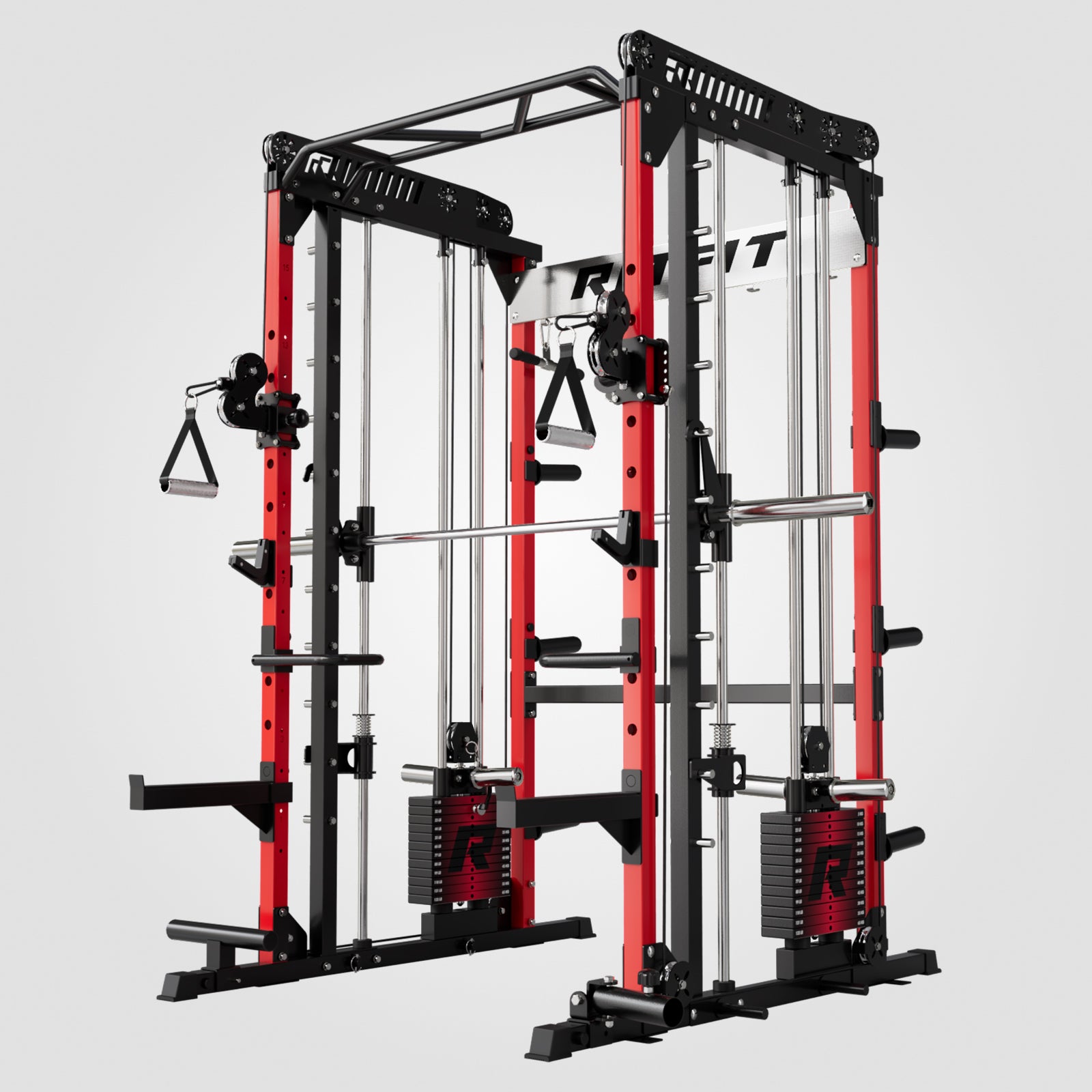
You need a Smith machine and a sturdy bench, box, or step.
Smith machine setup
- Set the bar around mid chest height so you can unrack without rising onto your toes.
- Center yourself under the bar and keep the bar level across your upper back.
- If your machine has safety stops, set them just below your lowest comfortable depth.
Bench or foot support setup
- Place a bench or step behind you.
- Distance: Start around one large stride length behind the bar, then fine tune based on comfort and your target muscle.
How to Do Smith Machine Bulgarian Split Squats
Step 1: Get into the Starting Position
- Step under the bar and rest it across your upper traps, similar to a high bar back squat position.
- Grip the bar slightly wider than shoulder width.
- Stand tall, brace your core, then rotate the bar to unrack it.
Step 2: Set Your Foot Positioning
- Plant your front foot under the bar or slightly forward with the heel flat.
- Create a "tripod foot" by pressing the big toe, little toe, and heel evenly into the floor.
- Place the top of your rear foot on the bench with laces down, or use the ball of the foot if that feels better.
- Square your hips and keep your torso tall before you descend.
Step 3: Perform the Descent
- Inhale and brace your midsection.
- Lower straight down by bending the front knee while the back knee travels toward the floor.
- Keep your chest up and spine neutral.
- Descend until the front thigh is about parallel to the ground or your back knee is close to the floor (without slamming it).
Step 4: Execute the Ascent
- Drive up through the heel and mid-foot of your front leg.
- Bring your hips and shoulders up together at the same time.
- Exhale as you approach the top of the movement.
- Keep a slight bend in your knee at the top to maintain muscle tension.
Step 5: Complete Reps and Switch Legs
- Complete all of your prescribed reps on one side before switching.
- Re-rack the bar safely between sides if you need to reset your stance.
Technique Tips
-
Foot placement matters:
- For quads: Use a shorter stance and stay more upright so the knee can travel forward comfortably.
- For glutes: Use a longer stance and add a small hip hinge while keeping the back neutral.
- Knee tracking: Keep the knee in line with the toes and avoid collapsing inward. Tripod foot pressure helps.
- Kickstand concept: Keep most of your weight on the front leg. The rear leg is mainly for balance.
- Tempo: Control the lowering phase and avoid dropping fast. A slow lower with a strong drive up works well.
Common Mistakes to Avoid
- Using the back leg too much: Rear leg fatigue often means you are pushing off the bench. Kinematic studies reveal that to prevent severe hip flexor strain, ~85% of your body weight must remain on the front leg; the back leg is purely a "kickstand".
- Feet in a straight line: Keep hip width alignment instead of a tightrope stance.
- Rounding the back: Keep the chest proud and ribcage stacked over the hips.
- Slamming the knee: Control the descent so the back knee does not crash into the floor.
- Short range reps: Use the deepest range you can control without pain and without losing posture.
Programming and Progression
Sets reps and loading
- Beginner: 2 to 3 sets of 8 to 12 reps per leg with light load
- Intermediate: 3 to 4 sets of 8 to 15 reps per leg for hypertrophy
- Advanced: 4 to 5 sets of 6 to 10 reps per leg with heavier loads if form stays clean
When to do them
This movement fits well on lower body days after heavier bilateral lifts such as squats or deadlifts. It can also be the main lift if unilateral strength is your priority.
Progression methods
- Add a small amount of load over time.
- Add reps before adding weight.
- Slow the lowering phase to increase time under tension.
Because this is a demanding unilateral lift, aim around RPE 7 to 8, leaving 2 to 3 reps in reserve to avoid compensations.
Variations and Modifications
Stance and emphasis variations
Changing stance length and torso angle shifts emphasis. A more vertical shin can favor the glutes. Allowing more knee travel can bias the quads. Choose the setup that matches your goal and feels best on your joints.
Grip and bar position
Most people prefer a high bar position for comfort. If shoulder mobility is limited, use a slightly wider grip or adjust bar placement so you can maintain a stable upper back.
Joint friendly options
If the rear hip flexor feels overly stretched or painful, use a lower box or step. Reducing rear leg height often makes the position more comfortable without reducing front leg stimulus.
Safety Considerations
- Warm up: Use dynamic work for hips, knees, and ankles before loading the bar.
- Listen to joints: Stop if you feel sharp pain and adjust stance or load.
- Check safeties: Make sure hooks and stops are set correctly before heavy sets.
Frequently Asked Questions
How to fix rear leg pain during the Smith machine split squat?
You must keep eighty five percent of your weight on the front leg. The rear leg acts only as a kickstand for balance. Pushing off the bench causes severe hip flexor strain and reduces target muscle activation. Lowering the step height also relieves excessive stretch and improves overall comfort.
The best way to adjust your stance for glute or quad focus?
A shorter stride with an upright torso biases the quadriceps. A longer stride combined with a slight hip hinge shifts the tension directly to the glutes. You should choose the setup that matches your specific training goal. Both variations build unilateral leg strength effectively while keeping the joints safe.
Methods to prevent the front knee from collapsing inward?
Pressing your big toe and little toe and heel evenly into the floor creates a stable tripod foot. This active foot mechanic stabilizes the arch and ensures the knee tracks safely in line with your toes. Using the fixed bar path of the Smith machine further reduces lateral wobble effectively.
The ideal rep range and intensity for this exercise?
You should train around an exertion level of seven to eight and leave two to three repetitions in reserve. Pushing this demanding lift to absolute sloppy failure significantly increases the chance of harmful form compensations. Beginners benefit most from lighter loads while doing eight to twelve reps per leg.
Reasons to choose the Smith machine over free weights?
The fixed bar path provides increased stability and reduces balance demands during the lift. This allows you to push harder and focus entirely on driving the working leg to maximize muscle tension. It also enables a safer racking process if a repetition stalls near the bottom of the movement.
Summary
The Smith machine Bulgarian split squat is a top tier exercise for building strong, muscular legs. The fixed bar path reduces balance demands so you can focus on loading the front leg and creating tension in the quads and glutes. Use stance length to bias your target muscle, keep most of the load on the front foot, and control the descent. Start light, master the pattern, then progress gradually.
References
E-Posters. Global Spine J. 2022;12(3_suppl):205S-355S. doi:10.1177/21925682221096075