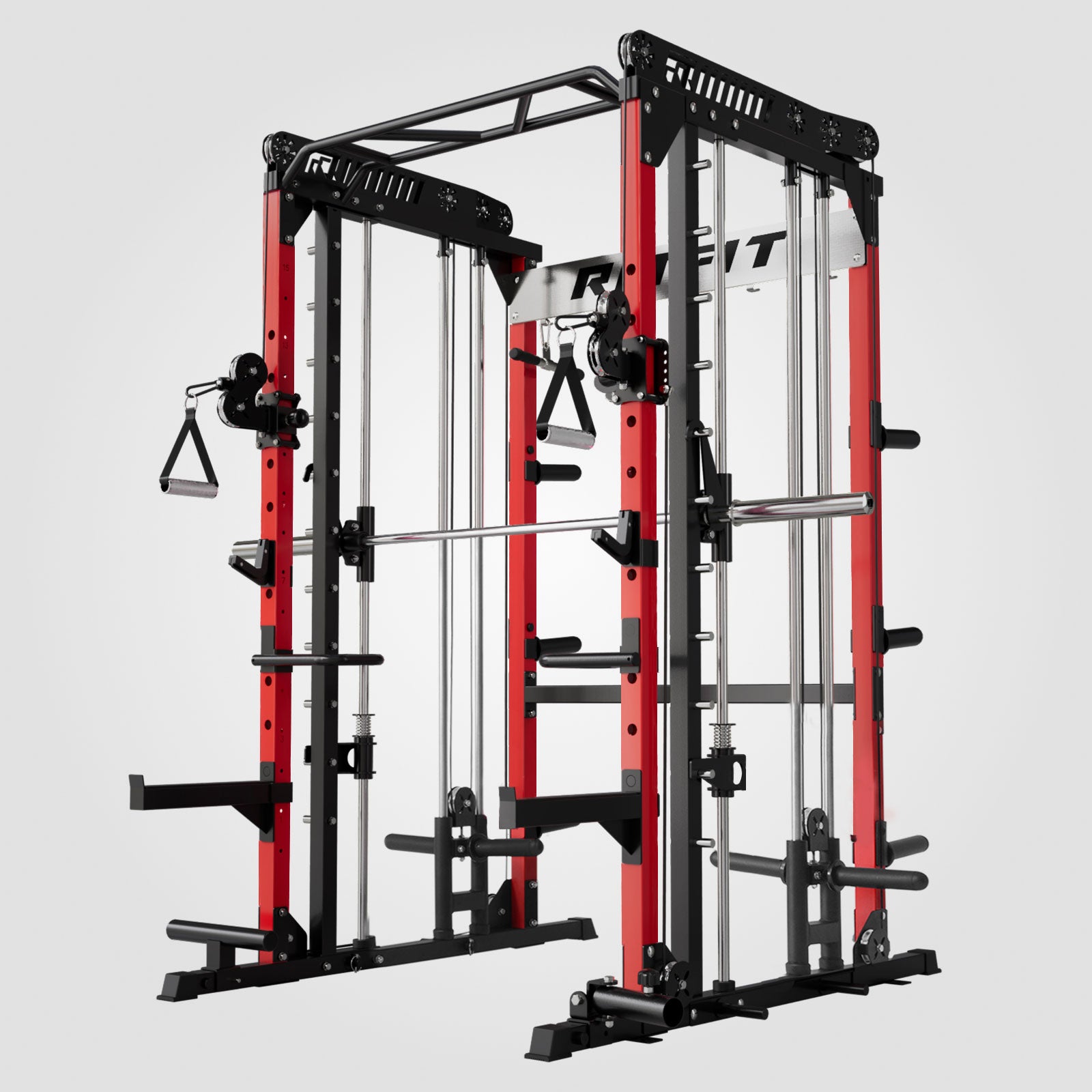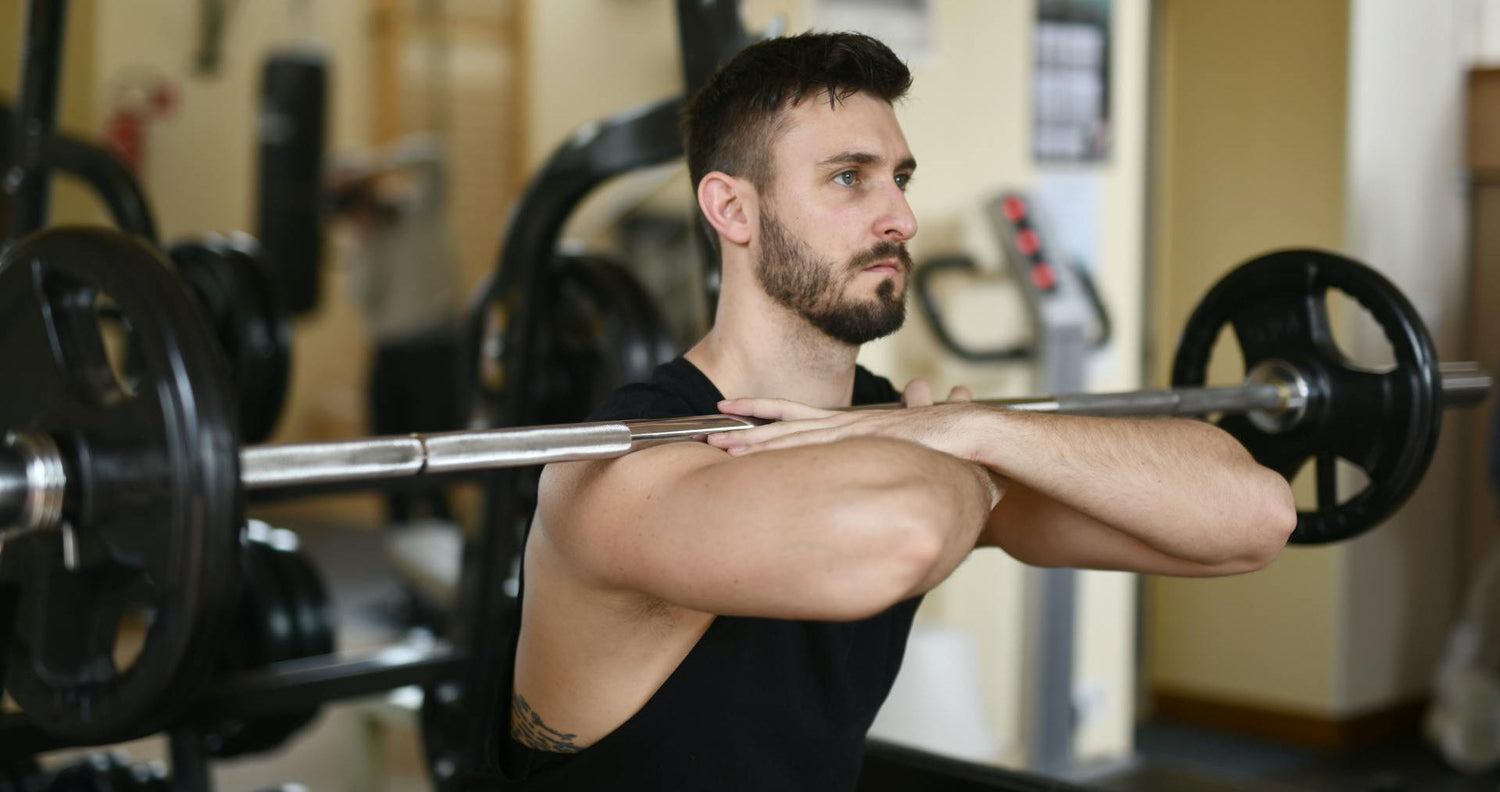
The Smith machine front squat is best for lifters who want a more controlled way to train upright squat mechanics and push quad growth at home. The fixed bar path can make setup, repeatability, and solo practice easier for many lifters than a free barbell front squat.
This guide explains form, setup, muscles worked, beginner programming, mistakes, tips, variations, and FAQs, and it also points readers to the Smith machine collection and the RitFit M1 vs M2 Smith machine guide for deeper equipment research.
Key Takeaways
- The Smith machine front squat helps many lifters train a more upright, quad focused squat pattern with repeatable bar tracking.
- Set bar height and safeties first, then test your front rack and rerack path with an empty bar before adding load.
- Place your feet only slightly forward, keep the bar over midfoot, and let your knees travel naturally while your heels stay planted.
- High elbows, a braced trunk, and a controlled descent matter more than chasing heavier plates too early.
- Use the movement one or two times per week, and pair it with hip dominant work for more balanced lower body development.
The Benefits of the Smith Machine Front Squat
The Smith machine front squat is a strong option for lifters who want cleaner bar control, more repeatable reps, and hard quad work without as much balance demand as a free bar. It does not remove the need for good technique, but it can make self training and home gym setup simpler.
- More repeatable bar path: The fixed rails help many lifters reproduce stance, depth, and bar position more consistently from rep to rep. That consistency can make technique practice and progressive overload easier to track.
- Strong quad emphasis: A front squat usually encourages a more upright torso and greater knee demand than a back squat, which is why many lifters feel more work through the quads and upper back during the movement.[2]
- Useful for solo home training: Built in safeties and a guided track can make unracking, reracking, and technical practice less intimidating when you train alone. This is one reason the movement fits well into many home gym plans.
- Full squat pattern, not just machine pressing: Smith squats still require you to brace, descend, and stand through a true squat pattern, and research has shown strong knee extensor demand in Smith squat based work.[3]
What Muscles Does the Smith Machine Front Squat Work
The Smith machine front squat is mainly a quad dominant squat, but it also relies on trunk stiffness, upper back position, and hip extension to finish each rep. Research on front squat related muscle activation supports strong contributions from the quadriceps and trunk musculature.[1]
Primary Muscles
The main job of the lift is to extend the knees while keeping the torso upright enough to hold the front rack. That is why the quads do most of the visible work, while the trunk and upper back keep the position from collapsing.
- Quadriceps: The vasti and rectus femoris are the main drivers because the movement demands strong knee extension out of the bottom.
- Upper back: The thoracic extensors and related postural muscles help keep the chest up and the elbows from dropping.
- Abdominal wall: The trunk braces hard to keep the rib cage stacked over the pelvis and protect spinal position under load.
Secondary Muscles
The movement is still a full lower body squat, so hip extensors and lower leg stabilizers help you stay efficient and finish the rep cleanly. They usually contribute less than in a more hip dominant back squat pattern, but they still matter.
- Gluteus maximus: Helps complete hip extension as you stand.
- Hamstrings: Support joint control and contribute more as stabilizers than prime movers in this variation.
- Calves and foot stabilizers: Help maintain pressure through the full foot and keep the squat path steady.
| Muscle Group | Primary Function | Practical Role in the Lift |
|---|---|---|
| Quadriceps | Knee extension | Drive the squat out of the bottom and through the sticking point |
| Upper back | Postural support | Keeps the chest up and the front rack from collapsing |
| Abdominals and trunk | Bracing | Maintain spinal position and improve force transfer |
| Gluteus maximus | Hip extension | Help finish the rep as you stand tall |
| Hamstrings | Joint support | Assist control and stability through the squat path |
How to Do a Smith Machine Front Squat
The best Smith machine front squat starts with the bar over your midfoot, a secure front rack, and a descent you can control all the way down. Start light, set the safeties before you unrack, and use the direction of the machine that gives you the smoothest squat path and rerack.
Setup and Stance
Bar height, safety height, foot pressure, and elbow position matter before the first rep ever starts. If you are still deciding which home setup fits your space and training style, compare frame layouts and cable options in the RitFit M1 vs M2 Smith machine guide.
- Bar height: Set the bar around upper chest height so you can step in, lift, and unrack without tiptoeing or half squatting.
- Safeties: Set the safeties just below your intended bottom position so you can bail a bad rep without getting pinned.
- Front rack: Rest the bar on the front delts and clavicle shelf, then drive the elbows high enough to keep the chest from folding.
- Feet: Use a shoulder width or slightly narrower stance, then shift your feet only a little forward until the bar tracks cleanly over midfoot.
- Angled Smith machines: On many angled machines, facing outward lets the bar drift slightly back as you stand, which often feels more natural for a squat path.
Step by Step Form
Every rep should look nearly identical, because a guided bar only helps if your body position stays organized under it. Move slowly enough to own the bottom, then stand with pressure through the whole foot rather than bouncing or twisting.
- Step 1: Unrack and brace: Get under the bar, build your front rack, stand tall, then rotate the hooks free and brace your trunk before moving.
- Step 2: Set your base: Lock in your foot pressure through heel, big toe, and little toe, then keep your elbows high and ribs stacked.
- Step 3: Descend with control: Bend knees and hips together, sit straight down between your feet, and keep the bar moving over midfoot.
- Step 4: Hit your best depth: Lower as far as you can without losing trunk position, heel contact, or front rack control.
- Step 5: Stand and rerack: Drive the floor away, keep the elbows high as long as possible, then rerack only after you fully finish the rep.
If you want more lower body options once your front squat feels solid, explore these best Smith machine squat exercises. They pair well with front squats when you want more quad volume without repeating the exact same pattern all session.
Beginners' Smith Machine Front Squat Routine
A beginner routine should prioritize clean reps, repeatable setup, and gradual loading, not early grinding. The goal is to leave each session feeling more coordinated, not more confused.
Beginner Foundation
Use this version if you are still learning the front rack, depth, and bar path. If you are unsure whether guided bar training suits your current level, read is a Smith machine good for beginners for a broader setup overview.
- Warm up: Do 5 to 10 minutes of light cardio, then 1 or 2 easy sets of bodyweight squats and hip hinges.
- Main work: Perform 3 sets of 8 to 10 reps with a light to moderate load that keeps your elbows and torso under control.
- Rest: Rest 60 to 90 seconds between sets, and add load only when all reps stay smooth and even.
- Frequency: Train the movement 1 or 2 times per week on nonconsecutive days.
Muscle Gain Option
Use this version after your setup is consistent and your front rack no longer feels fragile. The focus is higher tension and slightly longer sets without letting fatigue destroy position.
- Main work: Perform 4 sets of 6 to 10 reps.
- Tempo: Lower for 2 to 3 seconds, pause briefly, then stand with intent.
- Rest: Rest 90 to 120 seconds between sets.
- Accessory pairing: Pair the lift with Smith machine Romanian deadlifts and Smith machine hip thrusts for more complete lower body development.
Strength Option
Use this version if your main goal is heavier, cleaner low rep work. The key is to keep every rep sharp enough that the bar path still looks the same from first rep to last.
- Main work: Perform 4 or 5 sets of 3 to 5 reps.
- Rest: Rest 2 to 3 minutes between sets.
- Load selection: Stop the set if elbows drop, heels lift, or you lose your rack position before the planned reps are complete.
- Programming note: Strength gains come from consistent quality, not from surviving ugly reps.
5 Common Smith Machine Front Squat Mistakes
Most Smith machine front squat mistakes come from trying to force the lift into a position your rack, stance, or mobility cannot support yet. The fastest fix is usually a better setup, not more load.
1. Letting the Elbows Drop
Low elbows pull the chest down and make the bar roll forward on the shoulders. This turns a clean front squat into a fight to save the rack position.
- Fix: Use a lighter load, raise the elbows before every rep, and choose a rack style your wrists can actually tolerate.
2. Setting the Feet Too Far Forward
Too much forward foot shift can turn the squat into an awkward sit back and make the lift feel disconnected from a true front squat pattern. It also makes depth and balance harder to repeat.
- Fix: Slide the feet only enough to keep the bar over midfoot and the heels planted.
3. Crashing Into the Bottom
Diving too fast into the hole makes it harder to keep tension, depth, and joint position organized. It also usually makes the ascent slower and messier, not stronger.
- Fix: Control the lowering phase for about 2 seconds and pause briefly if you need to learn the bottom position.
4. Freezing the Knees Back
Trying to keep the knees artificially behind the toes often changes the squat into a less natural pattern and can shift unnecessary compensation elsewhere. Restricting forward knee travel on purpose is usually not the smartest fix for squat discomfort.[4]
- Fix: Let the knees travel naturally while the whole foot stays rooted and the trunk remains braced.
5. Using More Weight Than the Rack Position Can Hold
Many failed front squats are really failed upper back and rack position reps, not failed leg reps. When the rack breaks first, load has already exceeded what you can organize safely.
- Fix: End the set one rep early if bar position starts drifting, even if the legs still feel strong enough for more.
Tips for a Better Smith Machine Front Squat
A better Smith machine front squat comes from matching your stance and rack to your structure, not from forcing a textbook shape that your body cannot own. Small changes in heel lift, toe angle, and trunk control can change the lift a lot.[5]
- Use the best rack you can keep: A full clean style rack is not mandatory if a fingertip rack or strap assisted rack keeps the elbows higher and the wrists calmer.
- Test a small heel lift if needed: A modest wedge can help lifters with limited ankle mobility stay more upright and reach better depth without losing the foot.
- Brace before you descend: Inhale into the trunk, lock the rib cage over the pelvis, and keep that pressure until you are through the hardest part of the ascent.
- Keep pressure through the whole foot: Heels matter, but so do the forefoot contact points that stop the knees and hips from wobbling.
- Film your top set: The fastest way to catch elbow drop, heel lift, and excessive forward slide is to watch a side view of your hardest set.
What Makes the Back and Front Squat Different
The front squat usually keeps the torso more upright and shifts more visible demand toward the quads and upper back, while the back squat usually allows more total loading and more hip moment. That difference is why both lifts can belong in a good program, even when one is your main squat.[2]
- Front squat focus: Better for lifters who want a more upright pattern, strong quad stimulus, and less room to hide trunk position errors.
- Back squat focus: Better for lifters whose goals center on moving the heaviest load possible with a more hip involved squat pattern.
- Programming logic: If you want bigger quads and cleaner upright squatting, bias more front squat work. If you want more total loading and more posterior chain contribution, bias more back squat work.
- Equipment context: If you are deciding whether guided rails or a free setup fits your home gym better, read Smith machine vs power rack for a wider equipment comparison.
Smith Machine Front Squat Variations
Variations help you solve specific problems like limited ankle mobility, weak bottom position control, or a need for more quad emphasis. Use them to improve the main lift, not to avoid learning the main lift.
- Heels elevated Smith front squat: Best for lifters who need a more upright torso and easier access to depth.
- Paused Smith front squat: Best for building bottom control and reducing the habit of bouncing out of the hole.
- Tempo Smith front squat: Best for lifters who need cleaner positioning, longer time under tension, and lighter load with more challenge.
- Narrow stance Smith front squat: Best for lifters who want a little more quad bias, as long as knee tracking still looks smooth.
Smith Machine Front Squat FAQ
Which way should you face for a Smith machine front squat?
Face the direction that lets the bar stay closest to your midfoot and front rack path. On many angled machines, that means facing outward so the bar drifts slightly back as you stand, but your machine design, comfort, and smooth rerack position should decide the final setup.
Is the Smith machine front squat good for beginners?
Yes. The Smith machine front squat can be beginner friendly because the fixed path and built in safeties simplify setup and solo practice. It still requires bracing, elbow position, and controlled depth, so start light, learn the rack position, and stop each set before your torso collapses.
Can a Smith machine front squat replace back squats?
Yes. The Smith machine front squat can serve as your main squat pattern if your goal is upright quad focused lower body work and you also train hip dominant movements. It does not perfectly replace every benefit of a free bar back squat, but it can build strong legs for many home lifters.
How far forward should your feet be in a Smith machine front squat?
Set your feet only far enough forward to keep the bar over your midfoot and let your knees travel naturally without your heels lifting. Too little forward shift can crowd the rack path, while too much can turn the rep into an awkward sit back that reduces clean front squat mechanics.
Should you elevate your heels in a Smith machine front squat?
Yes. A small heel lift can help if limited ankle mobility stops you from staying upright and reaching depth with a stable foot. Use the smallest wedge that improves your position, keep pressure through the full foot, and do not use heel elevation to hide poor bracing or rushed descent.
What causes wrist pain in a Smith machine front squat?
Wrist pain usually comes from forcing a grip that your shoulder, wrist, or upper back mobility cannot support yet. A lighter load, higher elbows, a looser fingertip rack, or a strap assisted front rack often solves the issue better than trying to squeeze the bar harder.
Final Thoughts
The Smith machine front squat is a practical lift for home gym athletes who want more controlled quad focused squatting and a setup they can repeat with confidence. If you keep the rack position high, let the knees travel naturally, and progress the load only when the bar path stays clean, it can become one of your most reliable lower body builders.
Disclaimer: This article is for general educational purposes only and is not medical advice. If you have current knee, hip, back, shoulder, wrist, or elbow pain, a recent injury or surgery, numbness, weakness, or dizziness, consult a qualified healthcare professional before starting or progressing this exercise.
References
- Bautista D Durke D Cotter JA Escobar KA Schick EE. A Comparison of Muscle Activation Among the Front Squat, Overhead Squat, Back Extension and Plank. Int J Exerc Sci. 2020;13(1):714-722. doi:10.70252/BTUH3630
- Gullett JC Tillman MD Gutierrez GM Chow JW. A Biomechanical Comparison of Back and Front Squats in Healthy Trained Individuals. J Strength Cond Res. 2009;23(1):284-292. doi:10.1519/JSC.0b013e31818546bb
- Migliaccio GM Dello Iacono A Ardigò LP Samozino P Iuliano E Grgantov Z Padulo J. Leg Press vs. Smith Machine: Quadriceps Activation and Overall Perceived Effort Profiles. Front Physiol. 2018;9:1481. doi:10.3389/fphys.2018.01481
- Illmeier G Rechberger JS. The Limitations of Anterior Knee Displacement during Different Barbell Squat Techniques: A Comprehensive Review. J Clin Med. 2023;12(8):2955. doi:10.3390/jcm12082955
- Straub RK Powers CM. A Biomechanical Review of the Squat Exercise: Implications for Clinical Practice. Int J Sports Phys Ther. 2024;19(4):490-501. doi:10.26603/001c.94600