Table of Contents
- What Is a Smith Machine?
- What Is a Hip Thrust?
- How to Set Up Hip Thrust on Smith Machine
- How to Do the Smith Machine Hip Thrust with Proper Form
- How to Program Smith Machine Hip Thrusts
- Muscles Worked by the Smith Machine Hip Thrust
- Benefits of the Smith Machine Hip Thrust
- Common Smith Machine Hip Thrust Mistakes and How to Fix Them
- Recommended Training Gear for Smith Machine Hip Thrusts
- Smith Machine Hip Thrust Alternatives
- Smith Machine Hip Thrust vs Barbell Hip Thrusts
How to Do Smith Machine Hip Thrust with Proper Form
The Smith machine hip thrust is one of the most stable ways to train your glutes hard, especially if you want a controlled setup and simple progressive overload. When your bench, bar position, and foot placement are correct, it can be a practical lower body staple for home gyms and commercial gyms alike.
Key Takeaways
- Stable glute training: The Smith machine gives many lifters a more repeatable hip thrust setup than a free barbell.
- Setup matters most: Bench height, bar placement, and foot position usually decide whether you feel glutes or lower back.
- Shins guide the rep: At the top, near vertical shins usually help most lifters bias the glutes better.
- Control beats load: Smooth reps, a brief top squeeze, and a stable ribcage matter more than chasing weight too fast.
- Progress with purpose: Hip thrusts can fit glute growth, strength work, and beginner lower body training when programmed well.
What Is a Smith Machine?
A Smith machine is a bar fixed on rails, which gives you a guided bar path and easier reracking than a free barbell. That added control can make setup based lower body work, including hip thrusts, feel simpler and more repeatable for many lifters.
What Is a Hip Thrust?

A hip thrust is a hip extension exercise that trains the glutes through a loaded bridge position with the upper back supported on a bench. It mainly targets the gluteus maximus, while the hamstrings, adductors, and trunk muscles help stabilize the movement.
How to Set Up Hip Thrust on Smith Machine
Proper setup matters because most Smith machine hip thrust problems start before the first rep. You need a Smith machine, a sturdy bench, a bar pad, and enough room to place your feet so your shins are close to vertical at lockout.
- Bench position: Set the bench so the edge meets your upper back around the lower part of the shoulder blades, not the neck. A flat weight bench usually works best when it lets you move freely without forcing your head backward.
- Bar placement: Position the bar directly over the hip crease, not the stomach and not the thighs. A pad helps distribute pressure and makes the movement much easier to load consistently.
- Foot placement: Start with feet about shoulder width apart and test your position at the top of the rep. If your knees are far in front of or behind the ankles at lockout, adjust before you add more weight.
- Bar height: Set the hooks low enough to let you begin from a strong bottom position. If you are unsure how much the machine itself weighs, check this guide on Smith machine bar weight.
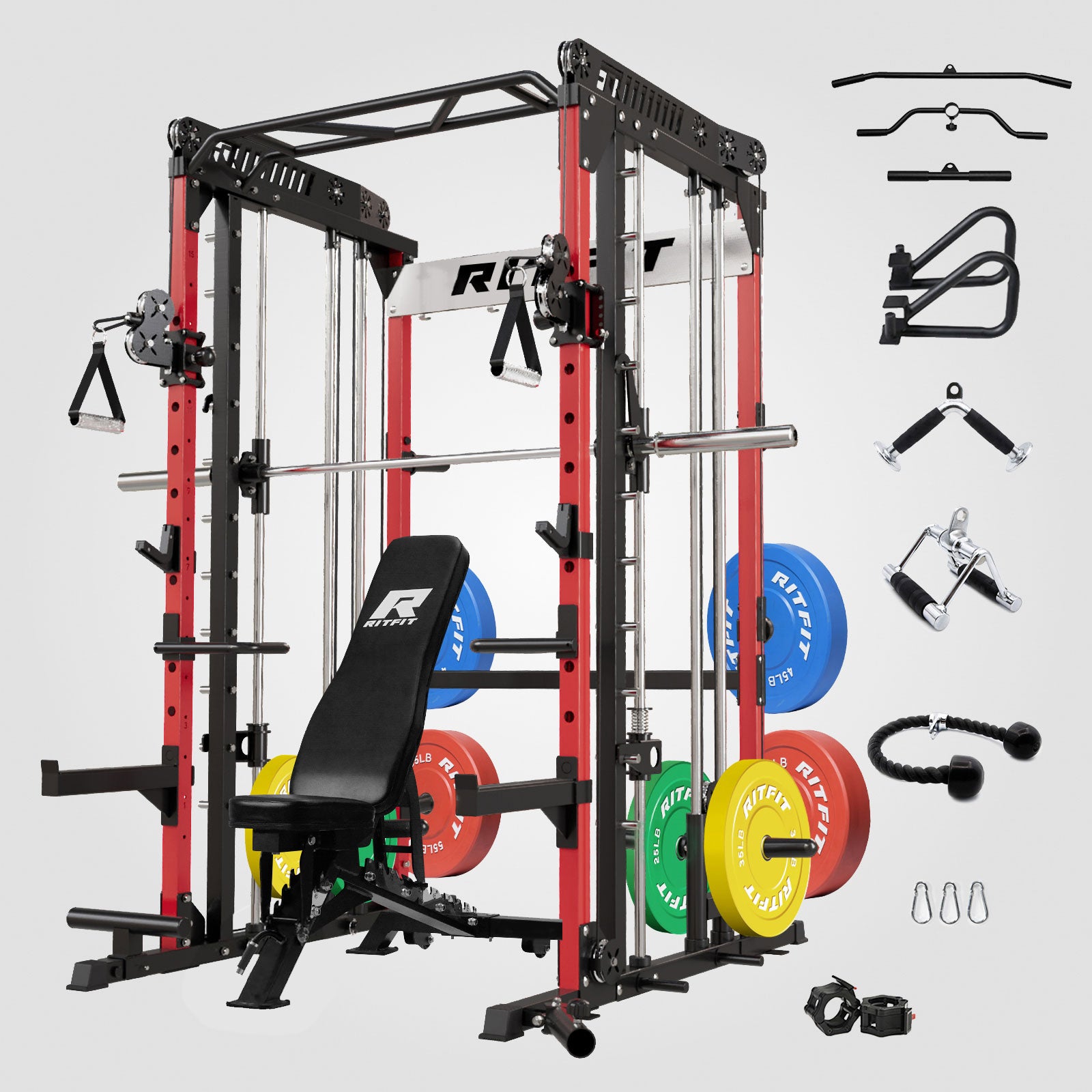
- Machine choice: A stable frame and smooth tracking make setup easier, especially for home use. A dedicated setup such as the RitFit M1 PRO Smith machine or a broader Smith machine collection can help lifters find a more practical training fit.
How to Do the Smith Machine Hip Thrust with Proper Form
Proper form matters because the exercise should feel like loaded hip extension, not a lower back grind. Use these steps to make the movement cleaner, safer, and more glute focused from the start.
- Step 1, Set your upper back: Slide under the bar and place the bench edge across the lower part of your shoulder blades. Plant your feet firmly so you feel balanced before you unrack the bar.
- Step 2, Brace before you move: Keep your ribs down, chin gently tucked, and core engaged before the first rep. This helps you extend through the hips instead of overextending the lower back.
- Step 3, Drive through the floor: Push through the heels and lift the hips until your torso and thighs form a strong top position. Most lifters do best when they think about driving the pelvis up instead of throwing the chest back.
- Step 4, Pause at lockout: Squeeze the glutes briefly at the top without turning the rep into a back arch. Your body does not need to chase extra height once the hips are fully extended.
- Step 5, Lower with control: Bring the hips down smoothly until you reach your natural bottom position without bouncing. The next rep should start from control, not momentum.
Foot and Bar Position Tips
Small setup changes can completely change what this exercise feels like. Use these cues to keep the movement glute dominant and more comfortable.
- Feet too close: This often makes the rep feel more quad heavy. Move the feet slightly forward and retest the top position.
- Feet too far: This often shifts tension into the hamstrings and can make lockout feel weak. Bring the feet slightly closer until the glutes can finish the rep cleanly.
- Knee tracking: Keep the knees following the line of the toes. Letting them cave inward usually makes the rep less stable.
- Bar path: The bar should travel over the hip crease in a controlled line. If it rolls up or down, reset your body position before the next set.
How to Program Smith Machine Hip Thrusts
Your sets and reps should match your goal, not just the amount of weight you can move. Hip thrusts work well early in a lower body session when glute output and setup focus are both high.
- For glute growth: Use 3 to 4 sets of 8 to 12 reps and control the lowering phase. This range usually gives enough tension and volume for productive glute work.
- For strength: Use 4 to 5 sets of 5 to 8 reps with longer rest periods. Keep the reps clean and stop the set before the lockout turns into lumbar extension.
- For beginners: Use 2 to 3 sets of 10 to 15 reps with light load and repeatable form. The goal is to learn setup, lockout, and tension placement before pushing load.
- For weekly use: Place the exercise 1 to 3 times per week depending on your full program. If glutes are a priority, put it before more fatiguing accessory work.
Muscles Worked by the Smith Machine Hip Thrust
The Smith machine hip thrust mainly trains the glutes, but it is not a one muscle exercise. Several lower body and trunk muscles assist by stabilizing position and helping you hold a strong lockout.
Glutes
The gluteus maximus is the primary driver because the main action is loaded hip extension. Research on glute focused exercise selection consistently places hip thrust style movements among the stronger options for glute activation and glute oriented training emphasis.[1]
Hamstrings
The hamstrings assist the movement by helping stabilize the lower body and support hip extension. They are important contributors, but they should not dominate the rep when your foot position is well matched to your build.
Adductors and Core
The adductors help keep the legs stable, while the trunk helps you hold ribcage and pelvic position. If the core loses tension, the movement usually shifts away from the glutes and into the lower back.
Quadriceps
The quadriceps help maintain knee position and overall lower body control during the setup and drive. They are involved, but a good Smith machine hip thrust should still feel glute led rather than quad led.
Benefits of the Smith Machine Hip Thrust
The biggest benefit of the Smith machine version is repeatability. It lets many lifters spend less energy fighting setup chaos and more energy training the glutes with intent.
Better setup consistency
The fixed bar path makes the movement easier to repeat from set to set. That consistency is one reason many home gym and commercial gym lifters prefer it over more tedious barbell setups.
Strong glute training stimulus
Hip thrust style training is widely used when glute development is the main goal because it loads hip extension directly. Evidence from systematic reviews and training studies supports its value as a serious glute building option, not just an accessory movement.[1][4]
Clearer technique focus for many lifters
The Smith machine can make it easier to learn bracing, pelvic control, and top position without also managing a completely free bar path. That does not make it automatically superior, but it often makes it easier to coach and repeat.
Useful transfer within lower body training
Hip thrust training can improve lower body performance measures and gives you a strong, targeted hip extension pattern to pair with squats, split squats, and hinging work.[3] If you want more posterior chain training variety, pair it with movements like the Smith machine Romanian deadlift.
Practical option for glute focused programming
The movement is easy to place into hypertrophy blocks, beginner plans, and lower body days built around glute emphasis. It also fits naturally with broader resources on gym machines for glutes when you want more targeted exercise selection.
Common Smith Machine Hip Thrust Mistakes and How to Fix Them
Most mistakes come from chasing height, load, or speed before the setup is stable. Fixing the rep usually starts with position, not with motivation.
- Arching the lower back: This usually means you are trying to create lockout with spinal extension instead of hip extension. Keep ribs down, brace first, and stop the rep when the hips are fully extended.
- Feet in the wrong spot: Feet too close often create a quad dominant rep, while feet too far often shift tension into the hamstrings. Test your position at the top and adjust until the glutes clearly finish the movement.
- Bouncing out of the bottom: A rushed bottom position usually reduces tension quality. Lower under control and start each rep from a position you can own.
- Letting the bar slide: A drifting bar usually means poor placement or poor bracing. Keep the pad centered over the hip crease and reset if the path gets sloppy.
- Loading too fast: More weight is not better when the setup breaks down. Earn heavier sets only after the same form shows up rep after rep.
Recommended Training Gear for Smith Machine Hip Thrusts
The right accessories make this exercise more comfortable and easier to repeat well. Most lifters do not need many tools, but the few that matter can make a big difference.
- Bar pad: A dense pad reduces discomfort at the hip crease and helps you focus on the rep instead of the pressure.
- Stable bench: A solid bench matters as much as the bar because poor bench height often ruins the setup.
- Flat shoes or stable footwear: A firm base usually makes heel drive and foot pressure easier to control.
- Smith machine frame that fits your space: If you are comparing setups for home use, this guide on Smith machine vs power rack can help you judge training style, space, and versatility.
Smith Machine Hip Thrust Alternatives
You do not need to force the Smith machine hip thrust if your machine setup is awkward or your body does not fit it well. Several alternatives can train the same broad pattern with a different feel.
- Hip thrust machine: This is often the easiest option for comfort and speed of setup when the machine fits your proportions well.
- Barbell hip thrust: This gives you a freer bar path and may feel more natural once you are comfortable with the setup.
- Glute bridge: This is a simpler option when you want a shorter range or a beginner friendly pattern.
- Cable pull through: This can work well when the Smith machine rails limit your bottom position too much.
Smith Machine Hip Thrust vs Barbell Hip Thrusts
Neither version is automatically better for everyone, because the best choice depends on your setup quality, training goal, and comfort. The Smith machine usually wins on convenience and repeatability, while the barbell version usually wins on freedom of bar path and individual fit.
- Choose the Smith machine if: You want easier setup, more predictable loading, and a simpler way to progress glute focused sets.
- Choose the barbell if: You want more freedom to find your own bar path and bench distance without a fixed rail system.
- Use both if: You want variety across training blocks and do well alternating stable machine work with freer strength patterns.
- Read more before you buy: Lifters comparing full home gym setups may also want this broader guide on Smith machines with cable systems.
FAQs About Smith Machine Hip Thrusts
Is the Smith machine hip thrust good for glute growth?
Yes. Smith machine hip thrusts can be very effective for glute growth because the fixed bar path lets many lifters focus on hip extension and progressive overload. They work best when your shins are close to vertical at the top and your ribs stay down.
How high should the bench be for Smith machine hip thrusts?
The best bench height is the one that lets your upper back sit on the edge without forcing your neck to crank backward or your hips to stop short. For many adults, a standard flat bench works, but shorter lifters may need a lower setup or raised feet.
Why do I feel Smith machine hip thrusts in my quads instead of my glutes?
You usually feel more quad than glute when your feet are too close to your hips or you are pushing through the toes instead of the heels. Move your feet slightly farther forward, keep your shins nearly vertical at lockout, and focus on driving the pelvis up.
Can Smith machine hip thrusts hurt your lower back?
Yes. Smith machine hip thrusts can bother your lower back if you overarch at the top, lose core tension, or use a setup that does not fit your body. Keep your ribs down, tuck the pelvis slightly, and reduce load if the movement stops feeling controlled.
How much weight should I use for Smith machine hip thrusts?
Start with a load you can control for smooth reps while keeping your glutes doing the work from bottom to top. Many beginners do well with the empty bar or a very light load, then add weight only after the setup and lockout feel repeatable.
Are Smith machine hip thrusts better than barbell hip thrusts for beginners?
They are often easier for beginners, but not automatically better for every lifter. The Smith machine gives you more setup stability and simpler loading, while the barbell version gives you a freer bar path and may feel more natural once you learn it.
Conclusion
The Smith machine hip thrust is a practical glute exercise when you want stable setup, controlled loading, and a clear way to progress over time. Get the bench height, hip crease bar position, and foot placement right first, then let the glutes drive the movement instead of forcing the rep with your lower back.
Disclaimer: This article is for general fitness education only and does not replace medical advice, diagnosis, or individualized coaching. If you have current pain, a recent injury, or a history of hip, knee, or lower back issues, use light loads first and consult a qualified professional before heavy training.
References
- Neto WK, Soares EG, Vieira TL, Aguiar R, Chola TA, Sampaio VL, Gama EF. Gluteus Maximus Activation during Common Strength and Hypertrophy Exercises: A Systematic Review. J Sports Sci Med. 2020;19(1):195-203.
- Brazil A, Needham L, Palmer JL, Bezodis IN. A comprehensive biomechanical analysis of the barbell hip thrust. PLoS One. 2021;16(3):e0249307.
- González-García J, Morencos E, Balsalobre-Fernández C, Cuéllar-Rayo Á, Romero-Moraleda B. Effects of 7-Week Hip Thrust Versus Back Squat Resistance Training on Performance in Adolescent Female Soccer Players. Sports. 2019;7(4):80.
- Plotkin DL, Rodas MA, Vigotsky AD, McIntosh MC, Breeze E, Ubrik R, Robitzsch C, Agyin-Birikorang A, Mattingly ML, Michel JM, Kontos NJ, Lennon S, Frugé AD, Wilburn CM, Weimar WH, Bashir A, Beyers RJ, Henselmans M, Contreras BM, Roberts MD. Hip thrust and back squat training elicit similar gluteus muscle hypertrophy and transfer similarly to the deadlift. Front Physiol. 2023;14:1279170.