








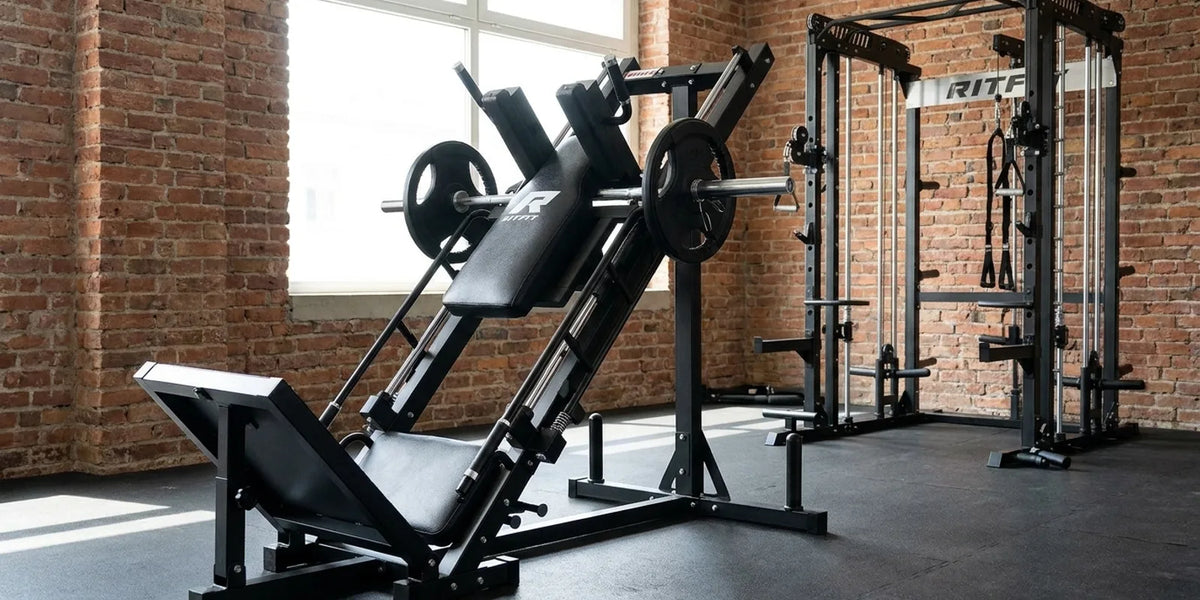
The pendulum squat is a guided lower body machine that trains the quads through a deep, controlled squat pattern. It is most useful for quad focused hypertrophy, supported leg training, and lifters who want a machine based alternative to free weight barbell squats.
This guide explains how to set up the pendulum squat, what muscles it works, how to avoid common mistakes, and which home gym alternatives can create a similar lower body training effect.
Quick Answer: The pendulum squat is a machine based squat that moves the body through a curved arc, targeting the quadriceps with deep knee flexion and reduced balance demands. It works best as a quad focused hypertrophy exercise and can be programmed 1-2 times per week within a complete lower body training plan.
Key Takeaways
- Best use: The pendulum squat is best used as a quad focused machine squat for hypertrophy and controlled lower body volume.
- Main muscles: It primarily trains the quadriceps, with help from the glutes, adductors, calves, and core.
- Form priority: Keep your heels planted, knees tracking with the toes, and tempo controlled on every rep.
- Foot placement: A lower foot position usually increases quad demand, while a higher and wider stance adds more glute and adductor involvement.
- Home gym reality: Most home gyms can use hack squat, leg press, Smith machine squat, or belt squat as alternatives to a dedicated pendulum squat machine.
What Is a Pendulum Squat?
The pendulum squat is a machine based squat where the body moves through a curved arc instead of a straight bar path. The shoulder pads and back support guide the movement while the lifter bends the knees and hips to lower into a squat position.
The machine keeps the torso more upright than a traditional barbell back squat. Squat biomechanics can change based on stance width, foot angle, trunk position, tibia angle, and depth, so machine setup and body position matter for both comfort and training effect.[1]
- Guided arc path: The pendulum squat follows a curved rail system that differs from the straight vertical path of a hack squat or Smith machine. This arc can feel more natural for some lifters and places less shear stress on the lower back.
- Bodybuilder favorite: The pendulum squat is popular with bodybuilders because it creates strong quad tension while reducing the balance demands of free weight squats. It is still a loaded squat pattern, so bracing, depth control, and load management remain essential.
- Gym availability: A dedicated pendulum squat machine is common in commercial gyms but rare in home gyms due to its size, cost, and single use design. Most home lifters need a multi purpose alternative.
What Muscles Does the Pendulum Squat Work?
The pendulum squat mainly works the quadriceps, but it is not an isolation exercise. The glutes, adductors, calves, and trunk muscles all help control the movement and stabilize the body throughout the full range of motion.
- Quadriceps: The quadriceps are the primary target because the movement involves deep knee flexion with a relatively upright torso. This includes the vastus lateralis, vastus medialis, vastus intermedius, and rectus femoris.
- Vastus Medialis: The inner quad works hard when the knees flex deeply and track cleanly over the toes. Consistent training with progressive overload can help build a more complete quad look.
- Glutes: The glutes assist as the hips extend during the ascent. A higher or wider foot placement can increase hip involvement for most lifters.
- Hamstrings: The hamstrings support hip control but are not the primary driver. They work less than the quads in most pendulum squat setups.
- Adductors: The adductors help control the thighs and assist with hip extension. Wider stances increase their contribution.
- Calves: The calves help maintain ankle position and foot pressure. Stable ankle control keeps the heels planted throughout the rep.
- Core: The core braces the torso even though the machine provides support. This includes the abdominal wall, obliques, and spinal stabilizers.
How Do You Do the Pendulum Squat?
Proper pendulum squat form helps you train the legs with more control and less wasted movement. Start light, learn the machine path, and add load only when depth and knee tracking stay consistent across all reps.
- Step 1: Set the Pads: Adjust the shoulder pads so they sit comfortably across your upper traps. Your body should feel secure without shrugging, rounding, or forcing your neck forward.
- Step 2: Place Your Feet: Stand with your feet about shoulder width apart and toes slightly turned out. Keep full foot contact with the platform before you unrack the machine.
- Step 3: Brace and Unrack: Take a deep breath, brace your core, grip the handles, and release the safety stops. Begin with a light load so you can feel the machine arc before pushing hard sets.
- Step 4: Lower With Control: Bend the knees and hips together while keeping your heels down and knees tracking with the toes. A controlled lowering phase reduces momentum and improves position awareness.
- Step 5: Drive Up Smoothly: Push through the midfoot and extend the knees and hips until you return to the top. Stop just short of a hard knee lockout so the legs stay active and the finish remains controlled.
What Are the Benefits of Pendulum Squats?
The pendulum squat combines machine support with a deep squat pattern, making it useful for lifters who want hard quad training without the balance demands of a barbell back squat. It can be especially valuable for bodybuilding style leg days.
- Quad Focus: The movement emphasizes the quadriceps because the torso stays upright and the knees travel forward. This makes it useful for lifters who want more quad volume in a leg day plan.
- Guided Movement: The machine path removes most of the balance demand. This lets many lifters focus more on depth, tempo, and effort rather than stabilization.
- Deep Range of Motion: Many lifters can reach a deep squat position on a pendulum machine when setup is correct. Training through a larger range of motion can be beneficial for muscle development when performed with control.[4]
- Lower Back Support: The supported torso reduces the need to hold a heavy barbell across the back. This does not remove all stress, so bracing and load selection still matter.
- Safe Hard Sets: The safety stops make it easier to train close to failure without a spotter. This is helpful for hypertrophy training when technique remains stable.
What Are Common Pendulum Squat Mistakes?
The biggest pendulum squat mistakes come from poor foot pressure, unstable knees, rushed reps, and excessive loading. Fixing these issues improves both comfort and training quality for most lifters.
- Letting the Heels Lift: Keep your heels planted from the start to the finish of each rep. If your heels rise, move your feet slightly higher on the platform or reduce depth until ankle control improves.
- Letting the Knees Collapse Inward: Track the knees in the same direction as the toes. Stable knee tracking is a useful safety cue, and dynamic knee valgus is a modifiable movement pattern in lower body training.[2]
- Cutting Depth Too Short: Use the deepest range you can control without heel lift or pelvic collapse. Partial reps can be useful in some programs, but they should be intentional rather than caused by excessive load.
- Rushing the Lowering Phase: Lower with control instead of dropping into the bottom. Exercise execution affects joint position, muscle length, and target muscle loading, so technique quality matters for hypertrophy.[3]
- Hard Locking the Knees: Finish tall without snapping the knees into a hard lockout. This keeps the set smoother and helps maintain tension through the legs.
- Adding Weight Too Fast: Do not add weight before you own the movement. Progress should follow stable depth, full foot pressure, and consistent reps across all sets.
How Should You Program the Pendulum Squat?
Program the pendulum squat based on your goal, recovery capacity, and leg training frequency. Most lifters should use it 1 to 2 times per week with at least one lower body recovery window between hard sessions.
- For Hypertrophy: Perform 3 to 4 sets of 8 to 12 reps with 1 to 2 reps in reserve. Weekly volume, effort level, load, and exercise selection are all important variables for muscle growth.[5]
- For Strength Focus: Perform 4 to 5 sets of 5 to 8 reps with heavier loads. Keep the descent controlled and avoid grinding reps that change knee position or depth.
- For Metabolic Stress: Perform 2 to 3 sets of 15 to 20 reps with lighter loads. This works well near the end of leg day when the goal is quad fatigue and pump.
- For Beginners: Start with 2 to 3 sets of 10 to 12 reps using the empty machine or very light plates. Add weight only when every rep looks the same across all sets.
What Are the Best Pendulum Squat Variations?
Pendulum squat variations help you change the training stimulus without changing the main machine pattern. Use these only after your standard rep form feels stable and consistent.
- Pause Pendulum Squat: Pause for 1 to 3 seconds in the bottom position. This removes bounce and teaches control in the hardest part of the rep.
- Tempo Pendulum Squat: Lower for 3 to 4 seconds before driving up. This improves body awareness and makes lighter loads feel more demanding.
- Constant Tension Pendulum Squat: Stop just short of full lockout on each rep. This keeps tension on the quads and works well for hypertrophy sets.
- Wide Stance Pendulum Squat: Use a wider stance to add more hip and adductor involvement. Keep the knees tracking with the toes and avoid forcing depth beyond your control.
What Are the Best Pendulum Squat Alternatives for Home Gyms?
A dedicated pendulum squat machine is effective, but it is not realistic for most home gyms. Most home lifters can train a similar quad focused pattern with a hack squat, leg press, Smith machine squat, or belt squat.
| Machine | Movement Feel | Best For | Home Gym Practicality |
|---|---|---|---|
| Pendulum Squat | Curved guided arc | Quad focused deep squats | Low for most home gyms |
| Hack Squat | Fixed angled track | Quad training and controlled depth | Medium if combined with leg press |
| Leg Press | Seated or angled push pattern | Heavy lower body volume | Medium to high with compact units |
| Smith Machine Squat | Fixed bar path | Home gym squats and solo lifting | High when part of an all in one system |
Comparison of pendulum squat machine alternatives for home gyms. The best choice depends on available space, budget, and training goals.
- Hack Squat Machine: A hack squat machine is one of the closest alternatives because it provides a guided lower body path. The RitFit BLP01 3 in 1 Leg Press and Hack Squat Machine is a practical home gym option for lifters who want leg press, hack squat, and calf raise training in one unit.
- Leg Press Machine: A leg press is useful for controlled lower body volume with less balance demand. The RitFit GAZELLE PRO Leg Press and Hack Squat Machine is a strong alternative for lifters who want heavy quad and glute training at home.
- Smith Machine Squat: A Smith machine squat can train the quads with a fixed bar path and adjustable stance. See the Smith machine squat form guide for a home gym friendly squat pattern.
- Smith Machine Hack Squat: A Smith machine hack squat can mimic part of the quad focused feel of a machine squat. The Smith machine hack squat guide explains setup, stance, and common errors.
- Smith Machine Collection: A multifunction Smith system can support squats, lunges, RDLs, calf raises, and cable lower body work. Browse the RitFit Smith Machine collection for home gym setups that support full body strength training.
- Strength Machine Collection: A complete leg training setup often works better than one single squat variation. The RitFit strength machines collection includes lower body machines for quads, glutes, hamstrings, and calves.
- Belt Squat Attachment: A belt squat attachment loads the hips and quads with a guided vertical path using a power rack or Smith machine. The RitFit belt squat attachment is a compact add on for home gyms that targets the lower body without spinal loading.
- Hack Squat vs Barbell Squat: Comparing squat variations helps you choose the right tool for your goal. The hack squat vs barbell squat guide explains movement mechanics, muscle emphasis, and home gym suitability.
FAQs About Pendulum Squats
What muscles does the pendulum squat work?
Yes. The pendulum squat mainly works the quadriceps, with help from the glutes, adductors, calves, and core. It is not an isolation movement because the hips, hamstrings, and trunk all assist through the full range. The exact muscle focus depends on foot position, machine design, squat depth, and how well you control the lowering phase.
How should beginners set up the pendulum squat?
Yes. Beginners should start with the machine unloaded, set the shoulder pads comfortably, and place the feet shoulder width apart. The first goal is smooth depth, planted heels, stable knees, and controlled reps before adding meaningful external load. A light starting weight lets you learn the arc path without fear and builds confidence for heavier sets later.
Is the pendulum squat good for quad growth?
Yes.
The pendulum squat can be effective for quad growth because it supports the torso and allows many lifters to train deep knee flexion with steady control.
Hypertrophy still depends on progressive overload, sufficient weekly volume, consistent technique, and recovery.
Can pendulum squats replace barbell squats?
No. Pendulum squats should not fully replace barbell squats if your goal includes free weight strength, balance, and sport transfer. They work best as a quad focused accessory or main machine movement within a complete lower body program. For most lifters, keeping a free weight squat in the plan preserves strength and joint stability.
How deep should you go on pendulum squats?
You should go as deep as you can while keeping your heels planted, knees tracking with your toes, and pelvis controlled. Many lifters aim for thighs below parallel, but comfortable depth depends on ankle mobility, hip structure, and training history.
Which pendulum squat alternative works best at home?
The best home alternative is usually a hack squat or leg press machine when space and budget allow. A Smith machine squat, heel elevated goblet squat, or belt squat can also create a strong quad focused pattern in smaller home gyms.
Does foot placement change pendulum squat muscle focus?
Yes.
Lower foot placement usually increases knee travel and quad emphasis, while a higher and wider stance often increases glute and adductor involvement.
Keep changes small and choose the position that lets you maintain stable knees and full foot pressure.
Should you lock your knees at the top of a pendulum squat?
No. You should avoid snapping into a hard knee lockout at the top of each rep. Finish tall with control, keep tension on the legs, and stop the set when form starts to break down. A soft finish keeps the quadriceps loaded through the top of the range, which supports better hypertrophy outcomes.
Conclusion
The pendulum squat is a strong machine based option for lifters who want quad focused leg training with a guided movement path. Use controlled depth, planted heels, stable knee tracking, and progressive loading to make the exercise safer and more effective for hypertrophy.
For most home gyms, a dedicated pendulum squat machine may not be the most practical choice. A RitFit leg press, hack squat, or Smith machine setup can offer more exercise variety while supporting serious quad, glute, and lower body training.
Visit the RitFit store to explore home gym options that fit your space and goals.
Disclaimer
This article is for general strength training education only and is not medical advice. Consult a qualified medical professional or certified strength coach before using heavy squat variations, especially if you have knee, hip, back, or balance concerns.
References
1. Straub RK, Powers CM. A Biomechanical Review of the Squat Exercise: Implications for Clinical Practice. Int J Sports Phys Ther. 2024;19(4):490-501. doi:10.26603/001c.94600. PMCID: PMC10987311
2. Wilczyński B, Zorena K, Ślęzak D. Dynamic Knee Valgus in Single-Leg Movement Tasks. Potentially Modifiable Factors and Exercise Training Options. A Literature Review. Int J Environ Res Public Health. 2020;17(21). doi:10.3390/ijerph17218208. PMCID: PMC7664395
3. Androulakis Korakakis P, Wolf M, Coleman M, et al. Optimizing Resistance Training Technique to Maximize Muscle Hypertrophy: A Narrative Review. J Funct Morphol Kinesiol. 2023;9(1). doi:10.3390/jfmk9010009. PMCID: PMC10801605
4. Schoenfeld BJ, Grgic J. Effects of range of motion on muscle development during resistance training interventions: A systematic review. SAGE Open Med. 2020;8:2050312120901559. doi:10.1177/2050312120901559. PMCID: PMC6977096
5. Bernárdez-Vázquez R, Raya-González J, Castillo D, Beato M. Resistance Training Variables for Optimization of Muscle Hypertrophy: An Umbrella Review. Front Sports Act Living. 2022;4:949021. doi:10.3389/fspor.2022.949021. PMCID: PMC9302196





