Table of Contents
- What Is a Smith Machine Shrug
- The Benefits of Smith Machine Shrugs
- Muscles Worked by Smith Machine Shrugs
- Proper Smith Machine Shrug Setup
- How to Do Smith Machine Shrugs
- Smith Machine Shrugs Workout for Beginners
- Common Smith Machine Shrug Mistakes
- Smith Machine Shrugs Tips
- Smith Machine Shrugs Variations
- Smith Machine Shrugs vs Dumbbell Shrugs
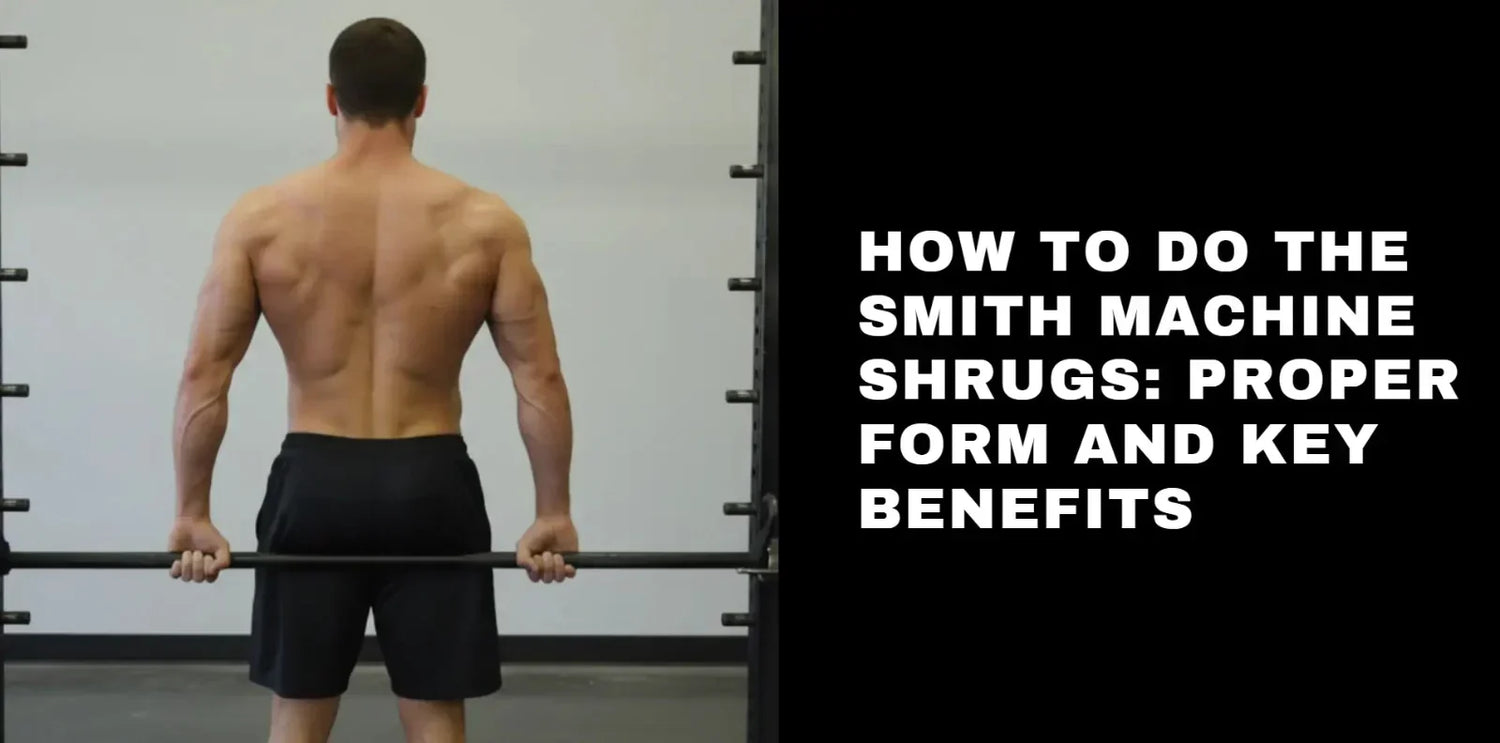
The Smith machine shrug is a simple trap exercise that lets you train scapular elevation with a fixed bar path and repeatable loading. This guide explains the benefits, muscles worked, form cues, beginner programming, common mistakes, smart variations, and when to choose Smith machine shrugs over dumbbells or barbells.
Key Takeaways
- Smith machine shrugs are best for lifters who want stable loading, clear setup, and a strict shrug pattern.
- The main job of the movement is scapular elevation, so the bar should travel straight up and straight down.
- Shoulder rolling, chin jutting, elbow bend, and knee bounce are the mistakes that ruin most shrug sets.
- Lifting straps can help when grip fails before the upper traps do, especially on heavier or higher rep sets.
- Smith machine shrugs can support upper back training, but they do not replace broader posture, mobility, and scapular control work.
The Benefits of Smith Machine Shrugs
Smith machine shrugs make trap training easier to repeat because the bar path is fixed and the setup is simple. That can help many lifters focus on scapular elevation, loading, and control instead of balancing a free bar.
They can also fit well inside a home gym plan built around a Smith machine collection, especially if you already use the machine for presses, squats, and rows. If you are also comparing machine feel, this Smith machine bar weight guide can help you plan loading more accurately.
- Repeatable Heavy Loading: The fixed path makes setup and re racking more predictable, which can make heavy shrug work feel cleaner. It does not make every rep safe by default, but it can reduce unnecessary bar drift for many lifters.
- Direct Trap Focus: Smith machine shrugs are built around scapular elevation, so the upper traps stay central to the movement. That makes the exercise useful when you want a straightforward trap builder instead of a more complex upper back pattern.
- Simple Home Gym Use: The movement is easy to set up, easy to repeat, and easy to slot after back or shoulder work. That makes it practical for solo training and time efficient upper body sessions.
- Useful for Structured Progression: You can add small weight jumps, extra reps, longer top pauses, or slower descents without changing the exercise pattern. That makes progression easier to track week to week.
- Helpful but Not Magical for Posture: Stronger upper traps can support scapular control, but shrugs alone do not fix forward head posture or neck discomfort. Scapular stabilization work has shown benefits for posture and symptoms in specific neck pain populations, which supports using shrugs as one part of a broader plan rather than the full answer.[1][2]
Muscles Worked by Smith Machine Shrugs
Smith machine shrugs mainly train the upper trapezius because the main motion is scapular elevation. Secondary support comes from other scapular and grip related muscles that help keep the bar stable and the shoulder girdle organized.
- Upper Trapezius: This is the main target because it contributes to elevation and upward rotation of the scapula. If you want the classic trap focused shrug feel, this is the muscle doing most of the visible work.[3][4]
- Middle Trapezius: The middle fibers help stabilize scapular position during the set. They are not the prime mover here, but they help keep the shoulder girdle from turning the rep into a sloppy forward roll.[4][5]
- Levator Scapulae: This muscle also assists scapular elevation. It supports the motion, but most lifters should think about clean shrug mechanics, not about trying to isolate it.
- Forearm and Hand Muscles: Your grip still matters even on a guided bar. This is why some lifters add straps when the hands fail before the traps.
If you want another trap focused movement on the same machine, the Smith machine upright row is a useful comparison because it changes elbow path and shoulder demand.
Proper Smith Machine Shrug Setup
Good setup matters because Smith machine shrugs go wrong when lifters chase load before they lock in position. You need the bar set around mid thigh, a comfortable overhand grip, stable foot pressure, and a neutral neck before the first rep starts.
- Bar Height: Set the bar around mid thigh so you can unrack it without turning the lift into a partial deadlift. The setup should feel stable, not rushed.
- Grip Width: Use an overhand grip around shoulder width or just outside it. The best grip is the one that lets your shoulders move straight up without joint irritation.
- Body Position: Stand tall with your rib cage stacked over your pelvis and your knees softly unlocked. You do not need a big lean, but you also do not want a lazy slouch.
- Neck Position: Keep the head neutral and the chin gently tucked. The neck should stay quiet while the shoulders do the work.
- Brace: Lightly brace your trunk before you unrack the bar. A stable torso helps keep the shrug vertical and repeatable.
How to Do Smith Machine Shrugs
Proper Smith machine shrug form matters because trap growth comes from clean scapular elevation, not from bouncing or shoulder rolling. Start with a stable stance, a neutral neck, and a load you can pause and lower under control.
- Step 1: Unrack with Position: Grip the bar, stand tall, rotate the hooks free, and settle the weight before you begin. Your arms should stay straight and your shoulders should start fully down.
- Step 2: Shrug Straight Up: Drive your shoulders toward your ears without bending the elbows or swinging the torso. Think up, not back and around.
- Step 3: Pause at the Top: Hold the top for about one second when you can. That pause makes it easier to separate a true shrug from a rushed bounce.
- Step 4: Lower Under Control: Bring the shoulders down slowly until you reach your normal bottom position. Do not crash the weight or relax so much that the rep turns loose.
- Step 5: Re rack Cleanly: Finish the set, guide the bar back to the hooks, and lock it in before you let go. Good re racking is part of good form, especially when you train alone.
Smith Machine Shrugs Workout for Beginners
A beginner Smith machine shrug plan should prioritize consistency and control before maximal load. Most lifters will grow faster from clean repeatable sets than from sloppy heavy reps that beat up the neck and shoulders.
- Warm Up: Start with light upper back and shoulder movement, then do one easy acclimation set on the Smith machine. Your warm up should make the shrug pattern feel clear, not tiring.
- Sets and Reps: Use 3 to 4 working sets of 10 to 15 reps. This range gives most beginners enough practice and enough tension without forcing ugly loading.
- Tempo: Lift with intent, pause briefly at the top, and lower for about two seconds. A slower descent helps you keep the rep honest.
- Frequency: Train Smith machine shrugs 1 to 2 times per week. That is enough for most beginners when the rest of the program already includes rows, pulls, or carries.
- Progression: Add 2.5 to 10 pounds or add one rep when all sets stay clean. Progress only when the neck remains neutral and the shoulders still move straight up.
If your program already includes the Smith machine shoulder press or other pressing work, shrugs often fit best near the end of the session.
Common Smith Machine Shrug Mistakes
Most Smith machine shrug mistakes happen when lifters confuse more motion with better motion. The cleanest shrug is usually the most effective one.
- Shoulder Rolling: Rolling the shoulders turns a simple elevation pattern into a messy shoulder circle. That usually makes the rep less repeatable and less comfortable.
- Chin Jutting: Pushing the head forward under load adds unnecessary neck strain. Keep the neck stacked and let the shoulders move instead.
- Elbow Bend: Bending the elbows turns the shrug into a partial pull. Keep the arms long so the traps stay central.
- Knee Bounce: Dipping and popping the bar up uses momentum instead of a clean shrug. Save explosive leg drive for lifts that actually need it.
- Too Much Load: Heavy weight is useful only when the rep still looks like a shrug. If range, pause quality, and neck position fall apart, the load is too high.
Smith Machine Shrugs Tips
Small form cues make a bigger difference on shrugs than most lifters expect. A few simple adjustments can change the exercise from a rushed ego lift into a reliable trap builder.
- Use Straps When Needed: Straps are useful when grip is the limiting factor, not when you want to ignore setup. Use them to keep trap work limited by the target muscle instead of your hands.
- Keep the Path Vertical: Think shoulders up and down, not back and around. A vertical shrug pattern is usually easier to repeat and easier to feel.
- Pause the Top: A short top hold can improve control and help you separate a real shrug from a bounced rep. Even half a second can clean up the set.
- Treat It as Assistance Work: Smith machine shrugs usually work best as targeted upper trap training, not as the center of your whole upper back program. Pair them with broader patterns such as rows, face pulls, and presses.
- Build a Better Smith Machine Session: If you want more exercise ideas around the same station, this guide to Smith machine exercises can help you program the rest of the workout more intelligently.
Smith Machine Shrugs Variations
Small variation changes can alter comfort, feel, and setup without changing the core job of the exercise. The best variation is the one that keeps the shrug path clean and the neck happy.
- Standard Front Smith Machine Shrug: This is the default version for most lifters. It is easy to set up, easy to load, and easy to track over time.
- Behind the Back Smith Machine Shrug: This version can feel better for some lifters because it changes how the shoulders sit relative to the bar. If it feels awkward or pinchy, go back to the standard front version.
- Paused Smith Machine Shrug: Add a longer top hold if you struggle to feel the traps. This is a simple way to increase difficulty without chasing more load.
- Higher Rep Smith Machine Shrug: Use 15 to 20 reps when you want a controlled finisher. This can work well after rows or after the Smith machine face pull if your goal is upper back volume rather than maximal loading.
Smith Machine Shrugs vs Dumbbell Shrugs
Smith machine shrugs usually win for loading consistency, while dumbbell shrugs usually win for arm path freedom. Your best option is the one that lets you shrug vertically with full control and without neck irritation.
| Option | Best for | Main advantage | Main limitation |
|---|---|---|---|
| Smith machine shrug | Stable heavy trap work | Fixed path and simple setup | Bar path may not feel ideal for every body |
| Dumbbell shrug | Freer shoulder and arm path | Easy to adjust hand position | Grip and balance can limit loading |
| Barbell shrug | Simple traditional loading | Heavy potential with minimal setup | More bar drift and more technique demand |
If you are deciding between a guided setup and a freer setup for your whole program, this Smith machine vs power rack comparison is the next logical read.
FAQs
How much weight should you use for Smith machine shrugs?
Use a load you can control for 8 to 15 clean reps. Start lighter than your ego wants, pause at the top, lower with control, and only add weight when your neck stays neutral, your elbows stay straight, and every rep still looks like a true shrug.
Can Smith machine shrugs build bigger traps?
Yes. Smith machine shrugs can help build bigger traps when you use enough load, enough weekly volume, and clean scapular elevation. They work best when you stop rolling the shoulders, keep the neck stacked, and progress with small weight or rep increases over time.
Are Smith machine shrugs better than dumbbell shrugs?
Smith machine shrugs are better for some lifters, not all lifters. The fixed path can make heavy loading easier and more repeatable, while dumbbells allow a freer arm path, so the better option is the one that lets you shrug vertically without neck irritation or sloppy momentum.
Should you use lifting straps for Smith machine shrugs?
Yes. Lifting straps can be useful when your grip fails before your traps. They are not mandatory for every set, but they can help you keep trap work limited by the target muscle instead of your hands, especially on higher rep sets or heavier top sets.
What are the most common Smith machine shrug mistakes?
The most common Smith machine shrug mistakes are shoulder rolling, chin jutting, bending the elbows, and using knee drive to bounce the bar. Each mistake shifts tension away from a clean shrug pattern, makes the set less repeatable, and can make the movement feel worse on the neck and shoulders.
Can Smith machine shrugs fix posture or tech neck?
No. Smith machine shrugs are not a full posture fix. They can support upper trap strength and scapular control, but better posture usually also needs lower trap and serratus work, sensible screen habits, and a training plan that does not teach you to live in shoulder elevation all day.
Final Thoughts
Smith machine shrugs are a practical way to train the upper traps with stable loading, clear setup, and repeatable technique. Keep the path vertical, avoid shoulder rolling, progress gradually, and treat shrugs as one part of a complete upper back plan that also includes scapular control work and better daily posture habits.
If you are building a fuller machine based routine, explore the Smith machine attachments guide to expand exercise options without making the article feel like a sales page.
Disclaimer. This article is for general education only and is not medical advice. Stop if you feel sharp pain, radiating symptoms, dizziness, or unusual pressure in the neck or head. Consult a qualified clinician before heavy shrug training if you have a recent injury, uncontrolled blood pressure, or persistent neck and shoulder symptoms.
References
- Im B, Kim Y, Chung Y, Hwang S. Effects of scapular stabilization exercise on neck posture and muscle activation in individuals with neck pain and forward head posture. J Phys Ther Sci. 2016;28(3):951-955. doi:10.1589/jpts.28.951
- Kang JI, Choi HH, Jeong DK, Choi H, Moon YJ, Park JS. Effect of scapular stabilization exercise on neck alignment and muscle activity in patients with forward head posture. J Phys Ther Sci. 2018;30(6):804-808. doi:10.1589/jpts.30.804
- Camargo PR, Neumann DA. Kinesiologic considerations for targeting activation of scapulothoracic muscles, part 2: trapezius. Braz J Phys Ther. 2019;23(6):467-475. doi:10.1016/j.bjpt.2019.01.011
- Paine R, Voight ML. The role of the scapula. Int J Sports Phys Ther. 2013;8(5):617-629.
- Henderson ZJ, Bohunicky S, Rochon J, Dacanay M, Scribbans TD. Muscle activation in specific regions of the trapezius during modified Kendall manual muscle tests. J Athl Train. 2021;56(10):1078-1085. doi:10.4085/545-20