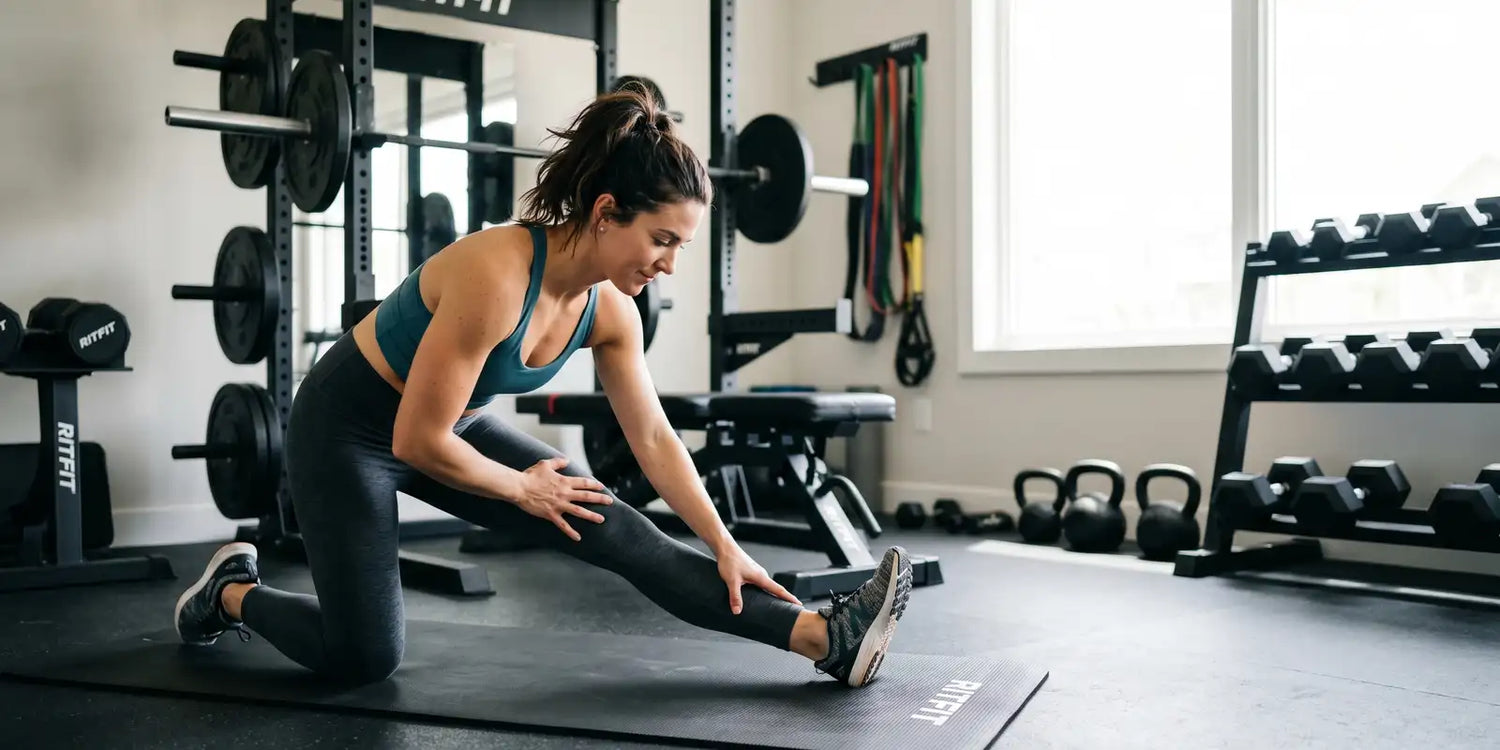
Stiff, tight knees can make squatting, kneeling, and even walking feel harder than they should. Knee stretching exercises for flexibility can loosen the muscles around the joint and restore easy movement.
This guide explains what stretching your knee actually means, which muscles to target, and a safe routine to improve flexibility. It is written for healthy, active people, and it shows clearly when to stop and seek professional advice.
Quick Answer: To improve knee flexibility, stretch the muscles around the joint rather than the joint itself. Target the quadriceps, hamstrings, calves, and hips with static holds of at least 30 seconds, two to three times per side, several times per week, stretching to mild tension but never into sharp pain.
Key Takeaways
- The knee is a joint: You stretch the muscles around it, mainly the quads, hamstrings, and calves.
- Stretching works: Consistent stretching can improve knee range of motion in tight muscles.
- Cover all sides: Target the front, back, and outer leg to balance the pull on the joint.
- Dose it right: Hold static stretches at least 30 seconds, several times per week.
- Know the limit: Stretch healthy stiffness, not sharp pain, and see a professional if symptoms persist.
What Stretching Your Knee Really Means
Your knee is a joint between the thigh bone, shin bone, and kneecap, not a muscle you can lengthen directly. Knee stretches therefore target the muscles and tendons that cross the joint.
Loosening these surrounding muscles reduces pressure on the knee and improves how it moves. The main players are the quadriceps in front, the hamstrings behind, and the calves below.
- Front: Quadriceps and hip flexors that extend the knee.
- Back: Hamstrings and calves that flex the knee.
- Side and hip: Glutes and outer-hip muscles that keep the kneecap tracking well.
Do Knee Stretches Actually Improve Flexibility?
Yes, for tight muscles, stretching reliably increases range of motion. The gains come from the muscles loosening, which lets the joint move more freely.
In a study of 48 adults with tight hamstrings, both static stretching and PNF stretching significantly increased active knee extension range of motion compared with a control group, with no loss of muscle activation.[1]
- Better movement: Looser muscles let the knee bend and straighten more easily.
- Less tightness: Reduced muscle tension can ease the stiff feeling during daily activity.
Mobility upstream and downstream matters too, so pair knee work with our guide to increase ankle mobility for deeper squats.
The Best Stretches for Your Knees
The most useful stretches loosen each muscle group that attaches around the knee. Move slowly, hold without bouncing, and stop short of sharp pain.
Intensity matters for the quads. In 18 healthy men, static stretching of the quadriceps at moderate to high intensity increased knee flexion range of motion, while low intensity did not.[2]
Standing Quad Stretch
Stand tall, bend one knee, and hold the ankle behind you with knees close together. You should feel a lengthening down the front of the thigh.
Seated or Lying Hamstring Stretch
Extend one leg and hinge gently from the hips toward the toes, keeping the back straight. This targets the hamstrings that cross the back of the knee.
Standing Calf Stretch
Face a wall, step one foot back, and press the heel down with the back knee straight. Tight calves can pull on the knee, so keep them loose.
Figure-4 and Hip Flexor Stretch
Cross one ankle over the opposite knee to open the outer hip, then add a half-kneeling hip flexor stretch to free the front of the hip.
The short routine below walks through these surrounding-muscle stretches step by step. For a gentle, full-body flexibility option, explore these Pilates exercises for flexibility at home.
Static vs Dynamic Stretching
Static stretches hold a position to lengthen the muscle, while dynamic stretches move the joint through its range with control. Each one suits a different moment in your day.
Speed and amplitude matter for dynamic work. In 15 participants, 30 seconds of dynamic stretching performed at a fast speed with normal amplitude improved hamstring range of motion and strength, while slow low-amplitude stretching did not change range of motion.[3]
- Before activity: Use dynamic moves like leg swings and slow knee bends to warm the joint.
- After activity: Use longer static holds when muscles are warm and ready to lengthen.
How Long and How Often to Stretch
Hold each static stretch for at least 30 seconds, then repeat it two to three times per side. General guidance suggests stretching several times per week for lasting flexibility.
Consistency beats intensity here. Gentle, regular sessions loosen tight muscles more safely than occasional forceful pulls, so build the habit into your routine.
- Duration: Hold 30 seconds or more, breathing steadily without bouncing.
- Frequency: Aim for several short sessions across the week.
- Intensity: Stretch to mild tension, never into sharp pain.
Build Strength and Mobility Around the Knee
Flexible muscles work best when they are also strong and well supported. Pairing stretches with strength and mobility work keeps the knee moving smoothly.
Mobility above and below the joint shares the load, so add our hip exercises for strength and mobility alongside your knee routine. For targeted support, try these home exercises for stronger knee joints.
- Strengthen: Build the quads, hamstrings, and glutes that stabilize the knee.
- Support: Some lifters use knee sleeves and when to wear them for warmth and comfort.
Standing work is especially effective for the muscles around the joint, so explore these standing exercises that restore knee strength. If you train with supportive gear, learn how weightlifting knee wraps work and when to wear them.
"The knee joint itself is a consequential joint. That means it is simply a hinge joint that is at the mercy of what is going on at the ankle below and the hip above."
Jeff Cavaliere, MSPT, CSCS, Physical Therapist & Strength Coach, former Head PT for the NY Mets, Athlean-X, How to Fix Knee Valgus (Knees That Cave In!)
FAQs About Knee Stretching
Can you actually stretch your knee?
Not directly.
The knee is a joint, not a muscle, so knee stretches really target the muscles and tendons that cross it, including the quadriceps, hamstrings, and calves.
Loosening these surrounding muscles improves how the knee moves and reduces tightness around the joint during exercise and daily activities.
What are the best stretches for stiff knees?
The standing quad stretch, seated or lying hamstring stretch, standing calf stretch, and figure-4 hip stretch are among the most effective.
Together they loosen the major muscle groups that attach around the knee.
Move slowly, hold each position without bouncing, and stop short of any sharp pain.
How long should you hold a knee stretch?
Hold each static stretch for at least 30 seconds and repeat it two to three times per side.
General guidance suggests stretching several times per week for lasting flexibility.
Keep the stretch in a mild to moderate range, never forcing into sharp pain, and breathe steadily throughout.
Should you stretch knees before or after exercise?
Use dynamic stretches like leg swings and controlled knee bends before activity to warm up the joint.
Save longer static stretches for after your workout, when muscles are warm and more receptive to lengthening.
This order helps performance beforehand and flexibility afterward without reducing strength during training.
When should you see a doctor about knee stiffness?
See a healthcare professional if knee pain is sharp, persistent, or accompanied by swelling, locking, or instability.
Stretching is meant for general tightness in healthy knees, not for diagnosing or treating injuries.
If symptoms do not improve within a few weeks of gentle stretching, seek a professional assessment.
Conclusion
Stretching your knee really means loosening the quads, hamstrings, calves, and hips that cross the joint. A few simple holds, done regularly, can restore easy, comfortable movement.
Start with two or three short sessions this week and build from there, holding each stretch to mild tension. If stiffness lingers or pain is sharp, see a professional, and browse the RitFit store for equipment that supports flexibility and recovery.
Disclaimer
This article is for general educational purposes only and does not replace personalized medical or fitness advice. Consult a qualified healthcare or training professional before starting a new routine, especially if you have a knee injury, arthritis, or persistent pain.
References
1. Lim KI, Nam HC, Jung KS. Effects on hamstring muscle extensibility, muscle activity, and balance of different stretching techniques. Journal of Physical Therapy Science. 2014;26(2):209-213. doi:10.1589/jpts.26.209. PMCID: PMC3944290
2. Nakamura M, Sato S, Murakami Y, et al. The Comparison of Different Stretching Intensities on the Range of Motion and Muscle Stiffness of the Quadriceps Muscles. Frontiers in Physiology. 2020;11:628870. doi:10.3389/fphys.2020.628870. PMCID: PMC7838703
3. Takeuchi K, Nakamura M, Matsuo S, Akizuki K, Mizuno T. Effects of Speed and Amplitude of Dynamic Stretching on the Flexibility and Strength of the Hamstrings. Journal of Sports Science and Medicine. 2022;21(4):608-615. doi:10.52082/jssm.2022.608. PMCID: PMC9741718