Toning your stomach is not about endless crunches. It comes from lowering overall body fat while building the core muscles underneath so your midsection looks tighter as fat comes off.
This guide explains what the science actually supports, which exercises matter, how often to train, and a realistic timeline so you stop wasting effort on tactics that do not work.
Quick Answer: Toning your stomach requires lowering overall body fat through a moderate calorie deficit while building the core muscles underneath with full body strength training and targeted core drills. Crunches alone cannot burn belly fat, but combining diet, cardio, and resistance training delivers a firmer midsection over weeks to months.
Key Takeaways
- Toning is two jobs: Lower overall body fat and build the core muscles that sit beneath it.
- Crunches alone fail: Ab exercises strengthen muscle but do not selectively burn the fat on top.
- Diet drives fat loss: A moderate calorie deficit shrinks belly fat that core work cannot.
- Combine training types: Resistance plus aerobic work reduces abdominal fat more than either alone.
- Be patient: A firmer midsection takes weeks to months of consistent diet and training.
What Does It Really Mean to Tone Your Stomach?
Toning your stomach means two things happening together: losing the fat that covers your abdomen and strengthening the core muscles so the midsection looks tighter once that fat drops. One without the other rarely delivers the look people want.
The muscles involved are more than the rectus abdominis you see as a six pack. The deeper transverse abdominis, internal and external obliques, and surrounding stabilizers all shape how flat and firm your trunk appears.
"If you want a flat stomach, there are two things that have to happen. You need to lose the fat around your midsection, and you need to train your core in a way that helps your stomach look tighter when that fat comes off."
Jeff Cavaliere, MSPT, CSCS, Physical Therapist and Strength Coach, Athlean-X
If you already have low body fat, more core work helps, but if you carry extra fat then fat loss should lead. Our companion guide on what weight dumbbells to use for toning applies the same logic to the arms.
Can You Spot Reduce Stomach Fat?
For practical purposes, you cannot reliably spot reduce stomach fat with ab exercises, so toning depends mostly on overall fat loss. The evidence on targeted local fat loss is mixed and the effects, when present, are small.
In one 10 week randomized controlled trial of 16 overweight men matched for energy expenditure, a group combining treadmill running with torso rotation and abdominal crunches lost more trunk fat, about 7 percent or roughly 1170 grams, than a running only control that showed no trunk fat change, while total body fat dropped similarly in both groups.[1]
- What it suggests: Targeted abdominal work may shift a modest amount of local fat in some people.
- What it does not prove: That crunches melt belly fat for everyone, especially without an overall deficit.
This was a small trial in men only, so treat it as a nuance, not a shortcut. The dominant lever for a toned stomach is still total fat loss plus core building.
How Do You Build the Core Underneath?
You build the core underneath by training it through all of its functions, not just by chasing a burn with crunches. Your core flexes, resists movement, rotates, and braces, so a complete routine covers each of those jobs.
Compound full body lifts should form the base because they engage the core hard for stabilization while burning meaningful calories. Targeted core drills then fill the gaps for shape and control.
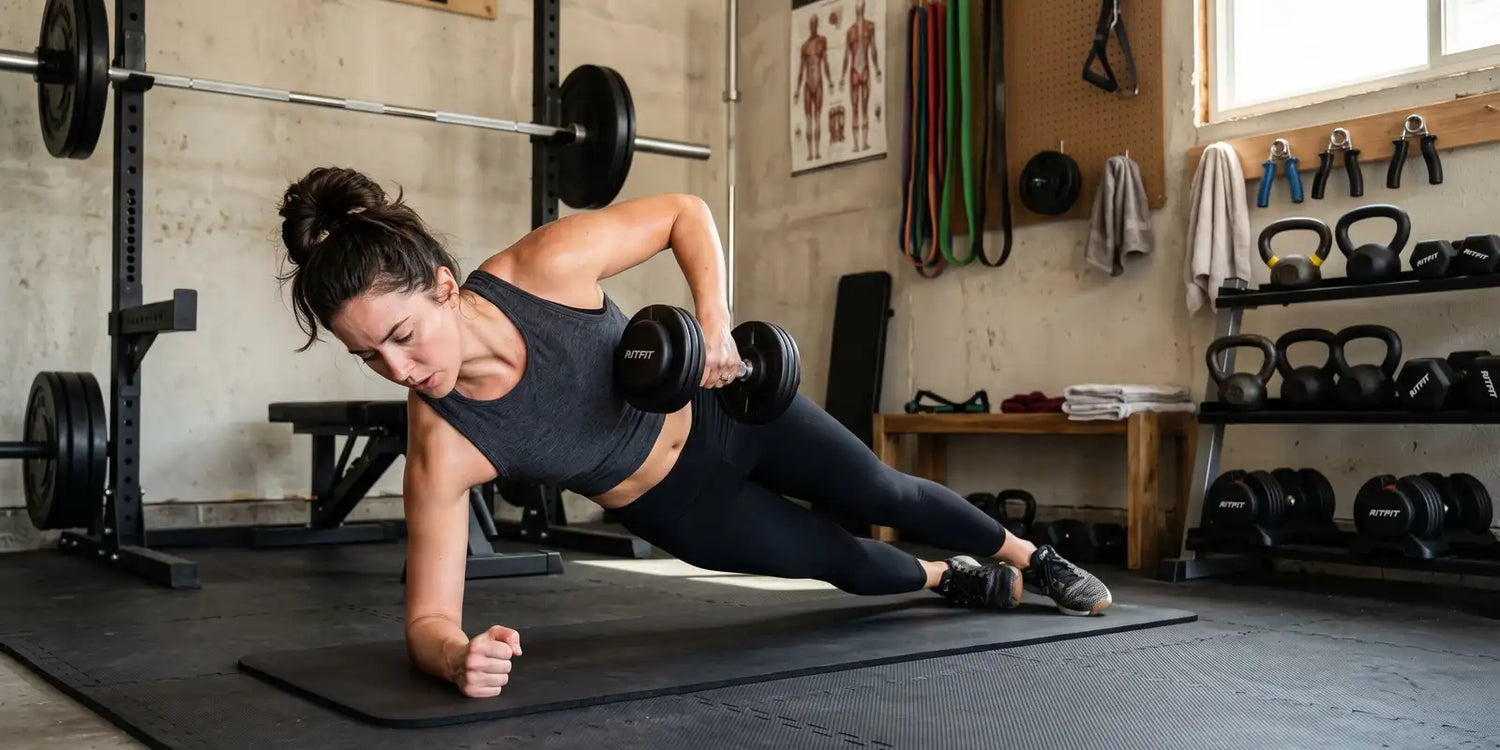
- Anti movement: Planks and side planks train the core to resist motion, its real job.
- Flexion and lower abs: Reverse crunches and leg raises target the lower abdominal region.
- Rotation and obliques: Controlled bicycle crunches and anti rotation work carve the sides.
- Deep core: Stomach vacuums train the transverse abdominis to pull the wall inward.
The video below demonstrates a controlled abs and obliques routine you can add to the end of a full body session for a leaner looking stomach.
How Do You Choose Your Loads and Resistance?
Pick a load that lets you complete 3 sets of 10 to 15 controlled reps with the last 2 reps feeling hard but clean. A pair of hex rubber dumbbells or a kettlebell set covers most weighted core and compound moves.
What Are Good Equipment Free Substitutions?
Swap weighted moves for bodyweight versions on a non-slip mat, using planks for anti rotation, bird dogs for stability, and standing knee drives in place of sit ups.
How Often Should You Train Your Core?
Two to three focused core sessions per week is enough for most people, layered on top of full body strength and regular cardio. The core recovers quickly, so short sessions can be done more frequently if you keep them controlled.
Quality matters more than volume. Slow, deliberate reps where you feel the target muscle working beat fast, sloppy sets that rely on momentum.
- Session length: Ten focused minutes of varied core drills is plenty per session.
- Pair it smartly: Add core work after full body lifts using a adjustable weight bench or as a standalone block.
Browse the dumbbells collection to build a set of loads you can progress through over time.
When Should You Add Resistance to Core Work?
Add resistance once you can complete your target reps with clean form and no momentum, progressing by a small amount such as a single light plate or the next dumbbell up. Lighter PVC-coated dumbbells suit early weighted standing core moves.
When Should You Stop or Scale Back?
Stop a movement if you feel sharp pain, lower back strain, or pelvic discomfort, and scale back if your form breaks down or soreness lingers beyond a few days. Persistent or unusual pain warrants a check with a qualified professional.
How Do Diet and Cardio Tone Your Stomach?
Diet and cardio tone your stomach by creating the calorie deficit that actually shrinks belly fat, which core training alone cannot do. A moderate deficit paired with consistent activity is what reveals the muscle you build.
A systematic review and meta-analysis of 43 trials enrolling 3552 subjects found aerobic training, resistance training, and combined training all significantly reduced subcutaneous abdominal fat versus controls, with combined training producing the largest reduction.[2]
- Protein first: It preserves muscle in a deficit and keeps you fuller for fewer calories.
- Move often: Brisk walking, cycling, and intervals add to daily calorie burn without heavy recovery cost.
- Strength train: Full body lifting on strength machines preserves muscle and raises resting metabolism.
You cannot out train a poor diet, so the kitchen and the gym have to work together for a leaner midsection.
How Long Does It Take and What Mistakes Should You Avoid?
A more toned stomach typically takes several weeks to a few months of consistent effort, with timing driven by your starting body fat, diet, and training. Lower starting body fat means faster visible change, while genetics decide where fat leaves last.
One review of abdominal obesity concluded that optimal abdominal fat reduction and lean tissue development comes from combining high intensity interval training and resistance training with more daily activity, with combined exercise cutting waist circumference by about 3.80 centimeters versus control in a cited meta-analysis.[3]
- Mistake one: Doing only crunches and ignoring diet and full body training.
- Mistake two: Crash dieting, which sheds muscle and rebounds, leaving you softer.
- Mistake three: Expecting weeks of work to undo months of habits overnight.
Consistency beats intensity. Steady habits across diet, cardio, and core work win over short bursts of extreme effort.
What Does a Weekly Plan Look Like?
A balanced weekly plan combines full body strength, cardio, and short core sessions inside a moderate calorie deficit. The table below shows a simple starting template you can adjust to your schedule and level.
| Day | Focus | Notes |
|---|---|---|
| Monday | Full body strength plus core | 3 sets of 10 to 15 reps, then 10 minutes core |
| Tuesday | Moderate cardio | 30 to 45 minutes brisk walk, cycle, or row |
| Wednesday | Full body strength | Compound lifts, progressive overload |
| Thursday | Intervals plus core | Short HIIT, then anti rotation and lower abs |
| Friday | Full body strength plus core | Repeat Monday, vary core drills |
| Weekend | Active recovery and rest | Easy walks, mobility, at least one full rest day |
Weekly template for a balanced approach to toning your stomach. Adjust based on your schedule and fitness level.
To set up a home routine, you can shop all RitFit gear and assemble the equipment that fits your space and goals.
FAQs About How to Tone Your Stomach
Can you tone just your stomach without losing weight elsewhere?
Mostly no. A toned looking stomach comes from lowering overall body fat plus building the core muscles underneath. While one small trial hinted that targeted abdominal work may shift a little local fat, the proven path is a calorie deficit, full body strength, and cardio combined with focused core training for the firmer look you want.
Do ab exercises burn belly fat?
Ab exercises strengthen and build your core muscles, but they do not selectively burn the fat sitting on top of them.
Crunches and planks make the midsection look tighter once body fat drops.
To actually reduce belly fat you need an overall calorie deficit driven by diet, aerobic activity, and resistance training across your whole body.
How often should I train my core to tone my stomach?
Two to three focused core sessions per week is plenty for most people, layered on top of full body strength work and regular cardio.
The core recovers quickly, so short ten minute sessions can even be done more frequently.
Prioritize controlled, quality repetitions and progressive overload over chasing high rep counts or daily exhausting burns.
How long does it take to get a toned stomach?
It depends on your starting body fat, diet consistency, and training.
Many people notice a firmer midsection within several weeks to a few months of a steady calorie deficit, regular cardio, and core training.
Lower starting body fat means faster visible results, while genetics influence where you store and lose stomach fat last.
Is diet or exercise more important for toning your stomach?
Diet usually drives the fat loss side, since a calorie deficit is what shrinks belly fat, and you cannot out train a poor diet.
Exercise still matters greatly because resistance training preserves muscle, cardio increases calorie burn, and core work shapes the look.
The best results come from combining a moderate deficit with consistent strength and cardio training.
What are the best core exercises to tone your stomach?
The best exercises target all core functions, not just crunches.
Planks train anti movement, reverse crunches target the lower abs, and bicycle crunches work the obliques.
Compound lifts like squats and deadlifts also engage the core heavily.
A varied routine covering flexion, anti rotation, and stabilization delivers the most balanced results.
Conclusion
Toning your stomach is two jobs working together: lose the fat on top through a moderate calorie deficit and consistent cardio, and build the core underneath with full body lifts and varied core drills.
Start small, stay consistent, train your core two to three times a week, and judge progress over weeks and months rather than days. Browse RitFit sales to find the right gear for your home gym and start your journey toward a stronger, leaner midsection.
Disclaimer
This article is for general educational purposes and does not replace personalized medical or fitness advice. Consult a qualified healthcare or fitness professional before starting a new program, especially if you have an injury or health condition.
References
1. Brobakken MF, Krogsaeter I, Helgerud J, Wang E, Hoff J. Abdominal aerobic endurance exercise reveals spot reduction exists: A randomized controlled trial. Physiological Reports. 2023;11(22):e15853. doi:10.14814/phy2.15853. PMCID: PMC10680576
2. Yarizadeh H, Eftekhar R, Anjom-Shoae J, Speakman JR, Djafarian K. The Effect of Aerobic and Resistance Training and Combined Exercise Modalities on Subcutaneous Abdominal Fat: A Systematic Review and Meta-analysis of Randomized Clinical Trials. Advances in Nutrition. 2021;12(1):179-196. doi:10.1093/advances/nmaa090. PMCID: PMC7849939
3. Paley CA, Johnson MI. Abdominal obesity and metabolic syndrome: exercise as medicine? BMC Sports Science, Medicine and Rehabilitation. 2018;10:7. doi:10.1186/s13102-018-0097-1. PMCID: PMC5935926