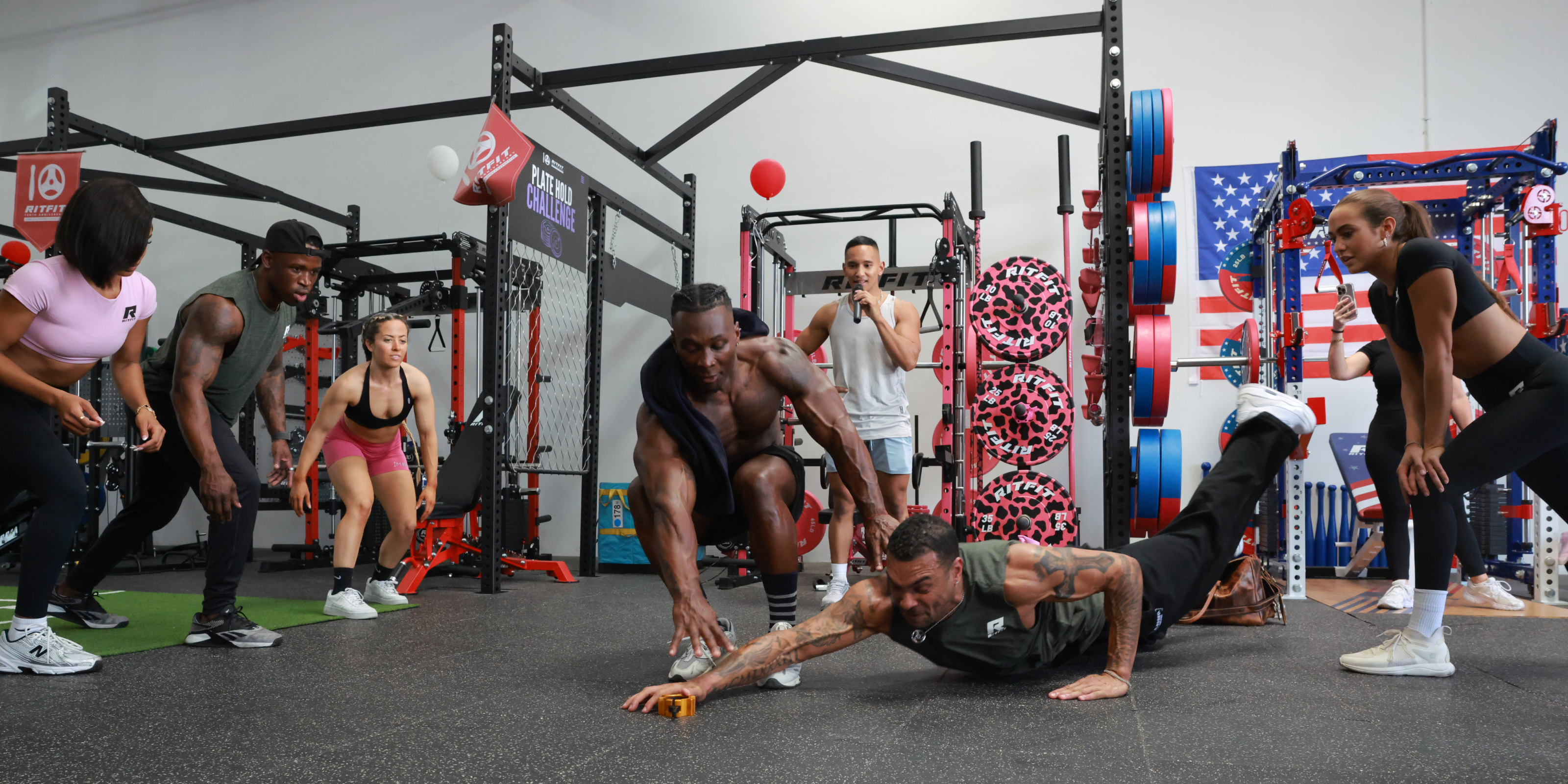
The Legs & Glutes Builder Workout is Brooke Mora's official RitFit follow along session for building stronger quads, glutes, and hamstrings in one lower body day. You run it as a guided video, moving from a short warm up into compound lifts and then hip and hamstring accessory work.
This guide breaks down what each movement trains, how much weight to use, smart substitutions, and when to add load or stop for pain, so you can follow the session safely and keep progressing for months.
Quick Answer: Brooke Mora's Legs & Glutes Builder Workout is a guided RitFit lower body session that trains the quads, glutes, and hamstrings through compound lifts and hip and hamstring accessory work, and you can run the session at home on a leg press, hack squat, or Smith machine setup.
Key Takeaways
- What it is: The Legs & Glutes Builder Workout is Brooke Mora's official RitFit follow along session for stronger quads, glutes, and hamstrings.
- How it is built: The session pairs compound lifts like hack squats and leg presses with hip and hamstring accessory work after a short warm up.
- How much weight: Choose loads that leave about 1-3 reps in reserve so every set ends with clean, controlled form.
- How to progress: Run the workout about twice per week and add load only after you clear every set at the top of your rep range.
- When to stop: Stop for sharp or pinching joint pain and see a professional if pain lingers beyond normal soreness.
Inside Brooke Mora's Legs and Glutes Builder Workout
Brooke Mora's Legs & Glutes Builder Workout is a guided lower body session that trains the quadriceps, glutes, hamstrings, and hip stabilizers in one sitting. A short dynamic warm up opens the session before compound lifts and hip and hamstring accessory work. Follow the embedded official video to match Brooke's pacing and coaching cues.
What the Session Targets
Every rep in this workout aims at the lower body, so the quadriceps, glutes, hamstrings, and hip abductors and adductors all get trained in one session. Resistance training drives gluteus maximus hypertrophy, and the hip extension work here targets exactly that.[1]
The Movement Patterns and the Muscles They Hit
A legs and glutes session like this one is built from a few core movement patterns, and each pattern trains a specific part of the lower body.
- Squat and hack squat pattern: drives the quadriceps and glutes while the core stays braced under load.
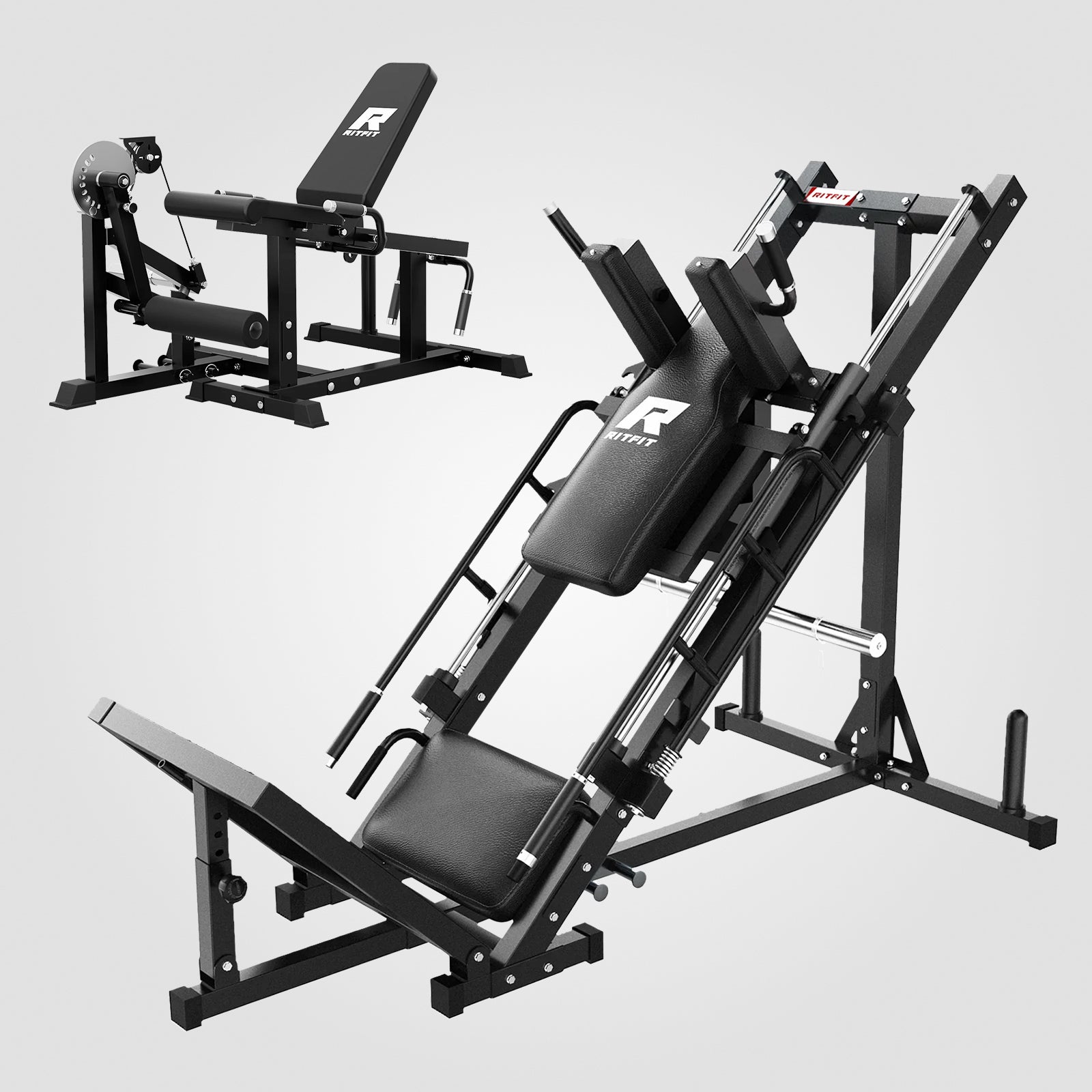
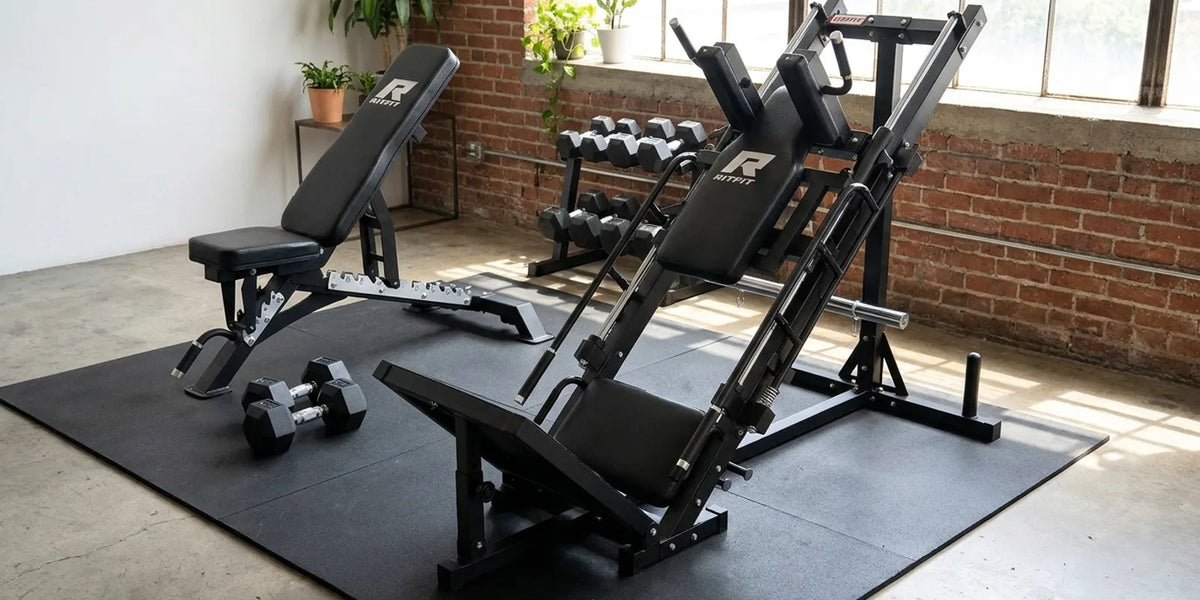
- Leg press: loads the quads and glutes heavily with less strain on the lower back, and a 3 in 1 leg press and hack squat machine covers this pattern well.
- Hip extension and hip thrust: targets the gluteus maximus through a full hip extension range.
- Hip abduction and adduction: trains the side glutes and inner thighs for hip stability.
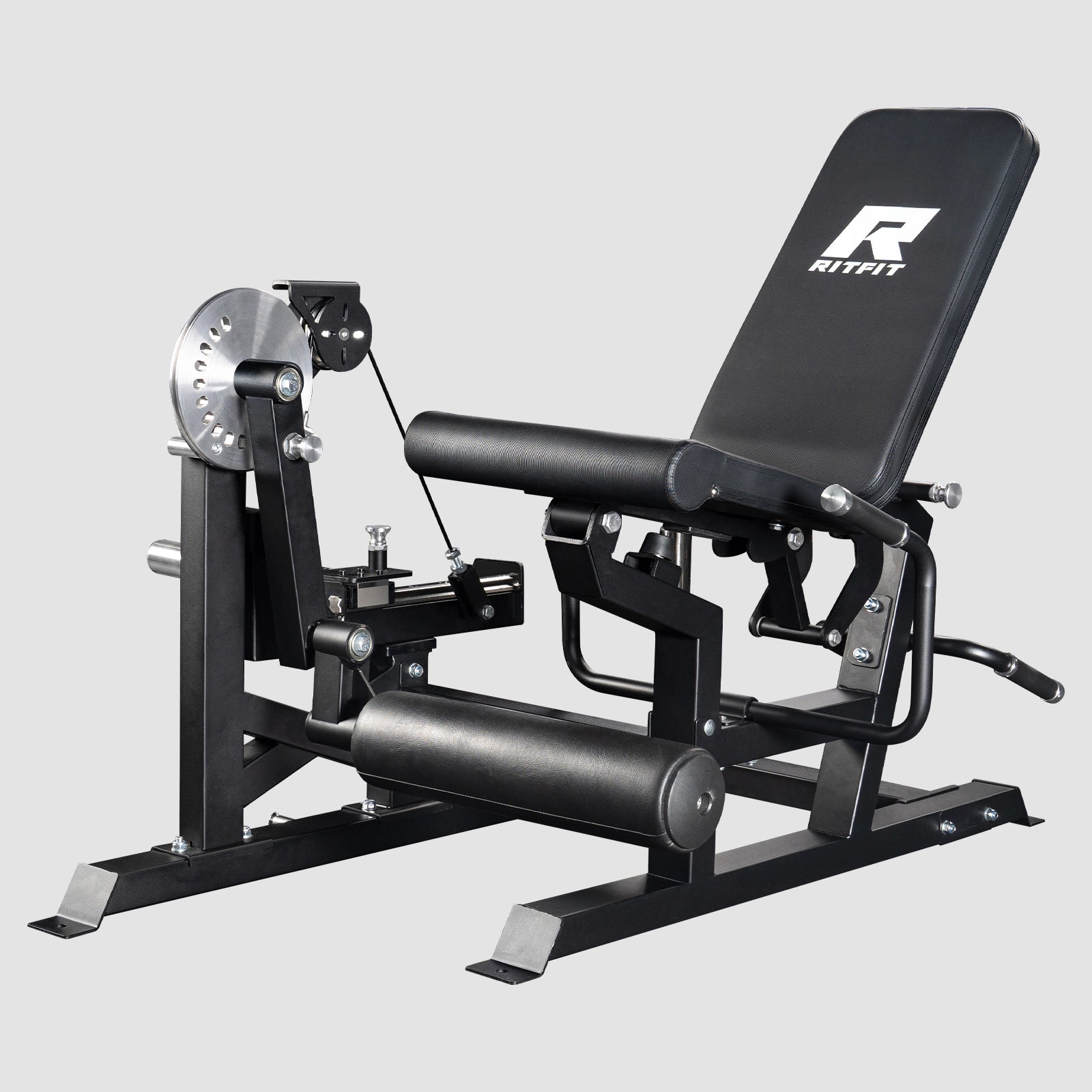
- Hamstring curl: trains knee flexion to balance the hamstrings against the quads, and a leg extension and curl machine isolates it cleanly.
- Single leg work like reverse lunges: fixes left to right imbalances and builds balance.
The official video runs 18:43 (1,123 seconds) and has drawn about 2,854 views since it went live on September 17, 2026. As a documented starting point, a comparable RitFit lower body session programs its compound lifts at roughly 3 sets x 10 reps and opens with about 3 minutes of dynamic warm up, so treat those numbers as a template to adjust rather than a fixed rule.
The Machine Setup Behind the Workout
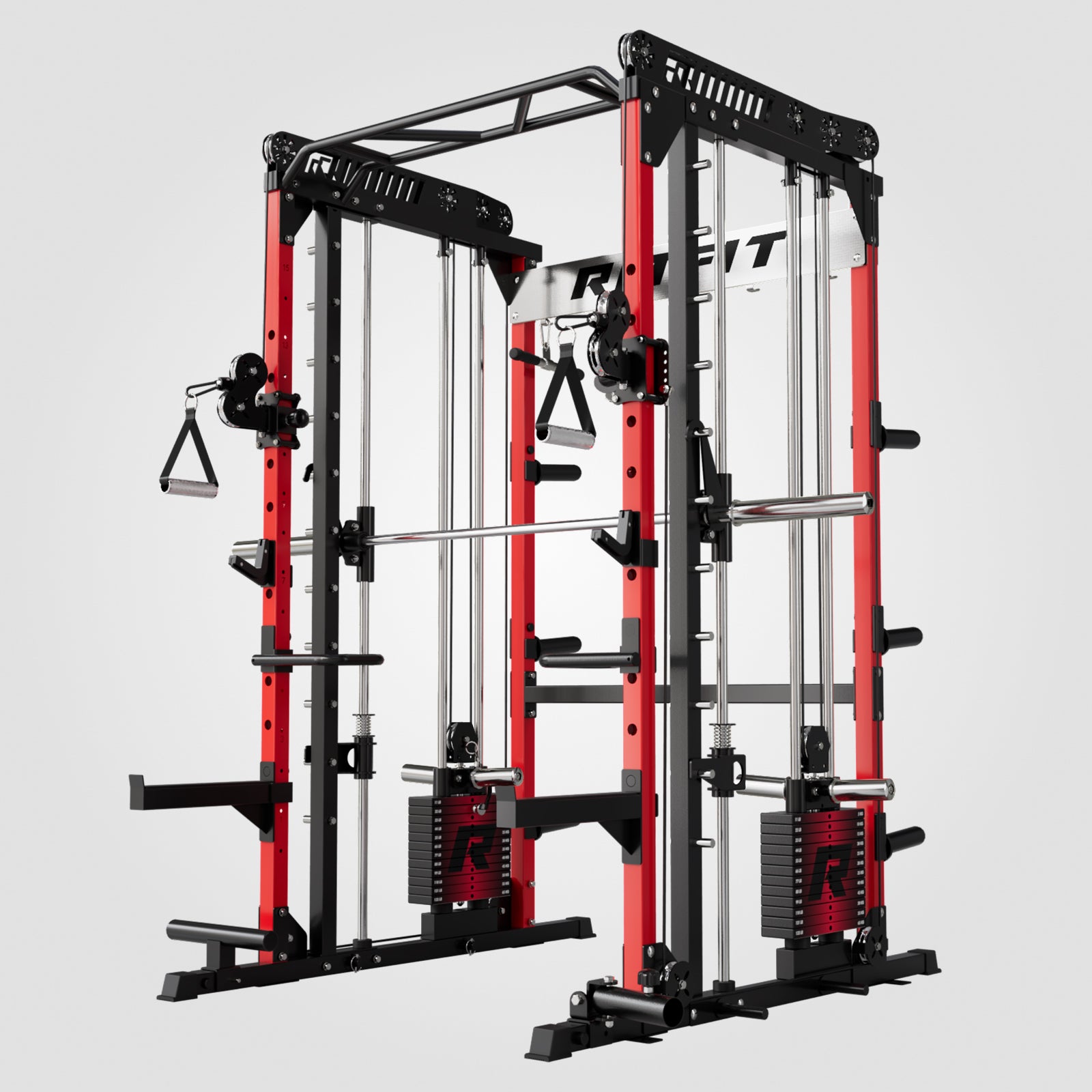
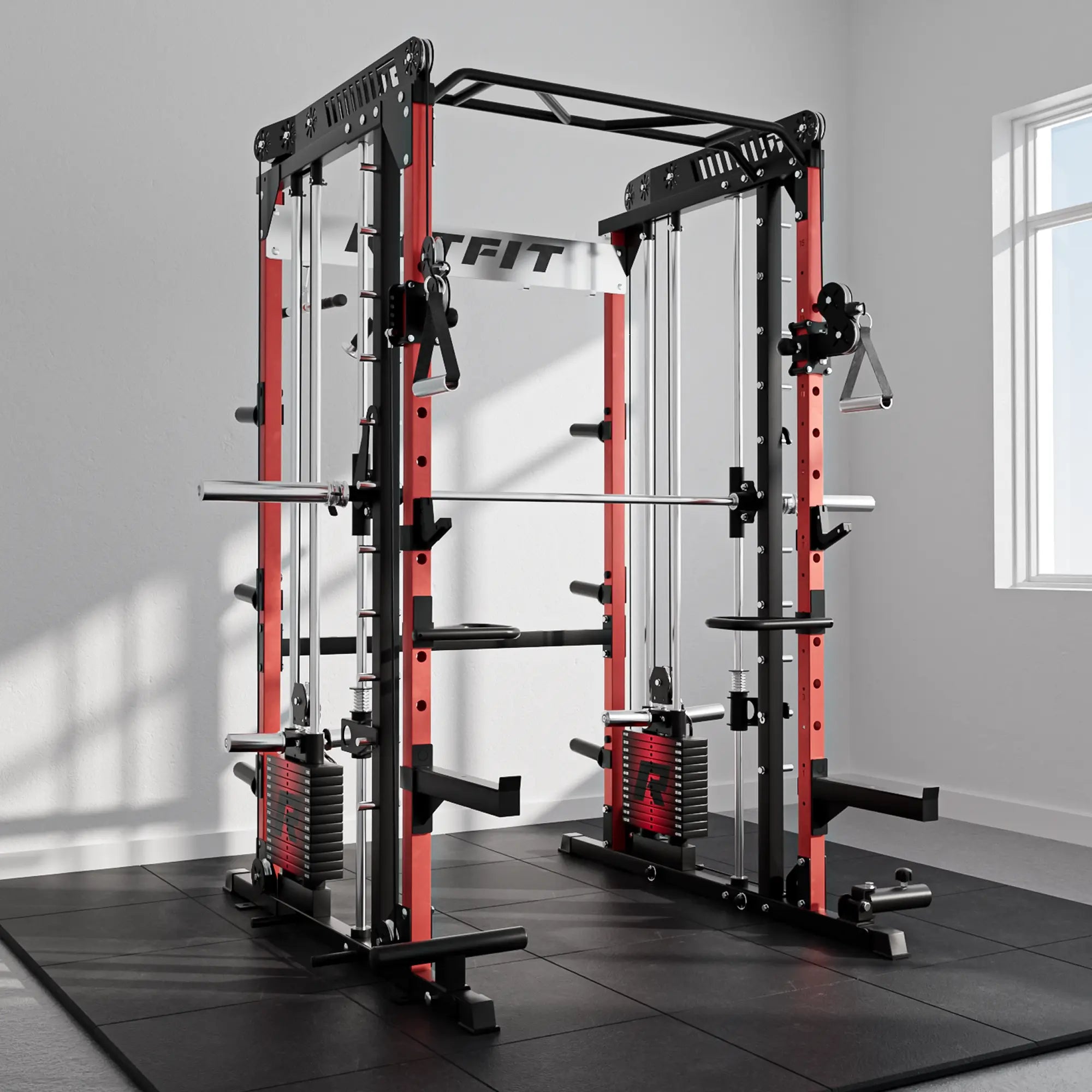
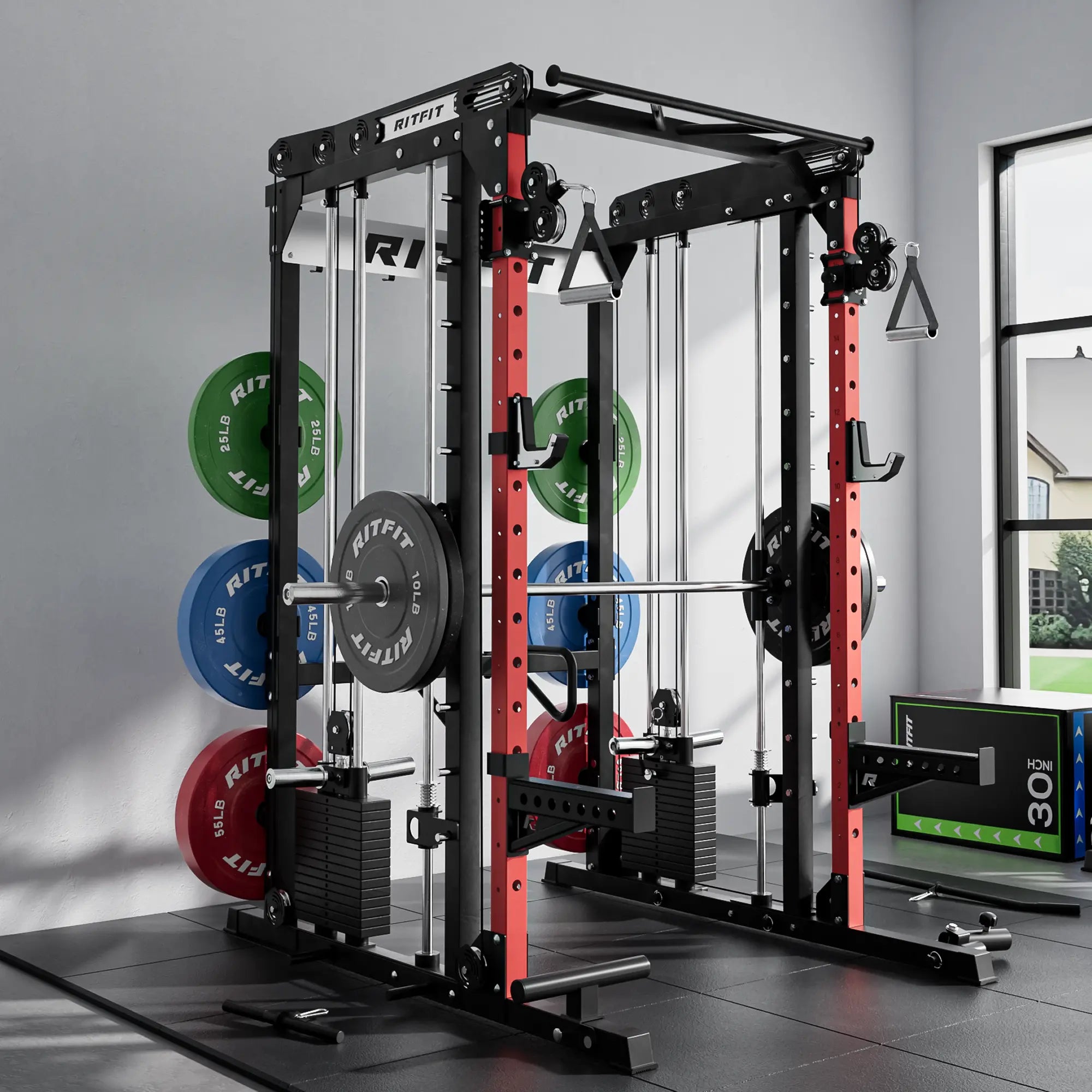
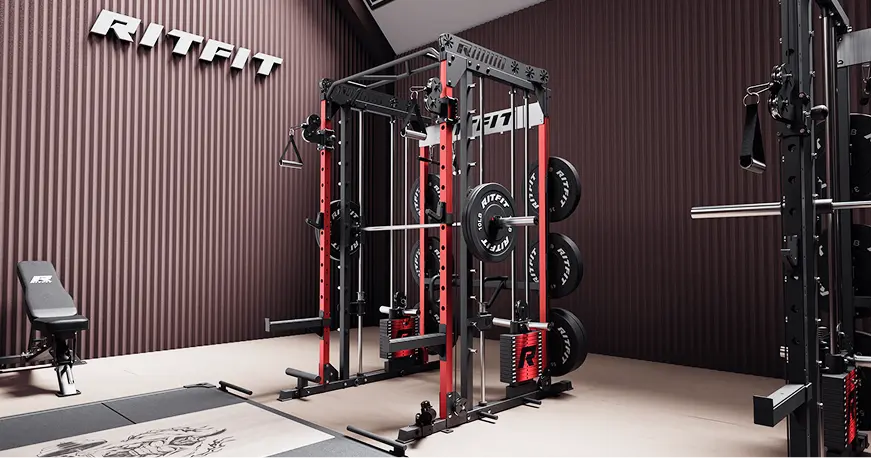
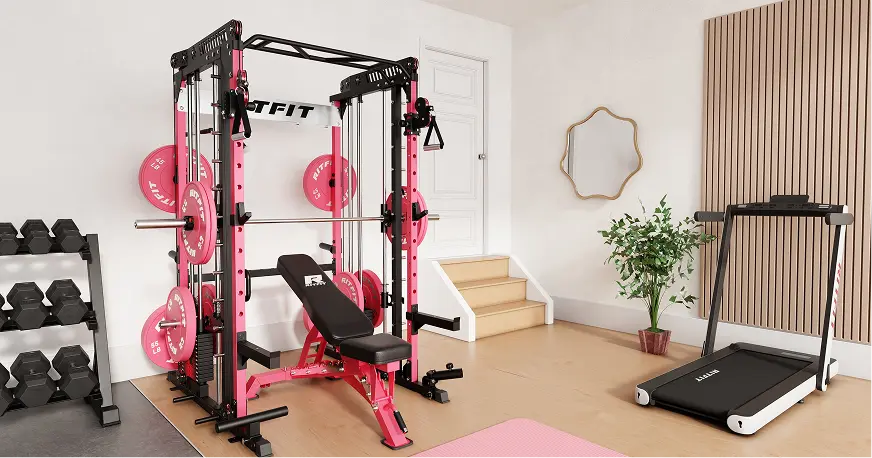
An all in one strength station powers this legs and glutes session, pairing a guided bar with leg press, hack squat, and leg extension attachments. A guided bar path and integrated safety catches let lifters push a set near failure without a spotter. The fixed path keeps heavy squats stable so the effort goes into the legs rather than into balance.
Why a Guided Bar Path Helps You Train Legs Near Failure Safely
A guided bar path removes the balance demand of a free bar, so you can chase the last hard reps without a spotter. Integrated safety catches stop the bar if a rep goes bad, which matters most on heavy squats and presses when you train alone at home.
- Guided bar station: a Smith machine home gym package gives a fixed bar path and safety catches for heavy squats and presses.
- Press and squat station: a dedicated leg press and hack squat setup loads the quads and glutes while sparing the lower back.
- Foot placement: swapping the leg press foot plate shifts the emphasis between quads and glutes.
When you want to compare stations for this style of training, browse the leg press machines to match the setup to your space and budget.
"Next, I do Smith machine squats for the quads and glutes. Here I get as deep as I can and explode out of the hole. Doing these on the Smith allows me to push my last set to failure without worrying about dumping the bar."
Jeff Nippard, Science-Based Natural Bodybuilder and Powerlifter, JeffNippard.com, Jeff Nippard's Science-Backed Leg Workout for Massive Quads
How Much Weight Should You Use on Each Movement?
The right weight for each movement is one that lets you finish every rep with clean form and about 1-3 reps left in reserve at the end of each set. Loading close to, but not past, technical failure is one of the reliable drivers of muscle growth.[2] Start lighter than you think you need, and add load only once the top of your rep range feels controlled.
- Warm up first: run 2-3 lighter ramp up sets before your working loads to prime the joints and the pattern.
- Leave 1-3 reps in reserve: the last rep should feel hard, but your form stays intact from the first rep to the last.
- Match weight to the movement: use heavier loads on the leg press and hack squat, and lighter controlled loads on curls and hip work.
- Rest by effort: take about 60-90 seconds between isolation sets and 2-3 minutes before heavy compound sets.
Common Mistakes to Avoid
Most loading mistakes come from rushing the basics, and each one cuts into progress or raises injury risk. The fixes are simple once you know what to watch for.
- Ego lifting: piling on weight before the rep is clean, which shifts strain to the joints instead of the muscles.
- Skipping the warm up: jumping straight to heavy loads without ramp up sets, which stiffens the pattern and the joints.
- Adding weight too fast: loading more before you own the top of the rep range, which stalls progress and breaks form.
Movement Substitutions for Every Lower-Body Pattern
Every lower body pattern in this workout has a swap that trains the same muscles when a machine or a movement does not suit you. Match each substitution to the movement pattern so the quads, glutes, and hamstrings still get worked from similar angles. These swaps keep the session useful even in a bare home gym.
- Leg press or hack squat: swap for goblet squats, dumbbell lunges, or a bodyweight squat to a box, or keep the machine version at home with a Gazelle Pro leg press and hack squat machine.
- Hip thrust: swap for glute bridges or a dumbbell hip thrust off the edge of a bench.
- Hip abduction and adduction: swap for banded lateral walks, or isolate both sides on a hip adduction and abduction machine.
- Hamstring curl: swap for Romanian deadlifts or sliding leg curls, and this leg extension and curl combo machine workouts guide shows more curl options.
- Single leg work: swap reverse lunges for split squats or step ups when balance limits the movement.
How Often Should You Run It and When Should You Add Weight?
Most lifters can run this legs and glutes session about twice per week, leaving at least a couple of rest days between sittings. Weekly training volume is one of the clearest drivers of muscle growth, so more hard sets tend to produce more size up to a point.[3] Add weight only after you clear every set at the top of your rep range with clean form.
- Frequency: about 2 sessions per week per muscle group leaves room for recovery while still adding weekly volume.
- Add load when: you hit the top of the rep range on every set with 1-3 reps still in reserve.
- Extend before you load: on isolation moves, add reps toward the top of the range before you add weight.
- Deload when progress stalls: if reps or load stall for a couple of weeks or soreness lingers, take an easy week at lighter loads.
Having the right stations at home makes the weekly schedule easier to keep. A full leg workout package bundles the leg press, hack squat, and calf raise work in one setup so the session is always ready to run.
When Should You Stop Because of Pain?
Sharp, pinching, or one sided joint pain is the signal to stop a set right away instead of pushing through it. Mild soreness in the days after a hard session is typical, but pain that changes your movement or worsens as you train means back off. Rest the area and, if the pain lingers beyond normal soreness, see a qualified professional.
- Normal: muscular effort, a burning feel in the muscle, and mild soreness for a day or two after training.
- Stop right away: sharp or pinching joint pain, pain on one side only, or a pop with immediate weakness.
- Back off and deload: if soreness lingers beyond a few days or your performance drops, take a lighter week.
- See a professional: if pain persists, changes your movement, or follows an injury, get it checked before loading again.
FAQs About the Legs and Glutes Builder Workout
What is the Legs and Glutes Builder Workout?
It is the official RitFit follow along lower body session led by trainer Brooke Mora. The workout pairs compound movements such as hack squats and leg presses with hip and hamstring accessory work to train the quadriceps, glutes, and hamstrings in one structured session.
How much weight should I use on this workout?
Choose a load that lets you finish each set with clean form and roughly one to three reps left in reserve. The final reps should feel challenging without breaking technique, and you should add load only after every set is completed with good control.
How often should I run this legs and glutes workout?
Most lifters can run a lower body session like this about twice per week with at least a couple of rest days between sessions. The right frequency depends on your recovery, total weekly volume, and training experience, so adjust it based on how quickly soreness fades.
What can I use instead of a leg press machine?
Swap the leg press for goblet squats, dumbbell lunges, or a hip thrust to keep loading the same muscle groups. Match each substitution to the movement pattern so the quads, glutes, and hamstrings still get trained from similar angles and ranges.
When should I stop because of pain during the workout?
End a set if you feel sharp, pinching, or one sided joint pain instead of normal muscular effort or mild soreness. Pain that changes your movement, worsens as you train, or lingers for several days is a signal to rest and, if it persists, to see a qualified professional.
Is this workout good for building the glutes?
Yes. It targets the gluteus maximus through hip extension work such as hip thrusts and presses alongside quad and hamstring training. Research links this kind of resistance training to gluteus maximus hypertrophy when it is paired with enough weekly volume and steady progression.
Do I need a spotter to follow this workout?
No. The session is built around machines and controlled movements, and a Smith machine with a guided bar path and safety catches lets you push close to failure without a spotter. Always set the safety stops before your heaviest sets and keep the load manageable.
Conclusion
Brooke Mora's Legs & Glutes Builder Workout is a simple, repeatable way to train the quads, glutes, and hamstrings at home. Follow the video, load each movement with 1-3 reps in reserve, and add weight only when every set at the top of your rep range feels controlled.
If you are building out a home gym for this session, start with the stations you will use most and check the RitFit discount guide before you buy.
Disclaimer
This article shares general training information for the Legs and Glutes Builder Workout and is not medical or healthcare advice. Consult a qualified professional before starting a new exercise program, especially if you have an injury or a health condition.
References
1. Krause Neto W, Krause TLV, Gama EF. The impact of resistance training on gluteus maximus hypertrophy: a systematic review and meta-analysis. Front Physiol. 2025;16:1542334. doi:10.3389/fphys.2025.1542334. PMCID: PMC12018462
2. Bernárdez-Vázquez R, Raya-González J, Castillo D, Beato M. Resistance Training Variables for Optimization of Muscle Hypertrophy: An Umbrella Review. Front Sports Act Living. 2022;4:949021. doi:10.3389/fspor.2022.949021. PMCID: PMC9302196
3. Baz-Valle E, Balsalobre-Fernández C, Alix-Fages C, Santos-Concejero J. A Systematic Review of The Effects of Different Resistance Training Volumes on Muscle Hypertrophy. J Hum Kinet. 2022;81:199-210. doi:10.2478/hukin-2022-0017. PMCID: PMC8884877