A monolift is a rack attachment that pivots a loaded squat bar away from the uprights, letting a lifter unrack and re-rack a squat without walking the bar out or back in. It is standard equipment in most powerlifting federations and shows up on some home rack attachments too.
This guide explains how a monolift works, how it differs from a standard power rack, when competition rules require one, and how to train the walkout even if your gym does not have one.
Quick Answer: A monolift is a pivoting rack attachment that swings the loaded bar toward the lifter and away from the uprights, removing the need to walk the bar out before squatting. It saves energy and reduces spotter demands, which is why most powerlifting federations require or allow one at meets, though most home gyms use a standard power rack instead.
Key Takeaways
- Mechanism: A monolift pivots the loaded bar toward the lifter, removing the walkout step entirely.
- Competition use: Most powerlifting federations require or permit a monolift at sanctioned meets.
- Energy savings: Skipping the walkout preserves leg and trunk energy for the squat itself.
- Home gyms: A standard power rack with safety pins and a spotter remains the practical default at home.
- Attachments: Some rack attachments mimic monolift pivoting without a full standalone station.
What Is a Monolift and How Does It Work?
A monolift is a rack attachment with a pivoting arm that swings a loaded squat bar out to the lifter and back to the uprights, so the lifter never has to walk the bar out of the rack before squatting. According to BarBend, the device was designed to reduce the physical toll of the walkout on heavy attempts.
- Pivot arm: Holds the J-hooks and rotates on a base, moving the bar instead of the lifter.
- Handler control: A spotter or handler releases the pivot after the lifter sets their position under the bar.
- Re-rack: After the squat, the handler swings the bar back to the uprights for a controlled rack.
Because the lifter stays in one spot throughout the lift, a monolift is most useful for near-maximal attempts where every bit of saved energy matters. Learn the fundamentals in our guide to how to use a squat rack.
Monolift vs Power Rack vs Combo Rack: What Are the Key Differences?
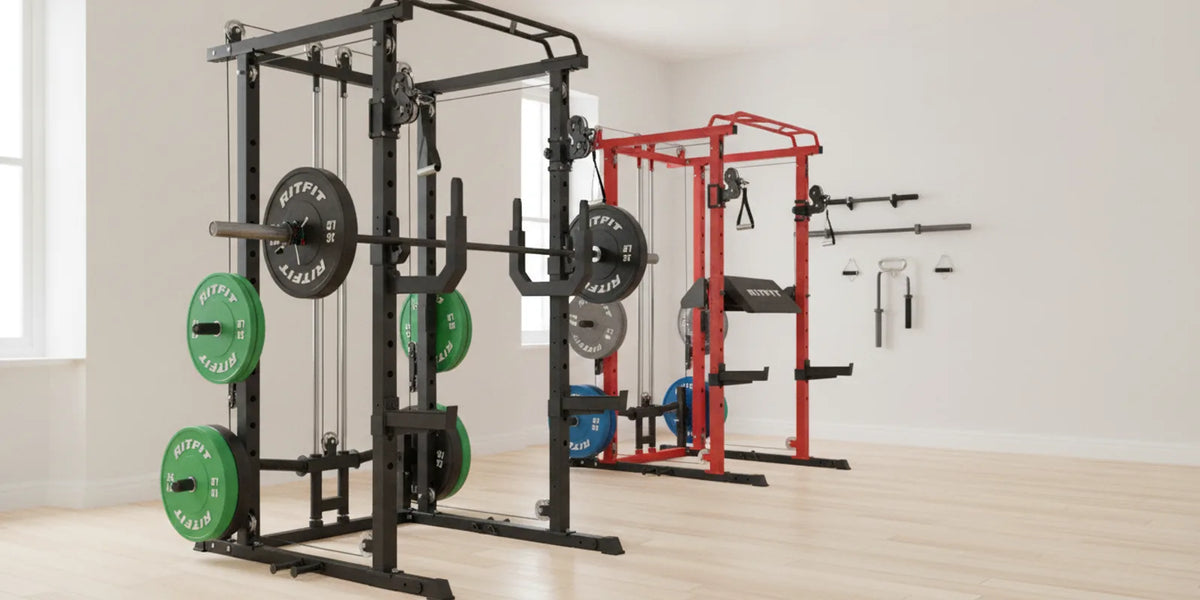
A monolift removes the walkout step through a pivoting arm, while a standard power rack requires the lifter to unrack the bar and step back before squatting. Combo racks blend features of both but typically keep the fixed-upright design of a power rack.
- Footprint: EliteFTS notes that a monolift setup often needs a wider stance than a standard rack to clear the pivot arm.
- Safety hardware: Power racks use fixed safety pins or straps at every hole; monolifts rely on the handler's control of the pivot.
- Versatility: Power racks support pulling, pressing, and accessory work; monolifts are built almost exclusively for the squat walkout.
For lifters who need one station to do everything, a power rack vs squat rack comparison is the more practical starting point than a dedicated monolift.
Why Do Powerlifters Use a Monolift?
Powerlifters use a monolift to conserve leg and trunk energy that would otherwise go into walking a heavy bar out of the rack. Research on squat lifting shows that whole body and local muscle fatigue accumulate quickly under heavy loads, so removing an extra loaded step before the lift has a real physiological cost benefit.[1]
Trunk stabilizers are already working hard during a heavy back squat. A study on trunk muscle activation during fatiguing heavy squat sets found high trunk demand even before considering the walkout, which supports why competitive lifters try to eliminate that step entirely.[2]
How Do You Set Up and Use a Monolift Safely?
Set up a monolift by locking the base, adjusting the J-hooks to the lifter's rack height, and confirming the handler understands the pivot signal before any working weight goes on the bar. Kustom Kit notes that most monolift units use a hydraulic ram or a locking pin to hold the arm steady until the handler releases it.
- Lock the base: Confirm the unit is bolted or weighted down so it cannot shift under load.
- Set hook height: Match the J-hooks to the lifter's unrack height, same as on a power rack.
- Communicate the signal: Agree on a verbal or nod cue between lifter and handler before the pivot moves.
- Control the swing: The handler should rotate the arm smoothly, not snap it into place.
Always run a light warm-up set through the full pivot cycle before loading heavy weight, and check squat rack dimensions if you are comparing footprint against a standard rack.
What Mistakes to Avoid on a Monolift?
Beginners most often rush the handoff signal or fail to check that the pivot base is locked before loading weight. Both mistakes can shift the bar path unexpectedly and put the lifter off balance right at unrack.
- Skipping the warm-up cycle: Always run the pivot through a light set before adding heavy plates.
- Unclear signals: Agree on the handoff cue every time, even with a familiar handler.
- Ignoring stance width: Set foot position for the pivot arm's swing path, not just for the squat itself.
- Loading before locking: Confirm the base is secured before any plates go on the bar.
Are Monolifts Allowed in Competition?
Yes, most major powerlifting federations allow or require a monolift at sanctioned meets, though exact rules vary by organization. Kustom Kit notes that federations such as USAPL and USPA commonly use monolift stations for the squat portion of competition.
Always confirm the current rulebook for your specific federation and meet before assuming monolift availability, since equipment requirements can change between competition cycles.
Monolift Attachments vs Full Monolift Stations: Which Fits Your Gym?
A full monolift station is a dedicated, standalone unit built only for the pivoting walkout, while a monolift-style attachment mounts onto an existing power rack for some of the same benefit in less floor space. Most home and small commercial gyms are better served by the attachment route.
- Full station: Best for dedicated powerlifting facilities with space to spare and frequent max-effort squat days.
- Rack attachment: Fits into an existing setup, such as a hack squat rack attachment, without a second large footprint.
- Browse options: See the full range of rack attachments to compare what mounts to your current rack.
If your rack already covers squats, presses, and pulls, weigh the tradeoff against a smith machine vs squat rack comparison and consider jammer arms for a power rack as another specialty attachment option.
No Monolift? How Do You Train the Walkout in a Power Rack?
Without a monolift, train the walkout by practicing a consistent unrack, step-back, and reset sequence on a standard power rack until it becomes automatic. Treat the walkout itself as a skill to drill, not just a formality before the squat.
- Practice the same step count: Use the same number of steps back every set so the setup becomes automatic under fatigue.
- Train heavy singles with a spotter: A power rack with adjustable safety pins lets you walk out near-maximal loads safely.
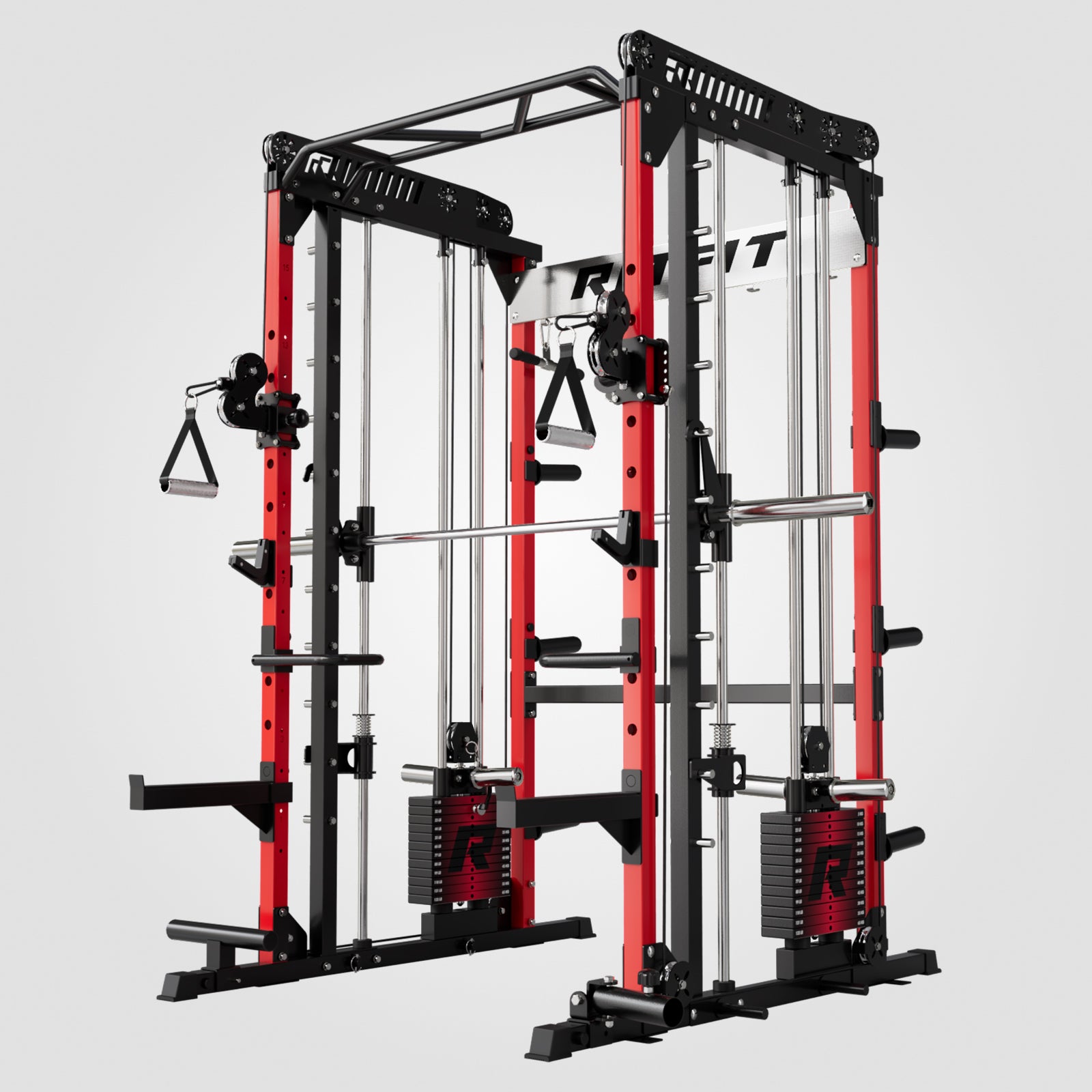
- Use a cable crossover station for accessory work: A combo rack keeps squat, press, and cable work in one footprint.

This kind of combo station covers the squat walkout drill plus pressing and cable accessory work in one footprint, which is worth comparing against the top power rack exercises and a best squat rack for small spaces guide, or browse the full power rack package collection.
Is a Monolift Worth It for Your Gym?
A monolift is worth it mainly for competitive powerlifters training near-maximal squats where saved energy on the walkout matters, and less useful for general strength training at home. Comparisons of muscle activation across different back squat loads show that technique and bar path consistency matter more for most lifters than removing the walkout step.[3]
For most home gyms, a versatile rack package that handles squats, presses, and accessory work will deliver more day-to-day value than a dedicated monolift station.
"The walkout is where a lot of lifters leak energy they need for the actual squat. A monolift takes that variable away, which is exactly why you see it at every serious meet."
Dave Tate, Founder, EliteFTS
FAQs About Monolifts
What does a monolift do differently from a power rack?
A monolift pivots the loaded bar to the lifter and back, removing the walkout step entirely, while a power rack requires the lifter to unrack the bar and step back before squatting. This makes the monolift a specialized tool built for one movement.
Do you need a monolift to compete in powerlifting?
Not always, since equipment rules vary by federation and by meet, but many sanctioned competitions provide or require a monolift for the squat portion. Always check your specific federation's current rulebook before a competition to confirm exact equipment requirements and avoid a surprise at the platform.
Why do powerlifters prefer a monolift over walking out the bar?
Powerlifters prefer a monolift because walking out a heavy bar adds extra fatigue to muscles that are already under load right before the squat begins. Removing that step preserves energy for the working set itself, which matters most on near-maximal attempts where every bit of reserve counts.
Can a home gym rack attachment work like a monolift?
Yes, some rack attachments add a pivoting or sliding motion that mimics part of a monolift's function without the footprint of a full standalone station. These attachments mount onto an existing power rack instead of requiring a separate unit, which keeps the setup compact for smaller home gyms.
How much space does a monolift setup need compared to a power rack?
A monolift setup generally needs a wider stance than a standard power rack to clear the pivot arm's swing path as it moves the bar toward the lifter. This makes footprint a key factor when comparing a dedicated monolift against a combo rack for a home gym or small training space.
Is a monolift necessary for a home gym?
No, most home gym lifters get more day-to-day value from a versatile power rack that supports squats, presses, pulls, and accessory work in one footprint. A monolift's benefit is concentrated in competitive, near-maximal squat attempts rather than the general strength training most home lifters do.
Conclusion
A monolift is a pivoting rack attachment built to remove the squat walkout, saving energy for competitive lifters chasing near-maximal attempts. Most federations allow or require one at sanctioned meets, but the tradeoff is a narrower use case and a wider footprint than a standard rack.
For general strength training, check whether a versatile power rack setup already covers your squat, press, and accessory needs before investing in a dedicated monolift. A well-rounded rack package is the more practical choice for most home gyms.
Disclaimer
This article is for general informational purposes only and does not replace professional coaching, equipment manufacturer guidance, or official federation rulebooks. Consult a qualified coach and confirm your federation's current rules before relying on monolift training for competition, and always squat heavy loads with a spotter present.
Save on your next RitFit order
Tap the button to copy your code, then paste it at checkout.
References
1. Ahmad I, Kim JY. Assessment of Whole Body and Local Muscle Fatigue Using Electromyography and a Perceived Exertion Scale for Squat Lifting. Int J Environ Res Public Health. 2018;15(4). doi:10.3390/ijerph15040784
2. Clark DR, Lambert MI, Grigson C, Hunter AM. Impact of resistance training status on trunk muscle activation in a fatiguing set of heavy back squats. Eur J Appl Physiol. 2021;121(2):597-608. doi:10.1007/s00421-020-04540-0
3. van den Tillaar R, Andersen V, Saeterbakken AH. Comparison of muscle activation and kinematics during free-weight back squats with different loads. PLoS One. 2019;14(5):e0217044. doi:10.1371/journal.pone.0217044