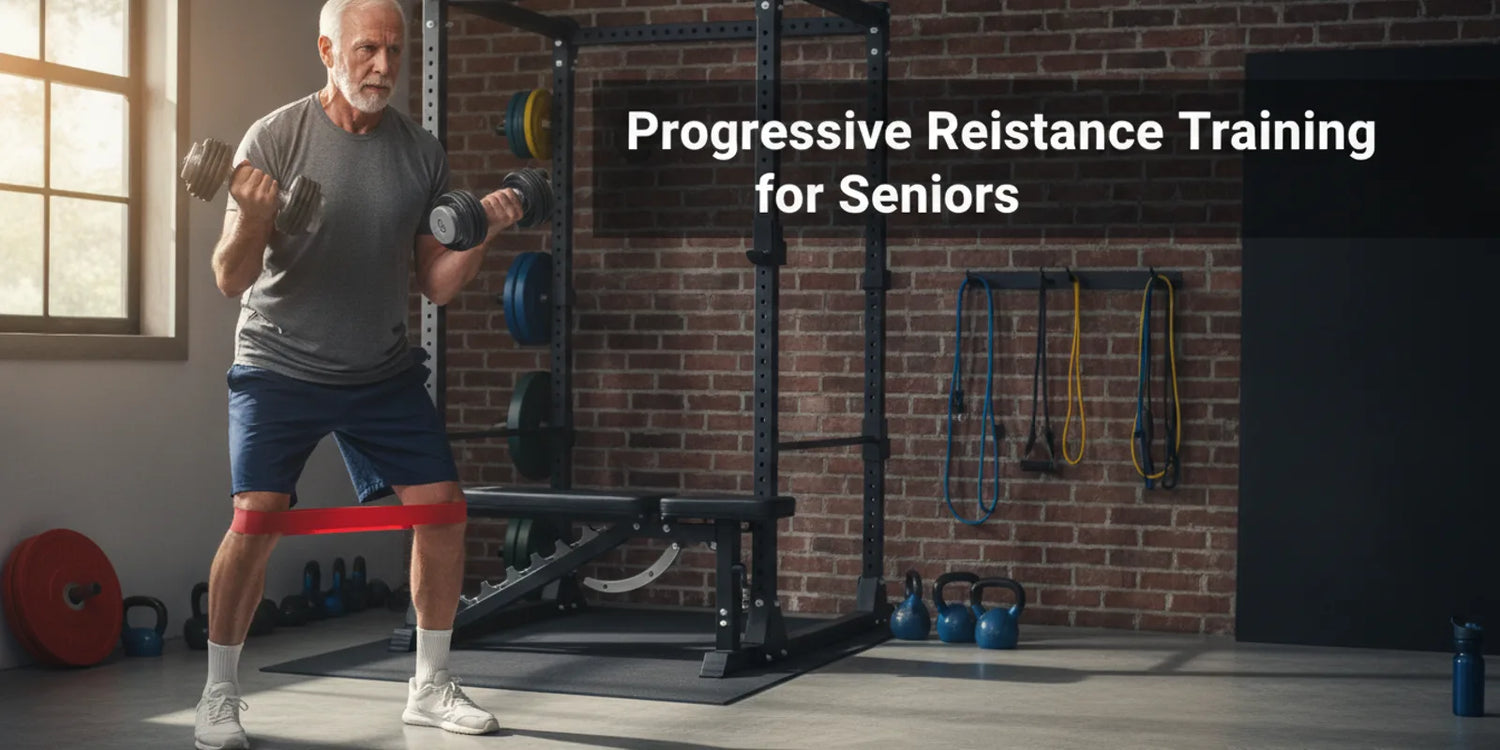
Progressive resistance training is a structured way of gradually increasing the load your muscles work against, and for older adults it is one of the most effective tools for staying strong and independent. This guide focuses on the part most senior fitness content skips, namely how to actually progress safely.
Written for healthy adults aged 60 and over who are new or returning to lifting, it covers starting weight, sets and reps, frequency, equipment, and when to add load or stop. Always get medical clearance before you begin.
Table of Contents
- What Does Progressive Resistance Training Mean for Seniors?
- Why Does Resistance Training Matter as You Age?
- How Do You Start Safely After 60?
- How Should Seniors Set Sets, Reps, Frequency, and Intensity?
- What Is the Best Home Equipment for Senior Beginners?
- What Does a Sample Beginner Week Look Like?
- What Are the Common Mistakes and When Should You Stop?
Key Takeaways
- Progression is the point: The benefit comes from gradually adding load, not just repeating the same easy movements forever.
- It is never too late: Older adults gain meaningful strength even after age 75 when training is consistent and progressive.
- Start light, train smart: Aim for 2 to 3 sessions per week, 2 to 3 sets of 8 to 12 reps per major muscle group.
- Bands first, then dumbbells: A band to dumbbell ladder lets you progress load in small, joint friendly steps at home.
- Know when to stop: Sharp or joint pain means stop the set, normal muscle effort is fine, and medical clearance comes first.
What Does Progressive Resistance Training Mean for Seniors?
Progressive resistance training for seniors means slowly and steadily increasing the resistance your muscles face over weeks and months, so they keep getting stronger. The word progressive is the key, because muscles only adapt when the challenge gradually grows beyond what they are used to.
- Resistance: The force your muscles push or pull against, from bands, dumbbells, or your own bodyweight.
- Progression: Adding small amounts of weight, reps, or sets as movements become easier and more controlled.
- Overload: The principle that muscles must be challenged a little more than usual to grow stronger.
Without progression, training stalls and strength plateaus. If you want a refresher on the basics, see what a rep is in strength training before you begin.
Why Does Resistance Training Matter as You Age?
Resistance training matters as you age because it directly fights the muscle loss, weakness, and fall risk that come with aging. A meta-analysis of 25 randomized controlled trials involving 1,302 older participants found resistance training significantly improved muscle strength and grip strength in older adults with sarcopenia.[1]
- Sarcopenia defense: Strength work counters the age related loss of muscle that begins in midlife.
- Functional gains: Better strength translates to easier stair climbing, lifting groceries, and standing from a chair.
- Fall prevention: Stronger legs and better balance reduce the risk and severity of falls.
Reversing Sarcopenia and Rebuilding Strength
Sarcopenia is the age related loss of muscle mass and function, and resistance training is widely recommended as a first line response. Reviewed evidence suggests moderate to high intensity work at 60 to 80 percent of one rep max, done 2 to 3 times per week with 2 to 3 sets of 8 to 12 reps over 8 to 12 weeks.[1]
It Is Never Too Late to Start
It is never too late to begin, and the gains can be life changing for independence. In one randomized controlled trial, 70 mobility limited older adults with a mean age of 78.9 years improved their maximal strength after just 12 weeks of progressive resistance training three days per week.[2]
"There's certainly people in their 60s, 70s, and even 80s that have more muscle than they had when they were 20, when they started resistance training later in life. So I would say that the key, in my humble opinion, to staving off sarcopenia is resistance training."
Brad Schoenfeld, PhD, Exercise Science Researcher, CUNY Lehman College, ZOE Podcast
How Do You Start Safely After 60?
You start safely after 60 by getting medical clearance first, then choosing simple movements and very light resistance before adding any load. This matters most if you have heart conditions, high blood pressure, recent surgery, or joint problems, where a doctor's sign off is essential.
- Get cleared: Talk to your doctor before starting, especially with any chronic condition.
- Master form first: Practice each movement with bodyweight or a band before adding weight.
- Warm up: Spend 5 to 10 minutes on light marching, arm circles, and gentle mobility.
Beginning with simple, controlled movements builds confidence and protects your joints. A pair of best fitness accessories for seniors can make those first sessions safer and more comfortable.
How Should Seniors Set Sets, Reps, Frequency, and Intensity?
Seniors should train each major muscle group 2 to 3 times per week, doing 2 to 3 sets of 8 to 12 reps at a moderate effort. This framework comes from the FITT-VP approach, which balances frequency, intensity, time, and progression for safe, steady gains.
- Frequency: 2 to 3 sessions weekly, with at least one rest day between sessions for the same muscles.
- Volume: 2 to 3 sets of 8 to 12 reps per major muscle group.
- Intensity: A weight where the last two reps feel challenging but your form stays clean.
Recovery becomes more important with age, so never train the same muscles on back to back days. Learning what resistance bands help with can help you scale intensity in small steps.
How to Choose Your Starting Weight
Choose a starting weight that lets you complete 8 to 12 controlled reps where only the final two feel hard, often just bodyweight, a band, or 1 to 3 pound dumbbells. If your form breaks down or you cannot finish the set, the weight is too heavy.
When and How to Add Weight (Progression Triggers)
Add resistance once you can complete all sets and reps with good form and the last reps no longer feel challenging, ideally when you exceed your target by two reps for two sessions in a row. Increase in small steps and always keep controlled form over heavier load.
What Is the Best Home Equipment for Senior Beginners?
The best home equipment for senior beginners is gear that is joint friendly, easy to control, and allows small load increases, which makes resistance bands and light dumbbells the top picks. A 2024 randomized controlled trial found 12 weeks of graded progressive home based resistance plus aerobic exercise improved strength, balance, and flexibility in community dwelling older adults.[3]
- Resistance bands: Light, inexpensive, and gentle on joints, ideal for the earliest weeks.
- Light dumbbells: Allow precise, gradual load increases as you get stronger.
- A sturdy chair: Provides support for balance during standing exercises.
Browse a set of resistance bands to begin, then explore functional training equipment as you advance.
The Resistance Band to Dumbbell Ladder
A practical progression is to start with bands for the first few weeks, then add light dumbbells as your control and confidence improve. For deeper guidance see best home gym equipment for seniors, and avoid early errors by reviewing common resistance band mistakes.
What Does a Sample Beginner Week Look Like?
A sample beginner week looks like two or three short full body sessions, each lasting 20 to 30 minutes, with rest days in between. Each session works the major muscle groups with simple movements like squats to a chair, rows, and overhead presses.
- Day 1: Full body session, 2 sets of 8 to 12 reps per exercise.
- Day 2: Rest, light walking, or gentle stretching.
- Day 3: Repeat the full body session, adding a rep or two if it felt easy.
The standing routine below is a beginner friendly example of how to put these movements together at home.
Exercise Substitutions for Joint-Friendly Training
Swap any movement that causes joint discomfort for a gentler version, such as replacing lunges with a supported sit to stand or a deep squat with a partial range chair squat. A lighter lighter training barbell can also reduce strain once you progress beyond dumbbells.
What Are the Common Mistakes and When Should You Stop?
The most common mistakes are progressing load too quickly, skipping rest days, and using momentum instead of controlled movement. Each of these raises injury risk and slows your long term progress, so prioritize form and recovery over speed.
- Adding weight too fast: Increase load in small steps, not large jumps.
- Skipping recovery: Muscles rebuild on rest days, which matter more with age.
- Holding your breath: Exhale on effort and never strain against a closed throat.
Patience and consistency beat intensity for older beginners. To understand the bigger picture, read about resistance training for sarcopenia.
Pain vs Normal Effort: When to Stop a Set
Stop a set immediately if you feel sharp, stabbing, or joint pain, dizziness, chest tightness, or shortness of breath. Normal muscle fatigue and a mild burn are expected, but pain is a signal to rest and, if it persists, to consult your doctor.
FAQs About Progressive Resistance Training for Seniors
Is it safe to start strength training in your 70s or 80s?
Yes, for most healthy older adults it is both safe and beneficial, and research shows meaningful strength gains even after age 75. Start with light resistance, focus on form, and progress gradually. However, always get clearance from your doctor first, especially if you have heart conditions, uncontrolled blood pressure, recent surgery, or joint problems before beginning any new program.
How often should seniors do resistance training?
Most evidence based guidelines recommend training the major muscle groups two to three times per week, with at least one rest day between sessions for the same muscles. Two sessions a week is the practical minimum. Recovery matters more as you age, so do not train the same muscles on back to back days.
What weight should an older beginner start with?
Start lighter than you think you need, often just bodyweight, resistance bands, or one to three pound dumbbells. The right weight lets you complete eight to twelve controlled reps while the last two feel challenging but never painful. If your form breaks down or you cannot finish the set, the weight is too heavy.
How long until seniors see results from resistance training?
Many older adults notice improved strength and easier daily tasks within four to eight weeks of consistent training. Research on adults with sarcopenia commonly reports significant strength gains over an eight to twelve week period. Visible muscle changes take longer and are usually modest, but functional benefits like better balance often come first.
Are resistance bands or dumbbells better for seniors?
Both work well, and many seniors benefit from starting with bands before progressing to dumbbells. Resistance bands are joint friendly, inexpensive, and easy to control, making them ideal for the earliest weeks. Dumbbells allow more precise, gradual load increases as you get stronger, so begin with bands then add light dumbbells over time.
When should a senior add more weight or resistance?
Add resistance once you can comfortably complete all your prescribed sets and reps with good form, and the final reps no longer feel challenging. A common rule is to increase the load slightly when you can do two or more reps beyond your target for two sessions in a row. Always increase in small steps.
Conclusion
Progressive resistance training gives older adults a proven path to more strength, better balance, and lasting independence. The secret is steady progression, starting light and adding small amounts of load as your body adapts.
Begin with two or three short weekly sessions, get medical clearance first, and progress patiently. Your future self will thank you for starting today.
Disclaimer
This article is for general educational purposes only and is not medical advice or a substitute for guidance from a qualified healthcare professional. Always consult your doctor before starting any new exercise program, especially if you have existing health conditions.
References
1. Tan Z, Jiang Y, Candow DG, Castagna C, Wang X, Zheng H. Optimizing prescription of resistance training for body composition, muscle strength, and physical performance in older adults with sarcopenia: a systematic review and meta-analysis. European Review of Aging and Physical Activity. 2026;23(1):8. https://pmc.ncbi.nlm.nih.gov/articles/PMC12908291/
2. Englund DA, Price LL, Grosicki GJ, et al. Progressive Resistance Training Improves Torque Capacity and Strength in Mobility-Limited Older Adults. The Journals of Gerontology: Series A. 2019;74(8):1316-1321. https://pmc.ncbi.nlm.nih.gov/articles/PMC6625591/
3. Liu M, Li J, Xu J, et al. Graded Progressive Home-Based Resistance Combined with Aerobic Exercise in Community-Dwelling Older Adults with Sarcopenia: A Randomized Controlled Trial. Clinical Interventions in Aging. 2024;19:1581-1595. https://pmc.ncbi.nlm.nih.gov/articles/PMC11444075/