








A sissy squat alternative at home is any setup that keeps your hips extended while your knees travel forward under load, and you can build one with a low cable, a wall, or a leg extension machine instead of a dedicated stand.
This guide explains why the sissy squat loads the quadriceps so heavily, what a stand actually provides, five home replacements, how to set up the cable version, and how to program the substitutes without losing the stimulus.
Quick Answer: A sissy squat alternative at home is a setup that loads the quadriceps with the hips extended and the knees traveling forward. A low cable with an ankle strap, a wall or sofa for balance, an elevated heel position with a towel under the knees, a reverse nordic curl, or a leg extension machine all reproduce that knee dominant load without a sissy squat stand.
Key Takeaways
- Knee dominant by design: The sissy squat shifts the load to the knee extensors because the tibia inclines forward while the trunk stays close to upright.
- No stand required: A sissy squat stand only adds balance support, ankle fixation, knee padding, and a heel wedge, and each of those functions exists in a normal home gym already.
- Closest match: A low cable with an ankle strap reproduces the same knee flexion path and lets you change resistance in small steps.
- Machine option: A leg extension machine loads the quadriceps through knee extension with no balance demand and no footprint for a stand.
- Programming: Two sessions per week with two to three controlled sets each, adding a small amount of resistance once you reach the top of your rep range, is enough to keep progressing.
Why Does the Sissy Squat Load the Quads So Effectively?
The sissy squat loads the quadriceps so heavily because the hips stay extended while the knees travel forward, which produces a large knee flexion moment. In a bilateral squat, the balance between hip and knee extensor moments is predicted by the trunk to tibia angle at peak knee flexion, so the movement becomes knee extensor biased once the tibia inclines forward more than the trunk.[1] A 2024 biomechanical review reached the same conclusion and reported that a forward trunk inclination reduces the knee flexion moment while a forward tibia inclination increases it.[2]
- Knee driven: The further forward the knees travel over the toes, the more the hip-to-knee moment ratio favors the quadriceps.
- Hip quiet: Keeping the hips extended removes the glute and hamstring contribution, so the quadriceps absorb almost all of the work.
- Lengthened position: The quadriceps are loaded while the knees are bent, which is the position where the muscle is longest under tension.
Quadriceps activation also climbs with knee flexion angle under load. One EMG study recorded the highest vastus lateralis, vastus medialis, and rectus femoris activity at 90 degrees of knee flexion compared with 20 degrees and 140 degrees.[3]
That mechanism is the reason every substitute below is judged on one question: does it keep the hips extended while the knees bend under load? For more quad focused movements to build around these substitutes, see these leg day exercises.
"You're going to have more joint torque at the knee and less joint torque at the hip. The further forward you shift your feet, in general, the more quads you're going to get."
Joe Bennett, Hypertrophy Coach, Independent, Hypertrophy Coach Breaks Down Jay Cutler's Quad Training (Fitness Volt)
What Does a Sissy Squat Stand Actually Do?
A sissy squat stand is a small frame that adds balance support, a padded knee or ankle rest, a fixed foot position, and often a raised heel platform. None of those functions is unique to the stand, and each one can be reproduced with equipment you already own.
- Balance support: The stand gives your hands something to hold so you can lean back without falling, which is what a wall, a couch base, or a rack upright also provides.
- Ankle fixation: Holding the ankles in place stops the feet from sliding as the knees travel forward, which an ankle strap attached to a low pulley achieves just as well.
- Heel elevation: A raised heel keeps the shin angled forward and the trunk upright, and a folded mat or a small wedge under the heels does the same job.
- Knee padding: The pad mainly protects the knees during deep flexion, which a towel or a kneeling pad under the knees covers.
The practical conclusion is that a stand changes convenience rather than stimulus. As long as the hips stay extended and the knees bend under load, the quadriceps receive the same task, so a home replacement is a question of setup rather than of buying the dedicated unit.
5 Sissy Squat Alternatives at Home Without a Stand
Five setups reproduce the knee dominant load of a sissy squat without a dedicated stand.
They are a cable machine with an ankle strap, a wall or sofa supported version, a heels elevated version with a towel under the knees, a leg extension machine, and a reverse nordic curl.
Each one keeps the hips extended and loads the quadriceps near the position where the muscle is longest.
1. Cable Machine Sissy Squat With an Ankle Strap
The cable machine version is the closest match because the strap holds your ankles while the pulley supplies resistance through the same knee flexion range as a sissy squat.
- Setup: Set the pulley at the lowest position, kneel facing away from the machine, and loop the strap snugly around both ankles.
- Why it works: The hips stay extended and the knees travel forward, which keeps the knee flexion moment high.
- Main advantage: The weight stack lets you reduce load in small steps when the quadriceps reach their limit at the bottom of the range.
2. Wall or Sofa Supported Sissy Squat
A wall, a couch base, or a rack upright can replace the hand support of a stand while you lean back under bodyweight alone.
- Setup: Face away from the wall and rest your fingertips on it, then bend the knees and lean back while keeping the hips extended.
- Range: Stop where you can still pull yourself back up without the heels lifting or the hips drifting backward.
- Main advantage: It requires no equipment at all and is the easiest way to learn the pattern before adding resistance.
3. Heels-Elevated Sissy Squat With a Towel Under the Knees
Raising the heels keeps the shin angled forward, which holds the knee flexion moment high even when you cannot lean far back.
- Setup: Place a folded towel or a kneeling pad under the knees and rest the heels on a small wedge or a plate.
- Why it works: The heel lift supports the forward tibia inclination that makes the movement knee extensor biased.
- Main advantage: It protects the knees during deep flexion and lets you train the pattern on a hard floor.
4. RitFit PLC01 Leg Extension Machine vs. Bodyweight Versions
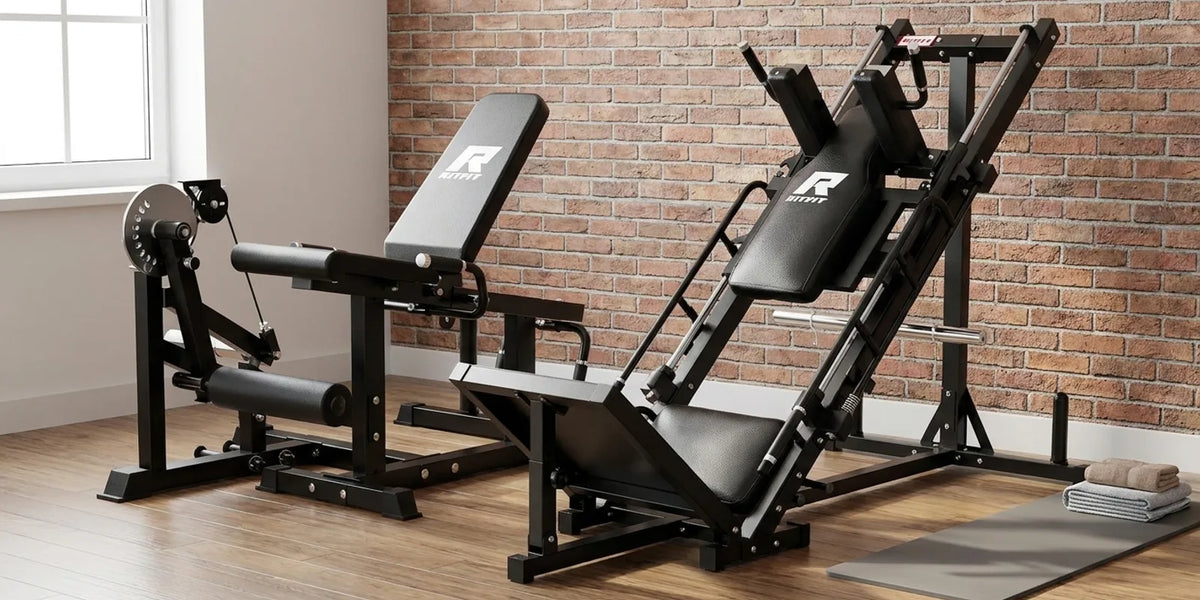
The RitFit PLC01 Leg Extension Curl Machine is the machine based replacement: it loads the quadriceps through knee extension with a fixed cam and adjustable pads, so no balance or hip control is required at all.
- Difference in leverage: Bodyweight sissy squats let the resistance track your body angle, while the machine keeps resistance vertical and consistent across the range.
- Difference in skill: The machine removes the balance demand, which suits lifters who lose position before the quadriceps reach their limit.
- Home gym fit: One compact station covers both leg extensions and leg curls, which matters when floor space is the limiting factor. For sizing questions such as seat and pad adjustment, use this PLC01 fit guide for taller lifters.
- Buying context: If you are weighing this against other home units, see the comparison of leg extension and curl machines for home gyms.
"Love how I can do different exercises in one machine. I love my Ritfit leg extension."
Steven J. Verified Buyer, RitFit PLC01 Leg Extension Curl Machine
5. Reverse Nordic Curl From a Kneeling Position
A reverse nordic curl is the pure bodyweight version of the same idea: kneeling upright, you lean the whole body back from the knees and then return, which loads the quadriceps in their lengthened position.
- Setup: Kneel on a mat with the hips extended and the trunk, hips, and knees moving as one line.
- Loading: Control the descent as far as you can hold, then push back up with the quadriceps rather than the hips.
- Main advantage: It needs only a mat and a pad under the knees, and the eccentric emphasis makes light bodyweight work feel heavy.
How Do You Set Up a Sissy Squat With a Cable Machine at Home?
Set a low pulley at the bottom of the cable machine and kneel facing away from it with an ankle strap looped around both ankles. The resistance then pulls you backward as the knees travel forward, and the same cable machines that run cable crossovers and lat pulldowns handle this movement as well.
- Pulley height: Keep the pulley at the lowest setting so the cable runs close to the floor and the line of pull stays horizontal.
- Stance distance: Kneel roughly two to three feet from the machine so the cable keeps tension at the bottom of the range instead of going slack.
- Strap position: Place the strap across the front of both ankles, check that it is snug but not tight, and stop the set if it starts to slip.
- Heel wedge: Add a small wedge under the heels if your knees stop traveling forward before the quadriceps feel loaded.
- Knee padding: Use a kneeling pad or a folded towel so deep knee flexion stays comfortable on a hard floor.
Guided stations also make the progressions easy to load, and the setups in these Smith machine leg workouts follow the same logic of keeping the hips extended while the knees drive the movement.
How Should You Program Sissy Squat Alternatives for Quad Growth?
Program a sissy squat substitute like any other quadriceps movement: two sessions per week, two to three controlled sets, and a full range of motion. A systematic review and network meta-analysis found that loads at or above about 60 percent of one-rep max drive greater strength gains than lighter loads, while hypertrophy gains are comparable across a wide load range when sets are taken close to failure.[4] The 2026 American College of Sports Medicine position stand reports that voluntary strength improved with loads of at least 80 percent of one-rep max taken through a full range of motion, for 2 to 3 sets, at least 2 sessions per week.[5]
- Weight selection: Start with a load you can control for the full rep range, and let the set feel hard rather than making the first rep a grind.
- Rep range: Eight to fifteen reps suits most lifters, and the cable version lets you drop a small step of resistance when the bottom position becomes the limiting factor.
- Frequency: Two sessions per week is a practical starting point for a quadriceps focused accessory, and it fits around squat or press work.
- When to add load: Increase resistance only after you complete the top of your rep range with the same range of motion and no change in position.
- Progression: Take the last set close to failure, then rotate between the substitutes so the quadriceps keep meeting a challenge rather than a routine.
If you want a full structure to slot the substitutes into, this 8 week home gym leg strength plan shows where accessory knee extension work sits relative to the main lower body lifts.
Does a Leg Press Machine Replace Sissy Squats at Home?
A leg press machine replaces the quadriceps work but not the loading pattern, because a press combines hip and knee extension while a sissy squat keeps the hips extended. A systematic review of lower limb EMG during the leg press and its variants found that the vastus lateralis and vastus medialis produced the greatest activation, followed closely by the rectus femoris, and that quadriceps activation increased as the knee flexion angle increased.[6]
- What transfers: Both movements build quadriceps strength and size, so a press keeps the muscle trained when a stand is not available.
- What does not: A press allows the hips to contribute, so it will not replicate the isolated knee extension demand of a sissy squat.
- When to choose it: A press or hack squat makes sense as the compound base of a leg day, with a sissy squat substitute added on top rather than instead.
Home machines such as the BLP01 leg press and hack squat with PLC01 leg extension set combine both roles in one footprint. If ceiling height or floor area is the deciding factor, this guide to leg press machines for small spaces covers the measurements that matter before you buy.
Which Sissy Squat Alternative Is Right for Your Home Gym?
The right sissy squat alternative is the one that matches the equipment you already own and the range you can control, not the one with the most features. Cable and machine options suit lifters who want precise loading, while the bodyweight versions suit anyone training with almost no equipment.
| Alternative | Equipment needed | Knee flexion load | Best for |
|---|---|---|---|
| Cable machine with ankle strap | Low pulley and ankle strap | High, adjustable in small steps | Closest match to the sissy squat path |
| Wall or sofa supported | A clear wall or couch base | Moderate, limited by how far you lean back | Bodyweight only setups and first attempts |
| Heels elevated with towel under the knees | Folded towel or mat and a small heel wedge | Moderate to high | Lifters who lose balance before the quads fatigue |
| Leg extension machine | One compact machine station | High and fixed by the cam and pads | Quad isolation with no balance demand |
| Reverse nordic curl from kneeling | Mat and a pad under the knees | High near the bottom of the range | Bodyweight training with an eccentric emphasis |
Loading descriptions reflect the joint mechanics explained in section 1, not measured force values.
Which Common Mistakes Undo a Sissy Squat Substitute?
The most common mistake is letting the hips travel backward, which turns the movement into a hinge and hands the work to the glutes and hamstrings instead of the quadriceps. The second is cutting the range short, because the quadriceps are loaded most in the bent knee position where the muscle is longest.
- Hips drifting back: Keep the trunk and hips in one line and let the knees, not the pelvis, lead the movement.
- Partial reps: Reduce the load so you can reach the deepest position you can control, rather than stopping halfway with heavier resistance.
- Loose ankle strap: A slipping strap changes the line of pull and shifts tension away from the quadriceps, so reset it before the next set.
- Chasing load too early: Adding resistance before the eccentric is controlled shortens the effective range and reduces the stimulus.
- Ignoring feedback: Stop the set if the knee feels unstable or the position changes, and switch to a machine based option such as a leg extension until the pattern is comfortable again.
FAQs About Sissy Squat Alternatives
Can you do sissy squats at home without a stand?
Yes. A sissy squat only needs a way to keep the hips extended while the knees travel forward, so a low cable with an ankle strap, a wall, a sofa, or a towel under the knees can replace a dedicated stand. The load shifts toward the quadriceps because the tibia inclines forward while the trunk stays close to vertical. Control the lowering phase and keep the movement within a range you can repeat without the knees drifting inward.
What can I use instead of a sissy squat stand?
The closest substitutes are a cable machine with an ankle strap, the base of a couch or a wall for hand support, an elevated heel position with a towel under the knees, a leg extension machine, and a reverse nordic curl from a kneeling position. Each one keeps the hips extended and loads the quadriceps near their lengthened position. Pick based on the equipment you already own and the range you can control.
Is a cable machine good for sissy squats?
Yes. A low pulley with an ankle strap lets you kneel and lean back while the cable supplies resistance through the same knee flexion range as a sissy squat, and the stack lets you change load in small steps. Set the pulley at the lowest position, face away from the machine, and keep the strap snug. The cable version also makes it easy to reduce load when the quadriceps reach their limit.
Do leg extensions replace sissy squats?
Leg extensions load the quadriceps through knee extension without asking for balance or hip control, so they are a practical substitute when the goal is quadriceps isolation. They differ in leverage because the resistance stays vertical rather than tracking the body angle of a sissy squat. A combination extension and curl machine covers both movements in one station, which suits home gyms where floor space is tight.
Are sissy squats hard on the knees?
A sissy squat produces a large knee flexion moment by design, so the knee joint carries most of the load and the quadriceps work near their lengthened position. People who can control the range usually tolerate it well, while anyone with knee discomfort should reduce the range, lower the load, or choose a machine based option such as a leg extension. Stop if a rep changes how the knee feels.
How many times a week should I train sissy squat alternatives?
Twice a week is a reasonable starting frequency for a quadriceps focused substitute, and the 2026 American College of Sports Medicine position stand supports at least two sessions per week for strength and hypertrophy. Use two to three sets with a load you can control, add a small amount of resistance when you complete the top of your rep range, and keep the last set close to failure without losing the range of motion.
Which mistakes reduce the quadriceps stimulus of a sissy squat substitute?
Three mistakes cut the stimulus fastest. Letting the hips travel backward turns the repetition into a hinge and shifts work to the glutes and hamstrings, cutting the range short skips the bent knee position where the quadriceps are longest, and adding load before the lowering phase is controlled reduces the range you can actually train. Reset the ankle strap if it slips, and stop the set when the position changes.
Conclusion
Put the mechanism first and the shopping second. Choose the option your space and equipment already support, keep the hips extended, and add load only when the top of your rep range feels controlled.
Start with two sessions per week and one substitute, then expand once the pattern feels stable. If a machine station turns out to be the better long term answer, read the RitFit discount guide before you order.
Disclaimer
This article covers training mechanics and equipment selection for general fitness readers and is not medical advice. If you have a knee condition, a previous injury, or pain during exercise, consult a qualified healthcare professional before starting or changing a training program.
References
1. Graber KA, Halverstadt AL, Gill SV, Kulkarni VS, Lewis CL. The effect of trunk and shank position on the hip-to-knee moment ratio in a bilateral squat. Phys Ther Sport. 2023;61:102-107. doi:10.1016/j.ptsp.2023.03.005. PMCID: PMC10518215
2. Straub RK, Powers CM. A Biomechanical Review of the Squat Exercise: Implications for Clinical Practice. Int J Sports Phys Ther. 2024;19(4):490-501. doi:10.26603/001c.94600. PMCID: PMC10987311
3. Marchetti PH, Jarbas da Silva J, Jon Schoenfeld B, et al. Muscle Activation Differs between Three Different Knee Joint-Angle Positions during a Maximal Isometric Back Squat Exercise. J Sports Med (Hindawi Publ Corp). 2016;2016:3846123. doi:10.1155/2016/3846123. PMCID: PMC4967668
4. Lopez P, Radaelli R, Taaffe DR, et al. Resistance Training Load Effects on Muscle Hypertrophy and Strength Gain: Systematic Review and Network Meta-analysis. Med Sci Sports Exerc. 2021;53(6):1206-1216. doi:10.1249/MSS.0000000000002585. PMCID: PMC8126497
5. Currier BS, D'Souza AC, Singh MAF, et al. American College of Sports Medicine Position Stand. Resistance Training Prescription for Muscle Function, Hypertrophy, and Physical Performance in Healthy Adults: An Overview of Reviews. Med Sci Sports Exerc. 2026;58(4):851-872. doi:10.1249/MSS.0000000000003897. PMCID: PMC12965823
6. Martín-Fuentes I, Oliva-Lozano JM, Muyor JM. Evaluation of the Lower Limb Muscles' Electromyographic Activity during the Leg Press Exercise and Its Variants: A Systematic Review. Int J Environ Res Public Health. 2020;17(13). doi:10.3390/ijerph17134626. PMCID: PMC7369968





