Can you buy a Smith machine with HSA or FSA funds?
A Smith machine can potentially be paid for with HSA or FSA dollars, but no machine is eligible by default.
Approval depends on a diagnosed condition, a letter of medical necessity, and the IRS line between medical care and general fitness.
This guide explains the IRS rule in plain terms, the Smith-specific scenarios that may support a claim, and the exact payment steps. It closes with RitFit models to consider and the documents to keep before you order.
Quick Answer: Smith machine HSA eligible purchases are possible but never automatic, and approval hinges on a diagnosed condition plus a clinician-issued letter of medical necessity supporting the purchase. Eligibility follows your health survey and clinician review, not the product name.
Key Takeaways
- Conditional status: No Smith machine is HSA or FSA eligible by default, and the same purchase can qualify for one buyer and fail for another.
- IRS line: According to IRS guidance, expenses that are merely beneficial to general health are not medical expenses, even when a doctor recommends them.
- LOMN path: A letter of medical necessity from an independent licensed clinician is the document that ties the machine to a diagnosed condition.
- Machine features: A guided bar path, adjustable safety catches, and a fixed rail are the features that may make a Smith machine suitable for medically supervised strength work.
- Pre-tax math: Truemed reports qualified customers save an average of 30 percent on eligible health purchases as of October 2026.
Is a Smith Machine HSA or FSA Eligible?
A Smith machine is not HSA or FSA eligible by default. The purchase can potentially be paid with pre-tax funds only when a diagnosed condition and a clinician-issued letter of medical necessity connect the machine to your medical plan.
- Default status: Exercise equipment bought for general fitness is treated as a personal expense, so a card payment or reimbursement claim fails without medical documentation.
- What unlocks it: A health survey and an independent clinician review that ties the machine to your diagnosis.
- Case by case: Eligibility is never guaranteed, because your administrator and the payment provider decide on documentation, not on the product name.
An HSA (Health Savings Account) pairs with a high-deductible health plan, an FSA (Flexible Spending Account) runs through an employer, and both hold pre-tax dollars set aside before income tax applies. The question is whether a Smith machine counts as a qualified cost under that spending umbrella.
If a Smith machine is on your list and your HSA or FSA covers health spending, the next sections walk through the rule, the qualifying scenarios, and the payment path in order.
What the IRS Rules Say About Exercise Equipment
IRS guidance draws the line at purpose. Medical expenses must primarily alleviate or prevent a physical or mental disability or illness, and costs that are merely beneficial to general health do not count.
The distinction matters for large equipment purchases. A Smith machine framed as a home gym for strength goals reads as general fitness, while the same machine tied to a documented medical plan may read differently to your administrator.
- Primary purpose test: The expense must be primarily for alleviating or preventing a specific disability or illness, not for a broader wellness goal.
- Merely beneficial spending: The IRS states that exercise bought for the improvement of general health is not a medical expense, even when a doctor recommends it.
- Why it matters here: Equipment purchases draw extra scrutiny, so administrators ask for condition-specific documentation before approving a claim.
For the full rule text and the qualification workflow, our hub on HSA and FSA funds for exercise equipment covers the detail this recap leaves out.
When a Smith Machine May Support a Medical Plan
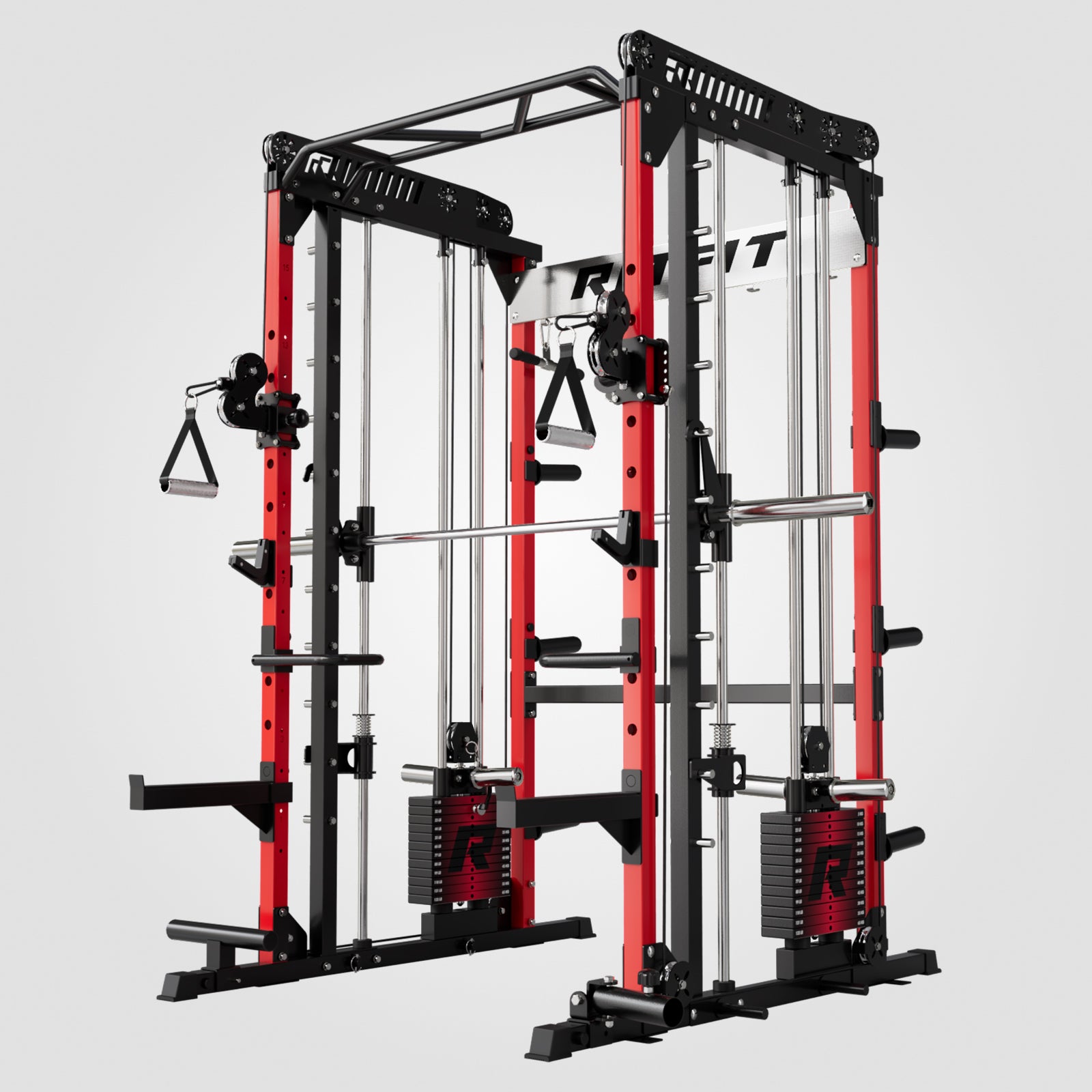
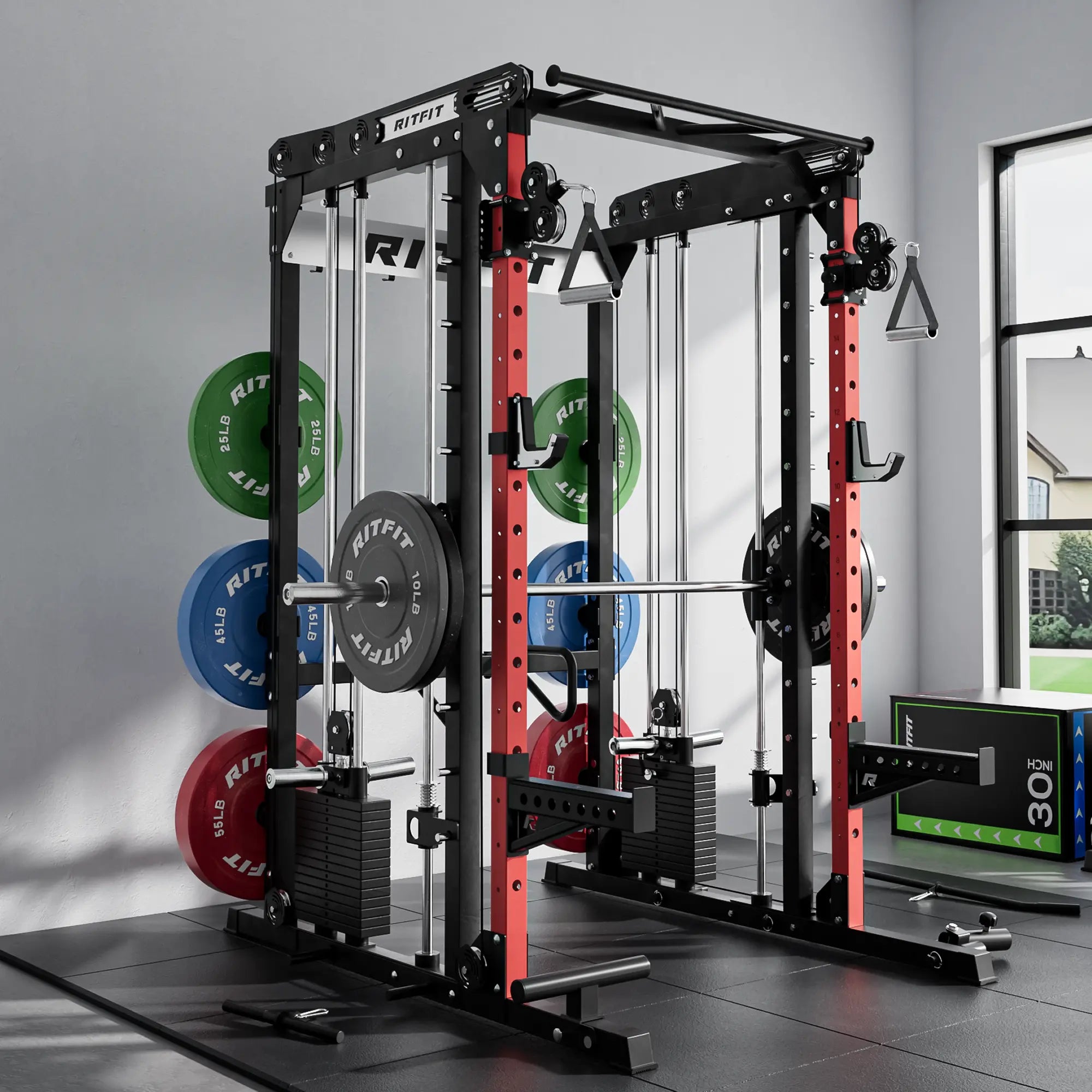
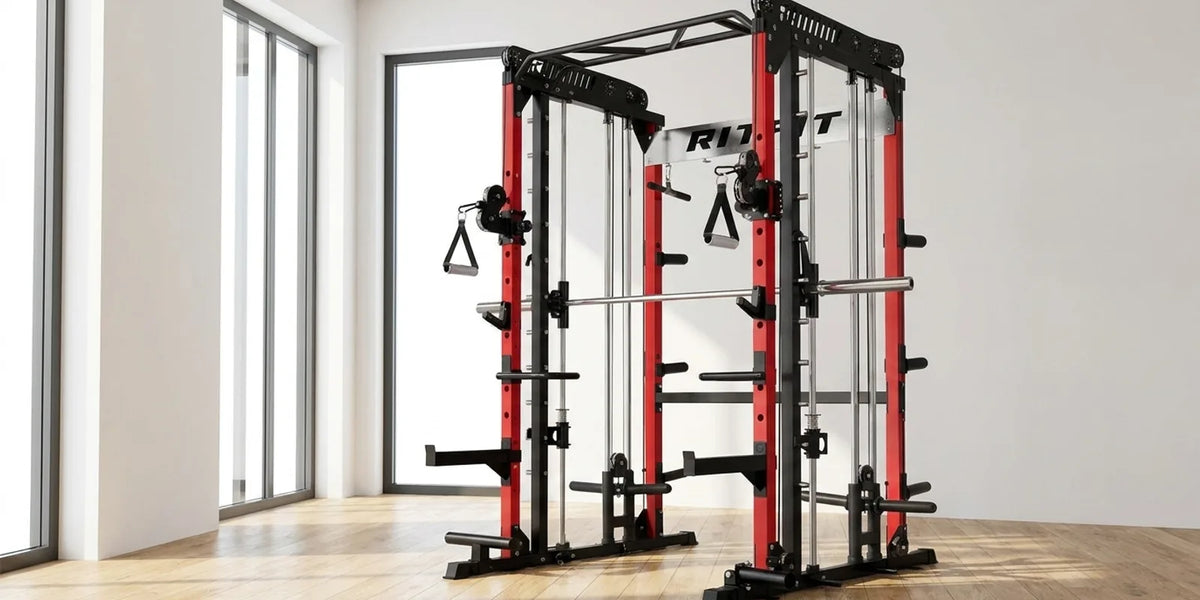
A Smith machine may support a medical plan when guided strength work serves a diagnosed condition. The guided bar path, fixed rail, and adjustable safety catches are the features clinicians associate with controlled, progressive loading.
- Guided bar path: The fixed rail keeps the bar on one line, so you can set depth, control range, and add load in small increments with more predictability than a free barbell.
- Post-injury and post-surgery strength work: Research suggests progressive resistance training improves physical function in older adults,[1] and a clinician-cleared plan may use a guided machine to rebuild strength under control.
- Bone and muscle health with age: One meta-analysis of randomized controlled trials examined resistance training in older people with sarcopenia,[2] and another reported that progressive resistance training concomitantly increases muscle strength and bone mineral density in older adults.[3]
- Limited mobility: A fixed path, adjustable start positions, and safety catches can lower the coordination demand for users who train with restricted mobility.
These scenarios are possibilities to document with your clinician, not claims that any machine treats a condition. Research describes training effects at the population level, and eligibility never follows automatically.
"The smith machine is great because it's going to take a lot of the pressure out of your shoulders because it's supporting itself and you can do a little bit more weight on here."
Scott Herman, YouTube Creator, ScottHermanFitness, How To: Smith Machine Bench Press, YouTube
How the Letter of Medical Necessity Works for a Smith Machine Purchase
The letter of medical necessity is the document that connects a Smith machine purchase to your diagnosed condition. Per the provider's published process, you complete a health survey at checkout and, if qualified, an independent licensed clinician issues the letter.
- Step 1: Complete a health survey describing your condition and how guided strength training fits your plan.
- Step 2: If your responses support it, an independent licensed clinician reviews the survey and issues the letter of medical necessity.
- Step 3: Pay with your HSA or FSA card at a supported checkout, or submit the letter to your plan administrator afterward for reimbursement.
Truemed states that qualification is not guaranteed for every customer or purchase, because eligibility depends on your survey responses and the clinician's determination. Our guide to buying HSA-approved exercise equipment expands on the same workflow.
How to Pay With Your HSA or FSA Card or Get Reimbursed Later
You have two routes to pay for a Smith machine with HSA or FSA funds. If the health payment provider is available at checkout, you pay directly with your HSA or FSA card, and if it is not, you pay with any card and submit the letter of medical necessity to your plan administrator for reimbursement.
- Direct card path: Check out with a supported provider, pass the health survey, and pay with the HSA or FSA card in one order.
- Reimbursement path: Pay with any card, then file the letter and an itemized receipt with your administrator for reimbursement.
- Expected savings: Truemed reports qualified customers save an average of 30 percent on eligible health purchases, giving the example of saving 160 dollars on a 500 dollar purchase at a 32 percent tax bracket.
- Coverage breadth: Per Truemed, its marketplace lists more than 3,000 health brands, so each seller and product is evaluated on its own terms.
To see how the savings math works for RitFit orders, our breakdown of using HSA or FSA funds for eligible RitFit equipment walks through the numbers. The store also keeps a dedicated HSA and FSA program page with the current checkout flow.
What Usually Does Not Qualify
General fitness spending usually does not qualify. The IRS states that exercise for the improvement of general health is not a medical expense, and Truemed states that qualification is not guaranteed for every customer or purchase.
- General fitness goals: A home gym bought to build muscle or support general health, with no diagnosed condition behind it, falls outside the medical expense rules.
- Doctor recommendation alone: The IRS guidance is explicit that a recommendation for general health is not sufficient by itself.
- Missing documentation: A claim filed without the survey, the letter, and an itemized receipt invites a documentation gap denial.
- Assumed approval: Qualification depends on your health survey responses and an independent licensed clinician's determination, so no buyer should treat approval as certain.
If your motivation is strength and conditioning rather than a diagnosed condition, budget the purchase as a regular expense and treat any pre-tax approval as a bonus.
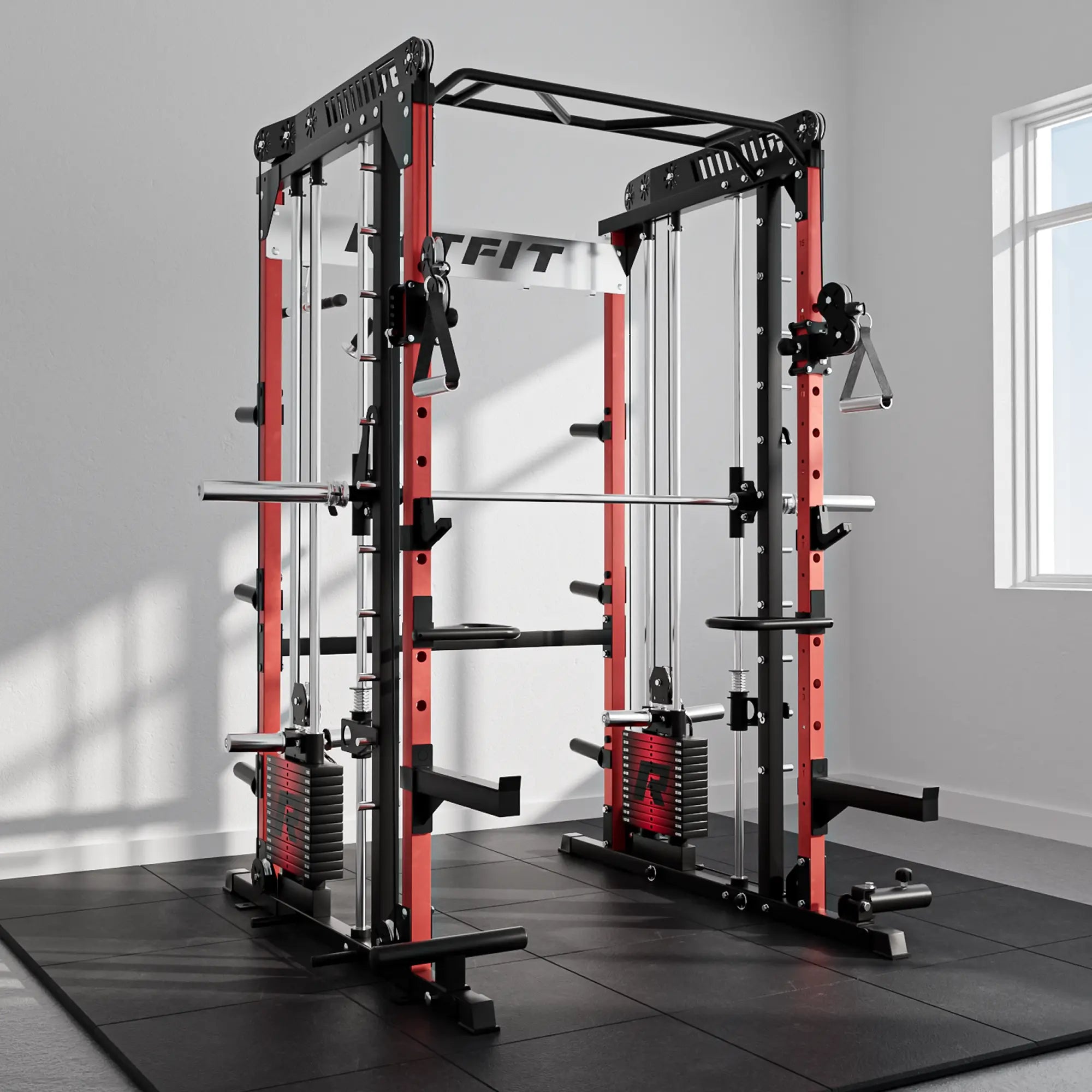
"Solid all in one rack. The pulleys and smith machine are so smooth. Ample room to store attachments and barbells. Time consuming assembly but easy"
Khristian P. Verified Buyer, RitFit M1 PRO Multi-Functional Smith Machine with Cable Crossover System and Squat Rack for Home Gym
Which RitFit Smith Machines to Consider if You Qualify
If a clinician documents a qualifying need, RitFit Smith machines cover different spaces and programs. Your choice depends on footprint, cable accessories, and whether you want a single unit or a complete package.
| Option | Best for | What it adds to a guided plan |
|---|---|---|
| RitFit M1 PRO Smith Machine | Compact all-in-one guided training | A guided bar path with a cable crossover system in one footprint |
| M1 PRO home gym package | A complete setup from day one | Bundles the machine with supporting accessories so training starts sooner |
| RitFit M3 | Larger spaces and broader programming | Combines a power rack with a cable crossover for more exercise options |
Options summarized from RitFit product pages; confirm the current configuration of each listing before you order.
For buyers who qualify, the RitFit Smith machines collection is the place to compare footprints and cable systems side by side.
Documents to Keep Before You Buy
Documentation decides whether a reimbursement claim survives review. Keep four items together from the day you order.
- Letter of medical necessity: The clinician-issued letter that ties the machine to your diagnosis.
- Itemized receipt: The order record showing the machine as the purchased item.
- Health survey copy: The responses your qualification was based on.
- Administrator correspondence: Approval or denial letters, stored for any later review.
Once your claim clears and you start comparing guided models, our buyer guide to the best Smith machine for beginners breaks the M1 PRO down spec by spec.
FAQs About Buying a Smith Machine With HSA or FSA Funds
Can I buy a Smith machine with my HSA card?
No, not automatically. You can typically pay with your HSA or FSA card only when the purchase ties to a diagnosed medical condition. You usually complete a health survey and receive a letter of medical necessity from an independent licensed clinician first. Eligibility is decided case by case and is never guaranteed.
What if my doctor recommends strength training?
A doctor recommendation helps your case but is not automatically sufficient. IRS guidance treats exercise bought merely for general health as a non-medical expense even when a doctor recommends it. The purchase must connect to a specific diagnosed condition or prescribed plan, which the letter of medical necessity documents for your administrator.
How much could I save paying with HSA or FSA funds?
Savings depend on your tax bracket because HSA and FSA dollars are pre-tax. Truemed reports qualified customers save an average of 30 percent on eligible purchases, and gives the example of saving 160 dollars on a 500 dollar purchase at a 32 percent tax bracket.
Does the M1 PRO count as eligible fitness equipment?
No, not by default. No specific machine qualifies automatically under IRS rules. Eligibility follows your health survey and a clinician review that links the machine to a qualifying condition, so the same M1 PRO can be eligible for one buyer and ineligible for another.
Does an HSA cover home rehabilitation equipment?
Possibly, when a clinician documents that the equipment serves a diagnosed condition through a letter of medical necessity. General wellness purchases do not qualify under IRS guidance. Check with your plan administrator and the payment provider process before buying, and keep all documentation for any reimbursement review.
Conclusion
A Smith machine can potentially be bought with HSA or FSA funds, but eligibility is decided case by case and is never guaranteed. Start with your plan administrator or the payment provider process, complete the health survey honestly, and keep the letter of medical necessity with your receipt.
If your purchase qualifies, pick the machine that matches your space and program, and check current offers in our RitFit discount guide before you order.
Disclaimer
This article explains published IRS guidance and third-party service processes for general information only and does not provide medical, tax, or legal advice. Confirm your specific situation with a qualified clinician, your plan administrator, or a tax professional before you buy.
References
1. Liu CJ, Latham NK. Progressive resistance strength training for improving physical function in older adults. Cochrane Database Syst Rev. 2009. PMCID: PMC4324332
2. Chen N, He X, Feng Y, et al. Effects of resistance training in healthy older people with sarcopenia: a systematic review and meta-analysis of randomized controlled trials. Eur Rev Aging Phys Act. 2021;18(1):23. PMCID: PMC8588688
3. O'Bryan SJ, Giuliano C, Woessner MN, et al. Progressive Resistance Training for Concomitant Increases in Muscle Strength and Bone Mineral Density in Older Adults: A Systematic Review and Meta-Analysis. Sports Med. 2022. PMCID: PMC9325860