
Choosing between a Smith Machine or Leverage Gym for your home gym comes down to how you want the weight to move. A Smith machine locks the bar into a guided path, while a plate-loaded leverage machine pivots on an arm and follows an arc, so each suits a different training style.
This guide compares the two on bar path, solo safety, exercise variety, footprint, and cost using manufacturer-listed RitFit specs and the current official warranty page. No hands-on testing is claimed, so check live product pages for current pricing.
Quick Answer: A Smith machine is the better default for most home gyms because its guided bar path and easy racking support solo training in a compact space, while a leverage machine suits lifters who want a freer plate-loaded feel and already own plates. Choose based on your space, training style, and upgrade budget.
Key Takeaways
- Bar path: A Smith machine uses fixed guide rods, while a leverage machine rotates a plate-loaded arm around a pivot.
- Solo training: A Smith machine lets you rack the bar at almost any height and set safety stops for failed reps.
- Listed capacity: The RitFit M1 PRO lists a 1,600 lb maximum capacity and a 352 lb Smith system capacity.
- Space: Measure footprint and ceiling height before choosing either a guided station or a lever arm machine.
- Long-term cost: A leverage setup needs loose plates and often a second station, while an all-in-one Smith machine consolidates cable work.
- Warranty: RitFit power cages carry lifetime frame coverage and 1-year parts coverage on the current policy page.
Smith Machine vs Leverage Machine: The Core Difference
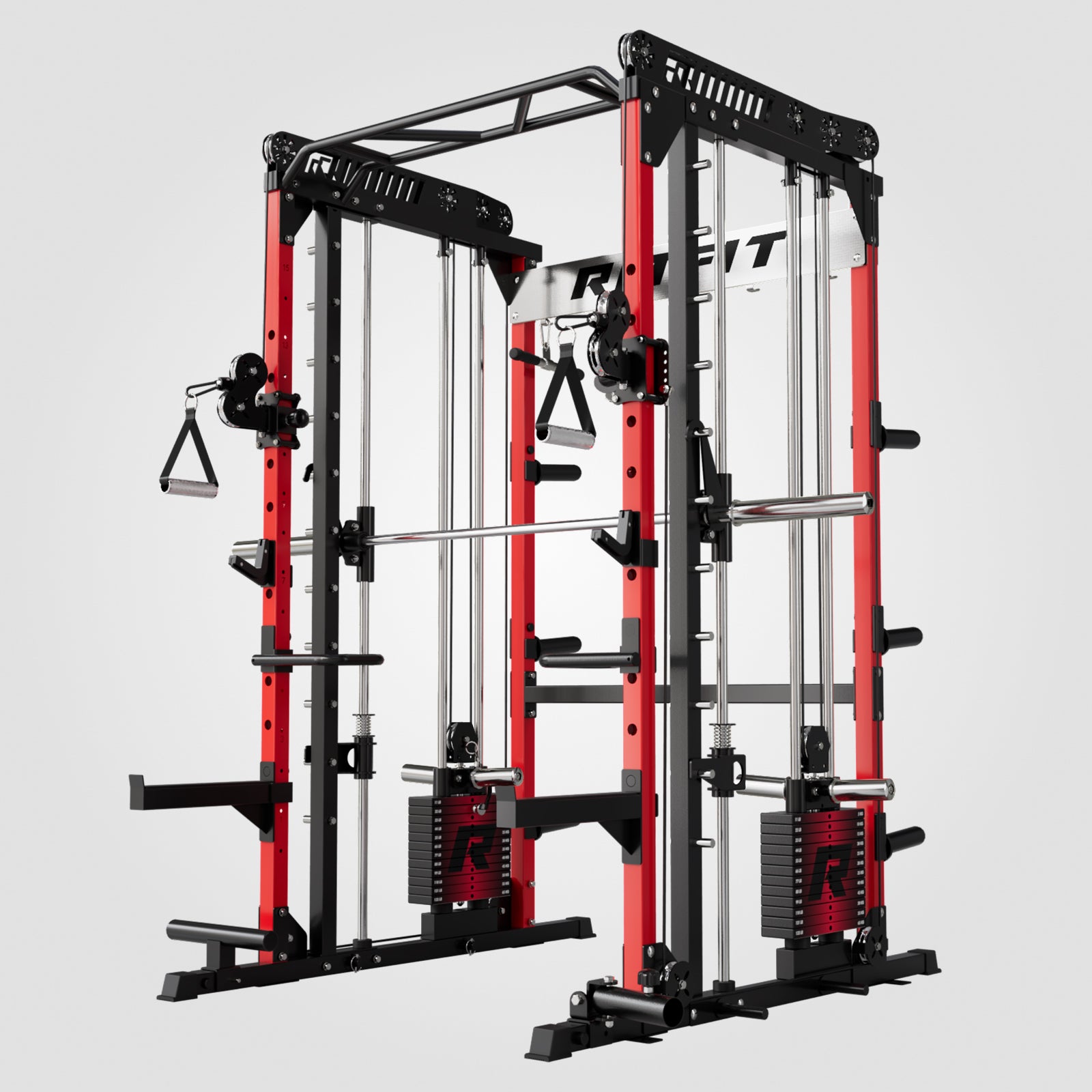
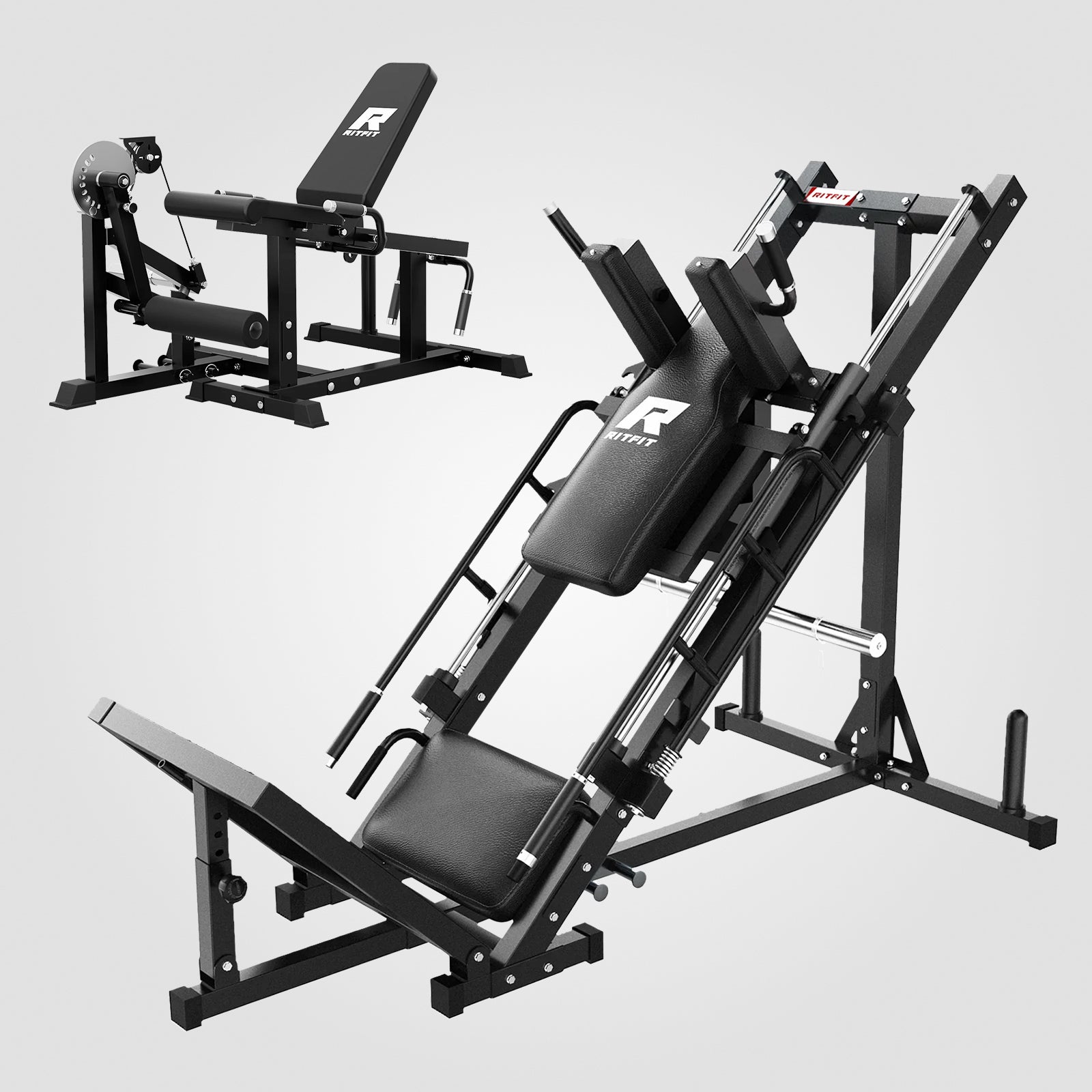
A Smith machine moves the bar along fixed guide rods, while a leverage machine rotates a plate-loaded arm around a pivot. The Smith design gives you a repeatable path and racking at almost any height. The leverage design follows an arc that tracks a free-weight movement more closely, but it needs loose plates and careful setup.
- Guided path: Linear bearings keep the bar on a set track, which reduces the balance demand on each rep.
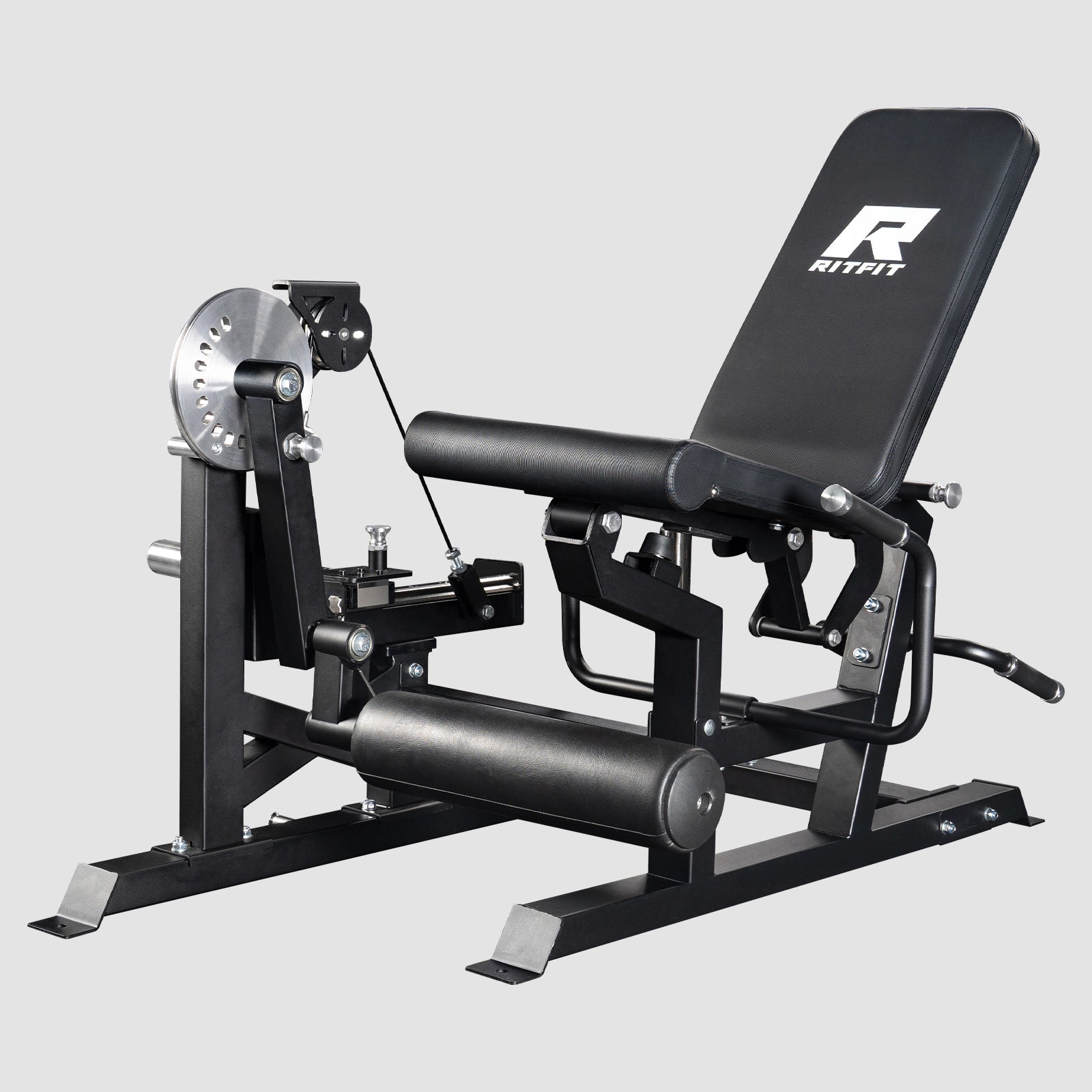
- Pivot arc: A lever arm and fulcrum create a resistance curve that changes as the arm travels.
- Loading style: Smith machines take plates on storage pegs, while leverage machines load plates directly onto the arm.
Neither category is automatically better for every lifter. Your choice depends on whether you value a controlled, predictable path or a movement that asks for more stabilization, and on how much floor space your home gym can spare.
"Solid all in one rack. The pulleys and smith machine are so smooth. Ample room to store attachments and barbells. Time consuming assembly but easy"
Khristian P. Verified Buyer, RitFit M1 PRO Multi-Functional Smith Machine with Cable Crossover System and Squat Rack for Home Gym
Bar Path and Resistance: How Each Machine Feels
The guided bar path of a Smith machine feels stable and predictable, while a leverage machine changes resistance as its arm moves through the arc. A Smith bar is counterbalanced to a listed weight, so starting resistance is lower than a loose barbell. A leverage machine draws its load from the plates you add, scaled by the lever geometry.
| Setup | Max capacity | Smith capacity | Frame |
|---|---|---|---|
| RitFit M1 PRO | 1,600 lb | 352 lb | 2 in by 2 in, 14-gauge steel |
| RitFit BUFFALO | 1,800 lb | 352 lb | 2 in by 3 in, 13-gauge steel |
| Plate-loaded leverage machine | Varies by maker | Not applicable | Varies by maker |
Capacity and frame figures are manufacturer-listed specs from RitFit product pages. Leverage machine figures vary by maker and are not presented as a single brand claim.
- Smith bar weight: The M1 PRO lists a 33 lb Smith bar, which is the baseline before you add plates.
- Resistance feel: Leverage arms shift the hardest point of the lift toward the end range of motion.
- Range of motion: A guided track fixes the path, while a pivot lets the handle travel on a slight arc.
The practical difference shows up on heavy compound lifts.
A guided path removes some stabilizer work, which helps you focus on the target muscles and load progressively.
A leverage arm keeps more of the free-weight feel but asks you to control the arc.
"Few pieces of equipment in the home exercise industry are as comprehensive and versatile as this all-in-one gym system. The robust system provides a natural, centered bar path for compound lifts like squats, presses, and rows, and incorporates a dual cable crossover station with a full rack of precision-engineered attachments."
Tom Eskey, CF-L1, CPT, Home Gym Equipment Reviewer, Garage Gym Revisited, RitFit M1 Multi-functional Smith Machine - Our Review
Training Alone: Safety Without a Spotter
A Smith machine is generally the safer home gym choice for solo training because the bar can be racked at many heights and most frames include safety stops. Set the stops just below your deepest rep and load plates evenly on both sides. Leverage machines often lack the same mid-rep escape option, so plan your failure points before each set.
- Racking flexibility: Guided bars can be caught at almost any height, which matters when you train without a partner.
- Safety arms: Check the listed safety arm capacity for your exact model and use them on bench and press work.
- Loading discipline: Even plate loading keeps the bar tracking straight and reduces uneven wear on the guides.
Safety also depends on your setup. A Smith machine collection page lets you compare frames with visible safety hardware before you buy. For leverage machines, confirm where the arm locks out and how you would exit a failed rep.
Exercises You Can Do on Each Setup
Both setups cover the main compound lifts, but the Smith machine favors guided presses and squats while a leverage machine mimics free weight pressing. Add cable work and you can train a full week from one station. Match the machine to the movements you actually program.
- Smith machine: Squats, bench press, overhead press, hip thrust, rows, and calf raises all fit the guided track.
- Leverage machine: Chest press, shoulder press, pulldown, and rowing patterns work well on a plate-loaded arm.
- Cable crossover: A dual cable system expands pressing, pulling, and isolation work without a second machine.
A Smith machine vs power rack comparison is useful if you still want free-weight barbell work. The Smith bar weight guide explains starting resistance before you load your first plate.
Choose the RitFit M1 PRO If You Want One Machine to Do It All
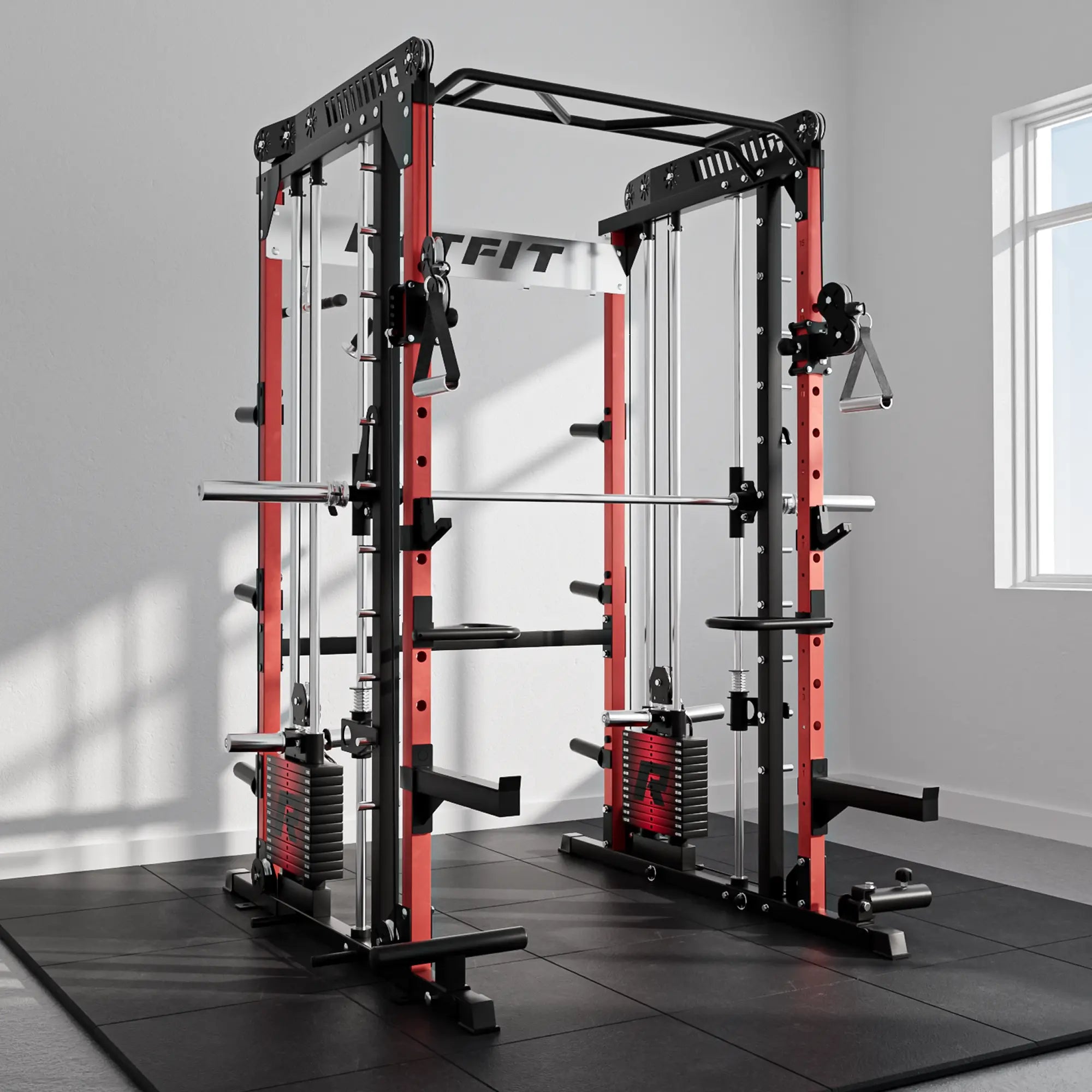
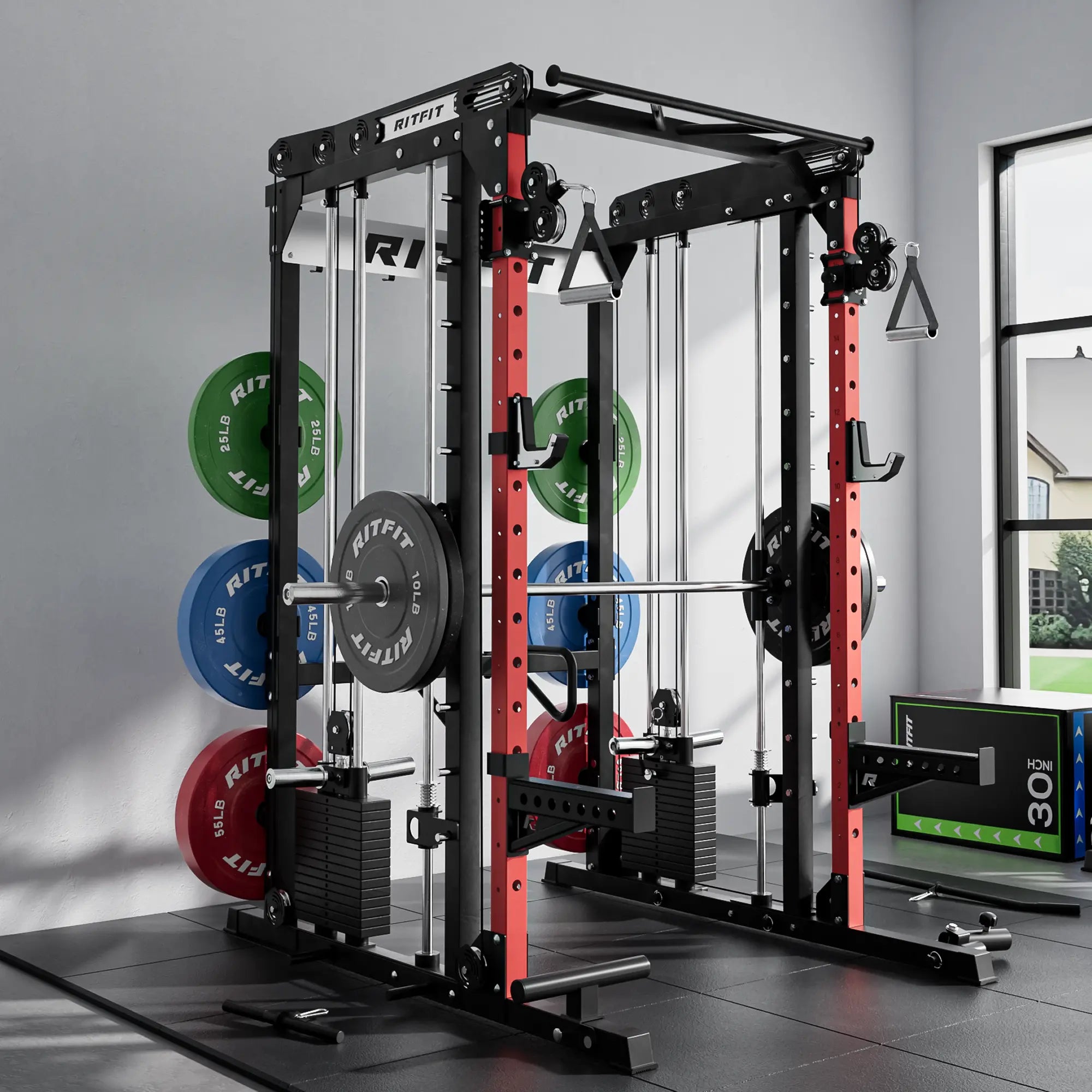
The RitFit M1 PRO is the better pick for a shopper who wants one guided station for squats, presses, rows, and cable work in a garage or basement. Its manufacturer-listed 1,600 lb maximum capacity and 352 lb Smith capacity cover heavy progressive work. Buyers who want true plate-loaded leverage movement should look at a dedicated lever machine.
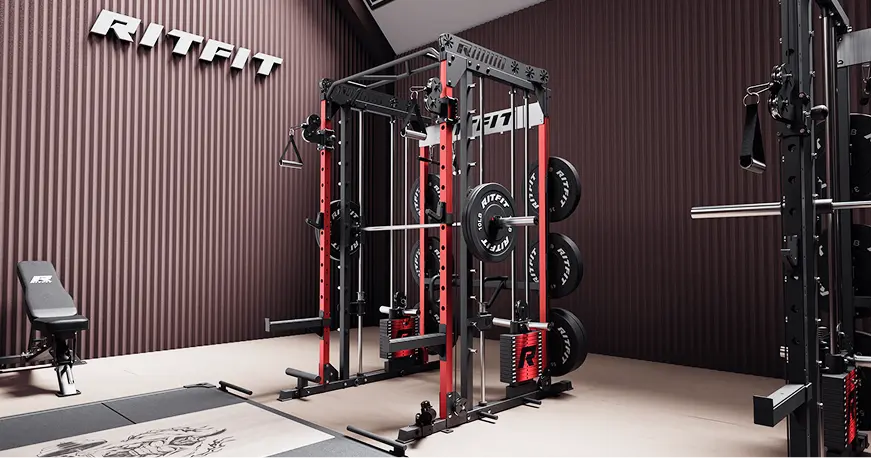
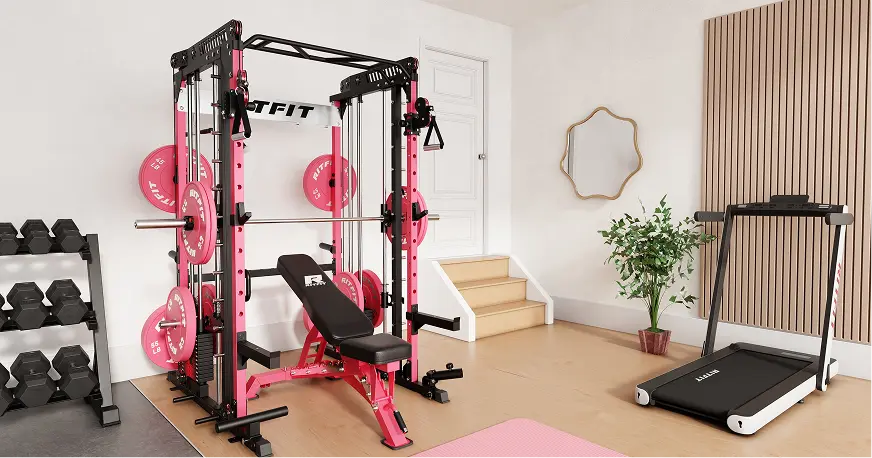
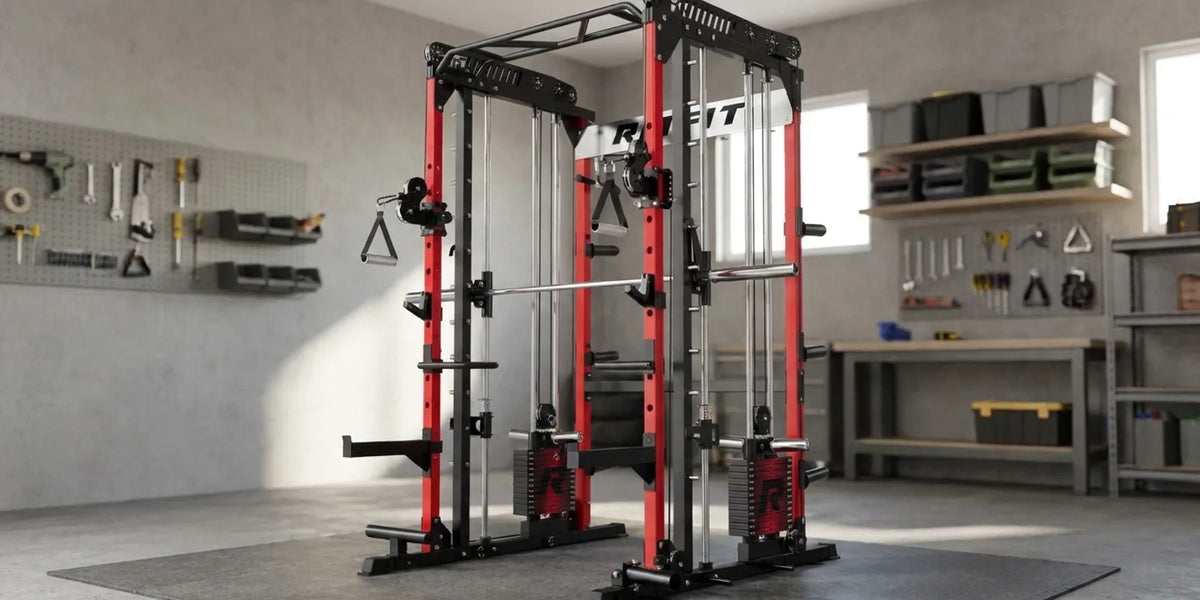
- One station: The frame combines a Smith bar, squat rack, and dual cable system in a single footprint.
- Adjustability: Multiple bar heights and cable positions let different family members share the same setup.
- Upgrade path: Optional attachments extend the machine as your training needs change.
The RitFit M1 PRO Smith machine suits a lifter who values guided reps and consolidated training. The RitFit M1 vs BUFFALO comparison helps if you are weighing two guided frames.
"The M1 pro all in one machine is a game changer for our garage setup. Very sturdy and supports all the exercises you need! Fairly easy to install. Really love the new equipment."
jane m. Verified Buyer, RitFit M1 PRO Smith Machine Home Gym Package Comprehensive All-In-One Workout System
Space, Footprint, and Ceiling Height
A compact Smith machine usually fits a garage or basement better than a leverage station plus a separate rack. Measure the floor area and the vertical clearance before you buy, because both categories need room for the bar or arm to travel and for you to load plates.
- Floor area: Compare listed length and width, then add clearance for plate storage and movement.
- Ceiling height: Presses and pulls need overhead room, so check the machine height against your floor to ceiling measurement.
- Shared spaces: A guided station with safety stops is easier to leave set up in a family garage.
The M3 home gym Smith machine guide shows how a larger frame changes the space equation. If your room is tight, a guided all-in-one unit is usually easier to plan around than a lever arm machine that needs its own plate storage.
Cost, Plates, and Long-Term Upgrades
The true cost of either setup includes the frame, the plates, and the attachments you will add over time. A leverage machine often needs a larger plate inventory to load the arm, while an all-in-one Smith machine bundles cable work into the frame and may reduce the number of separate purchases.
- Plates: Leverage arms eat plates quickly on both sides, so budget for more bumper plates than you think you need.
- Attachments: Check which accessories are included and which are sold separately on the live product page.
- Resale and support: A machine with a clear warranty and available replacement parts is easier to own long term.
Prices change, so this guide does not quote a live dollar figure. Compare current listed prices on the RitFit BUFFALO Smith machine page and factor in the plates and attachments your program actually requires.
Warranty and Support
RitFit power cages carry lifetime structural frame coverage and 1-year parts coverage on the current official policy page. The table below groups the machines named in this comparison by category so you can see the terms without reading a separate policy for each one.
| Model | Category | Frame | Parts | Pads/Upholstery |
|---|---|---|---|---|
| RitFit M1 PRO | Power cage | Lifetime | 1 year | Not separately stated |
| RitFit BUFFALO | Power cage | Lifetime | 1 year | Not separately stated |
| RitFit M3 | Power cage | Lifetime | 1 year | Not separately stated |
Source: the current RitFit warranty page, checked for this article.
Coverage applies to the original purchaser, begins on the order date, is non-transferable, and is limited to the lower 48 US states.
Labor and cosmetic wear are excluded.
Which Setup Fits Your Training?
A Smith machine fits most home gym buyers, while a leverage machine fits lifters who already own plates and want a freer feel. Decide by matching the machine to your training style, your space, and how much you plan to spend on upgrades over the next few years.
- Beginner training alone: Choose a guided Smith machine with safety stops and easy racking.
- Shared family garage: Choose a guided all-in-one station with adjustable heights and clear safety hardware.
- Free-weight purist: Choose a plate-loaded leverage machine if you want an arc path and already own plates.
- Small basement: Choose the compact guided frame after measuring footprint and ceiling height.
For a broader look at guided frames, the RitFit M3 Smith machine adds another option with cable work. Confirm current pricing and specs on the live page before you commit.
FAQs About Smith Machine or Leverage Gym
What is the difference between a Smith machine and a leverage machine?
A Smith machine locks the bar into a fixed vertical path with guide rods, so the weight moves the same way every rep and you can rack it at any height. A leverage machine, often called a plate loaded machine, moves the load on a pivoting lever arm that follows an arc and is loaded with loose plates. The Smith gives you a guided consistent path. The leverage arm gives you a freer feel that follows your joint angle more closely, but it needs plates and usually cannot be racked mid rep as flexibly.
Can you build muscle with a Smith machine alone?
Yes, you can build muscle with a Smith machine as the main station in a home gym. It covers squats, presses, rows, hip thrusts, and calf work, and the fixed path lets you load heavy with less balance demand. Progressive overload still matters, so you need to add reps or weight over time and eat enough protein. The main limitation is that stabilizing muscles get less work than with free weights, so many lifters pair Smith work with dumbbell or cable movements.
Is a Smith machine safe to use without a spotter?
A Smith machine is generally a practical choice for solo training because most models include safety stops or hooks that let you set a failure point, and the bar can be reracked at many heights. That does not make it risk free. You still need to load plates evenly, use the safety arms correctly, and avoid pushing into a position you cannot escape. Check the listed capacity of the machine and never exceed it, especially on a shared home setup.
Do leverage machines feel more like free weights?
Many lifters describe a plate loaded leverage machine as feeling closer to free weights than a guided Smith bar, because the arm pivots on an arc and you must control the load through the movement. The resistance curve is set by the machine geometry rather than by gravity alone, so the feel still differs from a barbell. It is a useful middle ground if you want more freedom than a Smith machine but more structure than a loose barbell.
Which home gym machine takes up less space?
It depends on the exact models, but a compact Smith machine with a small footprint can fit a garage or basement better than a full rack plus a separate leverage station. The RitFit M1 PRO is listed at roughly 79 inches long and 68 inches wide, while a heavier machine like the BUFFALO needs more floor area. Measure your ceiling height and floor plan before buying, and leave clearance for loading plates and for the bar to travel.
How much weight can a RitFit Smith machine hold?
Capacity varies by model on the manufacturer spec sheets. The RitFit M1 PRO is listed with a 1,600 lb maximum rack capacity and a 352 lb Smith system capacity, with a 33 lb Smith bar. The RitFit BUFFALO is listed at a 1,800 lb maximum capacity. These are manufacturer figures, not independent test results, and you should confirm the current spec on the product page before loading heavy.
Can a Smith machine replace a power rack?
A Smith machine can replace many rack exercises, including squats, bench presses, and overhead presses, especially if it includes safety arms and a cable system. It cannot fully replace a power rack for exercises that need a free bar path, such as barbell deadlifts or deep rack pulls. If your program is built around free weight compounds, a rack is still the more flexible choice, while a Smith machine suits guided solo and space limited training.
Are leverage machines better for building strength?
Neither category is automatically better for strength. Leverage machines let you load heavy on a stable path and can reduce balance demands, which helps you focus on the target muscles. Smith machines likewise allow heavy loading with a guided bar. Strength gains come from consistent progressive overload, adequate recovery, and a program you can follow, so pick the machine you will actually use regularly and that fits your space.
How do the two bar paths change the feel and the exercises you can do?
A guided Smith bar path keeps the weight on a fixed track, so presses and squats feel stable and you can load close to failure without a spotter. A leverage machine follows a pivot arc, which makes pressing and rowing feel closer to free weights but asks for more control. Each path favors a slightly different exercise list, so choose the one that matches the movements in your program.
Which option fits a small garage or basement home gym better?
A compact Smith machine usually fits a small garage or basement better than a leverage station plus separate plate storage. Measure the floor length, width, and ceiling height before you buy, then add clearance for loading plates and moving around the frame. If your room is tight, an all-in-one guided station is simpler to plan and easier to leave set up for shared family use.
Conclusion
Smith Machine or Leverage Gym is a choice between a guided, repeatable path and a freer plate-loaded arc.
For most home gyms, a Smith machine with safety stops is the simpler and safer starting point.
A leverage machine makes sense when you own plates and want a feel closer to free weights.
Measure your space, check current specs, and buy the setup you will use consistently.
Ready to compare guided frames?
Browse the Smith machine lineup and check live pricing before you decide.
com/blogs/article/ritfit-discount-guide for current offers.
Disclaimer
This article is general equipment information, not medical or safety advice. Consult a qualified professional before starting a new training program, follow the manufacturer instructions for your machine, and never exceed listed weight capacities.