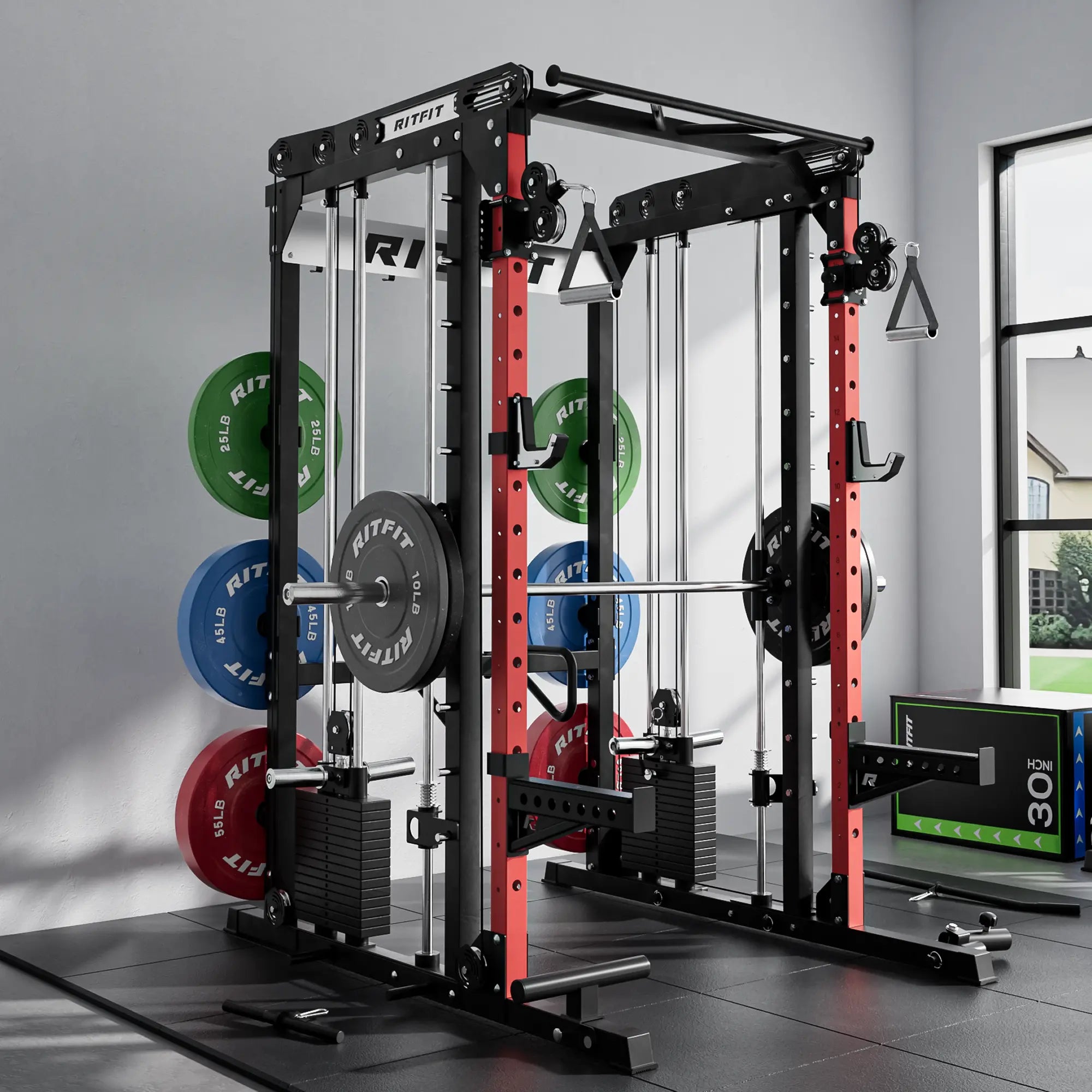

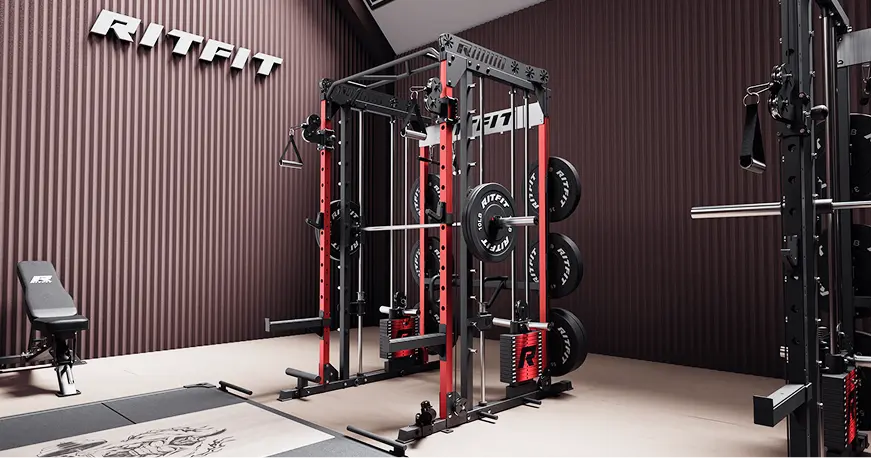
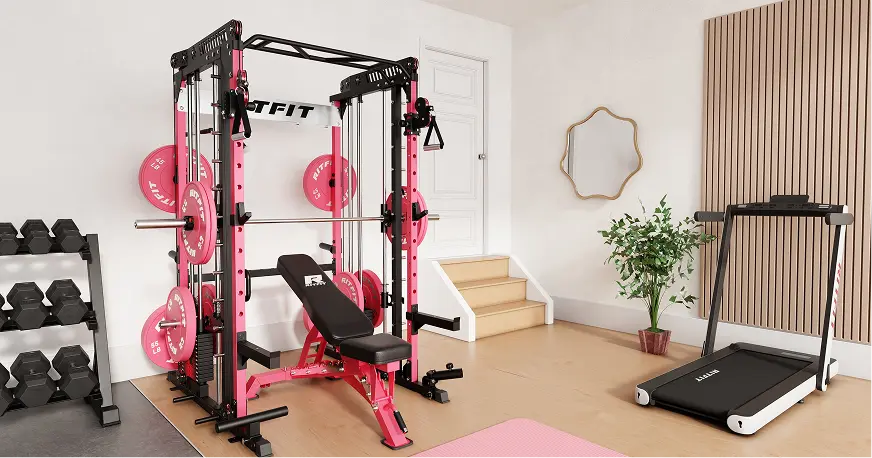
A Smith machine weight bench pairing gives the guided bar a supported surface and lets you set your body position relative to its fixed track. The useful question is whether the bench fits the machine bay, stays stable, and lets the bar travel without interference.
This guide focuses on compatibility, alignment checks, and what flat or adjustable configurations make possible.
It does not teach a Smith machine bench press; use the separate movement guide for that.
Measure your actual machine and bench, since model dimensions vary.
Quick Answer: A weight bench adds a stable, adjustable support position to a Smith machine, while the machine guides the bar along a fixed path. Pair them when the bench fits the bay, stays clear of the frame and safety catches, and places your body comfortably relative to that path.
Key Takeaways
- Two pieces, two jobs: The Smith machine guides the bar, while the bench supports and positions your body.
- Fit is specific: Compare the bench footprint with the usable machine bay, then check clearance through the intended setup.
- Adjustability adds options: A secure backrest and seat can support flat, incline, and upright positions when each one suits the machine path.
- Test unloaded first: Check stability, movement, frame clearance, and access to the safety catches before adding plates.
Why a Bench and Smith Machine Work as a Pair
A weight bench gives a Smith machine a movable support surface that sets your body position under the guided bar. The fixed bar path controls the bar's travel, but the bench determines where your torso, back pad, and seat pad sit relative to that path.
That pairing matters because the same machine can serve different users and setups, while a fixed track does not shift to meet every body position. A bench that can be repositioned or adjusted gives you another way to find a workable layout, provided the resulting position remains stable and clear of the frame.
- Support: A flat pad can support a reclined position, while an adjustable backrest can raise the torso for other setups.
- Positioning: Moving the bench changes where the body sits beneath the track without changing the track itself.
- Space use: A movable bench can serve the Smith station and other open-floor uses, if storage and access allow.
Fitness Director Ebenezer Samuel, C.S.C.S., describes a bench as a stable base for pressing, rowing, and support during heavy lifts.
That general equipment point does not establish that any specific bench fits a particular Smith machine.
"A weight bench, specifically an adjustable one, is non-negotiable in my home gym, and it should be in yours too. It provides a stable base for pressing, rowing, and stabilizing during heavy lifts."
Ebenezer Samuel, C.S.C.S. Fitness Director, Men's Health, Is the REP Fitness AB-3000 the Best Value Adjustable Weight Bench? We Put It to the Test.
How to Check Bench Fit, Dimensions, and Bar-Path Alignment
Check the bench against the usable machine bay and the bar's travel before loading it. Overall machine dimensions do not tell you the clear width, pad position, or movement space available inside a specific frame.
- Measure the usable opening: Record the inside width and depth where the bench will sit, along with any crossmembers or feet that reduce clearance.
- Compare the bench footprint: Check the full base width and length, including handles, wheels, and rear supports, against the space where the bench must move.
- Test the intended position: With no plates added, roll or carry the bench into place and check that it can be centered or shifted without catching on the frame.
- Check the body-to-track relationship: Settle onto the bench and move the unloaded bar through its available travel according to the machine manual. Confirm that the support position feels natural for the planned use.
- Recheck after angle changes: Raising the backrest or changing the seat moves your torso relative to the bar. Repeat the clearance and alignment check each time.
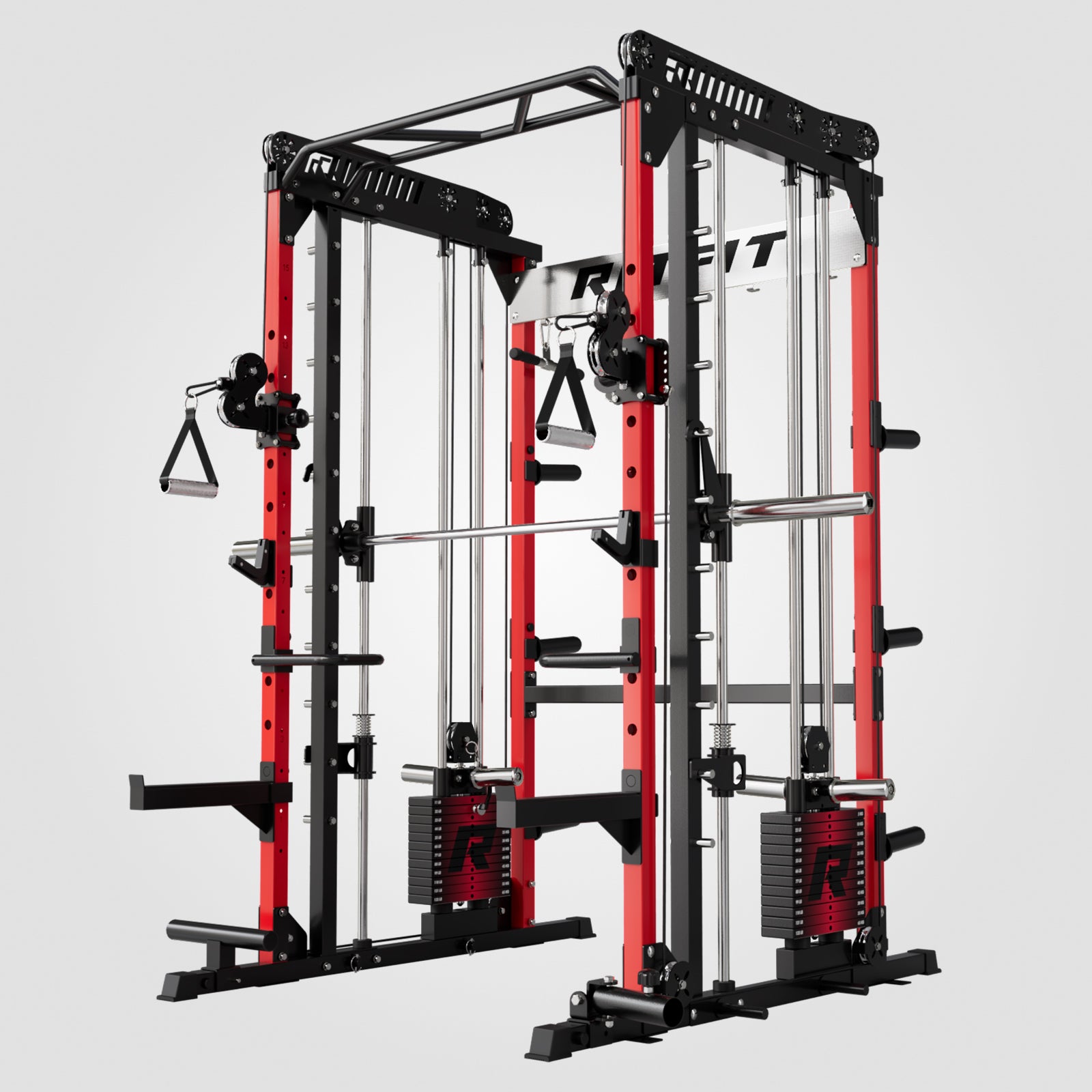
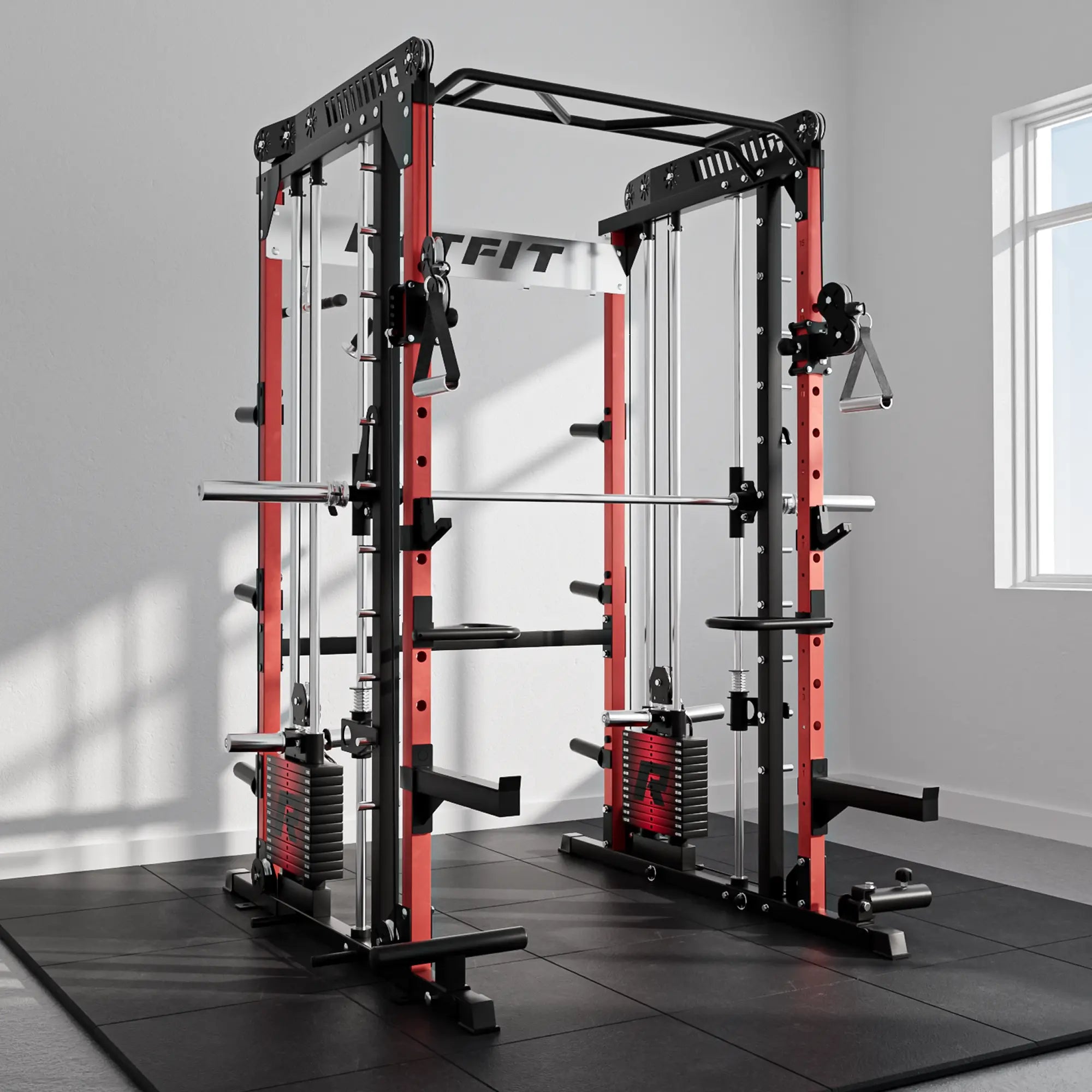
For a concrete example of why exact measurements matter, the RitFit PSR05 listing gives overall dimensions of 70.8 inches long including the Smith bar, 46.3 inches wide, and 82 inches high including the pull-up bar. Those are outside dimensions, not a guarantee of interior bench clearance; measure your own machine and consult its manual.
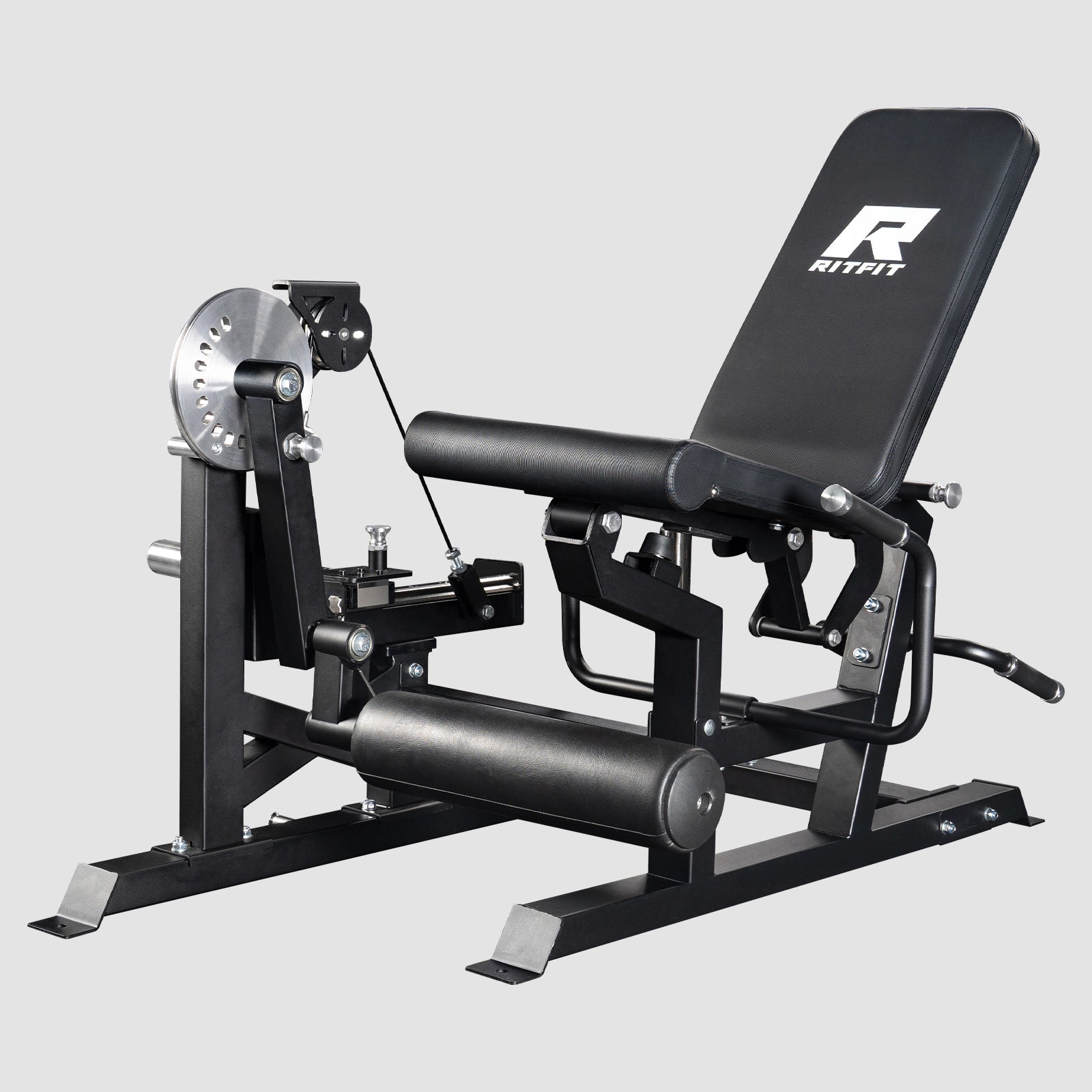
For another reference point, the RitFit GATOR adjustable bench listing gives a 57.8-inch length and 25.2-inch width. The same listing states a 1600-pound total load capacity.
These are manufacturer-listed specifications, not independent fit or safety tests. Compare the dimensions with your actual machine opening and review capacity instructions before use. The Smith machine collection and GATOR bench listing can help you identify exact models to measure.
Flat vs. Adjustable Bench Setups: Angles and Adjustments
A flat bench offers one straightforward support surface, while an adjustable bench can change the torso angle and seat position. The right choice depends on which positions you need and whether the bench remains stable and clear inside your machine.
- Flat bench: A simple option when your planned setup uses a level surface and you value uncomplicated repositioning. Confirm the bench height and base still leave room for the machine's catches and frame.
- Incline backrest: A raised back pad can support seated or inclined positions, but each angle changes where your shoulders and torso sit relative to the guided bar.
- Near-upright backrest: This can provide seated support for an appropriate setup. Check the rail direction, head clearance, and the bench's stability at that angle.
- Seat adjustment: A tilting seat can change how your hips and legs are supported. Make sure the seat locks firmly and does not interfere with the frame or bar path.
The RitFit GATOR listing describes 10 backrest levels from 0 to 85 degrees and three seat angles. The BWB01 listing describes 10 back adjustment positions and three seat positions. These are model-specific manufacturer details, not a compatibility standard; a greater number of positions does not guarantee a better fit.
Adjustable benches can also move out of the Smith bay for other supported work, such as dumbbell rows or seated accessory exercises. For chest-supported rows, for example, the bench needs to remain steady at the chosen incline and the dumbbells need a clear path; the Smith bar is not required for that setup.
For readers comparing a bench pairing with a broader integrated station, the multifunctional Smith machine and BPC06 Smith machine listings provide model-specific starting points. Verify the current product details and physical measurements before deciding.
Pairing Use-Case Matrix
The best pairing depends on the position you want the bench to support and the room available around the machine. Use this matrix to narrow the setup, then confirm it against your equipment's own dimensions and instructions.
| Use case | Bench configuration to consider | Fit check | Main limitation |
|---|---|---|---|
| Level supported position | Flat bench or adjustable bench locked flat | Check pad height, base width, and bar clearance | Only provides a level back support surface |
| Inclined torso support | Adjustable backrest with a securely locked seat | Recheck shoulder position and head clearance at each angle | Changing the angle changes body position relative to the track |
| Seated support | Adjustable backrest set near upright | Confirm the frame and bar remain clear around the head and shoulders | The fixed track may not suit every seated position |
| Supported rows away from the rails | Flat or adjustable bench on clear floor space | Check bench stability and room for the weights and your movement | This is a bench use that does not depend on the Smith bar |
| Shared or compact home gym | Bench that can be repositioned and stored without blocking access | Measure travel and storage space, not just the machine footprint | A heavy or wide bench may be inconvenient to move |
Use-case guidance is a layout framework, not a claim that any listed bench is compatible with every Smith machine.
The RitFit BUFFALO Smith machine package is one example of an integrated station that may call for a different floor plan than a compact frame. Check the machine's exact layout and keep access around it in view when choosing a bench; the BUFFALO Smith machine package listing is a model-specific reference.
Common Mistakes to Avoid: Bench Fit and Safety Checks
A pairing is not ready to use if the bench shifts, rocks, touches the frame, or prevents access to the safety catches. Correct those layout problems before adding weight.
- Assuming the footprint is the clearance: Outside dimensions do not show the usable space between uprights, feet, or crossmembers.
- Checking only one backrest angle: A bench that fits flat may move or rise into the frame when adjusted.
- Letting the bench obstruct safety hardware: Confirm the catches can be set and used as directed by the machine manufacturer.
- Ignoring a moving base: Check that all feet contact the floor and the bench does not rock or slide during the intended setup.
- Forcing the body to match the rail: If the fixed path and bench position do not line up comfortably, stop and change the setup or choose another configuration.
Before each new configuration, inspect the bench adjustment locks, locking pin, adjustment ladder, and feet, then check the unloaded bar travel and safety catches.
Confirm the bench base stability.
Follow the machine and bench manuals, and stop if a part is damaged, loose, obstructed, or behaving unexpectedly.
This article addresses pairing and fit. For a movement-specific walkthrough, see the separate Smith machine bench press guide. For broader machine programming and exercise options, see the Smith machine cable system guide.
FAQs About Smith Machine and Weight Bench Pairing
Does any weight bench fit inside a Smith machine?
No. Compare the bench footprint and height with the machine opening, then check that the bench can reach the intended position without touching the frame or blocking the safety catches. Model dimensions vary, so confirm both manufacturers' measurements and test the empty setup before loading the bar.
Is an adjustable bench better for a Smith machine pairing?
An adjustable bench offers more support angles, while a flat bench is simpler and may be easier to position or store. The better option depends on the movements you plan to support, the room available, and whether each adjustment locks securely. Neither type is automatically compatible with every Smith machine.
Can I use one bench for pressing and rows?
Yes. A flat or adjustable bench can support pressing positions and provide a stable base for supported rows, provided the bench stays steady and fits the machine bay. For rows performed outside the Smith rails, move the bench to a clear floor area and follow the equipment instructions.
What should I check before using a bench under a Smith bar?
Check the bench feet, adjustment locks, pad alignment, frame clearance, bar travel, and safety catches with no added plates. Confirm the bench cannot rock or slide and that the catches remain reachable. Follow the specific machine manual, and stop if the setup contacts the frame or feels unstable.
Can a Smith machine bench setup replace a flat bench?
A Smith machine pairing does not make the bench itself unnecessary. The bench supplies a supported surface and selectable body position, while the machine guides the bar. A separate flat bench may still suit floor-based dumbbell work, storage needs, or a layout where the adjustable bench cannot fit comfortably.
Conclusion
A Smith machine and weight bench work as a pair when the bench supports the position you need and fits the machine's fixed path without blocking movement or safety hardware. Measure the actual bay, test each intended bench angle unloaded, and choose a flat or adjustable bench based on the setups you will use.
Review your machine manual and measure the exact products before buying. When you are ready to compare equipment, use the RitFit discount guide for current shopping information.
Disclaimer
This article provides general equipment setup information and does not replace the manuals for your Smith machine or bench. Stop using equipment that is unstable, damaged, or obstructed, and consult a qualified fitness professional if you are unsure how to position or use it.