Selecting targeted tricep head exercises is the most effective biomechanical strategy to maximize upper arm hypertrophy and pressing lockout strength. The triceps brachii muscle comprises approximately sixty percent of total upper arm mass across three distinct anatomical heads.
This comprehensive guide details the biomechanics of each muscle head, highlights the top exercises for targeted development, and outlines structured workout programming for home gym lifters.
Quick Answer: Building bigger, stronger arms requires targeted tricep head exercises that stimulate the long, lateral, and medial heads through varied shoulder angles. Combining overhead extensions for the long head, heavy pressdowns for the lateral head, and reverse-grip lockouts for the medial head maximizes overall arm thickness, structural balance, and pressing power.
Key Takeaways
- Anatomical Dominance: The triceps brachii comprises three distinct heads that require specific shoulder flexion angles for complete muscular isolation.
- Long Head Hypertrophy: Overhead elbow extensions place the long head into a fully lengthened stretch position for maximum growth potential.
- Lateral Head Power: Overhand pushdowns and close-grip presses emphasize the outer lateral head to create the signature upper arm horseshoe shape.
- Medial Head Stability: Reverse-grip movements and controlled kickbacks isolate the medial head to reinforce elbow joint integrity and pressing lockouts.
- Programming Balance: Performing ten to fifteen weekly sets across varied movement planes maximizes arm hypertrophy while preventing overuse fatigue.
How Does Triceps Anatomy Dictate Exercise Selection?
Triceps anatomy dictates exercise selection because each of the three distinct muscle heads crosses different joints and responds to specific shoulder positions. Manipulating arm elevation relative to your torso changes muscle stretch and mechanical tension across the long, lateral, and medial heads.
The long head originates on the infraglenoid tubercle of the scapula, making it the only biarticular head crossing both the shoulder and elbow joints. In contrast, the lateral and medial heads originate along the posterior humerus, functioning purely as single-joint elbow extensors.
Biomechanical investigations demonstrate that the medial head acts as the primary elbow extensor across all joint angles, while the long and lateral heads modulate force based on shoulder elevation and load intensity.[1] Understanding these distinctions allows you to choose exercises that prevent structural imbalances, as outlined in our comprehensive training all arm muscles guide for longer bigger arms.
- Long Head: Requires overhead shoulder elevation to reach full passive tension and stretch under resistance.
- Lateral Head: Dominates pressing movements performed with arms at the sides or in front of the body.
- Medial Head: Acts as a workhorse stabilizer throughout the entire elbow extension arc.
Balancing these movement patterns ensures comprehensive arm development alongside complementary exercises from our guide on best short head biceps exercises for wider thicker arms.
What Are the Best Long Head Tricep Exercises?
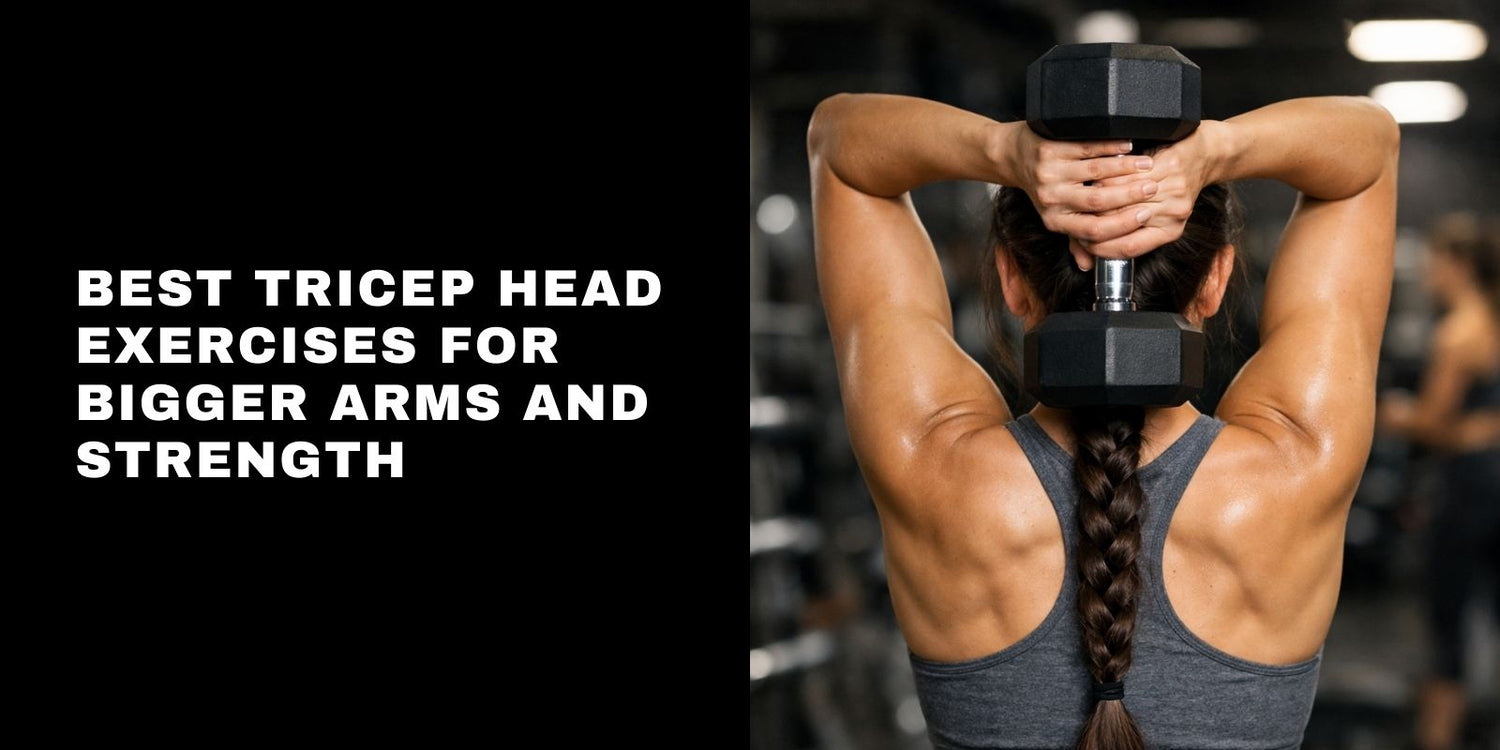
The best long head tricep exercises are overhead dumbbell extensions, incline bench skull crushers, and cable overhead extensions that stretch the muscle under load. Elevating the humerus overhead places the long head in maximum stretch, stimulating superior hypertrophic adaptations.
When performing overhead extensions, maintaining tucked elbows and controlling the eccentric descent prevents shoulder impingement while optimizing mechanical tension. Using dedicated free weights such as the RitFit PVC Coated Round Head Dumbbells In Pairs provides a stable, comfortable grip during heavy vertical pressing.
Advanced hypertrophy protocols such as drop-set elbow extensions sustain high intramuscular hypoxia and metabolic stress, accelerating muscle fiber recruitment in the triceps brachii.[2] To refine your technique on horizontal pressing variations, explore our detailed breakdown on how to do skullcrushers for bigger arms.
- Incline Dumbbell Overhead Extension: Adjusting the bench to a sixty-degree angle maintains constant tension at peak stretch.
- Cable Overhead Rope Extension: Delivers continuous resistance throughout the entire range of motion without joint strain.
- Lying EZ-Bar French Press: Allows slight shoulder flexion at the bottom to maximize long head stretch.
Pairing these overhead movements with ballistic loading variations detailed in best kettlebell tricep exercises for bigger arms and stronger presses creates a complete long-head training stimulus.
Which Movements Maximize Lateral Head Thickness?
The most effective exercises for lateral head thickness are straight-bar cable pushdowns, close-grip bench presses, and weighted diamond push-ups. These movements emphasize forceful elbow extension with arms pinned at the sides, producing peak mechanical tension on the outer arm.
Electromyographic analysis indicates that horizontal and slight decline pressing angles produce superior triceps brachii activation compared to steep incline variations.[3] Integrating heavy compound pressing develops the dense outer sweep that characterizes advanced arm development.
Executing pushdowns with a rigid torso and locked elbows prevents shoulder momentum from assisting the lift. Garage gym athletes can organize their free weight arsenal using the RitFit PVC Coated Round Head Dumbbells Set With Rack for seamless drop-set transitions.
- Straight Bar Cable Pushdown: Allows heavy overloading with an overhand grip for maximal lateral head contraction.
- Close-Grip Barbell Bench Press: Combines heavy mechanical load with significant triceps recruitment across the lockout phase.
- Bodyweight Diamond Push-Up: A closed-kinetic-chain movement that intensely recruits the lateral head without complex equipment.
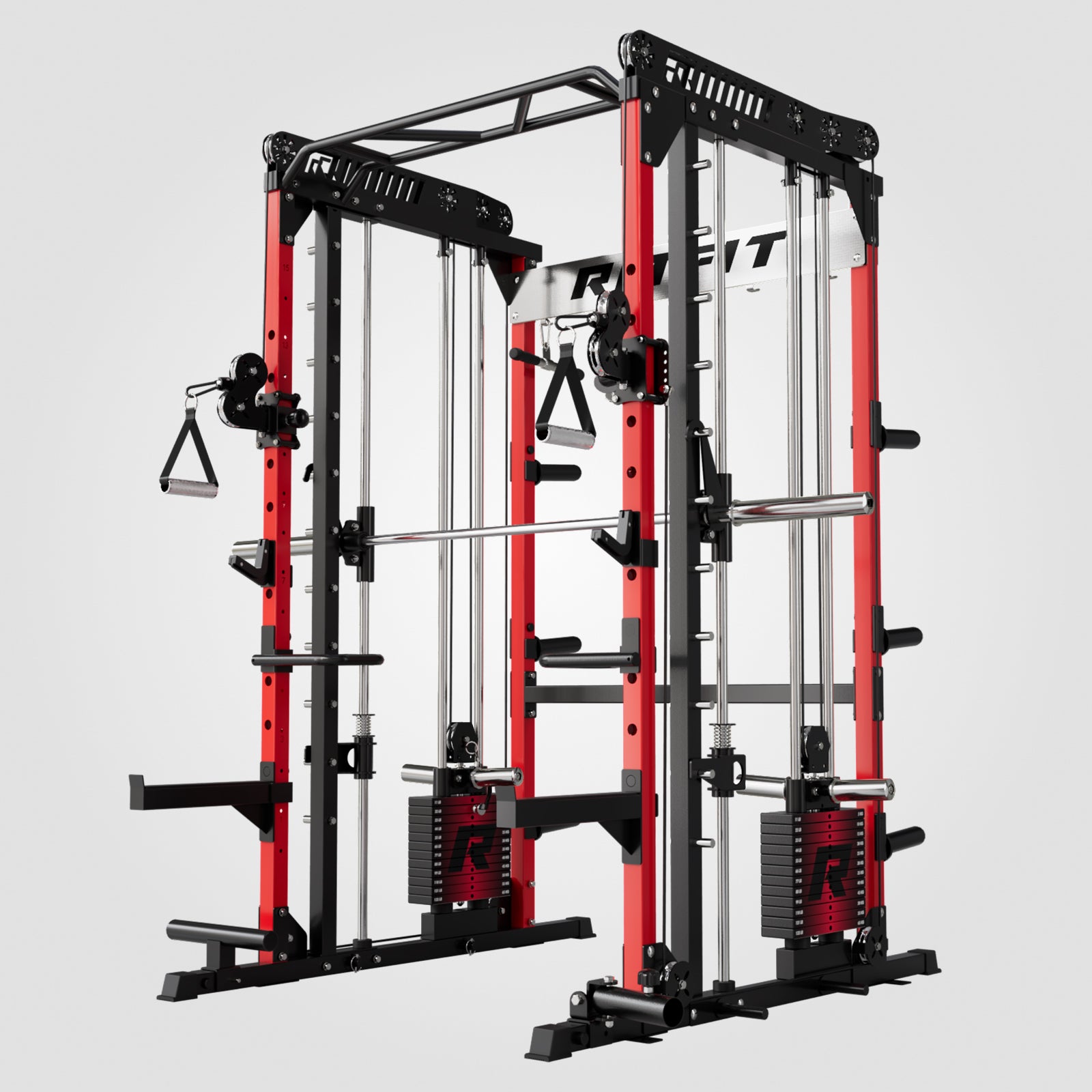
For lifters training on specialized home gym stations, leverage the RitFit LAM1 Adjustable Lever Arm Attachment to lock in guided pressing trajectories.
How Do You Target the Medial Head for Lockout Strength?
Targeting the medial head requires reverse-grip cable pushdowns, JM presses, and dumbbell kickbacks with a sustained terminal contraction. Supinated or neutral grip angles shift emphasis onto the deep medial muscle fibers responsible for joint stabilization and final elbow lockout.
Comparative muscle activation studies confirm that closed-kinetic-chain pressing variations provide substantial triceps motor unit recruitment comparable to free-weight bench press lockouts.[4] Incorporating guided bar paths on a Smith machine offers unmatched stability for heavy JM presses, as covered in our guide to best smith machine triceps exercises.
Lifters looking to enhance rotational strength and joint stability can also integrate the RitFit TAM1 Tornado Arm Attachment for multi-planar arm conditioning.
- Reverse-Grip Cable Pushdown: A supinated underhand grip shifts mechanical focus onto the medial head fibers.
- Dumbbell Tricep Kickback: Emphasizes the shortened position at full terminal extension, where the medial head acts strongly.
- JM Press: A hybrid movement combining a close-grip bench press and skull crusher for heavy joint-friendly overload.
For advanced home gym racks, attaching the RitFit LAM2 Lever Arm Attachment enables converging lockout arcs that thoroughly challenge the medial head.
How Should You Structure a Complete Triceps Training Routine?
A complete triceps training routine structures exercise selection around one overhead movement, one neutral-grip compound press, and one isolation lockout movement per workout. Distributing ten to fifteen weekly sets across two training sessions optimizes muscle protein synthesis and recovery.
Begin each training session with heavy compound pressing when central nervous system energy is highest, followed by targeted single-joint isolation exercises. Complement your routine with free-weight movements from our overview of best tricep dumbbell exercises for bigger arms and pressing strength.
| Exercise Name | Primary Target Head | Shoulder Angle | Optimal Rep Range |
|---|---|---|---|
| Overhead Dumbbell Extension | Long Head | 180° (Full Overhead Flexion) | 10-12 Reps |
| Incline Cable French Press | Long Head | 120°, 140° (Incline Flexion) | 12-15 Reps |
| Straight-Bar Cable Pushdown | Lateral Head | 0° (Neutral at Sides) | 8-12 Reps |
| Close-Grip Bench Press | Lateral & Medial | 90° (Horizontal Plane) | 6-8 Reps |
| Reverse-Grip Pushdown | Medial Head | 0° (Neutral at Sides) | 12-15 Reps |
| Dumbbell Kickback | Medial & Lateral | 0° (Posterior Extension) | 12-15 Reps |
Exercise selection and biomechanical emphasis data based on EMG muscle activation research.
For lifters wanting an all-in-one programming blueprint, explore our resource on best tricep head exercises to train all 3 heads for size and strength.
What Common Triceps Training Mistakes Should You Avoid?
Common triceps training mistakes include flaring the elbows excessively during presses, relying solely on pushdowns, and neglecting the eccentric phase of each repetition. Flaring the elbows places undue shear stress on the elbow joints while shifting tension away from the target triceps heads.
To avoid elbow strain and plateaus, maintain a controlled two-second lowering tempo, keep elbows tucked close to your torso, and ensure balanced weekly volume across all three anatomical heads.
- Elbow Flare: Avoid allowing elbows to drift outward on skull crushers or close-grip bench presses.
- Excessive Momentum: Refrain from swinging torso weight during heavy cable pressdowns.
- Neglecting Overhead Work: Ensure at least one overhead exercise is included weekly to prevent long head underdevelopment.
FAQs About Tricep Head Exercises
Which tricep head adds the most arm size?
The long head constitutes the largest overall muscle volume of the triceps brachii complex. Targeted overhead extensions and incline skull crushers place this specific head into a deep stretch under load, which directly stimulates significant muscle hypertrophy and thickness across the back of the upper arm.
How do you target the lateral tricep head?
You target the lateral head using overhand cable pressdowns, diamond push-ups, and close-grip bench presses. These heavy movements emphasize elbow extension without shoulder flexion, allowing the outer tricep muscle fibers to produce peak contraction force during heavy lockout phases for balanced arm development.
What is the primary role of the medial tricep head?
The medial head provides vital baseline joint stability and active elbow extension across all ranges of motion. Because it remains active during every pressing movement, reverse-grip cable pushdowns and dumbbell kickbacks provide focused isolation to complete balanced arm development and pressing endurance.
Are compound presses enough for complete tricep growth?
Compound pressing exercises build massive baseline pressing strength across the chest and anterior deltoids. However, dedicated single-joint elbow extensions are essential to fully recruit the long head in its lengthened state, preventing asymmetrical muscle development and maximizing total arm circumference over time.
How often should you train triceps each week for optimal growth?
Training the triceps twice per week with ten to fifteen total working sets produces consistent muscle growth. Splitting this volume across heavy compound pressing sessions and targeted isolation exercises allows adequate systemic recovery while maintaining optimal muscle protein synthesis throughout each training cycle.
Should you train triceps before or after chest?
You should generally train triceps after compound chest exercises in a typical push workout routine. Exhausting your triceps first can prematurely limit pressing stability and force output during heavy bench presses, reducing overall mechanical overload on your primary chest and shoulder muscles.
Conclusion
Mastering targeted tricep head exercises ensures complete development across all three anatomical heads for maximum arm size and pressing strength. Prioritizing varied shoulder angles, controlled eccentric tempo, and progressive overload will accelerate your hypertrophy progress.
Equip your garage gym with versatile free weights, select the right resistance tools from the RitFit dumbbell collection, and check our exclusive RitFit discount guide to upgrade your strength setup today.
Disclaimer
This training guide is intended strictly for educational and informational purposes and does not substitute for personalized medical advice. Always consult a certified healthcare professional or personal trainer before beginning any new high-intensity strength training program.
References
1. Kholinne E, Zulkarnain RF, Sun YC, Lim S, Chun JM, Jeon IH. The different role of each head of the triceps brachii muscle in elbow extension. Acta Orthop Traumatol Turc. 2018;52(3):201-205. doi:10.1016/j.aott.2018.02.005. PMCID: PMC6136322
2. Goto M, Nirengi S, Kurosawa Y, Nagano A, Hamaoka T. Effects of the Drop-set and Reverse Drop-set Methods on the Muscle Activity and Intramuscular Oxygenation of the Triceps Brachii among Trained and Untrained Individuals. J Sports Sci Med. 2016;15(4):562-568. PMCID: PMC5131208
3. Rodríguez-Ridao D, Antequera-Vique JA, Martín-Fuentes I, Muyor JM. Effect of Five Bench Inclinations on the Electromyographic Activity of the Pectoralis Major, Anterior Deltoid, and Triceps Brachii during the Bench Press Exercise. Int J Environ Res Public Health. 2020;17(19). doi:10.3390/ijerph17197339. PMCID: PMC7579505
4. Alizadeh S, Rayner M, Mahmoud MMI, Behm DG. Push-Ups vs. Bench Press Differences in Repetitions and Muscle Activation between Sexes. J Sports Sci Med. 2020;19(2):289-297. PMCID: PMC7196742