








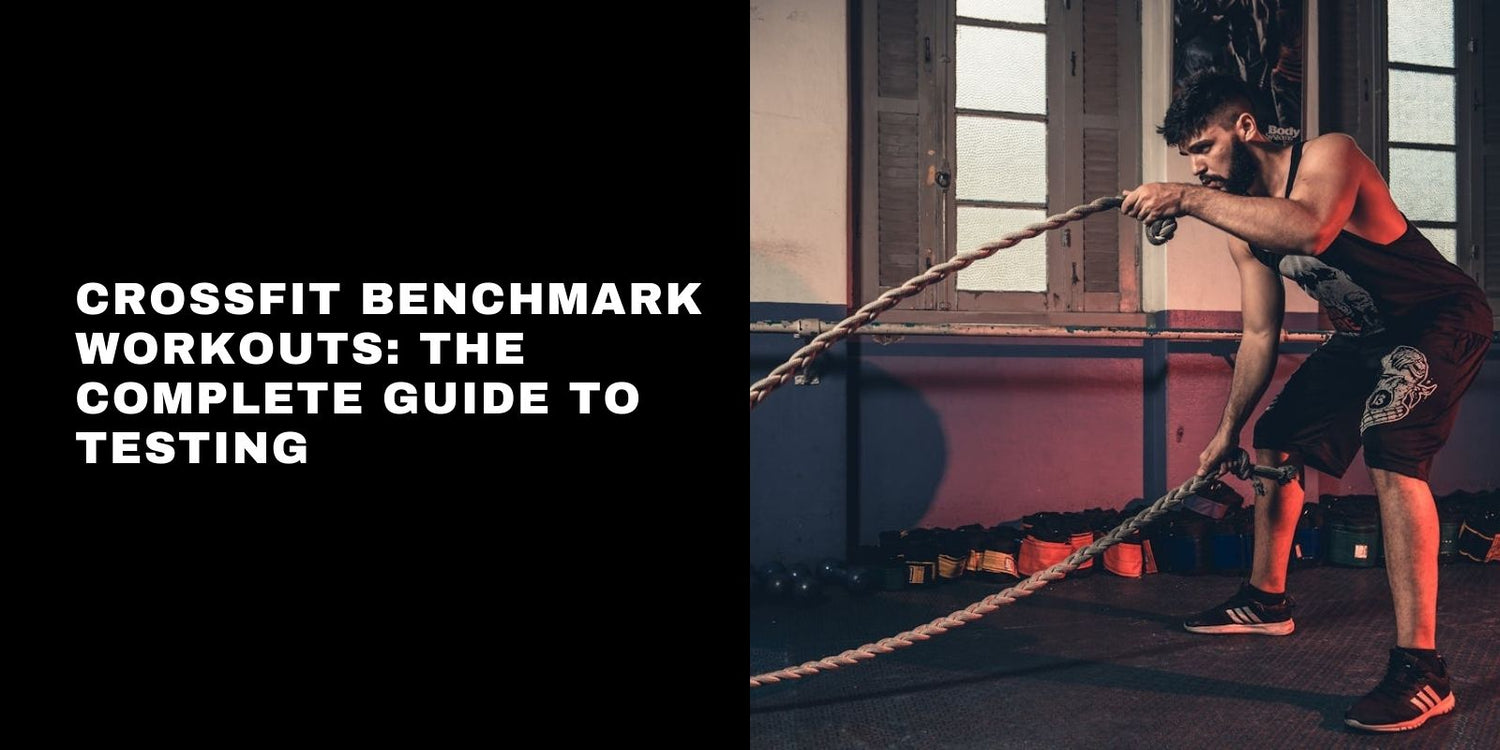
CrossFit benchmark workouts are the fixed tests inside a constantly varied program, and they turn abstract effort into data you can track. This guide explains the famous Girls and Hero WODs, the movement standards that make a score count, and the scaling and retest strategy that keeps progress measurable.
Whether you train at a box or in a garage gym, you will learn how to choose, perform, scale, and retest benchmarks without burning out. Read the standards first, because every valid PR starts with a rep that honestly meets the criteria.
Quick Answer: CrossFit benchmark workouts are standardized, repeatable tests such as Fran, Grace, and Murph that measure your strength, conditioning, and skill over time. Your score counts only when movement standards stay consistent, and scaling should match the intended stimulus so every retest gives comparable data.
Key Takeaways
- Measurable progress: Benchmark workouts are repeatable tests that make fitness progress measurable across strength, skill, and conditioning.
- Valid scores: Your score only counts if your movement standards stay consistent between attempts.
- Scaling is not failure: The goal is to match the intended stimulus and time domain so you can compare results later.
- Retest cycle: Re-testing the same benchmark every 3 to 6 months is usually enough to see meaningful adaptation without turning training into constant testing.
- Hero WOD caution: Hero WODs are emotionally significant and often high volume, so program them sparingly and respect recovery.
What Are CrossFit Benchmark Workouts?
CrossFit benchmark workouts are standardized tests with fixed movements, weights, and repetition schemes that you revisit periodically to measure your fitness. They act as a report card that tracks improvements in strength, speed, endurance, and metabolic conditioning over time.
In the high-intensity world of functional fitness, benchmark workouts serve as the gold standard for measuring capacity. Unlike daily programming that varies constantly to create broad adaptations, a benchmark is a fixed test that delivers tangible data on your current fitness level.
Types of Benchmark Workouts
Benchmarks fall into distinct families. The most famous are The Girls, a series of workouts named after women like Fran, Grace, and Diane, similar to how storms are named.
Hero workouts honor fallen military and first responders, and they are notoriously difficult and longer in duration. Many gyms and training programs have also developed their own named benchmarks and open-style workouts that became staples in the community.
Who This Guide Serves
Fitness can feel subjective, but benchmarks bring objectivity by standardizing the variables, so you can clearly see if your fitness is moving in the right direction. This guide serves the complete beginner learning the terminology, the intermediate athlete breaking a plateau, and the advanced competitor refining a strategy.
How to Use This Guide
Use this resource to understand the standards that make a lift count, the strategies that shave seconds off your time, and the scaling options that keep you safe while preserving the intended stimulus. You will also find suggestions for weaving these tests into a broader plan, whether you follow class programming or a home CrossFit training guide.
How Do Benchmarks Fit Into CrossFit Programming?
Benchmark workouts belong in a program as periodic tests that gauge the effectiveness of a training block, not as daily training. Regular training days build skill, strength, and capacity, while benchmark days measure those capacities.
Benchmarks still embody the core methodology of constantly varied, functional movements executed at high intensity, but they should not be done every day. Effective programming cycles these tests periodically, perhaps every few months, to gauge the effectiveness of the training block that preceded them.
Key Performance Metrics
Success in these workouts is measured by data. Depending on the workout, your score might be the total time taken to complete the work, the number of rounds and reps completed in a set time (AMRAP), or the maximum load lifted.
Understanding the difference between performing a workout Rx, meaning as prescribed, versus Scaled, meaning modified, is vital. Both yield valuable data when you track the specific modifications used, so you can compare apples to apples in the future.
Conditioning benchmarks also reflect the engine you build through structured metcon workouts. The fitter that engine becomes, the faster your repeatable conditioning tests get.
What Are the Girl Benchmark Workouts?
The Girl benchmark workouts are the classic named tests of CrossFit, spanning sprint barbell couples like Fran and Grace and longer bodyweight and running tests like Cindy, Nancy, and Eva. Each Girl targets a distinct blend of strength, skill, and conditioning, which makes the family useful for exposing different weaknesses.
Classic and Modern Girls at a Glance
| Workout | Prescription | Primary Test |
|---|---|---|
| Fran | 21-15-9 reps of thrusters and pull-ups | A sprint designed to leave you breathless |
| Grace | 30 clean and jerks for time | Power and barbell cycling speed |
| Diane | 21-15-9 reps of deadlifts and handstand push-ups | Posterior chain strength with inverted gymnastic pressing |
| Angie | 100 pull-ups, 100 push-ups, 100 sit-ups, 100 squats | Bodyweight endurance and muscle fatigue management |
| Cindy | 20-minute AMRAP of 5 pull-ups, 10 push-ups, 15 squats | Bodyweight endurance at a repeatable pace |
| Nancy | 5 rounds of 400m run and overhead squats | Aerobic capacity alongside barbell stability |
| Eva | 5 rounds of 800m run and heavy kettlebell swings | Aerobic capacity alongside strength and stability |
Prescriptions follow the traditional published benchmark standards. Always confirm current standards with your affiliate before testing.
Gymnastics-Biased and Endurance Girls
Angie and Cindy focus heavily on bodyweight endurance, and the strategy there is often about managing muscle fatigue rather than cardiovascular failure. Focused pressing work, like a structured dips workout progression, raises the push-up capacity both tests demand.
Workouts such as Nancy and Eva test aerobic capacity alongside strength and stability, so they require a paced approach rather than an all-out sprint. These longer Girls reward athletes who can hold their mechanics together while breathing hard.
How to Choose the Right Girl Workout
Select benchmarks that align with your goals or expose your weaknesses. If you want to improve gymnastics, retesting Cindy is logical, and if you need to work on barbell cycling, Grace or Isabel is an excellent choice.
Gymnastics-biased Girls pair naturally with a full collection of bodyweight CrossFit workouts. Barbell cycling for Grace and Isabel improves further with variations like clusters in CrossFit.
What Are Hero WODs and Why Are They Different?
Hero WODs are tribute workouts named for fallen soldiers and service members, and they are typically much more physically demanding than standard benchmarks. The volume is high, and the mental grit required to finish is often the primary test.
Popular Hero Benchmarks
- Murph: 1-mile run, 100 pull-ups, 200 push-ups, 300 squats, 1-mile run, often with a weight vest. This is a pure volume test of endurance and mental fortitude.
- DT: 5 rounds of deadlifts, hang power cleans, and push jerks. A grip-intensive heavy barbell workout.
Strategies involve breaking sets early and often to avoid hitting a wall. For Murph, hydration and pacing the runs are critical, and for DT, protecting the grip is paramount.
Programming Hero WODs Responsibly
Due to their severity, Hero WODs should be programmed sparingly. Doing them too frequently increases the risk of overtraining or rhabdomyolysis, so they are best reserved for special occasions or holidays, with ample recovery time afterward.
Hero workouts also share military conditioning roots you can explore through a structured military workout guide. The emotional weight of the tribute is part of why athletes respect the volume instead of chasing it weekly.
What Movement Standards Make a Benchmark Score Valid?
A benchmark score is valid only when every repetition meets the movement standards, including full depth in a squat, full lockout of the arms overhead, and touching the chest to the bar or ground where required. Standardized movement makes a time of 3:00 today truly comparable to a time of 2:50 six months from now.
Without standards, improvements might simply be the result of cutting corners. Form faults such as muted hips or failing to lock out elbows result in no-reps, which hurt your score and your physical progress.
Core Movements in Benchmark Workouts
Proficiency in the squat (air, front, back, overhead), pressing movements, Olympic lifts, and basic gymnastics is non-negotiable. Benchmarks amplify flaws, so technique must be solid before intensity is applied.
Every rep must meet the criteria: hips below knees in a squat, chin over the bar in a pull-up, and full extension of the hips and knees at the top of a box jump.
Using Video, Coaches, and Judging
If you train alone, use a phone to video your lifts, because seeing your movement is the best way to self-assess. In a class setting, rely on experienced eyes to critique your standards, since validating results through judging ensures your PRs are legitimate.
Readiness, Warm-Up, and Recovery
Before attempting a high-intensity benchmark, ensure you have the baseline prerequisites, including adequate mobility to hit safe positions and a foundational level of strength. If you are nursing an injury or have consistently poor sleep, a max-effort test might do more harm than good.
A general warm-up to raise body temperature should be followed by a specific warm-up targeting the movements in the workout, such as opening the hips and shoulders for a thruster-heavy test. Post-workout, a structured cool-down is essential to jumpstart recovery, and since benchmarks are often performed at maximum intensity, plan adequate rest or active recovery in the days following a major test.
How Do You Scale Benchmark Workouts?
Scaling modifies the load, repetitions, or movements of a benchmark to match your current ability while preserving the intended stimulus and time domain. If a workout is meant to take 5 minutes but the prescribed weight would take you 20, you must scale the weight.
Scaling is not failing, because it is a tool to preserve the intended stimulus. The goal is always to match the intensity and time domain of the original test.
Common Scaling Options
- Strength: Reduce the load to a weight you can cycle efficiently.
- Gymnastics: Substitute complex movements like muscle-ups with pull-ups or ring rows.
- Conditioning: Reduce the run distance or row calories to keep moving without excessive rest.
Progressive Scaling Over Time
As you improve, your scaling should evolve. You might move from ring rows to jumping pull-ups, then to banded pull-ups, and eventually to Rx pull-ups, and tracking these transitions carefully documents your journey toward the full prescription.
How Do You Track Progress and Analyze Results?
Tracking benchmark results means recording the date, the workout name, your final time or score, and the specific loads or modifications used. You cannot manage what you do not measure, because tracking provides objective proof of fitness and exposes plateaus where numbers stagnate.
Also note subjective factors, including how you felt, your pacing strategy, and how you broke up the reps. This context is invaluable for the next retest and signals when to change your training focus or recovery habits.
Analyzing Results
Improvement is not always a faster time. Doing the same workout with heavier weight, cleaner form, or less rest is also progress, and sometimes a slower time with stricter standards is a bigger victory than a fast time with sloppy mechanics.
How Do You Build a Benchmark-Focused Training Plan?
A benchmark-focused training plan uses 8 to 12 week cycles concentrated on strength or skill acquisition, capped off by a week of benchmark testing. Avoid the temptation to test every week, because constant testing replaces the training that actually drives adaptation.
Periodization for Specific Benchmarks
Use periodization to build the specific capacities a benchmark demands. If you want to improve your Grace time, spend a cycle focusing on Olympic lifting technique and anaerobic power, and if Murph is the goal, focus on volume accumulation and running endurance.
Simple strength blocks built on progressive models, like a 5x5 workout structure, raise the barbell numbers that Grace and DT expose. Let daily CrossFit workouts build the engine, and let benchmarks check the horsepower.
Integrating Benchmarks With Regular Workouts
Balance is key when integrating tests into regular training. Ensure that high-volume testing days are bracketed by lower-intensity active recovery days so the body can absorb the work.
What Strategy Should You Use on Benchmark Day?
Benchmark day strategy comes down to preparation, pacing, and honest reflection, so treat the test like a competition. Prioritize sleep and nutrition beforehand, and visualize the workout by imagining how the fatigue will feel and planning how you will push through it.
Intra-Workout Strategy
Pacing is critical, and fly and die is a common error where athletes start too fast and crash. Break sets up before you reach failure, because in a set of 21, doing three sets of 7 with short rests is often faster than doing 15 straight and resting for a minute.
Post-Workout Reflection
Immediately after the workout, write down what went well and what did not, including whether you rested too long or your grip failed. This reflection sets the specific goals for your next training block.
Which Common Pitfalls Should You Avoid?
The three most common benchmark pitfalls are chasing times over technique, over-testing while under-recovering, and turning ordinary training days into constant tests. Each one either raises injury risk or stalls the progress the tests were meant to measure.
Chasing Times Over Technique
Sacrificing lumbar safety to shave ten seconds off a deadlift workout is never worth it. Ego lifting leads to injury, which halts progress entirely, and longevity is the ultimate goal.
Over-Testing and Under-Recovering
Testing too often drains the central nervous system. If you feel burnt out or your times are regressing, you may be over-testing, so prioritize recovery and return to training basics.
Misusing Benchmarks in Training
Do not turn every Wednesday into a test. Most days should be about practice and training, moving well and sweating, rather than hitting a leaderboard score.
Who Should Use Which Benchmark Workouts?
Beginners should use simple benchmarks to establish baselines, masters athletes should modify volume and impact to protect joints, and competitors should test a broader range of benchmarks to find obscure weaknesses. General fitness athletes get the best value from the classics.
Beginners and Those New to CrossFit Workouts
For those in their first year, the focus should be on learning movement patterns. Establish baselines with simple workouts, focus on consistency, and do not worry about Rx weights, because the priority is showing up.
Masters Athletes
As athletes age, recovery takes longer. Masters athletes should focus on intensity relative to their current capacity rather than their 20-year-old selves, and modifying volume and high-impact movements preserves joint health while still delivering fitness.
Competitive and General Fitness Athletes
Competitors need to test a broader range of benchmarks to find obscure weaknesses. General fitness athletes can stick to the classics that provide the best bang for the buck in terms of health markers.
Testing Benchmarks at Home
Most Girl benchmarks need a barbell, plates, and a pull-up bar, and a dedicated CrossFit equipment collection keeps every scaling option within reach. For barbell tests like Fran and DT, an Olympic barbell paired with bumper plates covers the prescribed loads, and recording your sessions keeps standards honest without a coach present.
FAQs About CrossFit Benchmark Workouts
Why do benchmarks matter if CrossFit is about variety?
Benchmarks provide a standardized fitness report card to measure your tangible progress over time. Daily varied workouts build your overall fitness capacity, while these fixed tests objectively evaluate your strength and conditioning. Repeating the exact same workout later reveals if your current training program is actually working.
How often should I retest my benchmark workouts?
You should wait eight to sixteen weeks before retesting specific benchmark workouts. Testing too frequently often leads to training stagnation and unnecessary mental anxiety. This timeframe allows your body to produce physical adaptations from your current training cycle before you attempt to beat your previous score.
What does scaling mean for my benchmark workout results?
Scaling adjusts the workout weight or repetitions to match your current fitness level while preserving the intended physical stimulus. Modifying movements does not invalidate your test results or make the workout easier. Scaling ensures you maintain high intensity safely and keep your results meaningful for future comparisons.
How do I track my progress accurately during a test?
You must record your split times and movement modifications alongside your final score. Documenting how you break up your sets helps you plan a better strategy for your next attempt. Noting environmental factors like heat and your sleep quality provides valuable context for your overall athletic performance.
Why are strict movement standards required for these workouts?
Consistent movement standards guarantee that your test conditions remain exactly the same every time you perform the workout. Shortening your range of motion cheats you out of gathering accurate performance data. Meeting all physical criteria ensures fair comparisons across different athletes and tracks your true capacity improvements.
What is the difference between the Girls and Hero WODs?
The Girls are classic benchmark workouts named after women, such as Fran, Grace, and Cindy, and they span everything from short sprints to longer endurance tests. Hero WODs honor fallen military members and first responders, and they typically involve higher volume, longer durations, and a heavier emotional weight. Program Hero WODs sparingly, because the recovery cost is much higher than a standard benchmark.
Can beginners do CrossFit benchmark workouts?
Beginners can do benchmark workouts when every movement is scaled to current ability, because the goal is the intended stimulus rather than the prescribed weight. Start with simple tests like Cindy or a scaled Fran to establish a baseline, and keep movement standards strict from the very first rep. Consistent attendance and clean technique matter far more than Rx status in your first year.
What equipment do you need to test benchmarks at home?
A barbell with plates, a pull-up bar, and a squat rack cover most Girl benchmarks, while a weight vest is optional for Murph. A rack lets you set up thrusters and jerks safely for tests like Fran and DT. Expand your home setup gradually so every retest uses the same equipment and stays comparable.
Conclusion
Benchmark CrossFit workouts are powerful tools for quantifying fitness, because they transform abstract effort into concrete data that tracks your journey from beginner to athlete. Adhering to standards, scaling appropriately, and analyzing your results ensures long-term growth.
Choose one or two benchmarks that intimidate you, schedule a date to test them, and set up a journal or tracking app today, because the goal is to be better than you were yesterday. Before you build your home testing setup, check current savings in the RitFit discount guide.
Disclaimer
This article is for general educational purposes only and is not medical advice. If you have shoulder, neck, back, elbow, or wrist pain, a recent injury or surgery, numbness or tingling, unexplained weakness, or dizziness, consult a qualified clinician before starting, and stop any exercise that causes sharp pain.





