Table of Contents
When it comes to strength training, the weightlifting bar is your best friend. As strength training becomes more popular, some home gym owners begin to stock their facilities with specialized equipment. The various types of weightlifting bars are listed below so that you can get the most out of your workouts and start building your personalized home gym.
We'll go over the most common types of weightlifting bars in this guide, talk about what each one is best for, and show you how to pick the right one for you based on your goals, space, and level of experience. You won't have to guess at random metal sticks in the gym anymore; you'll know exactly where to start by the end.
What Is a Weightlifting Bar and Why It Matters for Home Gyms
A weightlifting bar (or barbell) is a long metal bar designed to hold weight plates so you can perform strength exercises like squats, deadlifts, presses, and rows. While all bars might look similar at first glance, their length, thickness, knurling, spin, and shape all impact how they feel and what they’re best used for.
For commercial gyms, having multiple specialized bars is beneficial. Making the correct bar choice is essential for a home lifter. The right bar can:
- Make heavy lifts feel smoother and more stable.
- Reduce stress on sensitive joints like the wrists, shoulders, and lower back.
- Allow you to train more movements safely in a small space
- Stretch your budget by covering more exercises with fewer pieces of equipment.
As a sports medicine–trained coach, I often tell home lifters: you don’t need every bar. You need the bar (or two) that matches your body, training style, and long-term goals.
Key Barbell Specs You Should Know Before Buying
Before we dive into bar types, it helps to understand a few key specs you’ll see on product pages.
Length & Shaft Diameter
Most full-size Olympic barbells are around 86–87 inches (2200 mm) long. Shorter or “space-saving” bars can be useful in tight home gyms but may limit rack compatibility and sleeve loading.
Shaft diameter typically ranges from about 25 to 29 mm:
- Thinner shafts (25–28 mm) are easier to grip and often used for Olympic weightlifting or women’s bars.
- Thicker shafts (28.5–29 mm) feel stiffer and are common on power bars for heavy squats and presses.
Sleeve Diameter & Plate Compatibility
This is a big one for home gyms. “Standard” bars often have 1" sleeves, while true Olympic bars have 2" (50 mm) sleeves. Your plates must match your bar. If you plan to upgrade to bumper plates or commercial-style iron plates, choosing a 2" Olympic sleeve from the start is usually the smarter move.
Knurling, Spin & Whip
- Knurling: The rough pattern you grip. Aggressive knurling helps on heavy pulls but may feel harsh for high-rep work.
- Spin: Olympic bars use rotating sleeves with bushings or bearings so plates can rotate independently of the shaft, reducing torque on your wrists and elbows.
- Whip: The bar’s ability to flex under heavy load and “snap” back. More whip is useful for Olympic lifts; less whip (stiffer bar) feels better for powerlifting-style squats and presses.
Load Capacity & Finish
Check the bar’s weight rating and tensile strength if you plan to lift heavy. Also note the finish—chrome, zinc, black oxide, or stainless steel—which impacts both durability and grip feel.
Understanding these basics will make all the bar types below much easier to compare.
Types of Weightlifting Bars
Straight Bar

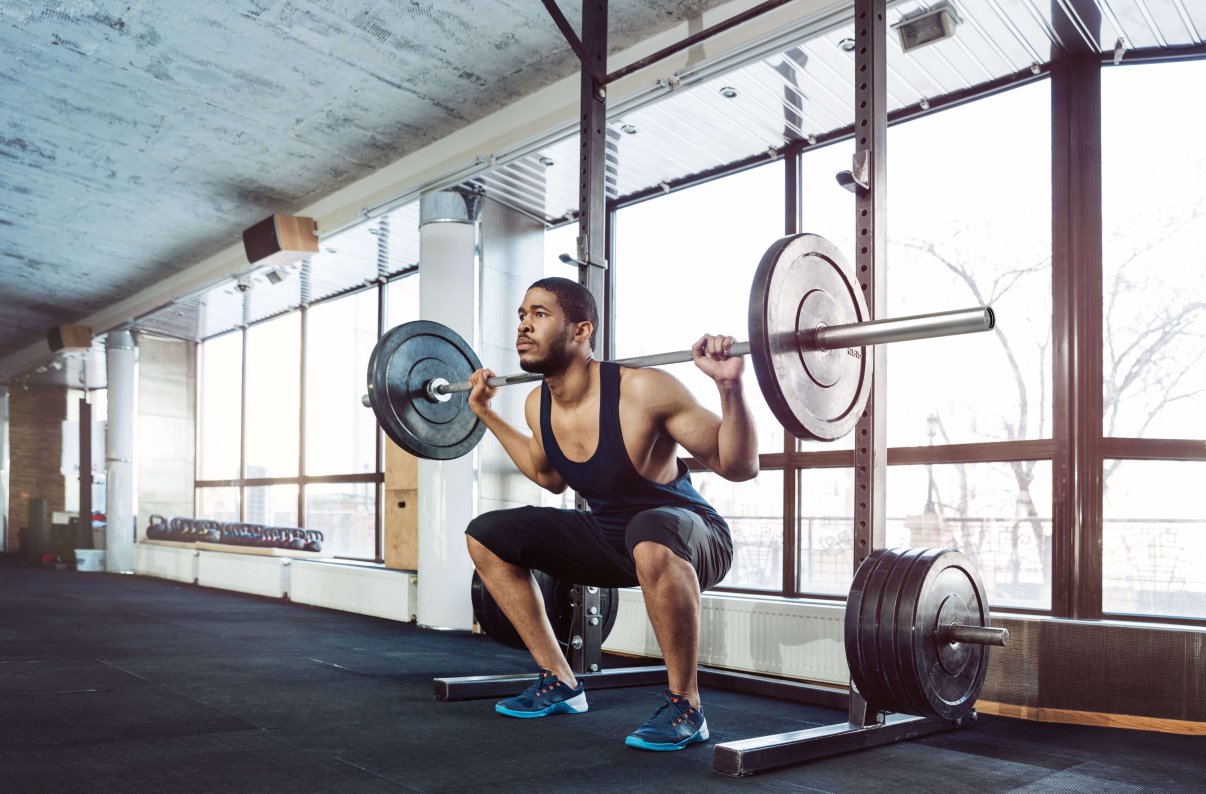
The straight bar is a straight steel pole, and if you have ever been to a gym, you have most definitely seen one. It can be used for various workouts such as squat, deadlift, bench press and overhead press.
A straight bar can be a great choice if you just get started in the gym and don’t have a large budget. However, as you get stronger, dive into variant exercises and plan on pushing heavier weights, you might need a more specialized bar.
Best use:
General strength training, bench presses, rows, overhead presses, and basic deadlifts.
Ideal user:
Beginners setting up a first home gym, or anyone who wants one bar to cover the basics.
Pros:
Versatile and familiar
Works with most racks and benches
Great starting point if you only buy one bar
Cons:
Some budget straight bars don’t spin well and may feel rough on the joints during dynamic lifts
Load capacity and durability can vary a lot on cheaper models
Olympic Bar
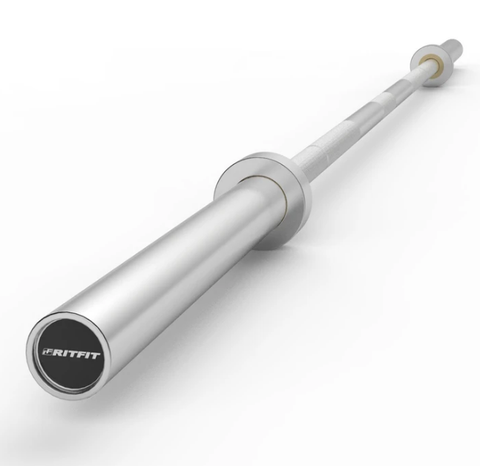
Olympic bars are the gold standard for serious strength training. They’re designed to handle heavy weights and explosive lifts like the snatch and clean & jerk.
A typical Olympic bar is about 2200 mm long, weighs 20 kg (44 lb), has 2" rotating sleeves, and a shaft around 28–29 mm in diameter. Good Olympic bars combine strong steel, controlled whip, and smooth spin so the bar moves with you instead of fighting you.
Best use:
Olympic lifts, heavy squats, presses, deadlifts, and overall barbell strength work.
Ideal user:
Intermediate to advanced lifters, or motivated beginners who want a long-term, do-it-all bar for a serious home gym.
Pros:
High load capacity and durability
Rotating sleeves protect wrists and elbows
Fits standard 2" Olympic plates and bumpers
One good Olympic bar can support almost your entire training program
Cons:
Higher upfront cost than basic straight bars
Full length may feel large in very tight spaces
EZ Curl Bar

The EZ curl bar has a shorter, wavy shaft designed specifically for arm training. The angled grips allow your hands to rest in a more natural, semi-supinated position.
This reduces stress on your wrists and elbows compared to a perfectly straight bar, especially during curls, extensions, and high-rep isolation work.
Best use:
Biceps curls, triceps extensions, upright rows, and lighter accessory work.
Ideal user:
Lifters with wrist or elbow discomfort during straight-bar curls, or anyone who loves focused arm training.
Pros:
More joint-friendly wrist position
Great for isolation exercises and high-rep burn sets
Compact and easy to store in a home gym
Cons:
Not designed for heavy squats, deadlifts, or presses
Usually a “nice to have” after you already own a main bar
Hex Bar/ Trap Bar

The hex bar (or trap bar) is shaped like a hexagon so you can stand inside it and hold the handles at your sides instead of in front of your body.
This changes the mechanics of the lift: the weight stays closer to your center of mass, which can reduce shear stress on the lower back and make it easier to maintain a strong, upright torso.
Best use:
Deadlifts, loaded carries (farmer’s walks), and power-focused lower-body work.
Ideal user:
Home lifters who want to pull heavy while being kind to their lower backs, athletes who care about power output, and beginners who struggle with straight-bar deadlift form.
Pros:
More forgiving technique for many lifters
Often feels more “natural” for deadlifts
Neutral grip handles are shoulder-friendly
Great tool for building strong glutes, quads, and traps
Cons:
Takes up extra floor space
Not used for squats or presses in a rack the same way a straight bar is
Usually purchased as a second or third bar
Yoke Bar

The safety squat bar (often called a yoke bar) has a cambered shaft with padded shoulder rests and forward-facing handles.
Instead of jamming your arms into an externally rotated position like a traditional back squat, the safety bar lets you hold handles in front of you, keeping your shoulders and wrists relaxed while still loading the legs and upper back hard.
Best use:
Squats, good mornings, lunges, and specialty lower-body variations.
Ideal user:
Lifters with shoulder, elbow, or wrist limitations; anyone who wants posterior-chain-focused squats with less upper-body mobility demand.
Pros:
More comfortable on shoulders and wrists
Encourages a more upright torso
Fantastic for building quads, glutes, and upper back
Great variation when straight-bar squats cause discomfort
Cons:
More specialized and usually more expensive
Not ideal as your only bar in a home gym
Heavier than a standard bar, which beginners should account for
Tricep Bar
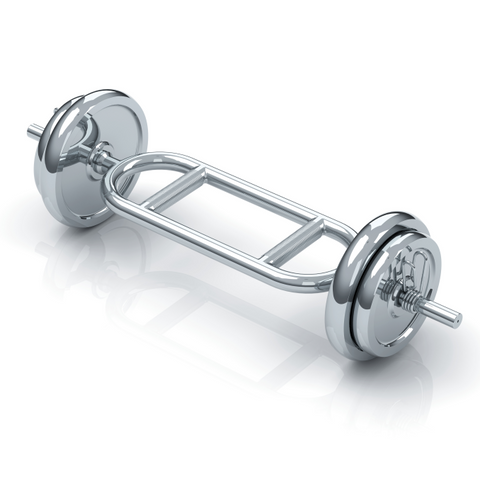
Tricep bars (and multi-grip or “Swiss” bars) feature neutral-grip handles so your palms face each other during pressing and extension movements.
Neutral grips are often more comfortable on the shoulders and elbows, making these bars great for pressing and arm work when straight-bar positions feel cranky.
Best use:
Triceps extensions, neutral-grip presses, hammer-style curls, and rehab-friendly upper-body work.
Ideal user:
Lifters with sensitive shoulders or elbows, or anyone who wants more pressing and arm options in a small footprint.
Pros:
Neutral grip is joint-friendly
Adds variety to pressing and arm training
Compact and easy to store
Cons:
Not a full replacement for a main barbell
Limited use for heavy compound lifts
How to Choose the Right Bar for Your Training Style
You don't need to have all of the bars on this list. To get started, ask yourself a few important questions:
1. What is your main goal for training?
Strength and muscle in general (squats, bench press, deadlifts, and rows):
Begin with a good Olympic or straight bar that fits your plates and rack.
Olympic lifting (snatch, clean, and jerk): Use a real Olympic bar that spins well and has a controlled whip.
If you have a history of low back problems and want to build joint-friendly strength, think about using a straight or Olympic bar with a hex bar.
Bodybuilding and accessory work with a lot of reps:
After you have secured your main bar, add an EZ curl bar or a tricep/multi-grip bar.
2. How much experience do you have?
For the first 6 to 12 months, all you really need is one sturdy Olympic bar and some basic plates.
If you're an intermediate or advanced lifter, adding a hex bar or safety squat bar can help you make more progress and protect your equipment.
3. How much room do you have?
If you don't have a lot of space in your garage or spare room, a full-length Olympic bar and a small storage solution might be better than several specialty bars. Choose the bar that allows the most exercises if you have little floor space.
4. Do you have a history of injuries or limited range of motion in your joints?
Shoulders or wrists hurt from doing back squats:
A safety squat (yoke) bar can make a big difference.
Straight-bar curls hurt my wrists and elbows.
An EZ curl or neutral-grip tricep bar is a smart, cheap way to resolve the problem.
Concerns about the lower back: A hex bar with good form and sensible loading is often easier on the back.
Sample Barbell-Only Workouts You Can Do With One Bar
Here are a few plug-and-play routines you can do with just one type of bar to make this guide useful. Change the number of sets, reps, and weight to match your level.
A. Full-Body Strength with an Olympic or Straight Bar
Do 3 to 4 sets of 5 to 8 reps for each movement, except for the core.
- Squat from the back or the front.
- Barbell Floor Press or Bench Press
- Row with a bent-over arm.
- Romanian Deadlift/Hip Hinge
- Press from above.
- Core Finisher: Barbell Roll-outs or Plank (3 times for 20–30 seconds)
If you're just starting out, use an empty bar or very light plates and focus on doing clean, controlled reps before trying to lift heavier weights.
B. Hex/Trap Bar Lower-Body Power
Do 3 to 4 sets of 4 to 6 reps on the main lifts and 8 to 12 reps on the accessories.
- Perform the deadlift using a trap bar (this is the main lift).
- Romanian Deadlift with a Trap Bar
- Shrugs with a Trap Bar
- Split squats with the bar in one hand like a suitcase or on a rack
- Farmer's Walks (if there is room)
Be honest about your rest periods, and concentrate on strong, clear reps instead of pushing through bad form.
Final Thoughts
Finally, the type of weightlifting bar you choose is determined by your goals and experience. RitFit offers different sizes of standard straight bar, EZ curl bar, Olympic bar and Yoke bar for beginners, intermediate, and elite athletes. Choose the weightlifting bar that best suit your fitness style and incorporate them into your daily routine.
Frequently Asked Questions About Weightlifting Bars
Q: Are standard and Olympic bars interchangeable?
A: Not really. Standard bars use 1" sleeves and standard plates; Olympic bars use 2" sleeves and Olympic plates. You need plates that match your bar’s sleeve size.
Q: How much weight can a typical Olympic bar hold?
A: Many quality Olympic bars can handle 600–1000+ lb, but always check the manufacturer’s rating and don’t exceed the recommended load.
Q: Which bar is best for beginners at home?
A: Most beginners do best starting with one solid Olympic bar and a set of plates they can progressively load. It’s the most versatile foundation.
Q: Do I need more than one bar for my home gym?
A: You don’t need more than one, but many lifters eventually add a hex bar or EZ curl bar to make training more comfortable and varied.
Q: Is a trap bar worth it if I already have a straight bar?
A: If you love heavy pulls or have a sensitive lower back, a trap bar is often worth it. It lets you train hard while keeping the weight closer to your center of mass.
Q: Are specialty bars cheating or less “serious”?
A: Absolutely not. Specialty bars like safety squat and multi-grip bars can be smarter, more joint-friendly tools that keep you progressing longer with fewer aches.