The reverse grip lat pulldown is best for lifters who want a tighter elbow path, stronger biceps assistance, and a better lower lat contraction feel, while the overhand lat pulldown is usually better for width focused pulling and pull up carryover.
Neither grip is automatically better, because your best choice depends on your goal, shoulder comfort, wrist comfort, equipment setup, and whether you can keep tension on your back instead of turning the set into an arm curl.
Key Takeaways
- Overhand lat pulldowns are often the better starting point for back width. The pronated grip usually supports a wider elbow path and reduces the tendency to curl the weight with the biceps.
- Reverse grip lat pulldowns often feel stronger and more controlled. The supinated grip places the biceps in a stronger position and helps many lifters drive the elbows closer to the ribs.
- Grip alone does not guarantee better lat growth. Research on lat pulldown variations suggests that muscle activation differences can be smaller than many lifters expect, so execution quality still matters most.[1]
- Shoulder, elbow, and wrist comfort should guide your grip choice. A shoulder width overhand grip, neutral handle, or multi grip attachment is often smarter than forcing a very wide or fully supinated position.
- The best back program usually uses more than one pulling angle. Combine one vertical pull with one row, then rotate grip style across the week instead of stacking near identical pulldown patterns in one session.
Quick Comparison: Reverse Grip vs Overhand Lat Pulldown
The easiest way to choose between reverse grip and overhand lat pulldowns is to match the grip to your training goal. Use this table as a fast decision guide before you plan your back day.
| Factor | Overhand Lat Pulldown | Reverse Grip Lat Pulldown |
|---|---|---|
| Grip position | Palms facing away | Palms facing you |
| Common grip width | Shoulder width to moderately wide | Shoulder width or slightly narrower |
| Best for | Back width, pull up carryover, upper back control | Lower lat feel, heavy controlled pulling, biceps assisted overload |
| Biceps involvement | Lower to moderate | Moderate to high |
| Main cue | Drive elbows down and slightly out | Drive elbows down toward the hips |
| Common problem | Shoulder irritation if the grip is too wide | Biceps or wrist stress if the load is too heavy |
Exercise Basics: What Are Underhand and Overhand Lat Pulldowns?
Both variations are vertical pulling exercises that train the lats, upper back, and elbow flexors. The difference is that grip position changes your elbow path, joint comfort, and how much your biceps help the pull.
Overhand Lat Pulldown
The overhand lat pulldown uses a pronated grip with palms facing away from you, usually at shoulder width or slightly wider. It is commonly used for back width because the elbows travel down and slightly out from the body.
Underhand Lat Pulldown
The underhand lat pulldown uses a supinated grip with palms facing toward you, usually at shoulder width or slightly narrower. It is also called the reverse grip lat pulldown and often feels stronger because the biceps can contribute more naturally.
Muscles Worked: Underhand vs Overhand Lat Pulldown
Both grips work the same main muscle groups, but they can change the way you feel the movement. The biggest practical difference is not which muscle exists in the exercise, but which muscle becomes easiest to load and control.
- Latissimus dorsi: The lats are the main target in both versions and help pull the upper arm down and back toward the torso.
- Teres major: This smaller upper back muscle assists the lats and contributes to the upper outer back shape.
- Middle and lower trapezius: These muscles support scapular control and help keep the shoulder blades stable during the pull.
- Rhomboids: The rhomboids help with scapular retraction, especially when the lifter pulls with control instead of swinging.
- Biceps brachii and brachialis: These elbow flexors assist the pull, with the biceps usually contributing more during reverse grip pulldowns.
- Posterior deltoids: The rear delts assist more when the elbow path travels behind or slightly outside the torso.
Overhand Lat Pulldown Emphasis
The overhand grip usually makes it easier to train a wider pulling path with less biceps dominance. This makes it a strong choice when your goal is back width, upper lat development, and better carryover to pull ups.
Reverse Grip Lat Pulldown Emphasis
The reverse grip lat pulldown usually makes it easier to keep the elbows close to the ribs and pull toward the upper chest or lower chest. Many lifters feel this path more strongly in the lower lats, but the grip can also shift more work to the biceps.
Biomechanics and Range of Motion
Grip changes the exercise because it changes your shoulder angle, forearm position, and elbow path. Newer EMG research on lat pulldown variations suggests that grip changes may not always create large differences in latissimus dorsi activation, so comfort and execution should drive your choice.[2]
Shoulder Adduction vs Shoulder Extension
Overhand pulldowns usually involve more shoulder adduction, where the elbows move down from a wider position. Reverse grip pulldowns usually involve more shoulder extension, where the elbows move down and back closer to the torso.
Range of Motion
The reverse grip often allows a deeper pull because the elbows stay closer to the body. The overhand version should usually stop around the upper chest because pulling too low can encourage shoulder rolling and poor posture.
Why the Reverse Grip Often Feels Stronger
The reverse grip often feels stronger because supination puts the biceps in a favorable pulling position. That strength is useful only if you still lead the motion with the elbows instead of curling the bar down with your hands.
Strength and Load Potential
Many lifters can use more load on the reverse grip lat pulldown, but heavier is not always better. A stronger grip should support cleaner tension, not give you permission to swing or shorten the range of motion.
- For hypertrophy: Use a load that allows controlled reps, a full stretch, and a strong contraction without pain.
- For strength carryover: Use overhand pulldowns if your main goal is improving pull ups or wide grip vertical pulling.
- For overload: Use reverse grip pulldowns when you can add load while keeping your ribs down and elbows tracking close to the body.
- For joint comfort: Use a neutral grip or multi grip handle if wide overhand or full underhand positions irritate your shoulders, wrists, or elbows.
Technique Breakdown and Form Tips
Good lat pulldown form starts before the first rep. Set the pads, torso angle, grip width, and shoulder blades correctly so the lats can create tension instead of letting momentum take over.
Common Setup Points
Lock your thighs under the pads, sit tall, and lean back only slightly. Keep your chest lifted, ribs controlled, spine neutral, and feet planted throughout the set.
Correct Overhand Lat Pulldown Technique
Grab the bar at shoulder width or slightly wider, depress the shoulder blades, and drive the elbows down toward the floor. Stop around the upper chest, pause briefly, and return with control until the lats stretch at the top.
Correct Reverse Grip Lat Pulldown Technique
Use a shoulder width underhand grip, start by pulling the shoulder blades down, and drive the elbows toward your hips. Pull to the upper chest or top of the ribcage only as far as you can control without curling the wrists or leaning back hard.
Pros and Cons: Underhand vs Overhand
The best grip is the one that lets you train your target muscle with strong control and no joint pain. Use the pros and cons below to choose the right variation for each training block.
Overhand Lat Pulldown Pros
Overhand pulldowns are excellent for back width, pull up carryover, and reducing excessive biceps assistance. They also help beginners learn scapular depression before chasing heavier loads.
Overhand Lat Pulldown Cons
Overhand pulldowns can irritate the shoulders when the grip is too wide or when the lifter pulls behind the neck. They also usually limit load compared with underhand variations.
Reverse Grip Lat Pulldown Pros
Reverse grip pulldowns often allow heavier controlled loads and a strong elbow to hip cue. They are useful for lifters who feel their lats better when the elbows stay close to the torso.
Reverse Grip Lat Pulldown Cons
Reverse grip pulldowns can become too biceps dominant if the load is too heavy or the wrists curl at the bottom. They may also bother lifters with wrist or medial elbow discomfort.
Joint Health and Injury Considerations
Joint comfort should decide your grip before ego decides your weight. If a grip creates sharp pain, numbness, or persistent irritation, change the handle, narrow the grip, reduce the load, or stop the exercise.
- Shoulders: Avoid behind the neck pulldowns and very wide grips if they cause pinching or loss of control.
- Elbows: Avoid forcing a fully supinated reverse grip if you feel inner elbow strain.
- Wrists: Keep the wrists stacked and neutral instead of curling them hard around the bar.
- Neck: Keep the head neutral and avoid jutting the chin forward to meet the bar.
- Spine: Use a small static lean instead of turning the pulldown into a swinging row.
Which Grip Is Better for Your Goals?
The right grip depends on what you want the exercise to solve. Most lifters should not marry one grip forever, because back development benefits from different elbow paths and handles.
For Building Overall Back Mass
Use both grips across the week if your goal is complete back development. Training volume matters for hypertrophy, and research in trained men suggests that higher weekly volume can increase hypertrophy more than very low volume when recovery is managed.[3]
For Emphasizing Lower Lat Feel
Use the reverse grip lat pulldown when you want a closer elbow path and a stronger elbow to hip cue. This does not change your lat insertions, but it can help you feel and control the lower portion of the lat line more effectively.
For Pull Up Carryover
Use the overhand lat pulldown when your goal is improving overhand pull ups. Match your grip width to a strong pull up position instead of going extremely wide.
For Beginners
Start with a shoulder width overhand or neutral grip because it is easier to learn without turning the movement into a curl. Add reverse grip pulldowns once you can keep the shoulder blades moving smoothly.
For Advanced Lifters
Use reverse grip pulldowns for controlled overload and slow eccentrics, not uncontrolled cheating. Muscular adaptations can occur across a range of loading zones when effort, progression, and technique are managed properly.[4]
Best Lat Pulldown Handles and Attachments for Home Gyms
The handle you use can matter as much as the grip you choose. Home gym lifters should prioritize handles that let them rotate between overhand, neutral, and reverse grip patterns without creating wrist or shoulder discomfort.
- Wide lat bar: Choose this for overhand pulldowns, back width work, and pull up style training.
- Straight bar: Choose this for reverse grip lat pulldowns if your wrists tolerate a fully supinated position.
- Neutral handle: Choose this when your shoulders or wrists dislike wide overhand and strict underhand grips.
- Multi grip bar: Choose this when you want several grip angles from one attachment for a more versatile home gym setup.
If you are building a home cable setup, a dedicated lat pulldown attachment set for cable machines can make grip rotation easier without changing your main equipment.
For lifters who want multiple hand positions from one bar, the all in one multi grip lat pull down bar is a natural fit for switching between overhand, neutral, and semi neutral pulling patterns.
How to Build a Better Home Back Training Setup
A better home back setup gives you stable vertical pulling, smooth cable travel, and enough handle options to match your joints. If your current setup feels awkward, the issue may be the attachment, cable angle, or thigh support rather than the exercise itself.
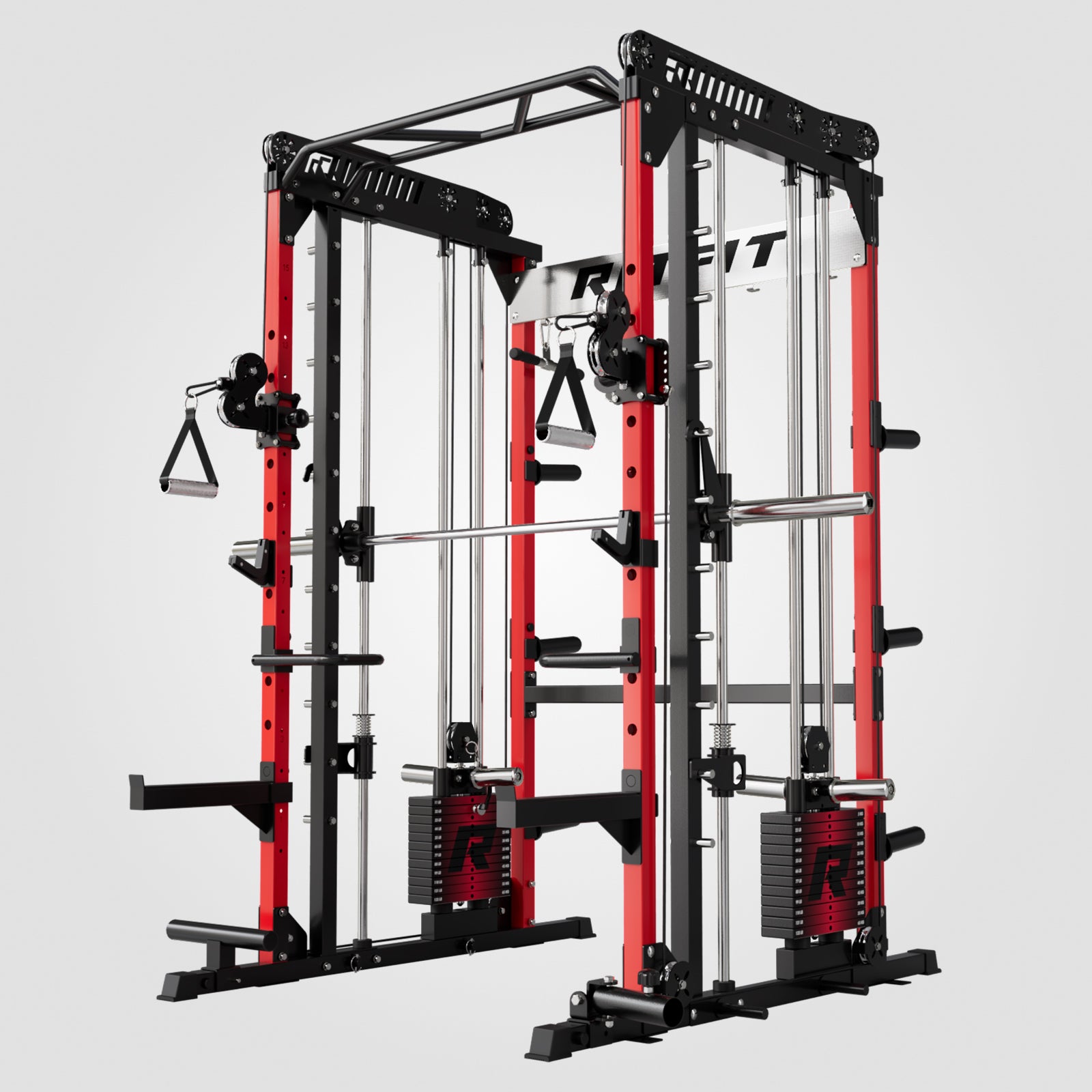
- For cable variety: A standalone cable crossover machine helps support pulldowns, rows, face pulls, curls, and triceps work in one training area.
- For Smith machine owners: The LDM1 lat pulldown attachment for M1 PRO is relevant if you want to add dedicated vertical pulling to an M1 PRO setup.
- For better lower body anchoring: The lat pulldown leg holder attachment bundle for M1 PRO can help keep your thighs locked down during heavier pulldown sets.
- For exercise education: Read how to do a lat pulldown on a Smith machine if you want a more equipment specific setup guide.
- For full back programming: Pair vertical pulls with rows from 8 best Smith machine back workouts to avoid relying on pulldowns alone.
- For cable system planning: Use the Smith machine with cable system complete workout guide to connect your pulldown training with rows, presses, and accessory work.
Programming Recommendations
Program lat pulldowns based on weekly back volume, not just grip preference. Most lifters progress better when they choose one main vertical pull per session and pair it with a row.
Hypertrophy Sets and Reps
Use 3 to 4 sets of 8 to 15 reps for most muscle building work. Keep 1 to 3 reps in reserve on most sets so your lats stay in control instead of your torso swinging the weight.
Weekly Grip Rotation
Use overhand pulldowns on one back day and reverse grip pulldowns on another. This gives your elbows and shoulders variety while still training the same vertical pulling pattern.
Avoiding Redundancy
Avoid doing pull ups, wide grip pulldowns, chin ups, and reverse grip pulldowns all in the same session. Choose one vertical pull, then add a row or rear delt movement to cover a different back angle.
Sample Back Workouts
Use these sample structures to make grip choice easier. Keep the first movement focused and heavy, then use the second movement to add volume without repeating the exact same pattern.
| Session | Main Pull | Secondary Back Move | Best Goal |
|---|---|---|---|
| Back Day A | Overhand lat pulldown, 4 sets of 8 to 12 | Seated cable row, 3 sets of 10 to 15 | Back width and pull up carryover |
| Back Day B | Reverse grip lat pulldown, 4 sets of 8 to 12 | Chest supported row, 3 sets of 10 to 15 | Lower lat feel and controlled overload |
| Joint Friendly Day | Neutral grip pulldown, 3 sets of 10 to 15 | Face pull, 3 sets of 12 to 20 | Shoulder comfort and upper back balance |
Common Mistakes to Avoid
Most lat pulldown mistakes happen when the lifter chases weight before control. Fix these issues before adding load.
- Using momentum: Keep the lean slight and static instead of throwing your torso backward.
- Skipping the stretch: Let the arms reach overhead with control so the lats load through a fuller range.
- Over gripping the bar: Think of your hands as hooks and let the elbows drive the movement.
- Curling the wrists: Keep the wrists stacked so the elbows and lats guide the pull.
- Pulling behind the neck: Pull in front of the body to reduce unnecessary shoulder and neck stress.
- Going too wide: Use a grip you can control without shoulder pinching or reduced range of motion.
FAQs
Is reverse grip lat pulldown better than overhand lat pulldown?
No. Reverse grip lat pulldown is not automatically better than overhand lat pulldown. It is usually better for lifters who want a closer elbow path and stronger lower lat feel, while overhand is often better for width focused pulling and pull up carryover.
What muscles does the reverse grip lat pulldown work?
The reverse grip lat pulldown mainly works the lats, teres major, upper back, biceps, and brachialis. The underhand grip often increases biceps involvement, so lifters should drive the elbows toward the hips to keep the back as the main target.
Does overhand lat pulldown build wider lats?
Yes. Overhand lat pulldown can help build wider lats when it is performed with controlled shoulder blade movement and a strong elbow path. A moderate grip width usually works better than an extremely wide grip, because it preserves range of motion and shoulder comfort.
Can I do reverse grip and overhand lat pulldowns in the same workout?
Yes. You can do both in the same workout, but it is usually better to reduce total sets. For most lifters, choosing one vertical pull and pairing it with a row gives better quality volume and avoids repeating nearly identical fatigue patterns.
Which lat pulldown grip is best for shoulder comfort?
The best lat pulldown grip for shoulder comfort is usually the one that lets you pull without pinching or forced rotation. Many lifters do well with shoulder width overhand, neutral grip, or a multi grip handle instead of a very wide bar.
Why do my biceps take over during reverse grip lat pulldowns?
Your biceps usually take over during reverse grip lat pulldowns because the load is too heavy or the pull starts from the hands. Lower the weight, relax your grip slightly, depress the shoulder blades first, and drive your elbows down toward your hips.
Should beginners use reverse grip or overhand lat pulldown first?
Beginners should usually start with a shoulder width overhand or neutral grip lat pulldown first. These grips make it easier to learn shoulder blade control, reduce excessive arm pulling, and build a stable foundation before adding reverse grip overload work.
What is the best attachment for reverse grip lat pulldown?
The best attachment for reverse grip lat pulldown is usually a straight bar or a multi grip bar that keeps your wrists comfortable. If a fully underhand position bothers your wrists or elbows, use a neutral grip handle to train the lats with less strain.
Conclusion
The reverse grip lat pulldown is best when you want a close elbow path, heavier controlled pulling, and a stronger lower lat contraction feel. The overhand lat pulldown is best when you want width focused pulling, pull up carryover, and less biceps dominance.
For the most complete back development, rotate both grips across your training week, use pain free technique, and choose handles that match your shoulders, wrists, and home gym setup.
Disclaimer: This guide is for general strength training education and should not replace individualized coaching, physical therapy, or medical advice. If you have persistent shoulder, elbow, wrist, neck, or back pain, stop the exercise and consult a qualified professional before continuing.
References
- Lehman GJ Buchan DD Lundy A Myers N Nalborczyk A. Variations in muscle activation levels during traditional latissimus dorsi weight training exercises: an experimental study. Dyn Med. 2004;3:4. doi:10.1186/1476-5918-3-4. PMC
- Buonsenso A Di Fonza D Di Claudio G Carangelo M Centorbi M di Cagno A Calcagno G Fiorilli G. Electromyographic Analysis of Back Muscle Activation During Lat Pulldown Exercise: Effects of Grip Variations and Forearm Orientation. J Funct Morphol Kinesiol. 2025;10(3):345. doi:10.3390/jfmk10030345. PMC
- Schoenfeld BJ Contreras B Krieger J Grgic J Delcastillo K Belliard R Alto A. Resistance Training Volume Enhances Muscle Hypertrophy but Not Strength in Trained Men. Med Sci Sports Exerc. 2019;51(1):94-103. doi:10.1249/MSS.0000000000001764. PMC
- Schoenfeld BJ Grgic J Van Every DW Plotkin DL. Loading Recommendations for Muscle Strength, Hypertrophy, and Local Endurance: A Re-Examination of the Repetition Continuum. Sports. 2021;9(2):32. doi:10.3390/sports9020032. PMC